DIGITAL CITIZENSHIP TOPIC TLE 8 MATATAG CURRICULUM
1.
DIGITAL
CITIZENSHIP
Exploring Our EverydayRoles and Responsibilities
as Active, Respectful, and Informed Members of
the Digital Community.
Created By: Date:
Bailey Dupont
Thynk Unlimited
2.
WHAT IS DIGITAL
CITIZENSHIP?
Digitalcitizenship is the practice of
using technology in a safe, respectful,
and responsible way. It involves
understanding how our actions
online affect ourselves and others.
Being a good digital citizen means
knowing how to protect privacy,
communicate kindly, and make smart
choices while using the internet.
LEARN MORE
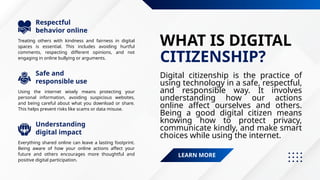
Treating others with kindness and fairness in digital
spaces is essential. This includes avoiding hurtful
comments, respecting different opinions, and not
engaging in online bullying or arguments.
Using the internet wisely means protecting your
personal information, avoiding suspicious websites,
and being careful about what you download or share.
This helps prevent risks like scams or data misuse.
Respectful
behavior online
Safe and
responsible use
Everything shared online can leave a lasting footprint.
Being aware of how your online actions affect your
future and others encourages more thoughtful and
positive digital participation.
Understanding
digital impact
3.
THE IMPORTANCE OF
DIGITALCITIZENSHIP
Digital citizenship is important because it helps people use
technology in a safe, respectful, and responsible way. When we
understand how to behave online, we can protect ourselves
from dangers such as scams, cyberbullying, and harmful
content. It also teaches us to treat others kindly in digital
spaces, which creates a more positive and supportive online
community.
Practicing good digital habits helps us make smart
choices, use reliable information, and build a good
reputation that can impact future education or job
opportunities. In a world where we spend so much time
online, digital citizenship is a skill everyone needs.
4.
BEING
SAFE ONLINE
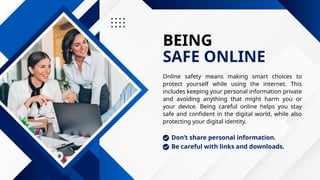
Online safetymeans making smart choices to
protect yourself while using the internet. This
includes keeping your personal information private
and avoiding anything that might harm you or
your device. Being careful online helps you stay
safe and confident in the digital world, while also
protecting your digital identity.
Don’t share personal information.
Be careful with links and downloads.
5.
RESPECTING
OTHERS ONLINE
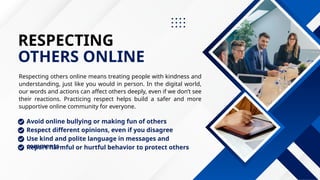
Respecting othersonline means treating people with kindness and
understanding, just like you would in person. In the digital world,
our words and actions can affect others deeply, even if we don’t see
their reactions. Practicing respect helps build a safer and more
supportive online community for everyone.
Use kind and polite language in messages and
comments
Respect different opinions, even if you disagree
Report harmful or hurtful behavior to protect others
Avoid online bullying or making fun of others
6.
THINKING BEFORE
YOU POST
Beforesharing anything online, it is important to take a moment to think
carefully. Whether it is a post, a comment, or a picture, once it is shared, it can
spread very quickly and may remain on the internet for a very long time,
possibly even forever.
The things you share can influence how other people see you, and they can also
affect how others feel, sometimes in ways you might not expect. Thinking before
you post shows that you are responsible and that you respect both yourself and
the people around you. This habit helps make the online world a safer, kinder,
and more thoughtful place for everyone.
7.
DIGITAL
UNDERSTANDING
FOOTPRINTS
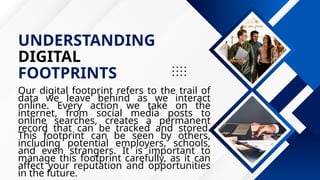
Our digital footprintrefers to the trail of
data we leave behind as we interact
online. Every action we take on the
internet, from social media posts to
online searches, creates a permanent
record that can be tracked and stored.
This footprint can be seen by others,
including potential employers, schools,
and even strangers. It is important to
manage this footprint carefully, as it can
affect your reputation and opportunities
in the future.
8.
BALANCING
SCREEN TIME
Spending toomuch time in front of screens can lead to physical
and mental health problems. It's important to balance your
screen time with other activities to maintain your well-being. By
creating healthy habits and setting limits, you can enjoy
technology while also protecting your health.
Take regular breaks to stretch,
walk, or rest your eyes.
01 03
02 04
Create a balanced routine that
includes both online and offline
activities.
Limit daily screen time to
avoid strain on your eyes and
mind.
Engage in offline activities like
reading, sports, or spending time with
friends.
9.
RECOGNIZING
FAKE INFORMATION
In thedigital world, it is easy to come across information that looks real
but is actually false. Learning how to recognize fake information helps us
avoid spreading confusion and protects us and others from making
wrong decisions. Being careful with what we read and share online is an
important part of being a responsible digital citizen.
Look for signs of bias, exaggeration, or emotional language.
Check the source before believing or sharing information.
Use trusted websites to confirm facts or news.
Be cautious with headlines that seem shocking or unbelievable.
10.
BEING A GOOD
DIGITALCITIZEN AT SCHOOL
Being a responsible digital citizen at school means using technology in a respectful and
honest way. Whether it’s during lessons, group work, or homework, students should follow
school rules, respect others, and use devices for learning, not distraction. By doing this, we
create a safe and supportive digital environment for everyone at school.
Communicate politely with teachers
and classmates in all digital spaces,
such as chats, messages, and online
discussions. Always choose kind
words and listen to others' ideas.
Stay focused on schoolwork when
using devices. Avoid things that can
distract you, like playing games,
watching unrelated videos, or copying
answers from others.
Use devices only when your teacher or
school says it is okay, and make sure
you are using them for learning
activities, not for unrelated things like
games or chatting.
Follow school rules Be respectful online
Use tech to learn
11.
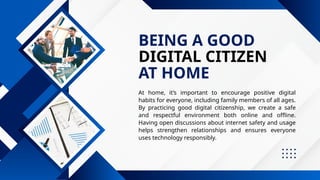
DIGITAL CITIZEN
BEING AGOOD
AT HOME
At home, it’s important to encourage positive digital
habits for everyone, including family members of all ages.
By practicing good digital citizenship, we create a safe
and respectful environment both online and offline.
Having open discussions about internet safety and usage
helps strengthen relationships and ensures everyone
uses technology responsibly.
12.
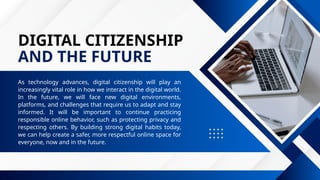
DIGITAL CITIZENSHIP
AND THEFUTURE
As technology advances, digital citizenship will play an
increasingly vital role in how we interact in the digital world.
In the future, we will face new digital environments,
platforms, and challenges that require us to adapt and stay
informed. It will be important to continue practicing
responsible online behavior, such as protecting privacy and
respecting others. By building strong digital habits today,
we can help create a safer, more respectful online space for
everyone, now and in the future.
13.
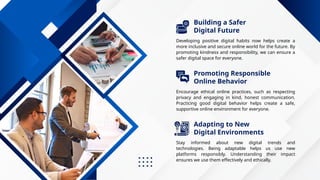
Developing positive digitalhabits now helps create a
more inclusive and secure online world for the future. By
promoting kindness and responsibility, we can ensure a
safer digital space for everyone.
Encourage ethical online practices, such as respecting
privacy and engaging in kind, honest communication.
Practicing good digital behavior helps create a safe,
supportive online environment for everyone.
Stay informed about new digital trends and
technologies. Being adaptable helps us use new
platforms responsibly. Understanding their impact
ensures we use them effectively and ethically.
Building a Safer
Digital Future
Promoting Responsible
Online Behavior
Adapting to New
Digital Environments
14.
CONCLUSION
Digital citizenship isnot just about using technology—it’s about
using it responsibly and ethically. As we navigate the online
world, we must ensure our actions contribute positively to the
digital community. This includes respecting others, protecting
our personal information, and being mindful of the content we
share. The internet is a powerful tool for learning, connecting,
and growing, but it also comes with risks and challenges.
By practicing good digital citizenship, we can help create a safer,
kinder, and more respectful digital space for everyone.
Remember, the choices we make online shape our digital
presence and influence those around us. It’s our responsibility
to make those choices wisely and with consideration for the
well-being of others.
15.
THANK YOU
FOR YOURATTENTION
Let’s continue to grow as responsible
digital citizens and make the online world
a better place for all.
www.reallygreatsite.com
123-456-7890
Thynk Unlimited