Digital Citizenship
  By Christopher, Jeet, Hamish and Harry
There are nine elements to
Master if you want to become
   a good Digital Citizen
Digital Access

• Tech users need to be aware of the electronic
 accessibility rates and try to support them. This is all
 part of digital citizenship.

• Digital exclusion is not respected nor tolerated. If
                                                     we
 all get fair access to technology we can be productive
 citizens of technology.
Digital Commerce

• Tech users need to be aware of issues with buying and
    selling items on the internet on websites like eBay
    and TradeMe.

•   Users need to understand that market economy is
    being done online. These days a lot of Internet
    purchases have been done.
Digital Communication

• In the nineteenth century communication was
 limited.

• Nowadays the technology has increased in knowledge
 and has a wider variety.

• Digital communication has changed and offered new
 programs like communication apps and other very
 useful apps.
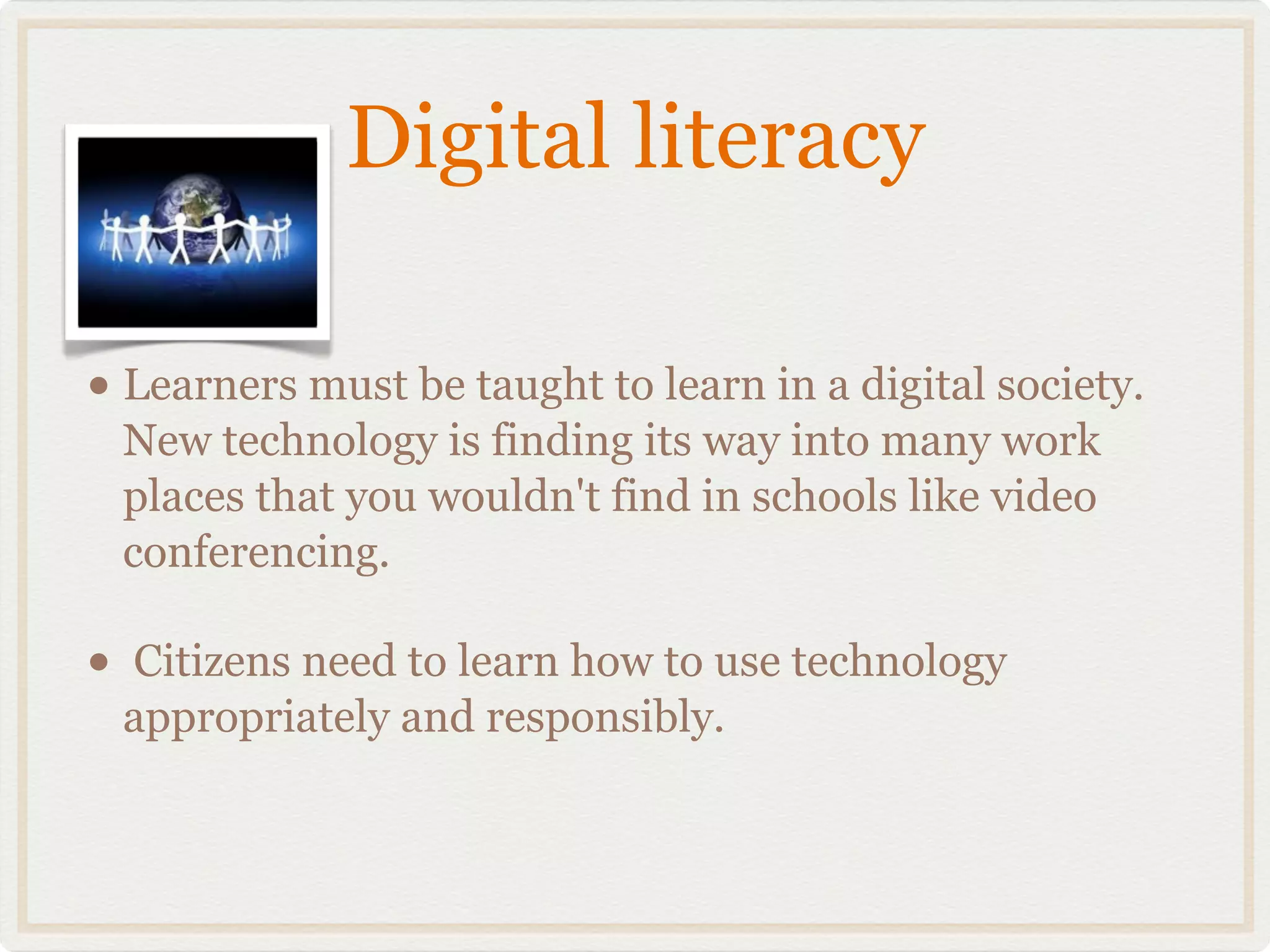
Digital literacy

• Learners must be taught to learn in a digital society.
    New technology is finding its way into many work
    places that you wouldn't find in schools like video
    conferencing.

•   Citizens need to learn how to use technology
    appropriately and responsibly.
Digital etiquette

• When it comes to digital etiquette it's the most
 pressing problem as being a digital citizen.

• Some citizens  behave badly and can get banned on
 some websites. Those citizens don't even bother to
 have etiquette. People who do care must teach other
 citizens to care.
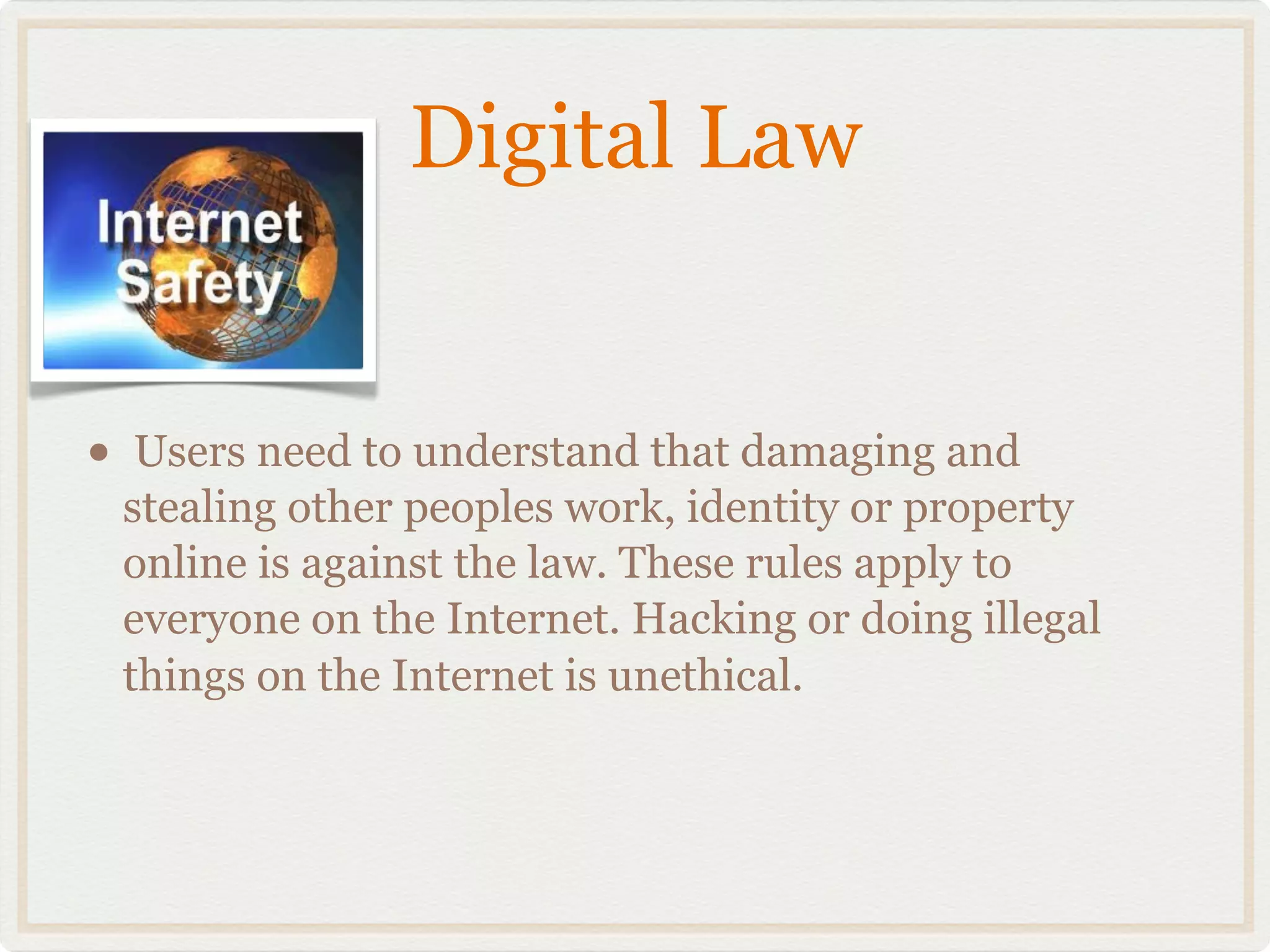
Digital Law


•    Users need to understand that damaging and
    stealing other peoples work, identity or property
    online is against the law. These rules apply to
    everyone on the Internet. Hacking or doing illegal
    things on the Internet is unethical.
Digital Rights & Responsibilities

• As In the American constitution there is a bill of rights connected
 with digital citizenship.

• Basic rights include privacy and freedom of speech, basic digital
 rights need to be addressed discussed and understood by the
 digital world. Digital rights also come with responsibilities
 though such as being able to help define technology using
 appropriate manner.

• In a digital society these two areas of digital citizenship must
 work together to make each digital citizen a productive citizen.
Digital Health & Wellness
• Eye safety, stress syndrome and sound ergonomic
 practices are only some of the illness people can get
 using technology. These issues need to be addressed in
 the new technological world or else people could have
 serious psychological sickness.

• They are becoming more prevalent by the year.
 Internet addiction is also another example of this. User
 of the digital world need to be taught how to protect
 themselves from the dangers of life on the Internet.
 One good way to do this is through education and
 training.
Digital Security (Self-Protection)

• In any community there are people who steal or
 disrupt other people the same applies in a digital
 society. It is not safe to trust other people on the web.

• We put locks and secure our houses and valuables.
 The same applies for all your computers and other
 technology and as responsible citizens, we must
 protect our computers from viruses and back up our
 computers.

Digital Citizenship Harry

  • 1.
    Digital Citizenship By Christopher, Jeet, Hamish and Harry
  • 2.
    There are nineelements to Master if you want to become a good Digital Citizen
  • 3.
    Digital Access • Techusers need to be aware of the electronic accessibility rates and try to support them. This is all part of digital citizenship. • Digital exclusion is not respected nor tolerated. If we all get fair access to technology we can be productive citizens of technology.
  • 4.
    Digital Commerce • Techusers need to be aware of issues with buying and selling items on the internet on websites like eBay and TradeMe. • Users need to understand that market economy is being done online. These days a lot of Internet purchases have been done.
  • 5.
    Digital Communication • Inthe nineteenth century communication was limited. • Nowadays the technology has increased in knowledge and has a wider variety. • Digital communication has changed and offered new programs like communication apps and other very useful apps.
  • 6.
    Digital literacy • Learnersmust be taught to learn in a digital society. New technology is finding its way into many work places that you wouldn't find in schools like video conferencing. • Citizens need to learn how to use technology appropriately and responsibly.
  • 7.
    Digital etiquette • Whenit comes to digital etiquette it's the most pressing problem as being a digital citizen. • Some citizens behave badly and can get banned on some websites. Those citizens don't even bother to have etiquette. People who do care must teach other citizens to care.
  • 8.
    Digital Law • Users need to understand that damaging and stealing other peoples work, identity or property online is against the law. These rules apply to everyone on the Internet. Hacking or doing illegal things on the Internet is unethical.
  • 9.
    Digital Rights &Responsibilities • As In the American constitution there is a bill of rights connected with digital citizenship. • Basic rights include privacy and freedom of speech, basic digital rights need to be addressed discussed and understood by the digital world. Digital rights also come with responsibilities though such as being able to help define technology using appropriate manner. • In a digital society these two areas of digital citizenship must work together to make each digital citizen a productive citizen.
  • 10.
    Digital Health &Wellness • Eye safety, stress syndrome and sound ergonomic practices are only some of the illness people can get using technology. These issues need to be addressed in the new technological world or else people could have serious psychological sickness. • They are becoming more prevalent by the year. Internet addiction is also another example of this. User of the digital world need to be taught how to protect themselves from the dangers of life on the Internet. One good way to do this is through education and training.
  • 11.
    Digital Security (Self-Protection) •In any community there are people who steal or disrupt other people the same applies in a digital society. It is not safe to trust other people on the web. • We put locks and secure our houses and valuables. The same applies for all your computers and other technology and as responsible citizens, we must protect our computers from viruses and back up our computers.

Editor's Notes