Differentiated Instruction During Guided ReadingKarla McFaddenJuly 2010
Letter/Sound Instruction  It is important to give beginning readers saturated exposure to the letters in the English language. They need to learn all the different sounds each letter makes, as well as the sounds of blends, digraphs, and vowel patterns.
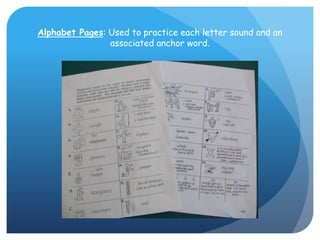
Alphabet Pages: Used to practice each letter sound and an associated anchor word.
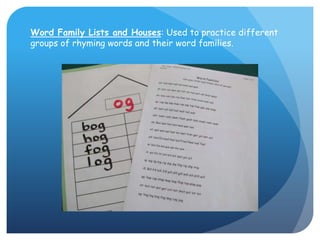
Word Family Lists and Houses: Used to practice different groups of rhyming words and their word families.
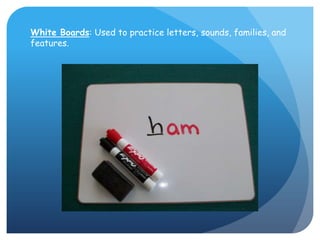
White Boards: Used to practice letters, sounds, families, and features.
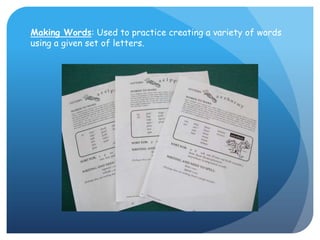
Making Words: Used to practice creating a variety of words using a given set of letters.
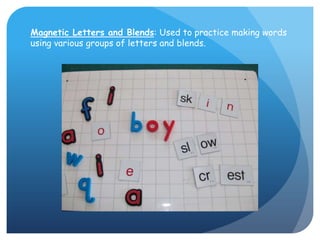
Magnetic Letters and Blends: Used to practice making words using various groups of letters and blends.
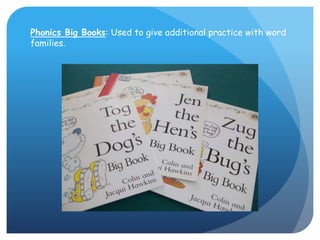
Phonics Big Books: Used to give additional practice with word families.
Word Study  It is important to expose beginning readers to a great deal of practice with high frequency words.  It is also important to frontload the vocabulary needed to be successful at their individual reading level.
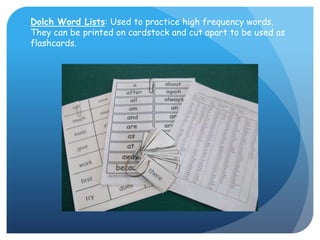
Dolch Word Lists: Used to practice high frequency words.  They can be printed on cardstock and cut apart to be used as flashcards.
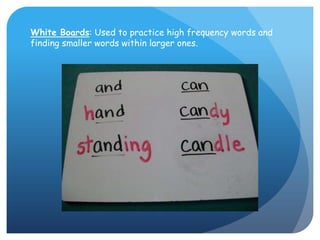
White Boards: Used to practice high frequency words and finding smaller words within larger ones.
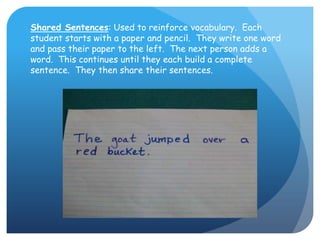
Shared Sentences: Used to reinforce vocabulary.  Each student starts with a paper and pencil.  They write one word and pass their paper to the left.  The next person adds a word.  This continues until they each build a complete sentence.  They then share their sentences.
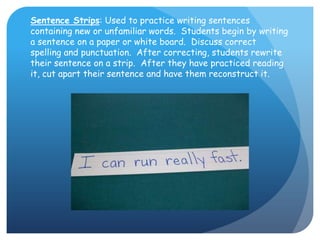
Sentence Strips: Used to practice writing sentences containing new or unfamiliar words.  Students begin by writing a sentence on a paper or white board.  Discuss correct spelling and punctuation.  After correcting, students rewrite their sentence on a strip.  After they have practiced reading it, cut apart their sentence and have them reconstruct it.
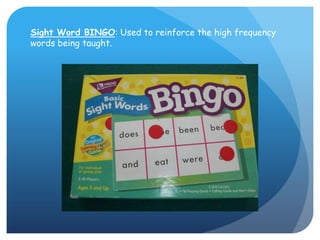
Sight Word BINGO: Used to reinforce the high frequency words being taught.
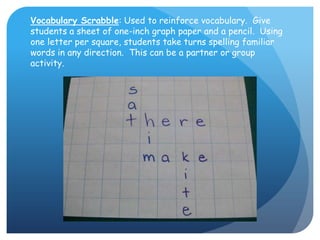
Vocabulary Scrabble: Used to reinforce vocabulary.  Give students a sheet of one-inch graph paper and a pencil.  Using one letter per square, students take turns spelling familiar words in any direction.  This can be a partner or group activity.
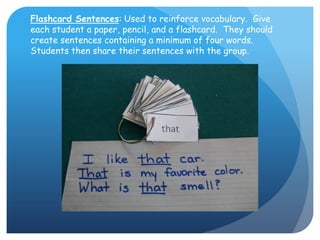
Flashcard Sentences: Used to reinforce vocabulary.  Give each student a paper, pencil, and a flashcard.  They should create sentences containing a minimum of four words.  Students then share their sentences with the group.
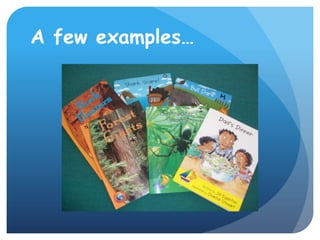
Leveled ReadersIt is important to provide beginning readers with texts that are at their appropriate reading level.  Using leveled readers in small groups offers an environment in which students can feel successful.  They are not being asked to “Round Robin” read in a whole group setting.
A few examples…
Introducing the TextUse the following techniques to introduce the text:Do a “Picture Walk” to discuss the illustrationsHave students make predictions based on the picturesGive a sense of the story or the basic plotCall attention to the text featuresPreview challenging or tricky words
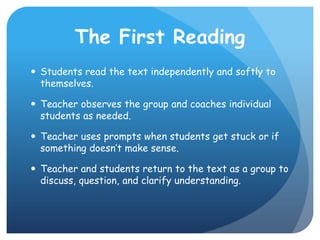
The First ReadingStudents read the text independently and softly to themselves.Teacher observes the group and coaches individual students as needed.Teacher uses prompts when students get stuck or if something doesn’t make sense.Teacher and students return to the text as a group to discuss, question, and clarify understanding.
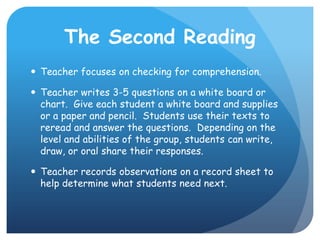
The Second ReadingTeacher focuses on checking for comprehension.Teacher writes 3-5 questions on a white board or chart.  Give each student a white board and supplies or a paper and pencil.  Students use their texts to reread and answer the questions.  Depending on the level and abilities of the group, students can write, draw, or oral share their responses.Teacher records observations on a record sheet to help determine what students need next.
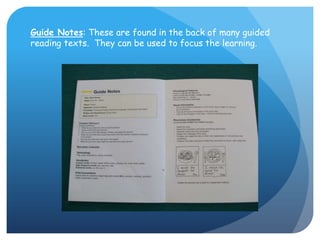
Guide Notes: These are found in the back of many guided reading texts.  They can be used to focus the learning.
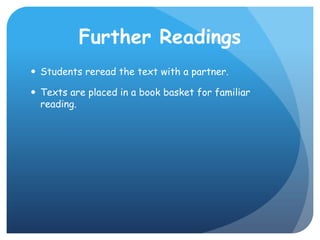
Further ReadingsStudents reread the text with a partner.Texts are placed in a book basket for familiar reading.
Other Things to Consider…Comprehension Strategies: Teach students to –Monitor comprehensionMake connectionsAsk deeper questionsInferVisualizeDetermine importanceSummarize
“Fix It” Strategies: Teach students to –  Figure out unfamiliar words by:Looking at the picturesSkipping the word and going back to itLooking at the first and last letterSounding it outLooking for “chunks” in the wordAsk:Does this make sense?Does it sound right?Backtrack:	If the story stops making sense, go back to an earlier part of the story and reread.
Additional ELL SupportsDramatizeUse body movements and gestures as helpful remindersKeep students involvedUse visuals including realia, photographs, and drawingsUse songs and poemsGive additional time to reinforce conceptProvide books on tapeProvide study sheets with big ideas/large conceptsModify assignmentsUse specific languageScaffold the learning as needed
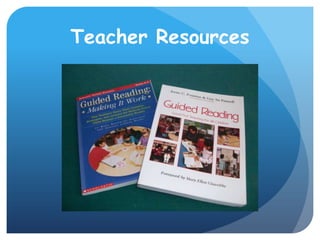
Teacher Resources

Differentiated Instruction - Guided Reading

  • 1.
    Differentiated Instruction DuringGuided ReadingKarla McFaddenJuly 2010
  • 2.
    Letter/Sound Instruction It is important to give beginning readers saturated exposure to the letters in the English language. They need to learn all the different sounds each letter makes, as well as the sounds of blends, digraphs, and vowel patterns.
  • 3.
    Alphabet Pages: Usedto practice each letter sound and an associated anchor word.
  • 4.
    Word Family Listsand Houses: Used to practice different groups of rhyming words and their word families.
  • 5.
    White Boards: Usedto practice letters, sounds, families, and features.
  • 6.
    Making Words: Usedto practice creating a variety of words using a given set of letters.
  • 7.
    Magnetic Letters andBlends: Used to practice making words using various groups of letters and blends.
  • 8.
    Phonics Big Books:Used to give additional practice with word families.
  • 9.
    Word Study It is important to expose beginning readers to a great deal of practice with high frequency words. It is also important to frontload the vocabulary needed to be successful at their individual reading level.
  • 10.
    Dolch Word Lists:Used to practice high frequency words. They can be printed on cardstock and cut apart to be used as flashcards.
  • 11.
    White Boards: Usedto practice high frequency words and finding smaller words within larger ones.
  • 12.
    Shared Sentences: Usedto reinforce vocabulary. Each student starts with a paper and pencil. They write one word and pass their paper to the left. The next person adds a word. This continues until they each build a complete sentence. They then share their sentences.
  • 13.
    Sentence Strips: Usedto practice writing sentences containing new or unfamiliar words. Students begin by writing a sentence on a paper or white board. Discuss correct spelling and punctuation. After correcting, students rewrite their sentence on a strip. After they have practiced reading it, cut apart their sentence and have them reconstruct it.
  • 14.
    Sight Word BINGO:Used to reinforce the high frequency words being taught.
  • 15.
    Vocabulary Scrabble: Usedto reinforce vocabulary. Give students a sheet of one-inch graph paper and a pencil. Using one letter per square, students take turns spelling familiar words in any direction. This can be a partner or group activity.
  • 16.
    Flashcard Sentences: Usedto reinforce vocabulary. Give each student a paper, pencil, and a flashcard. They should create sentences containing a minimum of four words. Students then share their sentences with the group.
  • 17.
    Leveled ReadersIt isimportant to provide beginning readers with texts that are at their appropriate reading level. Using leveled readers in small groups offers an environment in which students can feel successful. They are not being asked to “Round Robin” read in a whole group setting.
  • 18.
  • 19.
    Introducing the TextUsethe following techniques to introduce the text:Do a “Picture Walk” to discuss the illustrationsHave students make predictions based on the picturesGive a sense of the story or the basic plotCall attention to the text featuresPreview challenging or tricky words
  • 20.
    The First ReadingStudentsread the text independently and softly to themselves.Teacher observes the group and coaches individual students as needed.Teacher uses prompts when students get stuck or if something doesn’t make sense.Teacher and students return to the text as a group to discuss, question, and clarify understanding.
  • 21.
    The Second ReadingTeacherfocuses on checking for comprehension.Teacher writes 3-5 questions on a white board or chart. Give each student a white board and supplies or a paper and pencil. Students use their texts to reread and answer the questions. Depending on the level and abilities of the group, students can write, draw, or oral share their responses.Teacher records observations on a record sheet to help determine what students need next.
  • 22.
    Guide Notes: Theseare found in the back of many guided reading texts. They can be used to focus the learning.
  • 23.
    Further ReadingsStudents rereadthe text with a partner.Texts are placed in a book basket for familiar reading.
  • 24.
    Other Things toConsider…Comprehension Strategies: Teach students to –Monitor comprehensionMake connectionsAsk deeper questionsInferVisualizeDetermine importanceSummarize
  • 25.
    “Fix It” Strategies:Teach students to – Figure out unfamiliar words by:Looking at the picturesSkipping the word and going back to itLooking at the first and last letterSounding it outLooking for “chunks” in the wordAsk:Does this make sense?Does it sound right?Backtrack: If the story stops making sense, go back to an earlier part of the story and reread.
  • 26.
    Additional ELL SupportsDramatizeUsebody movements and gestures as helpful remindersKeep students involvedUse visuals including realia, photographs, and drawingsUse songs and poemsGive additional time to reinforce conceptProvide books on tapeProvide study sheets with big ideas/large conceptsModify assignmentsUse specific languageScaffold the learning as needed
  • 27.