Different Approaches
to Co-creating with
and for Kids
Rachel Liu, @rachelsliu
Florencia Döuek, @flordouek
The Research Thing Meetup, @researchthing, #uxkids
Topics
● Different problems to be solved
● Different levels of involvement (parents and/or kids)
● Single session vs full design cycle
● Co-designing in the lab vs school environment
● Different considerations from cultural differences,
ages, activity types and scaffolding
Case Study:
How might we motivate and
encourage kids to keep learning
with progress reports?
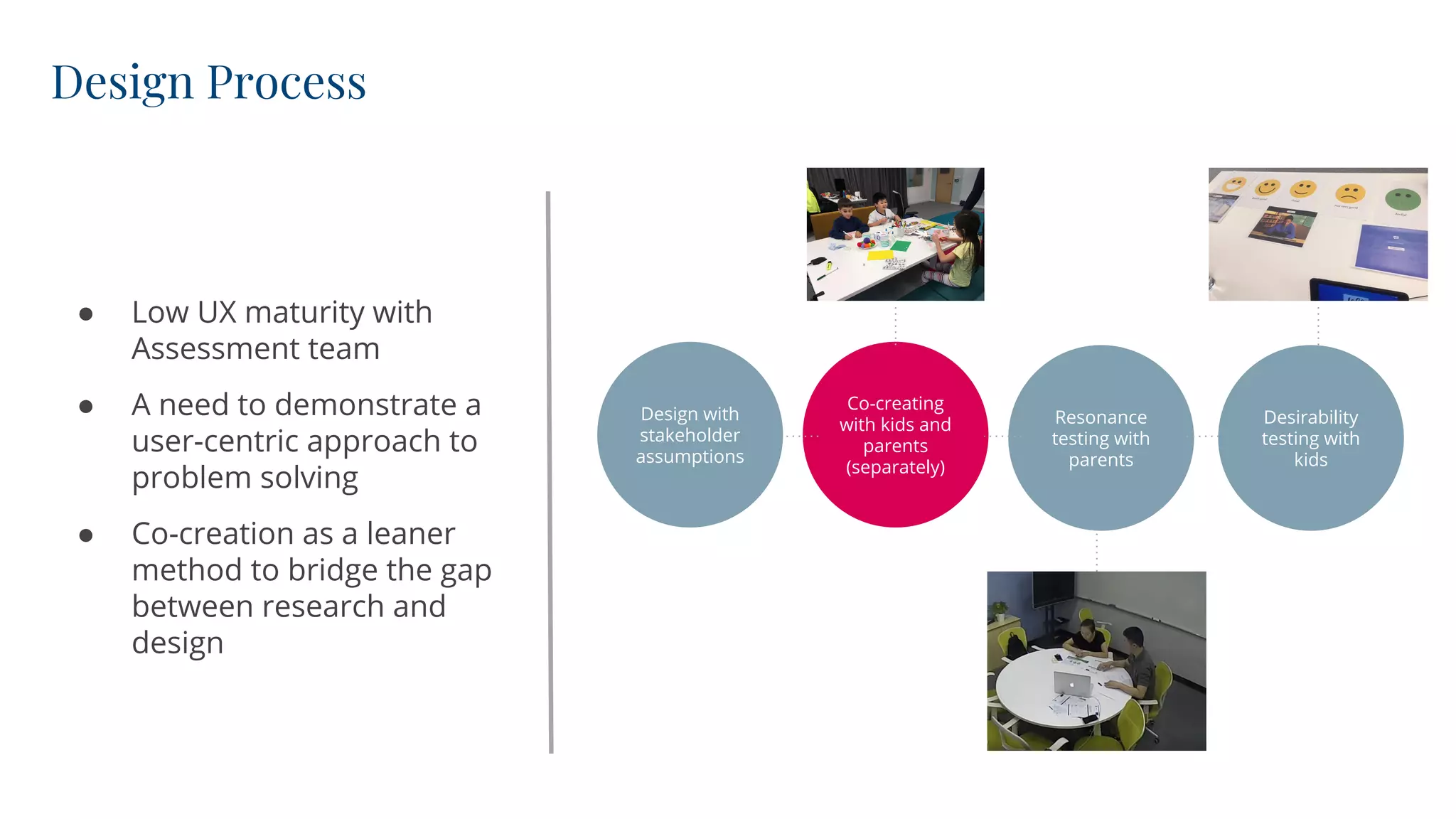
Design Process
Design with
stakeholder
assumptions
Resonance
testing with
parents
Desirability
testing with
kids
Co-creating
with kids and
parents
(separately)
● Low UX maturity with
Assessment team
● A need to demonstrate a
user-centric approach to
problem solving
● Co-creation as a leaner
method to bridge the gap
between research and
design
Considerations
Kids aged
5-14
English as
second
language
Growth
markets in
China and
Turkey
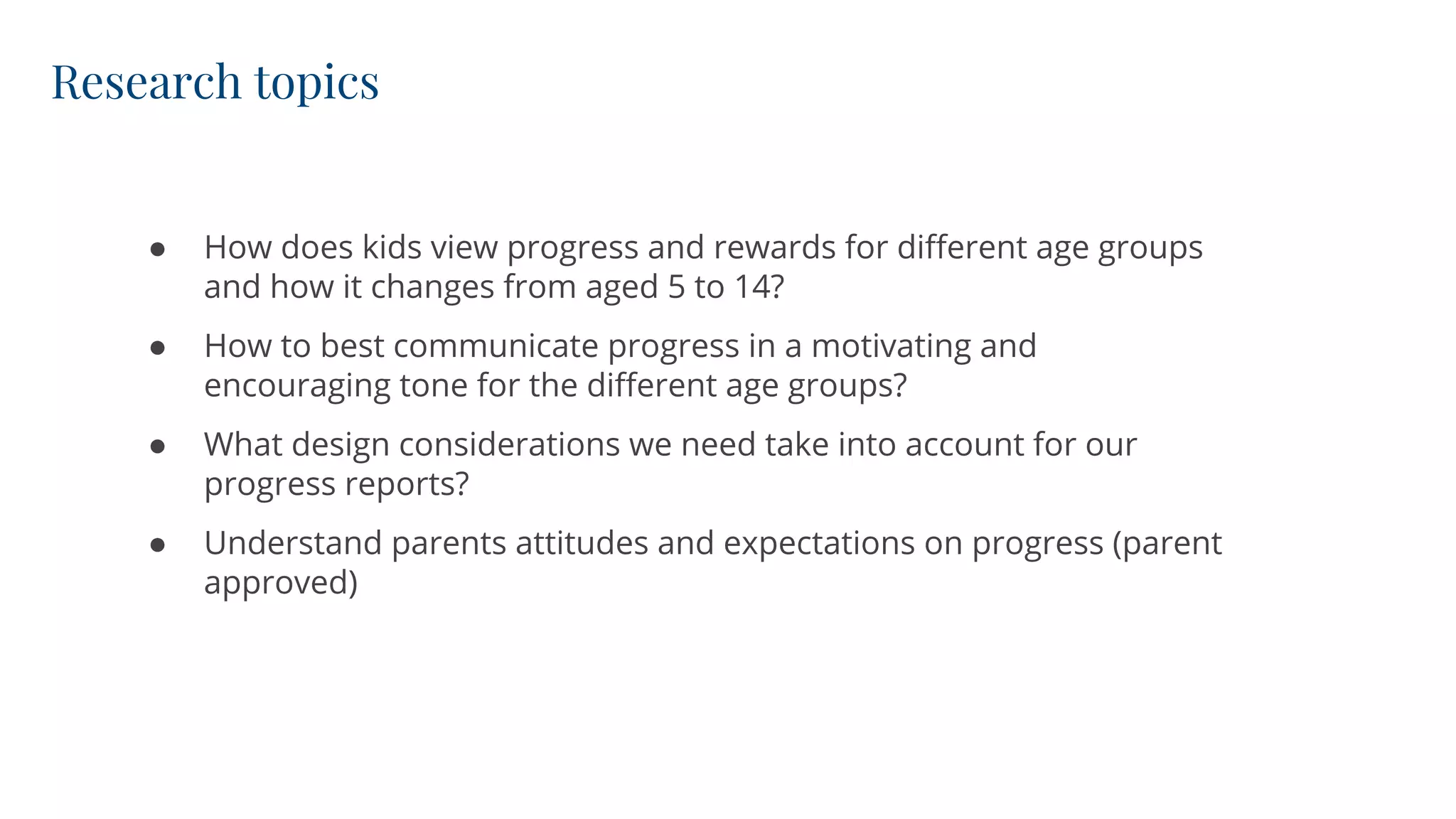
Research topics
● How does kids view progress and rewards for different age groups
and how it changes from aged 5 to 14?
● How to best communicate progress in a motivating and
encouraging tone for the different age groups?
● What design considerations we need take into account for our
progress reports?
● Understand parents attitudes and expectations on progress (parent
approved)
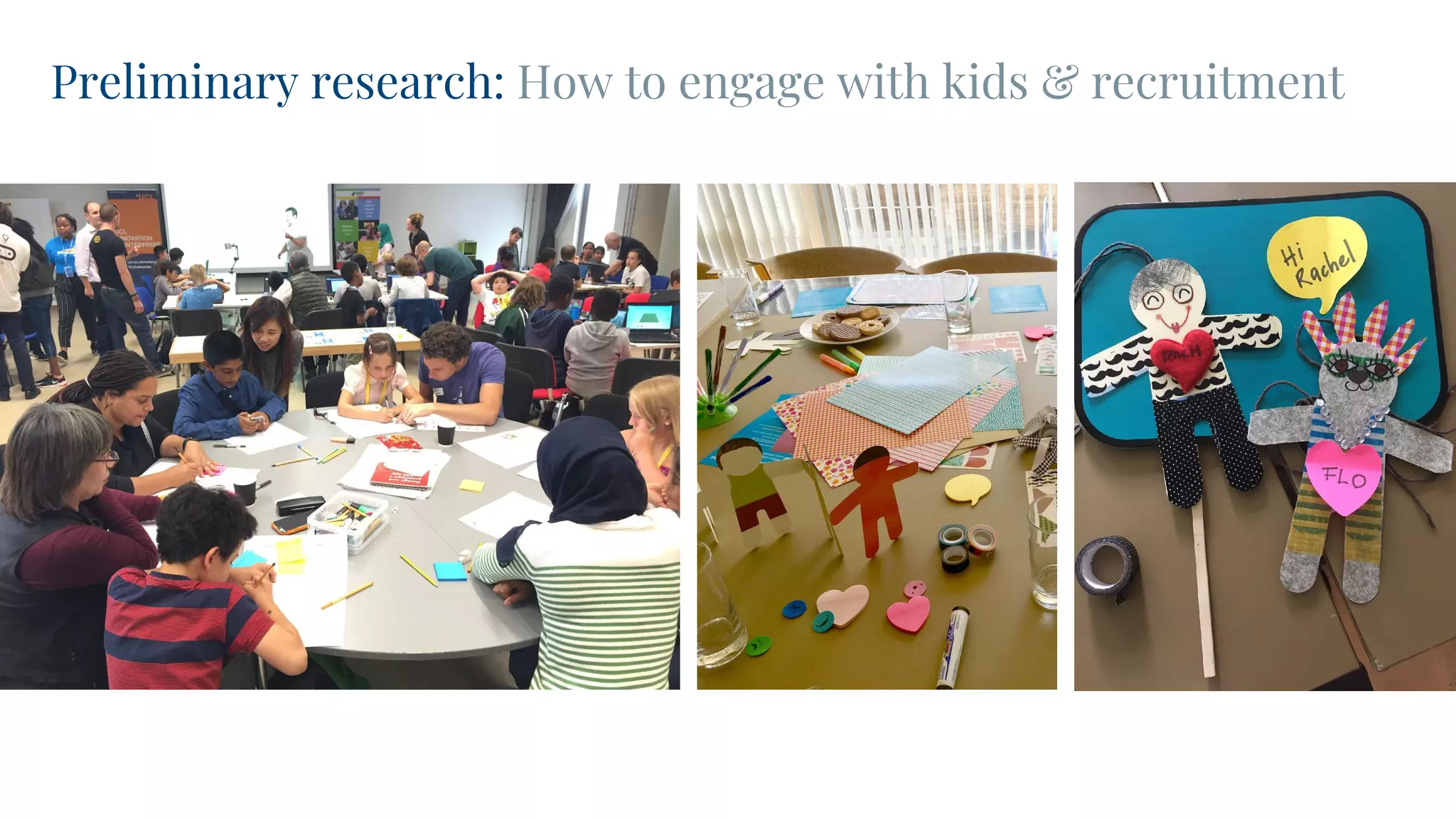
Preliminary research: How to engage with kids & recruitment
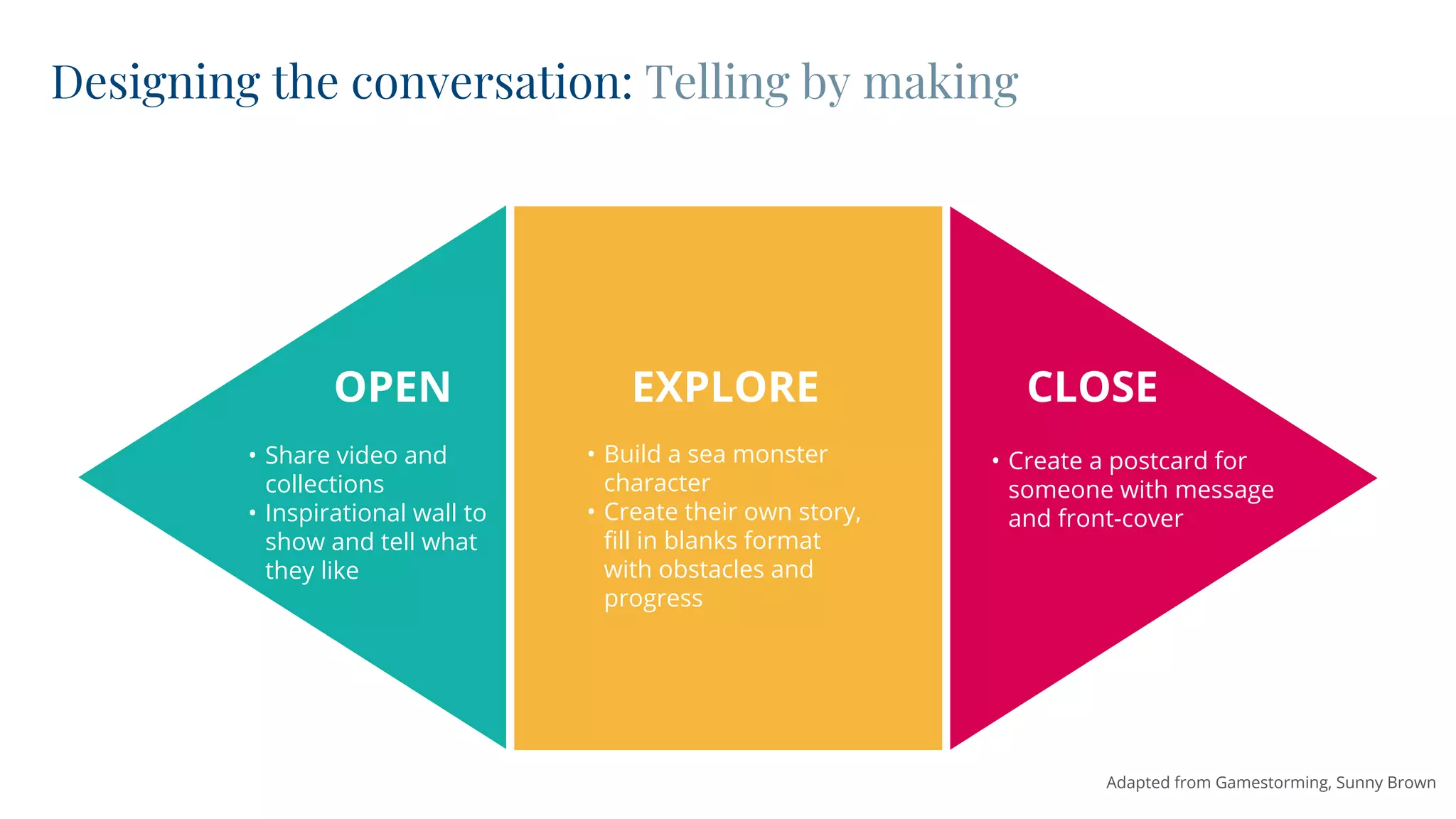
Designing the conversation: Telling by making
OPEN EXPLORE CLOSE
Adapted from Gamestorming, Sunny Brown
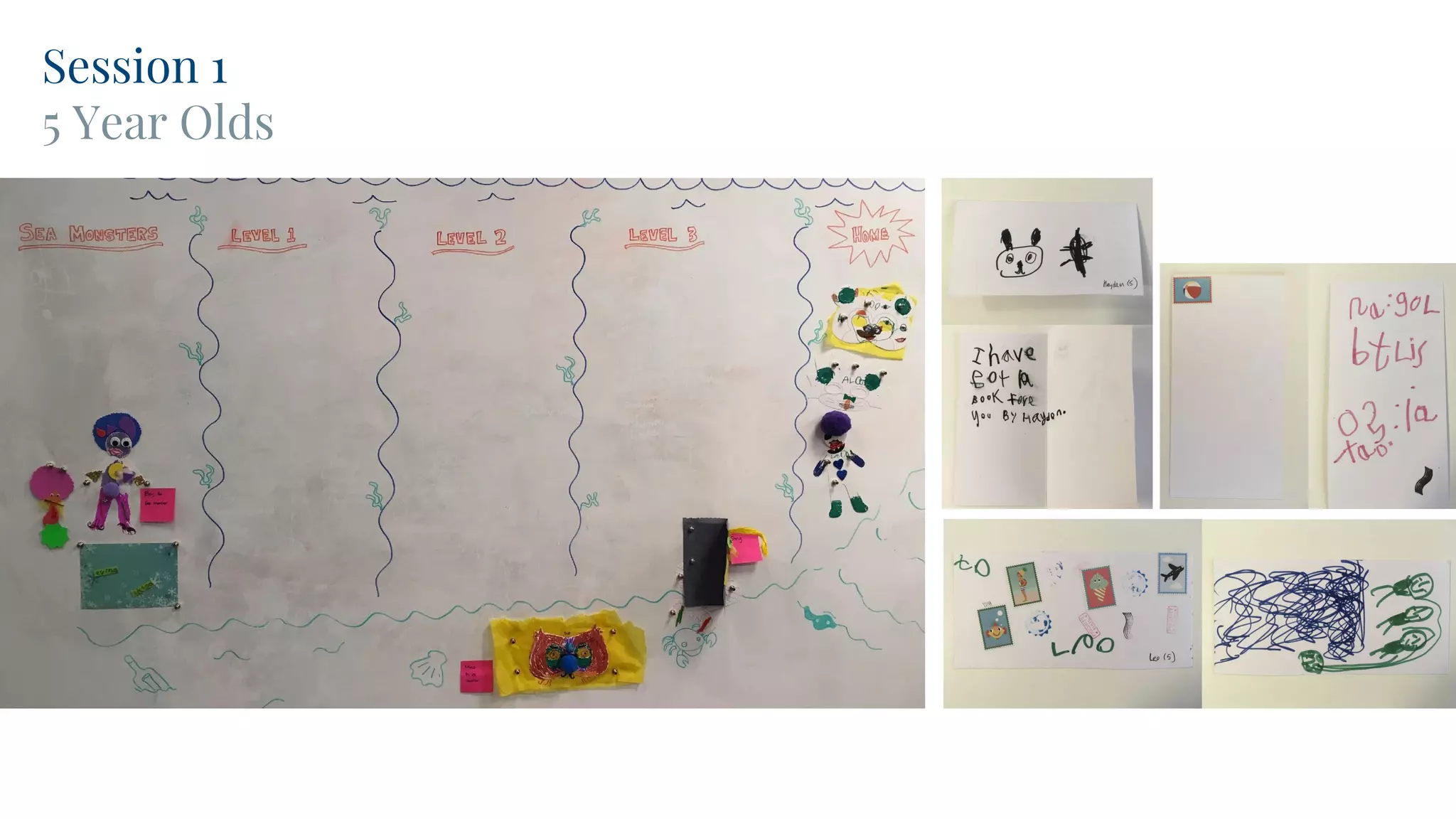
• Build a sea monster
character
• Create their own story,
fill in blanks format
with obstacles and
progress
• Share video and
collections
• Inspirational wall to
show and tell what
they like
• Create a postcard for
someone with message
and front-cover
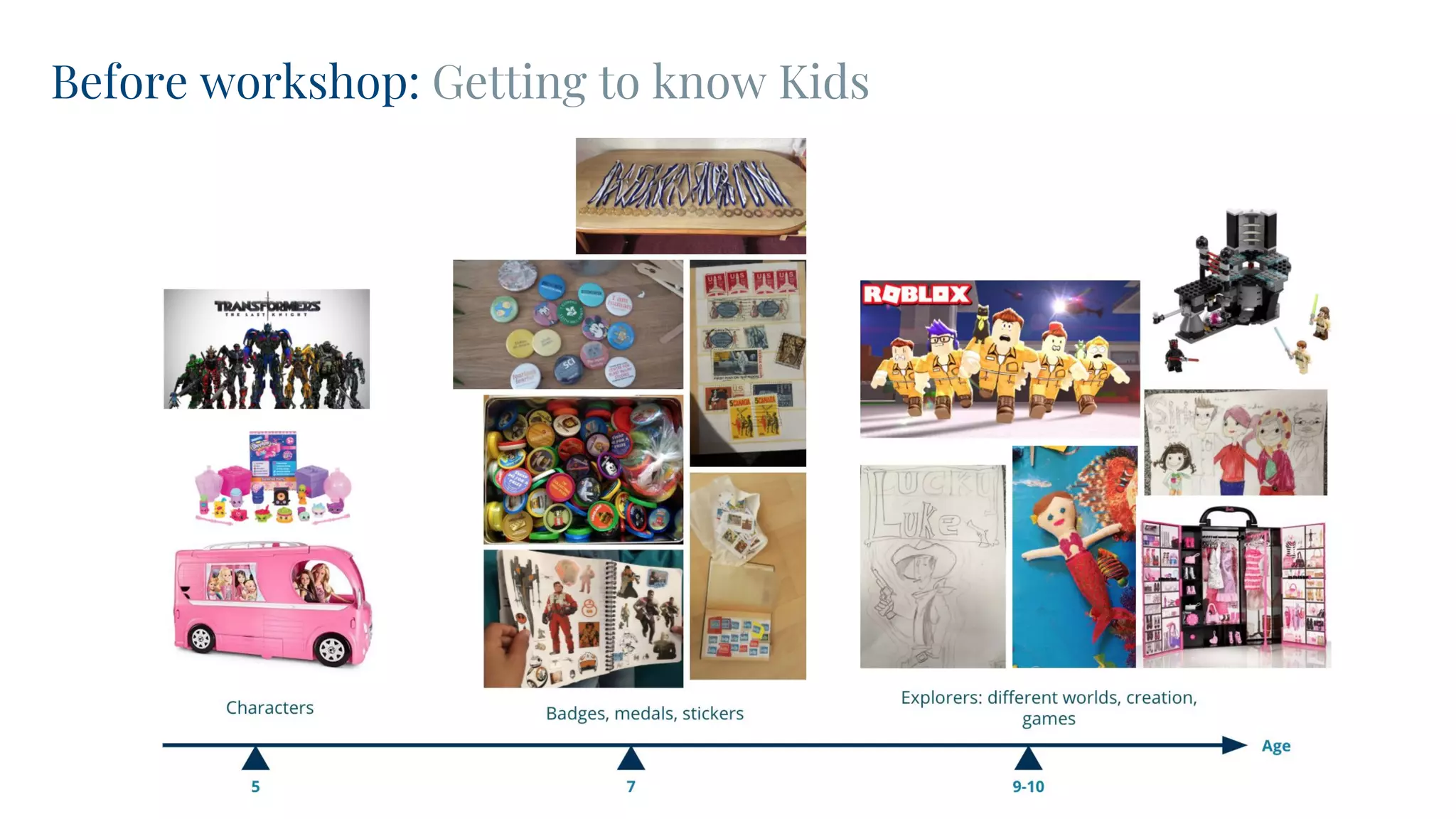
Before workshop: Getting to know Kids
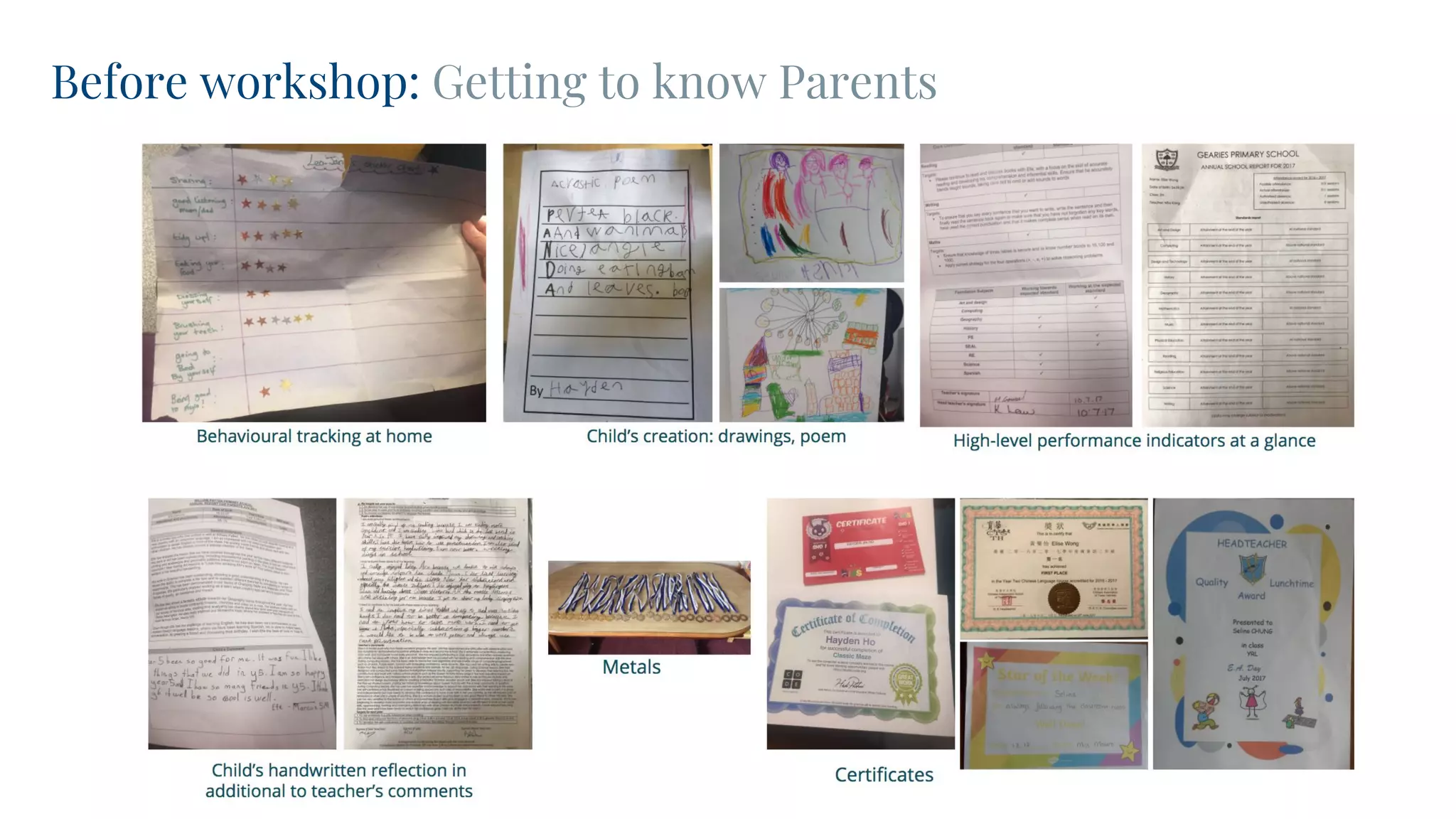
Before workshop: Getting to know Parents
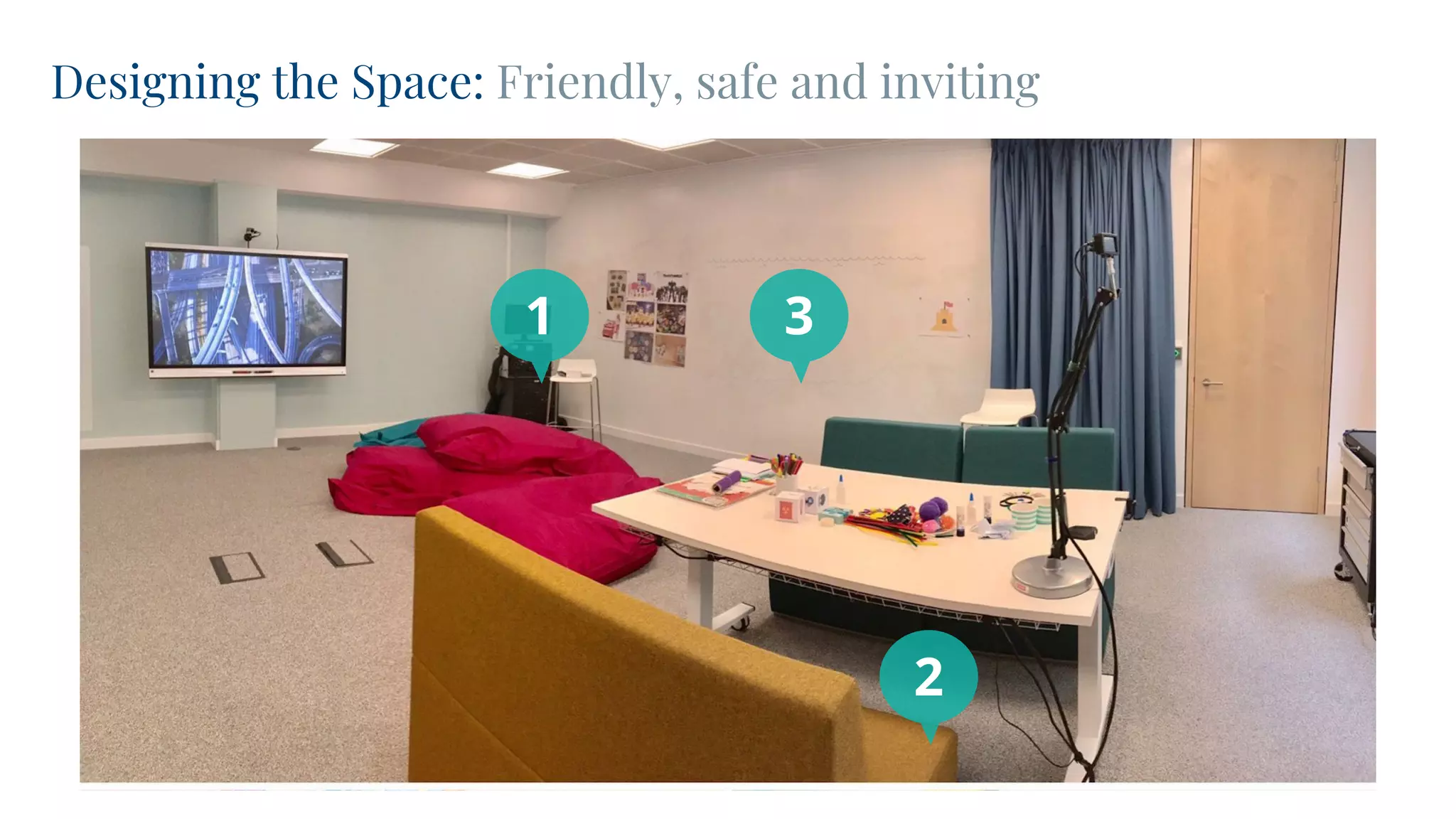
Designing the Space: Friendly, safe and inviting
CONVERGENT
1
2
3
Before Workshop
Learnings
CONVERGENT
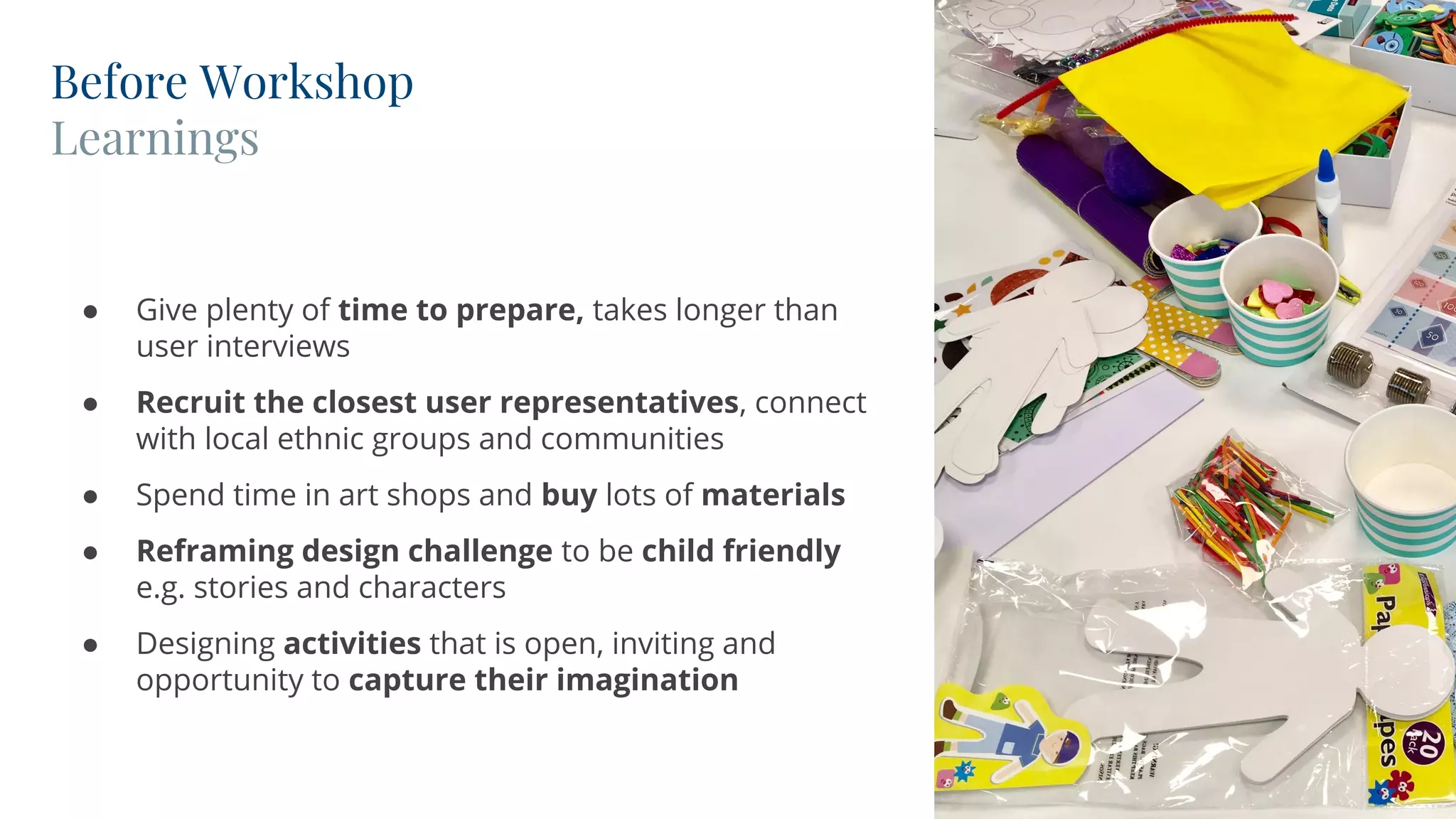
● Give plenty of time to prepare, takes longer than
user interviews
● Recruit the closest user representatives, connect
with local ethnic groups and communities
● Spend time in art shops and buy lots of materials
● Reframing design challenge to be child friendly
e.g. stories and characters
● Designing activities that is open, inviting and
opportunity to capture their imagination
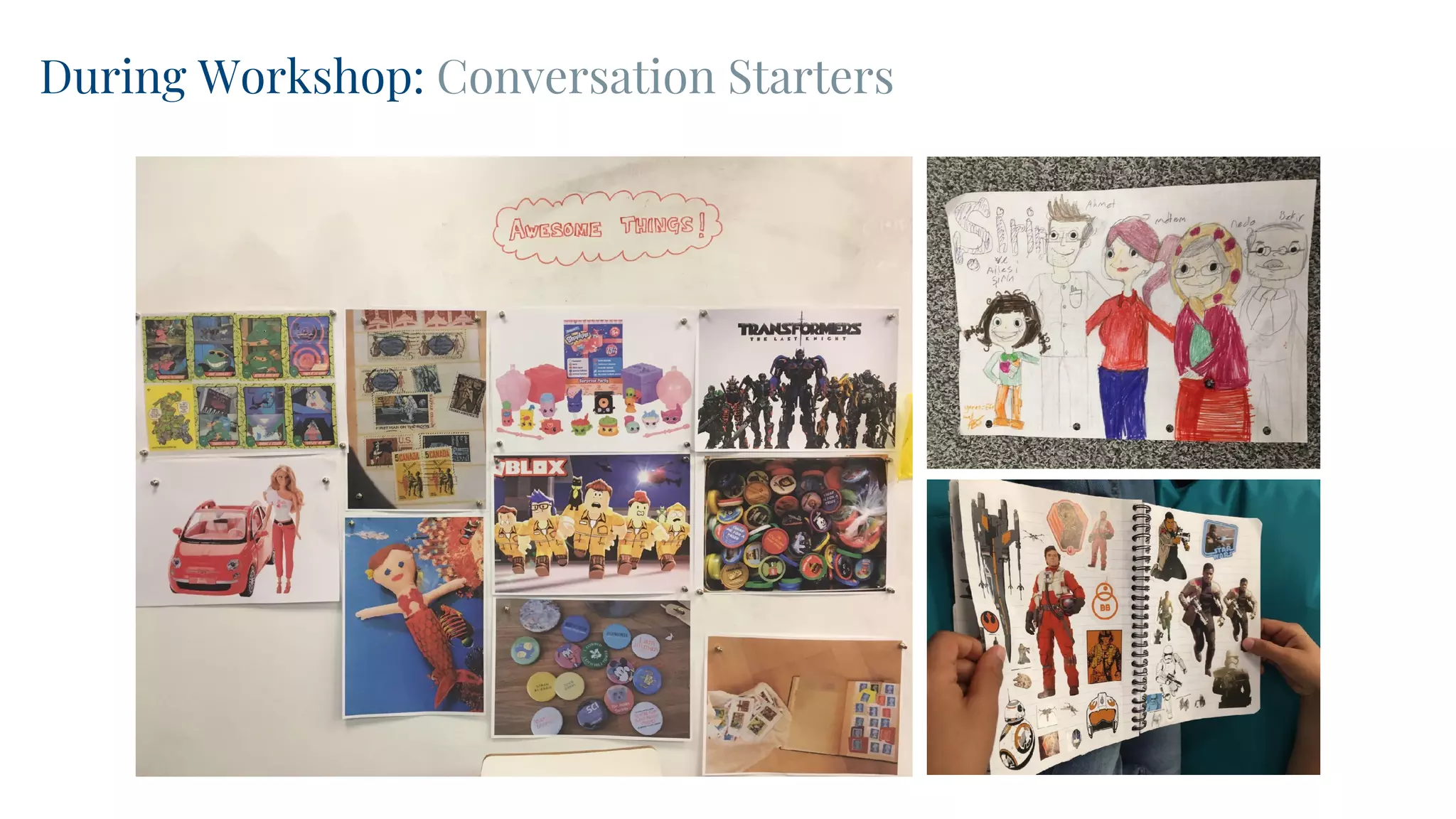
During Workshop: Conversation Starters
During Workshop
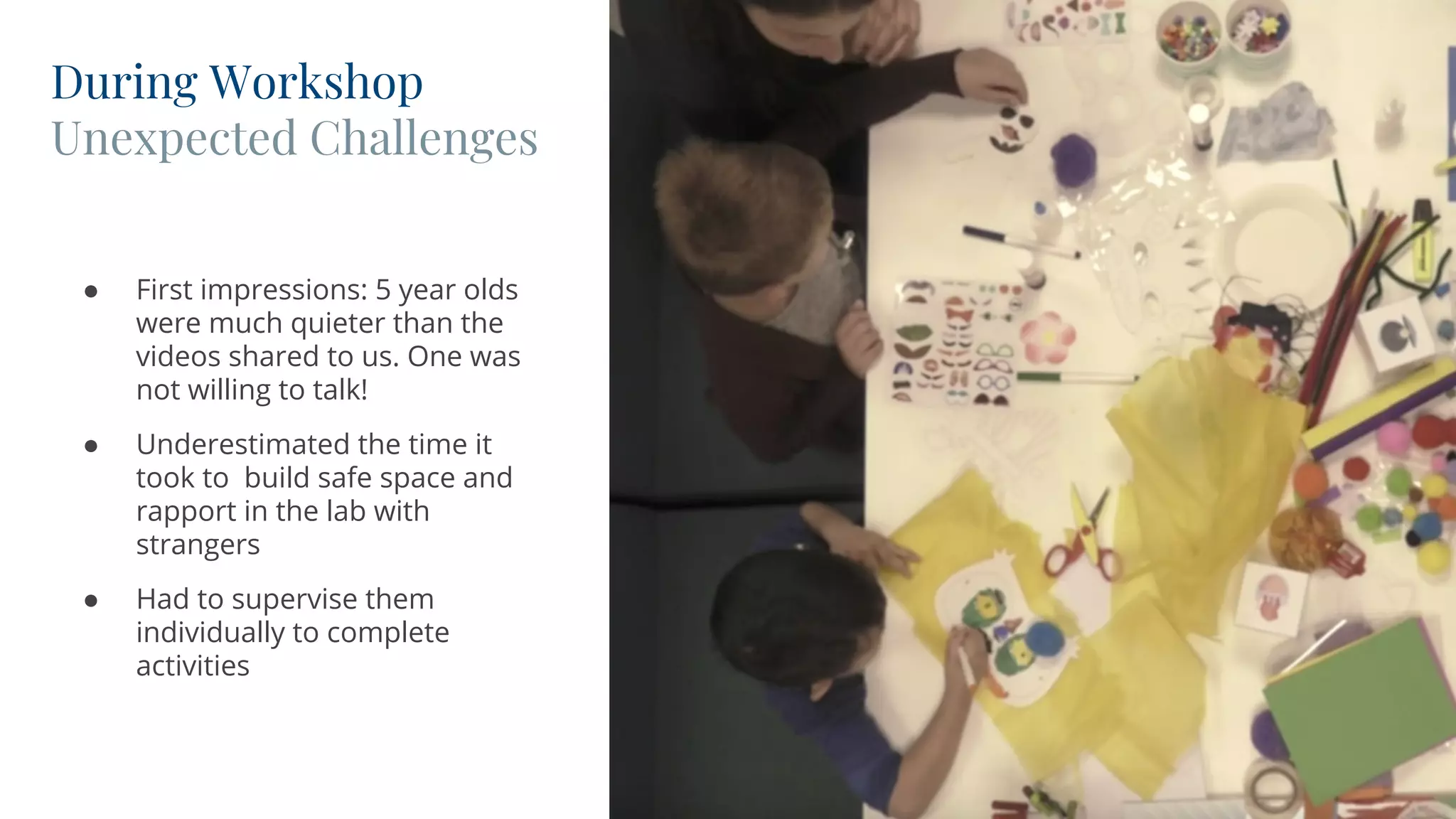
Unexpected Challenges
CONVERGENT
● First impressions: 5 year olds
were much quieter than the
videos shared to us. One was
not willing to talk!
● Underestimated the time it
took to build safe space and
rapport in the lab with
strangers
● Had to supervise them
individually to complete
activities
CONVERGENT
EXPLORE
EMERGENT
Session 1
5 Year Olds
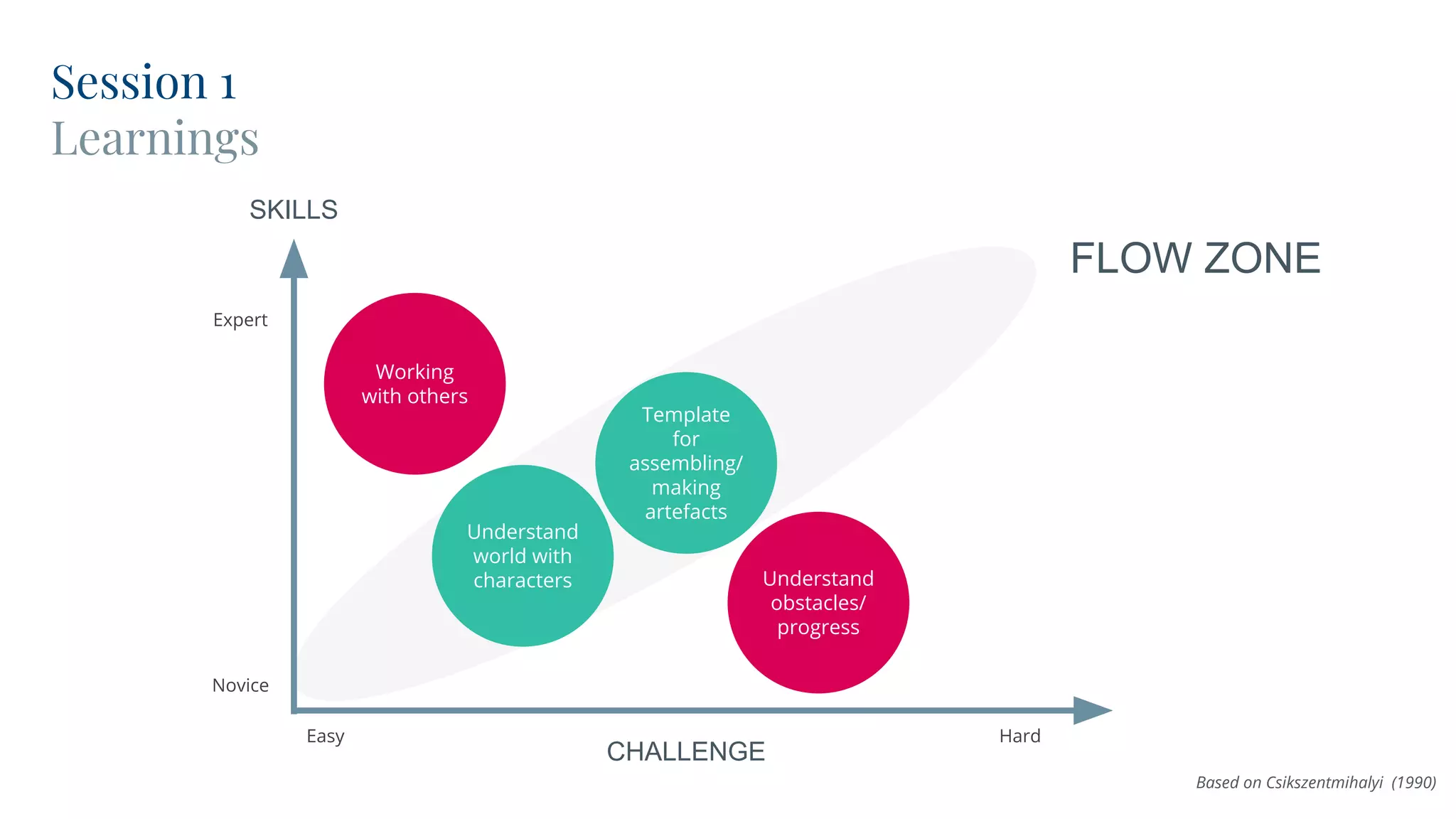
Session 1
Learnings
CHALLENGE
SKILLS
Easy Hard
Novice
Expert
FLOW ZONE
Based on Csikszentmihalyi (1990)
Understand
obstacles/
progress
Working
with others
Template
for
assembling/
making
artefacts
Understand
world with
characters
CONVERGENT
EXPLORE
EMERGENT
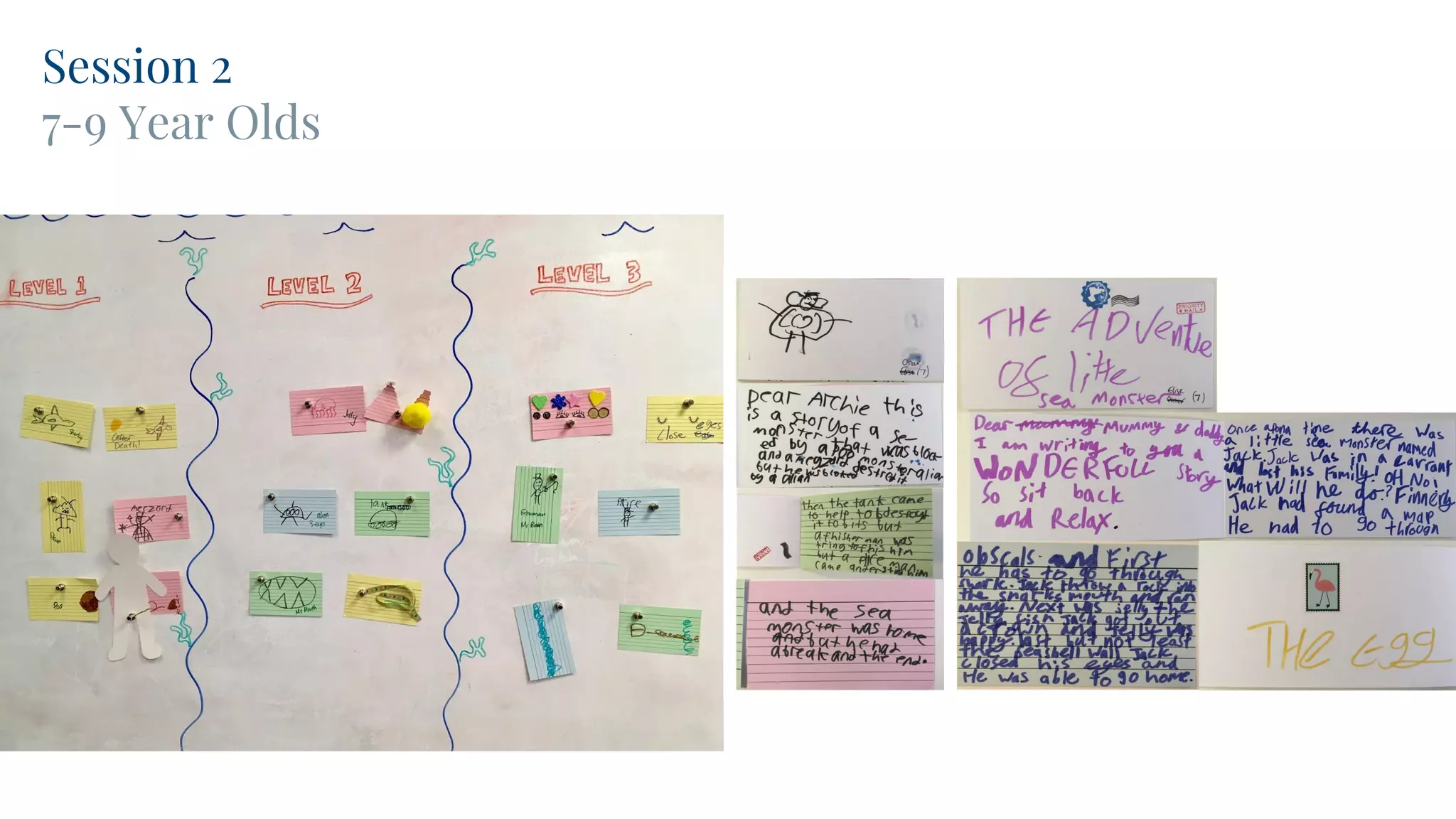
Session 2
7-9 Year Olds
CONVERGENT
EXPLORE
EMERGENT
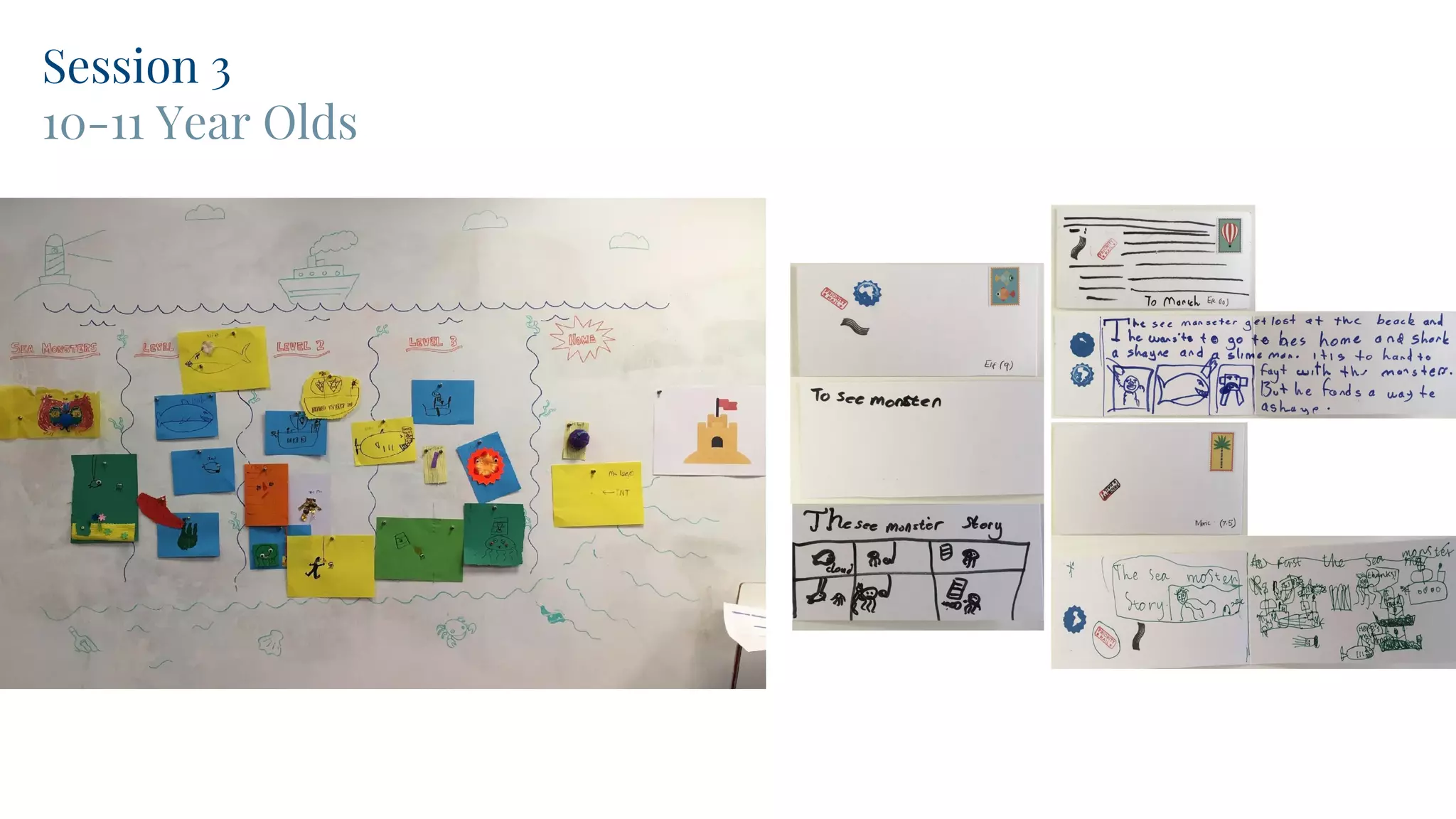
Session 3
10-11 Year Olds
CONVERGENT
EXPLORE
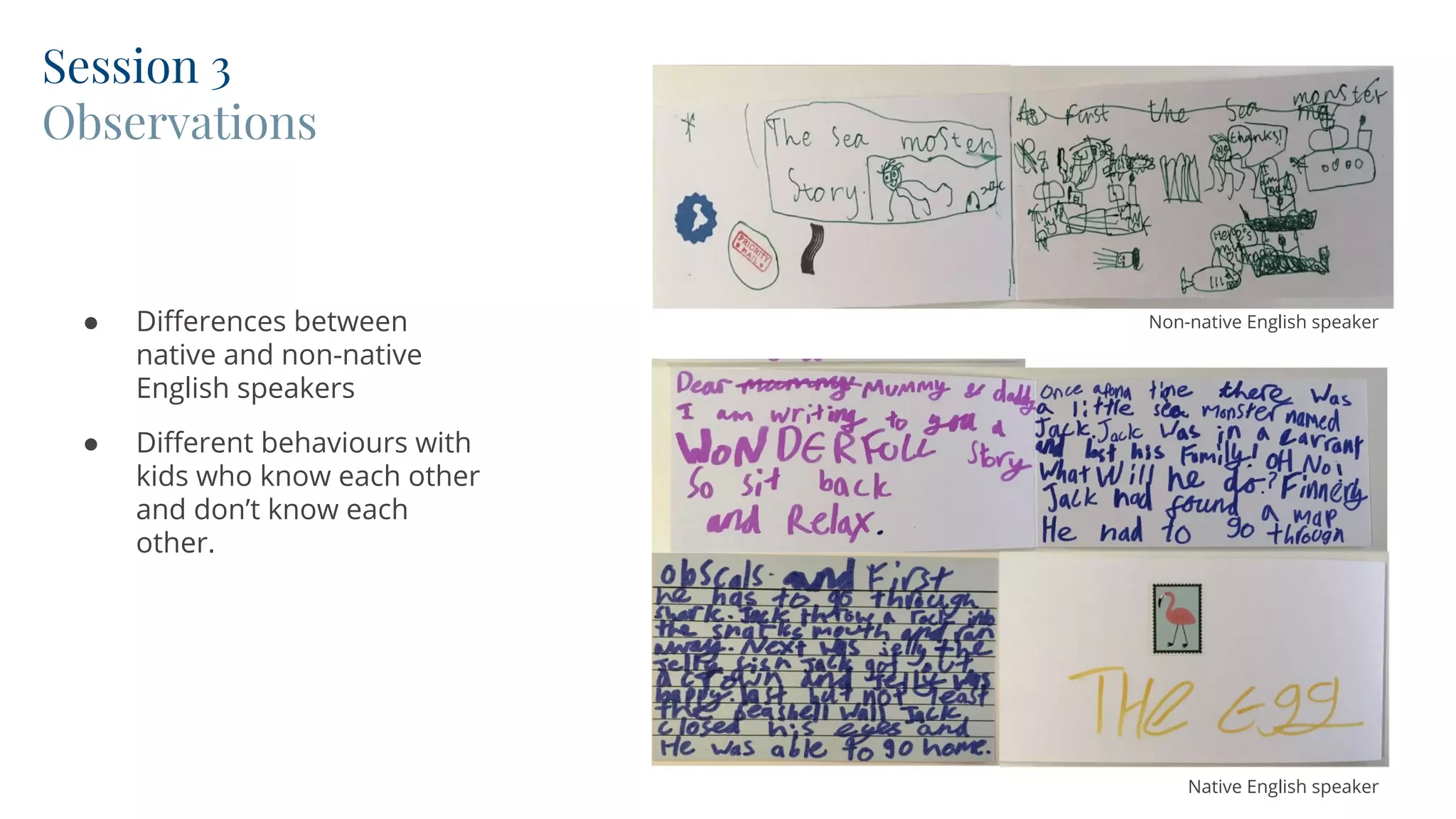
Session 3
Observations
● Differences between
native and non-native
English speakers
● Different behaviours with
kids who know each other
and don’t know each
other.
Native English speaker
Non-native English speaker
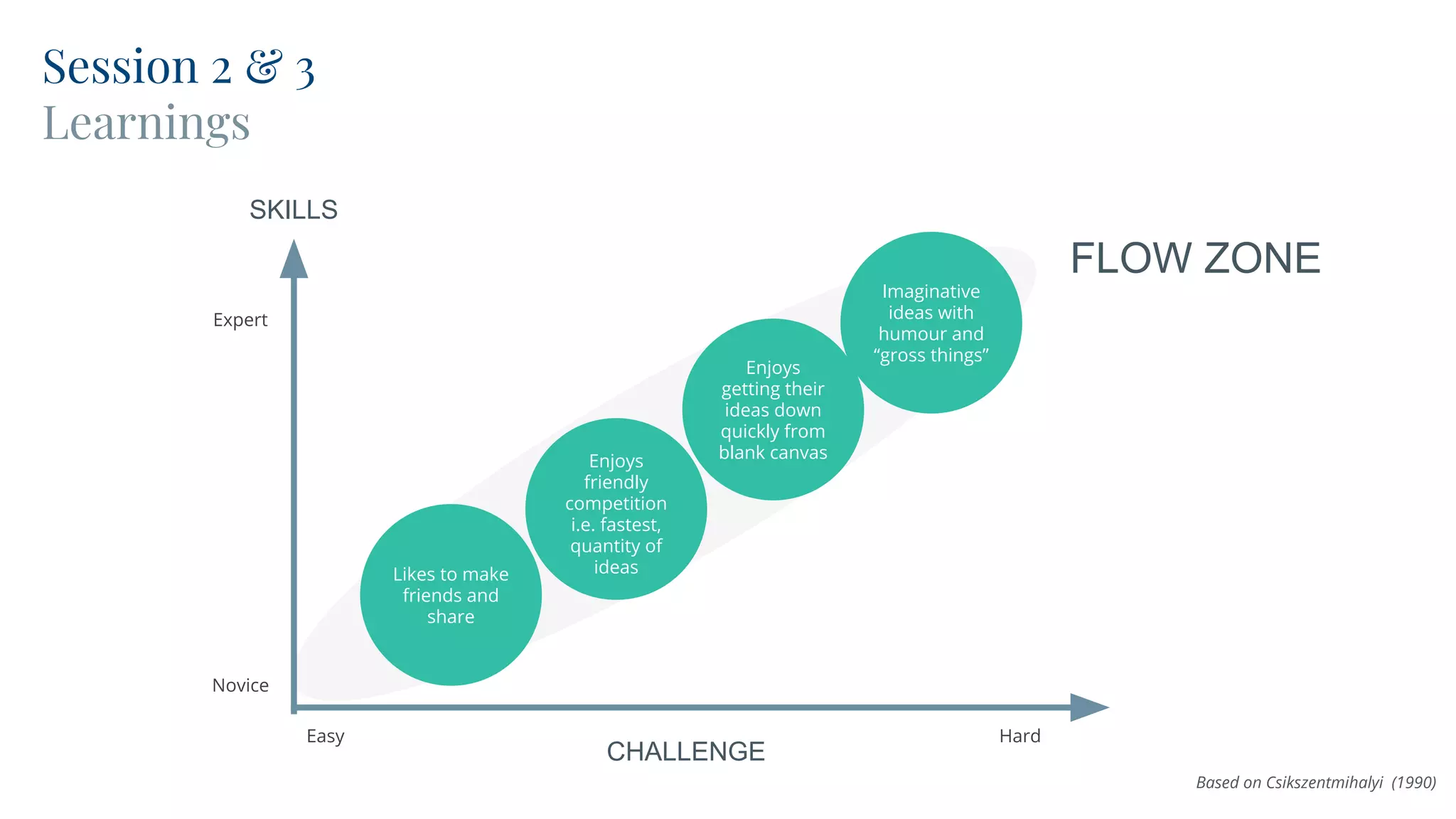
CHALLENGE
SKILLS
Easy Hard
Novice
Expert
FLOW ZONE
Based on Csikszentmihalyi (1990)
Enjoys
friendly
competition
i.e. fastest,
quantity of
ideasLikes to make
friends and
share
Imaginative
ideas with
humour and
“gross things”
Enjoys
getting their
ideas down
quickly from
blank canvas
Session 2 & 3
Learnings
During Workshop
Learnings
● Build rapport based on things they like i.e. inspiration wall
● Use encouraging, positive language: verbal and body language all the time!
● Show and tell is an easy way to share ideas from 7+
● Don’t be afraid to involve parents if necessary to ensure kids feel have a sense of
comfort. Set expectations of parents role as observer
● Don’t be afraid to improvise as Plan B when things don’t go to plan, assess and
adapt, prioritise activities.
● Small rewards to keep them engaged and motivated particularly for those who
finish quicker than others e.g. stickers, chill in bean bag area
● Key insights can come from the observing the kids and having a conversation with
them (not just the artefacts)
● Co-creation is a team sport, get all the help you can!
CONVERGENT
After Workshop
Reward kids!
● Debrief to consolidate
initial thoughts and
findings
● Tidy up of the mess
● Rest up, zzzzZZ
● Email photos of their
kids to their parents
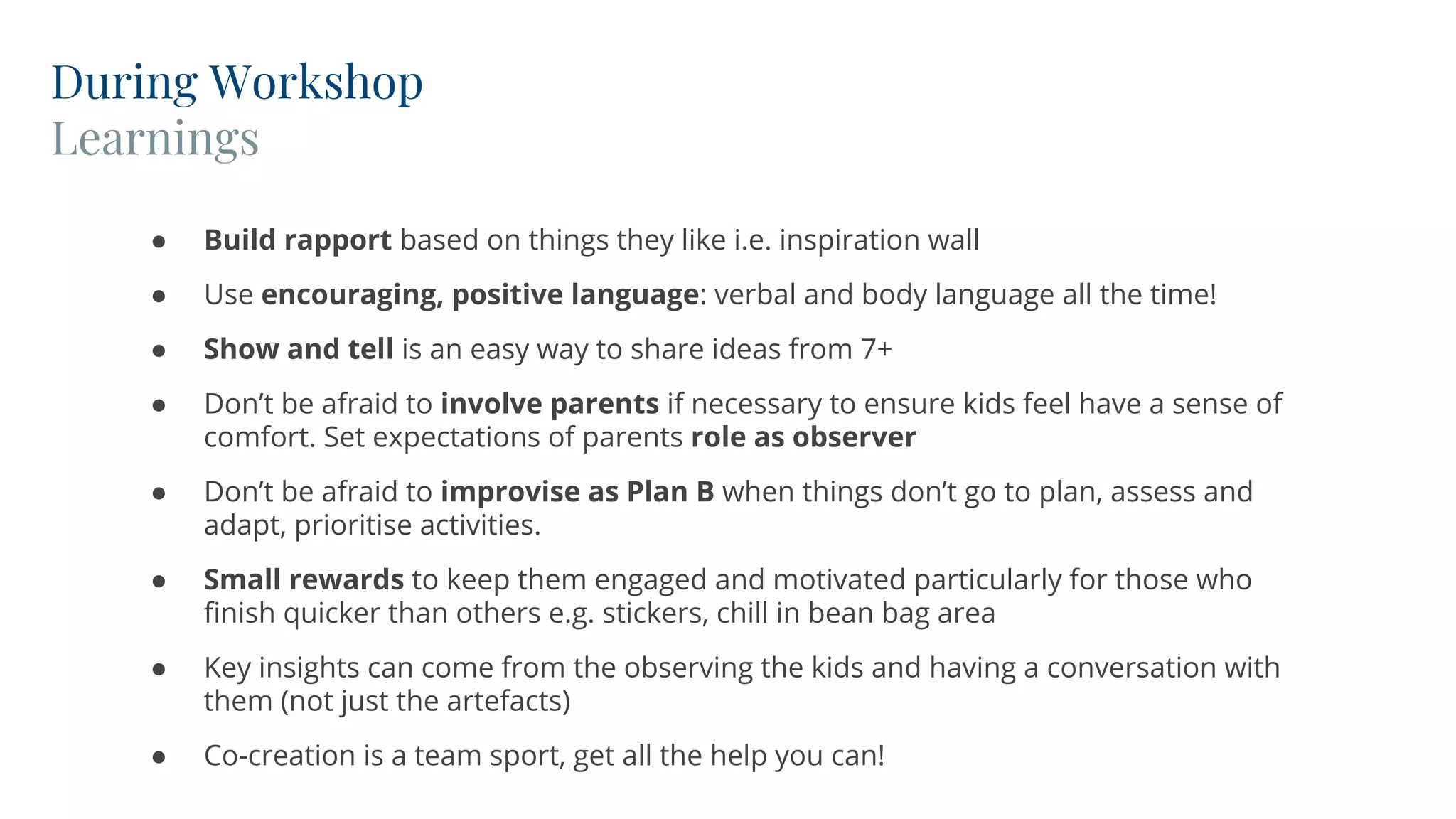
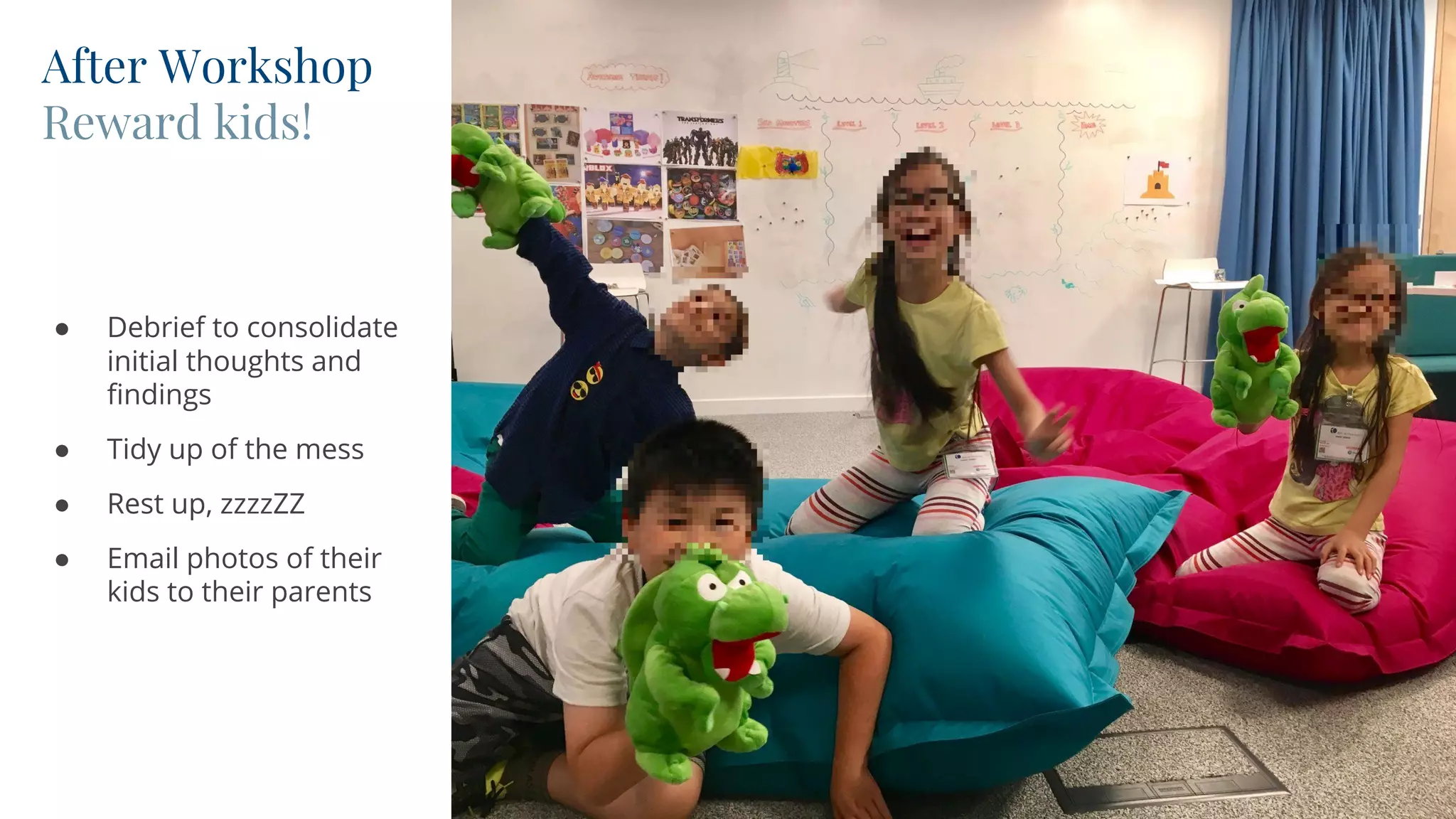
An Iterative Process
Before and after validating assumptions
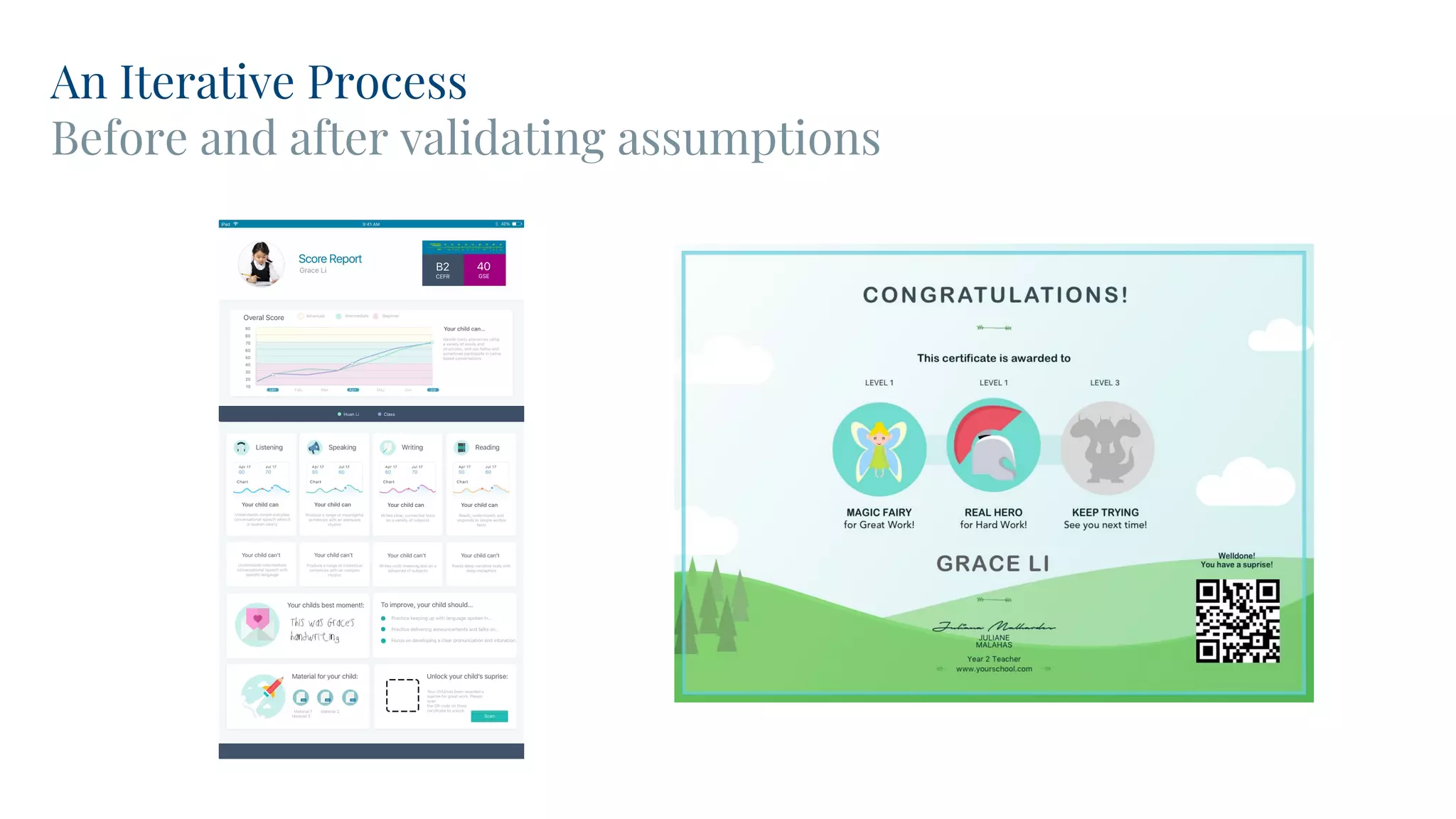
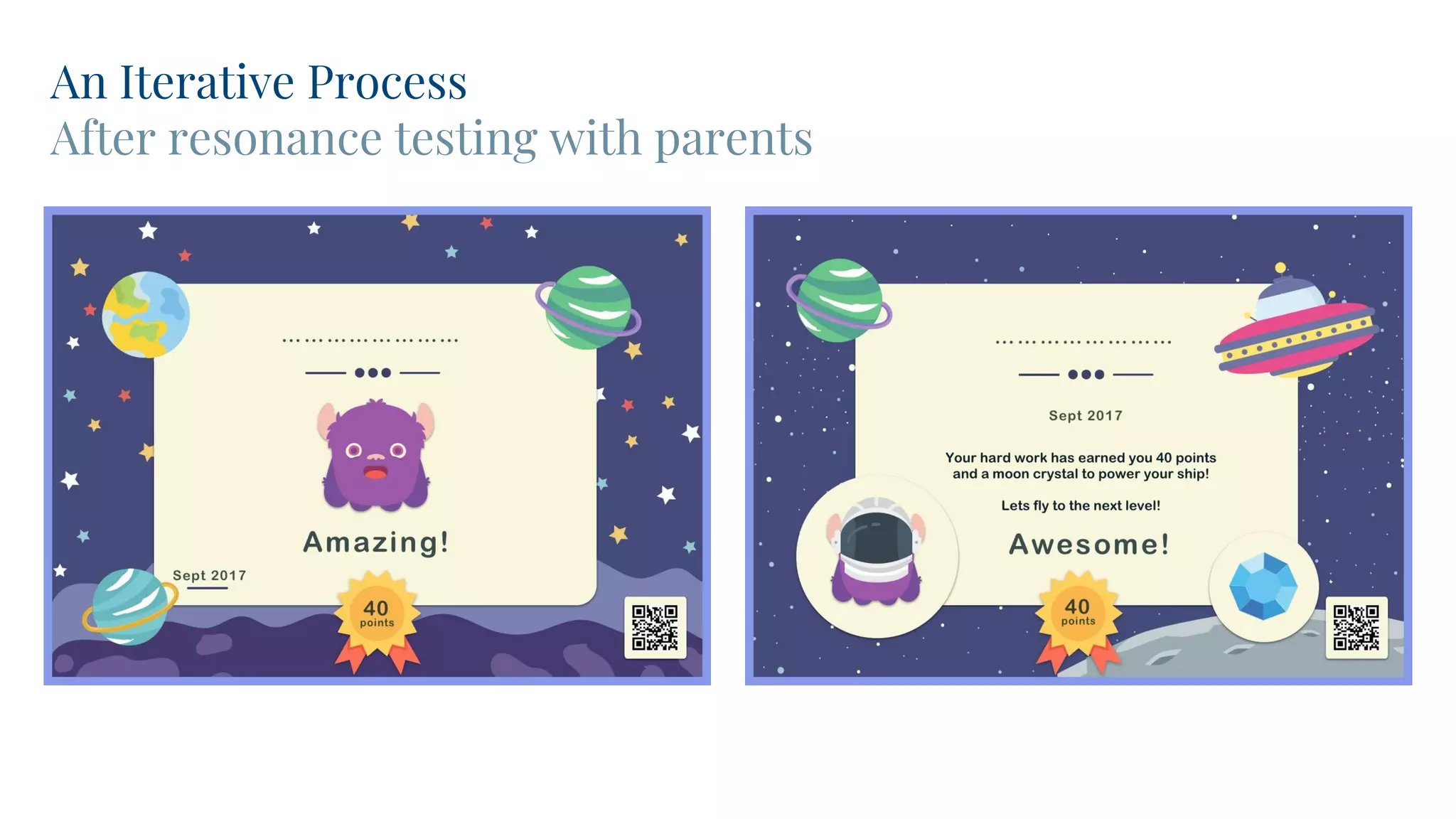
An Iterative Process
After resonance testing with parents
Case Study
Considerations
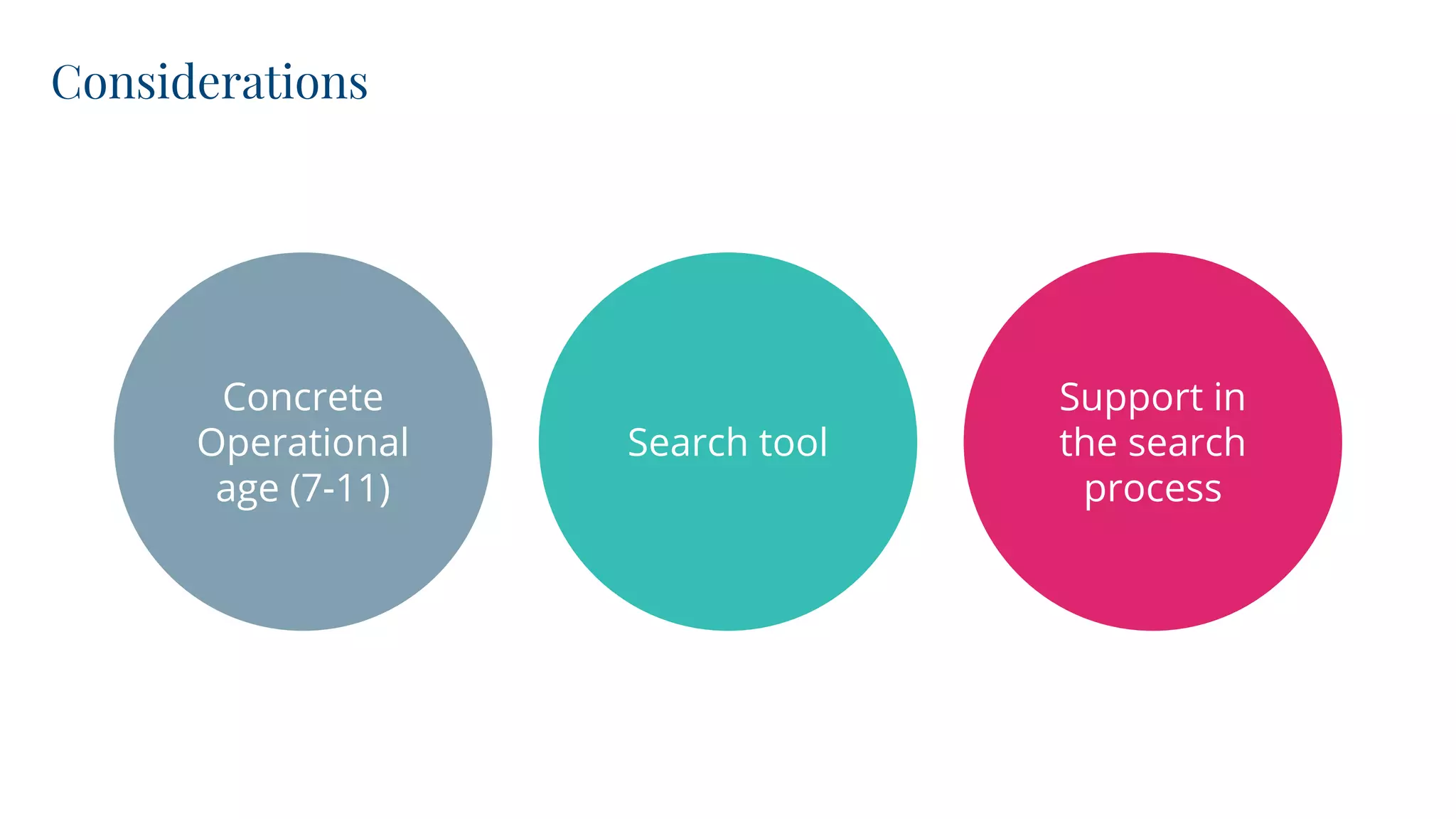
Concrete
Operational
age (7-11)
Search tool
Support in
the search
process
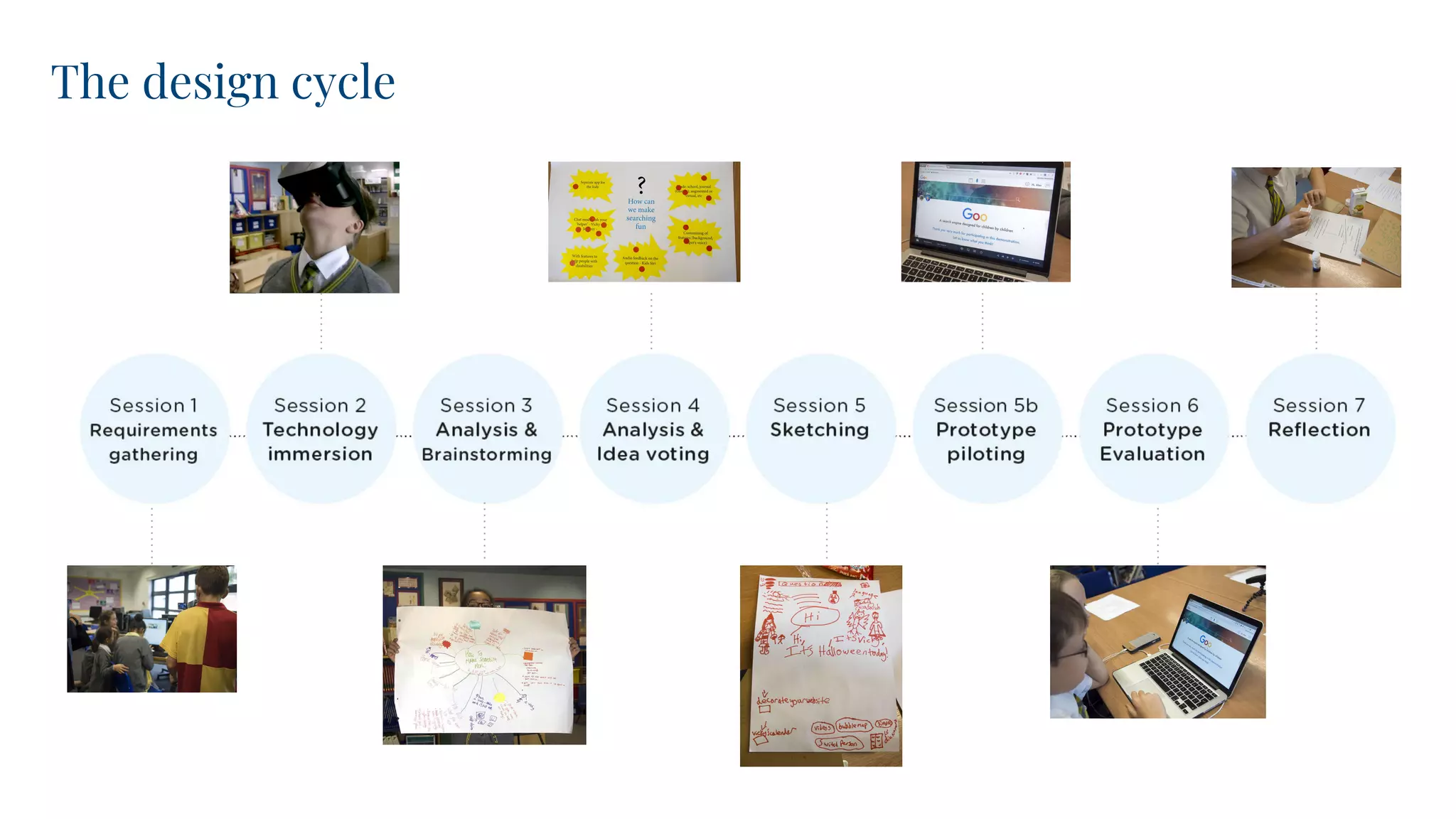
The design cycle
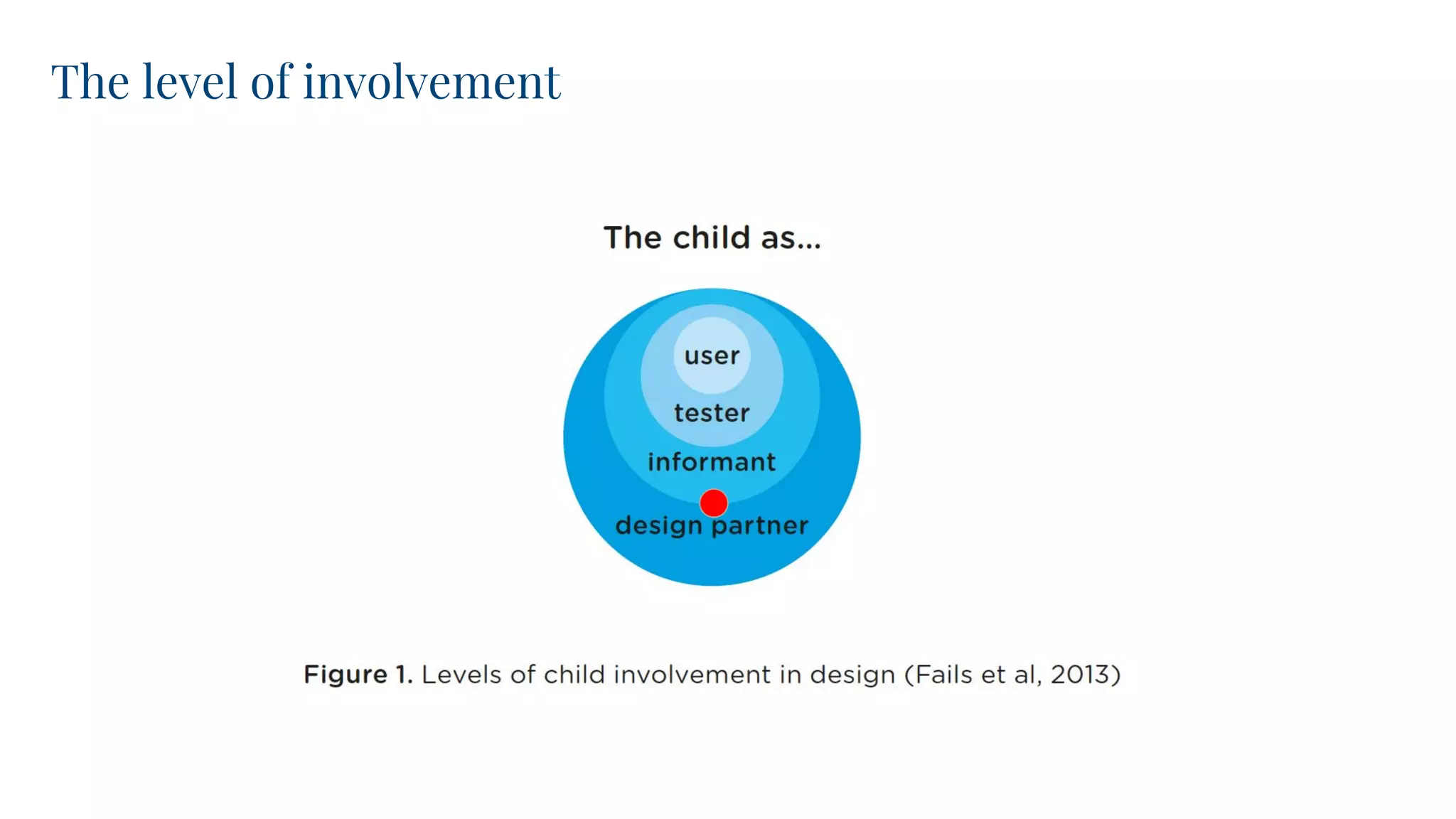
The level of involvement
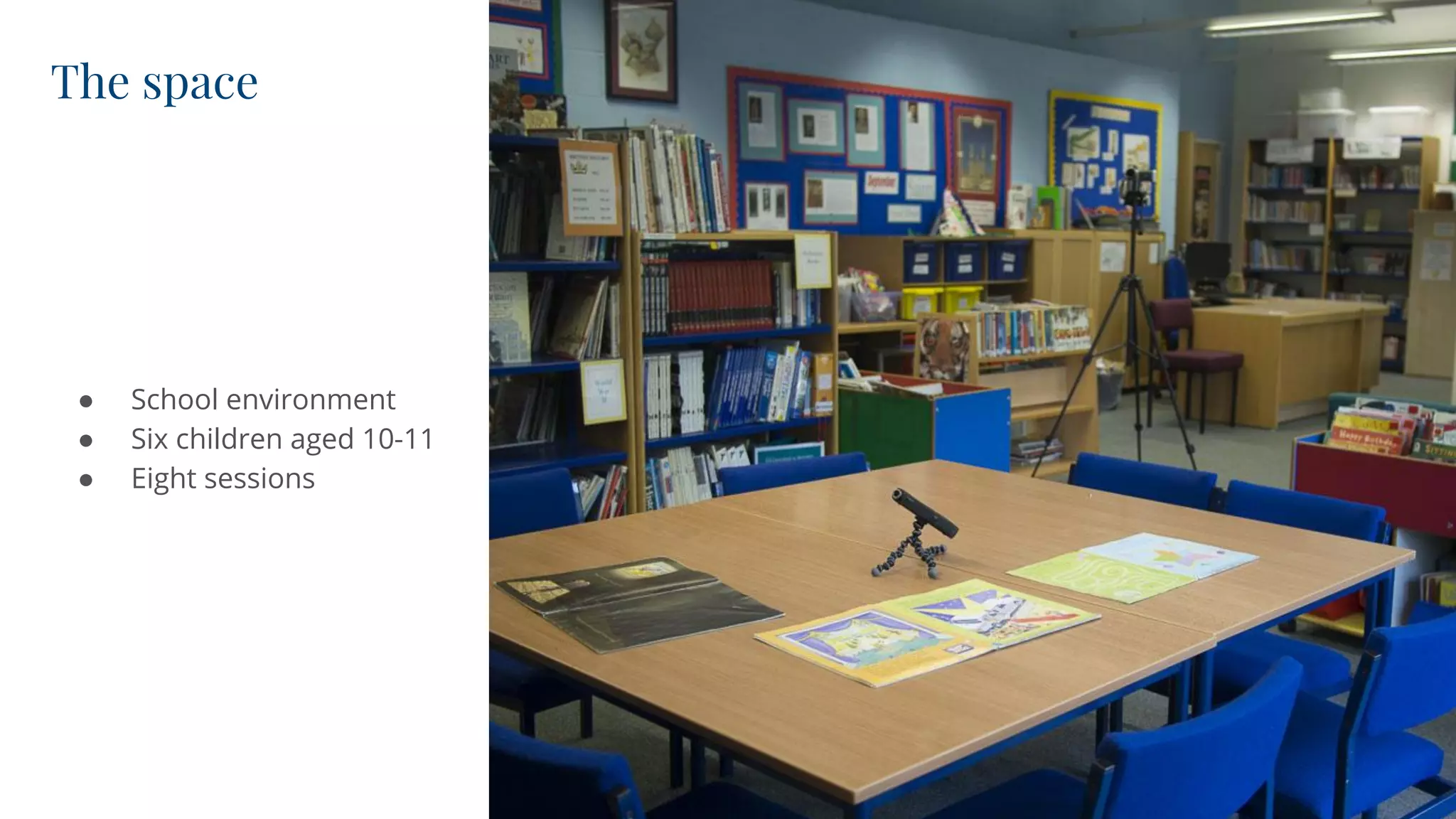
The space
● School environment
● Six children aged 10-11
● Eight sessions
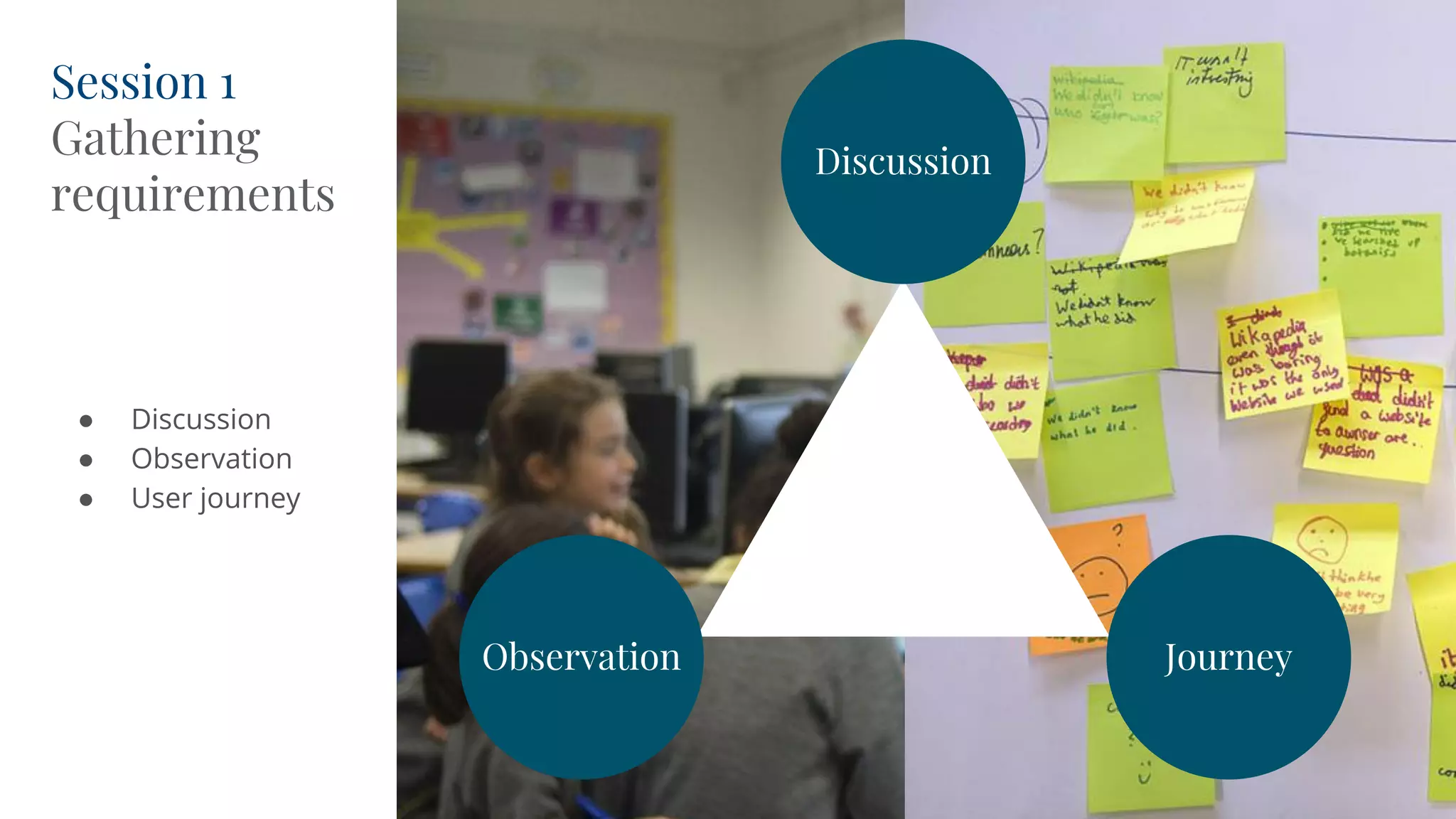
● Discussion
● Observation
● User journey
Session 1
Gathering
requirements
Discussion
JourneyObservation
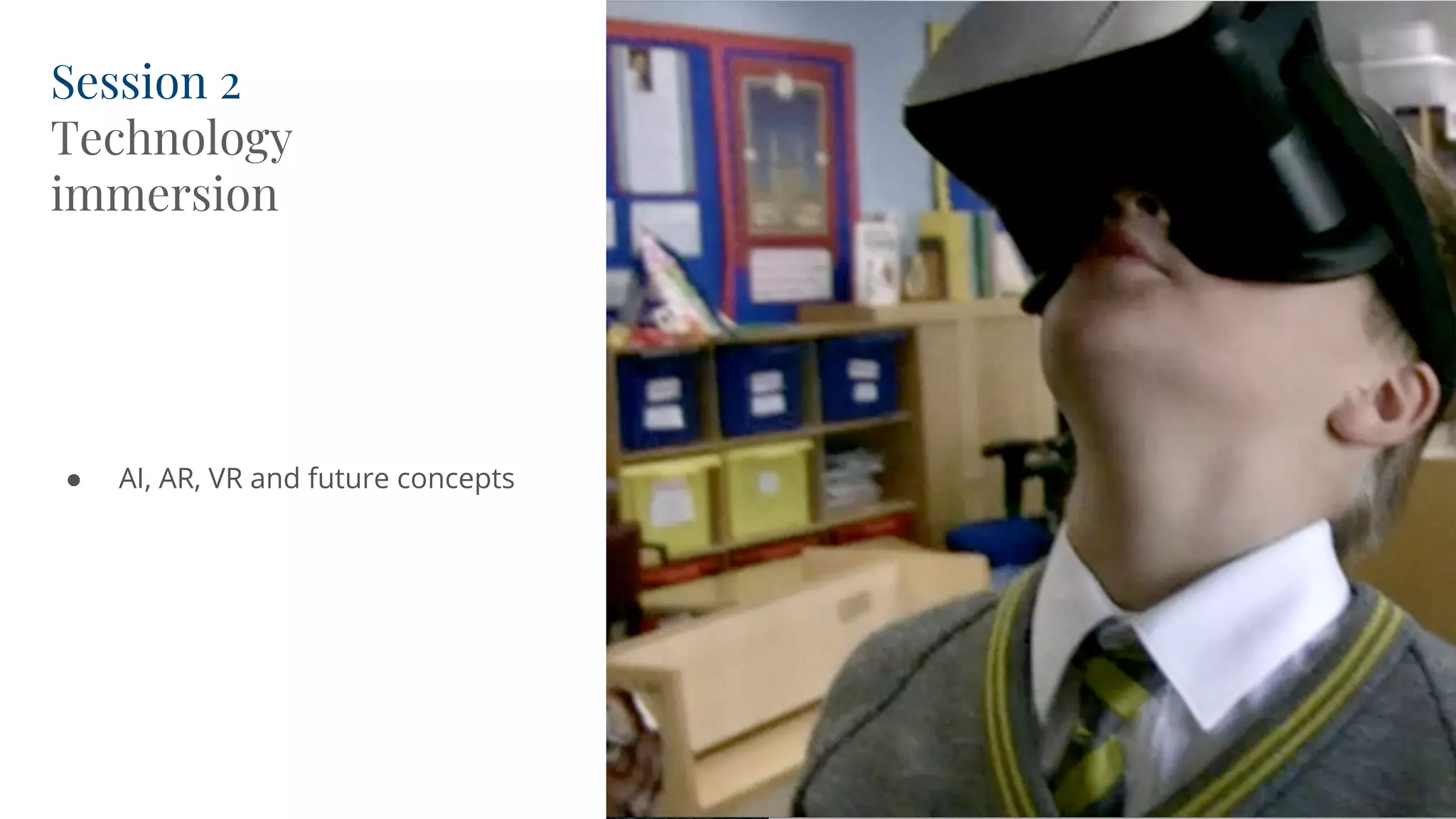
● AI, AR, VR and future concepts
Session 2
Technology
immersion
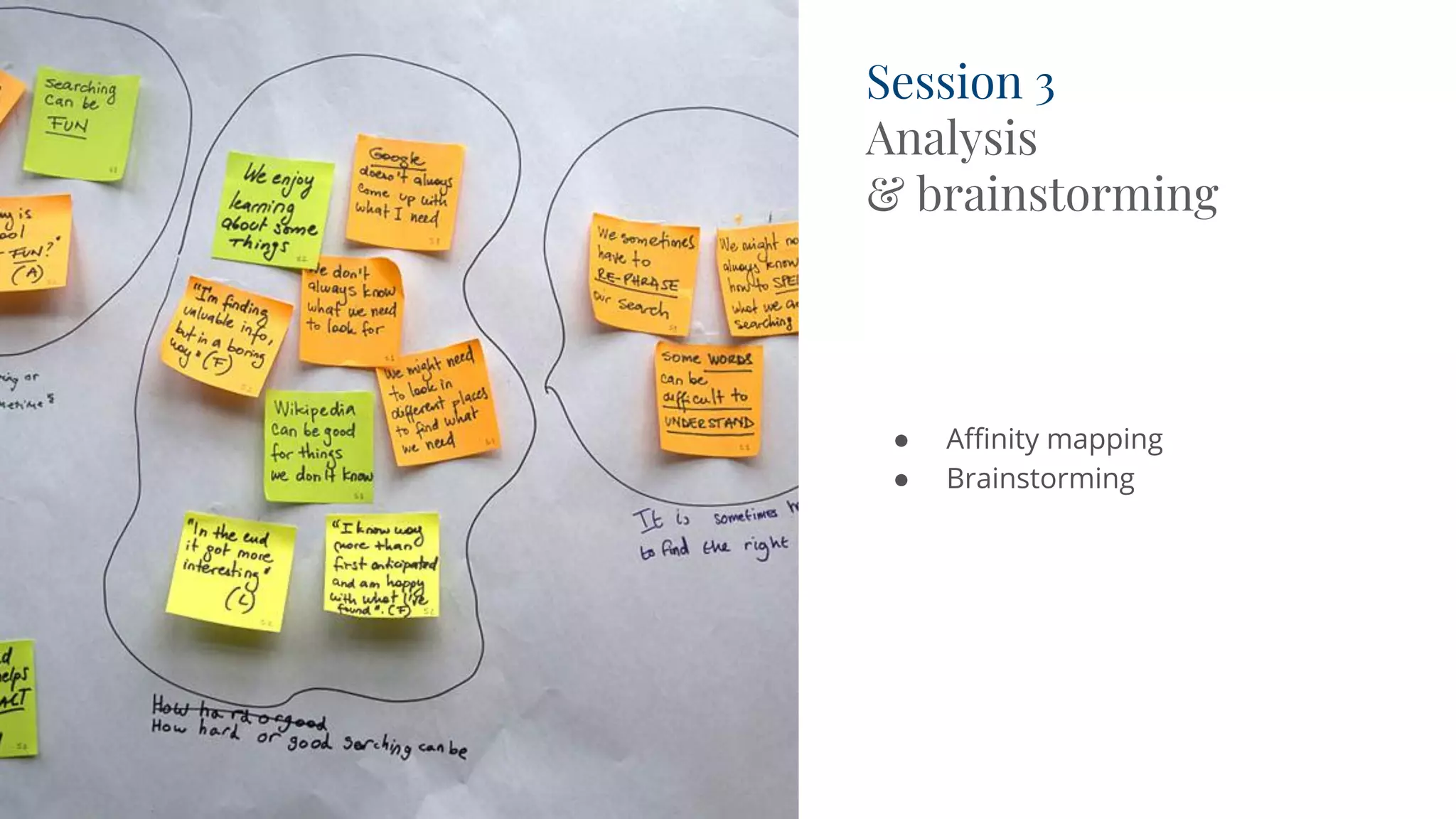
Session 3
Analysis
& brainstorming
● Affinity mapping
● Brainstorming
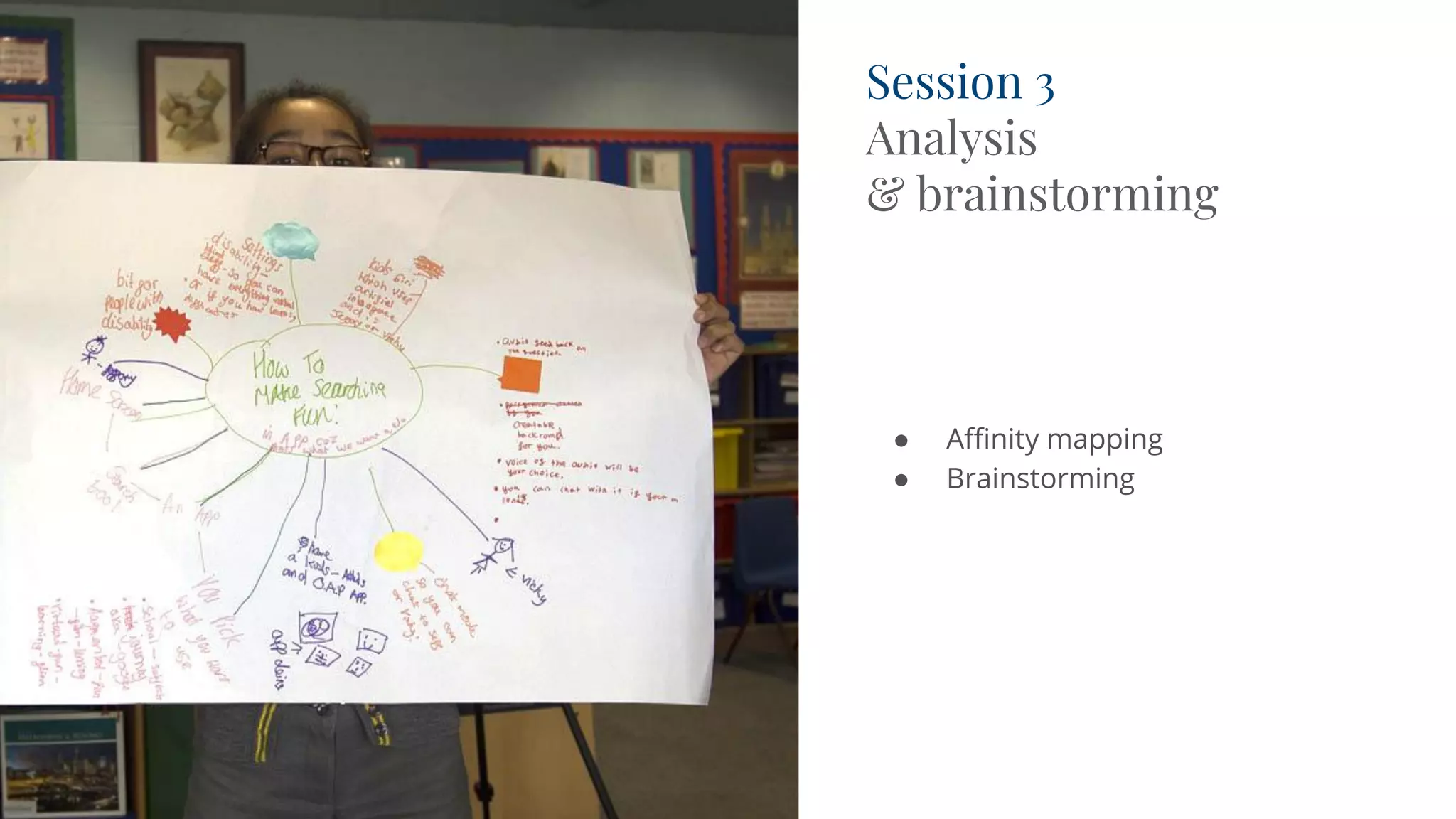
Session 3
Analysis
& brainstorming
● Affinity mapping
● Brainstorming
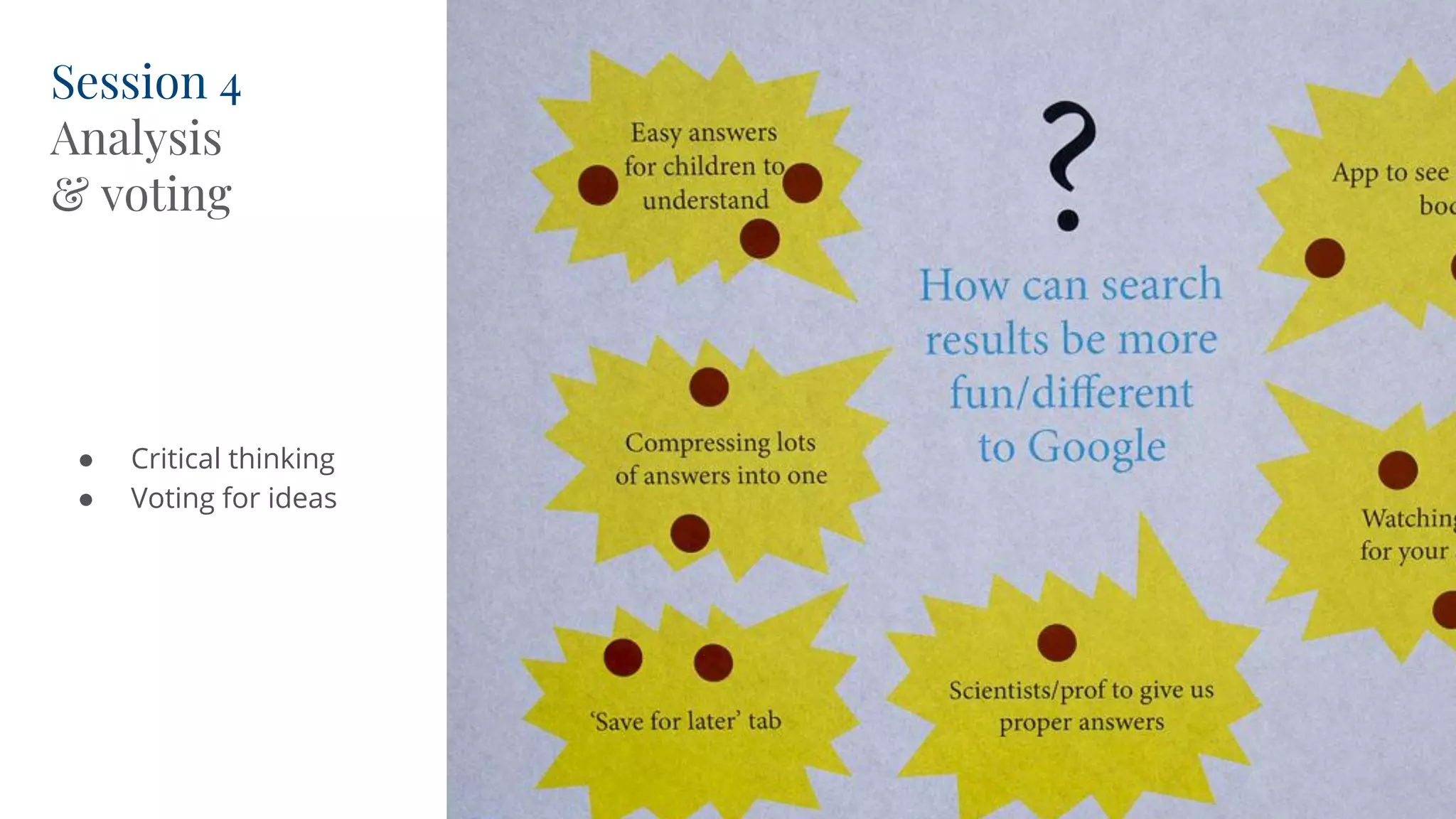
Session 4
Analysis
& voting
● Critical thinking
● Voting for ideas
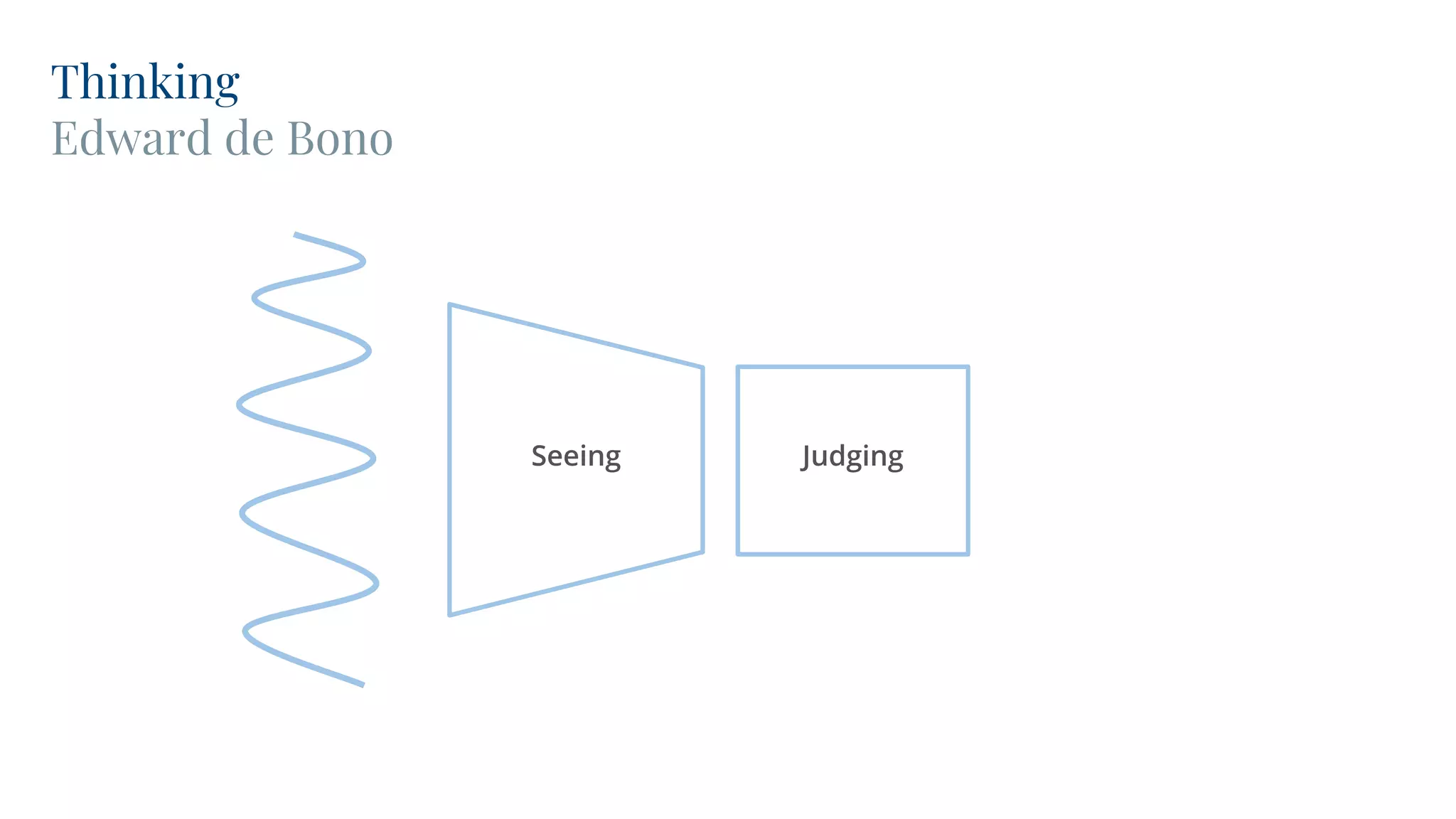
Seeing Judging
Thinking
Edward de Bono
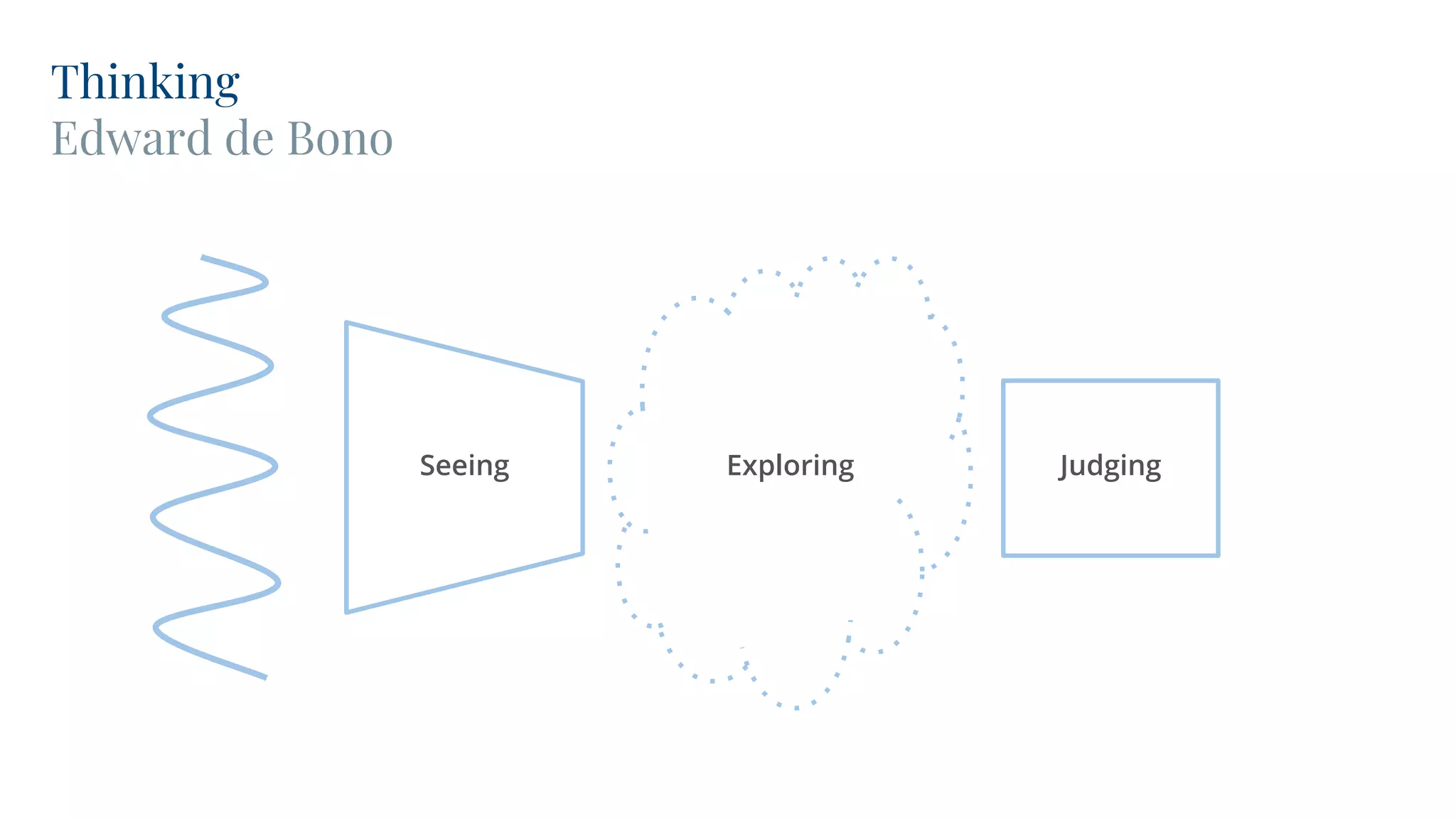
Seeing JudgingExploring
Thinking
Edward de Bono
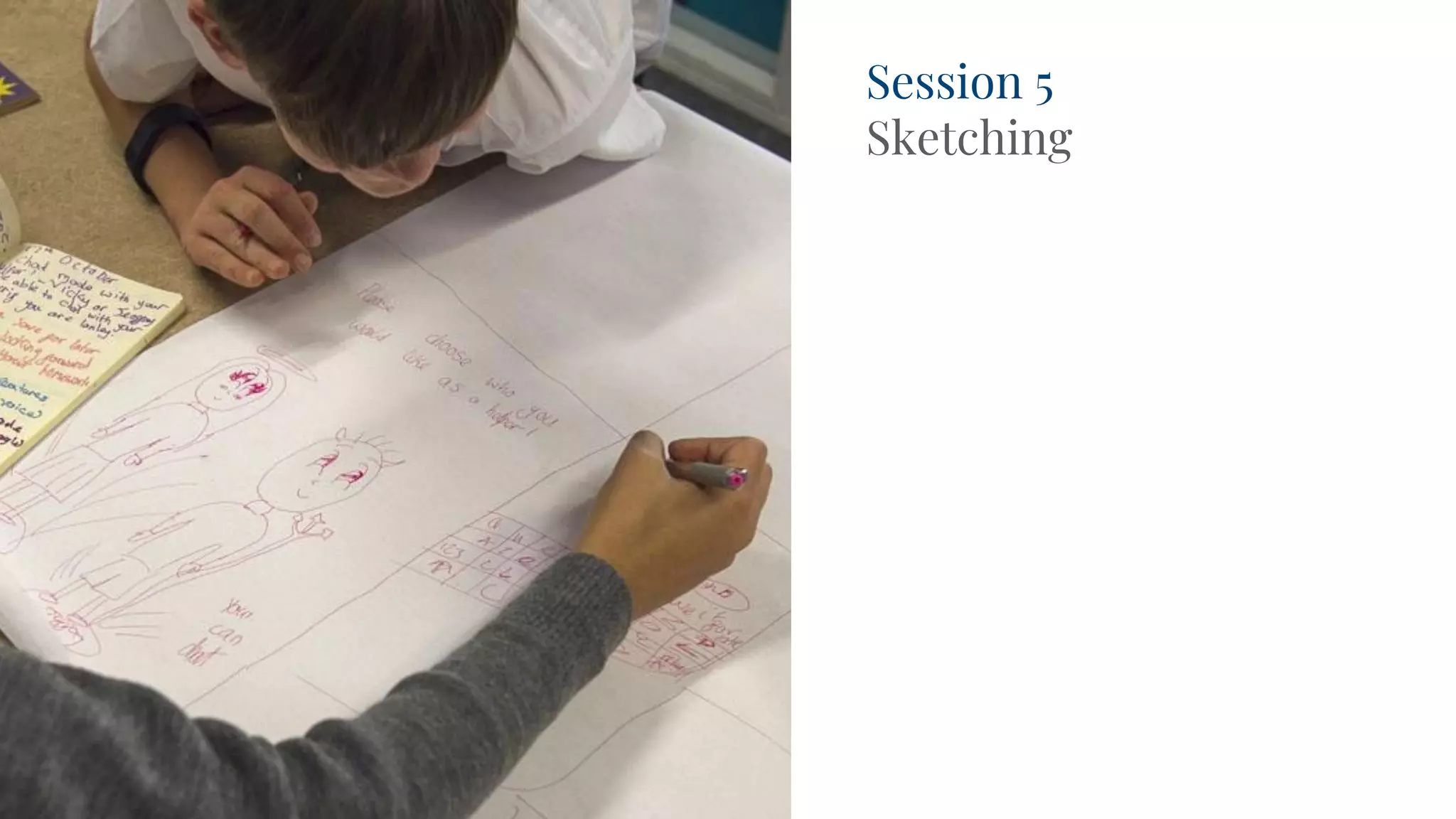
Session 5
Sketching
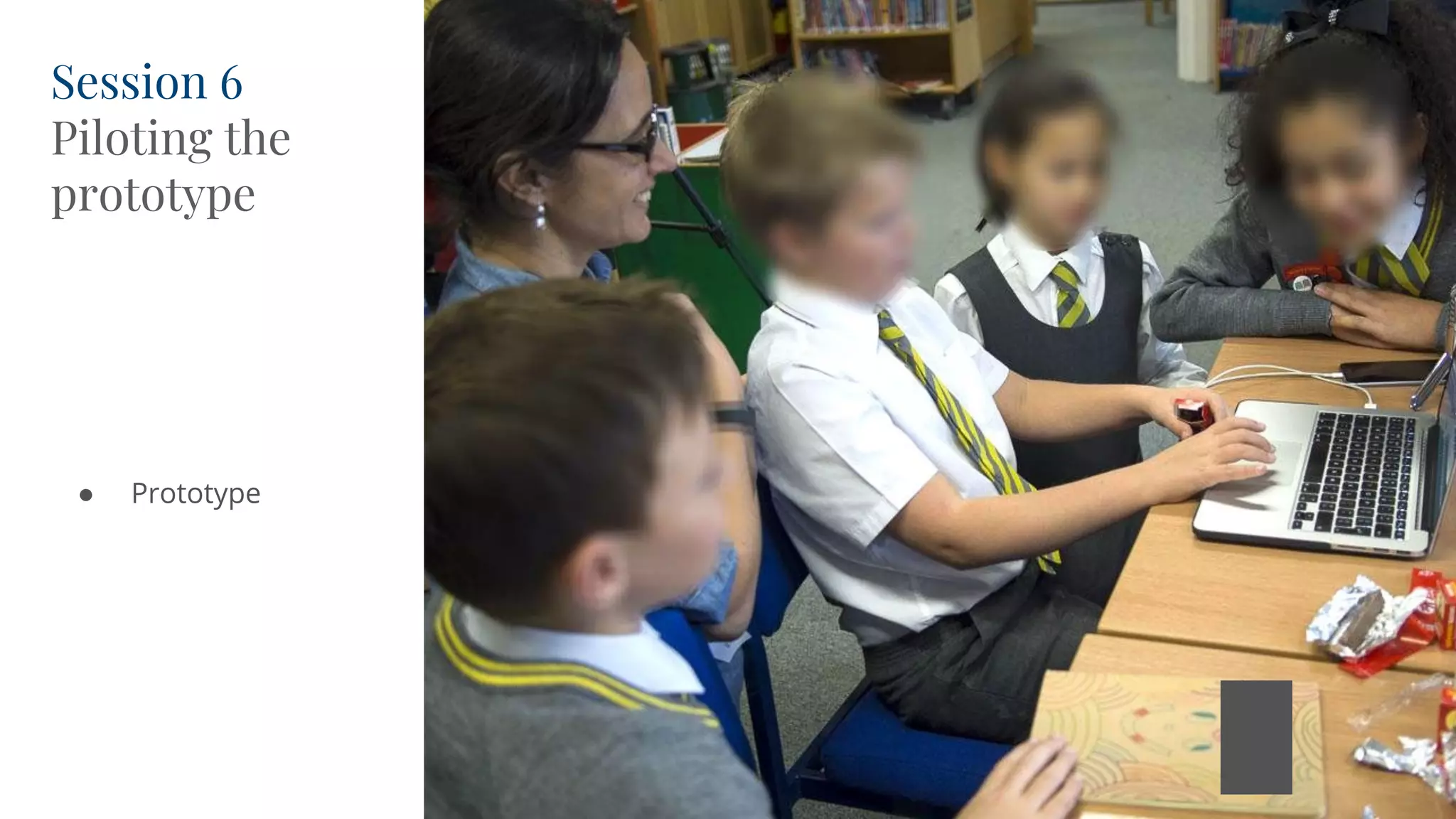
Session 6
Piloting the
prototype
● Prototype
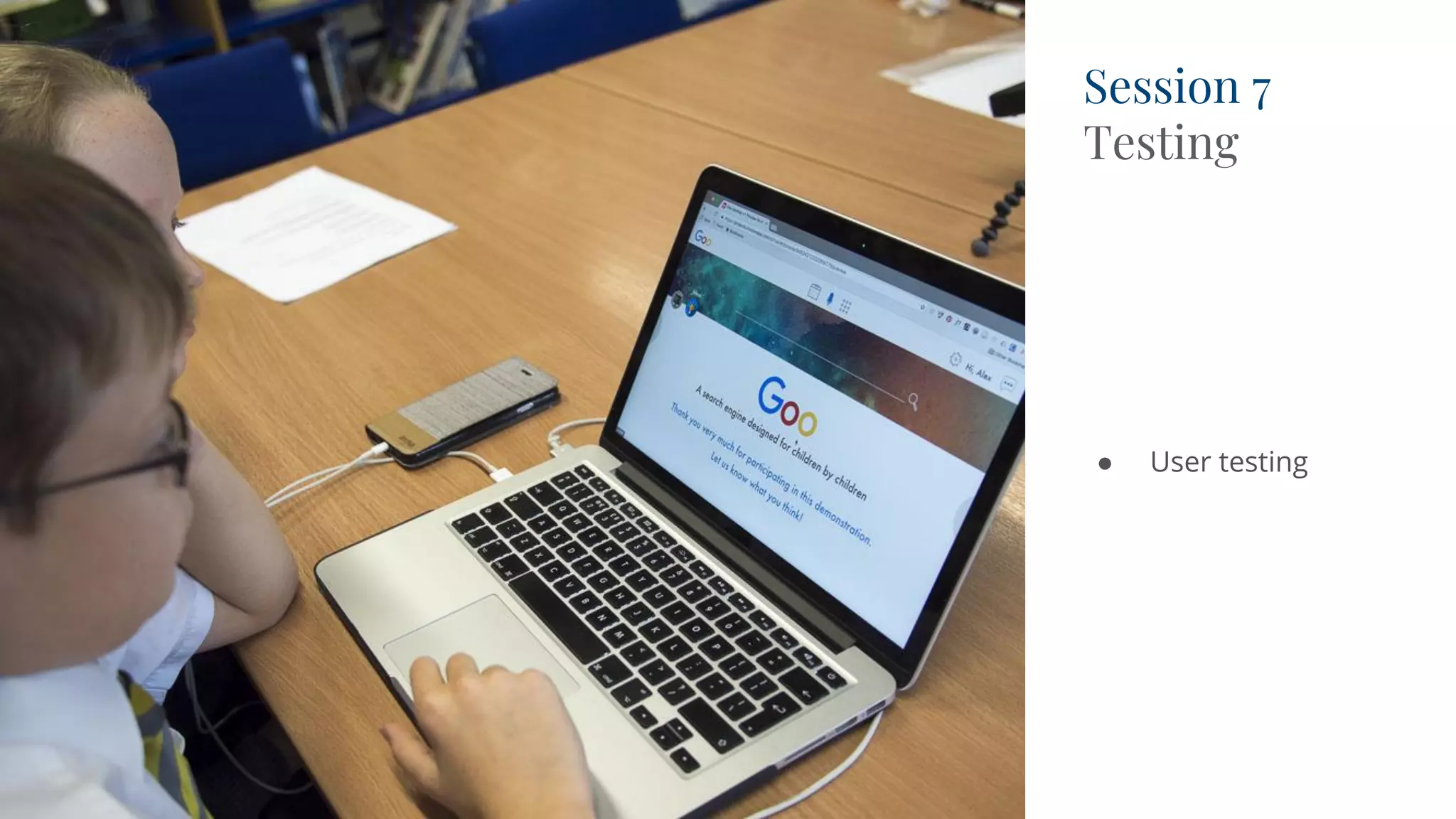
Session 7
Testing
● User testing
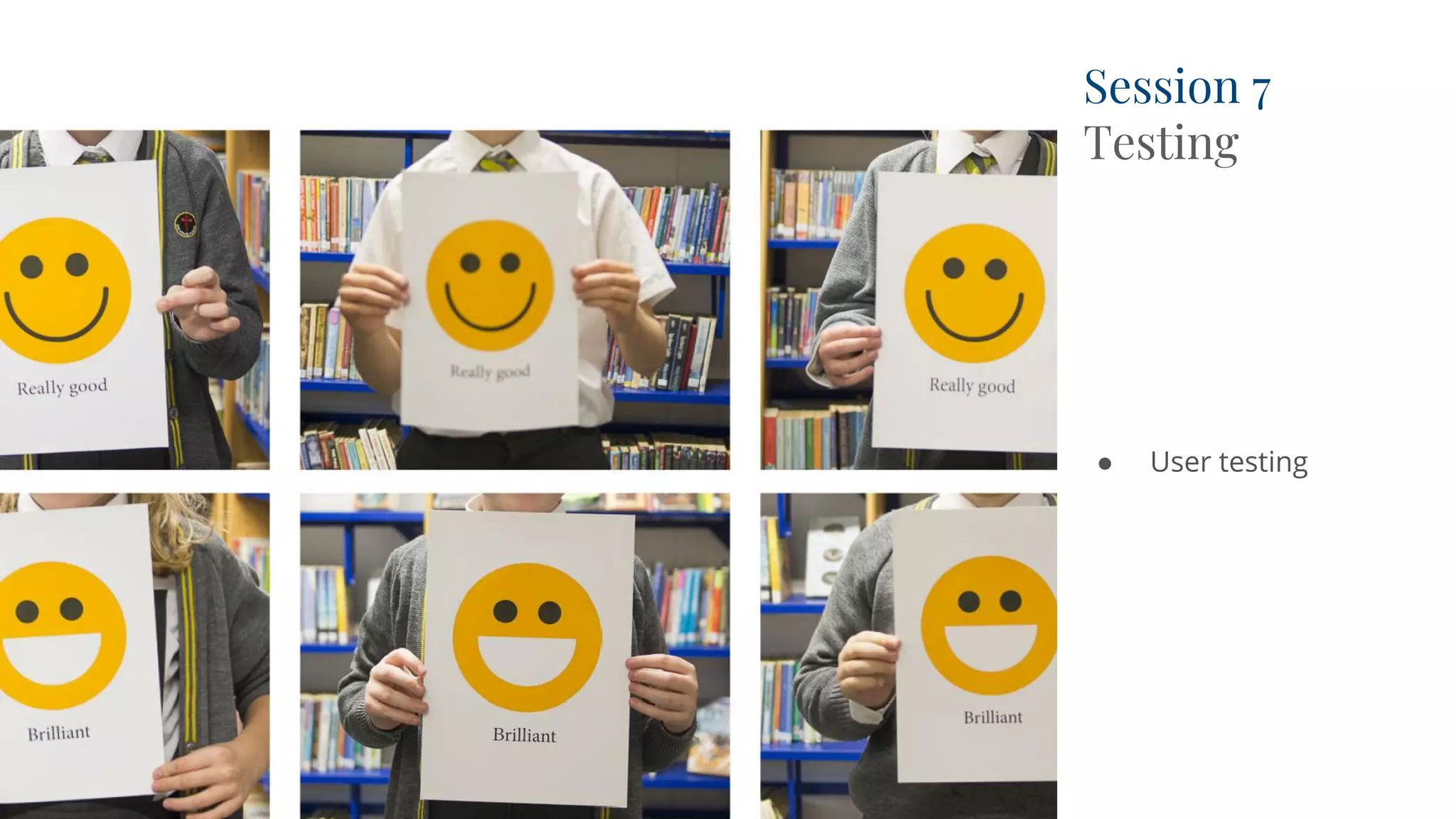
Session 7
Testing
● User testing
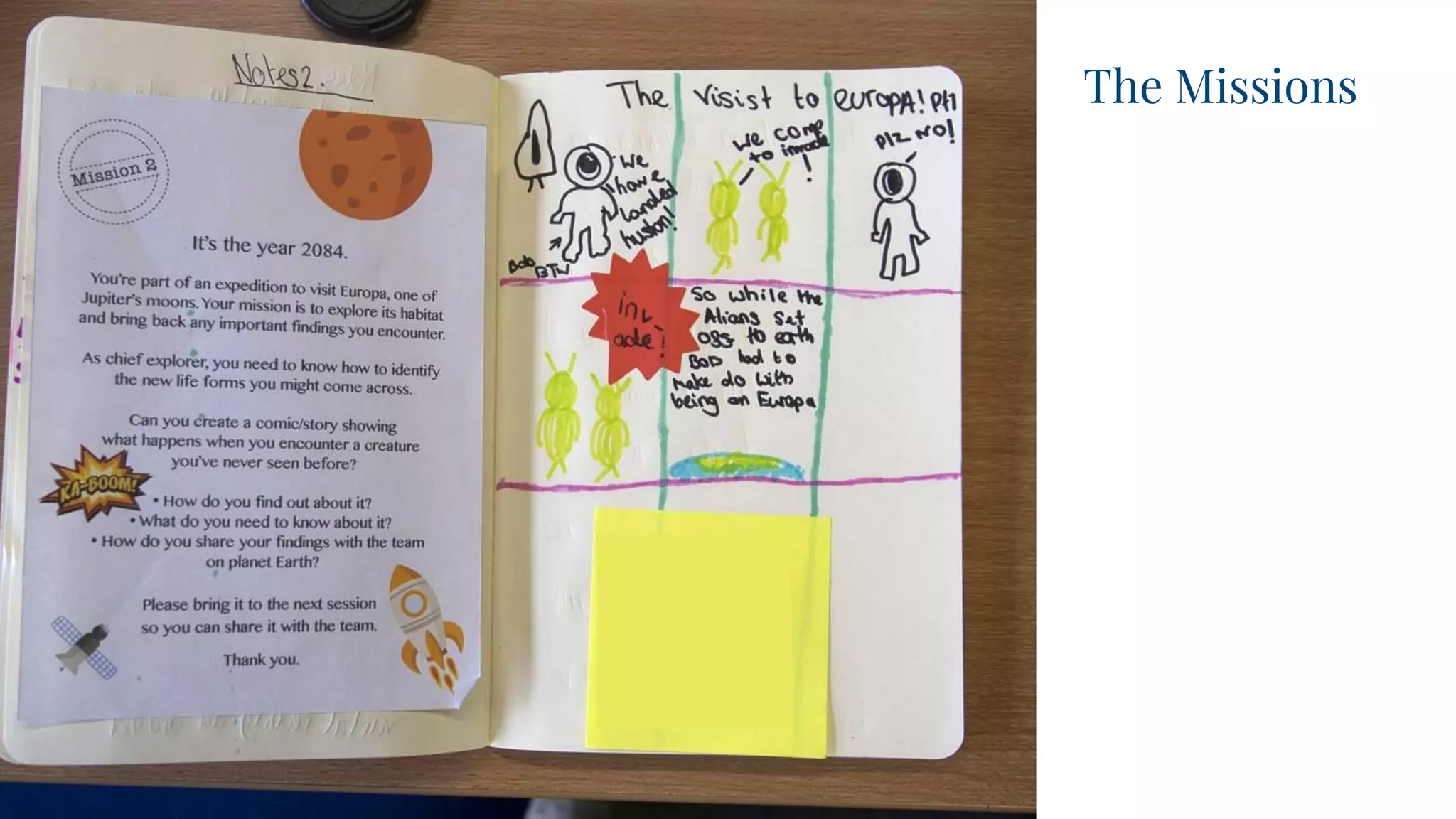
The Missions
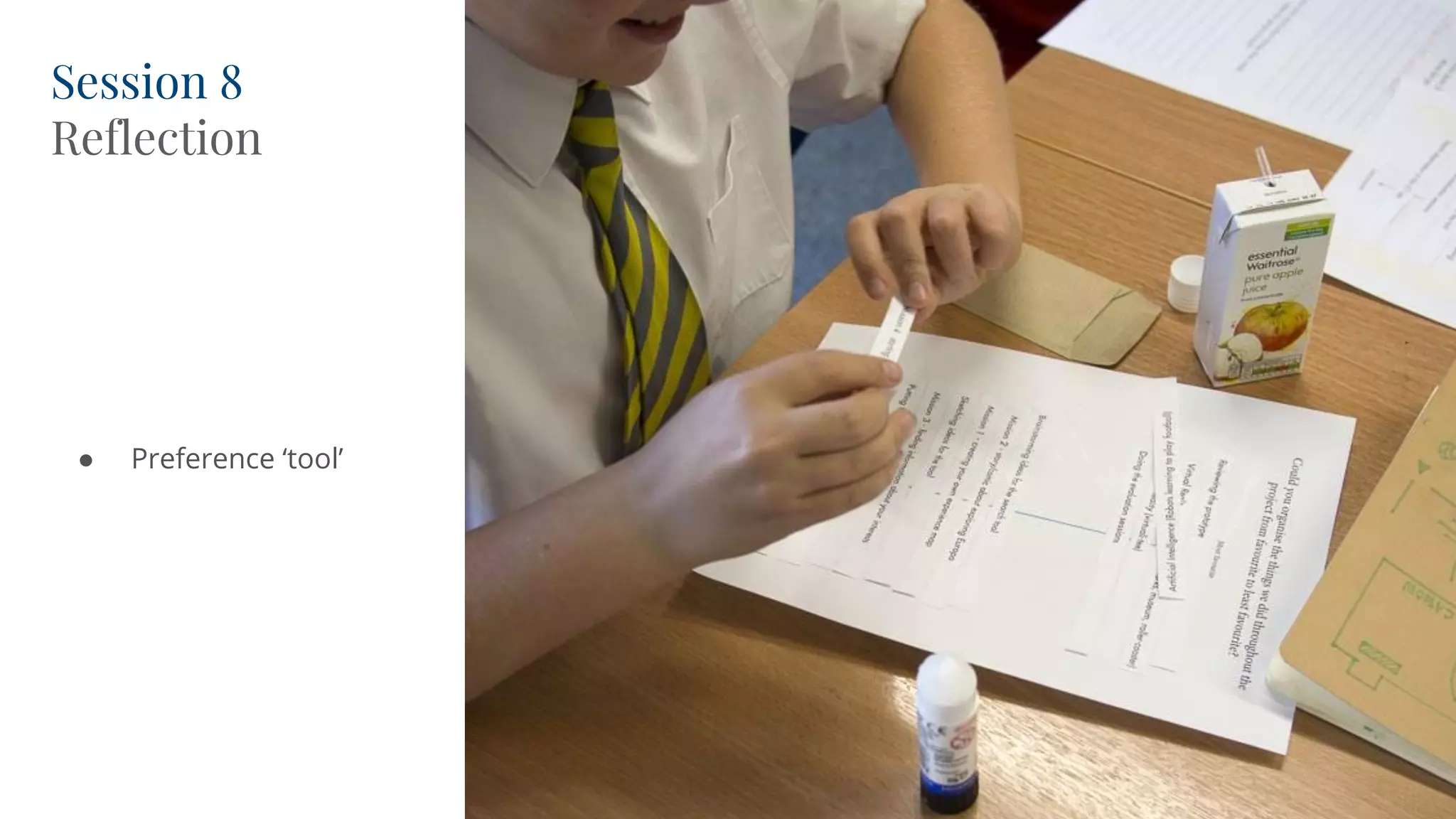
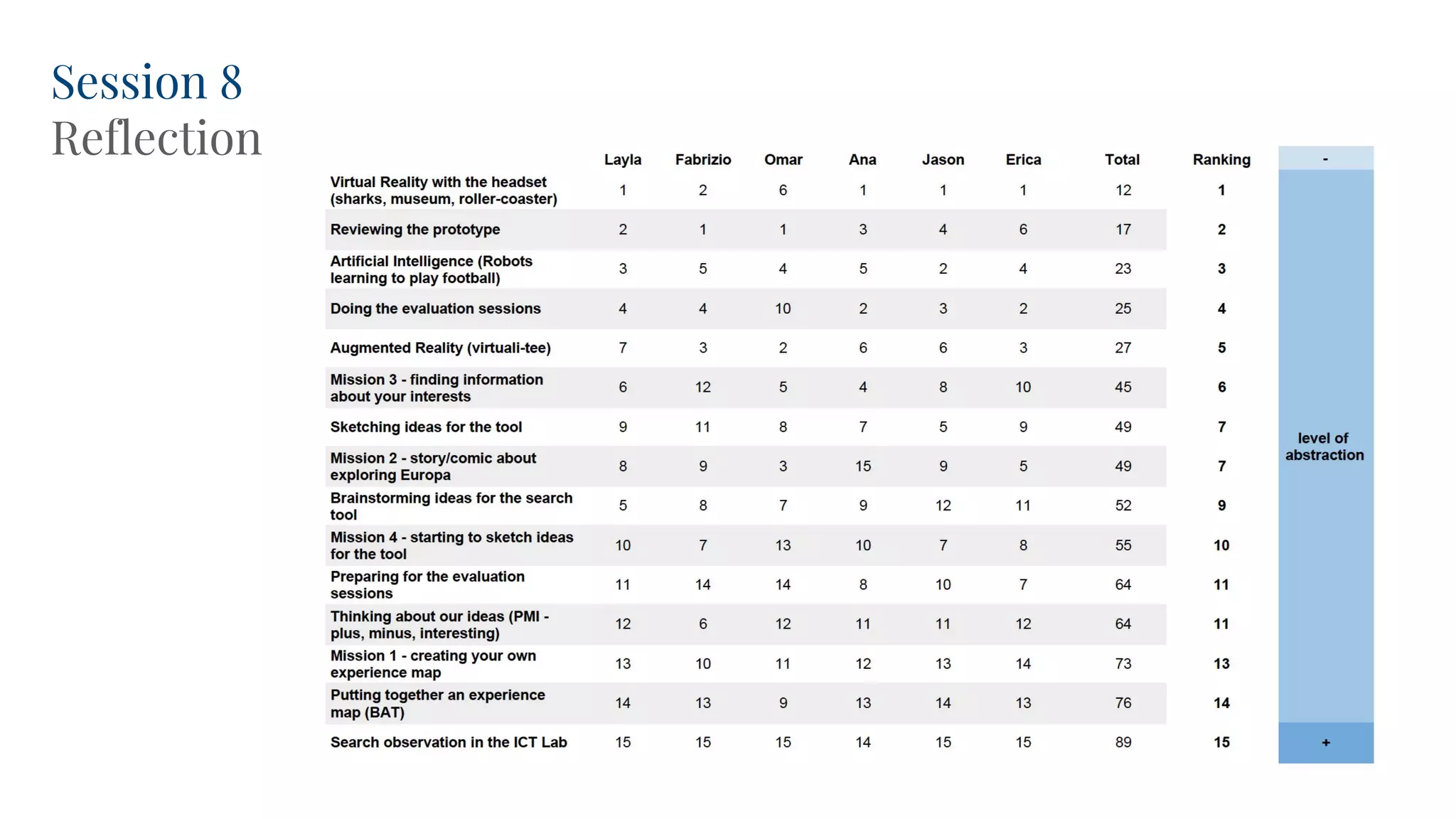
Session 8
Reflection
● Preference ‘tool’
Session 8
Reflection
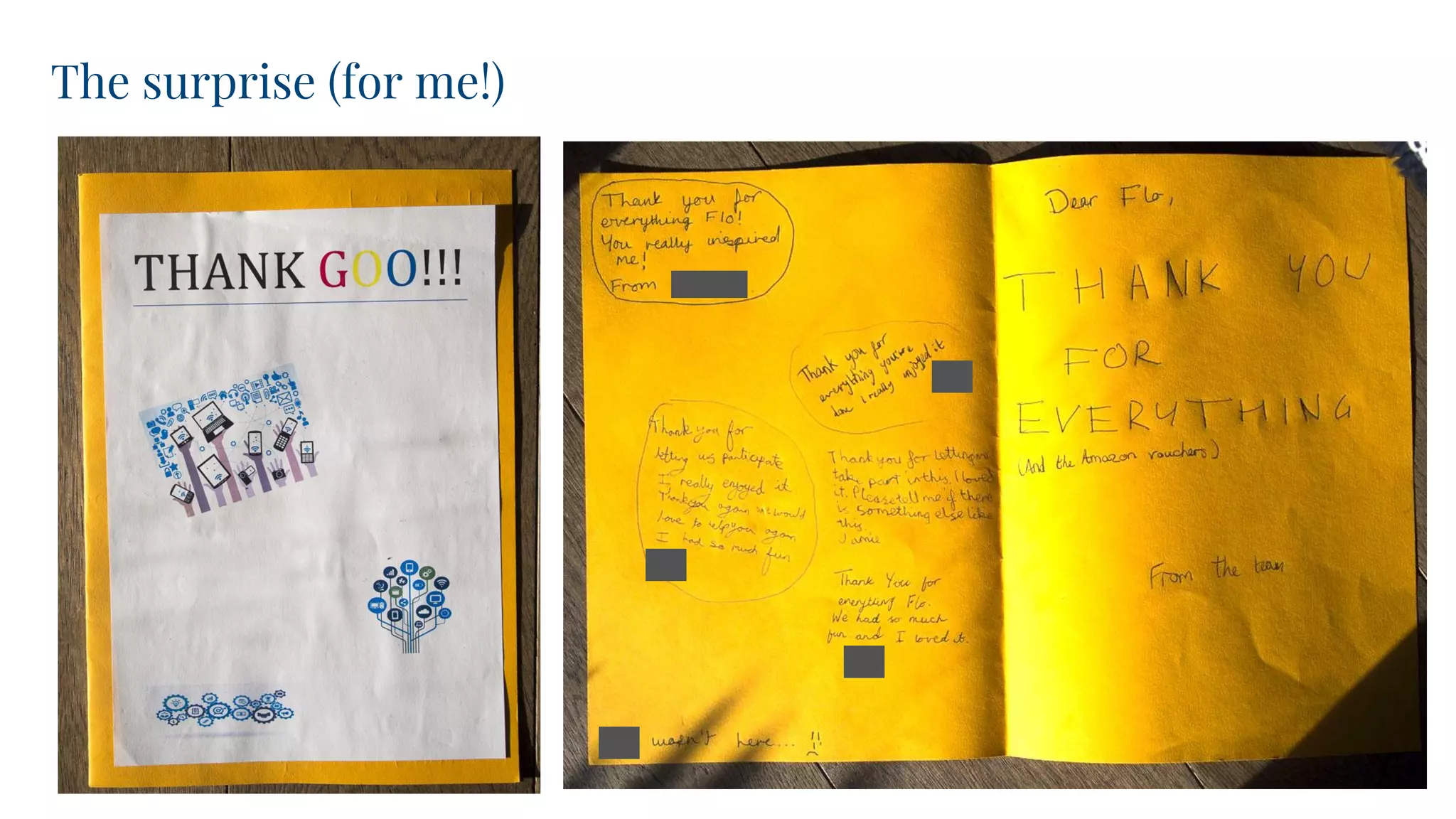
The surprise (for me!)
Different approaches to co-creating with and for kids

Different approaches to co-creating with and for kids