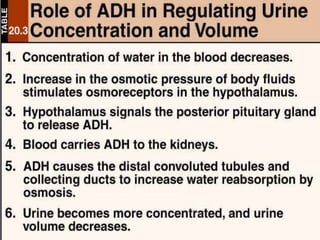
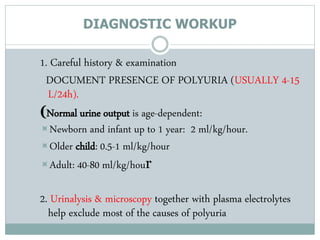
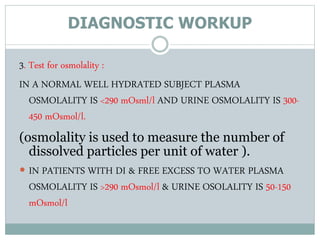
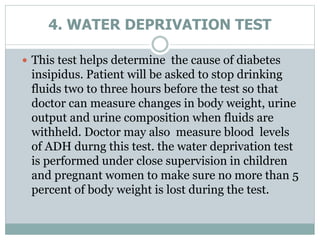
Diabetes insipidus is a condition where the kidneys are unable to conserve water due to a lack of antidiuretic hormone (ADH). There are several types of diabetes insipidus. Central diabetes insipidus is caused by damage to the hypothalamus or pituitary gland which prevents proper ADH production and release. Nephrogenic diabetes insipidus occurs when the kidneys do not respond correctly to ADH due to defects in the renal tubules. Symptoms include excessive thirst and urination. Diagnosis involves tests to measure urine and plasma osmolality during water deprivation. Treatment depends on the type, with desmopressin administered for central diabetes insipidus