BY :- Mr. Baljinder Singh
Assistant Professor
PIMS, Panipat
Definition
Diabetes insipidus is a disorder of the posterior lobe of
the pituitary gland characterized by a deficiency of
antidiuretic hormone (ADH), or vasopressin. Great
thirst (polydipsia) and large volumes of dilute urine
characterize the disorder.
Types of DI
A) Central diabetes insipidus
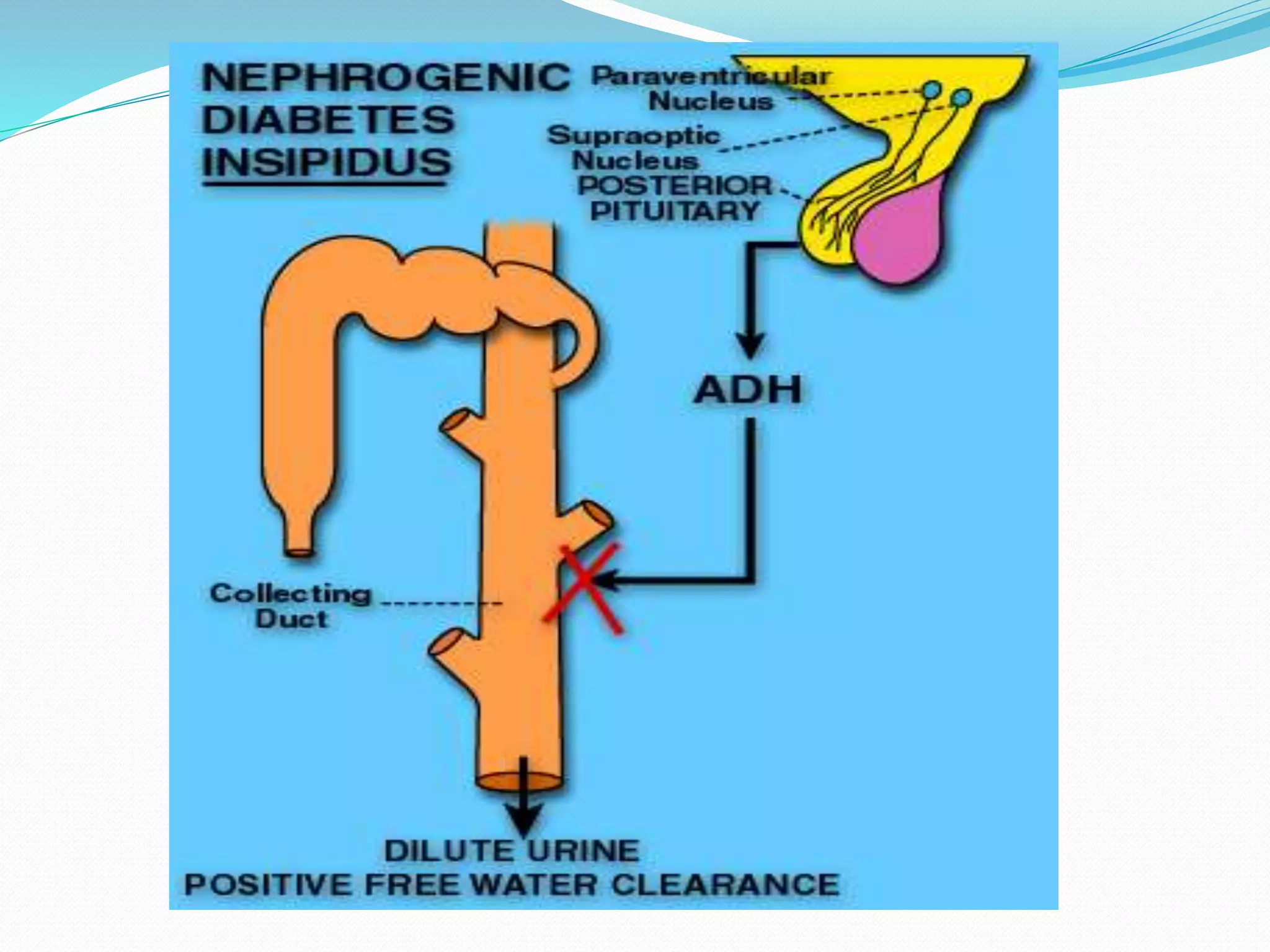
B) Nephrogenic diabetes insipidus
Causes
A) Central diabetes insipidus :-
 Head trauma or surgery
 Pituitary or hypothalamic tumor
 Intracerebral occlusion or infection
 B) Nephrogenic diabetes insipidus
 Systemic diseases involving the kidney
 Multiple myeloma
 sickle cell anemia
 Polycystic kidney disease
 Pyelonephritis
 Medications such as lithium
Pathophysiology
A) Central diabetes insipidus :-
 Loss of vasopressin-producing cells,
 Causing deficiency in antidiuretic hormone (ADH)
synthesis or release;
 Deficiency in ADH, resulting in an inability to
conserve water,
 leading to extreme polyuria and polydipsia
B) Nephrogenic diabetes insipidus
 Depression of aldosterone release or inability of the
nephrons to respond to ADH,
 causing extreme polyuria and polydipsia
Signs and symptoms
 Polyuria with urine output of 5 to 15 L daily
 Polydipsia, especially a desire for cold fluids
 Marked dehydration, as evidenced by dry mucous
membranes, dry skin, and weight loss
 Anorexia and epigastric fullness
 Nocturia and related fatigue from interrupted sleep
Diagnostic test results
 High serum osmolality, usually above 300 mOsm/kg of
water
 Low urine osmolarity, usually 50 to 200 mOsm/kg of
water;
 low urine-specifi c gravity of less than 1.005
 Increased creatinine and blood urea nitrogen (BUN)
levels resulting from dehydration
 Positive response to water deprivation test: Urine
output decreases and specific gravity increases
Goals of management
 The objectives of therapy are
(1) to replace ADH (which is usually a long-term
therapeutic program),
(2) to ensure adequate fluid replacement, and
(3) to identify and correct the underlying cause
Treatments
 Replacement vasopressin therapy with intranasal or
I.V. DDAVP (desmopressin acetate)
 Correction of dehydration and electrolyte imbalances
Treatment
 A thiazide diuretic to deplete sodium and increase
renal water reabsorption
 Restriction of salt and protein intake

Diabetes insipidus

  • 1.
    BY :- Mr.Baljinder Singh Assistant Professor PIMS, Panipat
  • 2.
    Definition Diabetes insipidus isa disorder of the posterior lobe of the pituitary gland characterized by a deficiency of antidiuretic hormone (ADH), or vasopressin. Great thirst (polydipsia) and large volumes of dilute urine characterize the disorder.
  • 4.
    Types of DI A)Central diabetes insipidus B) Nephrogenic diabetes insipidus
  • 5.
    Causes A) Central diabetesinsipidus :-  Head trauma or surgery  Pituitary or hypothalamic tumor  Intracerebral occlusion or infection
  • 6.
     B) Nephrogenicdiabetes insipidus  Systemic diseases involving the kidney  Multiple myeloma  sickle cell anemia  Polycystic kidney disease  Pyelonephritis  Medications such as lithium
  • 7.
    Pathophysiology A) Central diabetesinsipidus :-  Loss of vasopressin-producing cells,  Causing deficiency in antidiuretic hormone (ADH) synthesis or release;  Deficiency in ADH, resulting in an inability to conserve water,  leading to extreme polyuria and polydipsia
  • 9.
    B) Nephrogenic diabetesinsipidus  Depression of aldosterone release or inability of the nephrons to respond to ADH,  causing extreme polyuria and polydipsia
  • 11.
    Signs and symptoms Polyuria with urine output of 5 to 15 L daily  Polydipsia, especially a desire for cold fluids  Marked dehydration, as evidenced by dry mucous membranes, dry skin, and weight loss  Anorexia and epigastric fullness  Nocturia and related fatigue from interrupted sleep
  • 12.
    Diagnostic test results High serum osmolality, usually above 300 mOsm/kg of water  Low urine osmolarity, usually 50 to 200 mOsm/kg of water;  low urine-specifi c gravity of less than 1.005  Increased creatinine and blood urea nitrogen (BUN) levels resulting from dehydration  Positive response to water deprivation test: Urine output decreases and specific gravity increases
  • 13.
    Goals of management The objectives of therapy are (1) to replace ADH (which is usually a long-term therapeutic program), (2) to ensure adequate fluid replacement, and (3) to identify and correct the underlying cause
  • 14.
    Treatments  Replacement vasopressintherapy with intranasal or I.V. DDAVP (desmopressin acetate)  Correction of dehydration and electrolyte imbalances
  • 15.
    Treatment  A thiazidediuretic to deplete sodium and increase renal water reabsorption  Restriction of salt and protein intake