DIABETIC COMA
• Coma may be due to a variety of causes not directly related
to diabètes.
• Certain causes directly related to diabetes require
differentiation:
• (1) Hyp glycemia resulting from excessive doses of insulin or
oral hypoglycemic agents.
• 2) Hyperglycemic coma associated with either severe insulin
deficiency (diabetic ketoacidosis) or mild to moderate insulin
deficiency (hyperglycemic hyperosmolar state)
• 3) Lactic acidosis associated with diabetes,
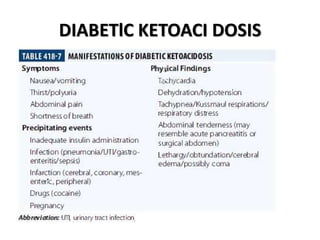
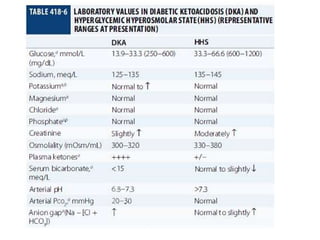
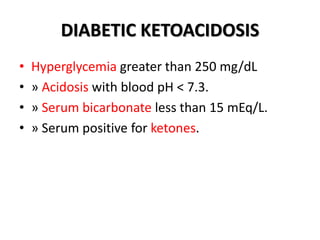
DIABETIC KETOACIDOSIS
• Hyperglycemia greater than 250 mg/dL
• » Acidosis with blood pH < 7.3.
• » Serum bicarbonate less than 15 mEq/L.
• » Serum positive for ketones.
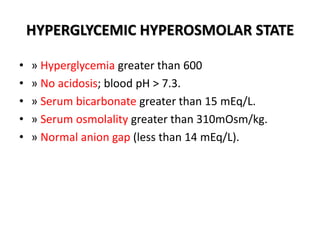
HYPERGLYCEMIC HYPEROSMOLAR STATE
• » Hyperglycemia greater than 600
• » No acidosis; blood pH > 7.3.
• » Serum bicarbonate greater than 15 mEq/L.
• » Serum osmolality greater than 310mOsm/kg.
• » Normal anion gap (less than 14 mEq/L).
LACTIC ACIDOSIS
• » Severe acidosis with hyperventilation.
• » Blood pH below 7.30.
• » Serum bicarbonate less than 15 mEq/L.
• » Anion gap greater than 15 mEq/L.
• » Serum lactate greater than 5 mmol/L.
• » Absent serum ketones.
Hyperglycemic coma
• Individuals with type 1 or type 2 DM and severe
hyperglycemia [300 mg/dL] ) should be assessed for
clinical stability; including mentation and hydration.
• the patient is stable or if diabetic ketoacidosis or a
hyperglycemic hyperosmolar state should be
considered.
• Ketones,an indicator of diabetic ketoacidosis,
should be measured in individuals with type 1 DM
when the plasm glucose is > (300 mg/dL) , during a
concurrent illness, or with symptoms such as
nausea, vomiting, or abdominal pain.
• Blood measurement of ß-ydroxybutarrate is
preferred over urine
• DKA was formerly considered a hallmark of
type 1 DM,
• HHS is primarily seen in individuals with type 2
DM,
• Both disorders are associated with absolute or
relative insulin deficiency, volume depletion
and acid base abnormalities,
DIABETlC KETOACI DOSIS
Diabetic coma
Diabetic coma

Diabetic coma

  • 1.
  • 2.
    • Coma maybe due to a variety of causes not directly related to diabètes. • Certain causes directly related to diabetes require differentiation: • (1) Hyp glycemia resulting from excessive doses of insulin or oral hypoglycemic agents. • 2) Hyperglycemic coma associated with either severe insulin deficiency (diabetic ketoacidosis) or mild to moderate insulin deficiency (hyperglycemic hyperosmolar state) • 3) Lactic acidosis associated with diabetes,
  • 3.
    DIABETIC KETOACIDOSIS • Hyperglycemiagreater than 250 mg/dL • » Acidosis with blood pH < 7.3. • » Serum bicarbonate less than 15 mEq/L. • » Serum positive for ketones.
  • 4.
    HYPERGLYCEMIC HYPEROSMOLAR STATE •» Hyperglycemia greater than 600 • » No acidosis; blood pH > 7.3. • » Serum bicarbonate greater than 15 mEq/L. • » Serum osmolality greater than 310mOsm/kg. • » Normal anion gap (less than 14 mEq/L).
  • 5.
    LACTIC ACIDOSIS • »Severe acidosis with hyperventilation. • » Blood pH below 7.30. • » Serum bicarbonate less than 15 mEq/L. • » Anion gap greater than 15 mEq/L. • » Serum lactate greater than 5 mmol/L. • » Absent serum ketones.
  • 6.
    Hyperglycemic coma • Individualswith type 1 or type 2 DM and severe hyperglycemia [300 mg/dL] ) should be assessed for clinical stability; including mentation and hydration. • the patient is stable or if diabetic ketoacidosis or a hyperglycemic hyperosmolar state should be considered. • Ketones,an indicator of diabetic ketoacidosis, should be measured in individuals with type 1 DM when the plasm glucose is > (300 mg/dL) , during a concurrent illness, or with symptoms such as nausea, vomiting, or abdominal pain. • Blood measurement of ß-ydroxybutarrate is preferred over urine
  • 7.
    • DKA wasformerly considered a hallmark of type 1 DM, • HHS is primarily seen in individuals with type 2 DM, • Both disorders are associated with absolute or relative insulin deficiency, volume depletion and acid base abnormalities,
  • 8.