DIABETES MELLITUS
Dr. Prasad B. Chinchole
Pharm D
SCOP, ALMALA
@ Dr. Prasad B. Chinchole
INDEX
• Pancreas
• Definition
• Epidemiology
• Classification
• Type 1
• Type 2
• GDM
• Other types of DM
• Difference between children and adult type 1
• Screening
@ Dr. Prasad B. Chinchole
PANCREAS
• What do you know?
• Type of gland
• Which exocrine hormones?
• First identified by herophilus- a greek anatomist (335 )
• Named by rufus of ephesus
• Pan= all, whole
• Creas= flesh
@ Dr. Prasad B. Chinchole
DEFINITION
It is a group of metabolic disorders of fat, carbohydrate and
protein metabolism that results from defects in insulin
secretion, insulin action (sensitivity) or both
@ Dr. Prasad B. Chinchole
EPIDEMIOLOGY
• Type 1 - 10%
• Type 2 - 90%
• GD - 7% of all pregnancy
• India?
@ Dr. Prasad B. Chinchole
CLASSIFICATION
• Type 1
• Type 2
• Gestational diabetes
• Other specific types of diabetes
@ Dr. Prasad B. Chinchole
TYPE 1 DM
• Autoimmune
• Markers of immune destruction are present in 90% of individuals
• Eg. Ilslet cell antibodies, antibodies to insulin
• Usually occurs in children and adolescent
• Can occur at an age
@ Dr. Prasad B. Chinchole
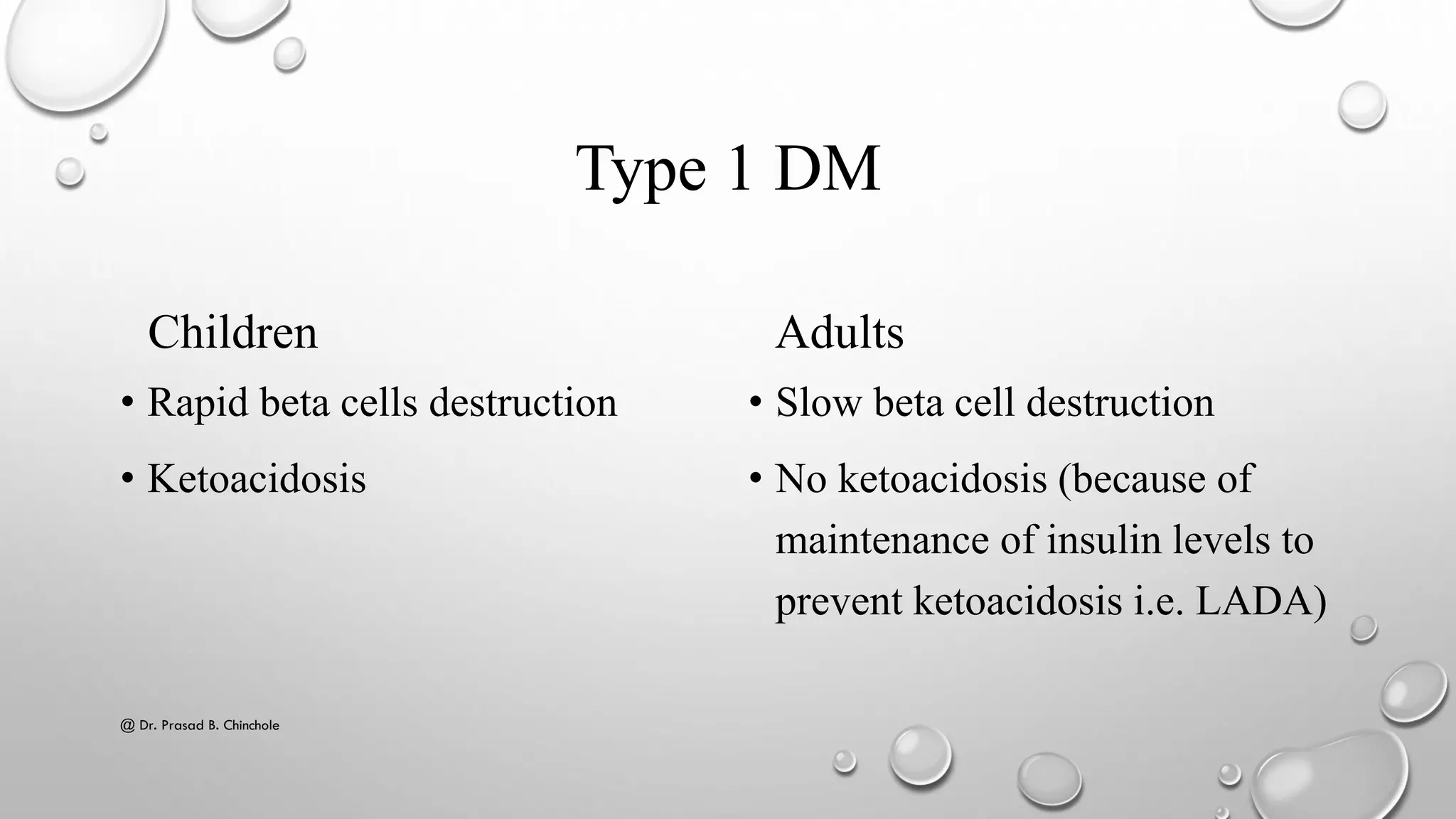
Type 1 DM
Children
• Rapid beta cells destruction
• Ketoacidosis
Adults
• Slow beta cell destruction
• No ketoacidosis (because of
maintenance of insulin levels to
prevent ketoacidosis i.e. LADA)
@ Dr. Prasad B. Chinchole
Type 2 DM
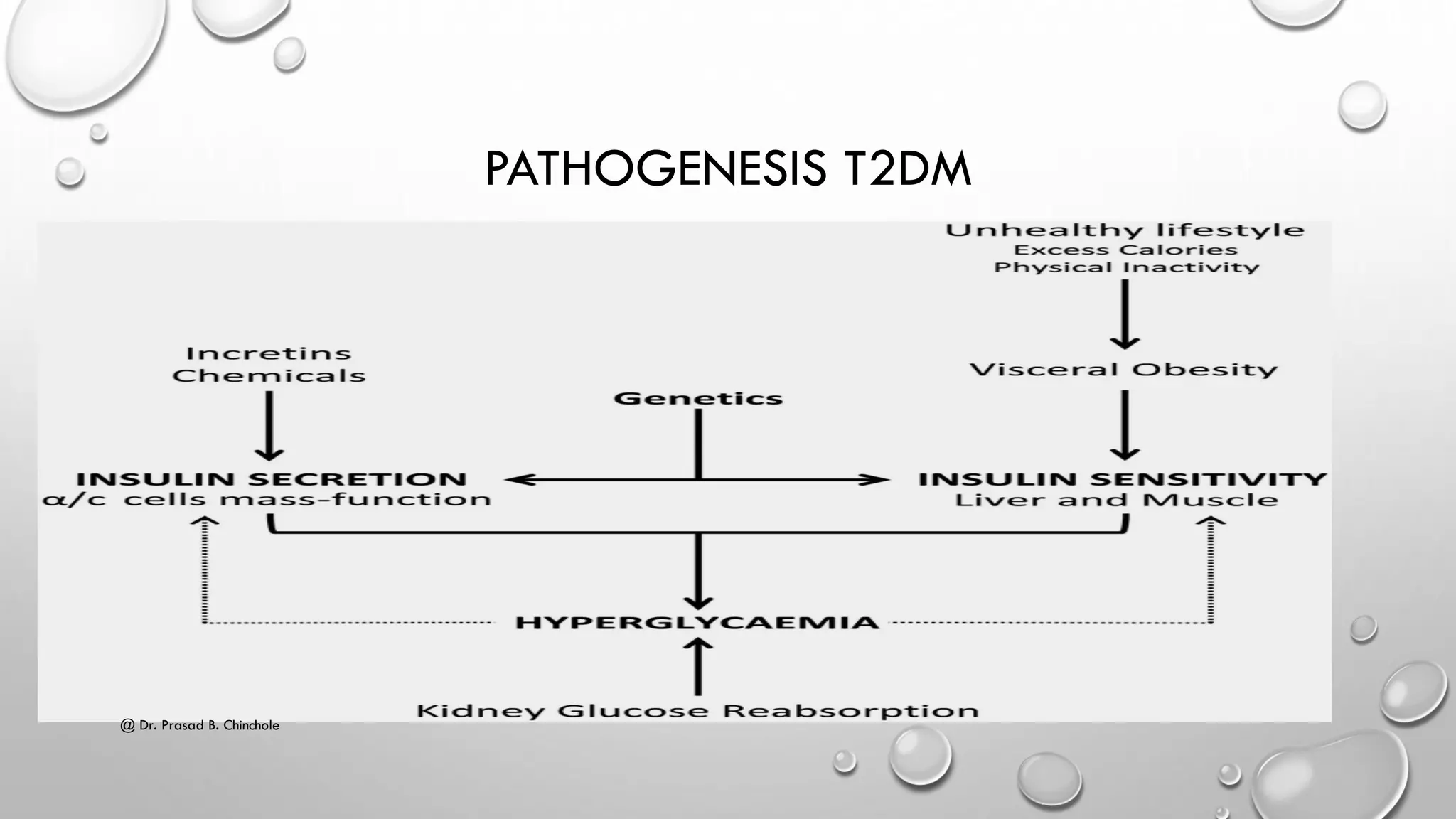
• Characterized by insulin resistance and/lack of insulin secretion
• Abdominal obesity which can cause IR
• Other factors- HTN, dyslipidemia,
• Clustering of abnormalities is called as insulin resistance syndrome/metabolic
syndrome
• Genetic cause is not well defined
@ Dr. Prasad B. Chinchole
Gestational diabetes mellitus
• Nothing but glucose intolerance first recognized during pregnancy
• 7%
@ Dr. Prasad B. Chinchole
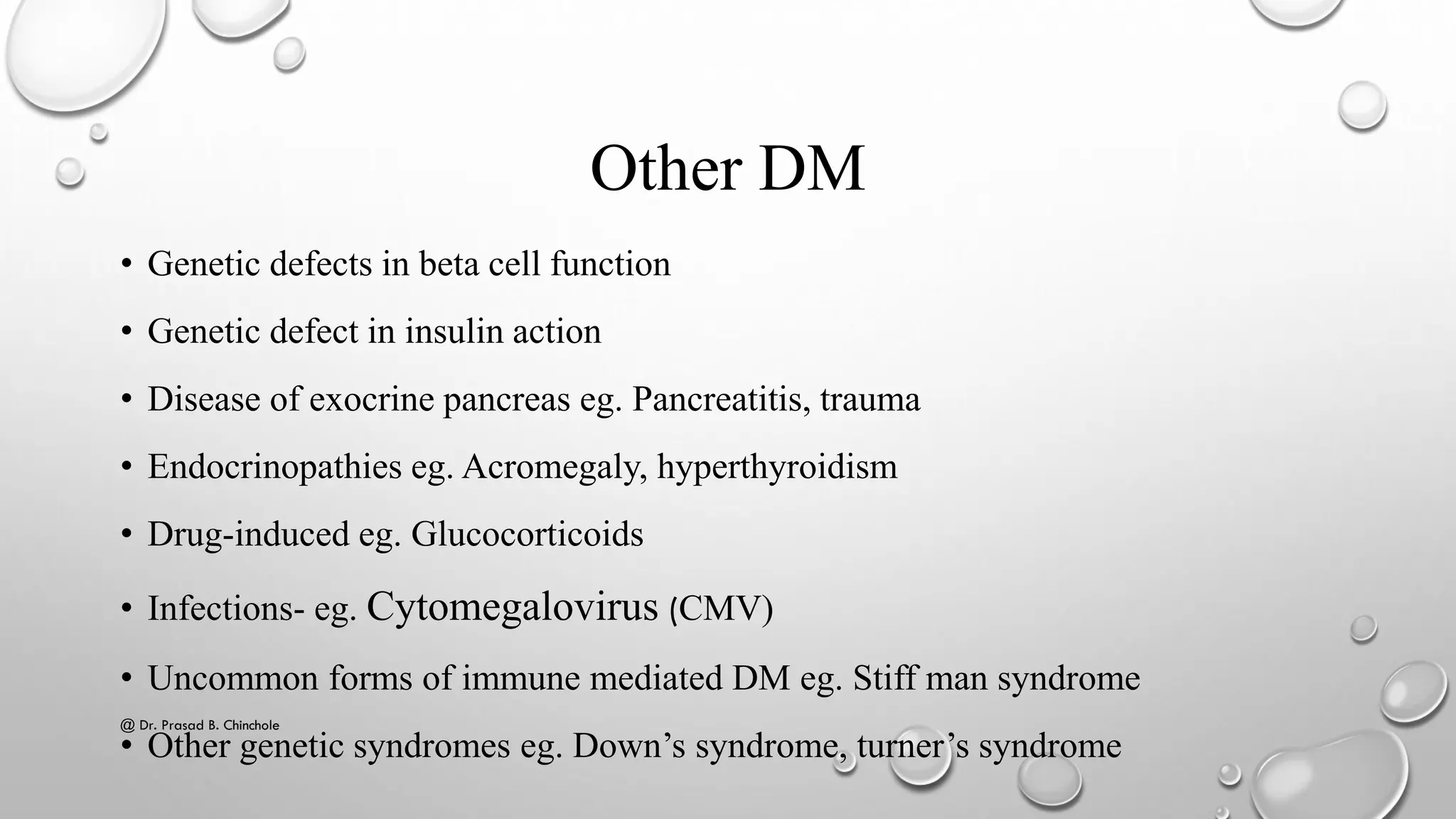
Other DM
• Genetic defects in beta cell function
• Genetic defect in insulin action
• Disease of exocrine pancreas eg. Pancreatitis, trauma
• Endocrinopathies eg. Acromegaly, hyperthyroidism
• Drug-induced eg. Glucocorticoids
• Infections- eg. Cytomegalovirus (CMV)
• Uncommon forms of immune mediated DM eg. Stiff man syndrome
• Other genetic syndromes eg. Down’s syndrome, turner’s syndrome
@ Dr. Prasad B. Chinchole
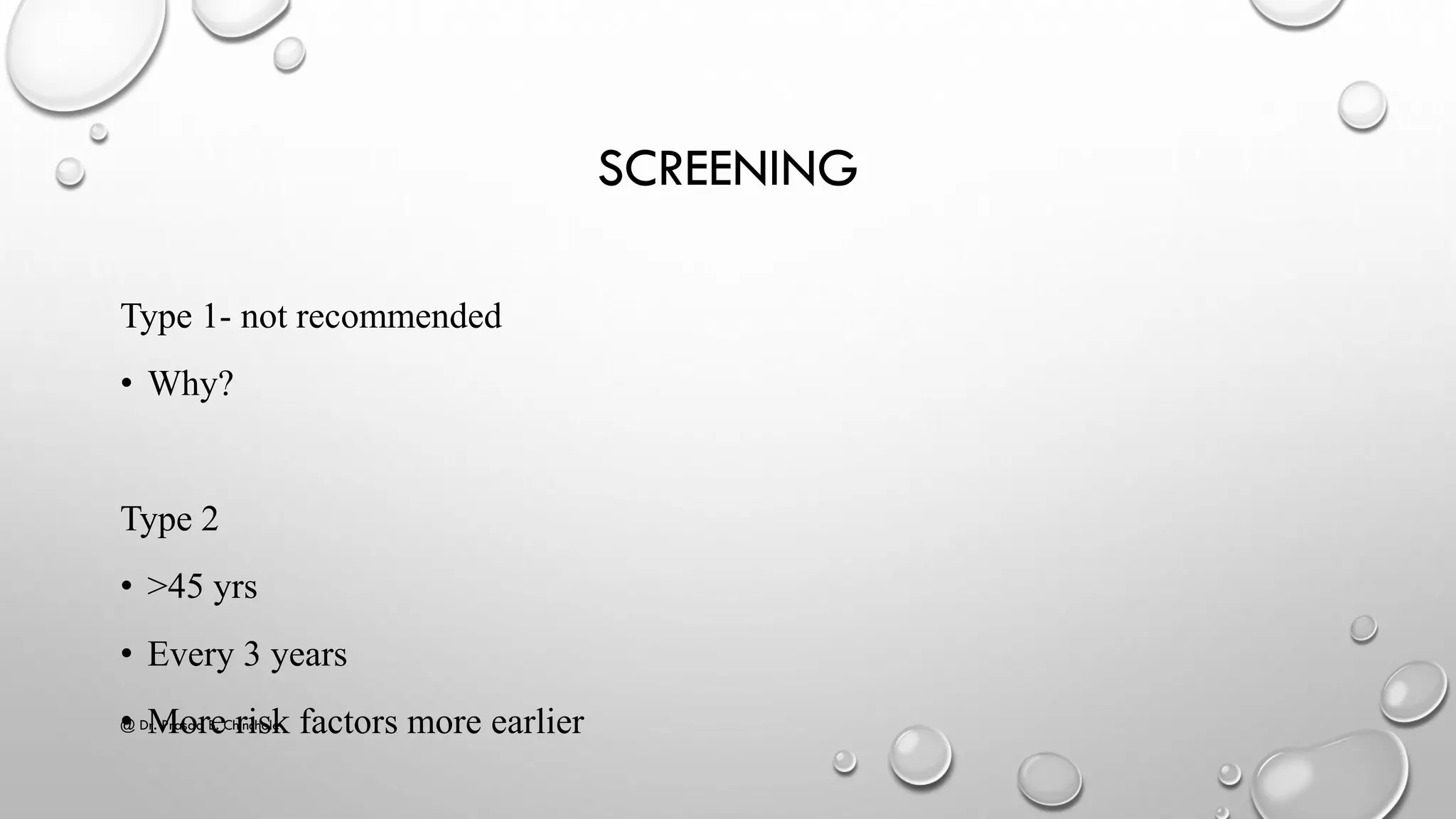
SCREENING
Type 1- not recommended
• Why?
Type 2
• >45 yrs
• Every 3 years
• More risk factors more earlier@ Dr. Prasad B. Chinchole
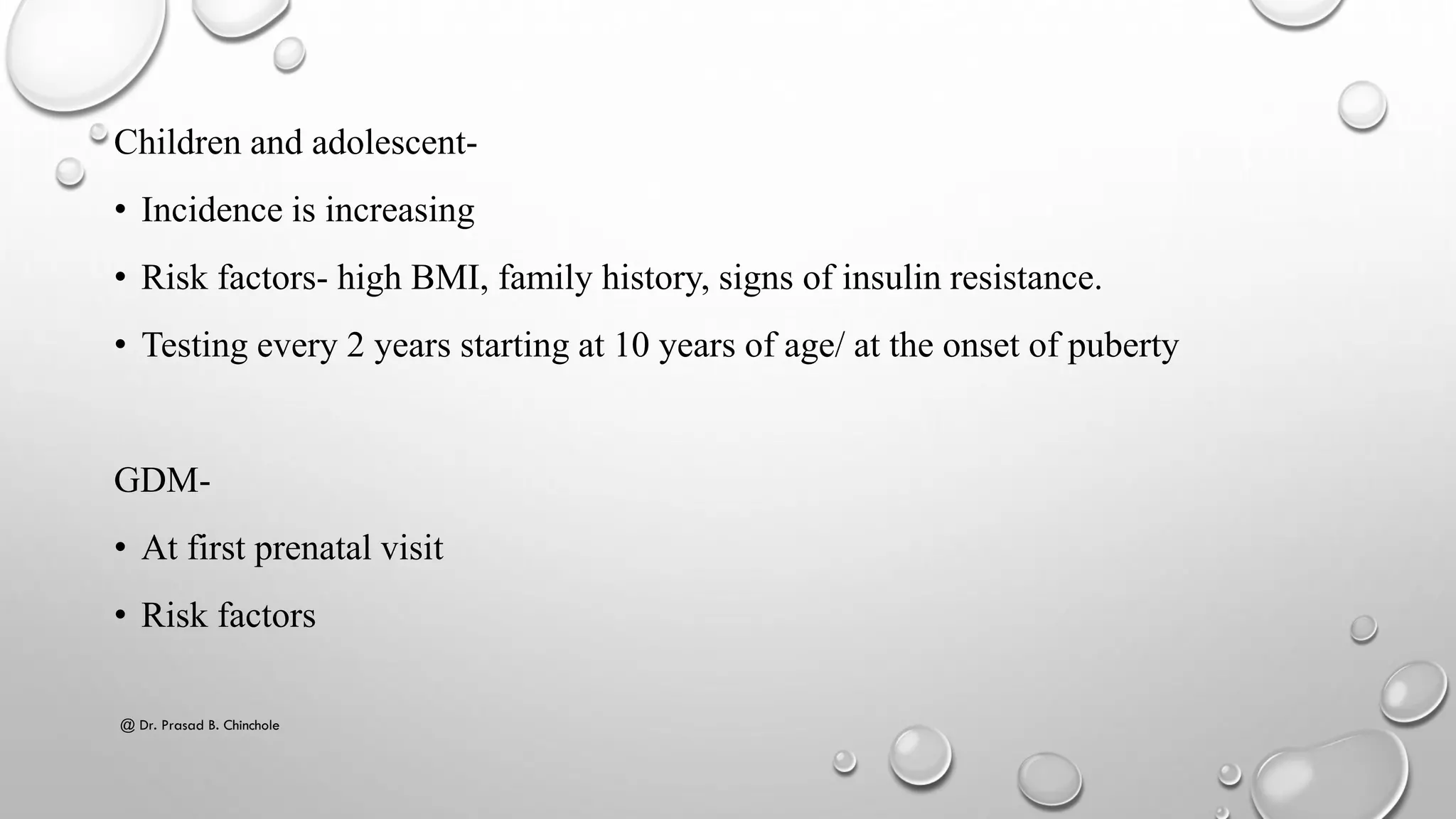
Children and adolescent-
• Incidence is increasing
• Risk factors- high BMI, family history, signs of insulin resistance.
• Testing every 2 years starting at 10 years of age/ at the onset of puberty
GDM-
• At first prenatal visit
• Risk factors
@ Dr. Prasad B. Chinchole
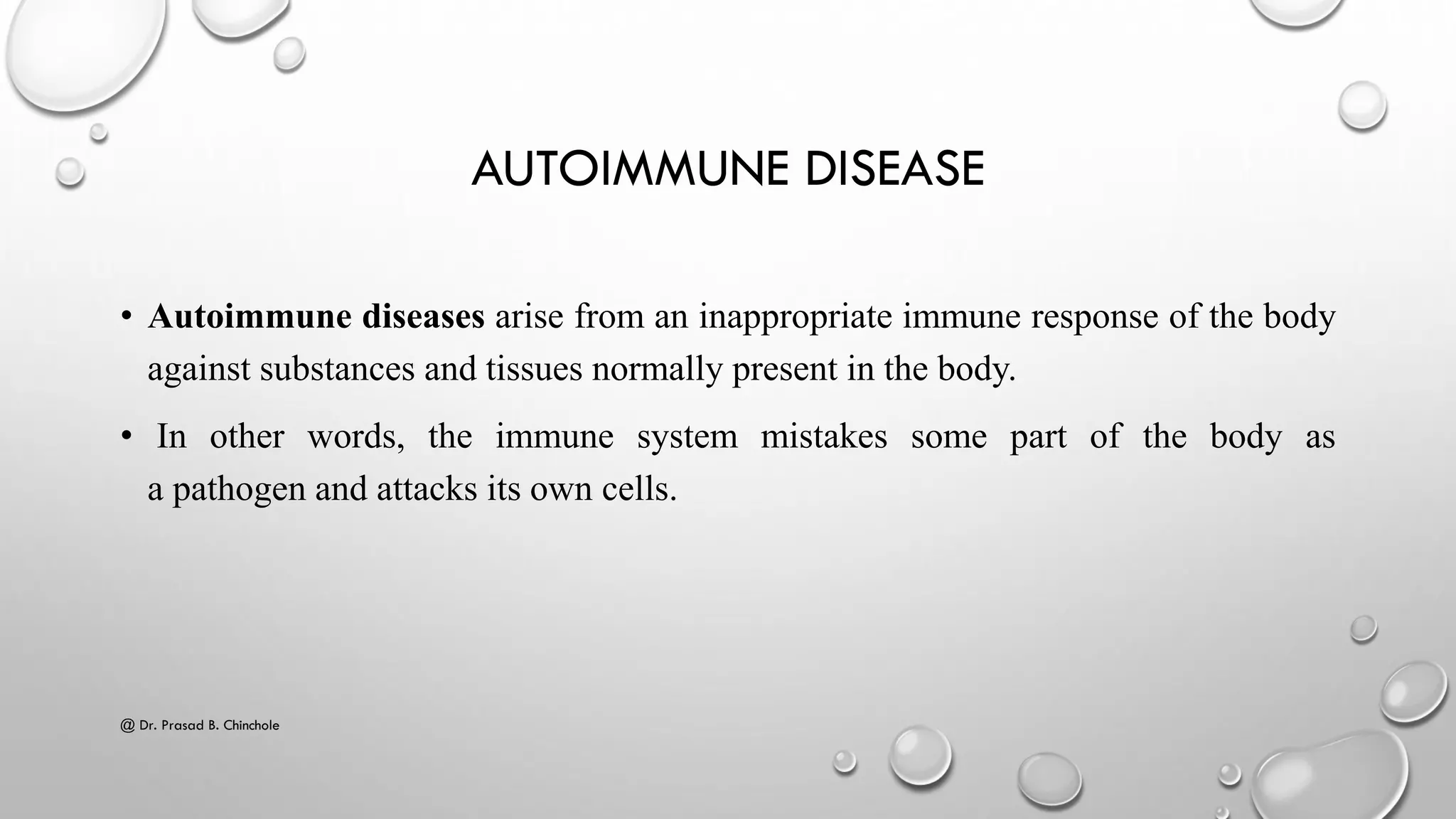
AUTOIMMUNE DISEASE
• Autoimmune diseases arise from an inappropriate immune response of the body
against substances and tissues normally present in the body.
• In other words, the immune system mistakes some part of the body as
a pathogen and attacks its own cells.
@ Dr. Prasad B. Chinchole
DIAGNOSIS
• Symptoms+ RBS >200
• FBS > 126
• PPBS > 200
• Impaired fasting glucose (100-126 mg/dl)
• IGT= 2hrs glucose value 140-200 mg/dl
• Prediabetes
• HbA1c@ Dr. Prasad B. Chinchole
PATHOGENESIS (T1DM)
• Absolute deficiency of insulin
• Idiopathic?
@ Dr. Prasad B. Chinchole
• Immune markers
• Hyperglycemia when 80-90% destruction of beta cells
• Some important inciting factors which initiate immune process?
• Auto-immune process is mediated by macrophages & t lymphocytes and
circulating auto-antibodies to beta cell antigen
• Most common antibody is islet cell antibody
• Lab test for it?
@ Dr. Prasad B. Chinchole
• LONAVALA
• KHANDALA
• PANHALA OF KOLHAPUR
• BANGALORE
• GOA
• KASHMIR
@ Dr. Prasad B. Chinchole
HONEYMOON PHASE
• Period that often follows diagnosis and initiation of insulin treatment
• Varying lengths of time and can affect diabetics differently
• Months to years
• Hypo and hyperglycemia
• Transient remission
@ Dr. Prasad B. Chinchole
• Other antibodies also found
• 90% of Pts have ab
• First degree relatives 3.5-4% (unaffected)
• Antibodies are markers rather than mediators
• Chromosomal abnormalities
@ Dr. Prasad B. Chinchole
PATHOGENESIS T2DM
@ Dr. Prasad B. Chinchole
INSULIN RESISTANCE
• A physiological condition where cells are no longer able to respond to the
normal actions of the hormone insulin
• Liver
• Skeletal muscles
• Adipocytes
@ Dr. Prasad B. Chinchole
SITE OF INSULIN RESISTANCE
• Liver- major site
• Insulin decreases hepatic glucose production
• In diabetics 2 inputs for glucose – liver and GIT
@ Dr. Prasad B. Chinchole
SKELETAL MUSCLES
• 80% glucose uptake
• High insulin high glucose uptake
• Plateau phase10 mg/kg/min
• In diabetics, insulin secretion delayed for 40 min and leg glucose uptake reduced
by 50%
@ Dr. Prasad B. Chinchole
PERIPHERAL (ADIPOCYTES)
• FFA are stored as tgs in adipocytes
@ Dr. Prasad B. Chinchole
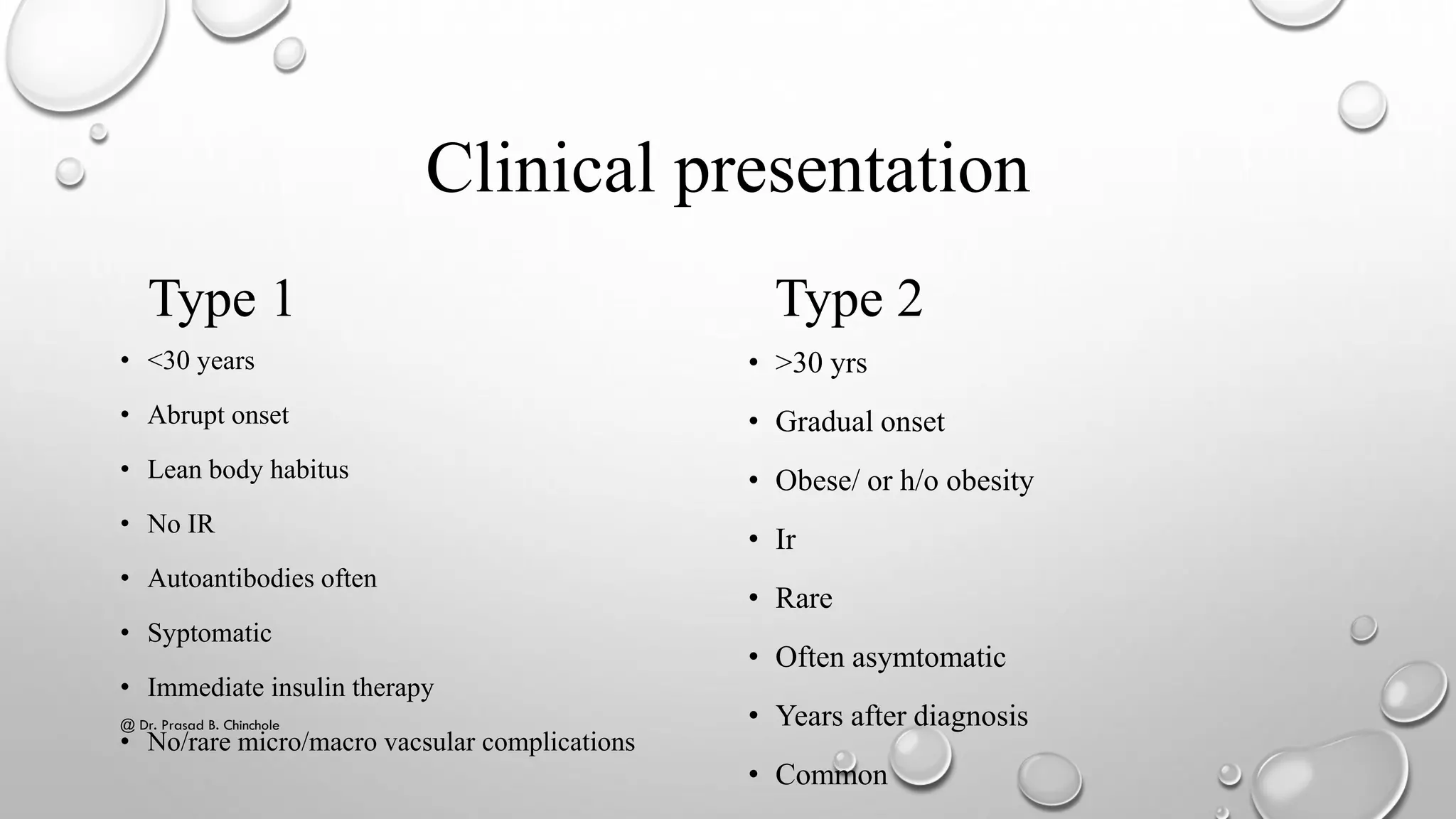
Clinical presentation
Type 1
• <30 years
• Abrupt onset
• Lean body habitus
• No IR
• Autoantibodies often
• Syptomatic
• Immediate insulin therapy
• No/rare micro/macro vacsular complications
Type 2
• >30 yrs
• Gradual onset
• Obese/ or h/o obesity
• Ir
• Rare
• Often asymtomatic
• Years after diagnosis
• Common
@ Dr. Prasad B. Chinchole
CLINICAL PRESENTATION
T1 DM
Polyurea
Polydipsia (increased thirst)
Polyphagia (increased hunger)
Irregular and unpredictable hyperglycemia
@ Dr. Prasad B. Chinchole
T2DM
• Blurred vision
• Peripheral neuropathy
• Weight loss
@ Dr. Prasad B. Chinchole
INDEX
• Di
• Cause, types, signs and symptoms, treatment
• DM- desired outcomes
• Goals of therapy
• Differences between ADA & ACE/AACE
• Monitoring complications
• Smbg
• Non-pharmacologic therapy
• Diet
• Activity
• Pharmacologic therapy
@ Dr. Prasad B. Chinchole
DIABETES INSIPIDUS
• “Insipidus” means “lacking of flavour or zest”
• Characterized by excessive thirst and excretion of large amounts of severely diluted urine,
• Most common is because of deficiency of adh/vasopressin
• Other one is nephrogenic diabetes insipidus which is caused by an insensitivity of the kidneys to
adh@ Dr. Prasad B. Chinchole
• What is the difference between polyurea two diabetes?
• Osmotic diuresis- sugar leaking into urine
• Very rare
• Signs and symptoms?
• No hyperglycemia, no glucose in urine
• Treatment- desmopressin
@ Dr. Prasad B. Chinchole
TYPES OF DI
• Neurogenic
• Nephrogenic
• Dipsogenic- due to the damage/destruct in thirst mechanism in hypothalamus
• Gestational- during pregnancy@ Dr. Prasad B. Chinchole
TREATMENT- DESIRED OUTCOME
• To reduce complications
• To ameliorate symptoms
• To reduce mortality
• To improve QOL
@ Dr. Prasad B. Chinchole
GLYCEMIC GOALS OF THERAPY
ADA
• HBA1C <7%
• PRE PBS 90-130
• PPBS <180
ACE & AACE
• ≤6.5%
• <110
• <140
@ Dr. Prasad B. Chinchole
MONITORING COMPLICATIONS
• Initiation of complication monitoring at the time of diagnosis-
• Eye care
• Feet examination
• Lipid examination
@ Dr. Prasad B. Chinchole
SMBG
• Near normal blood glucose
@ Dr. Prasad B. Chinchole
NON-PHARMACOLOGIC THERAPY- DIET
• Less carbohydrates
• Caloric restriction for what?
• Carbohydrate and glucose connection knowledge
@ Dr. Prasad B. Chinchole
ACTIVITY
• Aerobic exercise
• Benefits-
• Improves IR
• Improves glycemic control
• Reduce cardiovascular risk factors
• Contributes to weight/maintenance
• Improves well being@ Dr. Prasad B. Chinchole
• Start exercise slowly in previously sedentary patients
• Daily for half an hour for at least five days a week
@ Dr. Prasad B. Chinchole
PHARMACOLOGIC THERAPY
Currently 09 classes of drugs
1. Sulfonylureas- glibenclamide, glipizide
2. Biguanides- metformin
3. Meglitinide analogs- repaglinide, nateglinide
4. Thazolidinediones- pioglitazone
5. Αlpha glucosidase inhibitors- acarbose
@ Dr. Prasad B. Chinchole
6. Dipeptidyl peptidase-iv inhibitors (DPP-IV inhibitors)
7. Sodium glucose cotransporter 2 inhibitors
8. Bile acid sequestrants
9. Dopamone agonist
@ Dr. Prasad B. Chinchole
DRUG CLASS INFORMATION
Pharmacology
Characteristic
Pharmacokinetics
Efficacy
Macro & microvascular complications
Adverse effects
Drug-drug interaction
Dosing and administration
Storage
@ Dr. Prasad B. Chinchole
INSULIN
• Pharmacology-
• Anabolic and anti-catabolic hormone
• Plays major role in C, P and F metabolism
• Cleaved from pro-insulin insulin
@ Dr. Prasad B. Chinchole
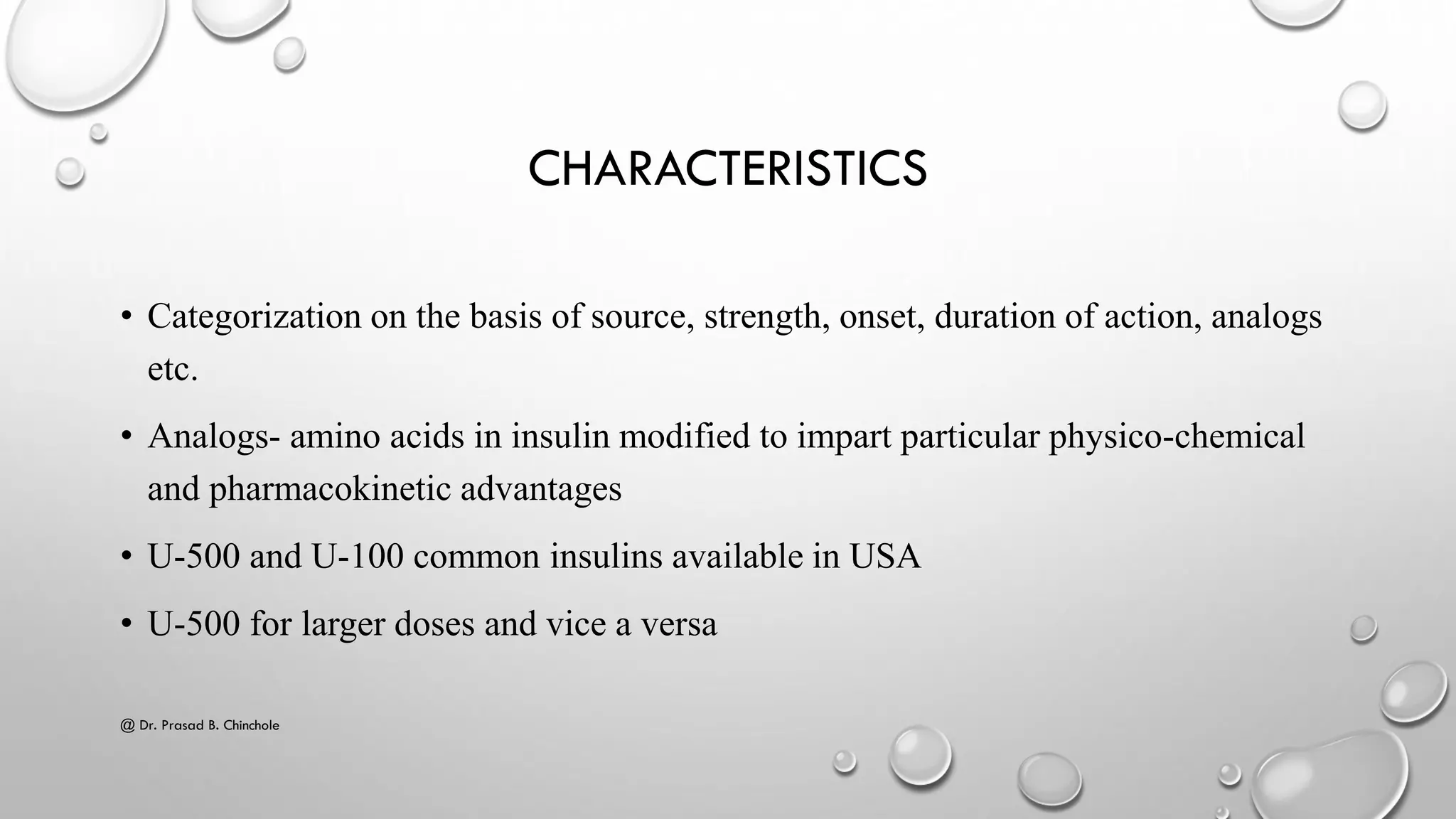
CHARACTERISTICS
• Categorization on the basis of source, strength, onset, duration of action, analogs
etc.
• Analogs- amino acids in insulin modified to impart particular physico-chemical
and pharmacokinetic advantages
• U-500 and U-100 common insulins available in USA
• U-500 for larger doses and vice a versa
@ Dr. Prasad B. Chinchole
SOURCES
• Beef or pork sources
• Beef insulin- differs by 3 AA
• Pork insulin- differs by 1 AA
• Now a days- recombinant DNA technology insulins are used
• When injected sc it is in hexameric form….Gets dissociated into monomers
@ Dr. Prasad B. Chinchole
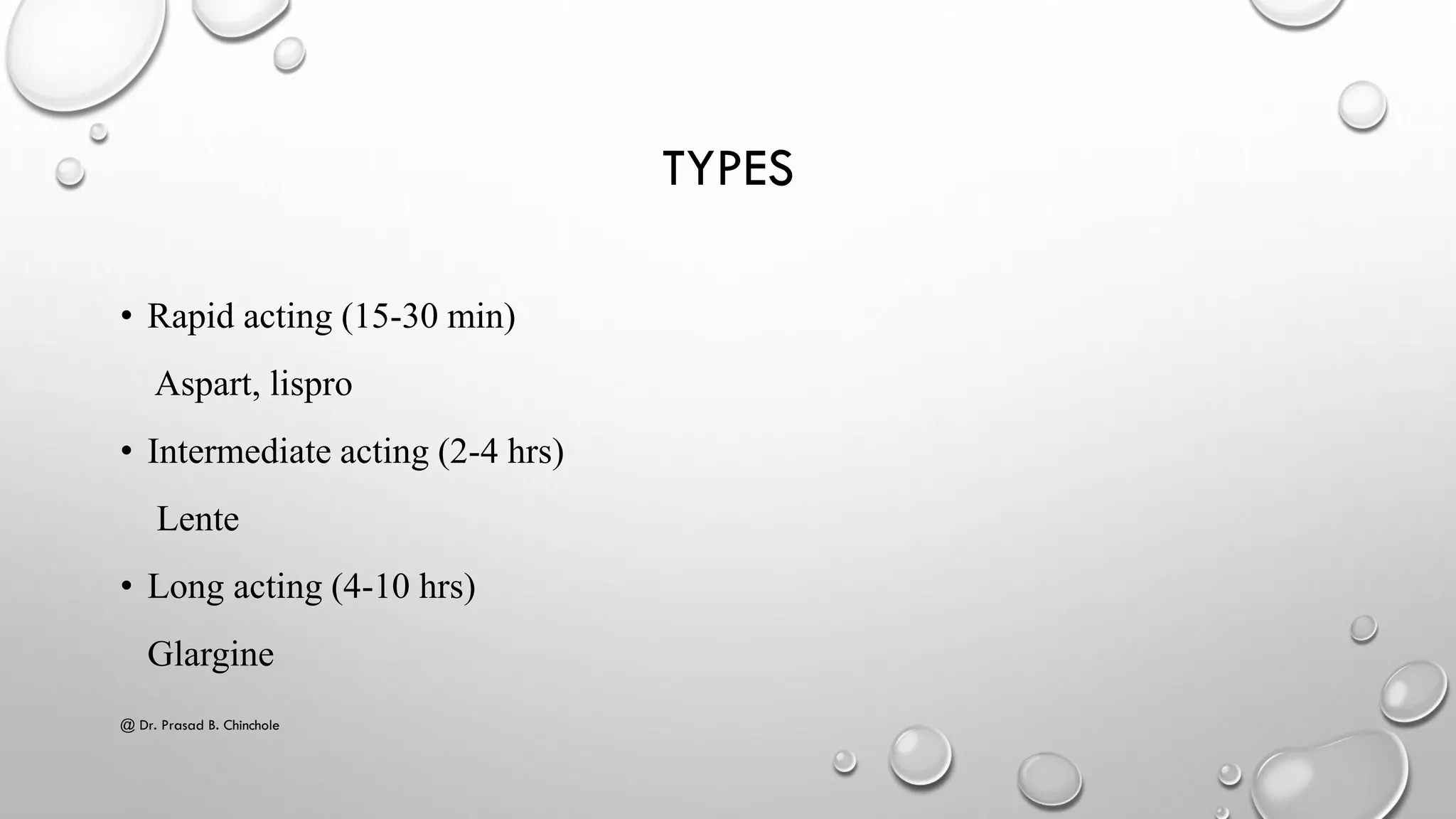
TYPES
• Rapid acting (15-30 min)
Aspart, lispro
• Intermediate acting (2-4 hrs)
Lente
• Long acting (4-10 hrs)
Glargine
@ Dr. Prasad B. Chinchole
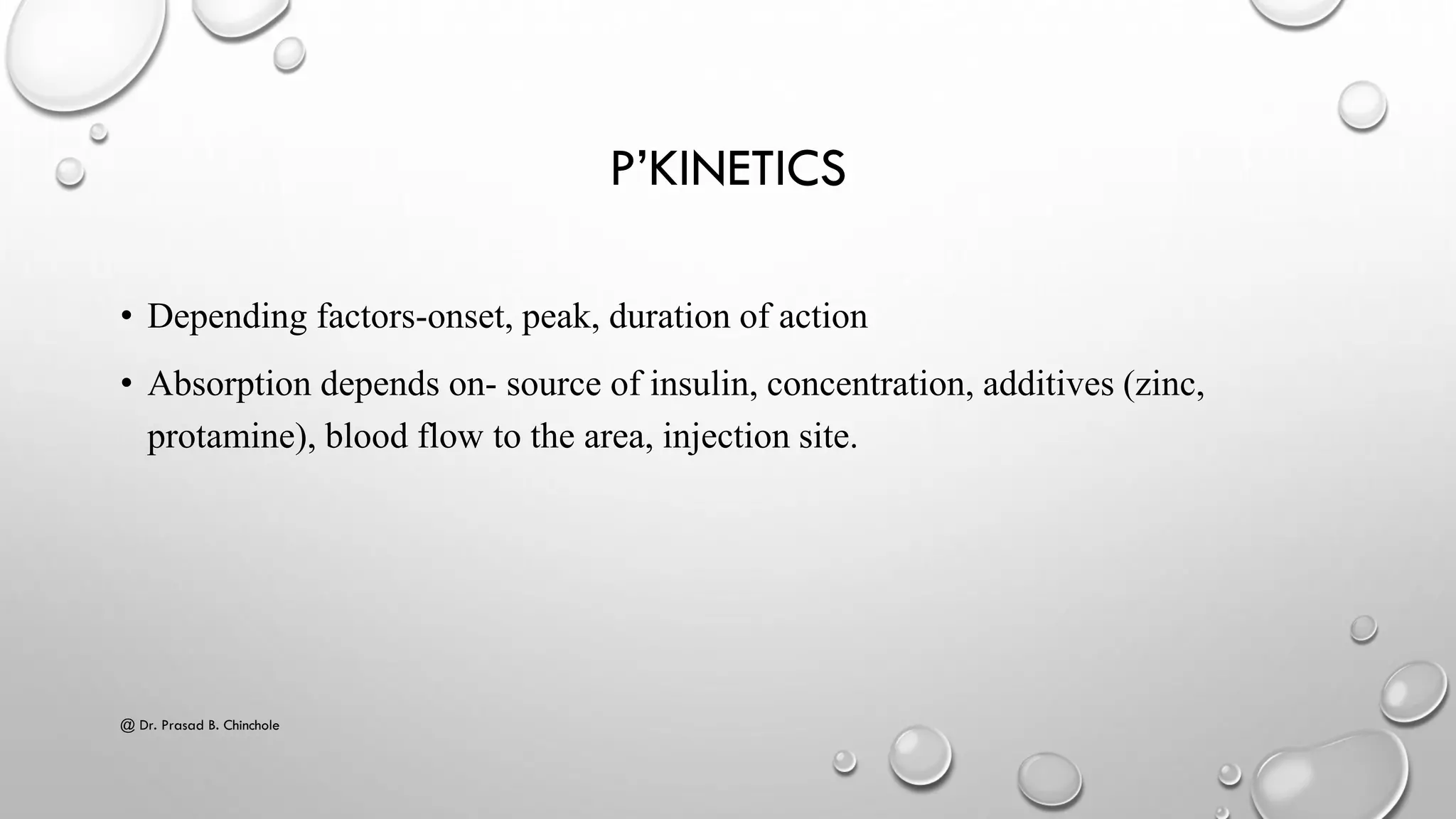
P’KINETICS
• Depending factors-onset, peak, duration of action
• Absorption depends on- source of insulin, concentration, additives (zinc,
protamine), blood flow to the area, injection site.
@ Dr. Prasad B. Chinchole
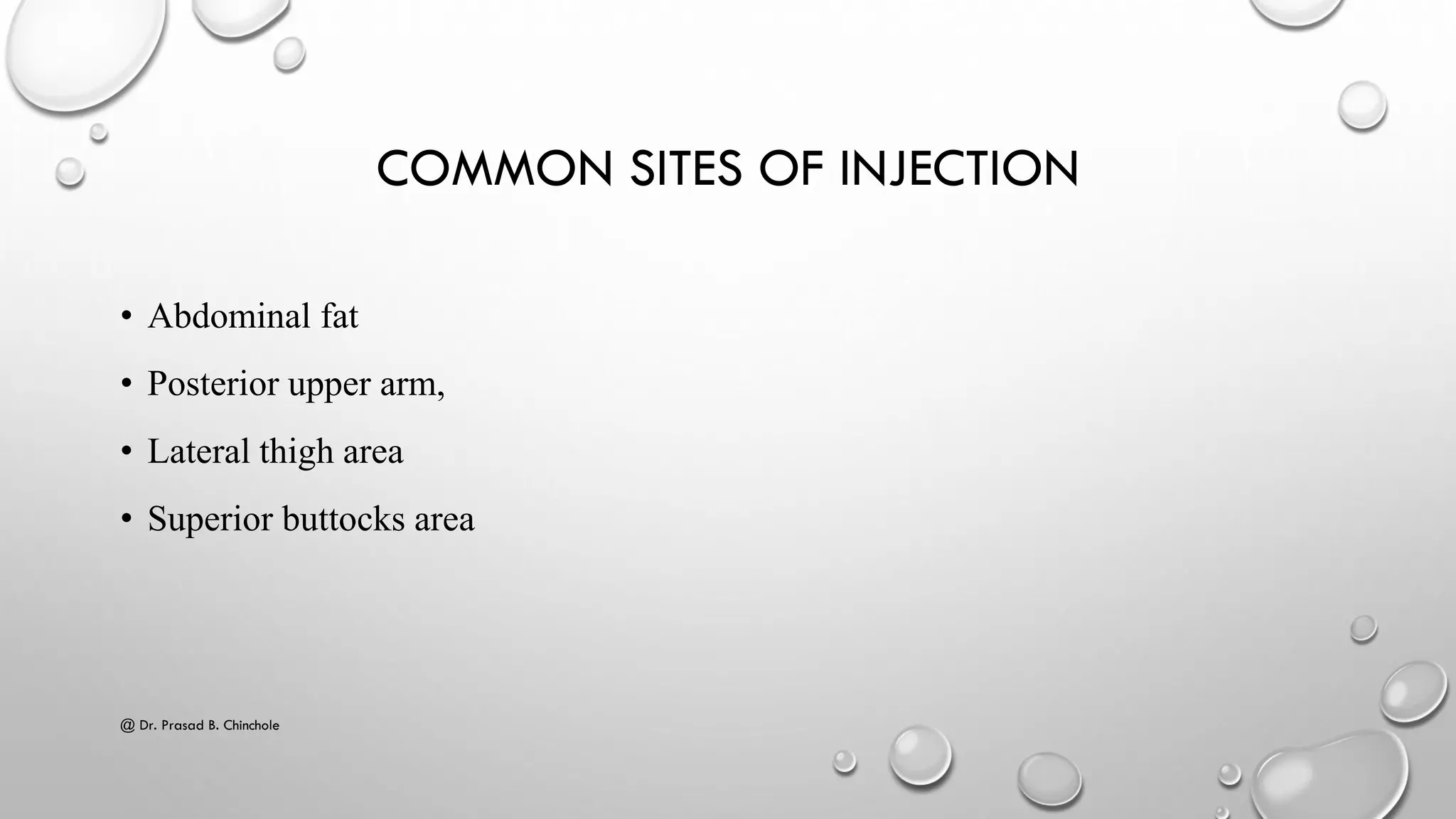
COMMON SITES OF INJECTION
• Abdominal fat
• Posterior upper arm,
• Lateral thigh area
• Superior buttocks area
@ Dr. Prasad B. Chinchole
DEGRADATION
• In liver, muscle, kidneys
• Liver 20-50%
• Kidneys 15-20%
• Inhaled insulin?
@ Dr. Prasad B. Chinchole
EFFICACY
• Glycemic control
@ Dr. Prasad B. Chinchole
Adverse effects
• Hypoglycemia (signs, treatment, risks)
• Weight gain
• Lipodystrophy (LH & LA)
• Dosing and admistration
• Storage
• Standards in handling
@ Dr. Prasad B. Chinchole
ADVERSE EFFECTS
• Hypoglycemia & weight gain are major adverse effects
• Patient education plays an important role in hypo.
• Symptoms of hypoglycemia-
• Tachycardia
• Sweating
• Initial symptoms are often neuro-glycopenic i.E. Confusion, agitation, LOC
and/or progression to coma@ Dr. Prasad B. Chinchole
• Driving, certain sports
• Treatment- glucagon/glucose IV
• Takes 10-15 min to raise blood glucose levels
@ Dr. Prasad B. Chinchole
WEIGHT GAIN
• Seen in both types of DM
• Undesirable in type 2 but may be beneficial in type 1 if the patient is lean
@ Dr. Prasad B. Chinchole
LIPODYSTROPHY
• A medical condition characterized by abnormal or degenerative conditions of the
body's adipose tissue. ("Lipo" is Greek for "fat" and "dystrophy" is greek for
"abnormal or degenerative condition".)
• Presence of small lump
• Harmless , less common
@ Dr. Prasad B. Chinchole
• Same site of injection
• Two forms-lipo-hyperhypertrophy & atrophy
• Lh-caused by many injections at same site
• Due to insulin anabolic action-fat deposition- changes in insulin absorption
• LA- because of insulin antibodies-destruction of fats at the site
@ Dr. Prasad B. Chinchole
DOSING & ADMINISTRATION
• Type 1- 0.5-0.6 units/kg
• Honeymoon phase- 0.1-0.4 units/kg
• Type 2 higher doses may be required depending upon IR
@ Dr. Prasad B. Chinchole
STORAGE
• Unopened insulin is recommended to be refrigerated (36-46ºf)
• Because of financial constraints pts may attempt the use after expiration
• How to identify?
• Clumping, ppt, discoloration
@ Dr. Prasad B. Chinchole
STANDARDS
• Never freeze. (Frozen insulin should be thrown away.)
• Never use insulin beyond the expiration date stamped on the vial, pen, or
cartridge that is supplied from the drug manufacturer.
• Never expose insulin to direct heat or light.
• Inspect insulin prior to each use. Any insulin that has clumps or solid white
particles should not be used.
• Insulin that is supposed to be clear should not have any cloudy appearance.
@ Dr. Prasad B. Chinchole
• Check storage guidelines specific to the insulin formulation. This is usually in
the product package insert.
• Unopened, not-in-use insulin should be stored in a refrigerator at a temperature
of 36-46º f.
• Opened, in-use insulin should be stored at room temperature below 86º f.
• If receiving insulin through the mail, always confirm that the insulin is going to
be stored under proper requirements.
• When storing pre-filled insulin syringes, store them with the needle pointing up.
@ Dr. Prasad B. Chinchole
SULPHONYUREAS
• Pharmacology (MOA)
• Classification
• First & second generation
• P’kinetics
• Adverse effects
• Hypoglycemia, weight gain, hyper na,
@ Dr. Prasad B. Chinchole
SULPHONYLUREAS (MOA)
• Increase insulin secretion
• Bind to a receptor SUR
• Ca channel opening and influx of ca ions
• Depolarization
• Exocytosis
• Decrease in hepatic glucose production
@ Dr. Prasad B. Chinchole
CLASSIFICATION
First generation-
• Tolbutamide, cholpropamide
Second generation-
• Glibenclamide (glyburide),
• Glipizide
• Gliclazide
• Glimepiride@ Dr. Prasad B. Chinchole
P’KINETICS
• Metabolized in liver by CYP450 2C9 enzyme
• Excreted through urine
@ Dr. Prasad B. Chinchole
EFFICACY
• Equipotent doses of SU are equally effective
@ Dr. Prasad B. Chinchole
ADVERSE EFFECTS
• Hypoglycemia
• Reasons-
• Skip meals,
• Exercise vigorously,
• Loss of weight
@ Dr. Prasad B. Chinchole
HYPONATREMIA
• Na levels <129 meq/l
• Why?
• Increase in ADH secretion
Risk factors-
• Age (>60 yrs)
• Female gender
• Concomitant use of thiazide diuretics
@ Dr. Prasad B. Chinchole
OTHER
• Weight gain
• Skin rash
• Hemolytic anemia
• GI disturbances
@ Dr. Prasad B. Chinchole
SAIS AND BIGUANIDES
SAIS
• Moa
• Kinetics (short half-life)
• Adrs
Biguanides
• Moa
• Kinetics
• Adrs
@ Dr. Prasad B. Chinchole
SHORT ACTING INSULIN SECRETOGOGUES
• Acts in analogous way to SU
• Bind to SUR & other distinct receptors
• Closure of ATP dependant K channels
• Depolarization
• Insulin release
• Repaglinide- benzoic acid derivative
• Nateglinide- phenylalanine acetic acid derivative@ Dr. Prasad B. Chinchole
P’KINETICS
• Rapidly absorbed (0.5-1 hr)
• Short half life (1-1.5 hrs)
• Both metabolized in liver
@ Dr. Prasad B. Chinchole
ADVERSE EFFECTS
• Hypoglycemia
• Less as compared to SU
• Weight gain
@ Dr. Prasad B. Chinchole
BIGUANIDES (P’COLOGY)
• Only metformin is available in USA
• Exact MOA is still under investigation
• Suppresion of hepatic gluconeogenesis (major)
• Enhance insulin mediated glucose disposal in muscle and fats
• Interfere with mitochondrial respiratory chain
• Inhibit GI absorption of glucose
@ Dr. Prasad B. Chinchole
P’KINETICS
• 50-60% oral bioavailability
• Half life 6 hrs
@ Dr. Prasad B. Chinchole
ADVERSE EFFECTS
• Gi disturbances (30%)
• Anorexia
• Lactic acidosis
• Flu like symptoms
• Vit B12 deficiency
@ Dr. Prasad B. Chinchole
Index
Thiazolidinediones
• Protein synthesis- central dogma
• Synonyms
• Moa
• P’kinetics
• Adrs
Alpha GI
• Moa
• Efficacy
• Adrs
@ Dr. Prasad B. Chinchole
THIAZOLIDINEDIONES
• Tzds/ glitazones
• Thiaglitazone withdrawn from the market beause of liver toxicity
@ Dr. Prasad B. Chinchole
MOA
• Agonists for the receptors- ppar-gamma
• Peroxisome proliferator activated receptor gamma
• Located in fat & vascular tissues
• Less concentration in muscles
• Enhance transcription of several insulin responsive genes
• Tend to reverse IR
• Suppression of hepatic gluconeogenesis
• Activation of genes regulating FA metabolism and lipogenesis@ Dr. Prasad B. Chinchole
P’KINETICS
• ½ Life periods
• Pioglitazone-3-7 hrs
• Rosiglitazone- 3-4 hrs
@ Dr. Prasad B. Chinchole
ADRS
• Hepatotoxicity
• Low hb levels (2-4%)
• Edema (4-5%)
• Weight gain (why?)
@ Dr. Prasad B. Chinchole
ΑLPHA GLUCOSIDASE INHIBITORS
• Final enzymes in the digestion of CH
• Slows down & decrease digestion and absorption of polysaccharides and sucrose
• Competitive inhibit- maltase, isomaltase, sucrase, glucoamylase in small intestine
• Delay in breakdown sucrose and complex CH
• PPBS not increased
@ Dr. Prasad B. Chinchole
EFFICACY
• 40-50 mg/dl reduction in PPBS
• Hba1c levels reduction 0.3-1%
@ Dr. Prasad B. Chinchole
ADR
• GI disturbances
• Bloating (swelling due to fluid/gas)
• Diarrhoea
• Flatulance (accumulation of gases)
• Why?
• Degradation of undigested ch by microflora results in prodution of gases (co2 &
methane)@ Dr. Prasad B. Chinchole
• Hypoglycemia
• Increased AST & ALT levels
@ Dr. Prasad B. Chinchole
NEWER OHA’S
1. Dipeptidyl peptidase-iv inhibitors (DPP-IV inhibitors)
2. Sodium glucose co-transporter 2 inhibitors
3. Bile acid sequestrants
4. Dopamone agonist
@ Dr. Prasad B. Chinchole
Dipeptidyl peptidase-iv inhibitors (DPP-IV inhibitors)
• Inhibitors of dipeptidyl peptidase 4, also DPP-4 inhibitors or gliptins.
• The first agent of the class — sitagliptin — was approved by the FDA in 2006.
• Glucagon increases blood glucose levels, and dpp-4 inhibitors reduce glucagon
and blood glucose levels.
• The mechanism of DPP-4 inhibitors is to increase incretin levels (GLP-
1 and GIP), which inhibit glucagon release, which in turn
increases insulin secretion, decreases gastric emptying, and decreases blood
glucose levels.
@ Dr. Prasad B. Chinchole
ADR
• In those taking sulphonylureas there is an increased risk of low blood sugar.
• Nasopharyngitis, headache, nausea, heart failure, hypersensitivity and skin
reactions.
• Joint pain that can be severe and disabling.
• Increased risk of heart failure
• Possible association of dpp-4 inhibitors with pancreatic cancer?
@ Dr. Prasad B. Chinchole
EXAMPLES
• Sitagliptin
• Vildagliptin
• Saxagliptin
• Linagliptin
• Gemigliptin
• Anagliptin
• Teneligliptin
• Alogliptin
• Trelagliptin
• Omarigliptin
• Evogliptin
• Dutogliptin
@ Dr. Prasad B. Chinchole
Sodium Glucose Co-Transporter 2 Inhibitors
• The sodium/glucose co-transporter 2 (SGLT2) is a protein that in humans is
encoded by the SLC5A2 gene.
• Sglt2 is a member of the sodium glucose co-transporter family which are
sodium-dependent glucose transport proteins. SGLT2 is the major co-transporter
involved in glucose reabsorption in the kidney.
• Gliflozins enhance glycemic control as well as reduce body weight and systolic
and diastolic blood pressure.
@ Dr. Prasad B. Chinchole
ADRS
• Euglycemic ketoacidosis.
• Increased risk of (generally mild) genital infections, such as candidal
vulvovaginitis.
@ Dr. Prasad B. Chinchole
EXAMPLES
• CANAGLIFLOZIN
• DAPAGLIFLOZIN
• EMPAGLIFLOZIN
@ Dr. Prasad B. Chinchole
BILE ACID SEQUESTRANTS
• The bile acid sequestrants are a group of resins used to bind certain components
of bile in the gastrointestinal tract
• Bile acid sequestrants are polymeric compounds that serve as ion-exchange
resins.
• Bile acid sequestrants exchange anions such as chloride ions for bile acids. By
doing so, they bind bile acids and sequester them from the enterohepatic
circulation.
• The liver then produces more bile acids to replace those that have been lost.
Because the body uses cholesterol to make bile acids, this reduces the amount of
LDL cholesterol circulating in the blood.@ Dr. Prasad B. Chinchole
• It is not yet known how colesevelam works to help control blood sugar in people
with type 2 diabetes.
• However, it is clear that the drug works within the digestive tract, since it is not
absorbed into the rest of the body.
@ Dr. Prasad B. Chinchole
• Serum triglyceride increased
• Serum transaminase increases
• Headache
• Flatulence, constipation
• Vomiting, diarrhea, dyspepsia, abdominal pain, stool abnormalities, nausea
• Myalgia
ADR’S
@ Dr. Prasad B. Chinchole
DOPAMINE AGONIST
@ Dr. Prasad B. Chinchole
INDEX
• Basic classification of OHAS
• Brief MOAS
• OHAS doses
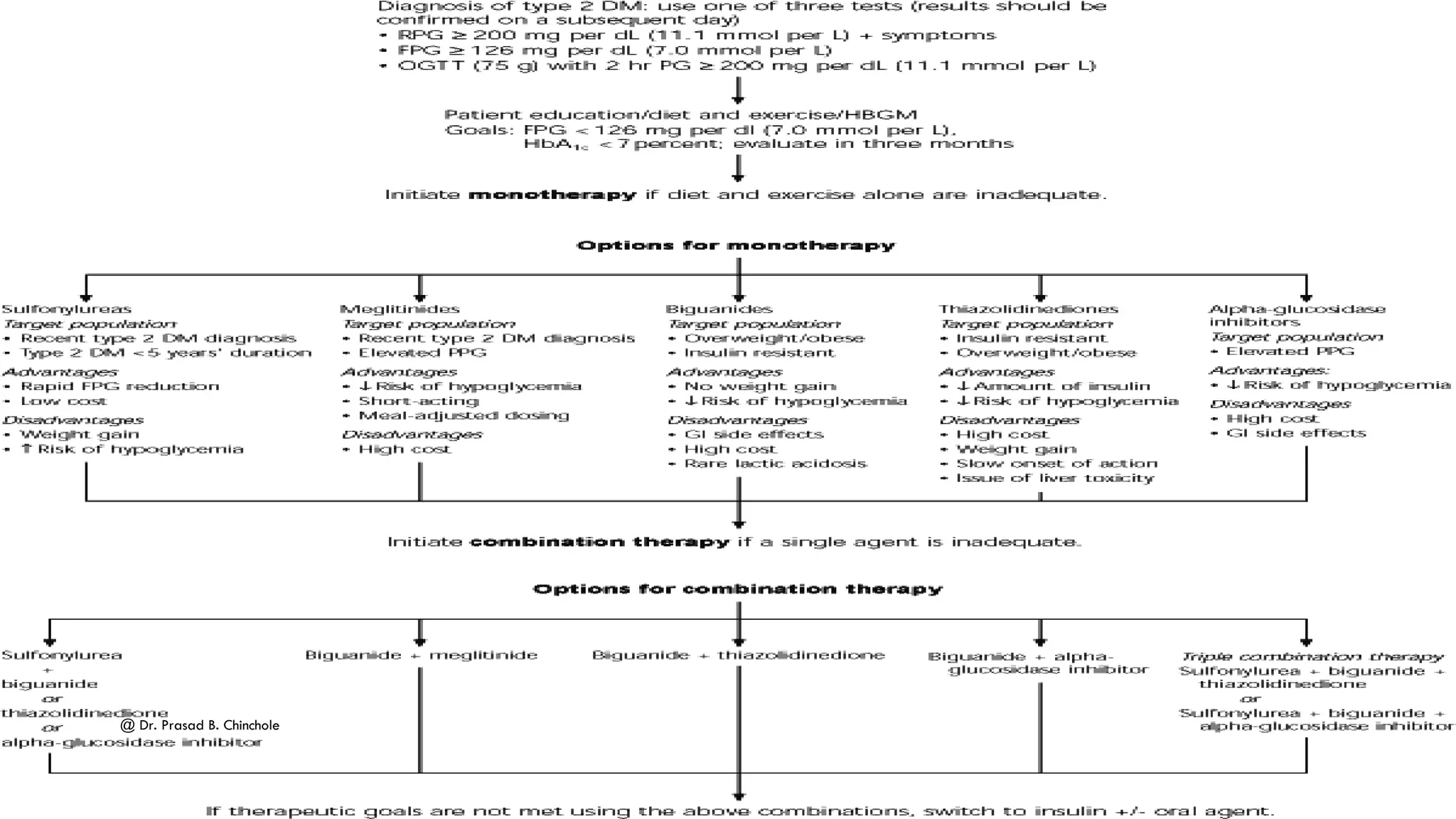
• Management of T2DM (OHAS)
@ Dr. Prasad B. Chinchole
Overall MOA
Drug class
• SU
• SAIS
• Biguanides
• TZD
• Alpha GI
MOA
• Binding to SUR and exocytosis of insulin
• Similar
• Decrease hepatic gluconeogenesis (major) & absorption of glucose
• Ppar gamma agonists
• Decrease in complex CH digestion
@ Dr. Prasad B. Chinchole
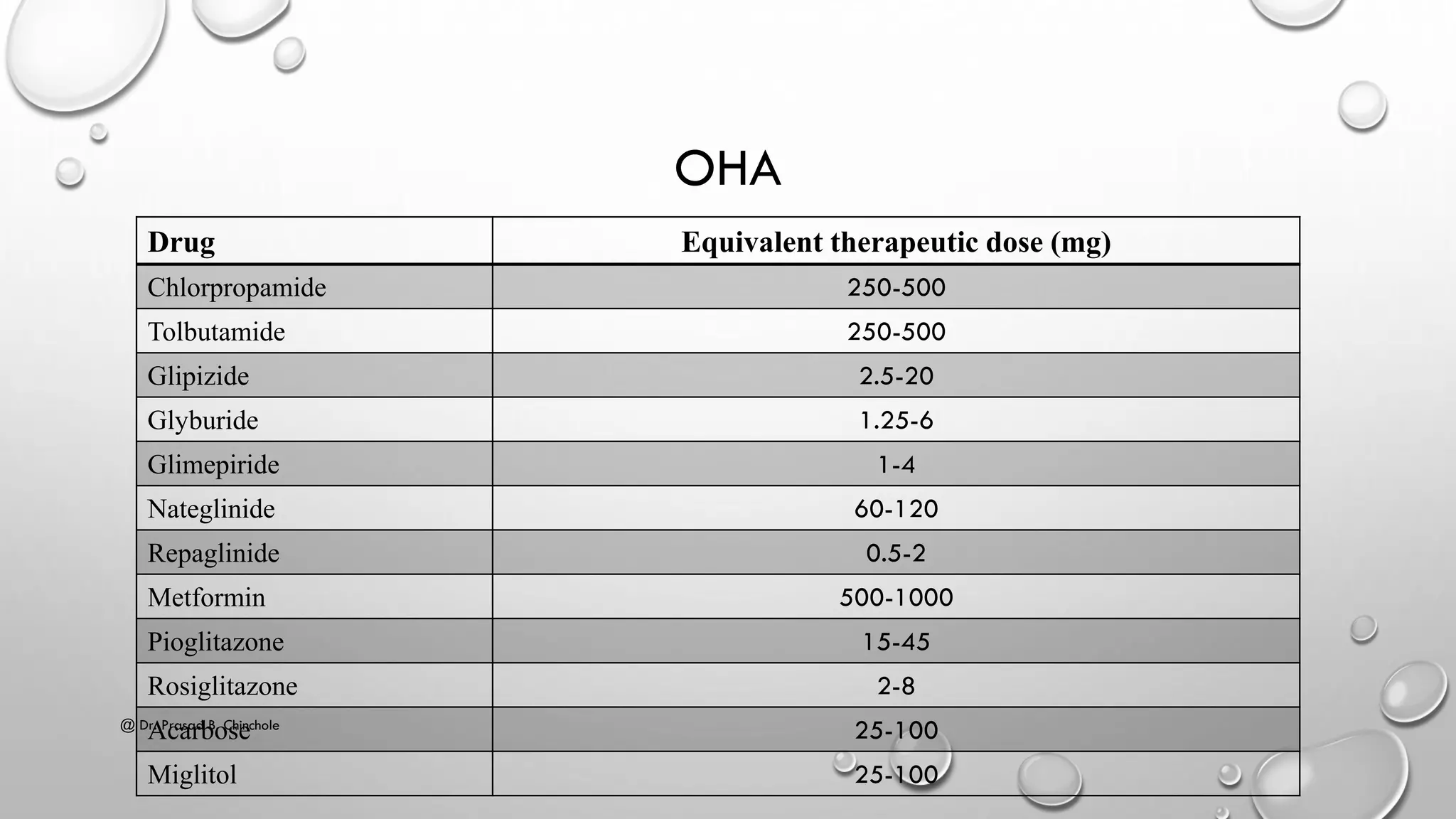
OHA
Drug Equivalent therapeutic dose (mg)
Chlorpropamide 250-500
Tolbutamide 250-500
Glipizide 2.5-20
Glyburide 1.25-6
Glimepiride 1-4
Nateglinide 60-120
Repaglinide 0.5-2
Metformin 500-1000
Pioglitazone 15-45
Rosiglitazone 2-8
Acarbose 25-100
Miglitol 25-100
@ Dr. Prasad B. Chinchole
PATIENT EDUCATION
• Importance
• Instructions and pamphlets are not enough
• Emphasis should be given that complications can be prevented and minimized
• Empathy
@ Dr. Prasad B. Chinchole
COMPLICATIONS
Microvacular
• Retinopath
• Neuropathy
• Nephropathy
Macrovascular
• CHD
• PVD & foot ulcer
• HTN
@ Dr. Prasad B. Chinchole
RETINOPATHY
@ Dr. Prasad B. Chinchole
• Various disorders of the retina, which can affect vision.
• Due to damage to the tiny blood vessels in the retina.
• Commonly caused by diabetes,
• Sometimes caused by other diseases such as very high blood pressure.
@ Dr. Prasad B. Chinchole
DIABETIC RETINOPATHY
• Damage to blood vessels
• Leads to destruction/damage to rod and cone cells
• Signs and symptoms- visual disturbances & blindness
• Treatment- laser treatment
@ Dr. Prasad B. Chinchole
NEUROPATHY
• Most common complication
• Feet are involved more than hands
• Numbness, sometimes pain
• Tricyclic antidepressants, gabapentin
@ Dr. Prasad B. Chinchole
NEPHROPATHY
• Also called as DKD
• Glomeruli get damaged
• Leaking of proteins in urine
• Proteinurea
• Common in T1DM but more people are there of T2DM
• Detection through urine tests
• Treatment- ACE inhibitors@ Dr. Prasad B. Chinchole
USEFUL LINKS
• HTTP://HIGHERED.MCGRAW-
HILL.COM/OLCWEB/CGI/PLUGINPOP.CGI?IT=SWF::535::535::/SITES/DL/FREE/0072437316/1
20077/MICRO06.SWF::PROTEIN%20SYNTHESIS
• HTTP://HIGHERED.MCGRAW-
HILL.COM/SITES/0072495855/STUDENT_VIEW0/CHAPTER20/ANIMATION__BLOOD_SUGAR_
REGULATION_IN_DIABETICS.HTML
• HTTP://WWW.ISPOR.ORG/DLP/LIST.ASPX
@ Dr. Prasad B. Chinchole

Diabetes mellitus

  • 1.
    DIABETES MELLITUS Dr. PrasadB. Chinchole Pharm D SCOP, ALMALA @ Dr. Prasad B. Chinchole
  • 2.
    INDEX • Pancreas • Definition •Epidemiology • Classification • Type 1 • Type 2 • GDM • Other types of DM • Difference between children and adult type 1 • Screening @ Dr. Prasad B. Chinchole
  • 3.
    @ Dr. PrasadB. Chinchole
  • 4.
    PANCREAS • What doyou know? • Type of gland • Which exocrine hormones? • First identified by herophilus- a greek anatomist (335 ) • Named by rufus of ephesus • Pan= all, whole • Creas= flesh @ Dr. Prasad B. Chinchole
  • 5.
    @ Dr. PrasadB. Chinchole
  • 6.
    DEFINITION It is agroup of metabolic disorders of fat, carbohydrate and protein metabolism that results from defects in insulin secretion, insulin action (sensitivity) or both @ Dr. Prasad B. Chinchole
  • 7.
    @ Dr. PrasadB. Chinchole
  • 8.
    @ Dr. PrasadB. Chinchole
  • 9.
    EPIDEMIOLOGY • Type 1- 10% • Type 2 - 90% • GD - 7% of all pregnancy • India? @ Dr. Prasad B. Chinchole
  • 10.
    CLASSIFICATION • Type 1 •Type 2 • Gestational diabetes • Other specific types of diabetes @ Dr. Prasad B. Chinchole
  • 11.
    TYPE 1 DM •Autoimmune • Markers of immune destruction are present in 90% of individuals • Eg. Ilslet cell antibodies, antibodies to insulin • Usually occurs in children and adolescent • Can occur at an age @ Dr. Prasad B. Chinchole
  • 12.
    Type 1 DM Children •Rapid beta cells destruction • Ketoacidosis Adults • Slow beta cell destruction • No ketoacidosis (because of maintenance of insulin levels to prevent ketoacidosis i.e. LADA) @ Dr. Prasad B. Chinchole
  • 13.
    Type 2 DM •Characterized by insulin resistance and/lack of insulin secretion • Abdominal obesity which can cause IR • Other factors- HTN, dyslipidemia, • Clustering of abnormalities is called as insulin resistance syndrome/metabolic syndrome • Genetic cause is not well defined @ Dr. Prasad B. Chinchole
  • 14.
    Gestational diabetes mellitus •Nothing but glucose intolerance first recognized during pregnancy • 7% @ Dr. Prasad B. Chinchole
  • 15.
    Other DM • Geneticdefects in beta cell function • Genetic defect in insulin action • Disease of exocrine pancreas eg. Pancreatitis, trauma • Endocrinopathies eg. Acromegaly, hyperthyroidism • Drug-induced eg. Glucocorticoids • Infections- eg. Cytomegalovirus (CMV) • Uncommon forms of immune mediated DM eg. Stiff man syndrome • Other genetic syndromes eg. Down’s syndrome, turner’s syndrome @ Dr. Prasad B. Chinchole
  • 16.
    @ Dr. PrasadB. Chinchole
  • 17.
    SCREENING Type 1- notrecommended • Why? Type 2 • >45 yrs • Every 3 years • More risk factors more earlier@ Dr. Prasad B. Chinchole
  • 18.
    Children and adolescent- •Incidence is increasing • Risk factors- high BMI, family history, signs of insulin resistance. • Testing every 2 years starting at 10 years of age/ at the onset of puberty GDM- • At first prenatal visit • Risk factors @ Dr. Prasad B. Chinchole
  • 19.
    AUTOIMMUNE DISEASE • Autoimmunediseases arise from an inappropriate immune response of the body against substances and tissues normally present in the body. • In other words, the immune system mistakes some part of the body as a pathogen and attacks its own cells. @ Dr. Prasad B. Chinchole
  • 20.
    DIAGNOSIS • Symptoms+ RBS>200 • FBS > 126 • PPBS > 200 • Impaired fasting glucose (100-126 mg/dl) • IGT= 2hrs glucose value 140-200 mg/dl • Prediabetes • HbA1c@ Dr. Prasad B. Chinchole
  • 21.
    PATHOGENESIS (T1DM) • Absolutedeficiency of insulin • Idiopathic? @ Dr. Prasad B. Chinchole
  • 22.
    • Immune markers •Hyperglycemia when 80-90% destruction of beta cells • Some important inciting factors which initiate immune process? • Auto-immune process is mediated by macrophages & t lymphocytes and circulating auto-antibodies to beta cell antigen • Most common antibody is islet cell antibody • Lab test for it? @ Dr. Prasad B. Chinchole
  • 23.
    • LONAVALA • KHANDALA •PANHALA OF KOLHAPUR • BANGALORE • GOA • KASHMIR @ Dr. Prasad B. Chinchole
  • 24.
    HONEYMOON PHASE • Periodthat often follows diagnosis and initiation of insulin treatment • Varying lengths of time and can affect diabetics differently • Months to years • Hypo and hyperglycemia • Transient remission @ Dr. Prasad B. Chinchole
  • 25.
    • Other antibodiesalso found • 90% of Pts have ab • First degree relatives 3.5-4% (unaffected) • Antibodies are markers rather than mediators • Chromosomal abnormalities @ Dr. Prasad B. Chinchole
  • 26.
    PATHOGENESIS T2DM @ Dr.Prasad B. Chinchole
  • 27.
    INSULIN RESISTANCE • Aphysiological condition where cells are no longer able to respond to the normal actions of the hormone insulin • Liver • Skeletal muscles • Adipocytes @ Dr. Prasad B. Chinchole
  • 28.
    SITE OF INSULINRESISTANCE • Liver- major site • Insulin decreases hepatic glucose production • In diabetics 2 inputs for glucose – liver and GIT @ Dr. Prasad B. Chinchole
  • 29.
    SKELETAL MUSCLES • 80%glucose uptake • High insulin high glucose uptake • Plateau phase10 mg/kg/min • In diabetics, insulin secretion delayed for 40 min and leg glucose uptake reduced by 50% @ Dr. Prasad B. Chinchole
  • 30.
    PERIPHERAL (ADIPOCYTES) • FFAare stored as tgs in adipocytes @ Dr. Prasad B. Chinchole
  • 31.
    Clinical presentation Type 1 •<30 years • Abrupt onset • Lean body habitus • No IR • Autoantibodies often • Syptomatic • Immediate insulin therapy • No/rare micro/macro vacsular complications Type 2 • >30 yrs • Gradual onset • Obese/ or h/o obesity • Ir • Rare • Often asymtomatic • Years after diagnosis • Common @ Dr. Prasad B. Chinchole
  • 32.
    CLINICAL PRESENTATION T1 DM Polyurea Polydipsia(increased thirst) Polyphagia (increased hunger) Irregular and unpredictable hyperglycemia @ Dr. Prasad B. Chinchole
  • 33.
    T2DM • Blurred vision •Peripheral neuropathy • Weight loss @ Dr. Prasad B. Chinchole
  • 34.
    INDEX • Di • Cause,types, signs and symptoms, treatment • DM- desired outcomes • Goals of therapy • Differences between ADA & ACE/AACE • Monitoring complications • Smbg • Non-pharmacologic therapy • Diet • Activity • Pharmacologic therapy @ Dr. Prasad B. Chinchole
  • 35.
    DIABETES INSIPIDUS • “Insipidus”means “lacking of flavour or zest” • Characterized by excessive thirst and excretion of large amounts of severely diluted urine, • Most common is because of deficiency of adh/vasopressin • Other one is nephrogenic diabetes insipidus which is caused by an insensitivity of the kidneys to adh@ Dr. Prasad B. Chinchole
  • 36.
    • What isthe difference between polyurea two diabetes? • Osmotic diuresis- sugar leaking into urine • Very rare • Signs and symptoms? • No hyperglycemia, no glucose in urine • Treatment- desmopressin @ Dr. Prasad B. Chinchole
  • 37.
    TYPES OF DI •Neurogenic • Nephrogenic • Dipsogenic- due to the damage/destruct in thirst mechanism in hypothalamus • Gestational- during pregnancy@ Dr. Prasad B. Chinchole
  • 38.
    TREATMENT- DESIRED OUTCOME •To reduce complications • To ameliorate symptoms • To reduce mortality • To improve QOL @ Dr. Prasad B. Chinchole
  • 39.
    GLYCEMIC GOALS OFTHERAPY ADA • HBA1C <7% • PRE PBS 90-130 • PPBS <180 ACE & AACE • ≤6.5% • <110 • <140 @ Dr. Prasad B. Chinchole
  • 40.
    MONITORING COMPLICATIONS • Initiationof complication monitoring at the time of diagnosis- • Eye care • Feet examination • Lipid examination @ Dr. Prasad B. Chinchole
  • 41.
    SMBG • Near normalblood glucose @ Dr. Prasad B. Chinchole
  • 42.
    NON-PHARMACOLOGIC THERAPY- DIET •Less carbohydrates • Caloric restriction for what? • Carbohydrate and glucose connection knowledge @ Dr. Prasad B. Chinchole
  • 43.
    ACTIVITY • Aerobic exercise •Benefits- • Improves IR • Improves glycemic control • Reduce cardiovascular risk factors • Contributes to weight/maintenance • Improves well being@ Dr. Prasad B. Chinchole
  • 44.
    • Start exerciseslowly in previously sedentary patients • Daily for half an hour for at least five days a week @ Dr. Prasad B. Chinchole
  • 45.
    PHARMACOLOGIC THERAPY Currently 09classes of drugs 1. Sulfonylureas- glibenclamide, glipizide 2. Biguanides- metformin 3. Meglitinide analogs- repaglinide, nateglinide 4. Thazolidinediones- pioglitazone 5. Αlpha glucosidase inhibitors- acarbose @ Dr. Prasad B. Chinchole
  • 46.
    6. Dipeptidyl peptidase-ivinhibitors (DPP-IV inhibitors) 7. Sodium glucose cotransporter 2 inhibitors 8. Bile acid sequestrants 9. Dopamone agonist @ Dr. Prasad B. Chinchole
  • 47.
    DRUG CLASS INFORMATION Pharmacology Characteristic Pharmacokinetics Efficacy Macro& microvascular complications Adverse effects Drug-drug interaction Dosing and administration Storage @ Dr. Prasad B. Chinchole
  • 48.
    INSULIN • Pharmacology- • Anabolicand anti-catabolic hormone • Plays major role in C, P and F metabolism • Cleaved from pro-insulin insulin @ Dr. Prasad B. Chinchole
  • 49.
    CHARACTERISTICS • Categorization onthe basis of source, strength, onset, duration of action, analogs etc. • Analogs- amino acids in insulin modified to impart particular physico-chemical and pharmacokinetic advantages • U-500 and U-100 common insulins available in USA • U-500 for larger doses and vice a versa @ Dr. Prasad B. Chinchole
  • 50.
    SOURCES • Beef orpork sources • Beef insulin- differs by 3 AA • Pork insulin- differs by 1 AA • Now a days- recombinant DNA technology insulins are used • When injected sc it is in hexameric form….Gets dissociated into monomers @ Dr. Prasad B. Chinchole
  • 51.
    TYPES • Rapid acting(15-30 min) Aspart, lispro • Intermediate acting (2-4 hrs) Lente • Long acting (4-10 hrs) Glargine @ Dr. Prasad B. Chinchole
  • 52.
    P’KINETICS • Depending factors-onset,peak, duration of action • Absorption depends on- source of insulin, concentration, additives (zinc, protamine), blood flow to the area, injection site. @ Dr. Prasad B. Chinchole
  • 53.
    COMMON SITES OFINJECTION • Abdominal fat • Posterior upper arm, • Lateral thigh area • Superior buttocks area @ Dr. Prasad B. Chinchole
  • 54.
    DEGRADATION • In liver,muscle, kidneys • Liver 20-50% • Kidneys 15-20% • Inhaled insulin? @ Dr. Prasad B. Chinchole
  • 55.
    EFFICACY • Glycemic control @Dr. Prasad B. Chinchole
  • 56.
    Adverse effects • Hypoglycemia(signs, treatment, risks) • Weight gain • Lipodystrophy (LH & LA) • Dosing and admistration • Storage • Standards in handling @ Dr. Prasad B. Chinchole
  • 57.
    ADVERSE EFFECTS • Hypoglycemia& weight gain are major adverse effects • Patient education plays an important role in hypo. • Symptoms of hypoglycemia- • Tachycardia • Sweating • Initial symptoms are often neuro-glycopenic i.E. Confusion, agitation, LOC and/or progression to coma@ Dr. Prasad B. Chinchole
  • 58.
    • Driving, certainsports • Treatment- glucagon/glucose IV • Takes 10-15 min to raise blood glucose levels @ Dr. Prasad B. Chinchole
  • 59.
    WEIGHT GAIN • Seenin both types of DM • Undesirable in type 2 but may be beneficial in type 1 if the patient is lean @ Dr. Prasad B. Chinchole
  • 60.
    LIPODYSTROPHY • A medicalcondition characterized by abnormal or degenerative conditions of the body's adipose tissue. ("Lipo" is Greek for "fat" and "dystrophy" is greek for "abnormal or degenerative condition".) • Presence of small lump • Harmless , less common @ Dr. Prasad B. Chinchole
  • 61.
    • Same siteof injection • Two forms-lipo-hyperhypertrophy & atrophy • Lh-caused by many injections at same site • Due to insulin anabolic action-fat deposition- changes in insulin absorption • LA- because of insulin antibodies-destruction of fats at the site @ Dr. Prasad B. Chinchole
  • 62.
    DOSING & ADMINISTRATION •Type 1- 0.5-0.6 units/kg • Honeymoon phase- 0.1-0.4 units/kg • Type 2 higher doses may be required depending upon IR @ Dr. Prasad B. Chinchole
  • 63.
    STORAGE • Unopened insulinis recommended to be refrigerated (36-46ºf) • Because of financial constraints pts may attempt the use after expiration • How to identify? • Clumping, ppt, discoloration @ Dr. Prasad B. Chinchole
  • 64.
    STANDARDS • Never freeze.(Frozen insulin should be thrown away.) • Never use insulin beyond the expiration date stamped on the vial, pen, or cartridge that is supplied from the drug manufacturer. • Never expose insulin to direct heat or light. • Inspect insulin prior to each use. Any insulin that has clumps or solid white particles should not be used. • Insulin that is supposed to be clear should not have any cloudy appearance. @ Dr. Prasad B. Chinchole
  • 65.
    • Check storageguidelines specific to the insulin formulation. This is usually in the product package insert. • Unopened, not-in-use insulin should be stored in a refrigerator at a temperature of 36-46º f. • Opened, in-use insulin should be stored at room temperature below 86º f. • If receiving insulin through the mail, always confirm that the insulin is going to be stored under proper requirements. • When storing pre-filled insulin syringes, store them with the needle pointing up. @ Dr. Prasad B. Chinchole
  • 66.
    SULPHONYUREAS • Pharmacology (MOA) •Classification • First & second generation • P’kinetics • Adverse effects • Hypoglycemia, weight gain, hyper na, @ Dr. Prasad B. Chinchole
  • 67.
    SULPHONYLUREAS (MOA) • Increaseinsulin secretion • Bind to a receptor SUR • Ca channel opening and influx of ca ions • Depolarization • Exocytosis • Decrease in hepatic glucose production @ Dr. Prasad B. Chinchole
  • 68.
    CLASSIFICATION First generation- • Tolbutamide,cholpropamide Second generation- • Glibenclamide (glyburide), • Glipizide • Gliclazide • Glimepiride@ Dr. Prasad B. Chinchole
  • 69.
    P’KINETICS • Metabolized inliver by CYP450 2C9 enzyme • Excreted through urine @ Dr. Prasad B. Chinchole
  • 70.
    EFFICACY • Equipotent dosesof SU are equally effective @ Dr. Prasad B. Chinchole
  • 71.
    ADVERSE EFFECTS • Hypoglycemia •Reasons- • Skip meals, • Exercise vigorously, • Loss of weight @ Dr. Prasad B. Chinchole
  • 72.
    HYPONATREMIA • Na levels<129 meq/l • Why? • Increase in ADH secretion Risk factors- • Age (>60 yrs) • Female gender • Concomitant use of thiazide diuretics @ Dr. Prasad B. Chinchole
  • 73.
    OTHER • Weight gain •Skin rash • Hemolytic anemia • GI disturbances @ Dr. Prasad B. Chinchole
  • 74.
    SAIS AND BIGUANIDES SAIS •Moa • Kinetics (short half-life) • Adrs Biguanides • Moa • Kinetics • Adrs @ Dr. Prasad B. Chinchole
  • 75.
    SHORT ACTING INSULINSECRETOGOGUES • Acts in analogous way to SU • Bind to SUR & other distinct receptors • Closure of ATP dependant K channels • Depolarization • Insulin release • Repaglinide- benzoic acid derivative • Nateglinide- phenylalanine acetic acid derivative@ Dr. Prasad B. Chinchole
  • 76.
    P’KINETICS • Rapidly absorbed(0.5-1 hr) • Short half life (1-1.5 hrs) • Both metabolized in liver @ Dr. Prasad B. Chinchole
  • 77.
    ADVERSE EFFECTS • Hypoglycemia •Less as compared to SU • Weight gain @ Dr. Prasad B. Chinchole
  • 78.
    BIGUANIDES (P’COLOGY) • Onlymetformin is available in USA • Exact MOA is still under investigation • Suppresion of hepatic gluconeogenesis (major) • Enhance insulin mediated glucose disposal in muscle and fats • Interfere with mitochondrial respiratory chain • Inhibit GI absorption of glucose @ Dr. Prasad B. Chinchole
  • 79.
    P’KINETICS • 50-60% oralbioavailability • Half life 6 hrs @ Dr. Prasad B. Chinchole
  • 80.
    ADVERSE EFFECTS • Gidisturbances (30%) • Anorexia • Lactic acidosis • Flu like symptoms • Vit B12 deficiency @ Dr. Prasad B. Chinchole
  • 81.
    Index Thiazolidinediones • Protein synthesis-central dogma • Synonyms • Moa • P’kinetics • Adrs Alpha GI • Moa • Efficacy • Adrs @ Dr. Prasad B. Chinchole
  • 82.
    THIAZOLIDINEDIONES • Tzds/ glitazones •Thiaglitazone withdrawn from the market beause of liver toxicity @ Dr. Prasad B. Chinchole
  • 83.
    MOA • Agonists forthe receptors- ppar-gamma • Peroxisome proliferator activated receptor gamma • Located in fat & vascular tissues • Less concentration in muscles • Enhance transcription of several insulin responsive genes • Tend to reverse IR • Suppression of hepatic gluconeogenesis • Activation of genes regulating FA metabolism and lipogenesis@ Dr. Prasad B. Chinchole
  • 84.
    P’KINETICS • ½ Lifeperiods • Pioglitazone-3-7 hrs • Rosiglitazone- 3-4 hrs @ Dr. Prasad B. Chinchole
  • 85.
    ADRS • Hepatotoxicity • Lowhb levels (2-4%) • Edema (4-5%) • Weight gain (why?) @ Dr. Prasad B. Chinchole
  • 86.
    ΑLPHA GLUCOSIDASE INHIBITORS •Final enzymes in the digestion of CH • Slows down & decrease digestion and absorption of polysaccharides and sucrose • Competitive inhibit- maltase, isomaltase, sucrase, glucoamylase in small intestine • Delay in breakdown sucrose and complex CH • PPBS not increased @ Dr. Prasad B. Chinchole
  • 87.
    EFFICACY • 40-50 mg/dlreduction in PPBS • Hba1c levels reduction 0.3-1% @ Dr. Prasad B. Chinchole
  • 88.
    ADR • GI disturbances •Bloating (swelling due to fluid/gas) • Diarrhoea • Flatulance (accumulation of gases) • Why? • Degradation of undigested ch by microflora results in prodution of gases (co2 & methane)@ Dr. Prasad B. Chinchole
  • 89.
    • Hypoglycemia • IncreasedAST & ALT levels @ Dr. Prasad B. Chinchole
  • 90.
    NEWER OHA’S 1. Dipeptidylpeptidase-iv inhibitors (DPP-IV inhibitors) 2. Sodium glucose co-transporter 2 inhibitors 3. Bile acid sequestrants 4. Dopamone agonist @ Dr. Prasad B. Chinchole
  • 91.
    Dipeptidyl peptidase-iv inhibitors(DPP-IV inhibitors) • Inhibitors of dipeptidyl peptidase 4, also DPP-4 inhibitors or gliptins. • The first agent of the class — sitagliptin — was approved by the FDA in 2006. • Glucagon increases blood glucose levels, and dpp-4 inhibitors reduce glucagon and blood glucose levels. • The mechanism of DPP-4 inhibitors is to increase incretin levels (GLP- 1 and GIP), which inhibit glucagon release, which in turn increases insulin secretion, decreases gastric emptying, and decreases blood glucose levels. @ Dr. Prasad B. Chinchole
  • 92.
    ADR • In thosetaking sulphonylureas there is an increased risk of low blood sugar. • Nasopharyngitis, headache, nausea, heart failure, hypersensitivity and skin reactions. • Joint pain that can be severe and disabling. • Increased risk of heart failure • Possible association of dpp-4 inhibitors with pancreatic cancer? @ Dr. Prasad B. Chinchole
  • 93.
    EXAMPLES • Sitagliptin • Vildagliptin •Saxagliptin • Linagliptin • Gemigliptin • Anagliptin • Teneligliptin • Alogliptin • Trelagliptin • Omarigliptin • Evogliptin • Dutogliptin @ Dr. Prasad B. Chinchole
  • 94.
    Sodium Glucose Co-Transporter2 Inhibitors • The sodium/glucose co-transporter 2 (SGLT2) is a protein that in humans is encoded by the SLC5A2 gene. • Sglt2 is a member of the sodium glucose co-transporter family which are sodium-dependent glucose transport proteins. SGLT2 is the major co-transporter involved in glucose reabsorption in the kidney. • Gliflozins enhance glycemic control as well as reduce body weight and systolic and diastolic blood pressure. @ Dr. Prasad B. Chinchole
  • 95.
    ADRS • Euglycemic ketoacidosis. •Increased risk of (generally mild) genital infections, such as candidal vulvovaginitis. @ Dr. Prasad B. Chinchole
  • 96.
    EXAMPLES • CANAGLIFLOZIN • DAPAGLIFLOZIN •EMPAGLIFLOZIN @ Dr. Prasad B. Chinchole
  • 97.
    BILE ACID SEQUESTRANTS •The bile acid sequestrants are a group of resins used to bind certain components of bile in the gastrointestinal tract • Bile acid sequestrants are polymeric compounds that serve as ion-exchange resins. • Bile acid sequestrants exchange anions such as chloride ions for bile acids. By doing so, they bind bile acids and sequester them from the enterohepatic circulation. • The liver then produces more bile acids to replace those that have been lost. Because the body uses cholesterol to make bile acids, this reduces the amount of LDL cholesterol circulating in the blood.@ Dr. Prasad B. Chinchole
  • 98.
    • It isnot yet known how colesevelam works to help control blood sugar in people with type 2 diabetes. • However, it is clear that the drug works within the digestive tract, since it is not absorbed into the rest of the body. @ Dr. Prasad B. Chinchole
  • 99.
    • Serum triglycerideincreased • Serum transaminase increases • Headache • Flatulence, constipation • Vomiting, diarrhea, dyspepsia, abdominal pain, stool abnormalities, nausea • Myalgia ADR’S @ Dr. Prasad B. Chinchole
  • 100.
    DOPAMINE AGONIST @ Dr.Prasad B. Chinchole
  • 101.
    INDEX • Basic classificationof OHAS • Brief MOAS • OHAS doses • Management of T2DM (OHAS) @ Dr. Prasad B. Chinchole
  • 102.
    Overall MOA Drug class •SU • SAIS • Biguanides • TZD • Alpha GI MOA • Binding to SUR and exocytosis of insulin • Similar • Decrease hepatic gluconeogenesis (major) & absorption of glucose • Ppar gamma agonists • Decrease in complex CH digestion @ Dr. Prasad B. Chinchole
  • 103.
    OHA Drug Equivalent therapeuticdose (mg) Chlorpropamide 250-500 Tolbutamide 250-500 Glipizide 2.5-20 Glyburide 1.25-6 Glimepiride 1-4 Nateglinide 60-120 Repaglinide 0.5-2 Metformin 500-1000 Pioglitazone 15-45 Rosiglitazone 2-8 Acarbose 25-100 Miglitol 25-100 @ Dr. Prasad B. Chinchole
  • 104.
    @ Dr. PrasadB. Chinchole
  • 105.
    PATIENT EDUCATION • Importance •Instructions and pamphlets are not enough • Emphasis should be given that complications can be prevented and minimized • Empathy @ Dr. Prasad B. Chinchole
  • 106.
    COMPLICATIONS Microvacular • Retinopath • Neuropathy •Nephropathy Macrovascular • CHD • PVD & foot ulcer • HTN @ Dr. Prasad B. Chinchole
  • 107.
  • 108.
    • Various disordersof the retina, which can affect vision. • Due to damage to the tiny blood vessels in the retina. • Commonly caused by diabetes, • Sometimes caused by other diseases such as very high blood pressure. @ Dr. Prasad B. Chinchole
  • 109.
    DIABETIC RETINOPATHY • Damageto blood vessels • Leads to destruction/damage to rod and cone cells • Signs and symptoms- visual disturbances & blindness • Treatment- laser treatment @ Dr. Prasad B. Chinchole
  • 110.
    NEUROPATHY • Most commoncomplication • Feet are involved more than hands • Numbness, sometimes pain • Tricyclic antidepressants, gabapentin @ Dr. Prasad B. Chinchole
  • 111.
    NEPHROPATHY • Also calledas DKD • Glomeruli get damaged • Leaking of proteins in urine • Proteinurea • Common in T1DM but more people are there of T2DM • Detection through urine tests • Treatment- ACE inhibitors@ Dr. Prasad B. Chinchole
  • 112.
    USEFUL LINKS • HTTP://HIGHERED.MCGRAW- HILL.COM/OLCWEB/CGI/PLUGINPOP.CGI?IT=SWF::535::535::/SITES/DL/FREE/0072437316/1 20077/MICRO06.SWF::PROTEIN%20SYNTHESIS •HTTP://HIGHERED.MCGRAW- HILL.COM/SITES/0072495855/STUDENT_VIEW0/CHAPTER20/ANIMATION__BLOOD_SUGAR_ REGULATION_IN_DIABETICS.HTML • HTTP://WWW.ISPOR.ORG/DLP/LIST.ASPX @ Dr. Prasad B. Chinchole