Melissa Davis 
Midwestern University
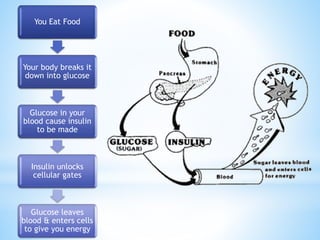
You Eat Food 
Your body breaks it 
down into glucose 
Glucose in your 
blood cause insulin 
to be made 
Insulin unlocks 
cellular gates 
Glucose leaves 
blood & enters cells 
to give you energy
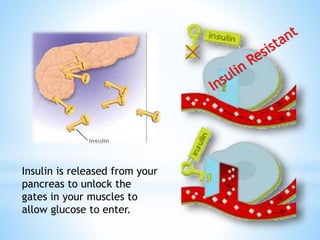
Insulin is released from your 
pancreas to unlock the 
gates in your muscles to 
allow glucose to enter.
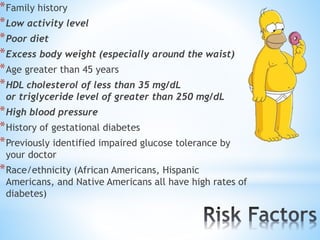
*Family history 
*Low activity level 
*Poor diet 
*Excess body weight (especially around the waist) 
*Age greater than 45 years 
*HDL cholesterol of less than 35 mg/dL 
or triglyceride level of greater than 250 mg/dL 
*High blood pressure 
*History of gestational diabetes 
*Previously identified impaired glucose tolerance by 
your doctor 
*Race/ethnicity (African Americans, Hispanic 
Americans, and Native Americans all have high rates of 
diabetes)
*Blurred vision 
*Erectile dysfunction 
*Fatigue 
*Frequent or slow-healing infections 
*Increased appetite 
*Increased thirst 
*Increased urination
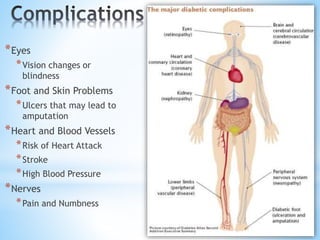
*Eyes 
*Vision changes or 
blindness 
*Foot and Skin Problems 
*Ulcers that may lead to 
amputation 
*Heart and Blood Vessels 
*Risk of Heart Attack 
*Stroke 
*High Blood Pressure 
*Nerves 
*Pain and Numbness
* 
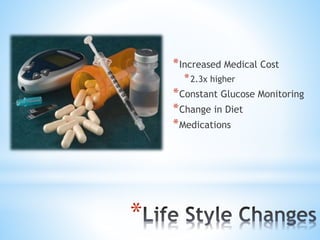
*Increased Medical Cost 
*2.3x higher 
*Constant Glucose Monitoring 
*Change in Diet 
*Medications
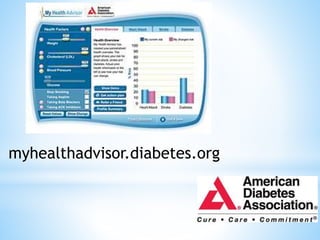
myhealthadvisor.diabetes.org

Diabetes mellitus

  • 1.
  • 3.
    You Eat Food Your body breaks it down into glucose Glucose in your blood cause insulin to be made Insulin unlocks cellular gates Glucose leaves blood & enters cells to give you energy
  • 4.
    Insulin is releasedfrom your pancreas to unlock the gates in your muscles to allow glucose to enter.
  • 5.
    *Family history *Lowactivity level *Poor diet *Excess body weight (especially around the waist) *Age greater than 45 years *HDL cholesterol of less than 35 mg/dL or triglyceride level of greater than 250 mg/dL *High blood pressure *History of gestational diabetes *Previously identified impaired glucose tolerance by your doctor *Race/ethnicity (African Americans, Hispanic Americans, and Native Americans all have high rates of diabetes)
  • 6.
    *Blurred vision *Erectiledysfunction *Fatigue *Frequent or slow-healing infections *Increased appetite *Increased thirst *Increased urination
  • 7.
    *Eyes *Vision changesor blindness *Foot and Skin Problems *Ulcers that may lead to amputation *Heart and Blood Vessels *Risk of Heart Attack *Stroke *High Blood Pressure *Nerves *Pain and Numbness
  • 8.
    * *Increased MedicalCost *2.3x higher *Constant Glucose Monitoring *Change in Diet *Medications
  • 9.