



• Chairperson Elect ICOG –Indian College of OB/GY
• National Corresponding Editor-Journal of OB/GY of India JOGI
• National Corresponding Secretary Association of Medical Women, India
• Founder Patron & President –ISOPARB Vidarbha Chapter 2019-21
• Chairperson-IMS Education Committee 2021-23
• President-Association of Medical Women, Nagpur AMWN 2021-24
• Nagpur Ratan Award @ hands of Union Minister Shri Nitinji Gadkari
• Received Bharat excellence Award for women’s health
• Received Mehroo Dara Hansotia Best Committee Award for her work as
Chairperson HIV/AIDS Committee, FOGSI 2007-2009
• Received appreciation letter from Maharashtra Government for her work in the
field of SAVE THE GIRL CHILD
• Senior Vice President FOGSI 2012
• President Menopause Society, Nagpur 2016-18
• President Nagpur OB/GY Society 2005-06
• Delivered 11 orations and 450 guest lectures
• Publications-Thirty National & Eleven International
• Sensitized 2 lakh boys and girls on adolescent health issues
Dr. Laxmi Shrikhande
MBBS; MD(OB/GY);
FICOG; FICMU; FICMCH
Medical Director-
Shrikhande Fertility Clinic
Nagpur, Maharashtra
Nutrition in Menopause
Dr Laxmi Shrikhande
Chairperson IMS Education Committee
Nagpur
Why to talk about Nutrition ?
• Everyone wants to be maintain
OPTIMUM HEALTH
OPTIMUM WEIGHT
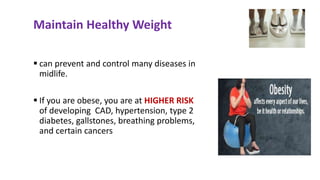
 can prevent and control many diseases in
midlife.
 If you are obese, you are at HIGHER RISK
of developing CAD, hypertension, type 2
diabetes, gallstones, breathing problems,
and certain cancers
Maintain Healthy Weight
Lifestyle Management
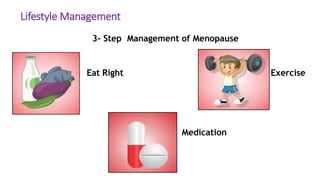
3- Step Management of Menopause
Eat Right Exercise
Medication
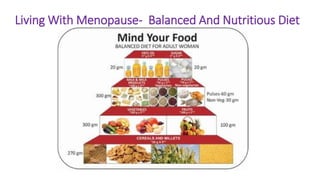
Living With Menopause- Balanced And Nutritious Diet
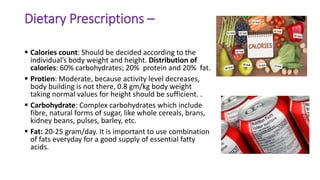
Dietary Prescriptions –
 Calories count: Should be decided according to the
individual’s body weight and height. Distribution of
calories: 60% carbohydrates; 20% protein and 20% fat.
 Protien: Moderate, because activity level decreases,
body building is not there, 0.8 gm/kg body weight
taking normal values for height should be sufficient. .
 Carbohydrate: Complex carbohydrates which include
fibre, natural forms of sugar, like whole cereals, brans,
kidney beans, pulses, barley, etc.
 Fat: 20-25 gram/day. It is important to use combination
of fats everyday for a good supply of essential fatty
acids.
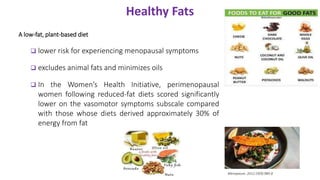
A low-fat, plant-based diet
 lower risk for experiencing menopausal symptoms
 excludes animal fats and minimizes oils
 In the Women’s Health Initiative, perimenopausal
women following reduced-fat diets scored significantly
lower on the vasomotor symptoms subscale compared
with those whose diets derived approximately 30% of
energy from fat
Healthy Fats
Menopause. 2012;19(9):980-8
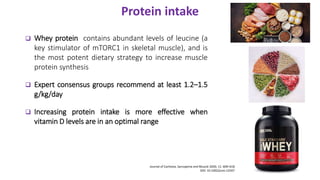
 Whey protein contains abundant levels of leucine (a
key stimulator of mTORC1 in skeletal muscle), and is
the most potent dietary strategy to increase muscle
protein synthesis
 Expert consensus groups recommend at least 1.2–1.5
g/kg/day
 Increasing protein intake is more effective when
vitamin D levels are in an optimal range
Protein intake
Journal of Cachexia, Sarcopenia and Muscle 2020; 11: 609–618
DOI: 10.1002/jcsm.12567
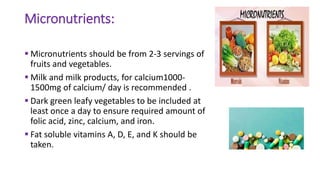
Micronutrients:
 Micronutrients should be from 2-3 servings of
fruits and vegetables.
 Milk and milk products, for calcium1000-
1500mg of calcium/ day is recommended .
 Dark green leafy vegetables to be included at
least once a day to ensure required amount of
folic acid, zinc, calcium, and iron.
 Fat soluble vitamins A, D, E, and K should be
taken.
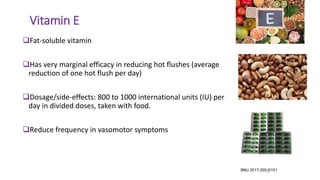
Vitamin E
Fat-soluble vitamin
Has very marginal efficacy in reducing hot flushes (average
reduction of one hot flush per day)
Dosage/side-effects: 800 to 1000 international units (IU) per
day in divided doses, taken with food.
Reduce frequency in vasomotor symptoms
BMJ 2017;359:j5101
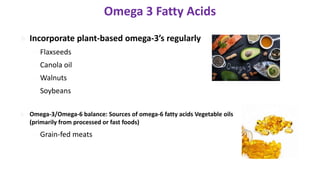
 Incorporate plant-based omega-3’s regularly
– Flaxseeds
– Canola oil
– Walnuts
– Soybeans
 Omega-3/Omega-6 balance: Sources of omega-6 fatty acids Vegetable oils
(primarily from processed or fast foods)
– Grain-fed meats
Omega 3 Fatty Acids
12
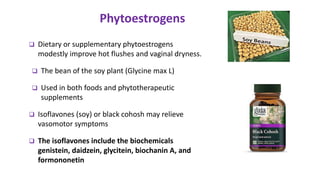
 Dietary or supplementary phytoestrogens
modestly improve hot flushes and vaginal dryness.
 The bean of the soy plant (Glycine max L)
 Used in both foods and phytotherapeutic
supplements
 Isoflavones (soy) or black cohosh may relieve
vasomotor symptoms
 The isoflavones include the biochemicals
genistein, daidzein, glycitein, biochanin A, and
formononetin
Phytoestrogens
The Journal of The North American Menopause Society.2001; 8(2): 84–95
 Isoflavone has been proposed as a natural alternative to
hormone replacement therapy (HRT)
 Effect of isoflavones on bone mineral density (BMD),
isoflavones are identified to decrease bone loss.
 Favorably alter insulin resistance, glycemic control and serum
lipoproteins in postmenopausal women with T2DM there by
improving their cardiovascular risk profile
Isoflavones
J Public Health. 2018 Mar; 47(3): 382–389.
J Steroid Biochem Mol Biol. 2014 March ; 140: 116–132
BJU Int 2014; 113: E119–E130
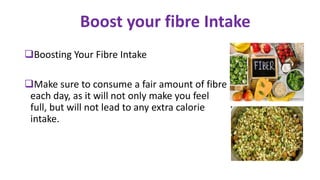
Boosting Your Fibre Intake
Make sure to consume a fair amount of fibre
each day, as it will not only make you feel
full, but will not lead to any extra calorie
intake.
Boost your fibre Intake
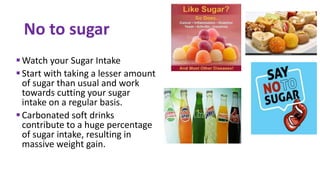
Watch your Sugar Intake
Start with taking a lesser amount
of sugar than usual and work
towards cutting your sugar
intake on a regular basis.
Carbonated soft drinks
contribute to a huge percentage
of sugar intake, resulting in
massive weight gain.
No to sugar
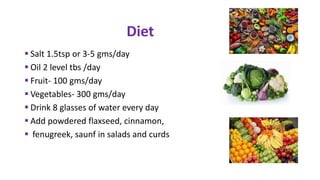
 Salt 1.5tsp or 3-5 gms/day
 Oil 2 level tbs /day
 Fruit- 100 gms/day
 Vegetables- 300 gms/day
 Drink 8 glasses of water every day
 Add powdered flaxseed, cinnamon,
 fenugreek, saunf in salads and curds
Diet
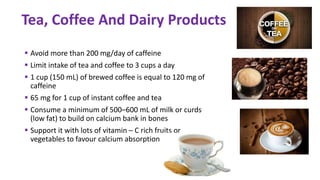
 Avoid more than 200 mg/day of caffeine
 Limit intake of tea and coffee to 3 cups a day
 1 cup (150 mL) of brewed coffee is equal to 120 mg of
caffeine
 65 mg for 1 cup of instant coffee and tea
 Consume a minimum of 500–600 mL of milk or curds
(low fat) to build on calcium bank in bones
 Support it with lots of vitamin – C rich fruits or
vegetables to favour calcium absorption
Tea, Coffee And Dairy Products
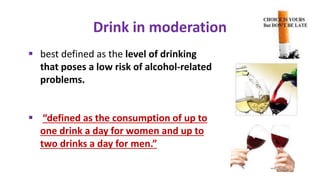
 best defined as the level of drinking
that poses a low risk of alcohol-related
problems.
 “defined as the consumption of up to
one drink a day for women and up to
two drinks a day for men.”
Drink in moderation
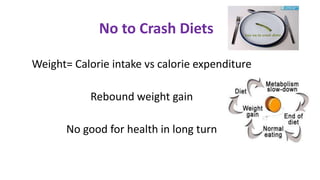
Weight= Calorie intake vs calorie expenditure
Rebound weight gain
No good for health in long turn
No to Crash Diets
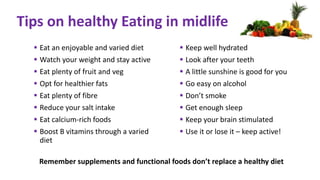
 Eat an enjoyable and varied diet
 Watch your weight and stay active
 Eat plenty of fruit and veg
 Opt for healthier fats
 Eat plenty of fibre
 Reduce your salt intake
 Eat calcium-rich foods
 Boost B vitamins through a varied
diet
 Keep well hydrated
 Look after your teeth
 A little sunshine is good for you
 Go easy on alcohol
 Don’t smoke
 Get enough sleep
 Keep your brain stimulated
 Use it or lose it – keep active!
Tips on healthy Eating in midlife
Remember supplements and functional foods don’t replace a healthy diet
Living With Menopause - Nutrition
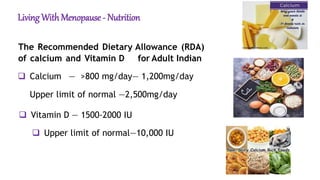
The Recommended Dietary Allowance (RDA)
of calcium and Vitamin D for Adult Indian
 Calcium — >800 mg/day— 1,200mg/day
Upper limit of normal —2,500mg/day
 Vitamin D — 1500-2000 IU
 Upper limit of normal—10,000 IU
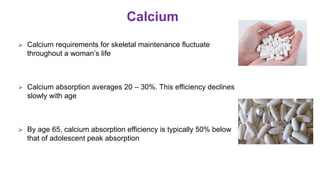
 Calcium requirements for skeletal maintenance fluctuate
throughout a woman’s life
 Calcium absorption averages 20 – 30%. This efficiency declines
slowly with age
 By age 65, calcium absorption efficiency is typically 50% below
that of adolescent peak absorption
Calcium
The Journal of The North American Menopause Society.2001; 8(2): 84–95
Calcium Deficiency occurs in…
 Lactose intolerance and limited use of dairy products
 Consume large amounts of protein or sodium, it increases calcium
excretion
 High oxalate diets
 Aging
 Vitamin D deficiency
 Long-term treatment with corticosteroids, thyroid hormone excess,
thiazide diuretics
 Bowel or digestive diseases that decrease ability to absorb calcium, such as
inflammatory bowel disease or celiac disease
Choosing Calcium Supplements— Factors To consider
 Amount of calcium
 - Elemental calcium is the actual amount of calcium in the
supplement that the body absorbs for bone growth and other
health benefits
 Tolerability
 Absorbability
 Cost
 Relation to meal
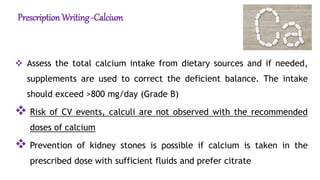
PrescriptionWriting -Calcium
 Assess the total calcium intake from dietary sources and if needed,
supplements are used to correct the deficient balance. The intake
should exceed >800 mg/day (Grade B)
 Risk of CV events, calculi are not observed with the recommended
doses of calcium
 Prevention of kidney stones is possible if calcium is taken in the
prescribed dose with sufficient fluids and prefer citrate
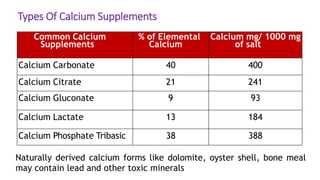
Types Of Calcium Supplements
Common Calcium
Supplements
% of Elemental
Calcium
Calcium mg/ 1000 mg
of salt
Calcium Carbonate 40 400
Calcium Citrate 21 241
Calcium Gluconate 9 93
Calcium Lactate 13 184
Calcium Phosphate Tribasic 38 388
Naturally derived calcium forms like dolomite, oyster shell, bone meal
may contain lead and other toxic minerals
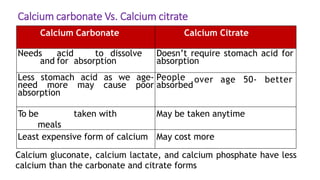
Calcium carbonate Vs. Calcium citrate
Calcium Carbonate Calcium Citrate
Needs acid to dissolve
and for absorption
Doesn’t require stomach acid for
absorption
Less stomach acid as we age-
need more may cause poor
absorption
People
absorbed
over age 50- better
To be taken with
meals
May be taken anytime
Least expensive form of calcium May cost more
Calcium gluconate, calcium lactate, and calcium phosphate have less
calcium than the carbonate and citrate forms
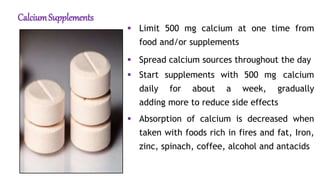
CalciumSupplements
 Limit 500 mg calcium at one time from
food and/or supplements
 Spread calcium sources throughout the day
 Start supplements with 500 mg calcium
daily for about a week, gradually
adding more to reduce side effects
 Absorption of calcium is decreased when
taken with foods rich in fires and fat, Iron,
zinc, spinach, coffee, alcohol and antacids
Calcium Supplements-absorption
 Thyroid medications, corticosteroids, tetracyclines and
anticonvulsants and calcium should be taken separately
 Contraindicated in patients with hypercalcaemia, renal insufficiency
and with caution in nephrolithiasis
 Excess amounts more than 2,500 mg a day - effect kidneys and can
reduce the absorption of other minerals like iron, zinc and
magnesium
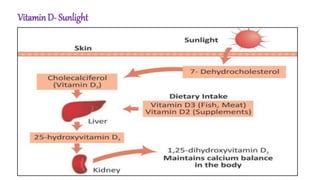
VitaminD- Sunlight
Despite the sunny climate there is widespread vitamin D deficiency in
Asian Indians of all age groups including children, pregnant women and
adult males and females living in urban and rural areas in India
Sun Exposure And Limitation For Vitamin D
Synthesis- Vitamin D Deficient Population
Vitamin D From Sunlight Exposure
• The sunlight between 11 am to 2 pm is preferably the best
• Clothing, sunscreen, window glass and pollution reduce amount
produced
VitaminD Deficient Population
 Age 50 or older- the skin becomes less effective with advancing
age as a source
 Dietary intake is low
 Low exposure to sun
 Dark skin
 Pollution
Vitamin D Deficient Population
 Overweight/ Obesity
 Gastric bypass surgery
 Milk allergy or lactose intolerance
 Liver or digestive diseases, such as Crohn's disease or
celiac
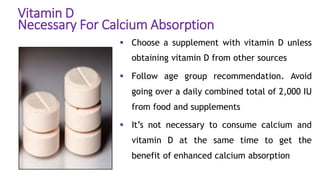
Vitamin D
Necessary For Calcium Absorption
 Choose a supplement with vitamin D unless
obtaining vitamin D from other sources
 Follow age group recommendation. Avoid
going over a daily combined total of 2,000 IU
from food and supplements
 It’s not necessary to consume calcium and
vitamin D at the same time to get the
benefit of enhanced calcium absorption
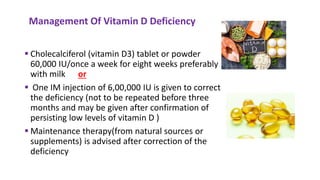
 Cholecalciferol (vitamin D3) tablet or powder
60,000 IU/once a week for eight weeks preferably
with milk or
 One IM injection of 6,00,000 IU is given to correct
the deficiency (not to be repeated before three
months and may be given after confirmation of
persisting low levels of vitamin D )
 Maintenance therapy(from natural sources or
supplements) is advised after correction of the
deficiency
Management Of Vitamin D Deficiency
Maintenance Therapy
 Cholecalciferol tablet or powder 60,000 IU once a month in
summer or twice a month in winter or
 Vitamin D supplements by oral spray or oral tablets of 2,000 IU/day,
or
 Injection of Cholecalciferol 3,00,000 IU IM, twice a year or
6,00,000 IU IM once a year
 Cholecalciferol, 1,000 IU daily, will raise blood levels, on average, by
approximately 10 ng/mL
Vitamin D is important for overall health
Insufficient and deficient 25(OH)D levels are associated with an
increased risk of MetS in postmenopausal women
Vitamin D supplementation significantly reduces triglyceride,
insulin, and HOMA-IR values.
Vitamin D treatment increases 25(OH)D levels and physical
performance while reducing the risks of falls.
Ther Adv Endocrinol Metab.2020; 11: 2042018820931291.
Benefits of Collagen
1. Can improve skin health-may help slow the aging of skin
2. Helps relieve joint pain-shown to reduce inflammation
3. Could prevent bone loss-help increase BMD
4. Could boost muscle mass- increased muscle growth and strength
5. Promotes heart health-reduce the risk factors associated with atherosclerosis.
6. Other health benefits-
• Hair and nails-may prevent brittleness, stimulate hair and nails to grow longer
• Gut health- to treat intestinal permeability, or leaky gut syndrome.
• Brain health-some people claim they improve mood and reduce symptoms of
anxiety.
• Weight loss-may promote weight loss and a faster metabolism.
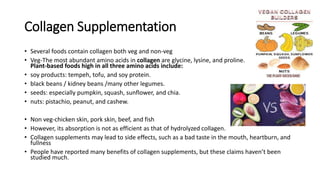
Collagen Supplementation
• Several foods contain collagen both veg and non-veg
• Veg-The most abundant amino acids in collagen are glycine, lysine, and proline.
Plant-based foods high in all three amino acids include:
• soy products: tempeh, tofu, and soy protein.
• black beans / kidney beans /many other legumes.
• seeds: especially pumpkin, squash, sunflower, and chia.
• nuts: pistachio, peanut, and cashew.
• Non veg-chicken skin, pork skin, beef, and fish
• However, its absorption is not as efficient as that of hydrolyzed collagen.
• Collagen supplements may lead to side effects, such as a bad taste in the mouth, heartburn, and
fullness
• People have reported many benefits of collagen supplements, but these claims haven’t been
studied much.
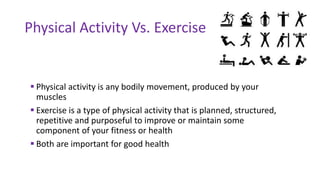
 Physical activity is any bodily movement, produced by your
muscles
 Exercise is a type of physical activity that is planned, structured,
repetitive and purposeful to improve or maintain some
component of your fitness or health
 Both are important for good health
Physical Activity Vs. Exercise
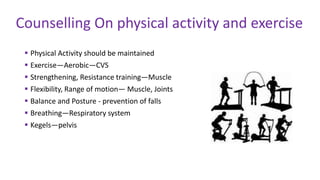
 Physical Activity should be maintained
 Exercise—Aerobic—CVS
 Strengthening, Resistance training—Muscle
 Flexibility, Range of motion— Muscle, Joints
 Balance and Posture - prevention of falls
 Breathing—Respiratory system
 Kegels—pelvis
Counselling On physical activity and exercise
 Helps to maintain a healthy weight
 Increases BMR
 Improves bone density
 Improves Coordination and balance
 Improves Muscle strength and joint mobility
 Improves lipid profiles, reduces CVD risk
 Improves genitourinary problems
 Relieves depression
 Induces sleep
 Improves quality of life
Benefits Of Exercise at midlife
The greatest mistake in the treatment of
diseases is that there are Physicians for the body
and Physicians for the soul although the two
cannot be separated
- Plato
Stress-Reducing Techniques
 Exercise
 Stretching
 Yoga
 Meditation
 Vacation
 Calling a friend
 Attacking your goal with
enthusiasm and focus
 Slowly indulging in one portion
of a favorite food
 9. Spending time with a loved
one
 10. Spending time with a pet
 11. Taking a break
 12. Making a schedule
 13. Watching a funny TV show
Summary
Menopause is inevitable
Nutrition, exercise and medications are important in this golden stage of
life
Lifestyle modification is important and should be considered in the
treatment plan of menopausal women
Adequate daily supplementation of calcium and vitamin D can help to
prevent osteoporosis & risk of falls
Physical activity can help to manage some menopause symptoms and
decrease the risk of cardiovascular disease and osteoporosis
Take Home Message
Balanced Diet +
Physical activity & exercise +
Stress reducing techniques =
Optimum Weight & Health
References
• Clinical Practice Guidelines on Menopause 2012, updated 2015,
Indian Menopause Society
• Clinical Practice Guidelines on Post Menopausal Osteoporosis 2012,
Indian Menopause Society
• North American Menopause Society 2012, Indian Menopause Society
• NICE 2015
• Endocrine Society 2015
• 2016 IMS Recommendations on women’s midlife health and
menopause hormone therapy
Anything that helps you to
become unconditionally
happy and loving is what is
called spirituality.
H. H. Sri Sri Ravishakar
Art of Living

Nutrition in Menopause

  • 1.
    • Chairperson ElectICOG –Indian College of OB/GY • National Corresponding Editor-Journal of OB/GY of India JOGI • National Corresponding Secretary Association of Medical Women, India • Founder Patron & President –ISOPARB Vidarbha Chapter 2019-21 • Chairperson-IMS Education Committee 2021-23 • President-Association of Medical Women, Nagpur AMWN 2021-24 • Nagpur Ratan Award @ hands of Union Minister Shri Nitinji Gadkari • Received Bharat excellence Award for women’s health • Received Mehroo Dara Hansotia Best Committee Award for her work as Chairperson HIV/AIDS Committee, FOGSI 2007-2009 • Received appreciation letter from Maharashtra Government for her work in the field of SAVE THE GIRL CHILD • Senior Vice President FOGSI 2012 • President Menopause Society, Nagpur 2016-18 • President Nagpur OB/GY Society 2005-06 • Delivered 11 orations and 450 guest lectures • Publications-Thirty National & Eleven International • Sensitized 2 lakh boys and girls on adolescent health issues Dr. Laxmi Shrikhande MBBS; MD(OB/GY); FICOG; FICMU; FICMCH Medical Director- Shrikhande Fertility Clinic Nagpur, Maharashtra
  • 2.
    Nutrition in Menopause DrLaxmi Shrikhande Chairperson IMS Education Committee Nagpur
  • 3.
    Why to talkabout Nutrition ? • Everyone wants to be maintain OPTIMUM HEALTH OPTIMUM WEIGHT
  • 4.
     can preventand control many diseases in midlife.  If you are obese, you are at HIGHER RISK of developing CAD, hypertension, type 2 diabetes, gallstones, breathing problems, and certain cancers Maintain Healthy Weight
  • 5.
    Lifestyle Management 3- StepManagement of Menopause Eat Right Exercise Medication
  • 6.
    Living With Menopause-Balanced And Nutritious Diet
  • 7.
    Dietary Prescriptions – Calories count: Should be decided according to the individual’s body weight and height. Distribution of calories: 60% carbohydrates; 20% protein and 20% fat.  Protien: Moderate, because activity level decreases, body building is not there, 0.8 gm/kg body weight taking normal values for height should be sufficient. .  Carbohydrate: Complex carbohydrates which include fibre, natural forms of sugar, like whole cereals, brans, kidney beans, pulses, barley, etc.  Fat: 20-25 gram/day. It is important to use combination of fats everyday for a good supply of essential fatty acids.
  • 8.
    A low-fat, plant-baseddiet  lower risk for experiencing menopausal symptoms  excludes animal fats and minimizes oils  In the Women’s Health Initiative, perimenopausal women following reduced-fat diets scored significantly lower on the vasomotor symptoms subscale compared with those whose diets derived approximately 30% of energy from fat Healthy Fats Menopause. 2012;19(9):980-8
  • 9.
     Whey proteincontains abundant levels of leucine (a key stimulator of mTORC1 in skeletal muscle), and is the most potent dietary strategy to increase muscle protein synthesis  Expert consensus groups recommend at least 1.2–1.5 g/kg/day  Increasing protein intake is more effective when vitamin D levels are in an optimal range Protein intake Journal of Cachexia, Sarcopenia and Muscle 2020; 11: 609–618 DOI: 10.1002/jcsm.12567
  • 10.
    Micronutrients:  Micronutrients shouldbe from 2-3 servings of fruits and vegetables.  Milk and milk products, for calcium1000- 1500mg of calcium/ day is recommended .  Dark green leafy vegetables to be included at least once a day to ensure required amount of folic acid, zinc, calcium, and iron.  Fat soluble vitamins A, D, E, and K should be taken.
  • 11.
    Vitamin E Fat-soluble vitamin Hasvery marginal efficacy in reducing hot flushes (average reduction of one hot flush per day) Dosage/side-effects: 800 to 1000 international units (IU) per day in divided doses, taken with food. Reduce frequency in vasomotor symptoms BMJ 2017;359:j5101
  • 12.
     Incorporate plant-basedomega-3’s regularly – Flaxseeds – Canola oil – Walnuts – Soybeans  Omega-3/Omega-6 balance: Sources of omega-6 fatty acids Vegetable oils (primarily from processed or fast foods) – Grain-fed meats Omega 3 Fatty Acids 12
  • 13.
     Dietary orsupplementary phytoestrogens modestly improve hot flushes and vaginal dryness.  The bean of the soy plant (Glycine max L)  Used in both foods and phytotherapeutic supplements  Isoflavones (soy) or black cohosh may relieve vasomotor symptoms  The isoflavones include the biochemicals genistein, daidzein, glycitein, biochanin A, and formononetin Phytoestrogens The Journal of The North American Menopause Society.2001; 8(2): 84–95
  • 14.
     Isoflavone hasbeen proposed as a natural alternative to hormone replacement therapy (HRT)  Effect of isoflavones on bone mineral density (BMD), isoflavones are identified to decrease bone loss.  Favorably alter insulin resistance, glycemic control and serum lipoproteins in postmenopausal women with T2DM there by improving their cardiovascular risk profile Isoflavones J Public Health. 2018 Mar; 47(3): 382–389. J Steroid Biochem Mol Biol. 2014 March ; 140: 116–132 BJU Int 2014; 113: E119–E130
  • 15.
    Boosting Your FibreIntake Make sure to consume a fair amount of fibre each day, as it will not only make you feel full, but will not lead to any extra calorie intake. Boost your fibre Intake
  • 16.
    Watch your SugarIntake Start with taking a lesser amount of sugar than usual and work towards cutting your sugar intake on a regular basis. Carbonated soft drinks contribute to a huge percentage of sugar intake, resulting in massive weight gain. No to sugar
  • 17.
     Salt 1.5tspor 3-5 gms/day  Oil 2 level tbs /day  Fruit- 100 gms/day  Vegetables- 300 gms/day  Drink 8 glasses of water every day  Add powdered flaxseed, cinnamon,  fenugreek, saunf in salads and curds Diet
  • 18.
     Avoid morethan 200 mg/day of caffeine  Limit intake of tea and coffee to 3 cups a day  1 cup (150 mL) of brewed coffee is equal to 120 mg of caffeine  65 mg for 1 cup of instant coffee and tea  Consume a minimum of 500–600 mL of milk or curds (low fat) to build on calcium bank in bones  Support it with lots of vitamin – C rich fruits or vegetables to favour calcium absorption Tea, Coffee And Dairy Products
  • 19.
     best definedas the level of drinking that poses a low risk of alcohol-related problems.  “defined as the consumption of up to one drink a day for women and up to two drinks a day for men.” Drink in moderation
  • 20.
    Weight= Calorie intakevs calorie expenditure Rebound weight gain No good for health in long turn No to Crash Diets
  • 22.
     Eat anenjoyable and varied diet  Watch your weight and stay active  Eat plenty of fruit and veg  Opt for healthier fats  Eat plenty of fibre  Reduce your salt intake  Eat calcium-rich foods  Boost B vitamins through a varied diet  Keep well hydrated  Look after your teeth  A little sunshine is good for you  Go easy on alcohol  Don’t smoke  Get enough sleep  Keep your brain stimulated  Use it or lose it – keep active! Tips on healthy Eating in midlife Remember supplements and functional foods don’t replace a healthy diet
  • 23.
    Living With Menopause- Nutrition The Recommended Dietary Allowance (RDA) of calcium and Vitamin D for Adult Indian  Calcium — >800 mg/day— 1,200mg/day Upper limit of normal —2,500mg/day  Vitamin D — 1500-2000 IU  Upper limit of normal—10,000 IU
  • 24.
     Calcium requirementsfor skeletal maintenance fluctuate throughout a woman’s life  Calcium absorption averages 20 – 30%. This efficiency declines slowly with age  By age 65, calcium absorption efficiency is typically 50% below that of adolescent peak absorption Calcium The Journal of The North American Menopause Society.2001; 8(2): 84–95
  • 25.
    Calcium Deficiency occursin…  Lactose intolerance and limited use of dairy products  Consume large amounts of protein or sodium, it increases calcium excretion  High oxalate diets  Aging  Vitamin D deficiency  Long-term treatment with corticosteroids, thyroid hormone excess, thiazide diuretics  Bowel or digestive diseases that decrease ability to absorb calcium, such as inflammatory bowel disease or celiac disease
  • 26.
    Choosing Calcium Supplements—Factors To consider  Amount of calcium  - Elemental calcium is the actual amount of calcium in the supplement that the body absorbs for bone growth and other health benefits  Tolerability  Absorbability  Cost  Relation to meal
  • 27.
    PrescriptionWriting -Calcium  Assessthe total calcium intake from dietary sources and if needed, supplements are used to correct the deficient balance. The intake should exceed >800 mg/day (Grade B)  Risk of CV events, calculi are not observed with the recommended doses of calcium  Prevention of kidney stones is possible if calcium is taken in the prescribed dose with sufficient fluids and prefer citrate
  • 28.
    Types Of CalciumSupplements Common Calcium Supplements % of Elemental Calcium Calcium mg/ 1000 mg of salt Calcium Carbonate 40 400 Calcium Citrate 21 241 Calcium Gluconate 9 93 Calcium Lactate 13 184 Calcium Phosphate Tribasic 38 388 Naturally derived calcium forms like dolomite, oyster shell, bone meal may contain lead and other toxic minerals
  • 29.
    Calcium carbonate Vs.Calcium citrate Calcium Carbonate Calcium Citrate Needs acid to dissolve and for absorption Doesn’t require stomach acid for absorption Less stomach acid as we age- need more may cause poor absorption People absorbed over age 50- better To be taken with meals May be taken anytime Least expensive form of calcium May cost more Calcium gluconate, calcium lactate, and calcium phosphate have less calcium than the carbonate and citrate forms
  • 30.
    CalciumSupplements  Limit 500mg calcium at one time from food and/or supplements  Spread calcium sources throughout the day  Start supplements with 500 mg calcium daily for about a week, gradually adding more to reduce side effects  Absorption of calcium is decreased when taken with foods rich in fires and fat, Iron, zinc, spinach, coffee, alcohol and antacids
  • 31.
    Calcium Supplements-absorption  Thyroidmedications, corticosteroids, tetracyclines and anticonvulsants and calcium should be taken separately  Contraindicated in patients with hypercalcaemia, renal insufficiency and with caution in nephrolithiasis  Excess amounts more than 2,500 mg a day - effect kidneys and can reduce the absorption of other minerals like iron, zinc and magnesium
  • 32.
  • 33.
    Despite the sunnyclimate there is widespread vitamin D deficiency in Asian Indians of all age groups including children, pregnant women and adult males and females living in urban and rural areas in India Sun Exposure And Limitation For Vitamin D Synthesis- Vitamin D Deficient Population
  • 34.
    Vitamin D FromSunlight Exposure • The sunlight between 11 am to 2 pm is preferably the best • Clothing, sunscreen, window glass and pollution reduce amount produced
  • 35.
    VitaminD Deficient Population Age 50 or older- the skin becomes less effective with advancing age as a source  Dietary intake is low  Low exposure to sun  Dark skin  Pollution
  • 36.
    Vitamin D DeficientPopulation  Overweight/ Obesity  Gastric bypass surgery  Milk allergy or lactose intolerance  Liver or digestive diseases, such as Crohn's disease or celiac
  • 37.
    Vitamin D Necessary ForCalcium Absorption  Choose a supplement with vitamin D unless obtaining vitamin D from other sources  Follow age group recommendation. Avoid going over a daily combined total of 2,000 IU from food and supplements  It’s not necessary to consume calcium and vitamin D at the same time to get the benefit of enhanced calcium absorption
  • 38.
     Cholecalciferol (vitaminD3) tablet or powder 60,000 IU/once a week for eight weeks preferably with milk or  One IM injection of 6,00,000 IU is given to correct the deficiency (not to be repeated before three months and may be given after confirmation of persisting low levels of vitamin D )  Maintenance therapy(from natural sources or supplements) is advised after correction of the deficiency Management Of Vitamin D Deficiency
  • 39.
    Maintenance Therapy  Cholecalciferoltablet or powder 60,000 IU once a month in summer or twice a month in winter or  Vitamin D supplements by oral spray or oral tablets of 2,000 IU/day, or  Injection of Cholecalciferol 3,00,000 IU IM, twice a year or 6,00,000 IU IM once a year  Cholecalciferol, 1,000 IU daily, will raise blood levels, on average, by approximately 10 ng/mL
  • 40.
    Vitamin D isimportant for overall health Insufficient and deficient 25(OH)D levels are associated with an increased risk of MetS in postmenopausal women Vitamin D supplementation significantly reduces triglyceride, insulin, and HOMA-IR values. Vitamin D treatment increases 25(OH)D levels and physical performance while reducing the risks of falls. Ther Adv Endocrinol Metab.2020; 11: 2042018820931291.
  • 41.
    Benefits of Collagen 1.Can improve skin health-may help slow the aging of skin 2. Helps relieve joint pain-shown to reduce inflammation 3. Could prevent bone loss-help increase BMD 4. Could boost muscle mass- increased muscle growth and strength 5. Promotes heart health-reduce the risk factors associated with atherosclerosis. 6. Other health benefits- • Hair and nails-may prevent brittleness, stimulate hair and nails to grow longer • Gut health- to treat intestinal permeability, or leaky gut syndrome. • Brain health-some people claim they improve mood and reduce symptoms of anxiety. • Weight loss-may promote weight loss and a faster metabolism.
  • 42.
    Collagen Supplementation • Severalfoods contain collagen both veg and non-veg • Veg-The most abundant amino acids in collagen are glycine, lysine, and proline. Plant-based foods high in all three amino acids include: • soy products: tempeh, tofu, and soy protein. • black beans / kidney beans /many other legumes. • seeds: especially pumpkin, squash, sunflower, and chia. • nuts: pistachio, peanut, and cashew. • Non veg-chicken skin, pork skin, beef, and fish • However, its absorption is not as efficient as that of hydrolyzed collagen. • Collagen supplements may lead to side effects, such as a bad taste in the mouth, heartburn, and fullness • People have reported many benefits of collagen supplements, but these claims haven’t been studied much.
  • 43.
     Physical activityis any bodily movement, produced by your muscles  Exercise is a type of physical activity that is planned, structured, repetitive and purposeful to improve or maintain some component of your fitness or health  Both are important for good health Physical Activity Vs. Exercise
  • 44.
     Physical Activityshould be maintained  Exercise—Aerobic—CVS  Strengthening, Resistance training—Muscle  Flexibility, Range of motion— Muscle, Joints  Balance and Posture - prevention of falls  Breathing—Respiratory system  Kegels—pelvis Counselling On physical activity and exercise
  • 45.
     Helps tomaintain a healthy weight  Increases BMR  Improves bone density  Improves Coordination and balance  Improves Muscle strength and joint mobility  Improves lipid profiles, reduces CVD risk  Improves genitourinary problems  Relieves depression  Induces sleep  Improves quality of life Benefits Of Exercise at midlife
  • 46.
    The greatest mistakein the treatment of diseases is that there are Physicians for the body and Physicians for the soul although the two cannot be separated - Plato
  • 47.
    Stress-Reducing Techniques  Exercise Stretching  Yoga  Meditation  Vacation  Calling a friend  Attacking your goal with enthusiasm and focus  Slowly indulging in one portion of a favorite food  9. Spending time with a loved one  10. Spending time with a pet  11. Taking a break  12. Making a schedule  13. Watching a funny TV show
  • 48.
    Summary Menopause is inevitable Nutrition,exercise and medications are important in this golden stage of life Lifestyle modification is important and should be considered in the treatment plan of menopausal women Adequate daily supplementation of calcium and vitamin D can help to prevent osteoporosis & risk of falls Physical activity can help to manage some menopause symptoms and decrease the risk of cardiovascular disease and osteoporosis
  • 49.
    Take Home Message BalancedDiet + Physical activity & exercise + Stress reducing techniques = Optimum Weight & Health
  • 50.
    References • Clinical PracticeGuidelines on Menopause 2012, updated 2015, Indian Menopause Society • Clinical Practice Guidelines on Post Menopausal Osteoporosis 2012, Indian Menopause Society • North American Menopause Society 2012, Indian Menopause Society • NICE 2015 • Endocrine Society 2015 • 2016 IMS Recommendations on women’s midlife health and menopause hormone therapy
  • 51.
    Anything that helpsyou to become unconditionally happy and loving is what is called spirituality. H. H. Sri Sri Ravishakar Art of Living