DEVELOPMENTAL DISTURBANCES
AFFECTING LIP AND PALATE
Dr. Reshma M
Assistant Professor
Dept of Oral and Maxillofacial Pathology
Congenital lips and commissural pits
and fistulas
• Malformations of the lip with hereditary pattern
• Van der Woude’s syndrome: pits of lower lip with cleft lip and/or cleft palate.
• Commissural pits: related to lip pits but occurs in commissures lateral to
typical lip pits
• Etiology : in early stages of development fixation of tissue to the base of
notch or from failure of complete union of the embryonic lateral sulci of the
lip.
Bilateral lip pits
Commissural lip pits
CLINICAL FEATURES
• Unilateral /bilateral
• Vermilion surface of either lip
• Common in lower lip
• Some times appears swollen accentuating appearance of lips
• Commissural pits are unilateral or bilateral
TREATMENT
Surgical excision
Van der Woude’s syndrome
• Autosomal dominant
• Cleft lip/cleft palate+ pits of lower lips
• Etiology : deletions in chromosome band 1q32
• Clinical features :
Unilateral/ bilateral
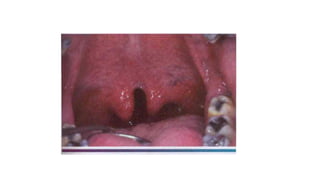
Hyper nasal voice and cleft or bifid uvula
Syngnathia(congenital adhesion of the jaws)
Narrow high arched palate
Ankyloglossia
EXTRA ORAL MANIFESTATION
Limb abnormalities
Popliteal webs
Brain abnormalities
Congenital heart defects
TREATMENT
Surgical repair of cleft lip and palate
Surgical removal of lip pits
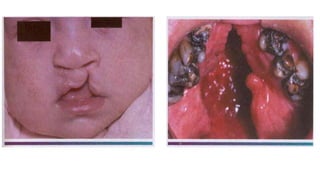
Cleft lip and cleft palate
• Two types of malformation : cleft lip with or without cleft palate and cleft
palate
• Etiology : Hereditary
By single gene/ by number of genes (polygenic inheritance)
Polygenic : Most common type , low risk
Monogenic : Associated with congenital abnormalities
Other factors : Defective vascular supply
Size of the tongue
Alcohol and certain drugs
Infections and lack of inherent developmental force
Clinical features
• Males
• Syndromic and non syndromic
• Unilateral or bilateral
• Median cleft face syndrome: hypertelorism, median cleft of premaxilla
and palate and cranium bifidum occultum.
• Clinical significance :
Esthetic, physical and psychological effects
• Treatment :
cosmetic and functional, 10 s
Chelitis glandularis
• Uncommon poorly understood inflammatory disease of the lip
• Progressive enlargement and eversion of lower lip
• Altered by environmental influences, leading to erosion, ulceration and
crusting.
• Etiology : chronic irritation
• Clinical features: Distinct deeply suppurative chronic inflammatory condition
of lower lip
Equal gender predilection
classification : simple type- multiple,painless, papular surface lesions with
central depressions and dilated canals
• Superficial suppurative type(baelz disease) : painless indurated swelling of
the lower lip with shallow ulceration and crusting.
• Deep suppurative type: deep seated infection with formation of abscesses,
sinus tracts and fistulas
• Histological features: lip biopsy is indicated
• Differential diagnosis: actinic keratosis, chelitis granulamatosa, sarcoidosis
and squamous cell carcinoma
• Treatment : aetiology to be rule out and attempts to alleviate and eradicate
the cause.
Chelitis granulomatosa(miescher-
melkersson –Rosenthal syndrome)
• Swelling of lip due to granulomatous inflammation
• Melkersson Rosenthal when chelitis with facial palsy and plicated tongue
• Etiology : Genetic predisposition
• Clinical features : Episodic nontender swelling and enlargement of one or
both lips
Prodromal symptoms
Regional lymph nodes are enlarged
• Differential diagnosis: insect bites and sarcoidosis
• Histological features: chronic inflammatory cell infiltration ;peri and para
vascular aggregations of lymphocytes, plasma cells and histiocytes, non
caseating granuloma formation and Langhans type of giant cells
• Treatment : corticosteroid, NSAIDS,Surgery radiation
Thank you

DEVELOPMENTAL DISTURBANCES AFFECTING LIP AND PALATE.pptx

  • 1.
    DEVELOPMENTAL DISTURBANCES AFFECTING LIPAND PALATE Dr. Reshma M Assistant Professor Dept of Oral and Maxillofacial Pathology
  • 3.
    Congenital lips andcommissural pits and fistulas • Malformations of the lip with hereditary pattern • Van der Woude’s syndrome: pits of lower lip with cleft lip and/or cleft palate. • Commissural pits: related to lip pits but occurs in commissures lateral to typical lip pits • Etiology : in early stages of development fixation of tissue to the base of notch or from failure of complete union of the embryonic lateral sulci of the lip.
  • 4.
  • 5.
    CLINICAL FEATURES • Unilateral/bilateral • Vermilion surface of either lip • Common in lower lip • Some times appears swollen accentuating appearance of lips • Commissural pits are unilateral or bilateral TREATMENT Surgical excision
  • 6.
    Van der Woude’ssyndrome • Autosomal dominant • Cleft lip/cleft palate+ pits of lower lips • Etiology : deletions in chromosome band 1q32 • Clinical features : Unilateral/ bilateral Hyper nasal voice and cleft or bifid uvula Syngnathia(congenital adhesion of the jaws) Narrow high arched palate Ankyloglossia
  • 7.
    EXTRA ORAL MANIFESTATION Limbabnormalities Popliteal webs Brain abnormalities Congenital heart defects TREATMENT Surgical repair of cleft lip and palate Surgical removal of lip pits
  • 8.
    Cleft lip andcleft palate • Two types of malformation : cleft lip with or without cleft palate and cleft palate • Etiology : Hereditary By single gene/ by number of genes (polygenic inheritance) Polygenic : Most common type , low risk Monogenic : Associated with congenital abnormalities Other factors : Defective vascular supply Size of the tongue Alcohol and certain drugs Infections and lack of inherent developmental force
  • 11.
    Clinical features • Males •Syndromic and non syndromic • Unilateral or bilateral • Median cleft face syndrome: hypertelorism, median cleft of premaxilla and palate and cranium bifidum occultum. • Clinical significance : Esthetic, physical and psychological effects • Treatment : cosmetic and functional, 10 s
  • 12.
    Chelitis glandularis • Uncommonpoorly understood inflammatory disease of the lip • Progressive enlargement and eversion of lower lip • Altered by environmental influences, leading to erosion, ulceration and crusting. • Etiology : chronic irritation • Clinical features: Distinct deeply suppurative chronic inflammatory condition of lower lip Equal gender predilection classification : simple type- multiple,painless, papular surface lesions with central depressions and dilated canals
  • 13.
    • Superficial suppurativetype(baelz disease) : painless indurated swelling of the lower lip with shallow ulceration and crusting. • Deep suppurative type: deep seated infection with formation of abscesses, sinus tracts and fistulas • Histological features: lip biopsy is indicated • Differential diagnosis: actinic keratosis, chelitis granulamatosa, sarcoidosis and squamous cell carcinoma • Treatment : aetiology to be rule out and attempts to alleviate and eradicate the cause.
  • 14.
    Chelitis granulomatosa(miescher- melkersson –Rosenthalsyndrome) • Swelling of lip due to granulomatous inflammation • Melkersson Rosenthal when chelitis with facial palsy and plicated tongue • Etiology : Genetic predisposition • Clinical features : Episodic nontender swelling and enlargement of one or both lips Prodromal symptoms Regional lymph nodes are enlarged
  • 15.
    • Differential diagnosis:insect bites and sarcoidosis • Histological features: chronic inflammatory cell infiltration ;peri and para vascular aggregations of lymphocytes, plasma cells and histiocytes, non caseating granuloma formation and Langhans type of giant cells • Treatment : corticosteroid, NSAIDS,Surgery radiation
  • 16.