Developing a Responsive and Dynamic Team Culture John Boyd, OODA, SEMCO
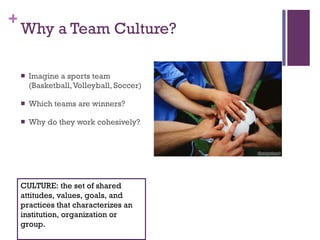
Why a Team Culture? Imagine a sports team (Basketball, Volleyball, Soccer) Which teams are winners? Why do they work cohesively?  CULTURE: the set of shared attitudes, values, goals, and practices that characterizes an institution, organization or group.
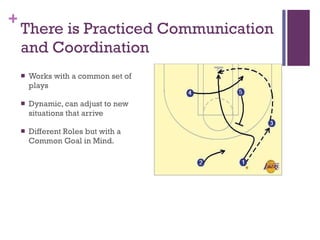
There is Practiced Communication and Coordination Works with a common set of plays Dynamic, can adjust to new situations that arrive Different Roles but with a Common Goal in Mind.
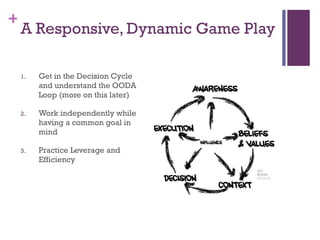
A Responsive, Dynamic Game Play Get in the Decision Cycle and understand the OODA Loop (more on this later) Work independently while having a common goal in mind Practice Leverage and Efficiency
PART 1: The Decision Cycle OODA Loops and John Boyd
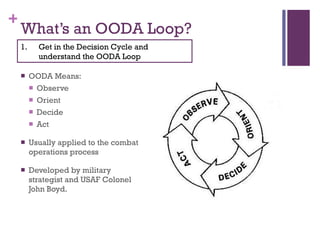
What’s an OODA Loop? OODA Means: Observe Orient Decide Act Usually applied to the combat operations process Developed by military strategist and USAF Colonel John Boyd. Get in the Decision Cycle and understand the OODA Loop
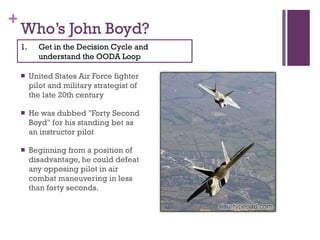
Who’s John Boyd? United States Air Force fighter pilot and military strategist of the late 20th century He was dubbed "Forty Second Boyd" for his standing bet as an instructor pilot Beginning from a position of disadvantage, he could defeat any opposing pilot in air combat maneuvering in less than forty seconds. Get in the Decision Cycle and understand the OODA Loop
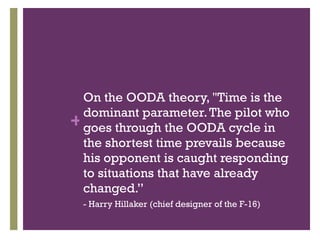
On the OODA theory, "Time is the dominant parameter. The pilot who goes through the OODA cycle in the shortest time prevails because his opponent is caught responding to situations that have already changed.” - Harry Hillaker (chief designer of the F-16)
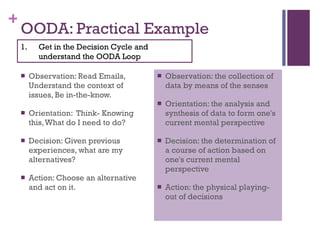
OODA: Practical Example Observation: Read Emails, Understand the context of issues, Be in-the-know. Orientation:  Think- Knowing this, What do I need to do? Decision: Given previous experiences, what are my alternatives? Action: Choose an alternative and act on it. Observation: the collection of data by means of the senses Orientation: the analysis and synthesis of data to form one's current mental perspective Decision: the determination of a course of action based on one's current mental perspective Action: the physical playing-out of decisions Get in the Decision Cycle and understand the OODA Loop
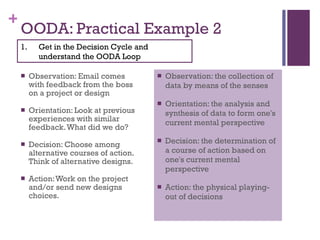
OODA: Practical Example 2 Observation: Email comes with feedback from the boss on a project or design Orientation: Look at previous experiences with similar feedback. What did we do? Decision: Choose among alternative courses of action. Think of alternative designs. Action: Work on the project and/or send new designs choices. Observation: the collection of data by means of the senses Orientation: the analysis and synthesis of data to form one's current mental perspective Decision: the determination of a course of action based on one's current mental perspective Action: the physical playing-out of decisions Get in the Decision Cycle and understand the OODA Loop
Remember: Observe and Orient = Situational Analysis Always Get FEEDBACK Be Aware of the Context Compare with previous experiences
The Faster the Decision Cycle,  The Better we Adapt to changing dynamic situations.
Is OODA Effective? Millennium Challenge was a$500 million war game the Pentagon conducted in 2001 It was considered elaborate dress rehearsal for the Iraq War, with one side "playing" the U.S. and another team playing Iraq -- and Iraq won.  A retired Marine Corps General named Paul Van Riper, played Saddam Hussein  Van Riper won by speeding up the game and getting into the decision cycle of his opponents. (From Blink, by Malcolm Gladwell)
PART 2: Acting Independently Workplace Democracy, SEMCO and Ricardo Semler
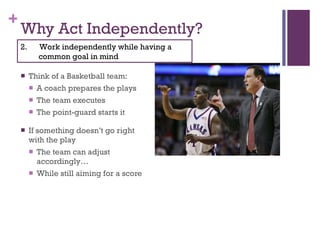
Why Act Independently? Think of a Basketball team: A coach prepares the plays The team executes The point-guard starts it If something doesn’t go right with the play The team can adjust accordingly… While still aiming for a score 2.  Work independently while having a common goal in mind
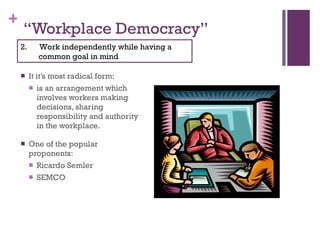
“ Workplace Democracy” It it’s most radical form: is an arrangement which involves workers making decisions, sharing responsibility and authority in the workplace.  One of the popular proponents: Ricardo Semler  SEMCO 2.  Work independently while having a common goal in mind
Who’s Ricardo Semler? Ricardo Semler (born 1959 in São Paulo) is the CEO and majority owner of Semco SA,  SEMCO is a Brazilian company best known for its radical form of workplace democracy and corporate re-engineering As of 2003, SEMCO had annual revenue of $212 million, from $4 million in 1982 and $35 million in 1994, with an annual growth rate of up to 40 per cent a year. It employs 3,000 workers in 2003, as opposed to 90 in 1982. 2.  Work independently while having a common goal in mind
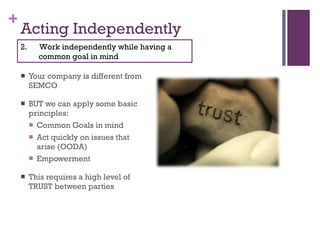
Acting Independently Your company is different from SEMCO BUT we can apply some basic principles: Common Goals in mind Act quickly on issues that arise (OODA) Empowerment This requires a high level of TRUST between parties 2.  Work independently while having a common goal in mind
You have authority to ACT. Just be sensible about it. 
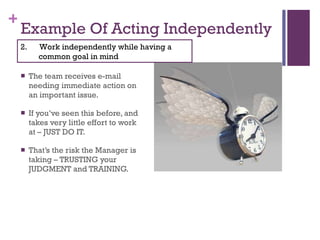
Example Of Acting Independently The team receives e-mail needing immediate action on an important issue. If you’ve seen this before, and takes very little effort to work at – JUST DO IT. That’s the risk the Manager is taking – TRUSTING your JUDGMENT and TRAINING. 2.  Work independently while having a common goal in mind
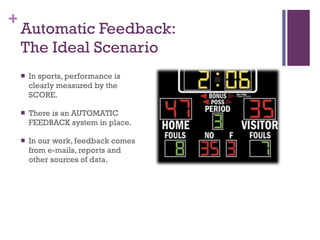
Automatic Feedback: The Ideal Scenario In sports, performance is clearly measured by the SCORE. There is an AUTOMATIC FEEDBACK system in place. In our work, feedback comes from e-mails, reports and other sources of data.
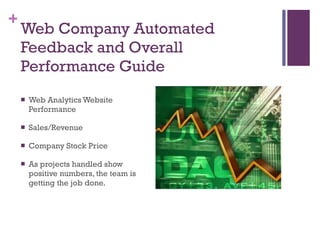
Web Company Automated Feedback and Overall Performance Guide Web Analytics Website Performance Sales/Revenue Company Stock Price As projects handled show positive numbers, the team is getting the job done.
Part 3: Leverage and Efficiency A game of GO, anyone?
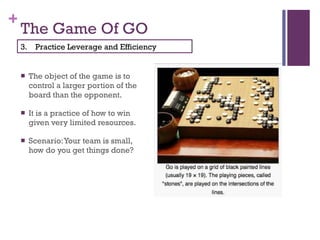
The Game Of GO The object of the game is to control a larger portion of the board than the opponent.  It is a practice of how to win given very limited resources. Scenario: Your team is small, how do you get things done? 3.  Practice Leverage and Efficiency
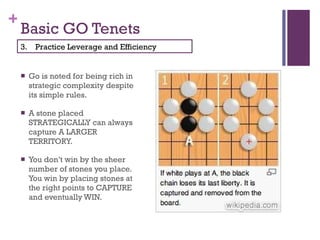
Basic GO Tenets Go is noted for being rich in strategic complexity despite its simple rules. A stone placed STRATEGICALLY can always capture A LARGER TERRITORY. You don’t win by the sheer number of stones you place. You win by placing stones at the right points to CAPTURE and eventually WIN. 3.  Practice Leverage and Efficiency
Correct Strategic Actions Bring Effective Results In short, work SMARTER.
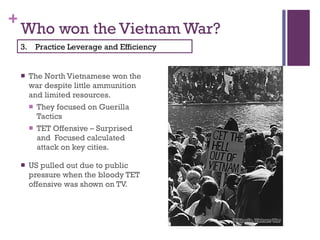
Who won the Vietnam War? The North Vietnamese won the war despite little ammunition and limited resources. They focused on Guerilla Tactics TET Offensive – Surprised and  Focused calculated attack on key cities. US pulled out due to public pressure when the bloody TET offensive was shown on TV. 3.  Practice Leverage and Efficiency
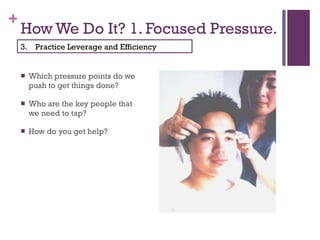
How We Do It? 1. Focused Pressure. Which pressure points do we push to get things done? Who are the key people that we need to tap? How do you get help? 3.  Practice Leverage and Efficiency
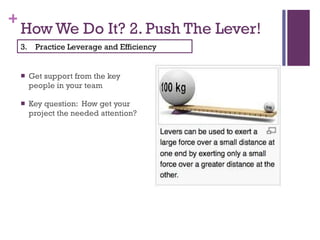
How We Do It? 2. Push The Lever! Get support from the key people in your team Key question:  How get your project the needed attention? 3.  Practice Leverage and Efficiency
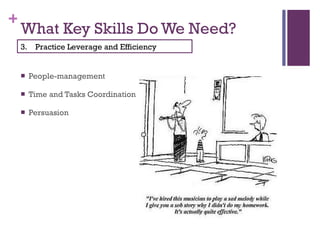
What Key Skills Do We Need? People-management Time and Tasks Coordination Persuasion 3.  Practice Leverage and Efficiency
Find your Fulcrum and Multiply Your Force Small Effort, Big Impact
You need to Learn the Art of Selling Ideas through Persuasion 
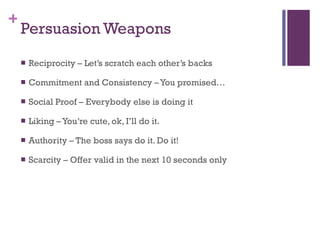
Persuasion Weapons Reciprocity – Let’s scratch each other’s backs Commitment and Consistency – You promised… Social Proof – Everybody else is doing it Liking – You’re cute, ok, I’ll do it. Authority – The boss says do it. Do it! Scarcity – Offer valid in the next 10 seconds only
Is this culture effective? TRY IT AND SEE FOR YOURSELF.

Developing Dynamic Team Cultures

  • 1.
    Developing a Responsiveand Dynamic Team Culture John Boyd, OODA, SEMCO
  • 2.
    Why a TeamCulture? Imagine a sports team (Basketball, Volleyball, Soccer) Which teams are winners? Why do they work cohesively? CULTURE: the set of shared attitudes, values, goals, and practices that characterizes an institution, organization or group.
  • 3.
    There is PracticedCommunication and Coordination Works with a common set of plays Dynamic, can adjust to new situations that arrive Different Roles but with a Common Goal in Mind.
  • 4.
    A Responsive, DynamicGame Play Get in the Decision Cycle and understand the OODA Loop (more on this later) Work independently while having a common goal in mind Practice Leverage and Efficiency
  • 5.
    PART 1: TheDecision Cycle OODA Loops and John Boyd
  • 6.
    What’s an OODALoop? OODA Means: Observe Orient Decide Act Usually applied to the combat operations process Developed by military strategist and USAF Colonel John Boyd. Get in the Decision Cycle and understand the OODA Loop
  • 7.
    Who’s John Boyd?United States Air Force fighter pilot and military strategist of the late 20th century He was dubbed "Forty Second Boyd" for his standing bet as an instructor pilot Beginning from a position of disadvantage, he could defeat any opposing pilot in air combat maneuvering in less than forty seconds. Get in the Decision Cycle and understand the OODA Loop
  • 8.
    On the OODAtheory, "Time is the dominant parameter. The pilot who goes through the OODA cycle in the shortest time prevails because his opponent is caught responding to situations that have already changed.” - Harry Hillaker (chief designer of the F-16)
  • 9.
    OODA: Practical ExampleObservation: Read Emails, Understand the context of issues, Be in-the-know. Orientation: Think- Knowing this, What do I need to do? Decision: Given previous experiences, what are my alternatives? Action: Choose an alternative and act on it. Observation: the collection of data by means of the senses Orientation: the analysis and synthesis of data to form one's current mental perspective Decision: the determination of a course of action based on one's current mental perspective Action: the physical playing-out of decisions Get in the Decision Cycle and understand the OODA Loop
  • 10.
    OODA: Practical Example2 Observation: Email comes with feedback from the boss on a project or design Orientation: Look at previous experiences with similar feedback. What did we do? Decision: Choose among alternative courses of action. Think of alternative designs. Action: Work on the project and/or send new designs choices. Observation: the collection of data by means of the senses Orientation: the analysis and synthesis of data to form one's current mental perspective Decision: the determination of a course of action based on one's current mental perspective Action: the physical playing-out of decisions Get in the Decision Cycle and understand the OODA Loop
  • 11.
    Remember: Observe andOrient = Situational Analysis Always Get FEEDBACK Be Aware of the Context Compare with previous experiences
  • 12.
    The Faster theDecision Cycle, The Better we Adapt to changing dynamic situations.
  • 13.
    Is OODA Effective?Millennium Challenge was a$500 million war game the Pentagon conducted in 2001 It was considered elaborate dress rehearsal for the Iraq War, with one side "playing" the U.S. and another team playing Iraq -- and Iraq won. A retired Marine Corps General named Paul Van Riper, played Saddam Hussein Van Riper won by speeding up the game and getting into the decision cycle of his opponents. (From Blink, by Malcolm Gladwell)
  • 14.
    PART 2: ActingIndependently Workplace Democracy, SEMCO and Ricardo Semler
  • 15.
    Why Act Independently?Think of a Basketball team: A coach prepares the plays The team executes The point-guard starts it If something doesn’t go right with the play The team can adjust accordingly… While still aiming for a score 2. Work independently while having a common goal in mind
  • 16.
    “ Workplace Democracy”It it’s most radical form: is an arrangement which involves workers making decisions, sharing responsibility and authority in the workplace. One of the popular proponents: Ricardo Semler SEMCO 2. Work independently while having a common goal in mind
  • 17.
    Who’s Ricardo Semler?Ricardo Semler (born 1959 in São Paulo) is the CEO and majority owner of Semco SA, SEMCO is a Brazilian company best known for its radical form of workplace democracy and corporate re-engineering As of 2003, SEMCO had annual revenue of $212 million, from $4 million in 1982 and $35 million in 1994, with an annual growth rate of up to 40 per cent a year. It employs 3,000 workers in 2003, as opposed to 90 in 1982. 2. Work independently while having a common goal in mind
  • 18.
    Acting Independently Yourcompany is different from SEMCO BUT we can apply some basic principles: Common Goals in mind Act quickly on issues that arise (OODA) Empowerment This requires a high level of TRUST between parties 2. Work independently while having a common goal in mind
  • 19.
    You have authorityto ACT. Just be sensible about it. 
  • 20.
    Example Of ActingIndependently The team receives e-mail needing immediate action on an important issue. If you’ve seen this before, and takes very little effort to work at – JUST DO IT. That’s the risk the Manager is taking – TRUSTING your JUDGMENT and TRAINING. 2. Work independently while having a common goal in mind
  • 21.
    Automatic Feedback: TheIdeal Scenario In sports, performance is clearly measured by the SCORE. There is an AUTOMATIC FEEDBACK system in place. In our work, feedback comes from e-mails, reports and other sources of data.
  • 22.
    Web Company AutomatedFeedback and Overall Performance Guide Web Analytics Website Performance Sales/Revenue Company Stock Price As projects handled show positive numbers, the team is getting the job done.
  • 23.
    Part 3: Leverageand Efficiency A game of GO, anyone?
  • 24.
    The Game OfGO The object of the game is to control a larger portion of the board than the opponent. It is a practice of how to win given very limited resources. Scenario: Your team is small, how do you get things done? 3. Practice Leverage and Efficiency
  • 25.
    Basic GO TenetsGo is noted for being rich in strategic complexity despite its simple rules. A stone placed STRATEGICALLY can always capture A LARGER TERRITORY. You don’t win by the sheer number of stones you place. You win by placing stones at the right points to CAPTURE and eventually WIN. 3. Practice Leverage and Efficiency
  • 26.
    Correct Strategic ActionsBring Effective Results In short, work SMARTER.
  • 27.
    Who won theVietnam War? The North Vietnamese won the war despite little ammunition and limited resources. They focused on Guerilla Tactics TET Offensive – Surprised and Focused calculated attack on key cities. US pulled out due to public pressure when the bloody TET offensive was shown on TV. 3. Practice Leverage and Efficiency
  • 28.
    How We DoIt? 1. Focused Pressure. Which pressure points do we push to get things done? Who are the key people that we need to tap? How do you get help? 3. Practice Leverage and Efficiency
  • 29.
    How We DoIt? 2. Push The Lever! Get support from the key people in your team Key question: How get your project the needed attention? 3. Practice Leverage and Efficiency
  • 30.
    What Key SkillsDo We Need? People-management Time and Tasks Coordination Persuasion 3. Practice Leverage and Efficiency
  • 31.
    Find your Fulcrumand Multiply Your Force Small Effort, Big Impact
  • 32.
    You need toLearn the Art of Selling Ideas through Persuasion 
  • 33.
    Persuasion Weapons Reciprocity– Let’s scratch each other’s backs Commitment and Consistency – You promised… Social Proof – Everybody else is doing it Liking – You’re cute, ok, I’ll do it. Authority – The boss says do it. Do it! Scarcity – Offer valid in the next 10 seconds only
  • 34.
    Is this cultureeffective? TRY IT AND SEE FOR YOURSELF.