WELCOME!
The Imperatives of Productivity
        Friday, 5 March 2010
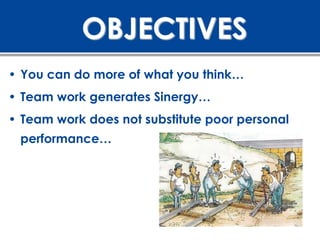
OBJECTIVES
• You can do more of what you think…
• Team work generates Sinergy…
• Team work does not substitute poor personal
 performance…
ROMAN
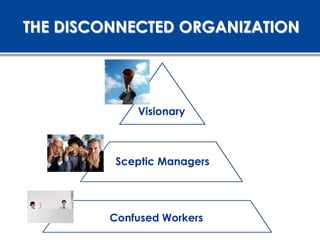
THE DISCONNECTED ORGANIZATION


             Visionary


          Sceptic Managers


         Confused Workers
TEAM WORK


• Get along well

• Get to know each other

• Have a common goal
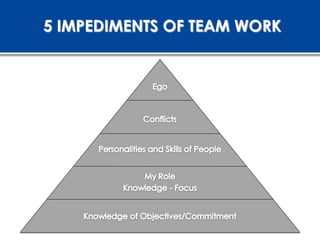
5 IMPEDIMENTS OF TEAM WORK
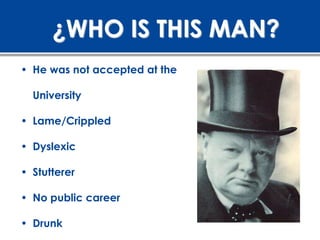
¿WHO IS THIS MAN?
• He was not accepted at the

  University

• Lame/Crippled

• Dyslexic

• Stutterer

• No public career

• Drunk
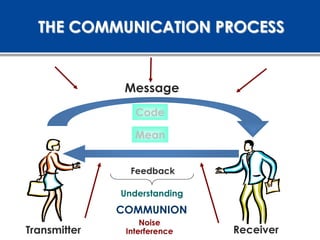
THE COMMUNICATION PROCESS


               Message
                 Code

                 Mean


                Feedback

              Understanding
              COMMUNION
                   Noise
Transmitter    Interference   Receiver
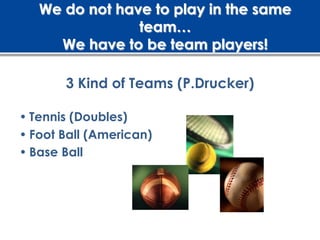
We do not have to play in the same
                team…
     We have to be team players!

       3 Kind of Teams (P.Drucker)

• Tennis (Doubles)
• Foot Ball (American)
• Base Ball
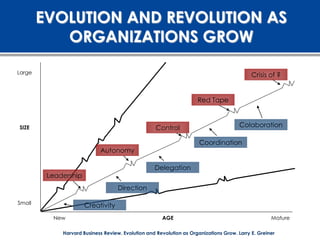
EVOLUTION AND REVOLUTION AS
           ORGANIZATIONS GROW

Large
                                                                                            Crisis of ?


                                                                     Red Tape


SIZE                                                Control                            Colaboration

                                                                      Coordination
                            Autonomy

                                                   Delegation
         Leadership
                                    Direction

Small
                      Creativity
          New                                         AGE                                           Mature

             Harvard Business Review. Evolution and Revolution as Organizations Grow. Larry E. Greiner
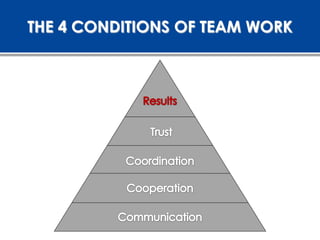
THE 4 CONDITIONS OF TEAM WORK
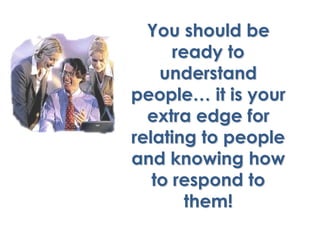
You should be
      ready to
    understand
people… it is your
  extra edge for
relating to people
and knowing how
   to respond to
        them!
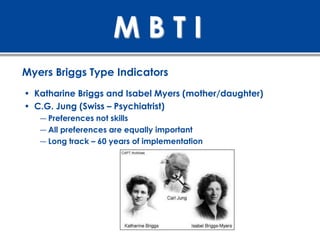
MBTI
Myers Briggs Type Indicators
• Katharine Briggs and Isabel Myers (mother/daughter)
• C.G. Jung (Swiss – Psychiatrist)
   ― Preferences not skills
   ― All preferences are equally important
   ― Long track – 60 years of implementation
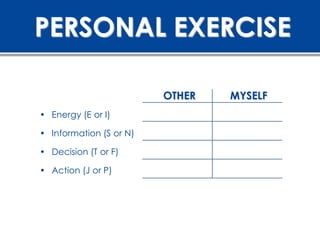
PERSONAL EXERCISE

                         OTHER   MYSELF
• Energy (E or I)

• Information (S or N)

• Decision (T or F)

• Action (J or P)
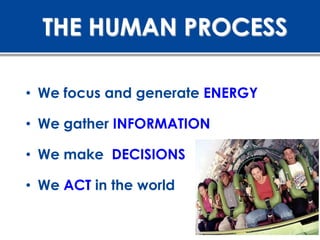
THE HUMAN PROCESS

• We focus and generate ENERGY

• We gather INFORMATION

• We make DECISIONS

• We ACT in the world
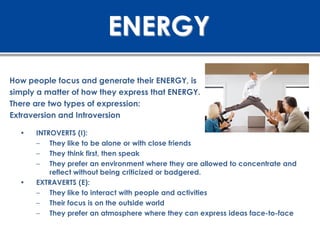
ENERGY
How people focus and generate their ENERGY, is
simply a matter of how they express that ENERGY.
There are two types of expression:
Extraversion and Introversion

  •   INTROVERTS (I):
      – They like to be alone or with close friends
      – They think first, then speak
      – They prefer an environment where they are allowed to concentrate and
          reflect without being criticized or badgered.
  •   EXTRAVERTS (E):
      – They like to interact with people and activities
      – Their focus is on the outside world
      – They prefer an atmosphere where they can express ideas face-to-face
INFORMATION
People gather information according to
preference. Some people prefer to deal more
with actualities, other with possibilities.

 • SENSING (S):
     – They depend of the five senses to gather
       information
     – They enjoy hands-on experiences
     – They are based on their experiences
     – They focus on details and facts
 • INTUITION (N):
     – They seek the meanings of various
       experiences and concepts
     – They are linked to their perception that
       intelligence is based on an “unrestricted
       approach to understanding”
     – They are inventive, original and enterprising
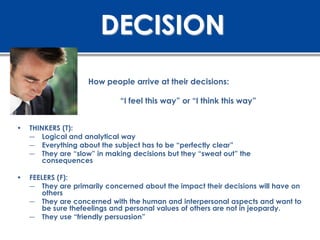
DECISION
                    How people arrive at their decisions:

                             “I feel this way” or “I think this way”


•   THINKERS (T):
    ― Logical and analytical way
    ― Everything about the subject has to be “perfectly clear”
    ― They are “slow” in making decisions but they “sweat out” the
        consequences

•   FEELERS (F):
    ― They are primarily concerned about the impact their decisions will have on
        others
    ― They are concerned with the human and interpersonal aspects and want to
        be sure thefeelings and personal values of others are not in jeopardy.
    ― They use “friendly persuasion”
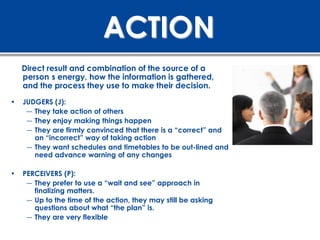
ACTION
    Direct result and combination of the source of a
    person s energy, how the information is gathered,
    and the process they use to make their decision.

•   JUDGERS (J):
     ― They take action of others
     ― They enjoy making things happen
     ― They are firmly convinced that there is a “correct” and
       an “incorrect” way of taking action
     ― They want schedules and timetables to be out-lined and
       need advance warning of any changes

•   PERCEIVERS (P):
     ― They prefer to use a “wait and see” approach in
       finalizing matters.
     ― Up to the time of the action, they may still be asking
       questions about what “the plan” is.
     ― They are very flexible
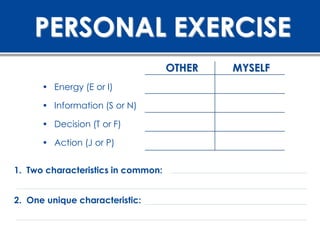
PERSONAL EXERCISE
                                    OTHER   MYSELF
      • Energy (E or I)

      • Information (S or N)

      • Decision (T or F)

      • Action (J or P)


1. Two characteristics in common:


2. One unique characteristic:
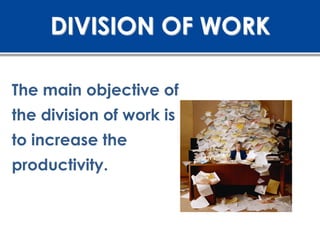
DIVISION OF WORK

The main objective of
the division of work is
to increase the
productivity.
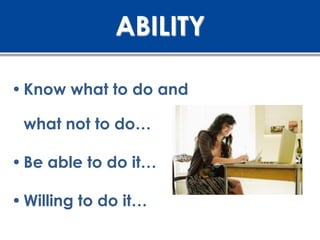
ABILITY

• Know what to do and

 what not to do…

• Be able to do it…

• Willing to do it…
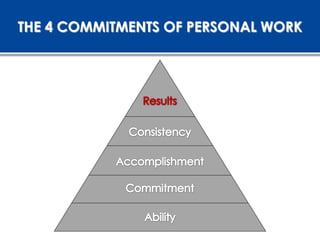
THE 4 COMMITMENTS OF PERSONAL WORK
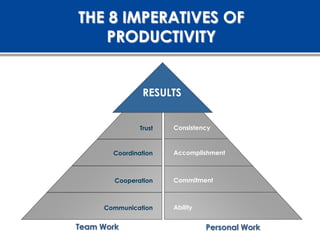
THE 8 IMPERATIVES OF
    PRODUCTIVITY


                RESULTS
             Results   Results


               Trust   Consistency


       Coordination    Accomplishment


        Cooperation    Commitment


     Communication     Ability


Team Work                        Personal Work
THANKS!
          Jose “Chepe” Ascoli
   President, Advanced Management
T: +502.2367.4274 F: +502.2366.6232
     jascoli@advancement.com.gt

Jose ascoli presentation

  • 1.
    WELCOME! The Imperatives ofProductivity Friday, 5 March 2010
  • 2.
    OBJECTIVES • You cando more of what you think… • Team work generates Sinergy… • Team work does not substitute poor personal performance…
  • 3.
  • 4.
    THE DISCONNECTED ORGANIZATION Visionary Sceptic Managers Confused Workers
  • 5.
    TEAM WORK • Getalong well • Get to know each other • Have a common goal
  • 6.
  • 7.
    ¿WHO IS THISMAN? • He was not accepted at the University • Lame/Crippled • Dyslexic • Stutterer • No public career • Drunk
  • 8.
    THE COMMUNICATION PROCESS Message Code Mean Feedback Understanding COMMUNION Noise Transmitter Interference Receiver
  • 9.
    We do nothave to play in the same team… We have to be team players! 3 Kind of Teams (P.Drucker) • Tennis (Doubles) • Foot Ball (American) • Base Ball
  • 10.
    EVOLUTION AND REVOLUTIONAS ORGANIZATIONS GROW Large Crisis of ? Red Tape SIZE Control Colaboration Coordination Autonomy Delegation Leadership Direction Small Creativity New AGE Mature Harvard Business Review. Evolution and Revolution as Organizations Grow. Larry E. Greiner
  • 11.
    THE 4 CONDITIONSOF TEAM WORK
  • 12.
    You should be ready to understand people… it is your extra edge for relating to people and knowing how to respond to them!
  • 13.
    MBTI Myers Briggs TypeIndicators • Katharine Briggs and Isabel Myers (mother/daughter) • C.G. Jung (Swiss – Psychiatrist) ― Preferences not skills ― All preferences are equally important ― Long track – 60 years of implementation
  • 14.
    PERSONAL EXERCISE OTHER MYSELF • Energy (E or I) • Information (S or N) • Decision (T or F) • Action (J or P)
  • 15.
    THE HUMAN PROCESS •We focus and generate ENERGY • We gather INFORMATION • We make DECISIONS • We ACT in the world
  • 16.
    ENERGY How people focusand generate their ENERGY, is simply a matter of how they express that ENERGY. There are two types of expression: Extraversion and Introversion • INTROVERTS (I): – They like to be alone or with close friends – They think first, then speak – They prefer an environment where they are allowed to concentrate and reflect without being criticized or badgered. • EXTRAVERTS (E): – They like to interact with people and activities – Their focus is on the outside world – They prefer an atmosphere where they can express ideas face-to-face
  • 17.
    INFORMATION People gather informationaccording to preference. Some people prefer to deal more with actualities, other with possibilities. • SENSING (S): – They depend of the five senses to gather information – They enjoy hands-on experiences – They are based on their experiences – They focus on details and facts • INTUITION (N): – They seek the meanings of various experiences and concepts – They are linked to their perception that intelligence is based on an “unrestricted approach to understanding” – They are inventive, original and enterprising
  • 18.
    DECISION How people arrive at their decisions: “I feel this way” or “I think this way” • THINKERS (T): ― Logical and analytical way ― Everything about the subject has to be “perfectly clear” ― They are “slow” in making decisions but they “sweat out” the consequences • FEELERS (F): ― They are primarily concerned about the impact their decisions will have on others ― They are concerned with the human and interpersonal aspects and want to be sure thefeelings and personal values of others are not in jeopardy. ― They use “friendly persuasion”
  • 19.
    ACTION Direct result and combination of the source of a person s energy, how the information is gathered, and the process they use to make their decision. • JUDGERS (J): ― They take action of others ― They enjoy making things happen ― They are firmly convinced that there is a “correct” and an “incorrect” way of taking action ― They want schedules and timetables to be out-lined and need advance warning of any changes • PERCEIVERS (P): ― They prefer to use a “wait and see” approach in finalizing matters. ― Up to the time of the action, they may still be asking questions about what “the plan” is. ― They are very flexible
  • 20.
    PERSONAL EXERCISE OTHER MYSELF • Energy (E or I) • Information (S or N) • Decision (T or F) • Action (J or P) 1. Two characteristics in common: 2. One unique characteristic:
  • 21.
    DIVISION OF WORK Themain objective of the division of work is to increase the productivity.
  • 22.
    ABILITY • Know whatto do and what not to do… • Be able to do it… • Willing to do it…
  • 23.
    THE 4 COMMITMENTSOF PERSONAL WORK
  • 25.
    THE 8 IMPERATIVESOF PRODUCTIVITY RESULTS Results Results Trust Consistency Coordination Accomplishment Cooperation Commitment Communication Ability Team Work Personal Work
  • 26.
    THANKS! Jose “Chepe” Ascoli President, Advanced Management T: +502.2367.4274 F: +502.2366.6232 jascoli@advancement.com.gt