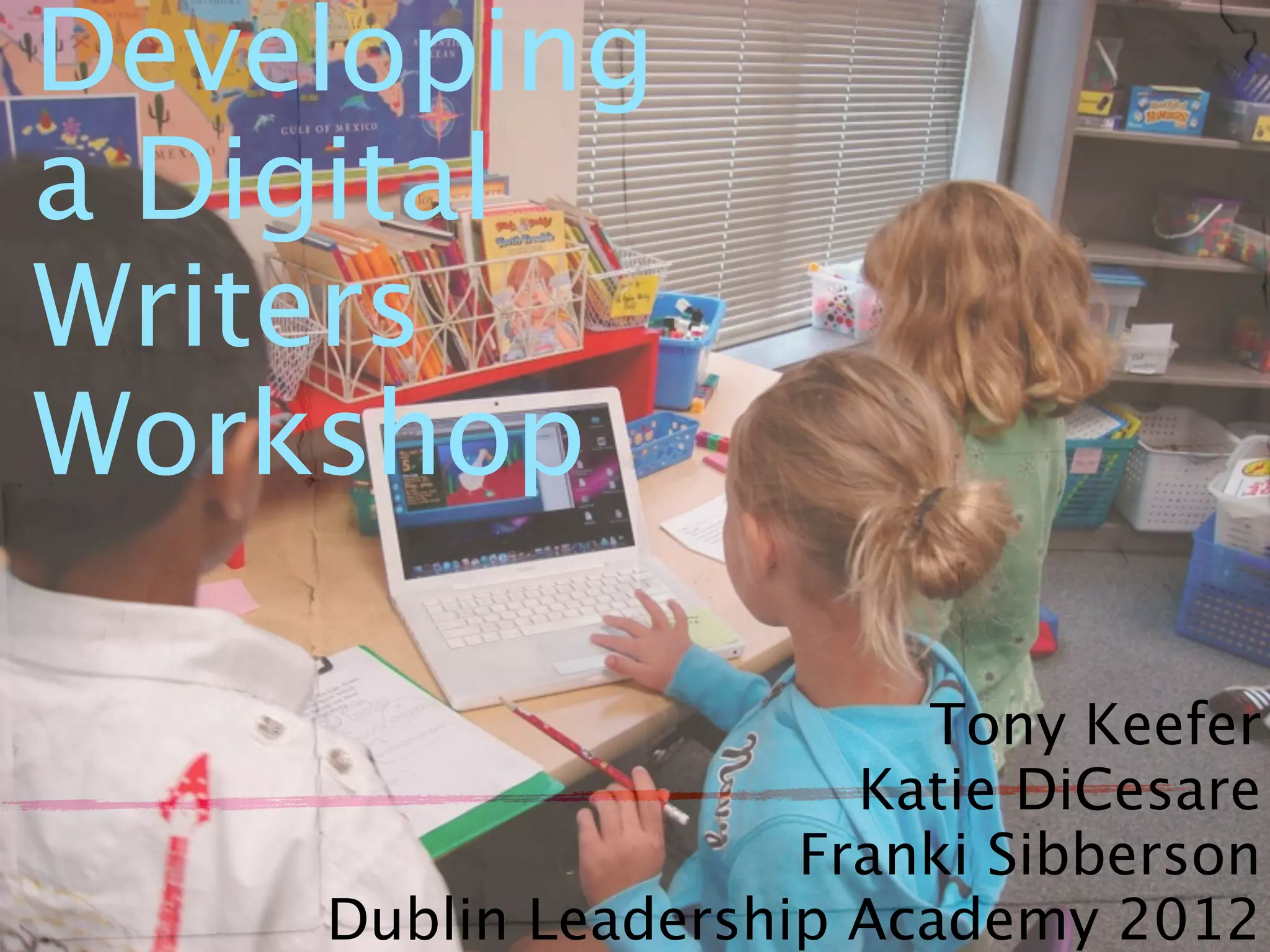
Developing
a Digital
Writers
Workshop

                        Tony Keefer
                      Katie DiCesare
                    Franki Sibberson
    Dublin Leadership Academy 2012
www.readingyear.blogspot.com

www.creativeliteracy.blogspot.com

www.tonykeefer.tumblr.com

www.slideshare.net/franki22

www.sildeshare.net/tonykeefer
Something to Consider:

The issue of scheduling laptops or computer
labs is a big issue. We understand this, but we
have worked hard to figure out ways to do this
in our own buildings.

If you decide to embrace the idea of using
digital writing in your classroom, we know you
will problem solve because it will be important
to you.
The easiest thing to do is react.
The second easiest is to respond.
But the hardest thing is to initiate.
-Seth Godin


This bridge will take you halfway there -
the last few steps you’ll have to take yourself.
-Shel Silverstein
WHY?
Audience
Deepening An Awareness of
Audience
“The public is the only critic whose opinion is worth
anything at all." - Mark Twain


"When I know my writing will be read by others, I
work on my writing harder." - Meredith Reed
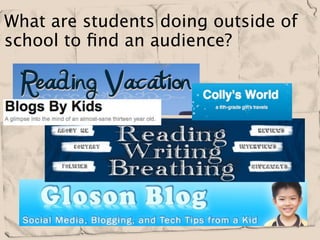
What are students doing outside of
school to find an audience?


What Do My Writers Think?
Who is your audience?

                1) I don't know


                    2) My teacher


                    3) My friends
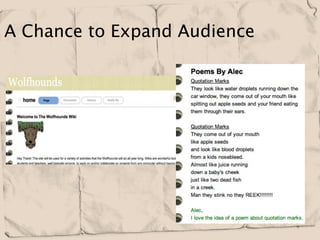
A Chance to Expand Audience


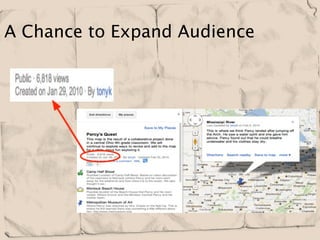
A Chance to Expand Audience


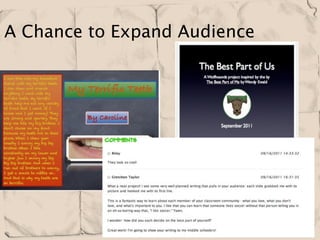
A Chance to Expand Audience


A Chance to Expand Audience


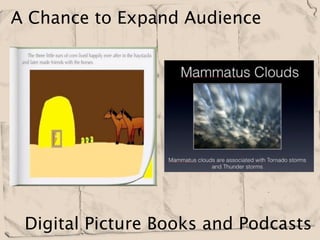
 Digital Picture Books and Podcasts
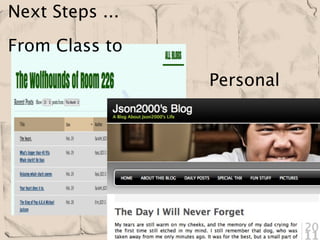
Next Steps ...
From Class to

                 Personal
"When I know my writing will be read by others, I
work on my writing harder." - Meredith Reed, age 10


"It will be tough to write as good as I can if I know
that nobody else will read it." - Meredith Reed
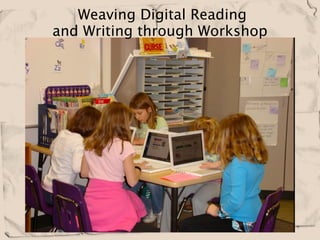
 Weaving Digital Reading
and Writing through Workshop  
Learning takes time.

Learning is a social practice.

Learning about technology should be embedded with sound
instructional practice.

-Digital Learning Collaborative 
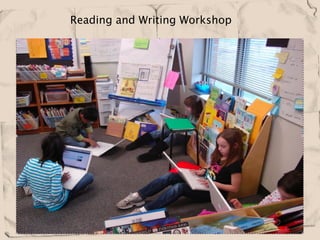
 Reading and Writing Workshop
What are the goals I have for readers and writers?


 What experiences am I providing to balance traditional
         workshop with digital experiences?
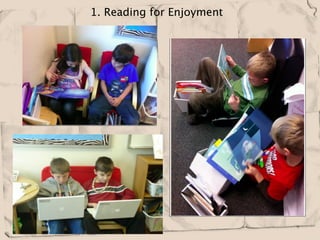
 1. Reading for Enjoyment  
              
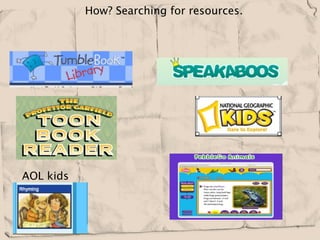
  How? Searching for resources. 


AOL kids
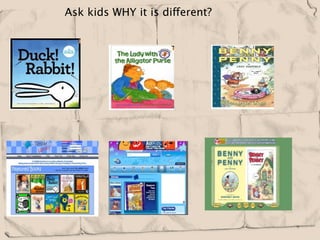
Ask kids WHY it is different?
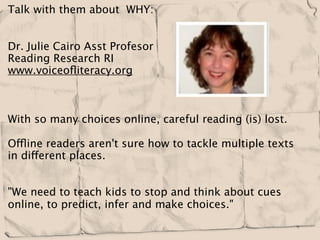
Talk with them about  WHY:
 

Dr. Julie Cairo Asst Profesor 
Reading Research RI
www.voiceofliteracy.org


With so many choices online, careful reading (is) lost.

Offline readers aren't sure how to tackle multiple texts
in different places.
 

"We need to teach kids to stop and think about cues
online, to predict, infer and make choices."
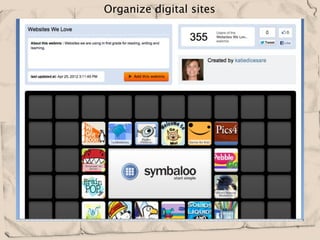
Organize digital sites
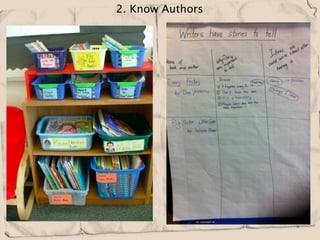
2. Know Authors  
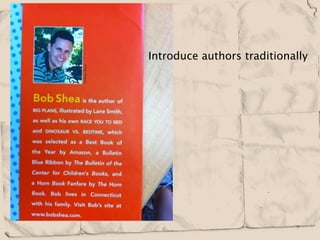
Introduce authors traditionally
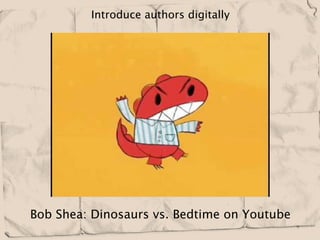
Introduce authors digitally


Bob Shea: Dinosaurs vs. Bedtime on Youtube
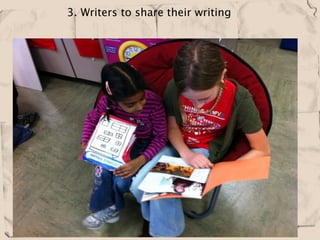
 3. Writers to share their writing 
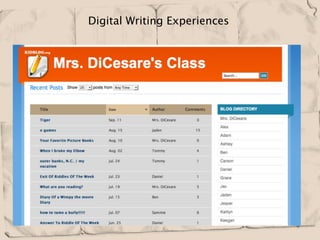
 Digital Writing Experiences
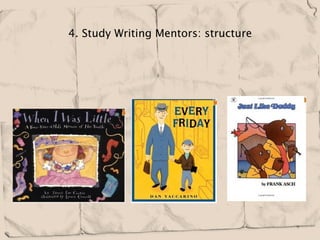
4. Study Writing Mentors: structure
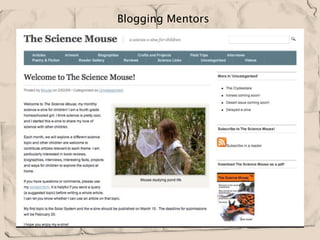
  Blogging Mentors
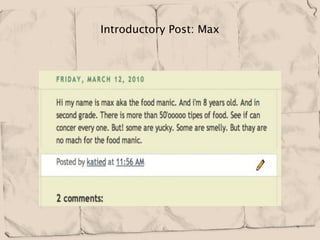
Introductory Post: Max
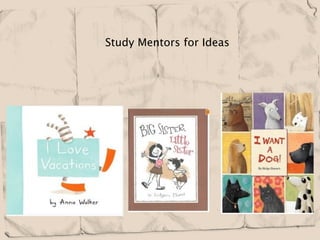
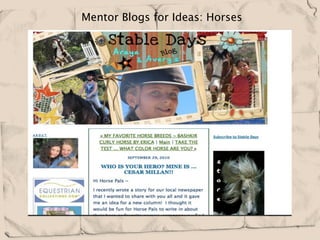
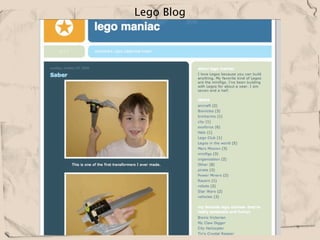
                        Study Mentors for Ideas
 Mentor Blogs for Ideas: Horses
Lego Blog
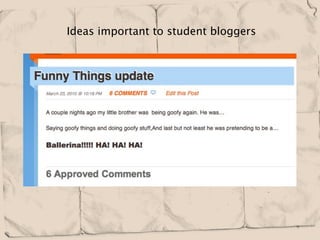
 Ideas important to student bloggers
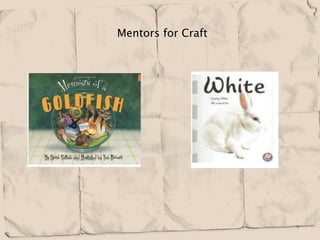
                         Mentors for Craft
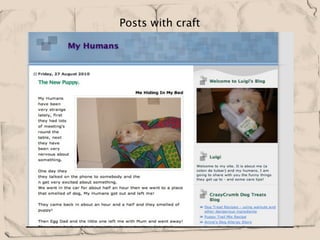
Posts with craft
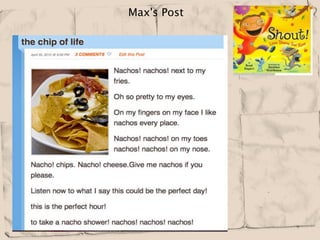
 Max's Post 
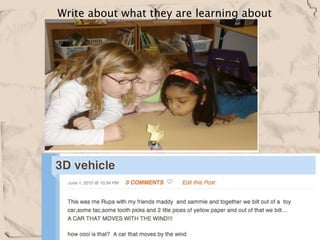
Posts that help us learn and understand   
Write about what they are learning about
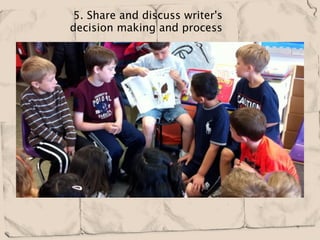
 5. Share and discuss writer's
decision making and process
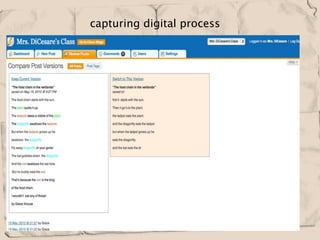
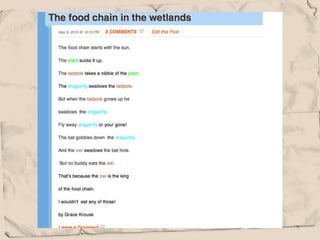
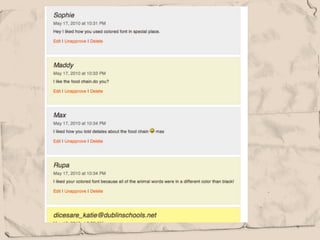
 capturing digital process
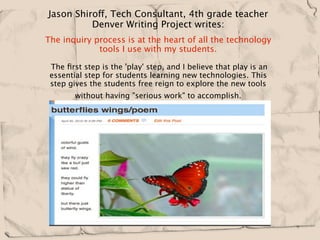
Jason Shiroff, Tech Consultant, 4th grade teacher
          Denver Writing Project writes:
The inquiry process is at the heart of all the technology
             tools I use with my students.  

 The first step is the 'play' step, and I believe that play is an
 essential step for students learning new technologies. This
 step gives the students free reign to explore the new tools
       without having "serious work" to accomplish.    
Digital Writing
              Workshop

                     he First
             hough t
Th inking T        s
         S ix Week
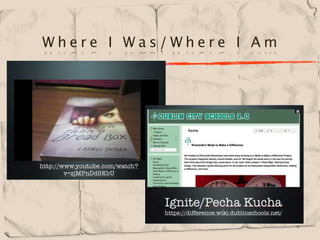
Where I Was/Where I Am
Pen and Paper will not be
   primary tools your
  students create with.


   Will Richardson
Publication is now the
  MIDPOINT in the
  writing process.


 Will Richardson
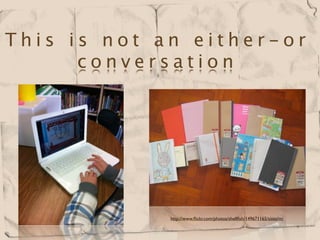
This is not an either-or
      conversation


             http://www.flickr.com/photos/shellfish/149671165/sizes/m/
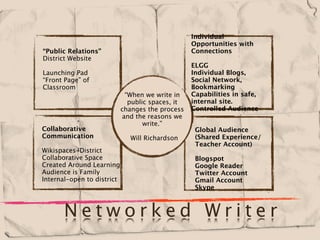
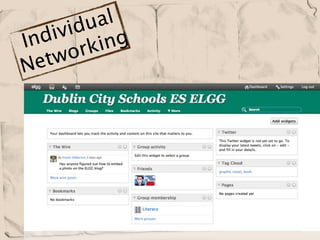
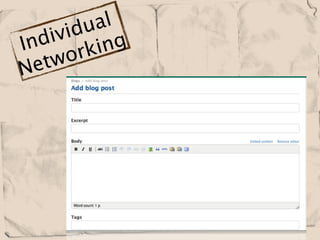
Individual
                                                   Opportunities with
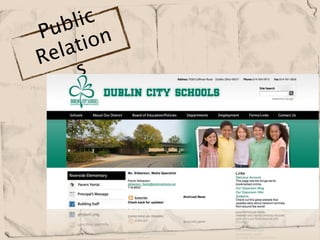
“Public Relations”                                 Connections
District Website
                                                   ELGG
Launching Pad                                      Individual Blogs,
“Front Page” of                                    Social Network,
Classroom                                          Bookmarking
                              “When we write in    Capabilities in safe,
                               public spaces, it   internal site.
                            changes the process    Controlled Audience
                             and the reasons we
                                    write.”
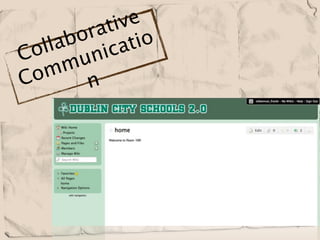
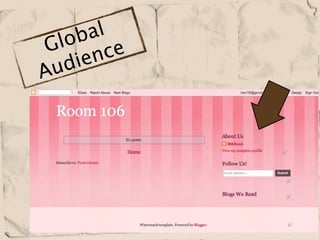
Collaborative                                       Global Audience
Communication                  Will Richardson      (Shared Experience/
                                                    Teacher Account)
Wikispaces-District
Collaborative Space                                 Blogspot
Created Around Learning                             Google Reader
Audience is Family                                  Twitter Account
Internal-open to district                           Gmail Account
                                                    Skype


       Networked Writer
lic
  ub n
P
  ela tio
R
      s
idu al
Indiv      ing
     wo rk
N et
idu al
Indiv     ing
   two rk
Ne
at ive
      or
    ab icatio
Coll un
     m
  om n
C
al
   ob e
Gl
  dienc
Au
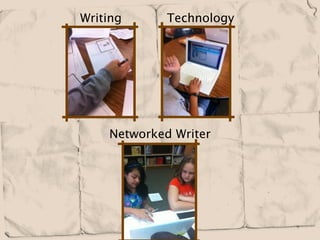
Writing      Technology


    Networked Writer
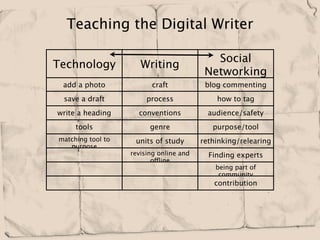
Teaching the Digital Writer

                                            Social
Technology            Writing
                                          Networking
 add a photo             craft            blog commenting
 save a draft           process              how to tag
write a heading      conventions           audience/safety
     tools               genre              purpose/tool
matching tool to    units of study       rethinking/relearing
   purpose
                   revising online and     Finding experts
                          offline
                                             being part of
                                              community
                                            contribution
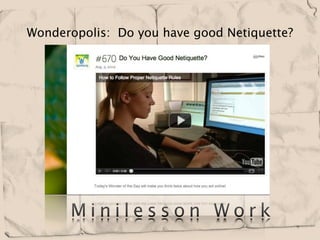
Wonderopolis: Do you have good Netiquette?


      Minilesson Work
http://lauramitolife.blogspot.com/


     Tagline


http://www.readingvacation.net/
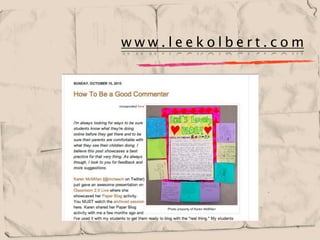
www.leekolbert.com


Tagline
ing
                         d
                  R ea
            e d
         c t
    ne
 o n
C
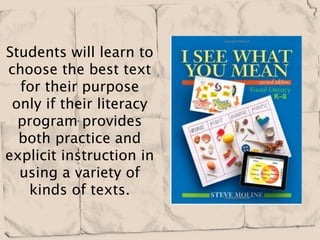
Students will learn to
choose the best text
  for their purpose
 only if their literacy
  program provides
  both practice and
explicit instruction in
  using a variety of
   kinds of texts.
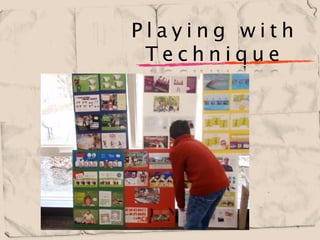
Playing with
   Technique


Tagline
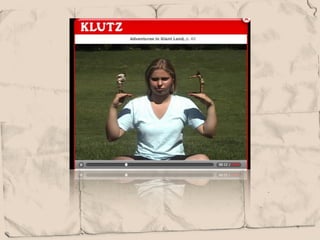
Klutz
Tricky
Video


 http://video.klutz.com/tricky/index.html
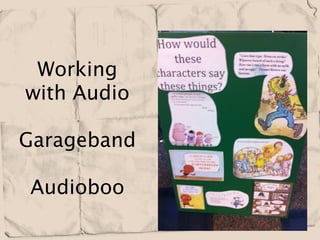
Working
with Audio

Garageband

Audioboo
Global Read Aloud-
    October 1
We have the ability to publish
in a variety of media with the
intention of connecting and
sharing it with others who
have an interest (or passion)
in the topic.

             Will Richardson

Developing a digital writers workshop

Editor's Notes

  • #2  idea to share\n
  • #3 \n
  • #4 \n
  • #5 \n
  • #6 \n
  • #7 \n
  • #8 \n
  • #9 \n
  • #10 \n
  • #11 \n
  • #12 \n
  • #13 \n
  • #14 \n
  • #15 \n
  • #16 \n
  • #17 When playing and thinking with technology, I think we have to step back and remember to think about Learning. \n
  • #18 \n
  • #19 Workshop\n\n\n\nKids are studying texts: mentor  and digital texts,\n\n having time to try what they are noticing and learning in those texts and \n\nthen having opportunities to share their learning with each other.\n
  • #20 To keep instruction first\n\n I want to make sure I have clear goals and messages  for my students when working with technology.\n
  • #21 \n
  • #22  We have to think about our goals for students and talk them through why and how we found the resources we use in our classroom.\n\nTumblebooks= digital listening library\n\nAOL= Lots of repetitive, song rhyming text that supports young kids learning to read\n\nToon Book Reader= digital place for graphic novels\n\nSpeakaboos= fairytales and plays, use it for introducing a complicated tale before reading it aloud\n\nNational geograhic kids= great non-fiction site with kids bloggers,  videos\n\nPebble Go= Place where kids can go to listen and or read about numerous topics about non-fiction  \nAnimals, earth and space and biographies\n\nIt becomes the place where we search for wonders about science first...\n
  • #23 Why is it different?\n\nDuck Rabbit Picture book vs\n\nabc search on top of page\nwhat is the first letter of name of book?\n\n\n\n\nAOL Kids search by topic: rhyming, animals, arthur books\n\n\nToon books: search by title\n\nChoice to have the text read to you or not\n\nbc graphic novel: click in the speech bubbles to activate the story\n\n\n\n \n
  • #24 \n
  • #25 Make sure it is easy for them to come back to at school so that they will come back to them at home\n
  • #26 Study authors and illustrator's work  traditionally\n\npics of authors on baskets\n\nstudy writer's work so that it serves as a mentor for student writing\n
  • #27 Traditionally: Reading the inside flap of the book jacket (do it!)\n\n\nYou Tube: helped us know Bob Shea personally\n\n \n\n Helped kids to see a dad can be a writer and write for his son...\n\n\n\nOther tools that allow for a more personal interaction with an author: using twitter, skpe\n
  • #28 Traditionally: Reading the inside flap of the book jacket (do it!)\n\n\nYou Tube: helped us know Bob Shea personally\n\n \n\n Helped kids to see a dad can be a writer and write for his son...\n\n\n\nOther tools that allow for a more personal interaction with an author: using twitter, skpe\n
  • #29  We have different levels of audience:\n\na partner, our classroom\n\nour classroom families\n\ncommunity\n
  • #30  Kidblog: \n allowed for kids to share with their classroom audience on a personal level\n\nstudents who often shied away from commenting in the group setting came alive by the possibility of commenting online\n\nkidblog created an independence in sharing and commenting that often I would orchestrate with partners, asking kids to turn and talk\n\n\n\n \n
  • #31 first grade writing mentors I choose bc of the structure, pattern  \n
  • #32 exploring science mouse:\n\nintroductory post to blogging\n\nKids partnered up to notice what  the author did to introduce herself\n\nTell about yourself\n Tell about what you love\nWrap up your post\n
  • #33 \n
  • #34 \n
  • #35 homeschool blogs \n\nkids writing authentically about their lives\n
  • #36 \n
  • #37 \n
  • #38 \n
  • #39 how was I going to help them transfer all the craft study we had experienced over the past 2 years\n\nAnd, how do I find kid bloggers who are crafting their writing?\n\nIn all of these posts, we read the comments, noticed the strong commenting. \n\nThought about what in the comment helped the writer or the conversation.\n
  • #40 \n
  • #41 Kaitlyn's mom in Austraila\n
  • #42 So blogging became this place where kids could:\n
  • #43 Another goal I have for readers and writers is to share their writing their reading and especially their process.\n\nIt is often captured in conversation...\n
  • #44 Spring 2 years ago\n\nStudied poems by Valerie Worth  Douglas Flourian, Joanne Ryder (Toad by the Road) and other non-fction poetry that taught us something \n\nBLog was a place where kids were writing ideas and poems as we learned about poetry.\n\nMEtro Park :  animals and their habitats in  Wetlands, food chain, \n\n\n3rd trim \n
  • #45 \n
  • #46 Ashley talking about "non-fiction" poetry\n
  • #47 Student playing with words after a minilesson on descriptive language...\n\n\nTeachers need to be practicing play.\n\nHow are you making time for purposeful play in your learning?\n
  • #48 \n
  • #49 \n
  • #50 \n
  • #51 \n
  • #52 \n
  • #53 \n
  • #54 \n
  • #55 \n
  • #56 \n
  • #57 \n
  • #58 \n
  • #59 \n
  • #60 \n
  • #61 \n
  • #62 \n
  • #63 \n
  • #64 \n
  • #65 \n
  • #66 \n
  • #67 \n
  • #68 \n
  • #69 \n
  • #70 \n
  • #71 \n
  • #72 \n
  • #73 \n
  • #74 \n