Introduction to
Occlusion
Ideal Anatomical
Contacts


B. Cleghorn DMD MSc
Associate Professor
Dalhousie University
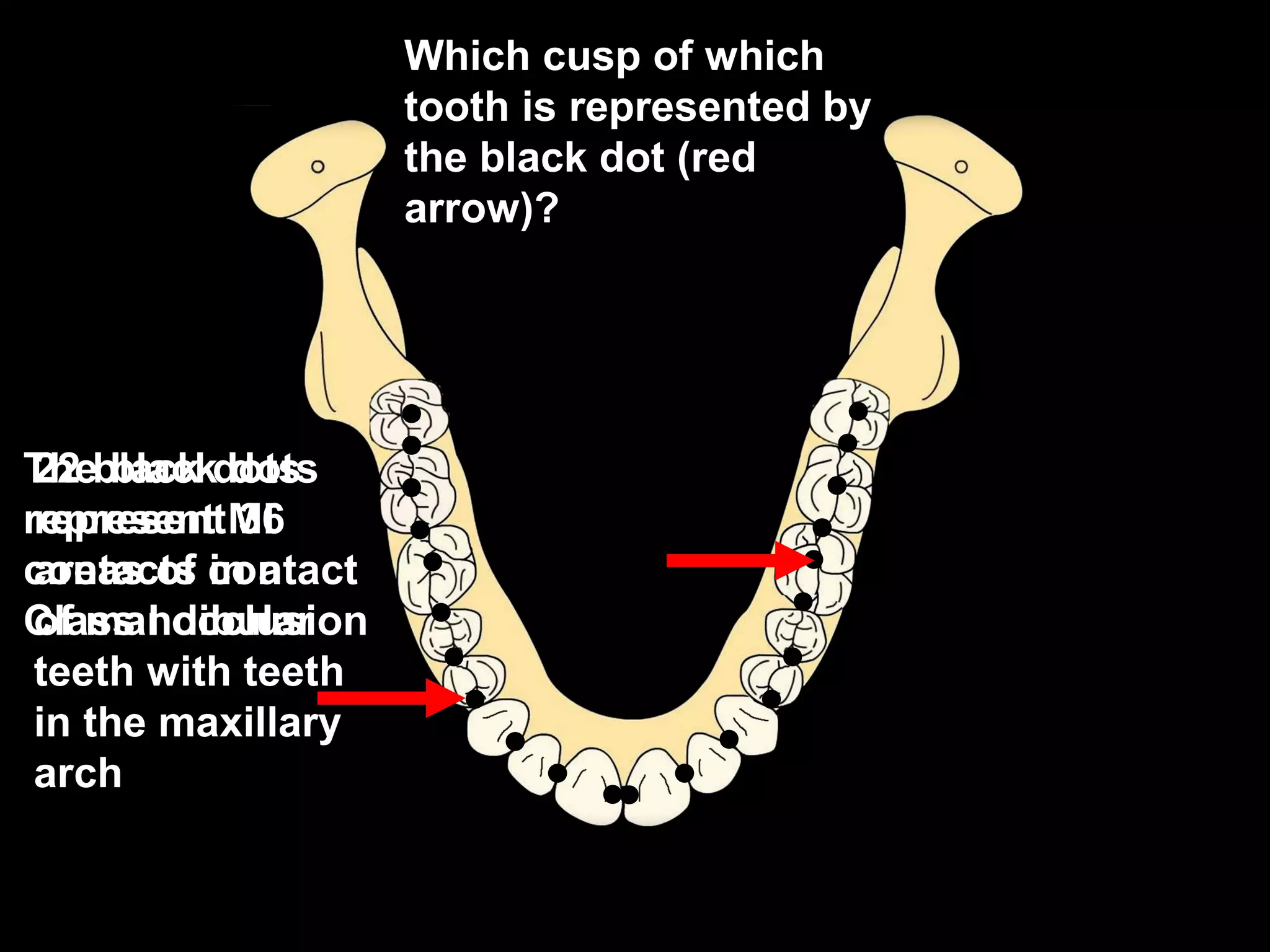
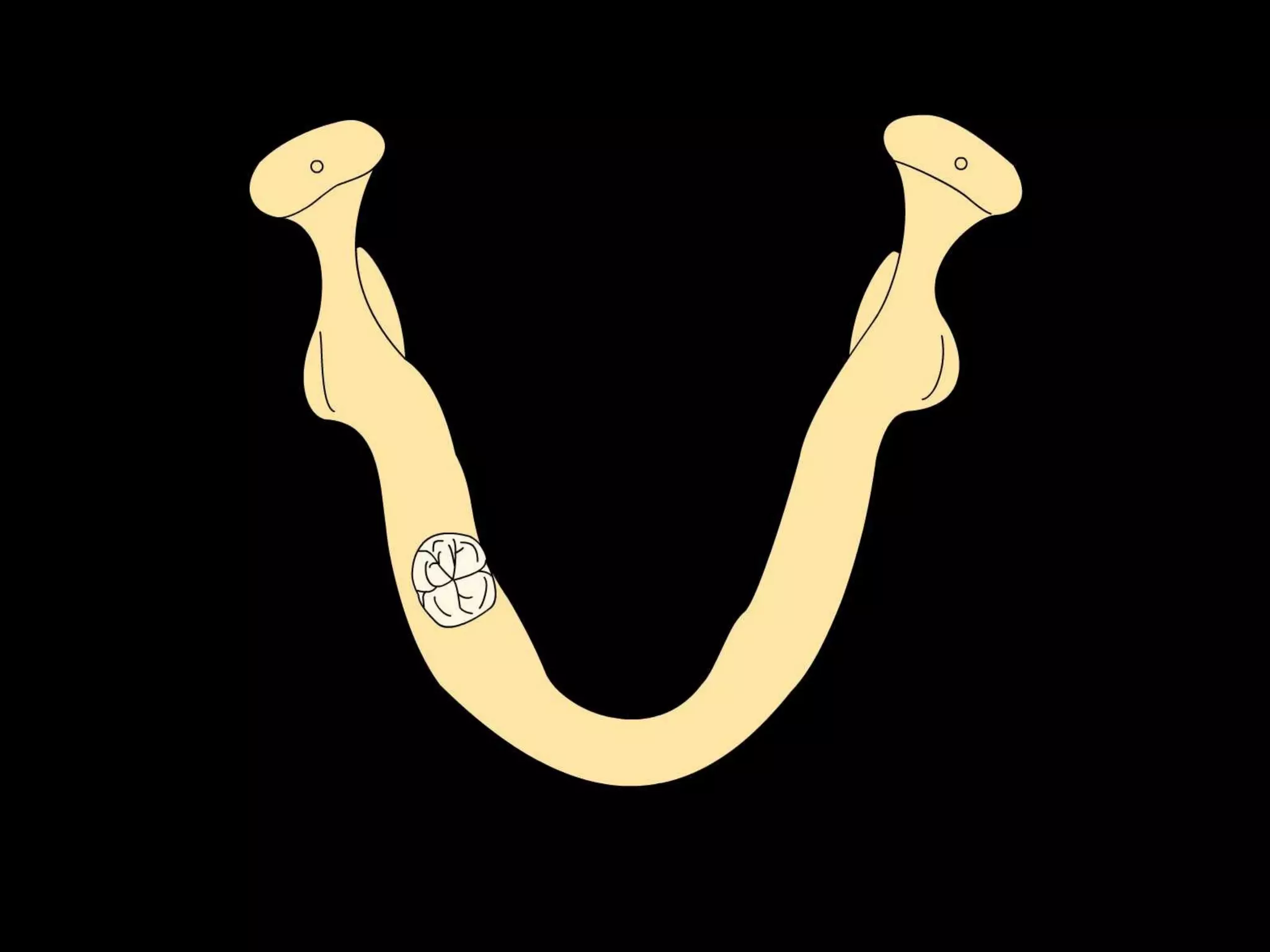
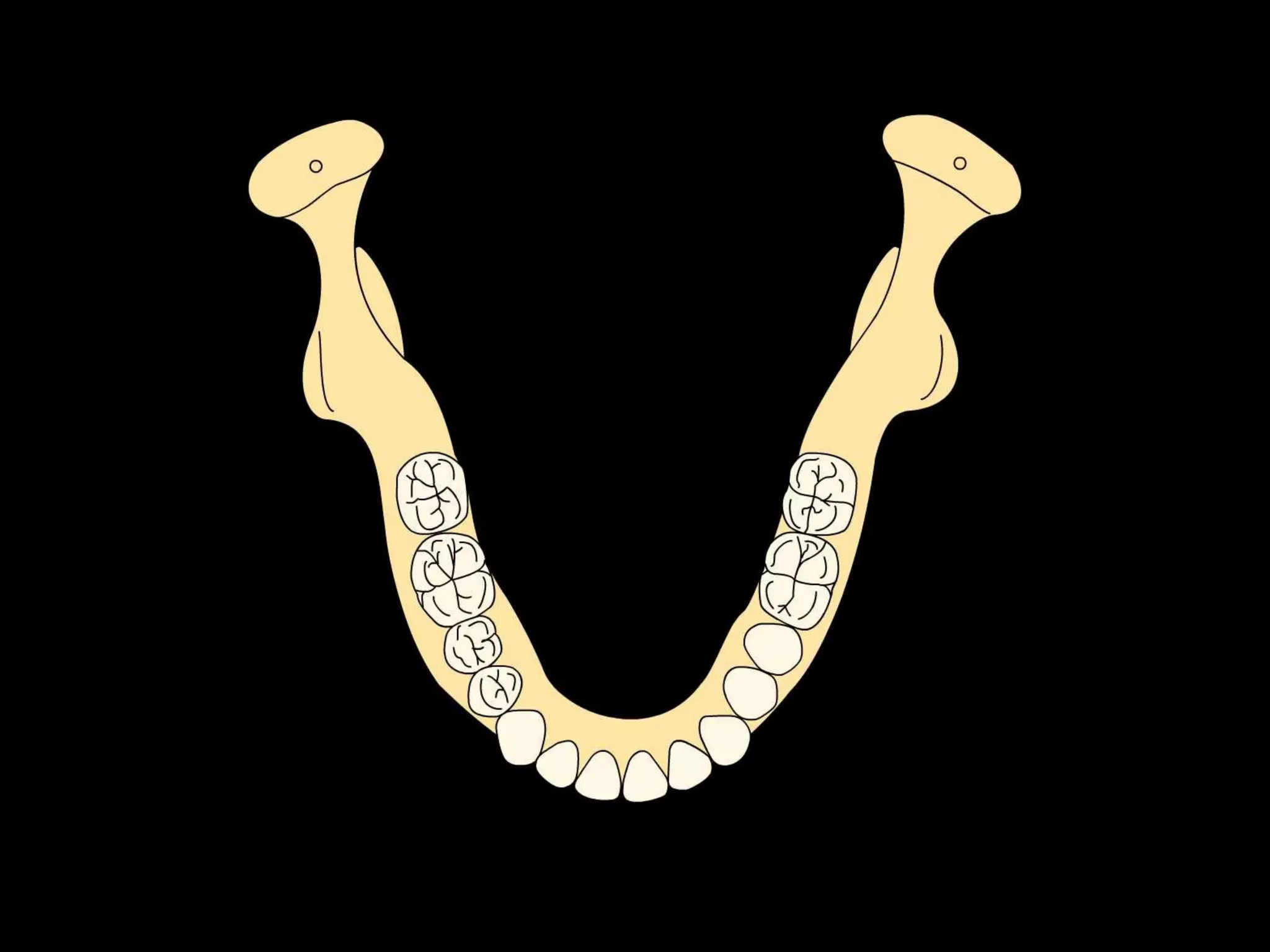
Which cusp of which
                    tooth is represented by
                    the black dot (red
                    arrow)?


Theblack dots
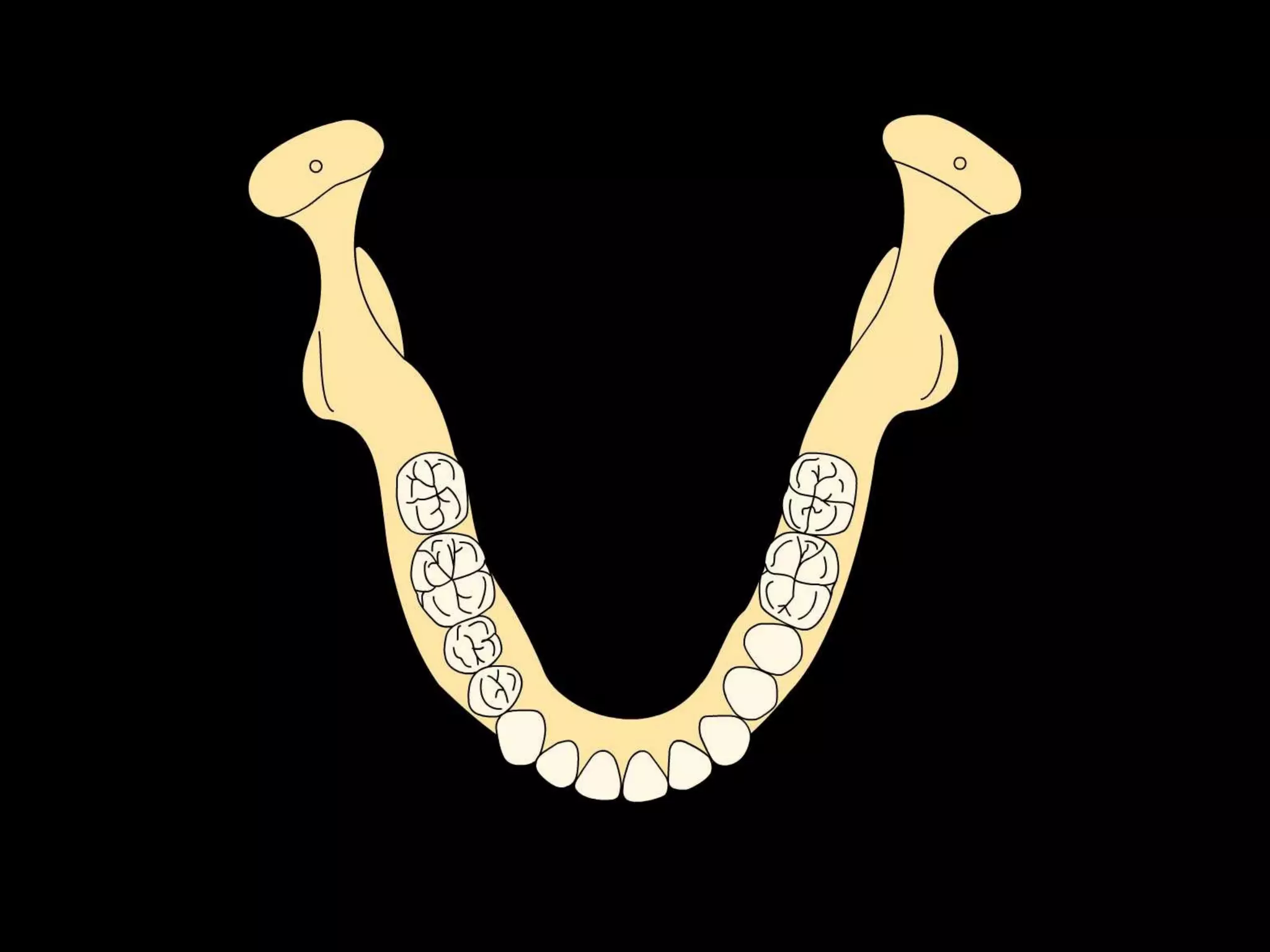
 22 black dots
represent MI
 represent 36
contacts contact
 areas of in a
Class I occlusion
 of mandibular
 teeth with teeth
 in the maxillary
 arch
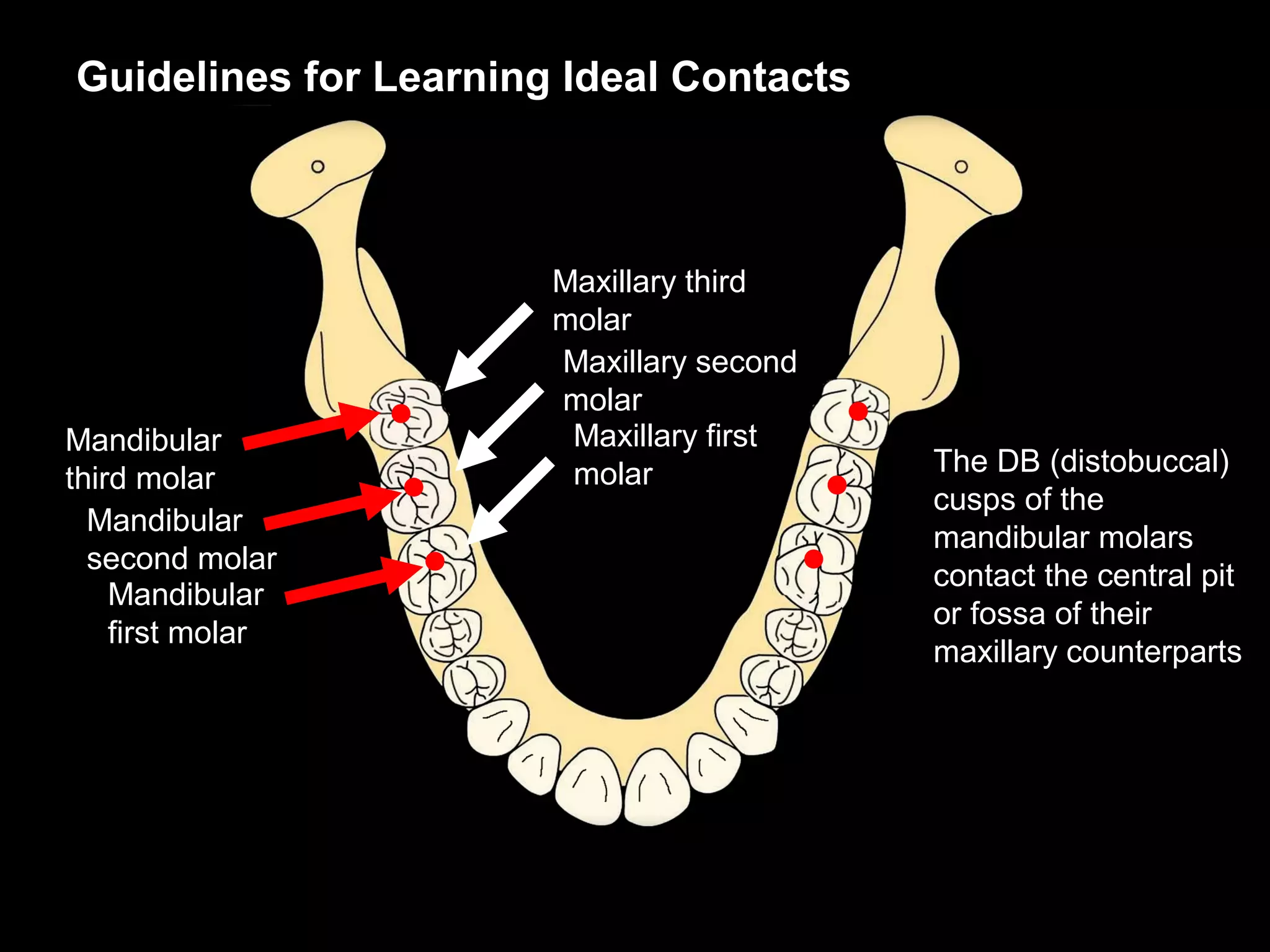
Guidelines for Learning Ideal Contacts


                       Maxillary third
                       molar
                       Maxillary second
                       molar
Mandibular              Maxillary first
                        molar             The DB (distobuccal)
third molar
                                          cusps of the
  Mandibular
                                          mandibular molars
  second molar
                                          contact the central pit
    Mandibular
                                          or fossa of their
    first molar
                                          maxillary counterparts
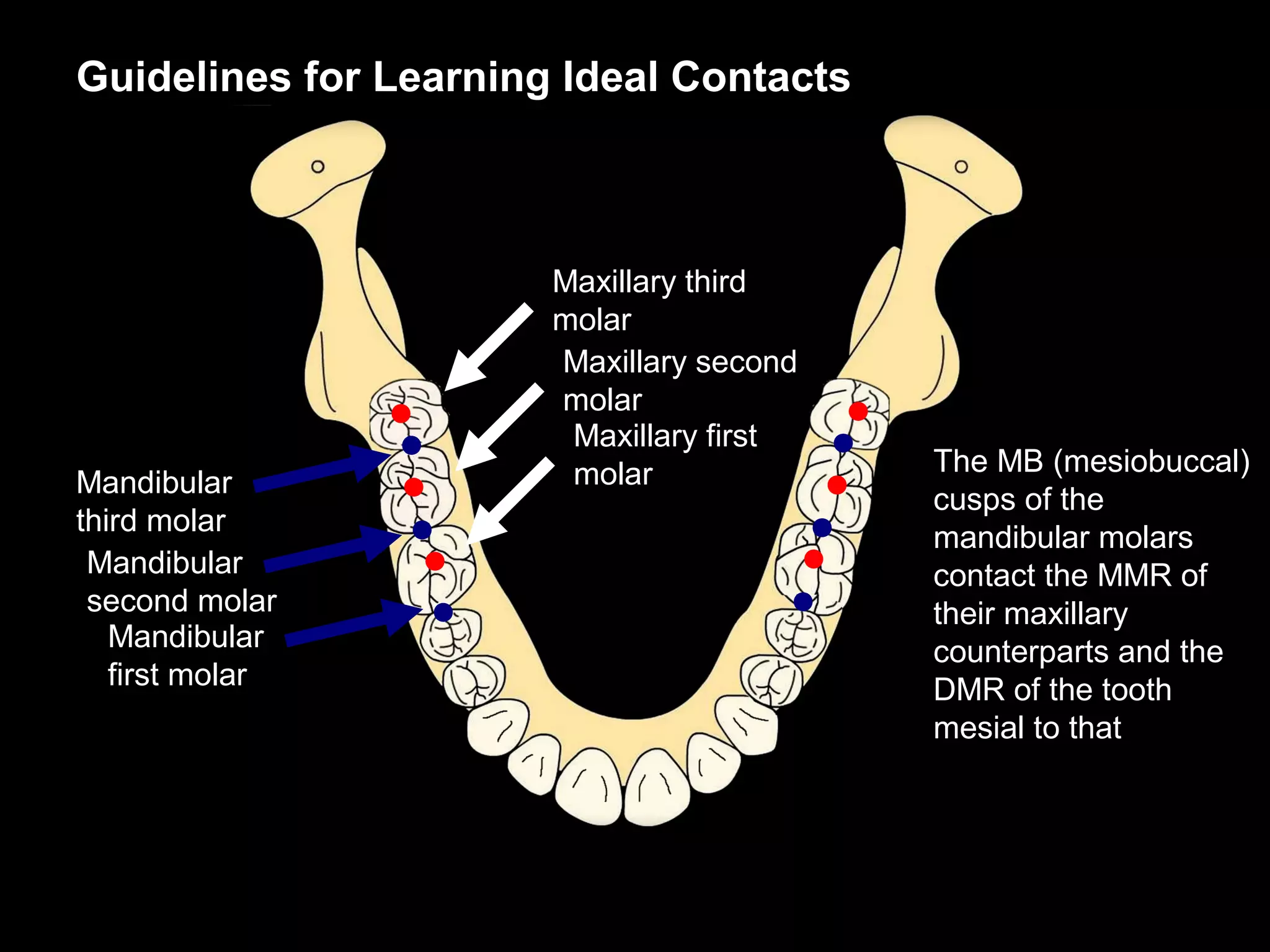
Guidelines for Learning Ideal Contacts


                       Maxillary third
                       molar
                       Maxillary second
                       molar
                        Maxillary first
                        molar             The MB (mesiobuccal)
Mandibular
                                          cusps of the
third molar
                                          mandibular molars
 Mandibular                               contact the MMR of
 second molar                             their maxillary
   Mandibular                             counterparts and the
   first molar                            DMR of the tooth
                                          mesial to that
Guidelines for Learning Ideal Contacts


                        Maxillary
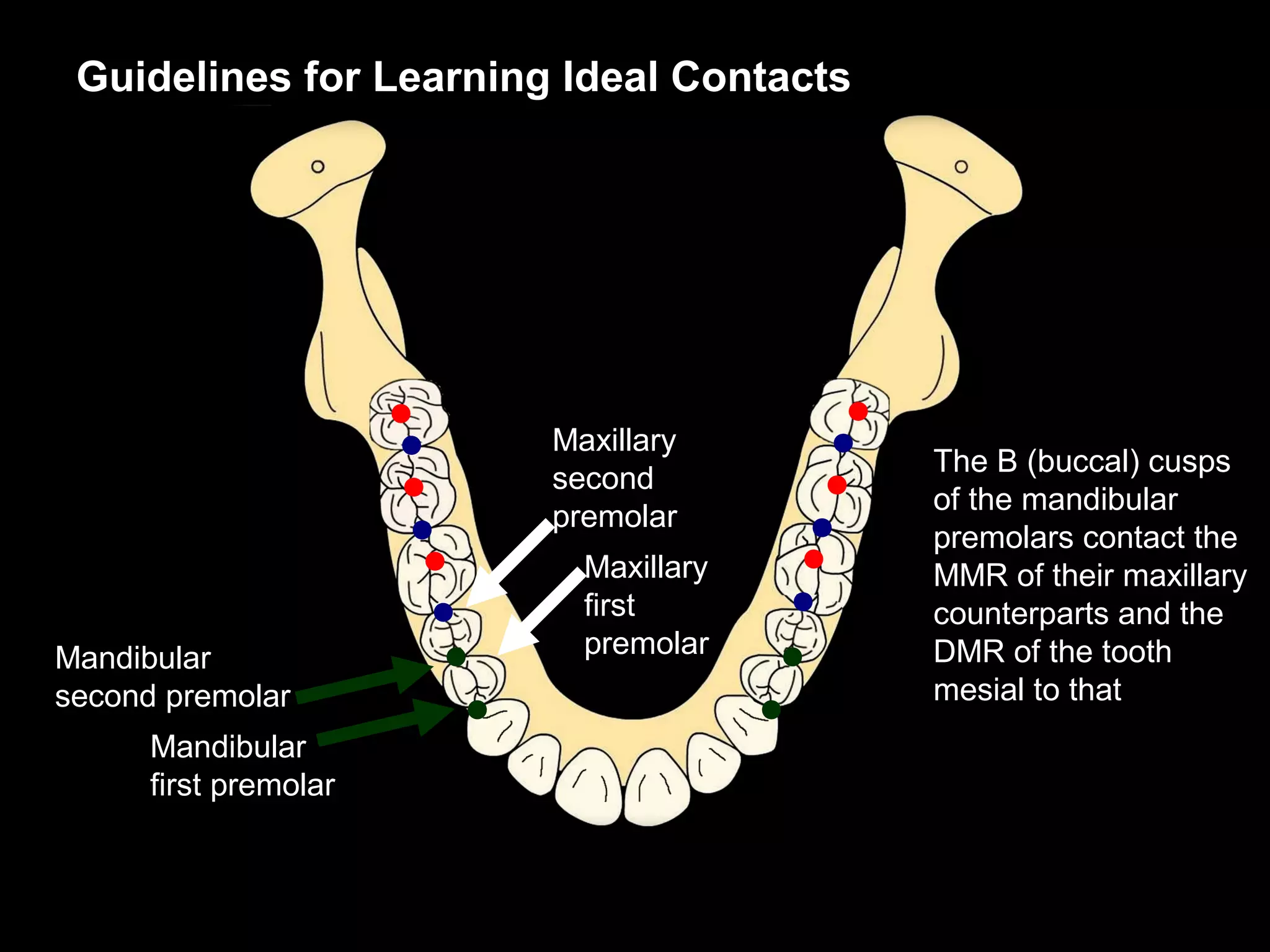
                                          The B (buccal) cusps
                        second
                                          of the mandibular
                        premolar
                                          premolars contact the
                          Maxillary       MMR of their maxillary
                          first           counterparts and the
Mandibular                premolar        DMR of the tooth
second premolar                           mesial to that
      Mandibular
      first premolar
Guidelines for Learning Ideal Contacts


                                         The cusp tip of the
                                         mandibular canines
                         Maxillary       contacts the MMR of
                         canine          their maxillary
                                         counterparts and the
                                         DMR of the tooth
                                         mesial to that
                                         (maxillary lateral
        Mandibular
                                         incisor)
        canine
Guidelines for Learning Ideal Contacts


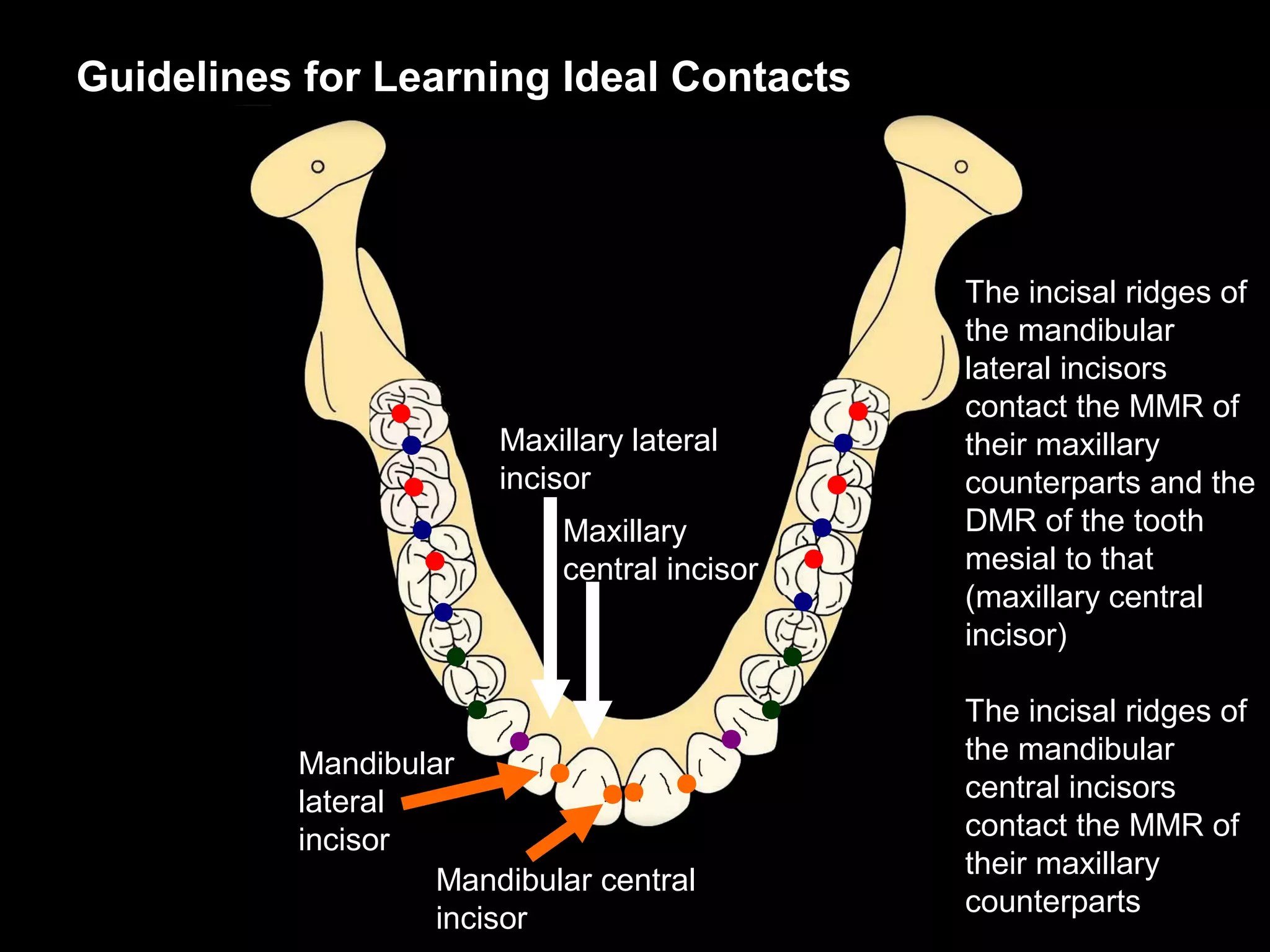
                                             The incisal ridges of
                                             the mandibular
                                             lateral incisors
                                             contact the MMR of
                       Maxillary lateral     their maxillary
                       incisor               counterparts and the
                           Maxillary         DMR of the tooth
                           central incisor   mesial to that
                                             (maxillary central
                                             incisor)

                                             The incisal ridges of
          Mandibular                         the mandibular
          lateral                            central incisors
          incisor                            contact the MMR of
                                             their maxillary
                   Mandibular central
                                             counterparts
                   incisor
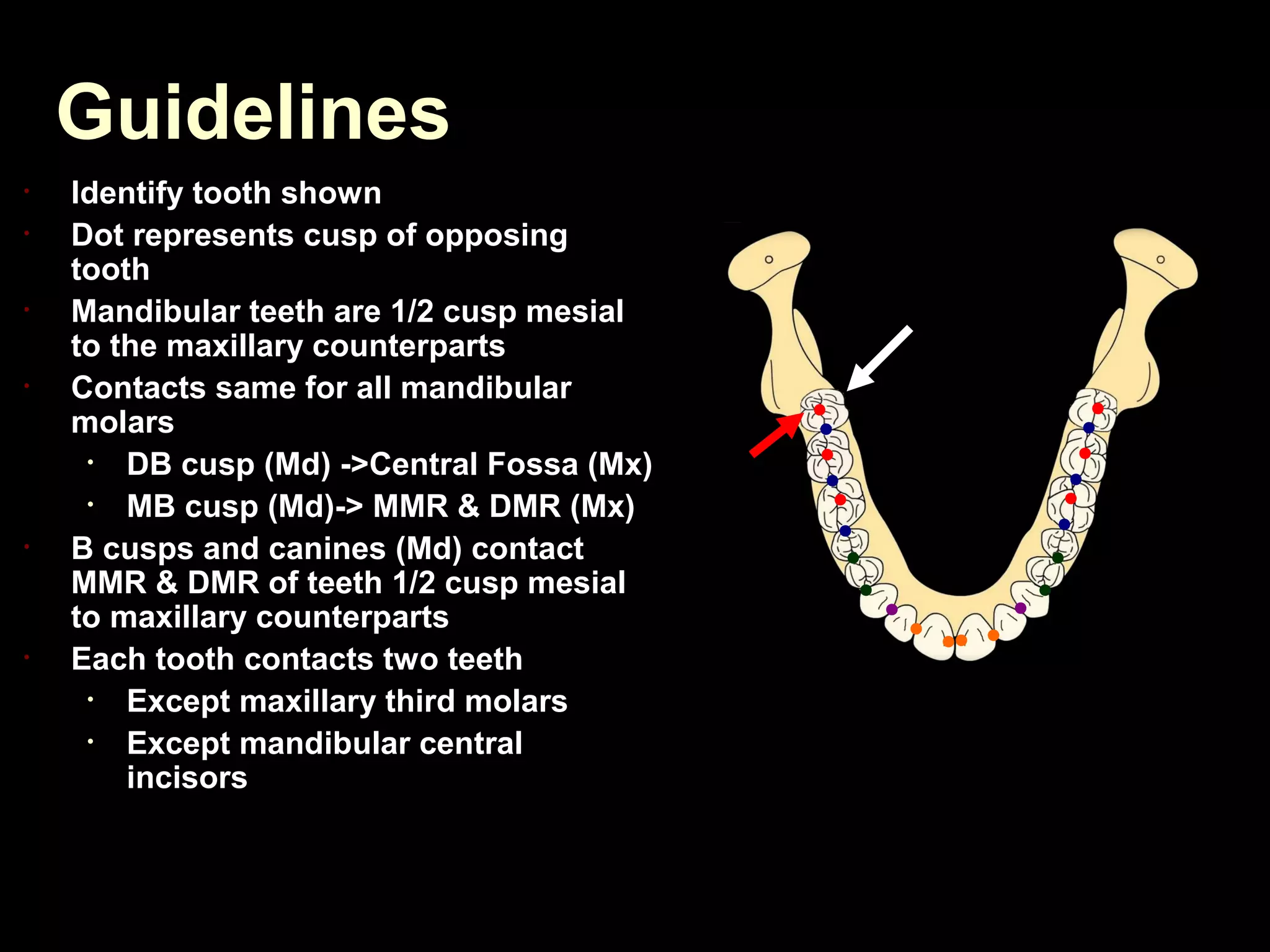
Guidelines
•   Identify tooth shown
•   Dot represents cusp of opposing
    tooth
•   Mandibular teeth are 1/2 cusp mesial
    to the maxillary counterparts
•   Contacts same for all mandibular
    molars
     •  DB cusp (Md) ->Central Fossa (Mx)
     •  MB cusp (Md)-> MMR & DMR (Mx)
•   B cusps and canines (Md) contact
    MMR & DMR of teeth 1/2 cusp mesial
    to maxillary counterparts
•   Each tooth contacts two teeth
     •  Except maxillary third molars
     •  Except mandibular central
        incisors
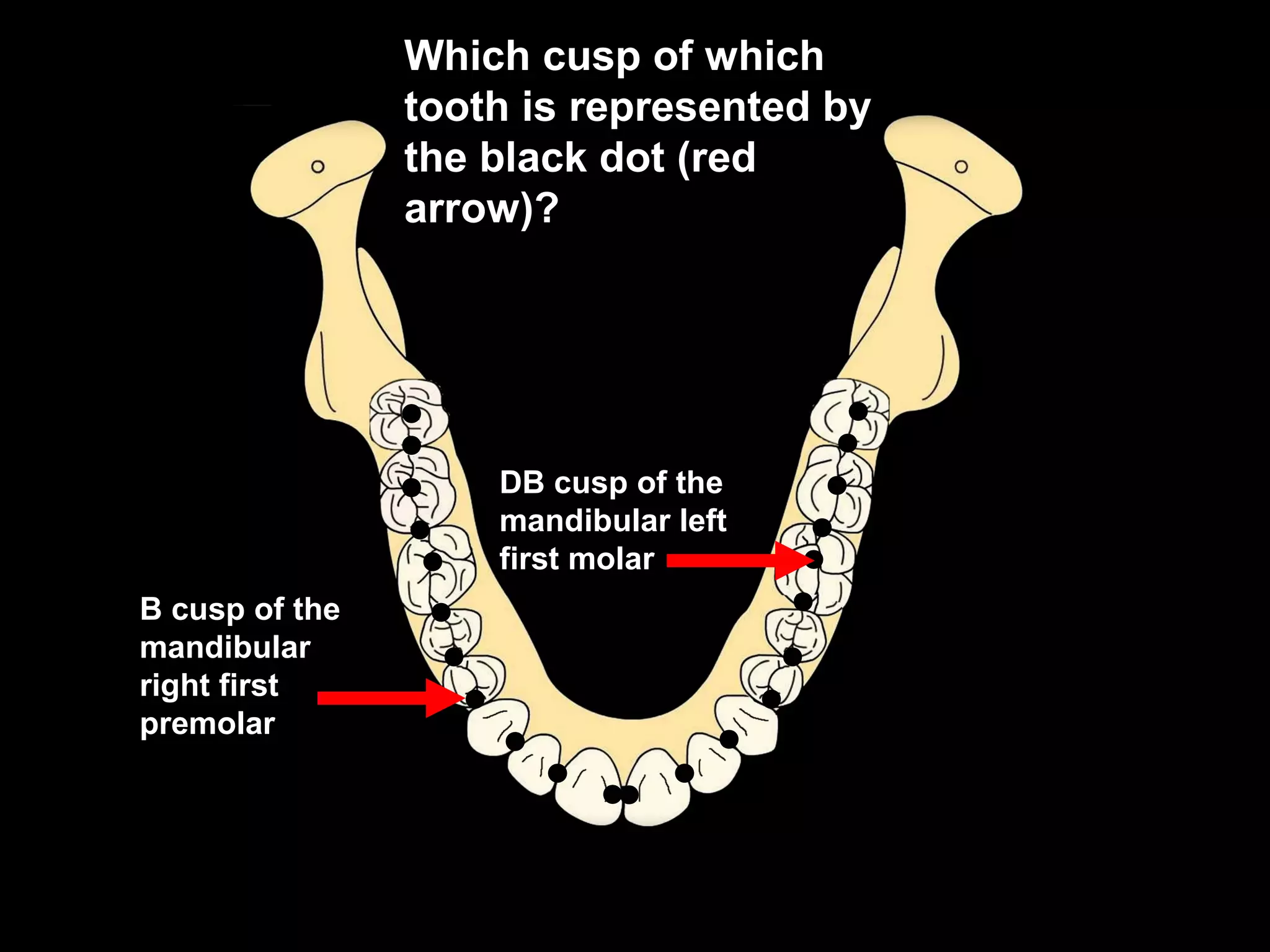
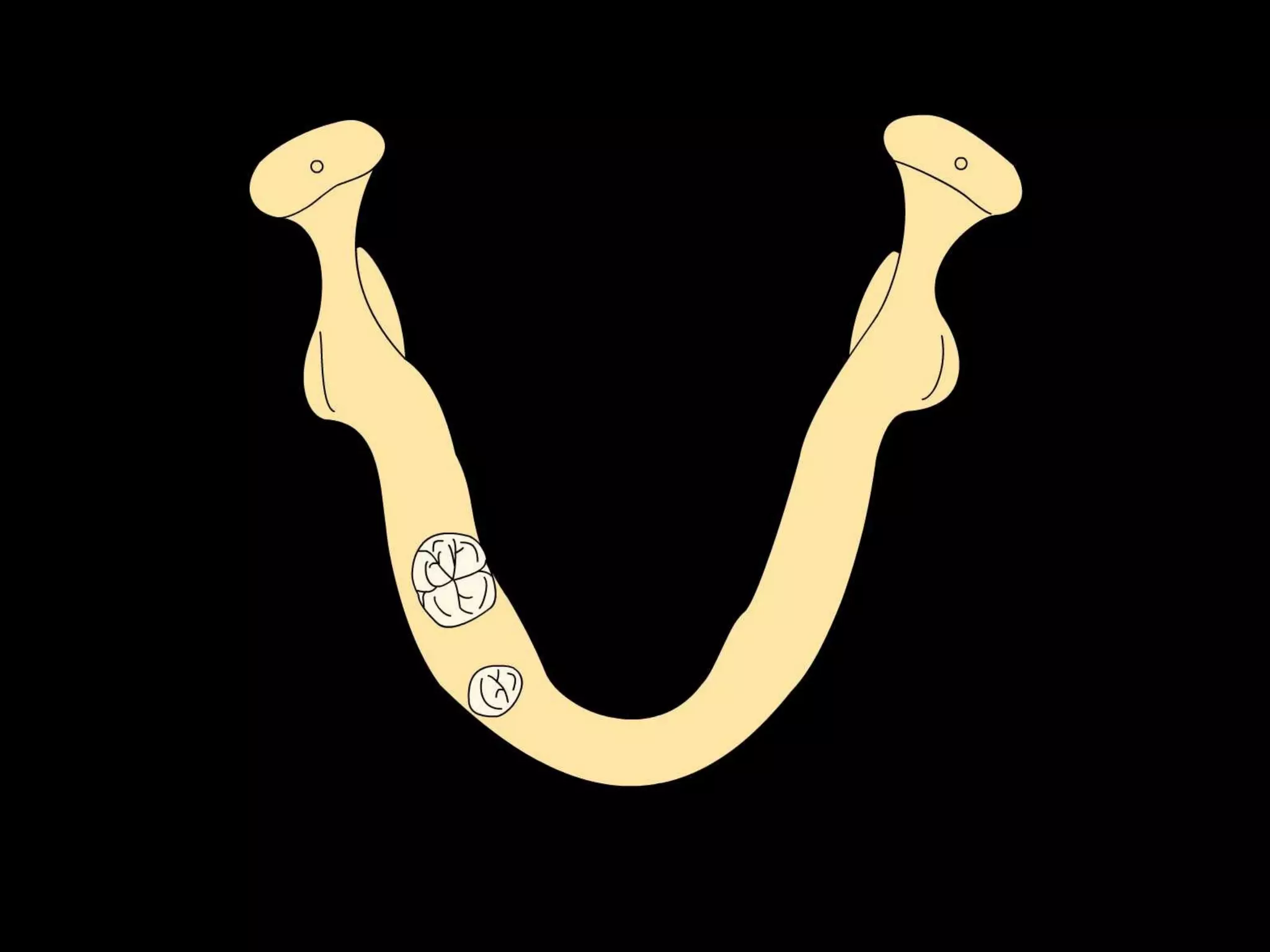
Which cusp of which
                tooth is represented by
                the black dot (red
                arrow)?


                    DB cusp of the
                    mandibular left
                    first molar
B cusp of the
mandibular
right first
premolar
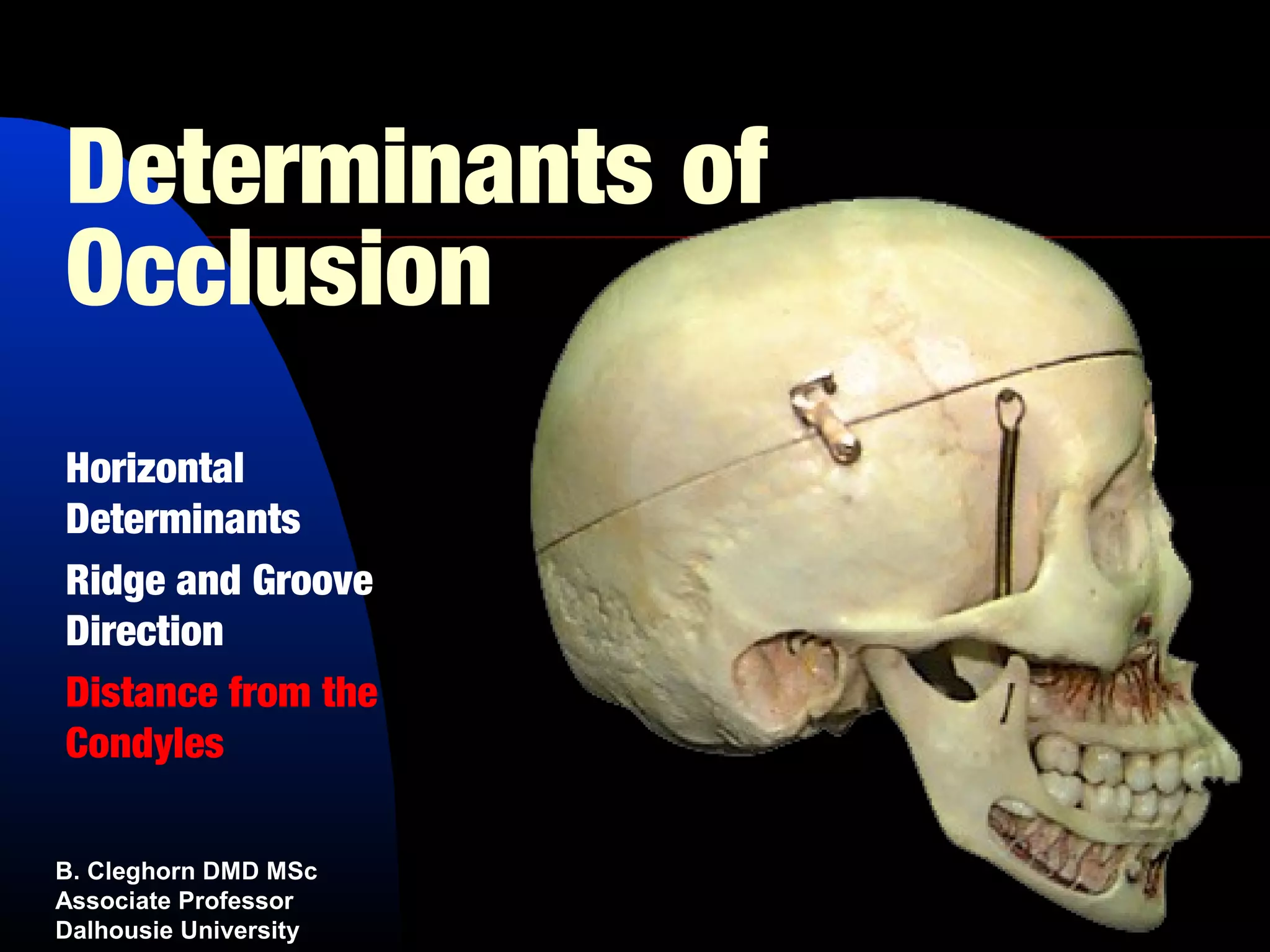
Determinants of
Occlusion
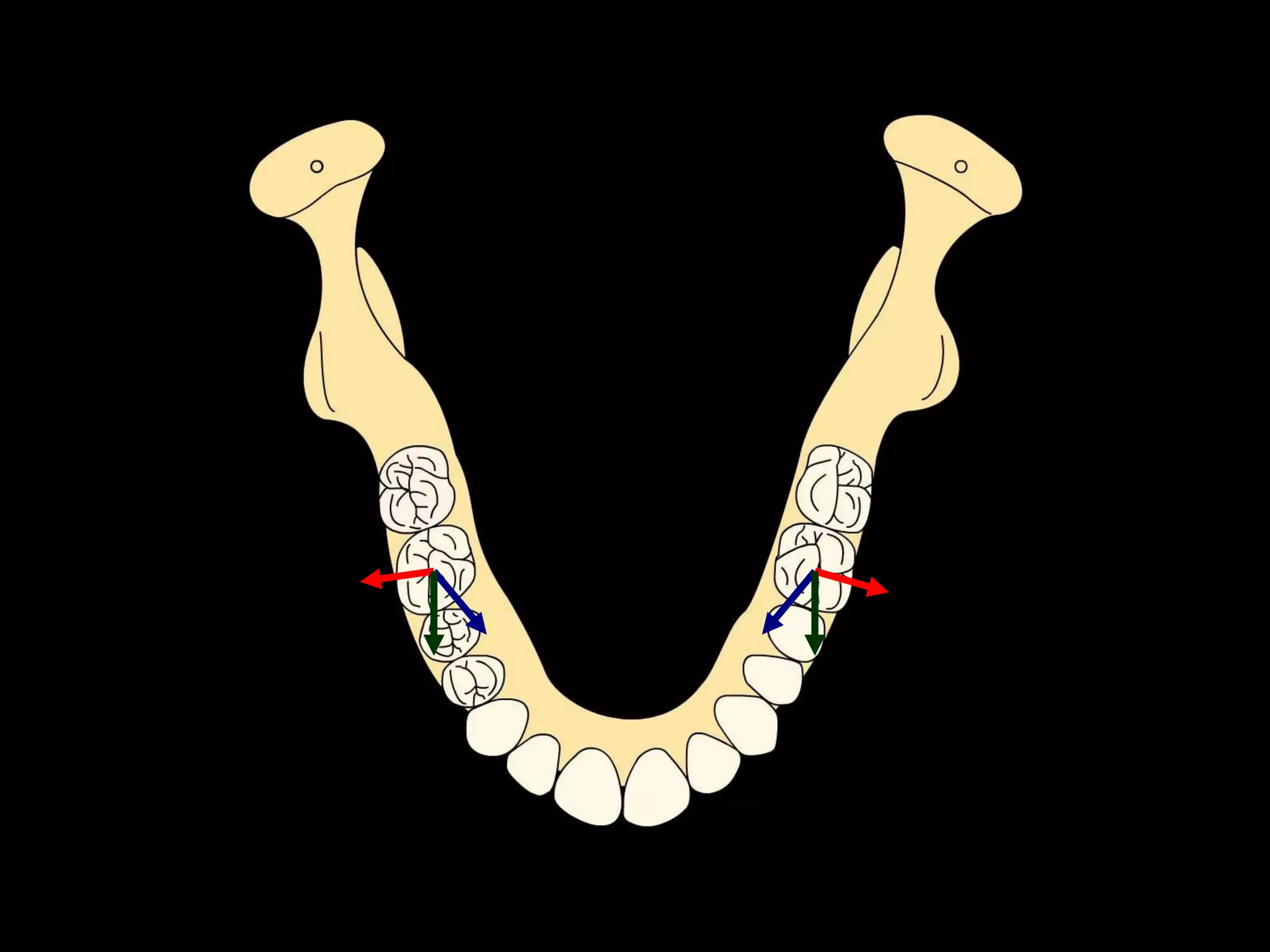
Horizontal
Determinants
Ridge and Groove
Direction


B. Cleghorn DMD MSc
Associate Professor
Dalhousie University
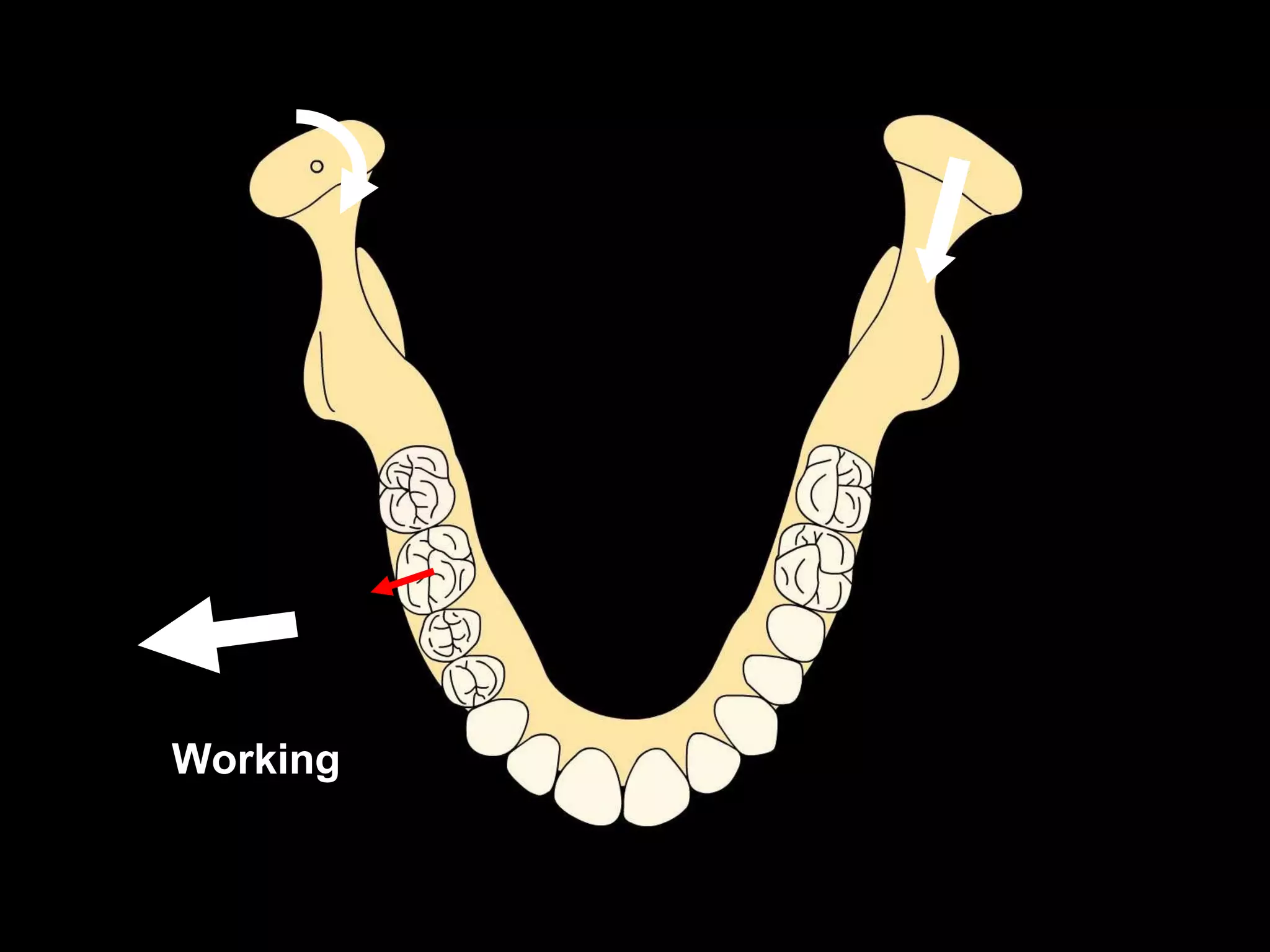
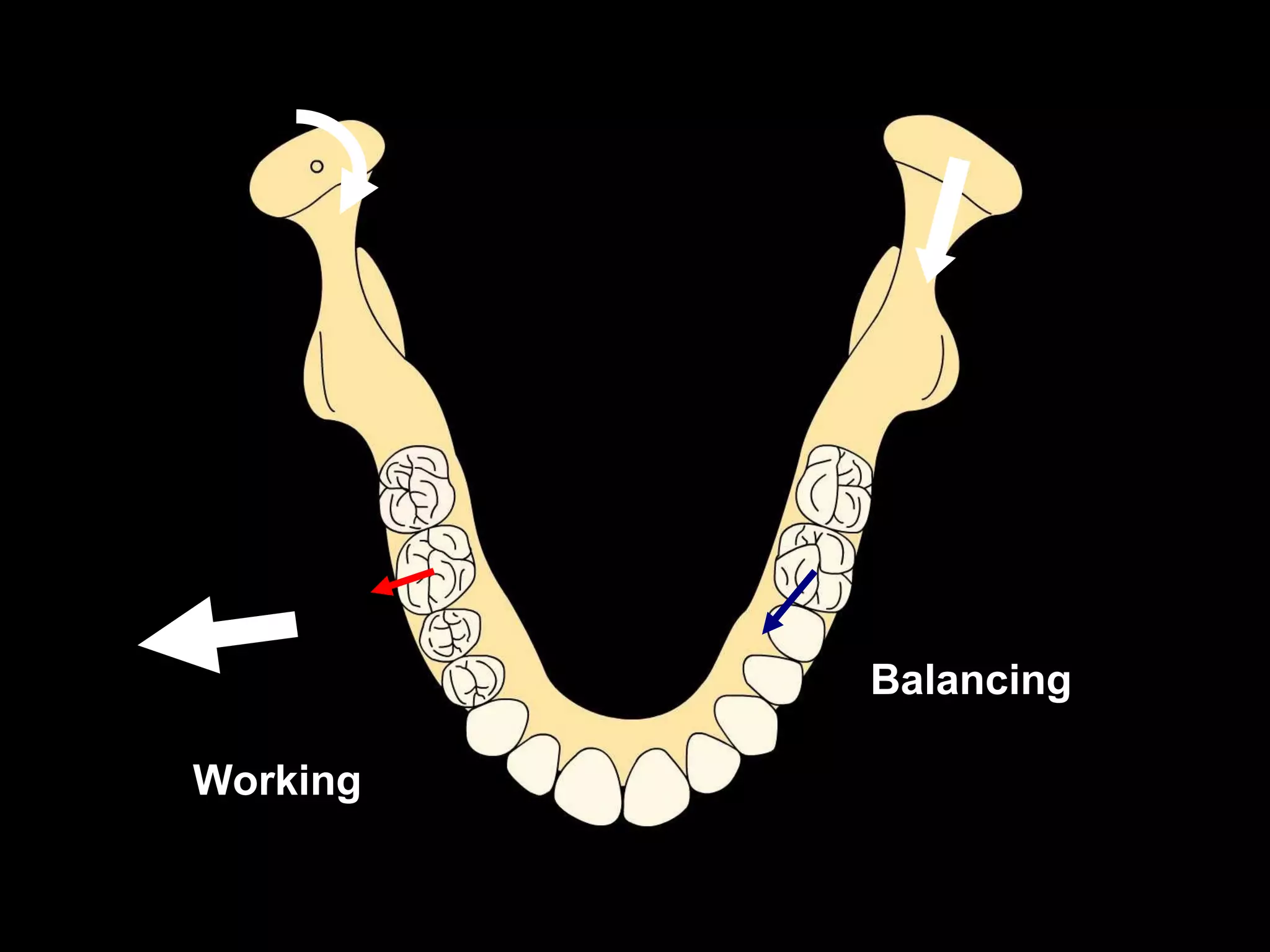
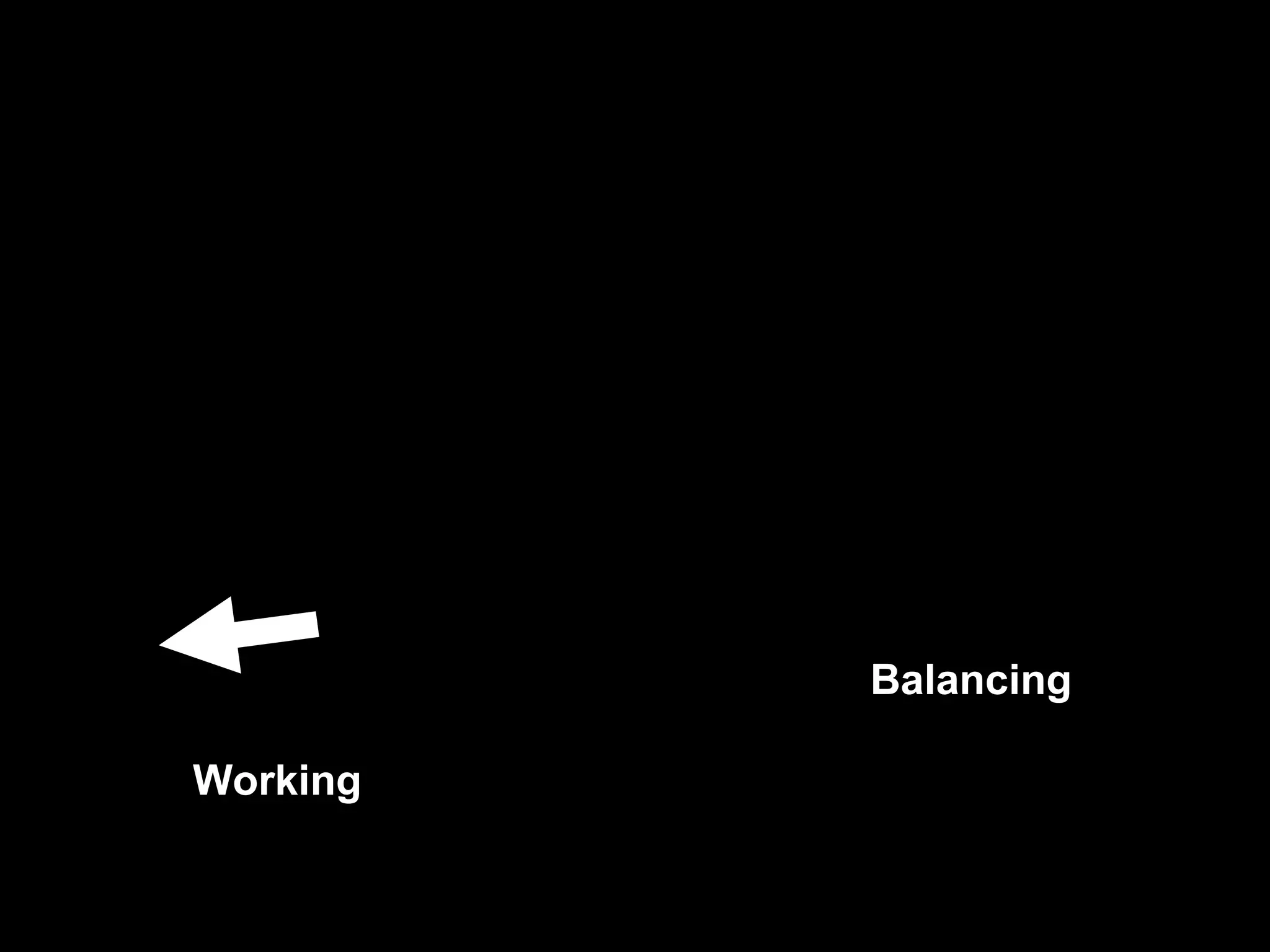
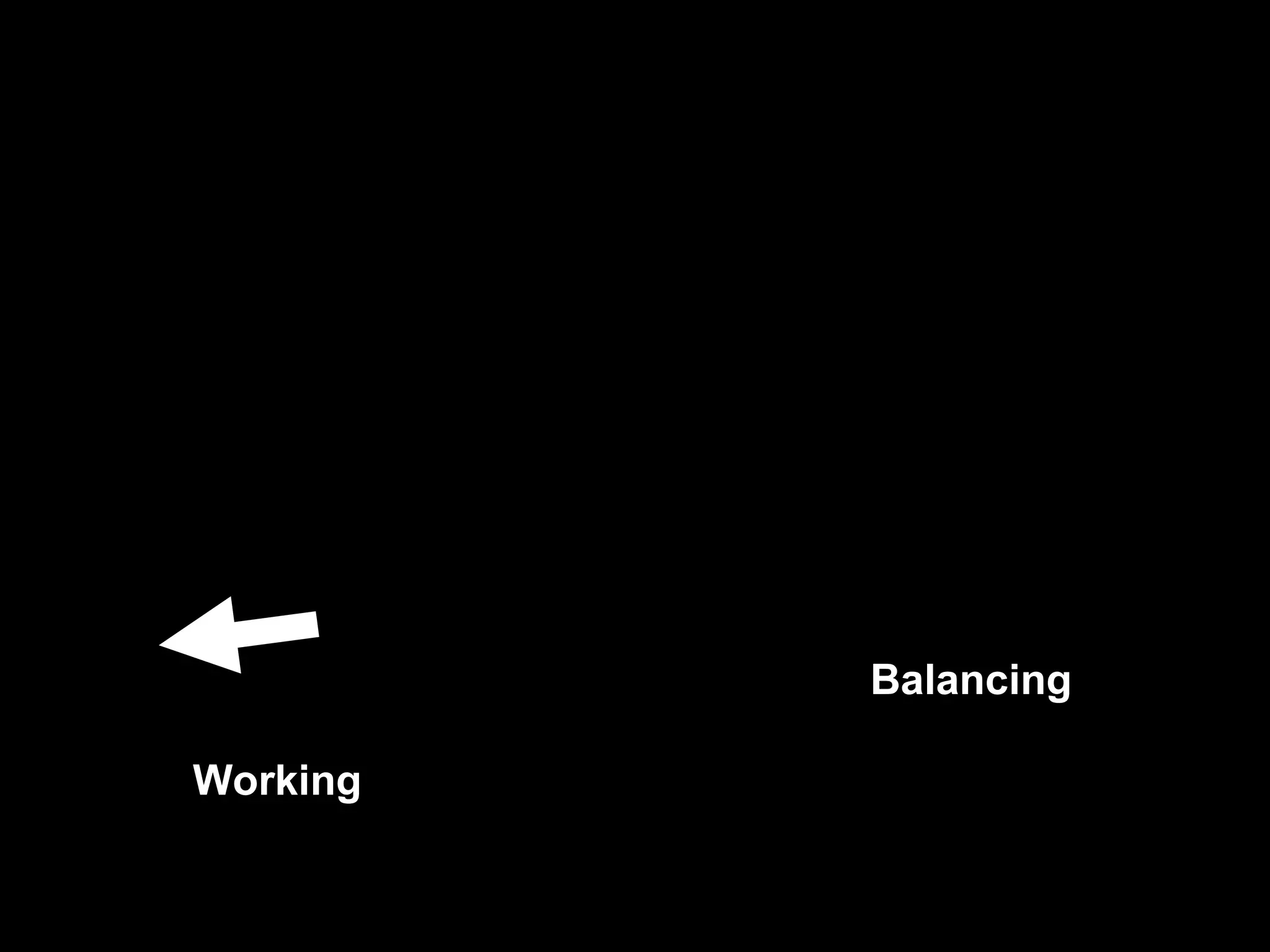
Working
Balancing
Working
 Working
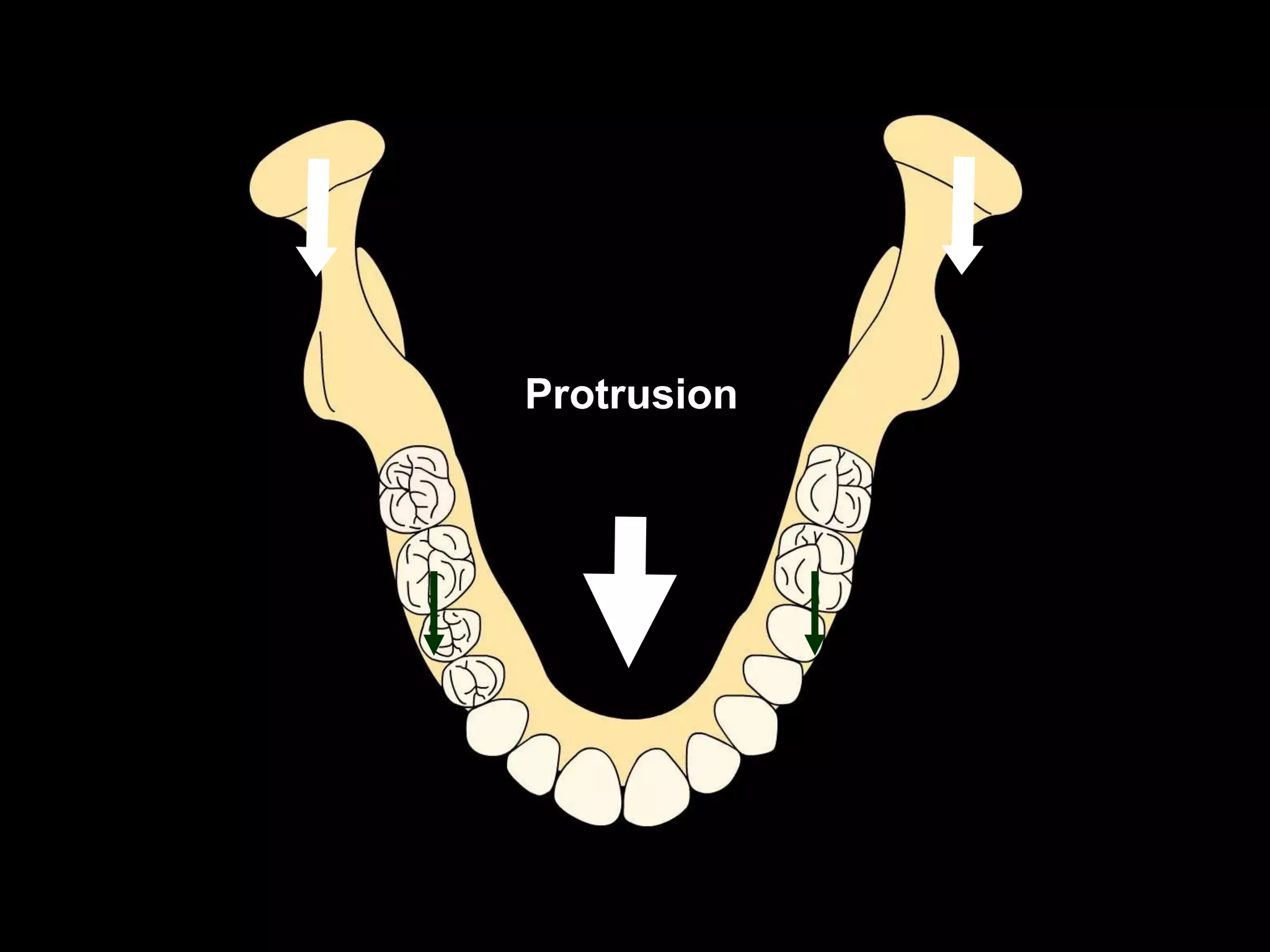
Protrusion
QuickTime™ and a
             Animation decompressor
          are needed to see this picture.


                                            Balancing

Working
QuickTime™ and a
             Animation decompressor
          are needed to see this picture.


                                            Balancing

Working
Protrusion
        QuickTime™ and a
    Animation decompressor
 are needed to see this picture.
Determinants of
Occlusion
Horizontal
Determinants
Ridge and Groove
Direction
Balancing Side
Interferences

B. Cleghorn DMD MSc
Associate Professor
Dalhousie University
QuickTime™ and a
             Animation decompressor
          are needed to see this picture.


                                            Balancing

Working
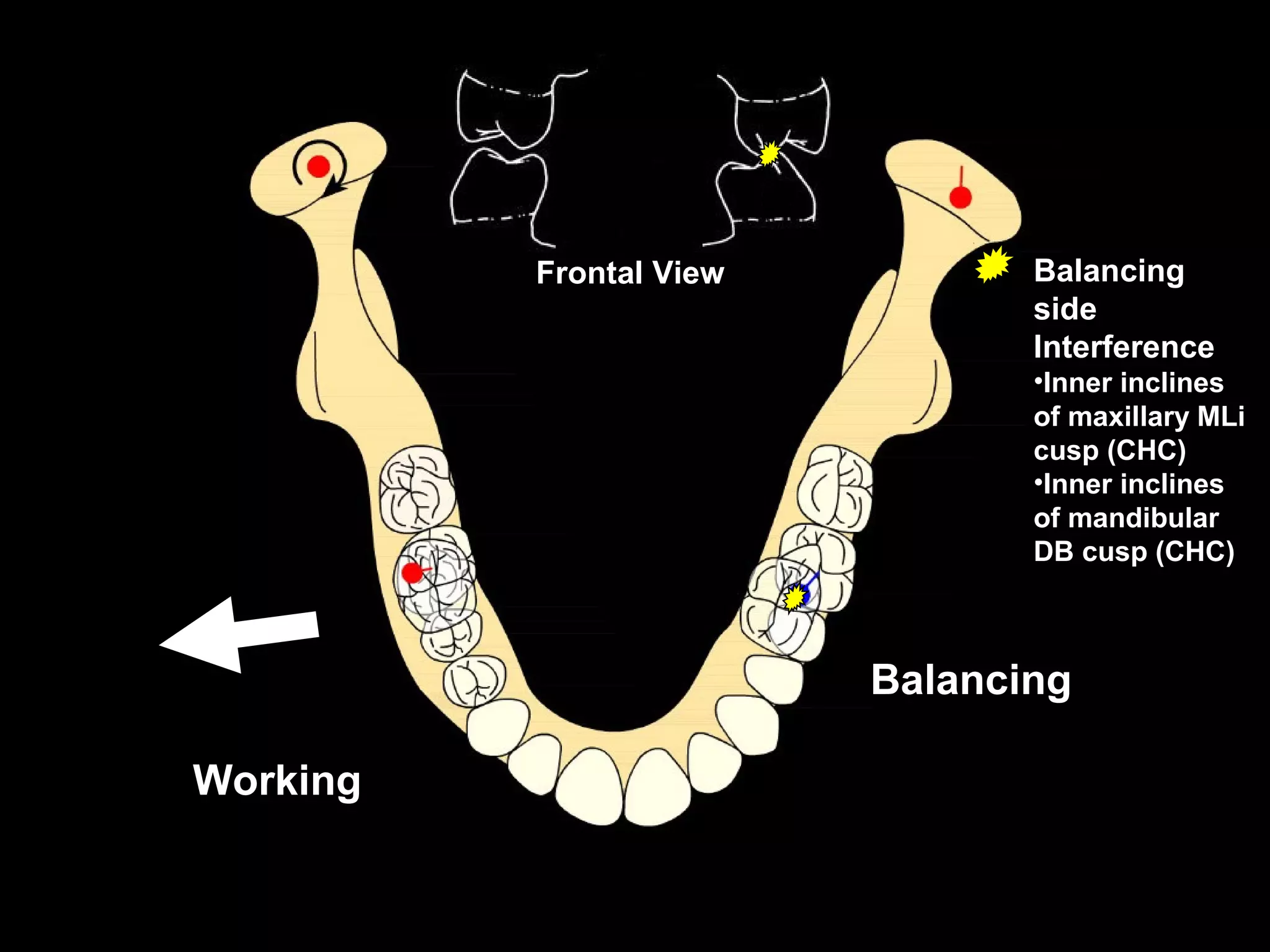
Frontal View          Balancing
                                side
                                Interference
                                •Inner inclines
                                of maxillary MLi
                                cusp (CHC)
                                •Inner inclines
                                of mandibular
                                DB cusp (CHC)


                         Balancing

Working
Determinants of
Occlusion
Horizontal
Determinants
Ridge and Groove
Direction
Working Side
Interferences

B. Cleghorn DMD MSc
Associate Professor
Dalhousie University
QuickTime™ and a
             Animation decompressor
          are needed to see this picture.


                                            Balancing

Working
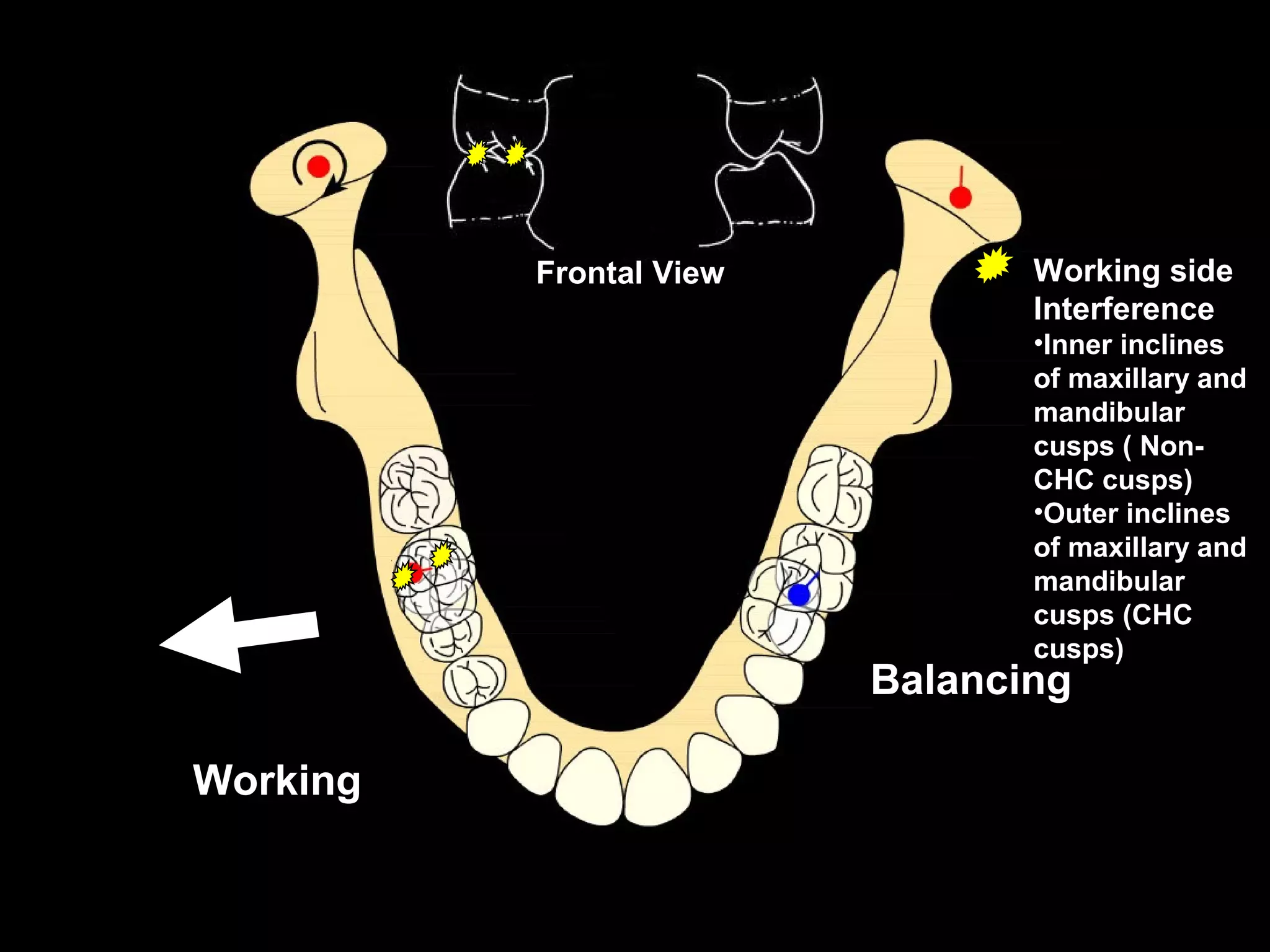
Frontal View          Working side
                                Interference
                                •Inner inclines
                                of maxillary and
                                mandibular
                                cusps ( Non-
                                CHC cusps)
                                •Outer inclines
                                of maxillary and
                                mandibular
                                cusps (CHC
                                cusps)
                         Balancing

Working
Determinants of
Occlusion
Horizontal
Determinants
Ridge and Groove
Direction
Distance from the
Condyles

B. Cleghorn DMD MSc
Associate Professor
Dalhousie University
QuickTime™ and a
             Animation decompressor
          are needed to see this picture.


                                            Balancing

Working
QuickTime™ and a
             Animation decompressor
          are needed to see this picture.


                                            Balancing

Working
Protrusion
        QuickTime™ and a
    Animation decompressor
 are needed to see this picture.
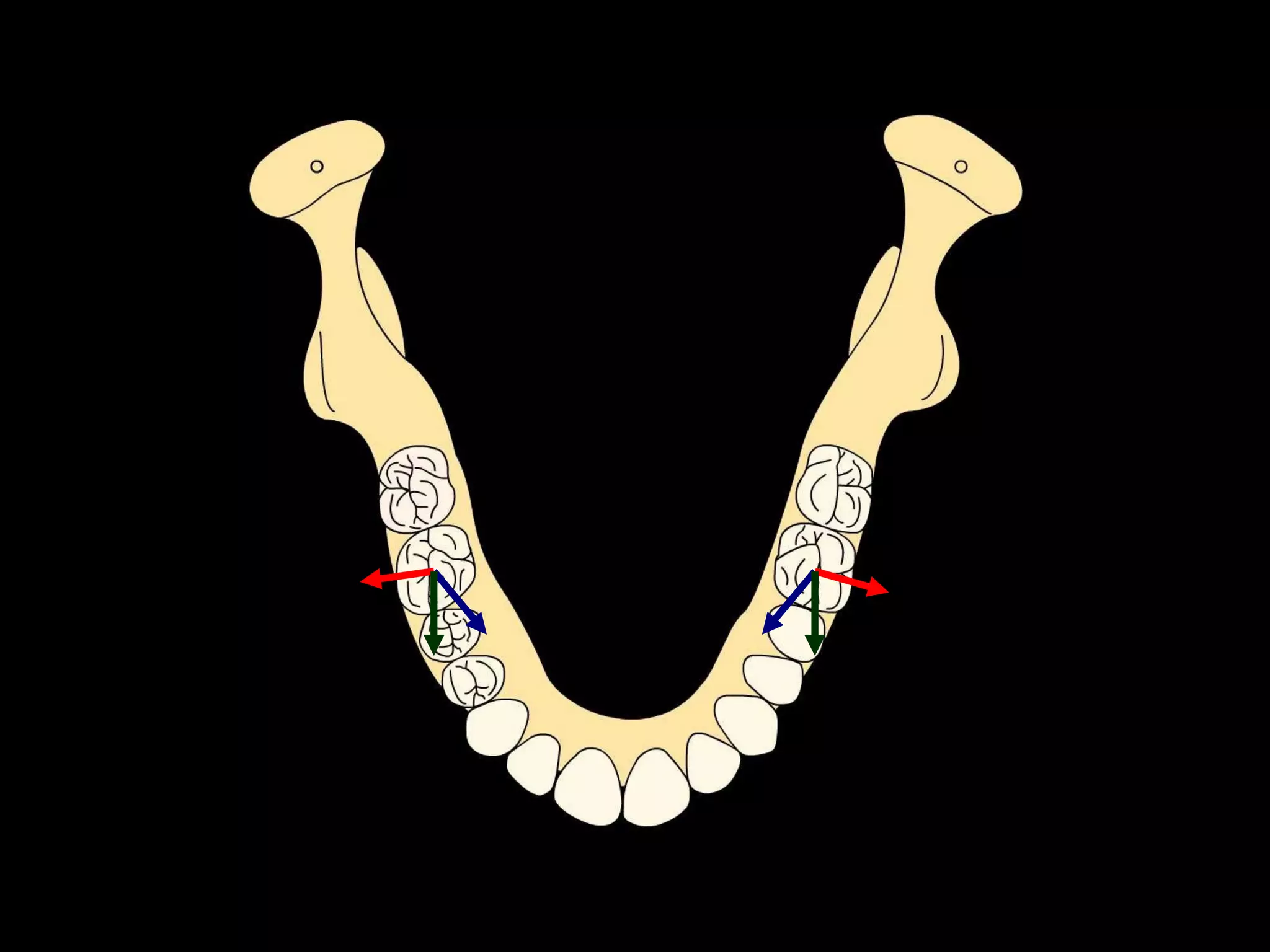
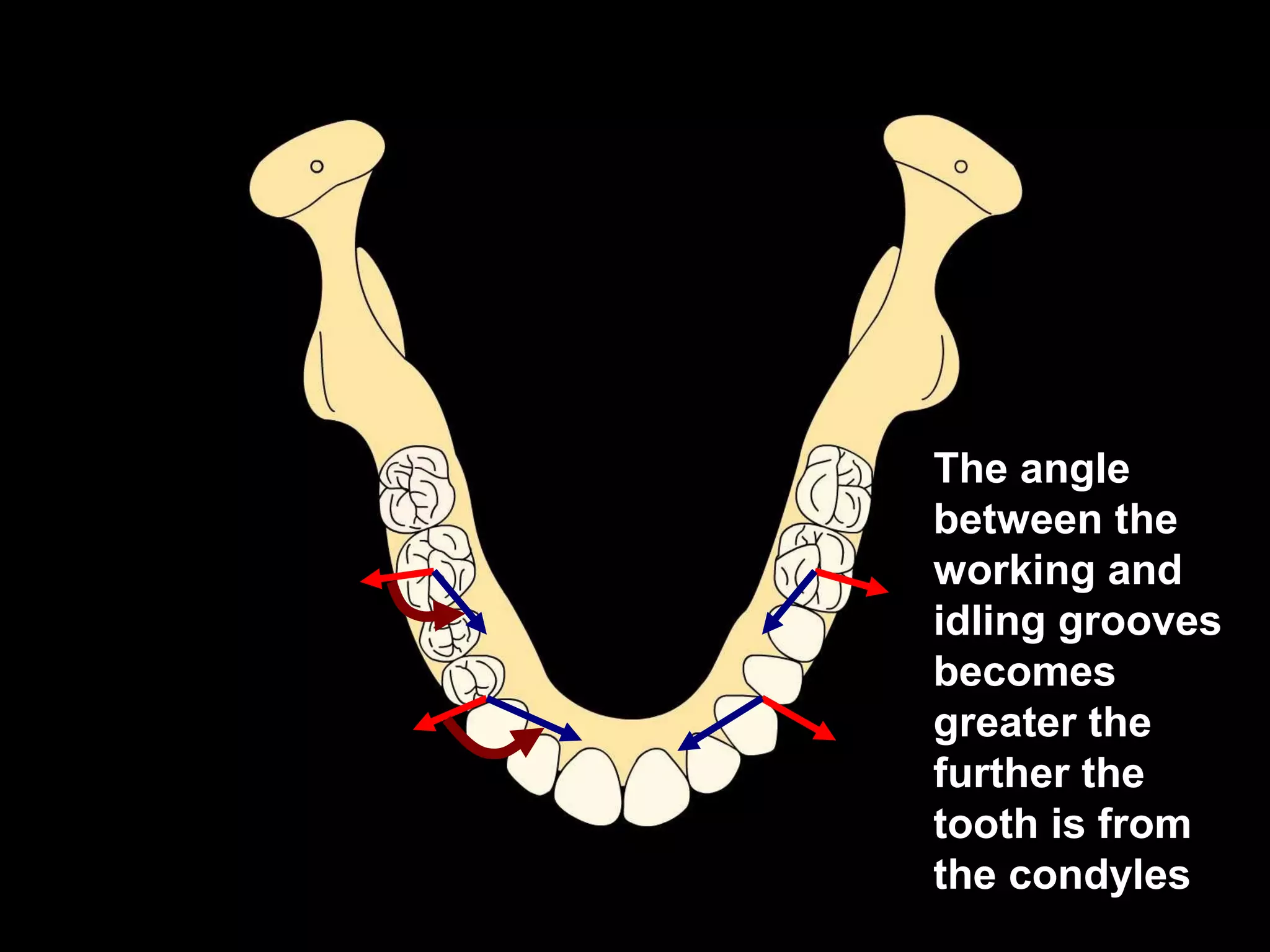
The angle
between the
working and
idling grooves
becomes
greater the
further the
tooth is from
the condyles

Determinants of occlusion

  • 1.
    Introduction to Occlusion Ideal Anatomical Contacts B.Cleghorn DMD MSc Associate Professor Dalhousie University
  • 2.
    Which cusp ofwhich tooth is represented by the black dot (red arrow)? Theblack dots 22 black dots represent MI represent 36 contacts contact areas of in a Class I occlusion of mandibular teeth with teeth in the maxillary arch
  • 3.
    Guidelines for LearningIdeal Contacts Maxillary third molar Maxillary second molar Mandibular Maxillary first molar The DB (distobuccal) third molar cusps of the Mandibular mandibular molars second molar contact the central pit Mandibular or fossa of their first molar maxillary counterparts
  • 4.
    Guidelines for LearningIdeal Contacts Maxillary third molar Maxillary second molar Maxillary first molar The MB (mesiobuccal) Mandibular cusps of the third molar mandibular molars Mandibular contact the MMR of second molar their maxillary Mandibular counterparts and the first molar DMR of the tooth mesial to that
  • 5.
    Guidelines for LearningIdeal Contacts Maxillary The B (buccal) cusps second of the mandibular premolar premolars contact the Maxillary MMR of their maxillary first counterparts and the Mandibular premolar DMR of the tooth second premolar mesial to that Mandibular first premolar
  • 6.
    Guidelines for LearningIdeal Contacts The cusp tip of the mandibular canines Maxillary contacts the MMR of canine their maxillary counterparts and the DMR of the tooth mesial to that (maxillary lateral Mandibular incisor) canine
  • 7.
    Guidelines for LearningIdeal Contacts The incisal ridges of the mandibular lateral incisors contact the MMR of Maxillary lateral their maxillary incisor counterparts and the Maxillary DMR of the tooth central incisor mesial to that (maxillary central incisor) The incisal ridges of Mandibular the mandibular lateral central incisors incisor contact the MMR of their maxillary Mandibular central counterparts incisor
  • 8.
    Guidelines • Identify tooth shown • Dot represents cusp of opposing tooth • Mandibular teeth are 1/2 cusp mesial to the maxillary counterparts • Contacts same for all mandibular molars • DB cusp (Md) ->Central Fossa (Mx) • MB cusp (Md)-> MMR & DMR (Mx) • B cusps and canines (Md) contact MMR & DMR of teeth 1/2 cusp mesial to maxillary counterparts • Each tooth contacts two teeth • Except maxillary third molars • Except mandibular central incisors
  • 9.
    Which cusp ofwhich tooth is represented by the black dot (red arrow)? DB cusp of the mandibular left first molar B cusp of the mandibular right first premolar
  • 10.
    Determinants of Occlusion Horizontal Determinants Ridge andGroove Direction B. Cleghorn DMD MSc Associate Professor Dalhousie University
  • 12.
  • 13.
  • 14.
  • 17.
    QuickTime™ and a Animation decompressor are needed to see this picture. Balancing Working
  • 18.
    QuickTime™ and a Animation decompressor are needed to see this picture. Balancing Working
  • 19.
    Protrusion QuickTime™ and a Animation decompressor are needed to see this picture.
  • 21.
    Determinants of Occlusion Horizontal Determinants Ridge andGroove Direction Balancing Side Interferences B. Cleghorn DMD MSc Associate Professor Dalhousie University
  • 22.
    QuickTime™ and a Animation decompressor are needed to see this picture. Balancing Working
  • 23.
    Frontal View Balancing side Interference •Inner inclines of maxillary MLi cusp (CHC) •Inner inclines of mandibular DB cusp (CHC) Balancing Working
  • 24.
    Determinants of Occlusion Horizontal Determinants Ridge andGroove Direction Working Side Interferences B. Cleghorn DMD MSc Associate Professor Dalhousie University
  • 25.
    QuickTime™ and a Animation decompressor are needed to see this picture. Balancing Working
  • 26.
    Frontal View Working side Interference •Inner inclines of maxillary and mandibular cusps ( Non- CHC cusps) •Outer inclines of maxillary and mandibular cusps (CHC cusps) Balancing Working
  • 27.
    Determinants of Occlusion Horizontal Determinants Ridge andGroove Direction Distance from the Condyles B. Cleghorn DMD MSc Associate Professor Dalhousie University
  • 30.
    QuickTime™ and a Animation decompressor are needed to see this picture. Balancing Working
  • 31.
    QuickTime™ and a Animation decompressor are needed to see this picture. Balancing Working
  • 32.
    Protrusion QuickTime™ and a Animation decompressor are needed to see this picture.
  • 33.
    The angle between the workingand idling grooves becomes greater the further the tooth is from the condyles