Pradeep Patel
Design Thinking
Solutions based approach to problem Solving
“Design Thinking is an iterative process in which we seek to
understand the user, challenge assumptions, and redefine
problems in an attempt to identify alternative strategies and
solutions”
Agenda
01
02
03
04
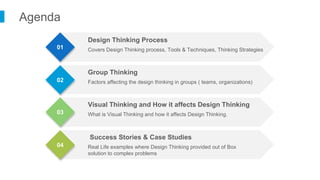
Covers Design Thinking process, Tools & Techniques, Thinking Strategies
Design Thinking Process
Factors affecting the design thinking in groups ( teams, organizations)
Group Thinking
What is Visual Thinking and how it affects Design Thinking.
Visual Thinking and How it affects Design Thinking
Real Life examples where Design Thinking provided out of Box
solution to complex problems
Success Stories & Case Studies
1
Design Thinking
Design Thinking Process
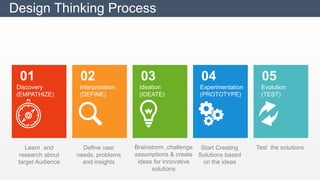
Learn and
research about
target Audience
Define user
needs, problems
and insights
Brainstorm ,challenge
assumptions & create
ideas for innovative
solutions
Start Creating
Solutions based
on the ideas
Test the solutions
0201 0403 05
Discovery
(EMPATHIZE)
Interpretation
(DEFINE)
Ideation
(IDEATE)
Experimentation
(PROTOTYPE)
Evolution
(TEST)
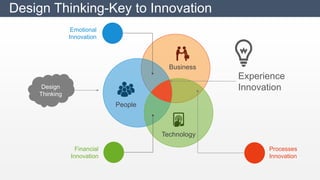
Technology
Business
People
Financial
Innovation
Design
Thinking
Emotional
Innovation
Experience
Innovation
Processes
Innovation
Design Thinking-Key to Innovation
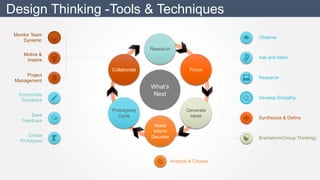
What’s
Next
Prototyping
Cycle
Collaborate
Research
Focus
Make
Inform
Decision
Generate
Ideas
Observe
Ask and listen
Research
Develop Empathy
Synthesize & Define
Brainstorm(Group Thinking)
Analyze & Choose
Incorporate
Feedback
Seek
Feedback
Create
Prototypes
Monitor Team
Dynamic
Motive &
Inspire
Project
Management
Design Thinking -Tools & Techniques
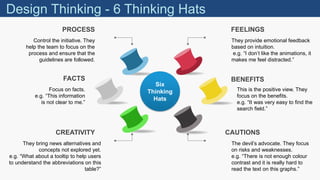
Six
Thinking
Hats
PROCESS
Control the initiative. They
help the team to focus on the
process and ensure that the
guidelines are followed.
FEELINGS
They provide emotional feedback
based on intuition.
e.g. “I don’t like the animations, it
makes me feel distracted.”
CREATIVITY
They bring news alternatives and
concepts not explored yet.
e.g. “What about a tooltip to help users
to understand the abbreviations on this
table?”
CAUTIONS
The devil’s advocate. They focus
on risks and weaknesses.
e.g. “There is not enough colour
contrast and it is really hard to
read the text on this graphs.”
BENEFITS
This is the positive view. They
focus on the benefits.
e.g. “It was very easy to find the
search field.”
FACTS
Focus on facts.
e.g. “This information
is not clear to me.”
Design Thinking - 6 Thinking Hats
2
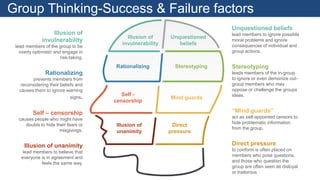
Group Thinking
Illusion of
invulnerability
Unquestioned
beliefs
Rationalizing Stereotyping
Self -
censorship
Mind guards
Illusion of
unanimity
Direct
pressure
Illusion of
invulnerability
lead members of the group to be
overly optimistic and engage in
risk-taking.
Rationalizing
prevents members from
reconsidering their beliefs and
causes them to ignore warning
signs.
Self – censorship
causes people who might have
doubts to hide their fears or
misgivings.
Illusion of unanimity
lead members to believe that
everyone is in agreement and
feels the same way.
Unquestioned beliefs
lead members to ignore possible
moral problems and ignore
consequences of individual and
group actions.
Stereotyping
leads members of the in-group
to ignore or even demonize out-
group members who may
oppose or challenge the groups
ideas.
“Mind guards”
act as self-appointed censors to
hide problematic information
from the group.
Direct pressure
to conform is often placed on
members who pose questions,
and those who question the
group are often seen as disloyal
or traitorous
Group Thinking-Success & Failure factors
2
Visual Thinking
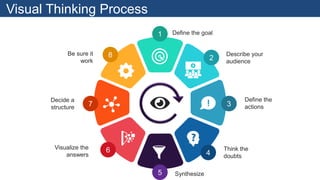
Decide a
structure
1
5
37
2
6 4
8
Define the goal
Describe your
audience
Define the
actions
Think the
doubts
Synthesize
Visualize the
answers
Be sure it
work
Visual Thinking Process
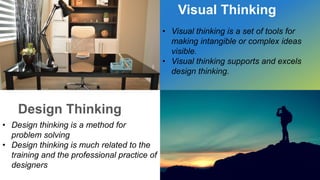
Visual Thinking
• Visual thinking is a set of tools for
making intangible or complex ideas
visible.
• Visual thinking supports and excels
design thinking.
Design Thinking
• Design thinking is a method for
problem solving
• Design thinking is much related to the
training and the professional practice of
designers
1
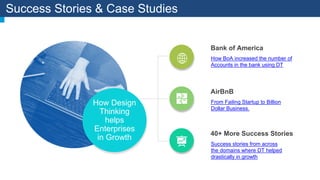
Success Stories & Case Studies
How Design
Thinking
helps
Enterprises
in Growth
How BoA increased the number of
Accounts in the bank using DT
Bank of America
From Failing Startup to Billion
Dollar Business.
AirBnB
Success stories from across
the domains where DT helped
drastically in growth
40+ More Success Stories
Success Stories & Case Studies
Connect with me
Email: pradeeppatel2k17@gmail.com
LinkedIn: https://www.linkedin.com/in/pradeeppatelpmp
Got Questions?

Design Thinking-Solution based approach to problem solving

  • 1.
    Pradeep Patel Design Thinking Solutionsbased approach to problem Solving “Design Thinking is an iterative process in which we seek to understand the user, challenge assumptions, and redefine problems in an attempt to identify alternative strategies and solutions”
  • 2.
    Agenda 01 02 03 04 Covers Design Thinkingprocess, Tools & Techniques, Thinking Strategies Design Thinking Process Factors affecting the design thinking in groups ( teams, organizations) Group Thinking What is Visual Thinking and how it affects Design Thinking. Visual Thinking and How it affects Design Thinking Real Life examples where Design Thinking provided out of Box solution to complex problems Success Stories & Case Studies
  • 3.
  • 4.
    Design Thinking Process Learnand research about target Audience Define user needs, problems and insights Brainstorm ,challenge assumptions & create ideas for innovative solutions Start Creating Solutions based on the ideas Test the solutions 0201 0403 05 Discovery (EMPATHIZE) Interpretation (DEFINE) Ideation (IDEATE) Experimentation (PROTOTYPE) Evolution (TEST)
  • 5.
  • 6.
    What’s Next Prototyping Cycle Collaborate Research Focus Make Inform Decision Generate Ideas Observe Ask and listen Research DevelopEmpathy Synthesize & Define Brainstorm(Group Thinking) Analyze & Choose Incorporate Feedback Seek Feedback Create Prototypes Monitor Team Dynamic Motive & Inspire Project Management Design Thinking -Tools & Techniques
  • 7.
    Six Thinking Hats PROCESS Control the initiative.They help the team to focus on the process and ensure that the guidelines are followed. FEELINGS They provide emotional feedback based on intuition. e.g. “I don’t like the animations, it makes me feel distracted.” CREATIVITY They bring news alternatives and concepts not explored yet. e.g. “What about a tooltip to help users to understand the abbreviations on this table?” CAUTIONS The devil’s advocate. They focus on risks and weaknesses. e.g. “There is not enough colour contrast and it is really hard to read the text on this graphs.” BENEFITS This is the positive view. They focus on the benefits. e.g. “It was very easy to find the search field.” FACTS Focus on facts. e.g. “This information is not clear to me.” Design Thinking - 6 Thinking Hats
  • 8.
  • 9.
    Illusion of invulnerability Unquestioned beliefs Rationalizing Stereotyping Self- censorship Mind guards Illusion of unanimity Direct pressure Illusion of invulnerability lead members of the group to be overly optimistic and engage in risk-taking. Rationalizing prevents members from reconsidering their beliefs and causes them to ignore warning signs. Self – censorship causes people who might have doubts to hide their fears or misgivings. Illusion of unanimity lead members to believe that everyone is in agreement and feels the same way. Unquestioned beliefs lead members to ignore possible moral problems and ignore consequences of individual and group actions. Stereotyping leads members of the in-group to ignore or even demonize out- group members who may oppose or challenge the groups ideas. “Mind guards” act as self-appointed censors to hide problematic information from the group. Direct pressure to conform is often placed on members who pose questions, and those who question the group are often seen as disloyal or traitorous Group Thinking-Success & Failure factors
  • 10.
  • 11.
    Decide a structure 1 5 37 2 6 4 8 Definethe goal Describe your audience Define the actions Think the doubts Synthesize Visualize the answers Be sure it work Visual Thinking Process
  • 12.
    Visual Thinking • Visualthinking is a set of tools for making intangible or complex ideas visible. • Visual thinking supports and excels design thinking. Design Thinking • Design thinking is a method for problem solving • Design thinking is much related to the training and the professional practice of designers
  • 13.
    1 Success Stories &Case Studies
  • 14.
    How Design Thinking helps Enterprises in Growth HowBoA increased the number of Accounts in the bank using DT Bank of America From Failing Startup to Billion Dollar Business. AirBnB Success stories from across the domains where DT helped drastically in growth 40+ More Success Stories Success Stories & Case Studies
  • 15.
    Connect with me Email:pradeeppatel2k17@gmail.com LinkedIn: https://www.linkedin.com/in/pradeeppatelpmp Got Questions?