Who I am
Annalisa Valente
Twitter: @d_art_h_vader
Design thinking & Agile
Tips for devs and design teams: How to become allies, not
enemies
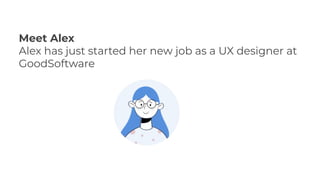
Meet Alex
Alex has just started her new job as a UX designer at
GoodSoftware
Meet Jo
Jo is a principal engineer at GoodSoftware
Alex joins the design team and she
doesn’t have much contact with Jo’s
team. Because she is sitting on a
different floor, she never sees the dev
team apart from some company
meetings.
After a few weeks she is given the first design task to do. She has to
design a new feature for the website.
When the design is ready, it goes to the dev team
to be developed. The dev team that was not
involved in any conversations, never saw the
feature before.
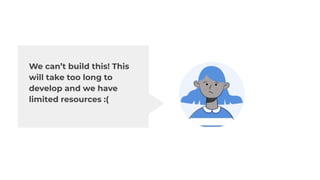
We can’t build this! This
will take too long to
develop and we have
limited resources :(
The feature goes back to the stakeholders but they
ask the dev team to build it anyway.
“We already spent 3 weeks on design!!! Let’s build it
anyway! We think it is the right idea”
The dev team builds and ships the feature after 12 months.
Meanwhile things change, the market changes, users don’t need
this feature anymore.
Nobody uses it :(
The business loses money :(
This is an example of a bad process.
How might we help Alex and Jo
working together?
Jo knows about
agile
Alex is an expert of
design thinking
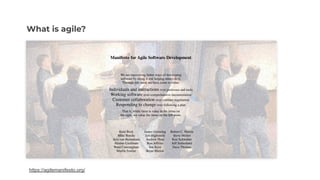
https://agilemanifesto.org/
What is agile?
Agile refers to a set of “methods and practices
based on the values and principles expressed in
the Agile Manifesto”
This includes:
1) Responding to change instead of following a strict plan
2) If the requirements shift the development, you change the plan
with agility
3) Delivering fast and often
4) Communication and transparency
What is design thinking?
It’s a process that starts with the people you’re
designing for and ends with new solutions that are
tailor made to suit their needs*.
*http://www.designkit.org
My definition of design thinking
It is a set of tools that allows designers and non
designers to identify and solve problems keeping
users in mind.
We have to remember
Customers values are the same of business values.
Meeting long-term business goals is only possible
when user needs are put first.
The problem today
Companies are struggling to bring these two things together
because it seems that devs follow a process, designers follow
another.
The two philosophies in fact run parallel, not at an intersection.
What an organisation needs to do to
allow Design thinking and Agile to
work together and to have a lean
approach
Balance cross-functional teams
Successful teams are cross-functional and small
(squads).
Build squads that are focused on a specific task
Make long term plan with short cycles of iterations
Iterations are the key to collect evidence and to
validate decisions with low risk and low cost
Build a problem-focused team
The team should be given a problem to solve
instead of solutions to implement. This allows
innovation and creates a feeling of ownership and
accountability among team members
Test wisely
Make assumptions, build continuous initiatives, ship and learn. Don’t
be afraid to fail
When you design/build a feature answer the question:
What is the smallest thing with the minimum effort we can do to
test our assumption?
Useful design tools and activities that can help Alex
and her dev team to better collaborate and to
increase efficiency:
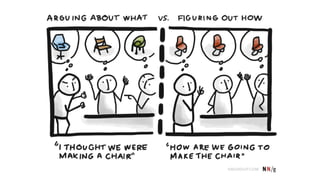
Show, don’t tell
Having workshops with devs and stakeholders is a
good way to align teams and to have all involved.
Bringing everyone in the conversation helps to get
feedback at early stage
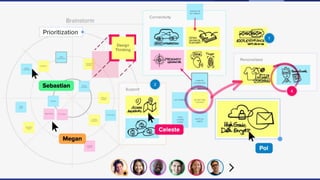
Whiteboarding and sharing
Share early stage ideas and sketches with devs and
stakeholders using post it, whiteboard or remotely
using mural to move conversation to the next step.
Remove waste!
Tips on remote working
Design critique
Having a regular group conversation in order to
analysing a design, and giving feedback on
whether it meets its objectives. (The ultimate goal
of this is to improving a design following some
heuristics)
https://www.figma.com/blog/design-critiques-at-figma/
https://www.nngroup.com/articles/ten-usability-heuristics/
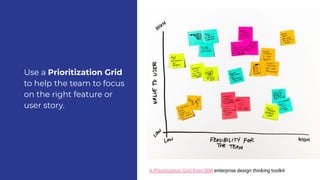
A Prioritization Grid to help the team to focus on th
right feature.
A Prioritization Grid from IBM enterprise design thinking toolkit
Use a Prioritization Grid
to help the team to focus
on the right feature or
user story.
Pair with devs
and being
imbedded into
dev teams will
help to break silos
Have the technical conversation upfront
Have frequent conversations with dev team to
ensure feasibility
Build transparency
Participating in common teams rituals
(like 3 amigos and retrospectives)
Each team has to build their own
process
Agile and design thinking both offers
methodologies and tools that need to be
adjusted to each team
Questions?
Twitter: @d_art_h_vader
Interesting books and links:
- The Agile manifesto
- Lean UX by Jeff Gothelf and Josh Seiden
- IBM Enterprise design thinking
Credits image

Design thinking & agile

  • 1.
    Who I am AnnalisaValente Twitter: @d_art_h_vader
  • 2.
    Design thinking &Agile Tips for devs and design teams: How to become allies, not enemies
  • 3.
    Meet Alex Alex hasjust started her new job as a UX designer at GoodSoftware
  • 4.
    Meet Jo Jo isa principal engineer at GoodSoftware
  • 5.
    Alex joins thedesign team and she doesn’t have much contact with Jo’s team. Because she is sitting on a different floor, she never sees the dev team apart from some company meetings.
  • 6.
    After a fewweeks she is given the first design task to do. She has to design a new feature for the website. When the design is ready, it goes to the dev team to be developed. The dev team that was not involved in any conversations, never saw the feature before.
  • 7.
    We can’t buildthis! This will take too long to develop and we have limited resources :(
  • 8.
    The feature goesback to the stakeholders but they ask the dev team to build it anyway. “We already spent 3 weeks on design!!! Let’s build it anyway! We think it is the right idea”
  • 9.
    The dev teambuilds and ships the feature after 12 months. Meanwhile things change, the market changes, users don’t need this feature anymore. Nobody uses it :( The business loses money :( This is an example of a bad process.
  • 10.
    How might wehelp Alex and Jo working together?
  • 11.
    Jo knows about agile Alexis an expert of design thinking
  • 12.
  • 13.
    Agile refers toa set of “methods and practices based on the values and principles expressed in the Agile Manifesto”
  • 14.
    This includes: 1) Respondingto change instead of following a strict plan 2) If the requirements shift the development, you change the plan with agility 3) Delivering fast and often 4) Communication and transparency
  • 15.
    What is designthinking? It’s a process that starts with the people you’re designing for and ends with new solutions that are tailor made to suit their needs*. *http://www.designkit.org
  • 16.
    My definition ofdesign thinking It is a set of tools that allows designers and non designers to identify and solve problems keeping users in mind.
  • 17.
    We have toremember Customers values are the same of business values. Meeting long-term business goals is only possible when user needs are put first.
  • 18.
    The problem today Companiesare struggling to bring these two things together because it seems that devs follow a process, designers follow another. The two philosophies in fact run parallel, not at an intersection.
  • 19.
    What an organisationneeds to do to allow Design thinking and Agile to work together and to have a lean approach
  • 20.
    Balance cross-functional teams Successfulteams are cross-functional and small (squads). Build squads that are focused on a specific task
  • 21.
    Make long termplan with short cycles of iterations Iterations are the key to collect evidence and to validate decisions with low risk and low cost
  • 22.
    Build a problem-focusedteam The team should be given a problem to solve instead of solutions to implement. This allows innovation and creates a feeling of ownership and accountability among team members
  • 23.
    Test wisely Make assumptions,build continuous initiatives, ship and learn. Don’t be afraid to fail When you design/build a feature answer the question: What is the smallest thing with the minimum effort we can do to test our assumption?
  • 24.
    Useful design toolsand activities that can help Alex and her dev team to better collaborate and to increase efficiency:
  • 25.
    Show, don’t tell Havingworkshops with devs and stakeholders is a good way to align teams and to have all involved. Bringing everyone in the conversation helps to get feedback at early stage
  • 27.
    Whiteboarding and sharing Shareearly stage ideas and sketches with devs and stakeholders using post it, whiteboard or remotely using mural to move conversation to the next step. Remove waste! Tips on remote working
  • 29.
    Design critique Having aregular group conversation in order to analysing a design, and giving feedback on whether it meets its objectives. (The ultimate goal of this is to improving a design following some heuristics) https://www.figma.com/blog/design-critiques-at-figma/ https://www.nngroup.com/articles/ten-usability-heuristics/
  • 30.
    A Prioritization Gridto help the team to focus on th right feature. A Prioritization Grid from IBM enterprise design thinking toolkit Use a Prioritization Grid to help the team to focus on the right feature or user story.
  • 31.
    Pair with devs andbeing imbedded into dev teams will help to break silos
  • 32.
    Have the technicalconversation upfront Have frequent conversations with dev team to ensure feasibility
  • 33.
    Build transparency Participating incommon teams rituals (like 3 amigos and retrospectives)
  • 34.
    Each team hasto build their own process Agile and design thinking both offers methodologies and tools that need to be adjusted to each team
  • 35.
  • 36.
    Interesting books andlinks: - The Agile manifesto - Lean UX by Jeff Gothelf and Josh Seiden - IBM Enterprise design thinking Credits image