DESCRIPTIVE STUDY
Dhanushree G
6th Term
SSIMS Davangere
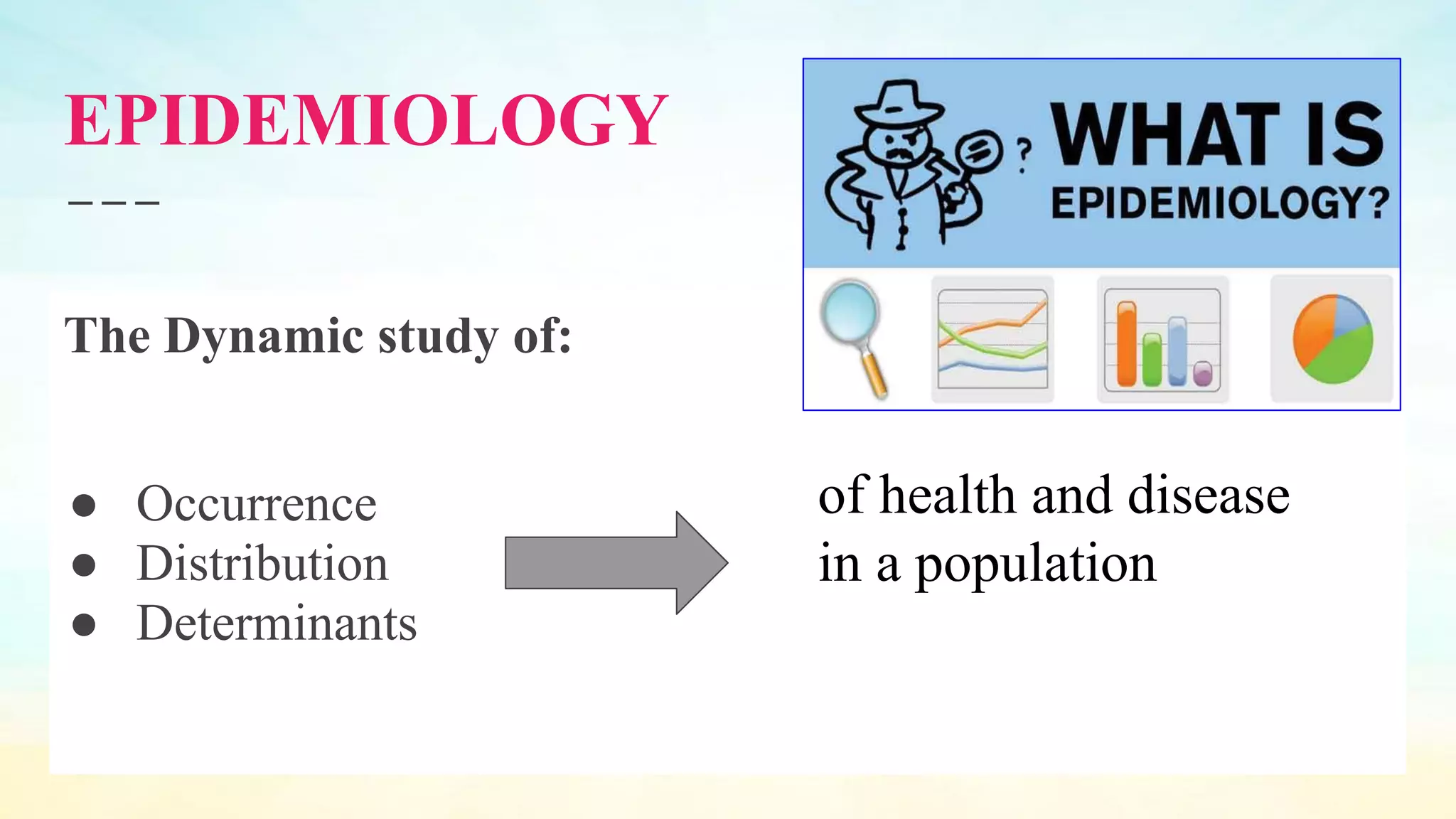
EPIDEMIOLOGY
The Dynamic study of:
● Occurrence
● Distribution
● Determinants
of health and disease
in a population
So,,,, EPIDEMIOLOGY
● is the basic science of public health
● Provides insight about the nature , causes , and
extent of health and disease
● Provides information needed to plan and target
resources appropriately.
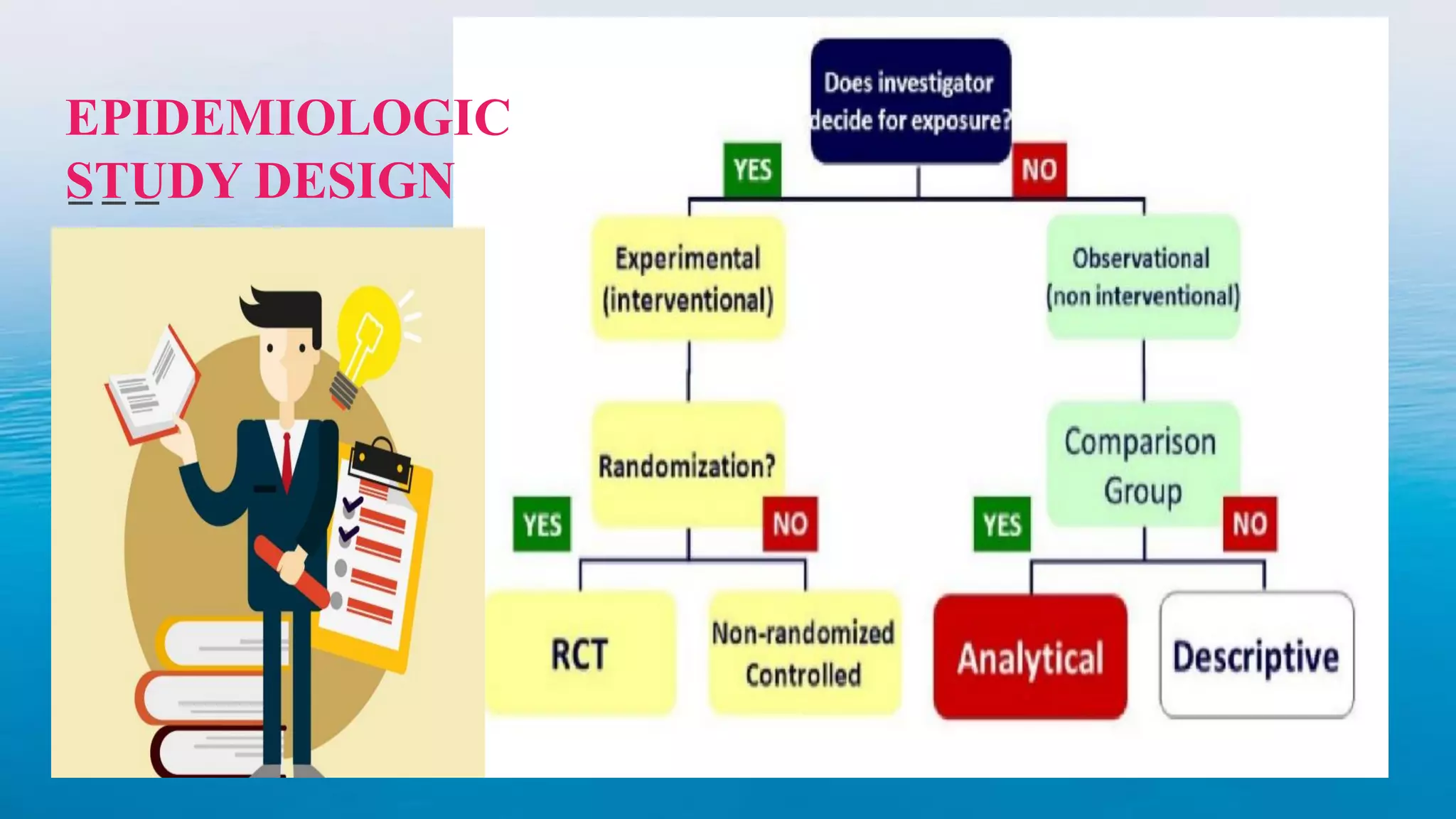
EPIDEMIOLOGIC
STUDY DESIGN
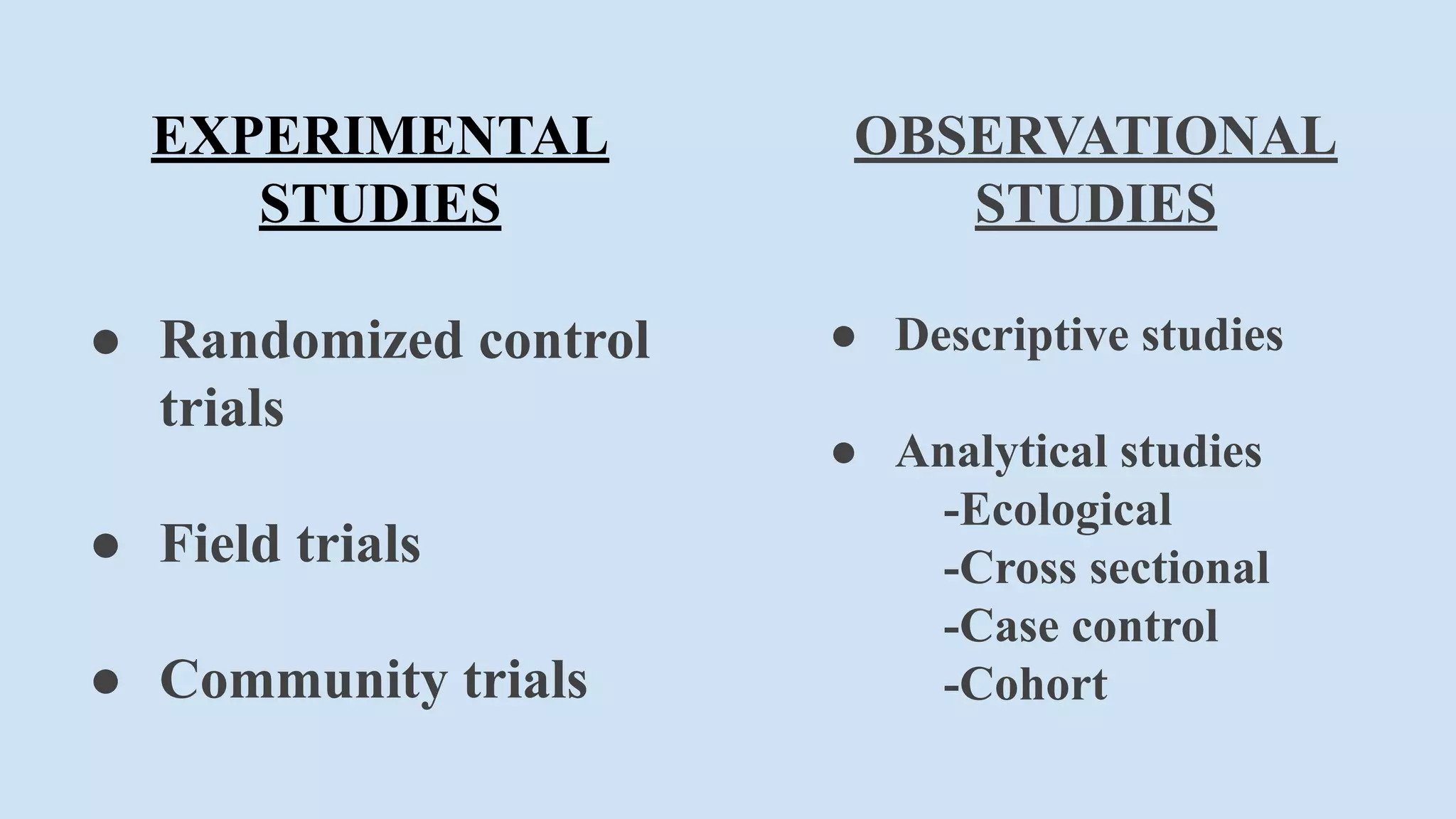
OBSERVATIONAL
STUDIES
● Descriptive studies
● Analytical studies
-Ecological
-Cross sectional
-Case control
-Cohort
EXPERIMENTAL
STUDIES
● Randomized control
trials
● Field trials
● Community trials
DESCRIPTIVE STUDY
❏ Descriptive studies are usually the first phase of
an epidemiological investigation.
❏ These studies are concerned with observing the
distribution of disease or health related characteristics
in human populations and identifying the
characteristics in which the disease is associated.
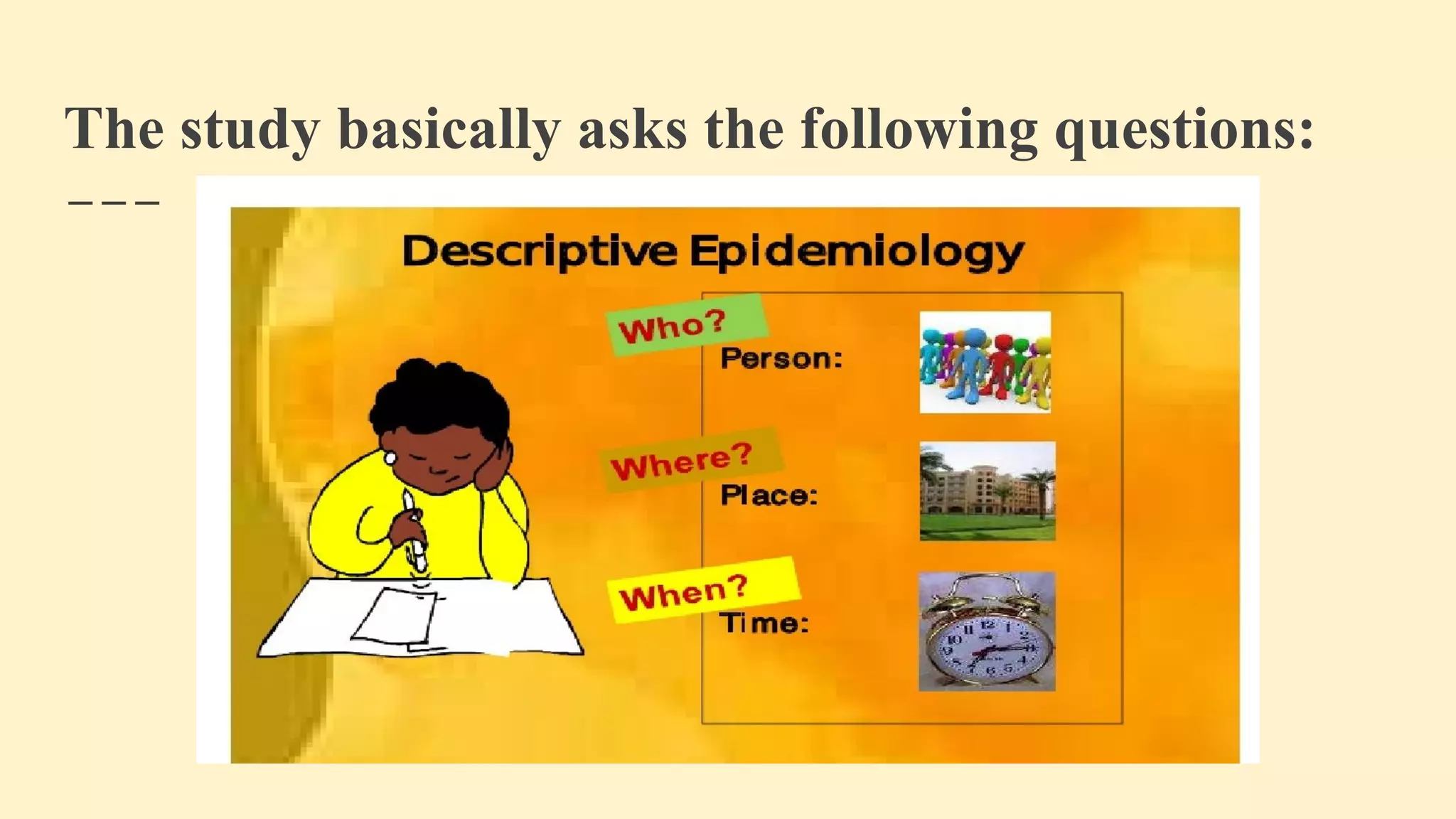
The study basically asks the following questions:
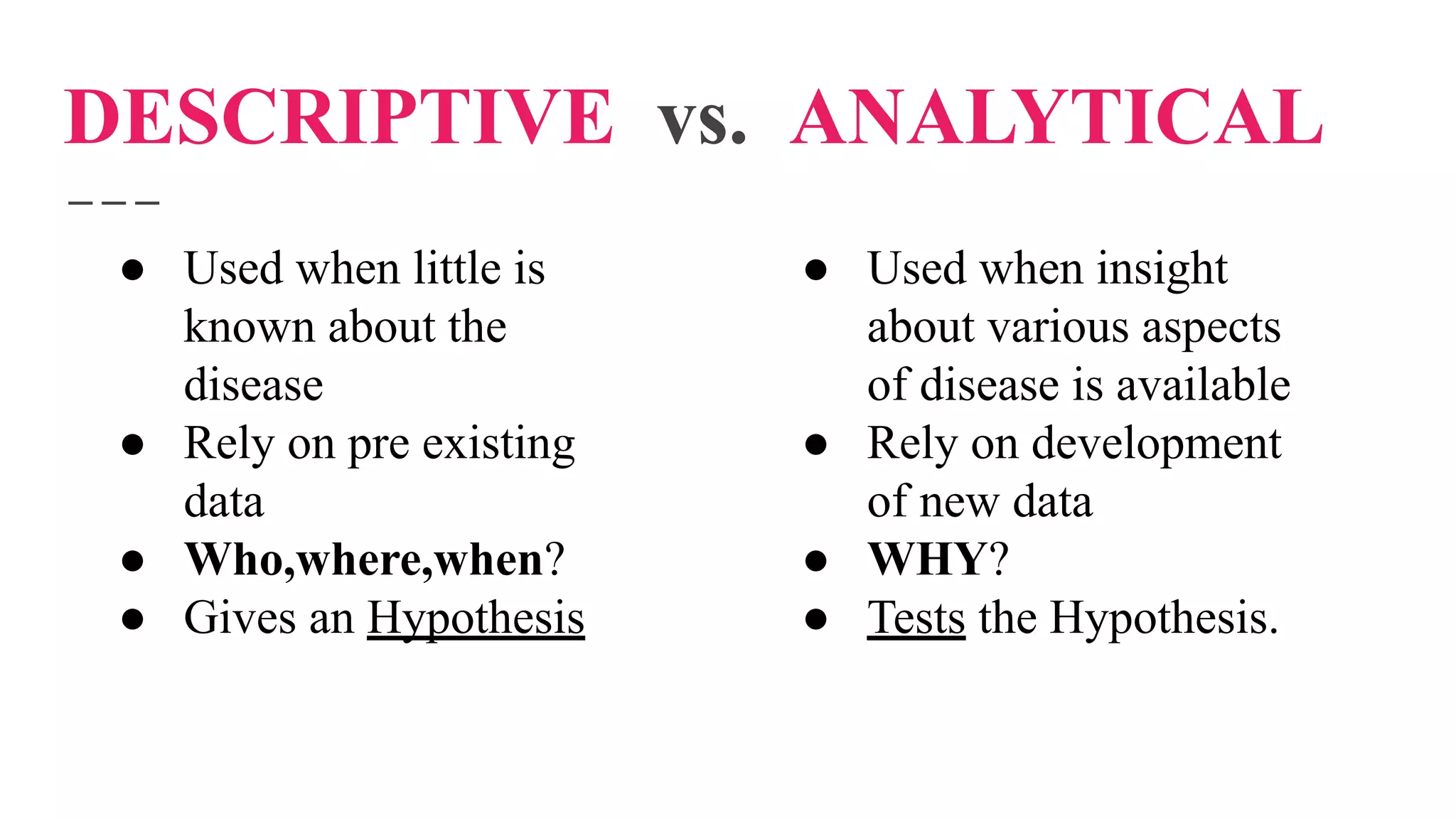
DESCRIPTIVE vs. ANALYTICAL
● Used when little is
known about the
disease
● Rely on pre existing
data
● Who,where,when?
● Gives an Hypothesis
● Used when insight
about various aspects
of disease is available
● Rely on development
of new data
● WHY?
● Tests the Hypothesis.
PROCEDURES IN DESCRIPTIVE
STUDIES
1. Defining the Population to be studied
2. Defining the Disease under study
3. Describing the disease by : Time , Place , Person
4. Measurement of disease
5. Comparing with known indices
6. Formulation of an aetiological Hypothesis.
1. DEFINING THE POPULATION
➔ Investigations done on populations and
not on individual.
➔ Specify the type of population under
study.
➔ Define ‘Population Base’
➔ Defined population
CRITERIA :
➢ Large
➢ Stable
➢ Not different from other communities
➢ Community participation
➢ Accessibility of health services
The Population Base : Includes the total number and its
composition in terms of age,sex,occupation, and cultural
characters.
The Defined population can be whole population in a
geographic area or specially selected group like
age/sex/occupational groups,hospital patients,school
children,pregnant women etc.
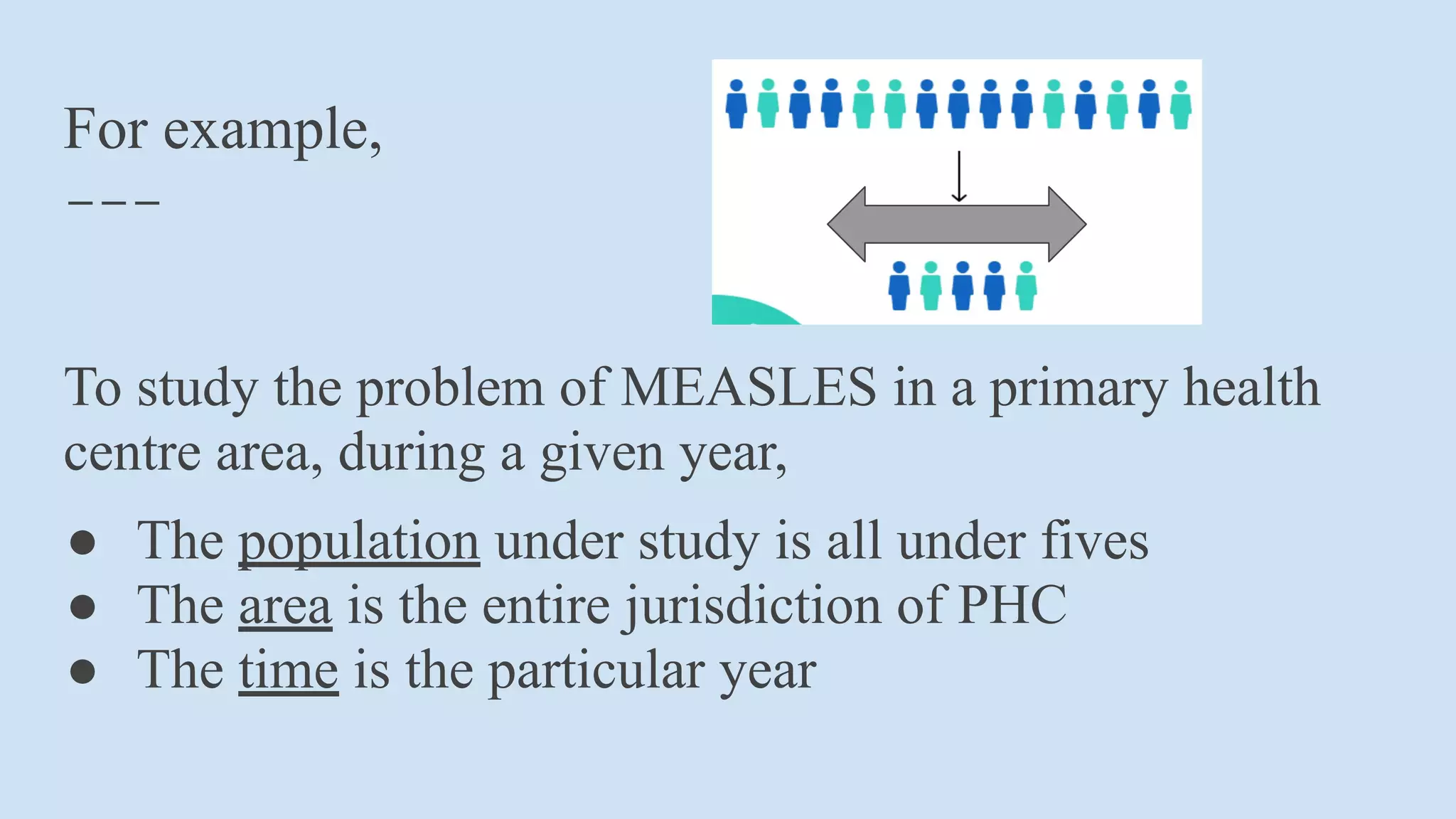
For example,
To study the problem of MEASLES in a primary health
centre area, during a given year,
● The population under study is all under fives
● The area is the entire jurisdiction of PHC
● The time is the particular year
Thus,
The study population [Defined Population] :
● becomes the population at risk ,
● it becomes the denominator and
● helps in calculating the rates
● which is further used in measuring the disease
frequency.
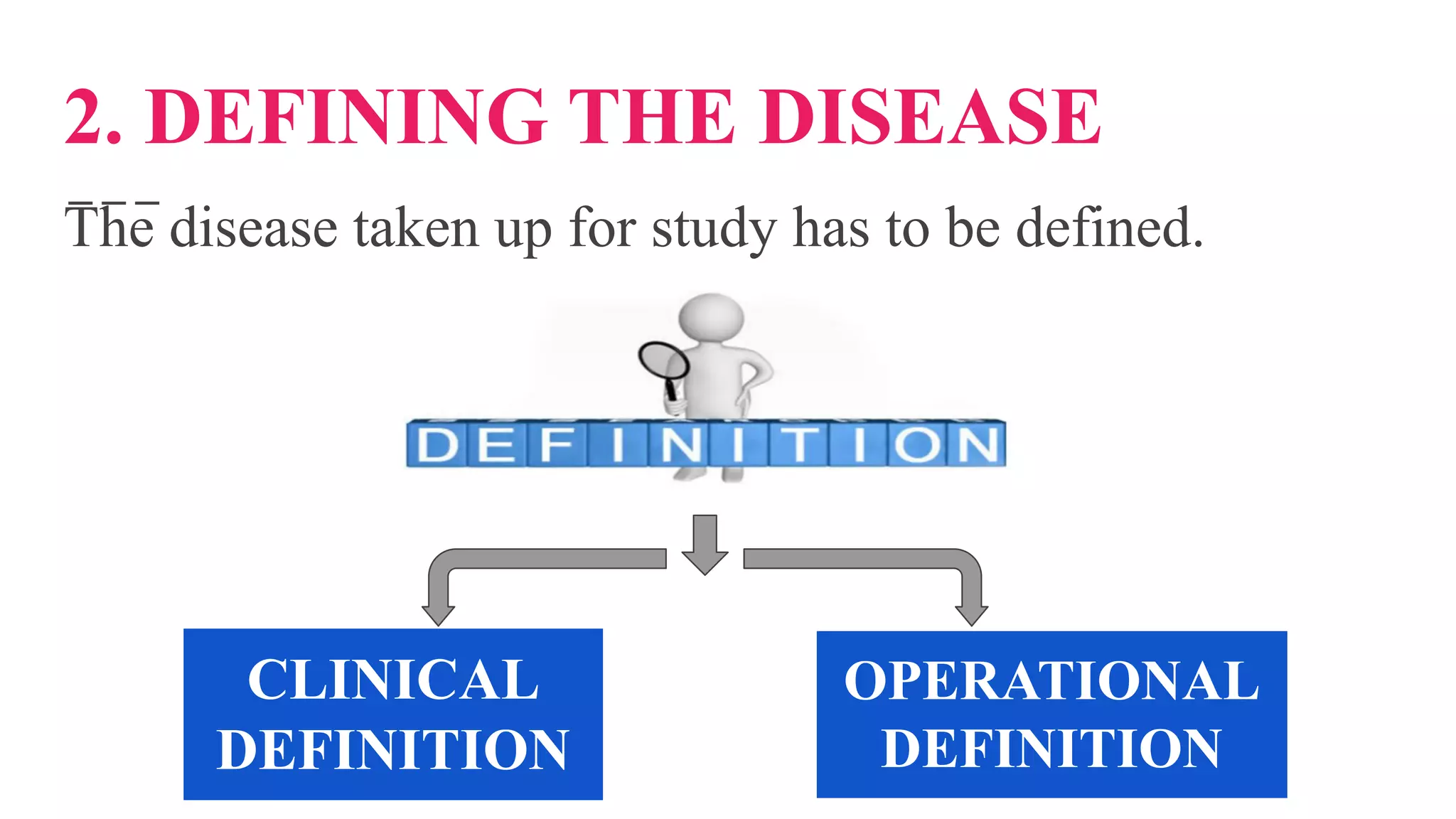
2. DEFINING THE DISEASE
The disease taken up for study has to be defined.
CLINICAL
DEFINITION
OPERATIONAL
DEFINITION
CLINICAL DEFINITION
➔ Given by clinician
➔ Serves to convey particular information
➔ But cannot be used to measure the disease in the
community.
➔ The Epidemiologist or the field workers may not be able to
identify those who have the disease from those who do not
accurately.
OPERATIONAL DEFINITION
➔ Accepted by Epidemiologists ,Observers,Field
workers.
➔ Operational Definition is a definition by which
the disease or condition can be identified and
measured in the defined population with a degree
of accuracy.
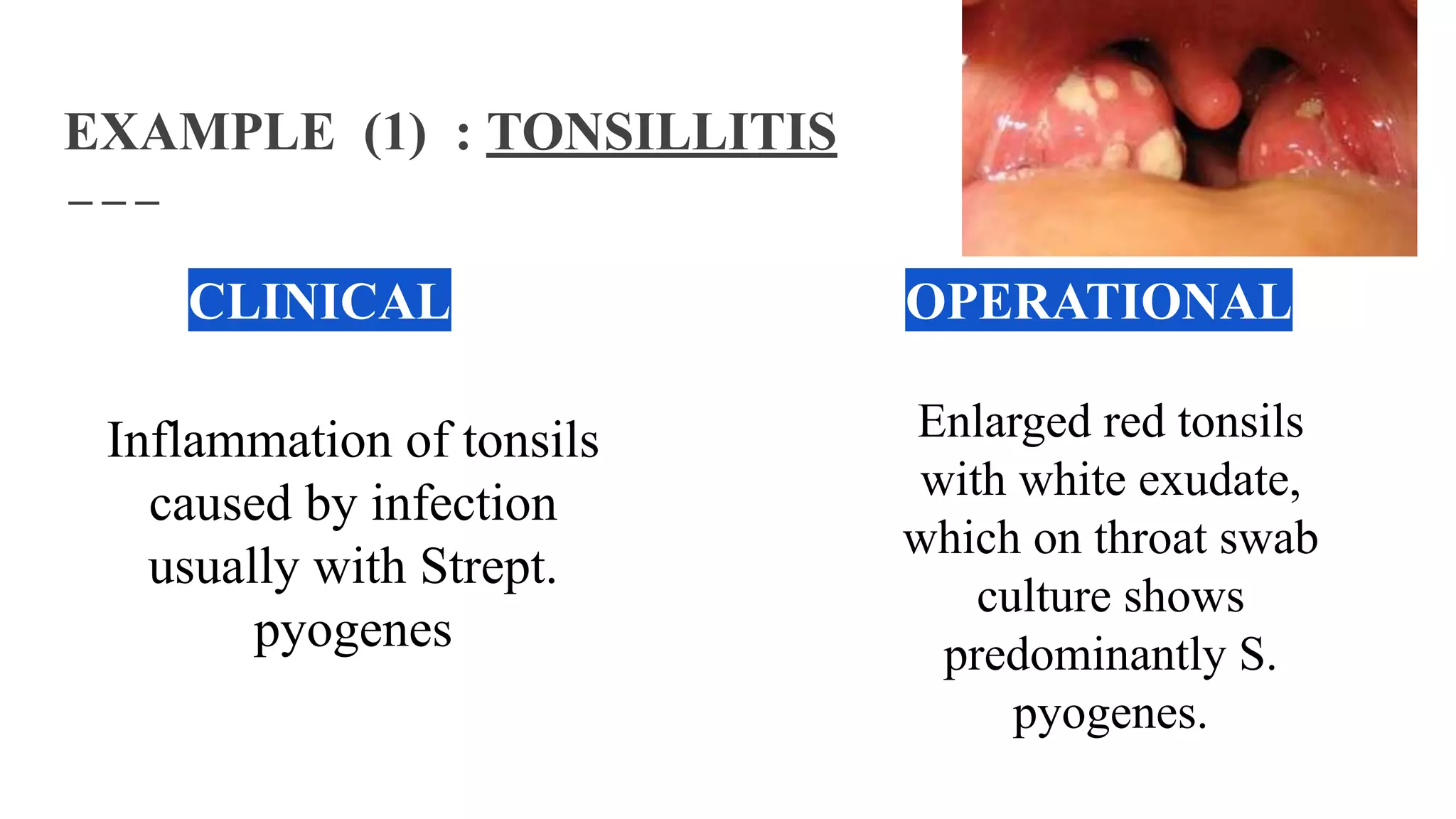
EXAMPLE (1) : TONSILLITIS
CLINICAL OPERATIONAL
Inflammation of tonsils
caused by infection
usually with Strept.
pyogenes
Enlarged red tonsils
with white exudate,
which on throat swab
culture shows
predominantly S.
pyogenes.
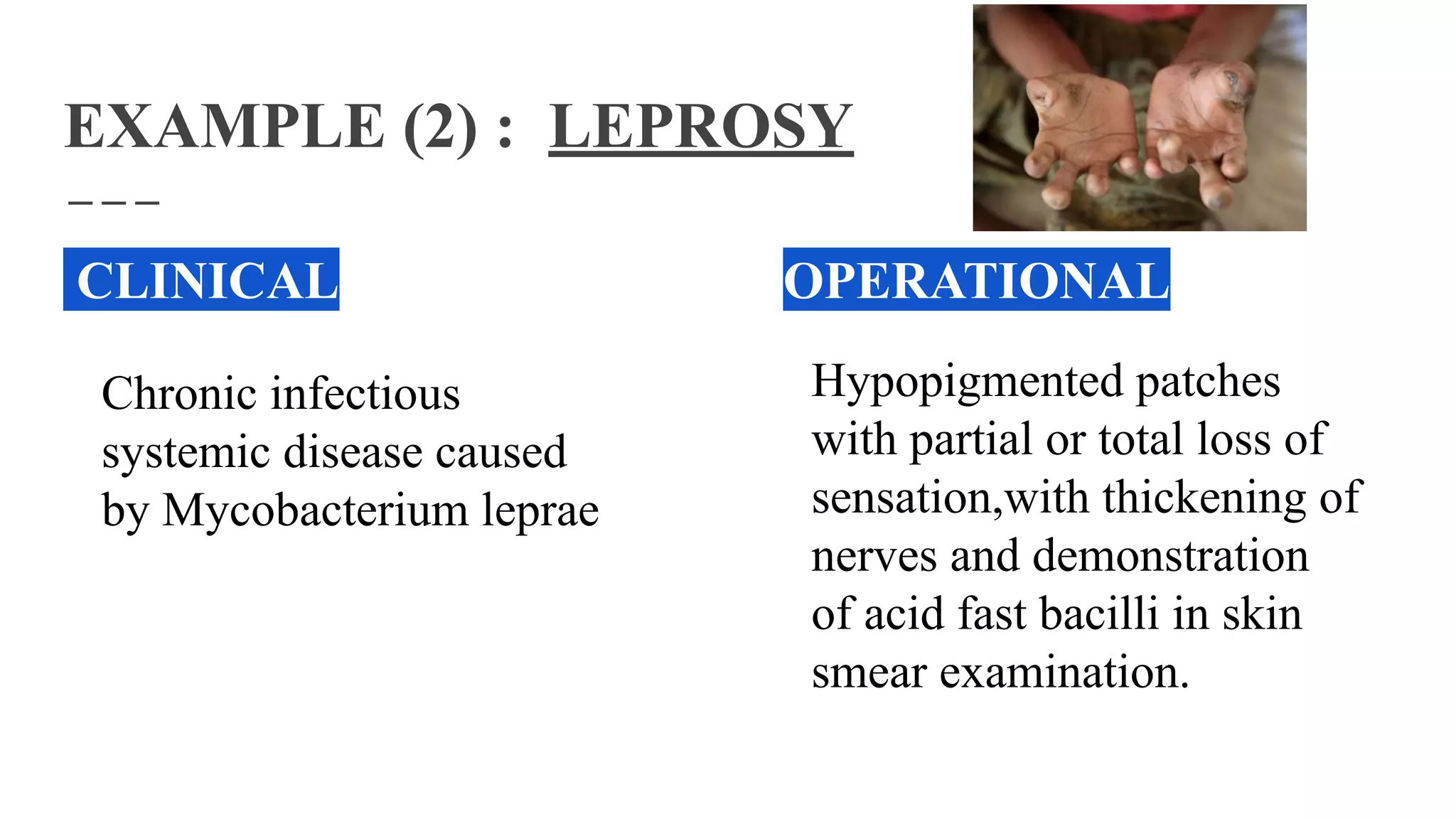
EXAMPLE (2) : LEPROSY
CLINICAL OPERATIONAL
Chronic infectious
systemic disease caused
by Mycobacterium leprae
Hypopigmented patches
with partial or total loss of
sensation,with thickening of
nerves and demonstration
of acid fast bacilli in skin
smear examination.
Hence,,
❏ Clinicians - do not need precise definition
❏ Epidemiologists - Need precise and valid definition.
❏ Diseases which do not have pathological signs and
symptoms, Epidemiologist frames his own
definition.
1) Which of the following does descriptive
study cannot answer?
● WHO?
● WHEN?
● WHY?
● WHERE?
2) Which of the following definition of disease does
an epidemiologist depend upon?
● Clinical definition
● Operational definition
● Surgical definition
● Simple definition
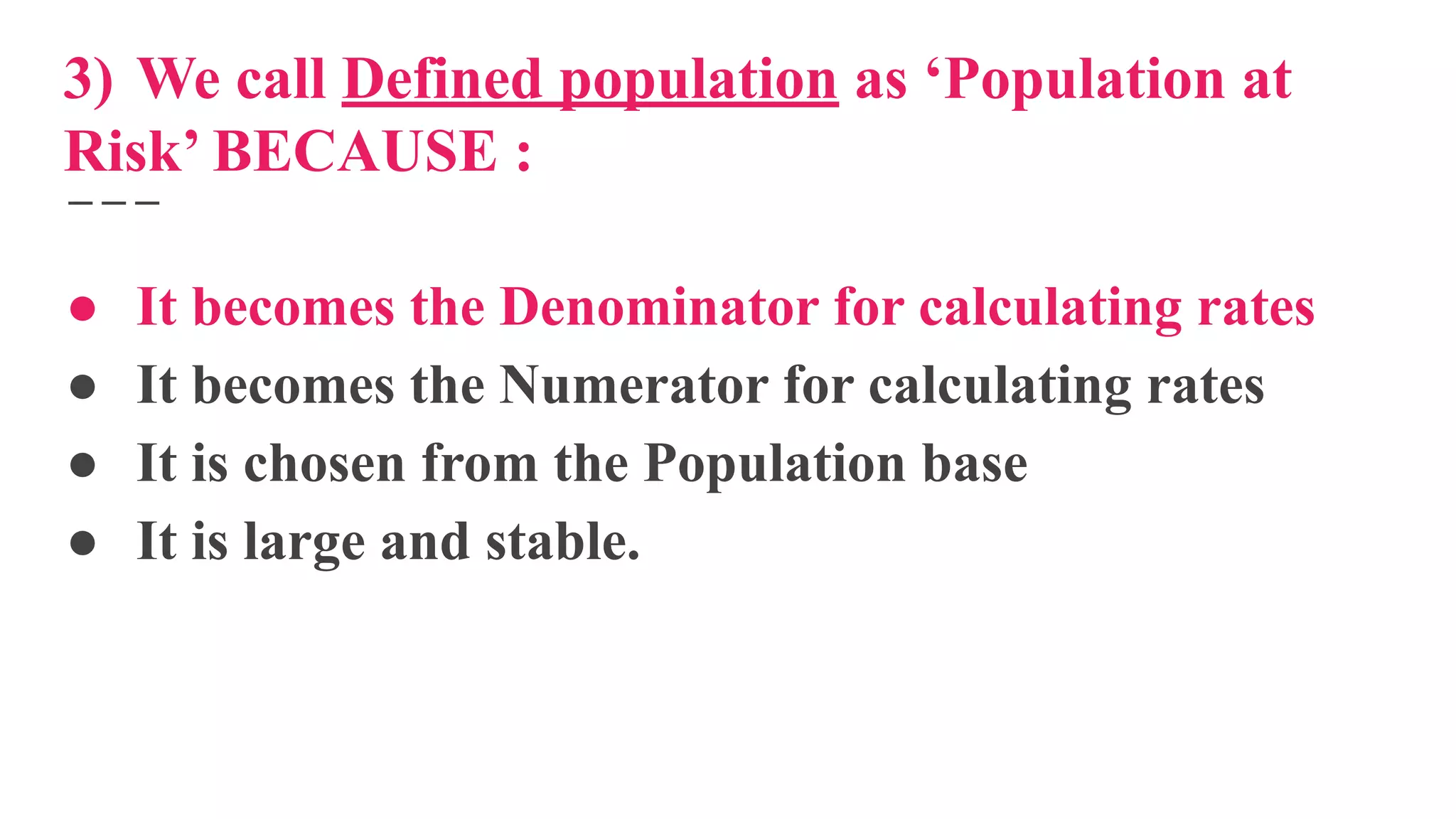
3) We call Defined population as ‘Population at
Risk’ BECAUSE :
● It becomes the Denominator for calculating rates
● It becomes the Numerator for calculating rates
● It is chosen from the Population base
● It is large and stable.
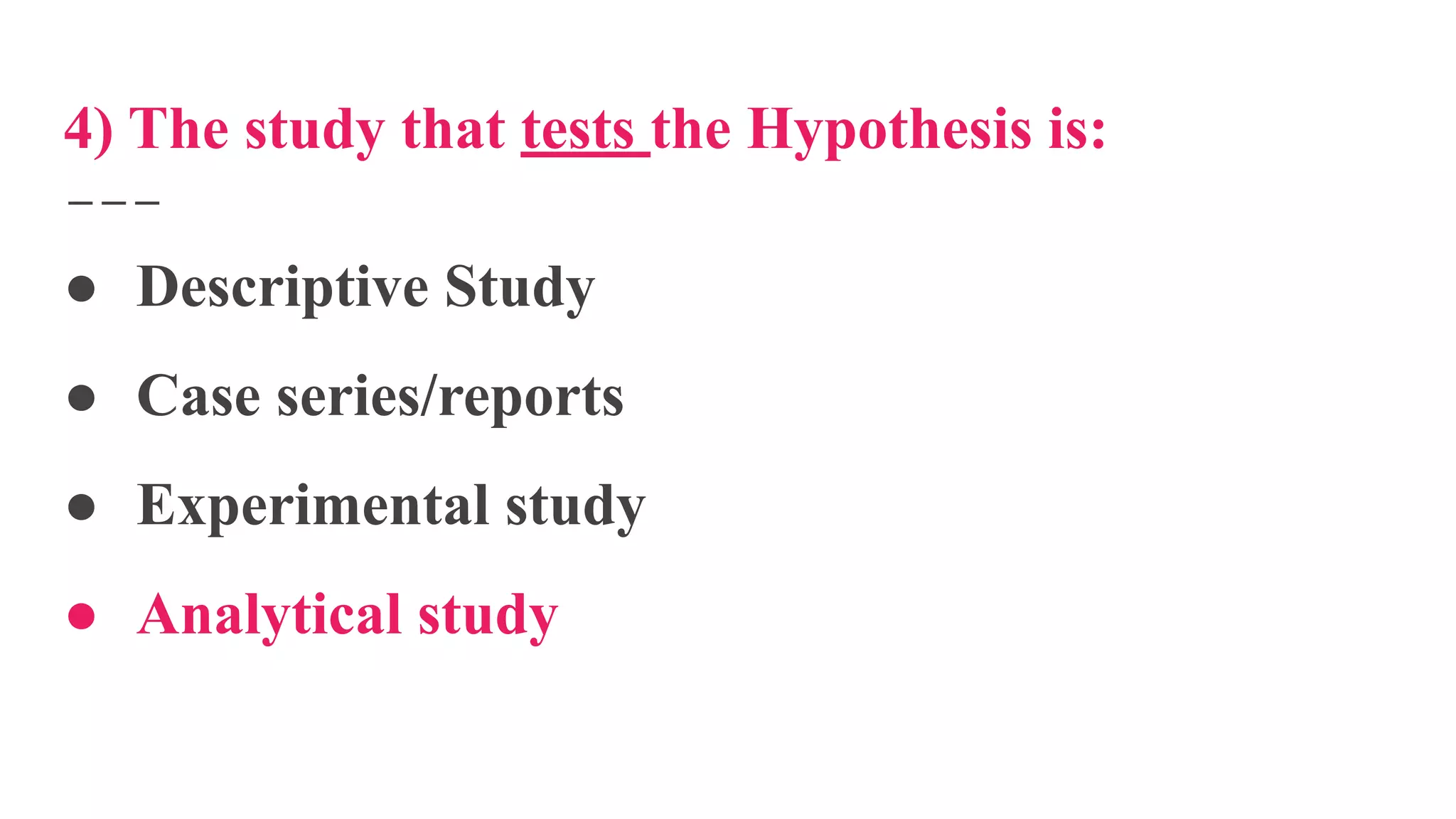
4) The study that tests the Hypothesis is:
● Descriptive Study
● Case series/reports
● Experimental study
● Analytical study
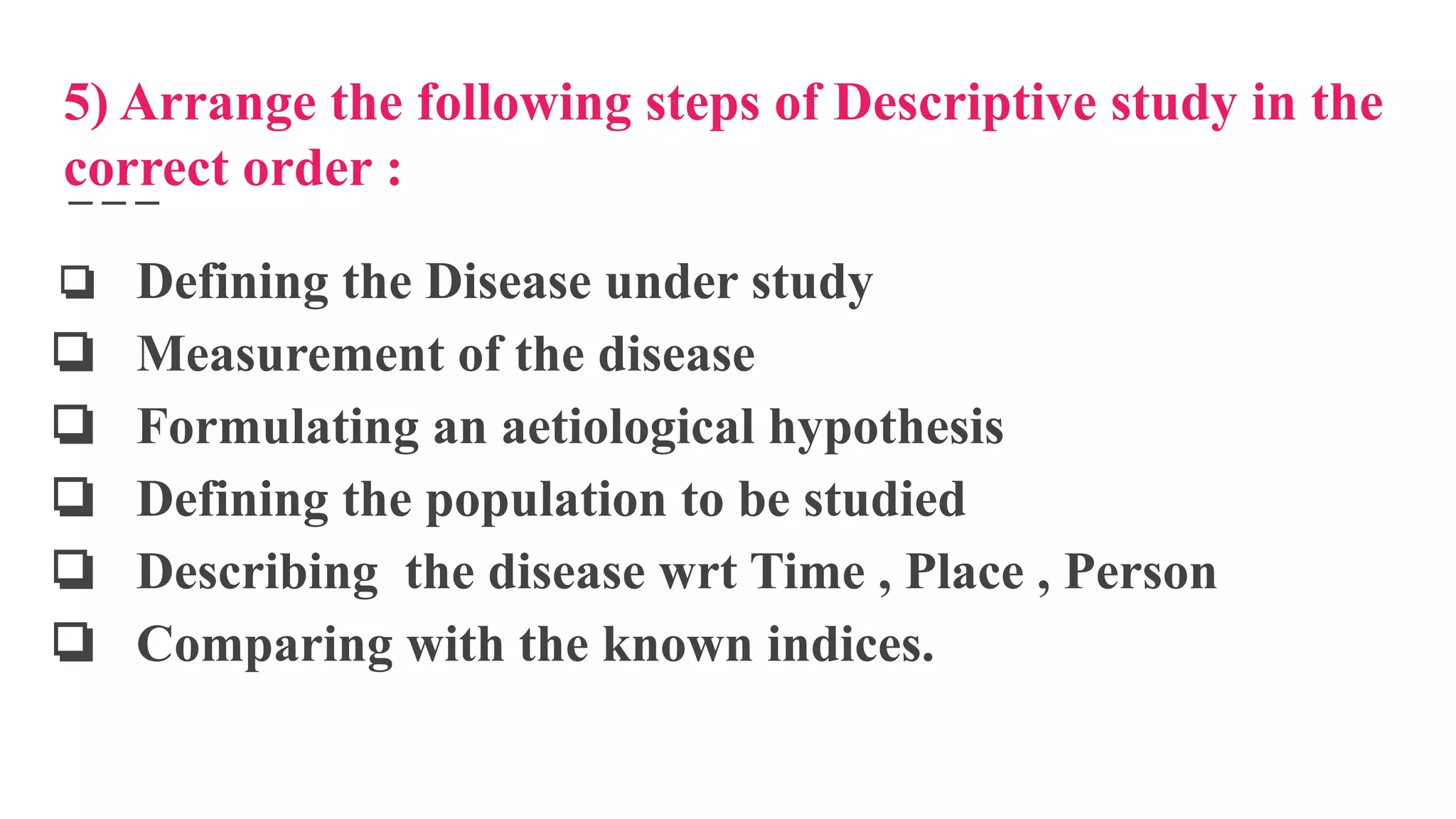
5) Arrange the following steps of Descriptive study in the
correct order :
❏ Defining the Disease under study
❏ Measurement of the disease
❏ Formulating an aetiological hypothesis
❏ Defining the population to be studied
❏ Describing the disease wrt Time , Place , Person
❏ Comparing with the known indices.
THANK
YOU :)

Descriptive study of Epidemiology PSM

  • 1.
  • 2.
    EPIDEMIOLOGY The Dynamic studyof: ● Occurrence ● Distribution ● Determinants of health and disease in a population
  • 3.
    So,,,, EPIDEMIOLOGY ● isthe basic science of public health ● Provides insight about the nature , causes , and extent of health and disease ● Provides information needed to plan and target resources appropriately.
  • 4.
  • 5.
    OBSERVATIONAL STUDIES ● Descriptive studies ●Analytical studies -Ecological -Cross sectional -Case control -Cohort EXPERIMENTAL STUDIES ● Randomized control trials ● Field trials ● Community trials
  • 6.
    DESCRIPTIVE STUDY ❏ Descriptivestudies are usually the first phase of an epidemiological investigation. ❏ These studies are concerned with observing the distribution of disease or health related characteristics in human populations and identifying the characteristics in which the disease is associated.
  • 7.
    The study basicallyasks the following questions:
  • 8.
    DESCRIPTIVE vs. ANALYTICAL ●Used when little is known about the disease ● Rely on pre existing data ● Who,where,when? ● Gives an Hypothesis ● Used when insight about various aspects of disease is available ● Rely on development of new data ● WHY? ● Tests the Hypothesis.
  • 9.
    PROCEDURES IN DESCRIPTIVE STUDIES 1.Defining the Population to be studied 2. Defining the Disease under study 3. Describing the disease by : Time , Place , Person 4. Measurement of disease 5. Comparing with known indices 6. Formulation of an aetiological Hypothesis.
  • 10.
    1. DEFINING THEPOPULATION ➔ Investigations done on populations and not on individual. ➔ Specify the type of population under study. ➔ Define ‘Population Base’ ➔ Defined population
  • 11.
    CRITERIA : ➢ Large ➢Stable ➢ Not different from other communities ➢ Community participation ➢ Accessibility of health services
  • 12.
    The Population Base: Includes the total number and its composition in terms of age,sex,occupation, and cultural characters. The Defined population can be whole population in a geographic area or specially selected group like age/sex/occupational groups,hospital patients,school children,pregnant women etc.
  • 13.
    For example, To studythe problem of MEASLES in a primary health centre area, during a given year, ● The population under study is all under fives ● The area is the entire jurisdiction of PHC ● The time is the particular year
  • 14.
    Thus, The study population[Defined Population] : ● becomes the population at risk , ● it becomes the denominator and ● helps in calculating the rates ● which is further used in measuring the disease frequency.
  • 15.
    2. DEFINING THEDISEASE The disease taken up for study has to be defined. CLINICAL DEFINITION OPERATIONAL DEFINITION
  • 16.
    CLINICAL DEFINITION ➔ Givenby clinician ➔ Serves to convey particular information ➔ But cannot be used to measure the disease in the community. ➔ The Epidemiologist or the field workers may not be able to identify those who have the disease from those who do not accurately.
  • 17.
    OPERATIONAL DEFINITION ➔ Acceptedby Epidemiologists ,Observers,Field workers. ➔ Operational Definition is a definition by which the disease or condition can be identified and measured in the defined population with a degree of accuracy.
  • 18.
    EXAMPLE (1) :TONSILLITIS CLINICAL OPERATIONAL Inflammation of tonsils caused by infection usually with Strept. pyogenes Enlarged red tonsils with white exudate, which on throat swab culture shows predominantly S. pyogenes.
  • 19.
    EXAMPLE (2) :LEPROSY CLINICAL OPERATIONAL Chronic infectious systemic disease caused by Mycobacterium leprae Hypopigmented patches with partial or total loss of sensation,with thickening of nerves and demonstration of acid fast bacilli in skin smear examination.
  • 20.
    Hence,, ❏ Clinicians -do not need precise definition ❏ Epidemiologists - Need precise and valid definition. ❏ Diseases which do not have pathological signs and symptoms, Epidemiologist frames his own definition.
  • 22.
    1) Which ofthe following does descriptive study cannot answer? ● WHO? ● WHEN? ● WHY? ● WHERE?
  • 23.
    2) Which ofthe following definition of disease does an epidemiologist depend upon? ● Clinical definition ● Operational definition ● Surgical definition ● Simple definition
  • 24.
    3) We callDefined population as ‘Population at Risk’ BECAUSE : ● It becomes the Denominator for calculating rates ● It becomes the Numerator for calculating rates ● It is chosen from the Population base ● It is large and stable.
  • 25.
    4) The studythat tests the Hypothesis is: ● Descriptive Study ● Case series/reports ● Experimental study ● Analytical study
  • 26.
    5) Arrange thefollowing steps of Descriptive study in the correct order : ❏ Defining the Disease under study ❏ Measurement of the disease ❏ Formulating an aetiological hypothesis ❏ Defining the population to be studied ❏ Describing the disease wrt Time , Place , Person ❏ Comparing with the known indices.
  • 27.