Desalination:
Creating fresh water for the future


              Ashley Hall
             Kelly Kramer
             Dan Spisak


                                      S
Desalination Definition
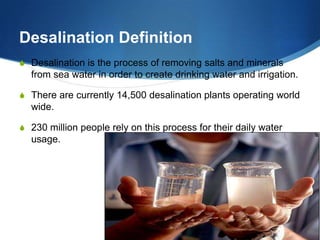
S Desalination is the process of removing salts and minerals
  from sea water in order to create drinking water and irrigation.

S There are currently 14,500 desalination plants operating world
  wide.

S 230 million people rely on this process for their daily water
  usage.
Problem Definition
S 97.5% of the Earth's water is saline. Accessible fresh water
   makes up .75% of the world's 2.5% fresh water supply.

S Increasing water demands attributed to population and
   industrialization increase coupled with shrinking aquifer
   reserves and deteriorating water infrastructure are putting a
   strain on the world's fresh water supply.

S The UN estimates by 2025, 30 of countries will be water
   scarce and 18 are in the Middle East and N. Africa.

S At least 36 states are expected to face water shortages
   within the next 5 years.

Desalination Methods
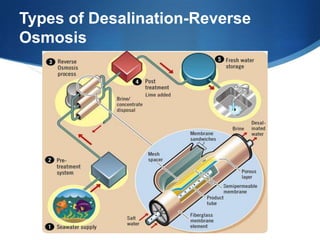
Types of Desalination-Reverse
Osmosis
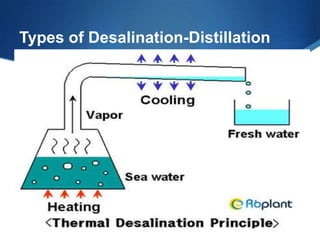
Types of Desalination-Distillation
Environmental Impacts

S Highly brine wastewater can be discharged back into the
  sea.


S Local temperature increases at discharge locations.
  Concentration of heavy metals in waste stream.


S Decreases demand on unsustainable sources of water
  (groundwater, surface water)
Economic Impacts

S Desalination is currently more expensive than traditional
  water extraction methods.

S Can range from 65-95 cents a cubic foot.

S Compared with groundwater extraction 50-65 cents a
  cubic foot.

S Creates local jobs, can utilize waste heat from power
  plants
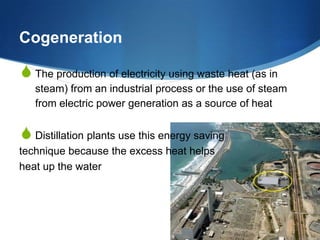
Cogeneration

S The production of electricity using waste heat (as in
   steam) from an industrial process or the use of steam
   from electric power generation as a source of heat


S Distillation plants use this energy saving
technique because the excess heat helps
heat up the water
Sociological Impacts
Effect of pollution on local community, depending on the
energy sources.

Less chance of supply disruptions.

Placement of the facility (environmental injustice)
Plant Regulations: The Big Ones


S No depositing or dumping any brine material within sanctuary
   boundaries. (Permit required)

S A permit is also required to dump brine material outside of
   the boundaries, that is approved by a government body.

S No actions in building shall harm or disturb the natural
   seabed (pipes, chemicals, etc.)
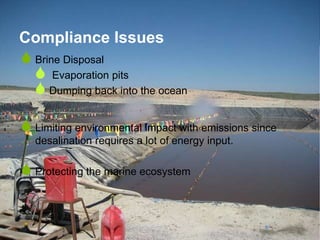
Compliance Issues
S Brine Disposal
  S Evaporation pits
  S Dumping back into the ocean

S Limiting environmental impact with emissions since
  desalination requires a lot of energy input.

S Protecting the marine ecosystem
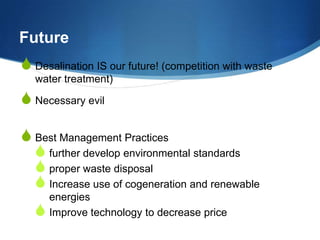
Future
S Desalination IS our future! (competition with waste
   water treatment)

S Necessary evil

S Best Management Practices
  S further develop environmental standards
  S proper waste disposal
  S Increase use of cogeneration and renewable
      energies
  S   Improve technology to decrease price
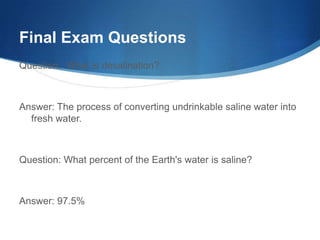
Final Exam Questions
Question: What is desalination?


Answer: The process of converting undrinkable saline water into
  fresh water.


Question: What percent of the Earth's water is saline?


Answer: 97.5%

Desalination

  • 1.
    Desalination: Creating fresh waterfor the future Ashley Hall Kelly Kramer Dan Spisak S
  • 2.
    Desalination Definition S Desalinationis the process of removing salts and minerals from sea water in order to create drinking water and irrigation. S There are currently 14,500 desalination plants operating world wide. S 230 million people rely on this process for their daily water usage.
  • 3.
    Problem Definition S 97.5%of the Earth's water is saline. Accessible fresh water makes up .75% of the world's 2.5% fresh water supply. S Increasing water demands attributed to population and industrialization increase coupled with shrinking aquifer reserves and deteriorating water infrastructure are putting a strain on the world's fresh water supply. S The UN estimates by 2025, 30 of countries will be water scarce and 18 are in the Middle East and N. Africa. S At least 36 states are expected to face water shortages within the next 5 years. Desalination Methods
  • 4.
  • 5.
  • 6.
    Environmental Impacts S Highlybrine wastewater can be discharged back into the sea. S Local temperature increases at discharge locations. Concentration of heavy metals in waste stream. S Decreases demand on unsustainable sources of water (groundwater, surface water)
  • 7.
    Economic Impacts S Desalinationis currently more expensive than traditional water extraction methods. S Can range from 65-95 cents a cubic foot. S Compared with groundwater extraction 50-65 cents a cubic foot. S Creates local jobs, can utilize waste heat from power plants
  • 8.
    Cogeneration S The productionof electricity using waste heat (as in steam) from an industrial process or the use of steam from electric power generation as a source of heat S Distillation plants use this energy saving technique because the excess heat helps heat up the water
  • 9.
    Sociological Impacts Effect ofpollution on local community, depending on the energy sources. Less chance of supply disruptions. Placement of the facility (environmental injustice)
  • 10.
    Plant Regulations: TheBig Ones S No depositing or dumping any brine material within sanctuary boundaries. (Permit required) S A permit is also required to dump brine material outside of the boundaries, that is approved by a government body. S No actions in building shall harm or disturb the natural seabed (pipes, chemicals, etc.)
  • 11.
    Compliance Issues S BrineDisposal S Evaporation pits S Dumping back into the ocean S Limiting environmental impact with emissions since desalination requires a lot of energy input. S Protecting the marine ecosystem
  • 12.
    Future S Desalination ISour future! (competition with waste water treatment) S Necessary evil S Best Management Practices S further develop environmental standards S proper waste disposal S Increase use of cogeneration and renewable energies S Improve technology to decrease price
  • 13.
    Final Exam Questions Question:What is desalination? Answer: The process of converting undrinkable saline water into fresh water. Question: What percent of the Earth's water is saline? Answer: 97.5%