MCQ/AAFP updates
Presented by
Abdulaziz Bagasi
R4 Family Medicine NGHA-Jeddah
Supervised by
Dr.Razaz Wali
October 2020
1
Objectives
2
We will discuss 8
AAFP outlines
•6 Derma cases
•2 other
specialties
We will discuss
11 MCQs
•6 Derma cases
•5 other
specialties
Q1 AAFP
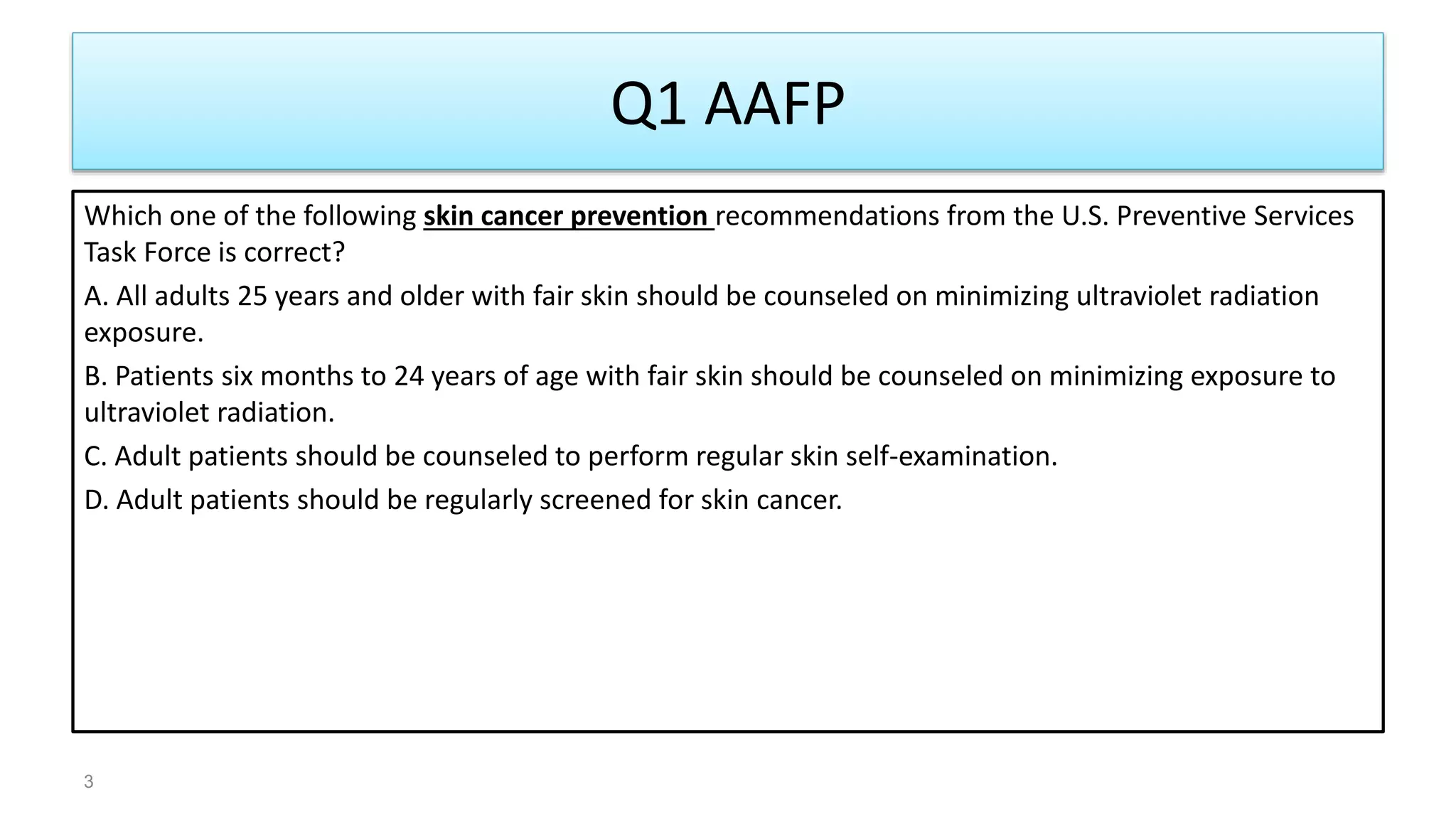
Which one of the following skin cancer prevention recommendations from the U.S. Preventive Services
Task Force is correct?
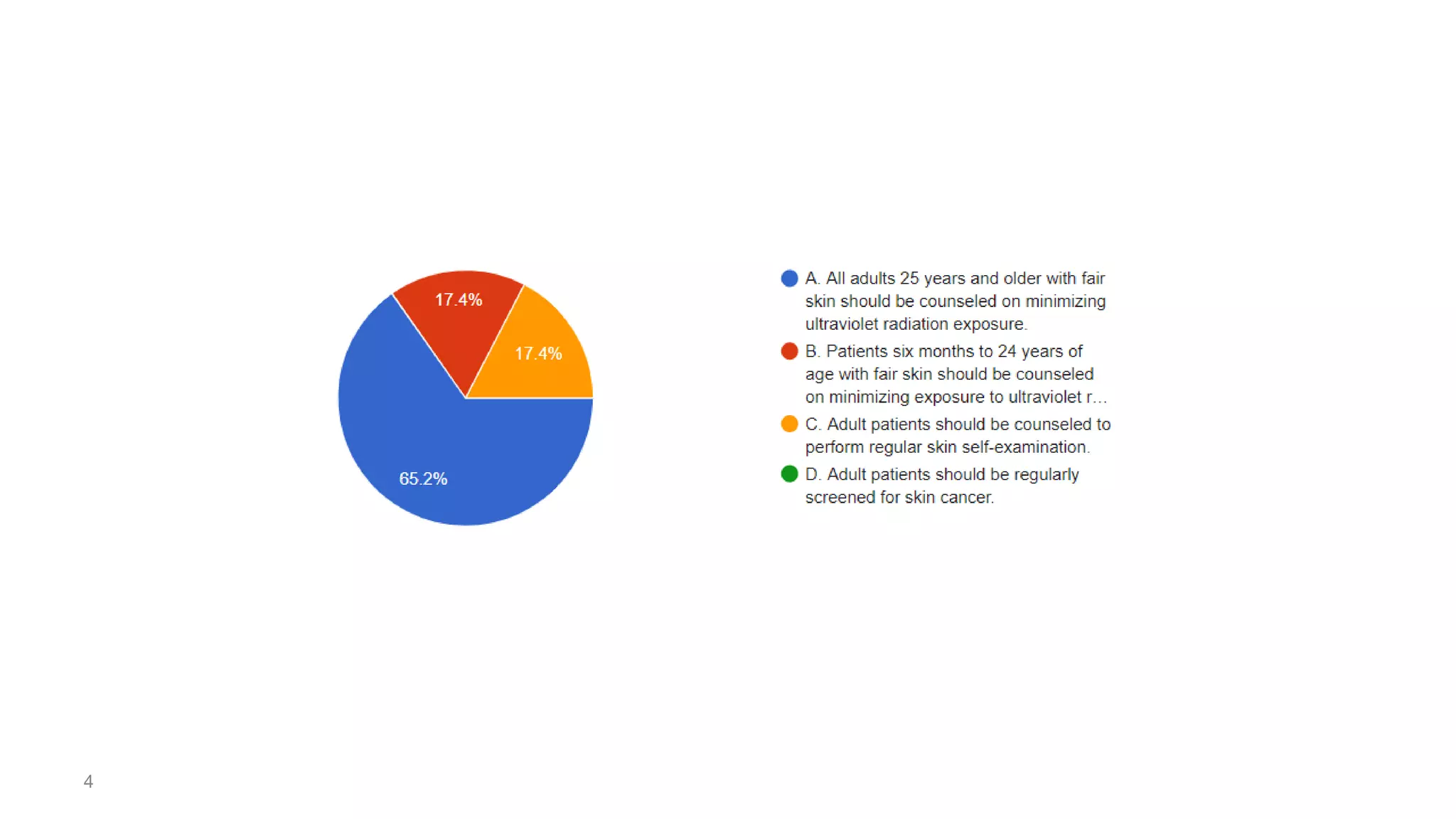
A. All adults 25 years and older with fair skin should be counseled on minimizing ultraviolet radiation
exposure.
B. Patients six months to 24 years of age with fair skin should be counseled on minimizing exposure to
ultraviolet radiation.
C. Adult patients should be counseled to perform regular skin self-examination.
D. Adult patients should be regularly screened for skin cancer.
3
4
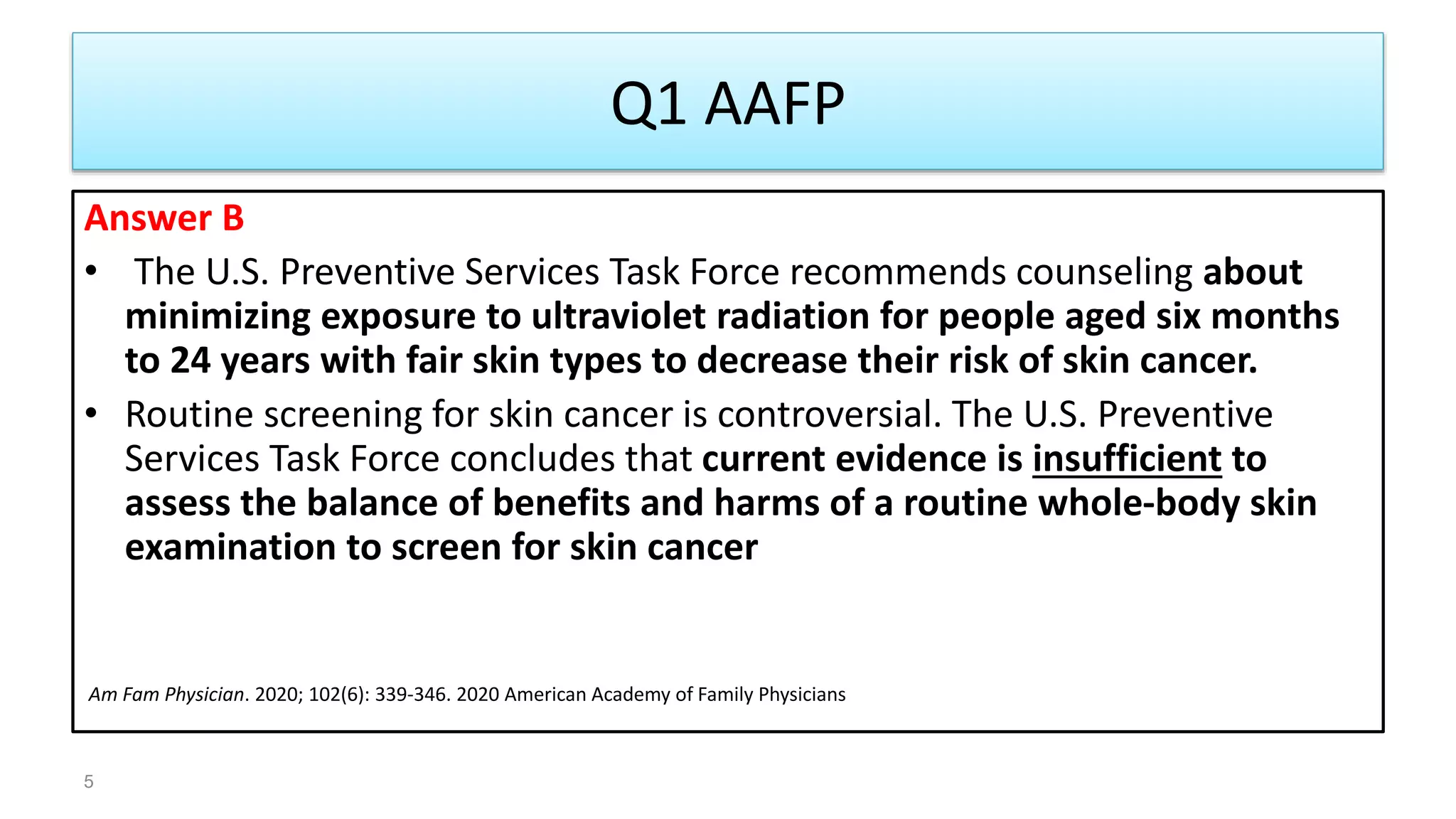
Q1 AAFP
Answer B
• The U.S. Preventive Services Task Force recommends counseling about
minimizing exposure to ultraviolet radiation for people aged six months
to 24 years with fair skin types to decrease their risk of skin cancer.
• Routine screening for skin cancer is controversial. The U.S. Preventive
Services Task Force concludes that current evidence is insufficient to
assess the balance of benefits and harms of a routine whole-body skin
examination to screen for skin cancer
Am Fam Physician. 2020; 102(6): 339-346. 2020 American Academy of Family Physicians
5
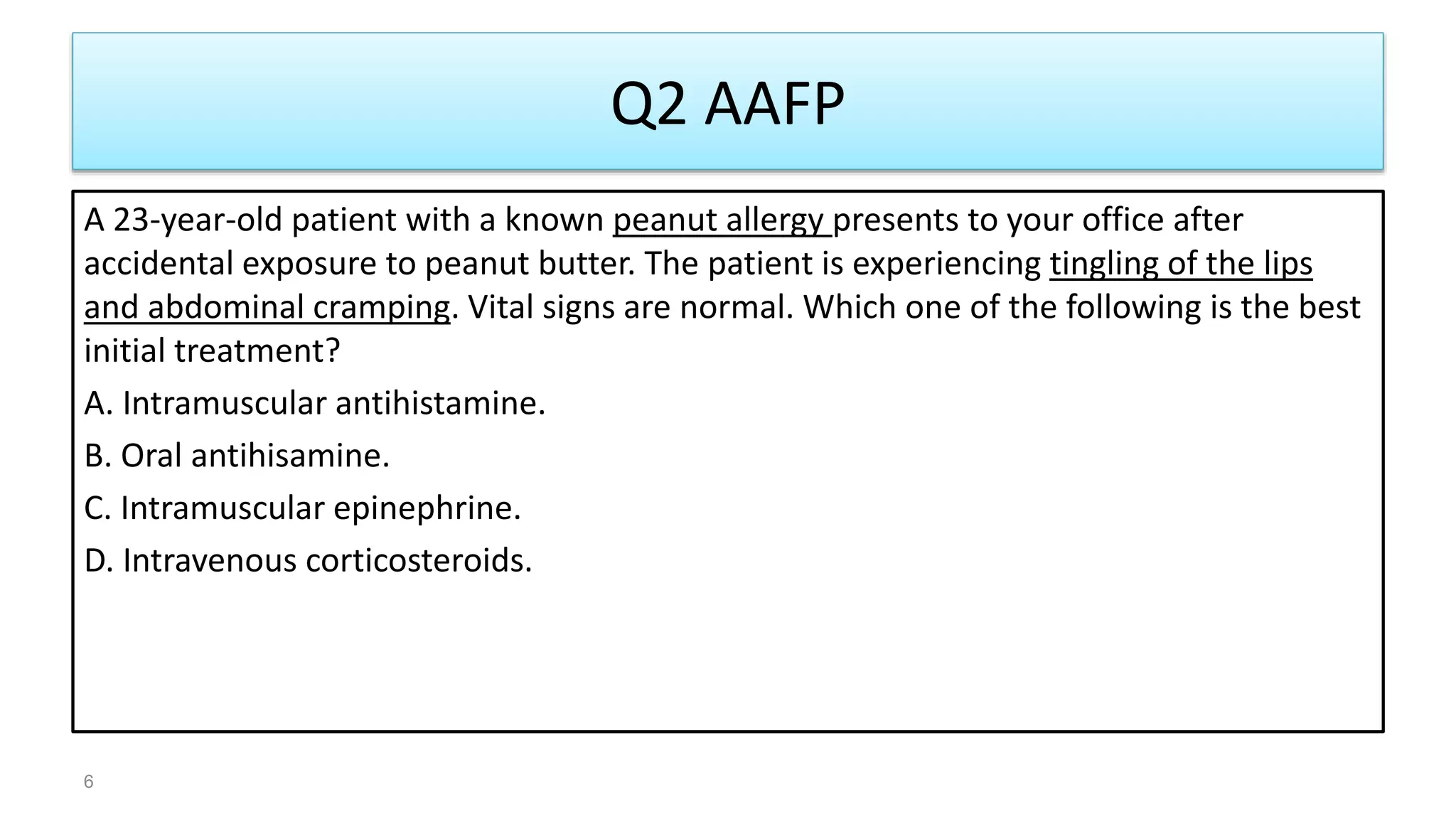
Q2 AAFP
A 23-year-old patient with a known peanut allergy presents to your office after
accidental exposure to peanut butter. The patient is experiencing tingling of the lips
and abdominal cramping. Vital signs are normal. Which one of the following is the best
initial treatment?
A. Intramuscular antihistamine.
B. Oral antihisamine.
C. Intramuscular epinephrine.
D. Intravenous corticosteroids.
6
Q2 AAFP
Answer C
7
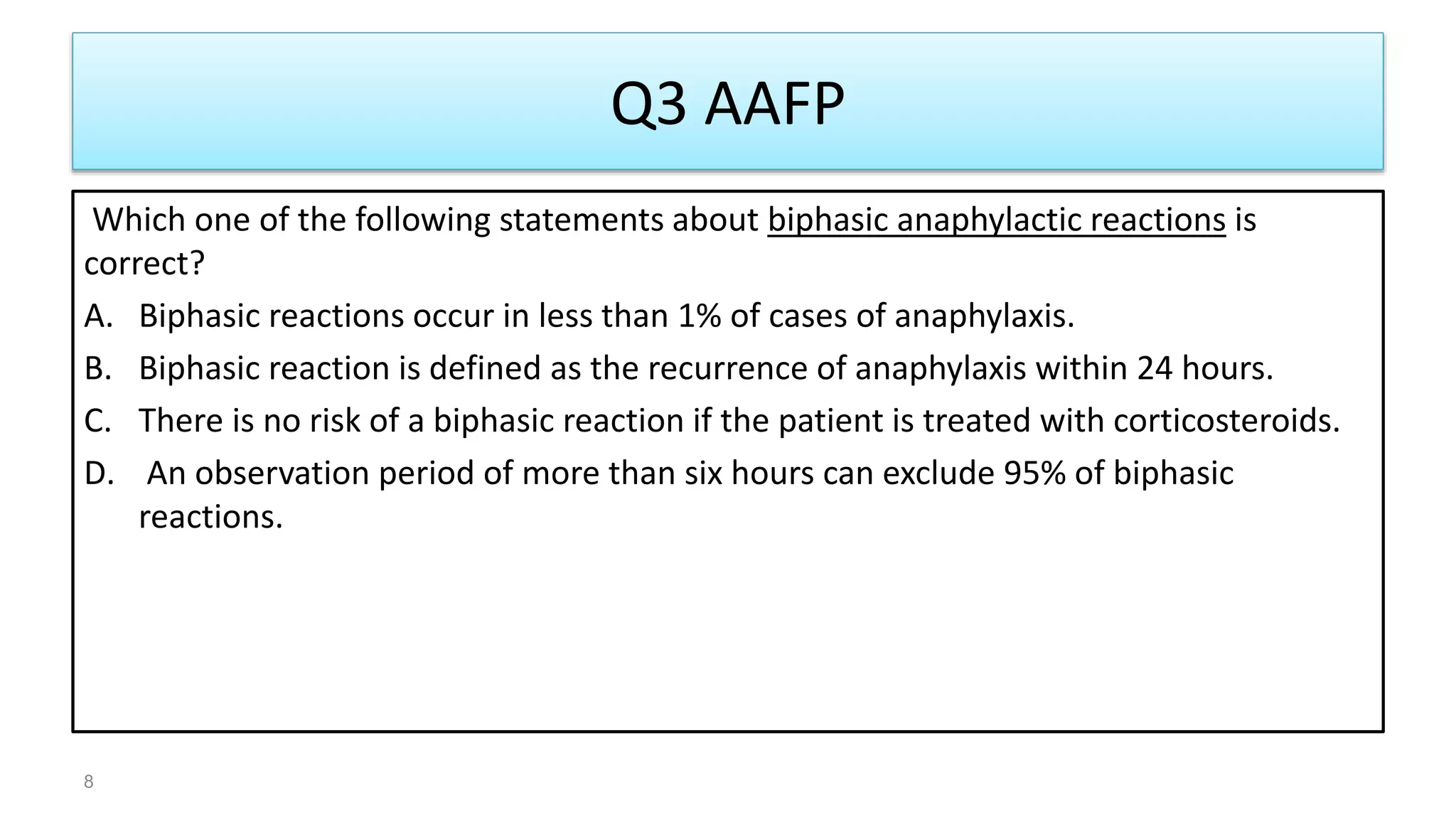
Q3 AAFP
Which one of the following statements about biphasic anaphylactic reactions is
correct?
A. Biphasic reactions occur in less than 1% of cases of anaphylaxis.
B. Biphasic reaction is defined as the recurrence of anaphylaxis within 24 hours.
C. There is no risk of a biphasic reaction if the patient is treated with corticosteroids.
D. An observation period of more than six hours can exclude 95% of biphasic
reactions.
8
Q3 AAFP
Answer D
• Observation Period Biphasic reactions are defined as the recurrence of anaphylaxis
within 72 hours of the initial reaction without reexposure to the allergen.
• A recent meta-analysis showed that an observation time greater than six hours
after resolution of anaphylactic symptoms could exclude the recurrence of a
secondary reaction in more than 95% of patients
AAFP September 15, 2020 - Volume 102, Number 6
9
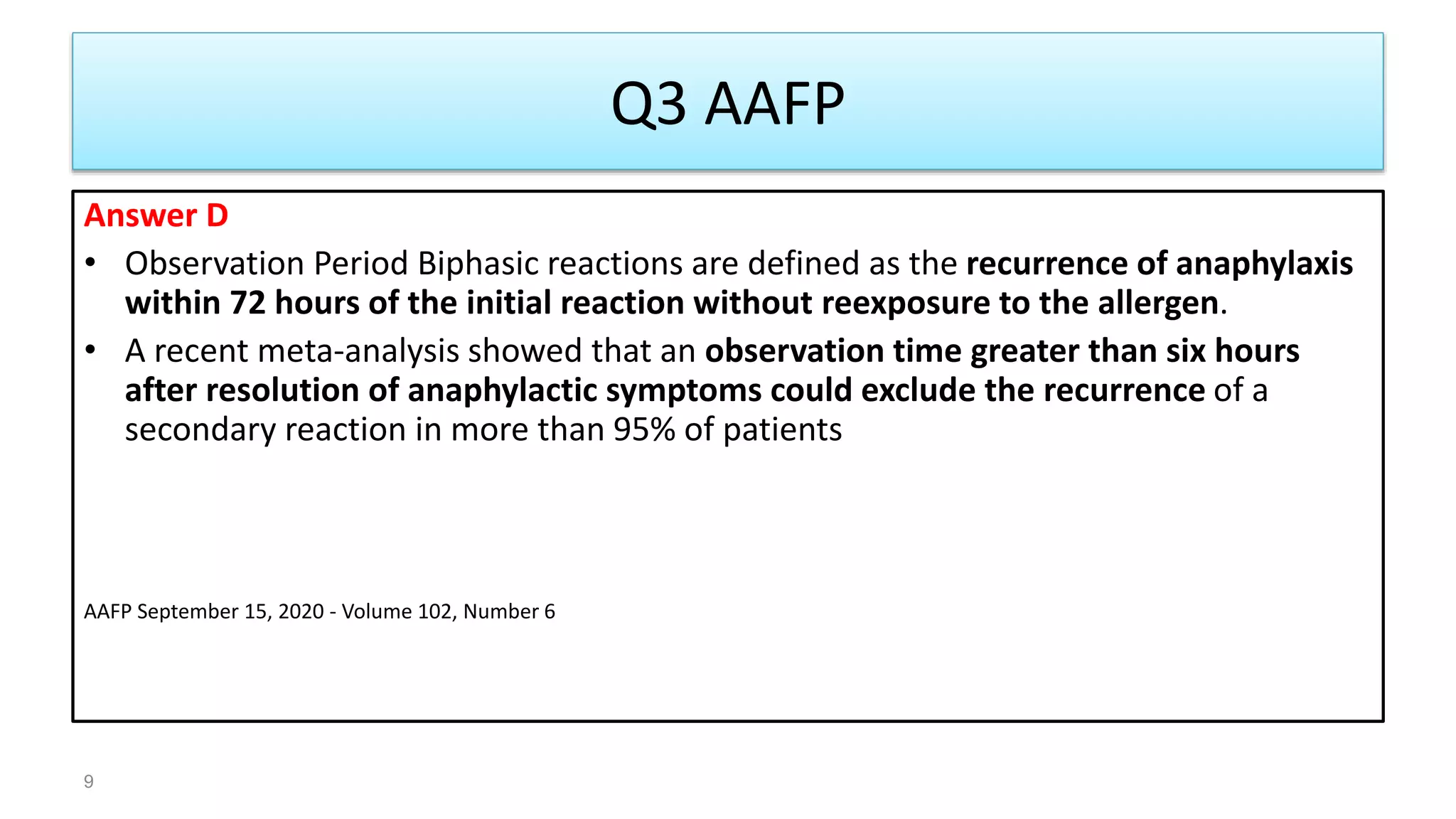
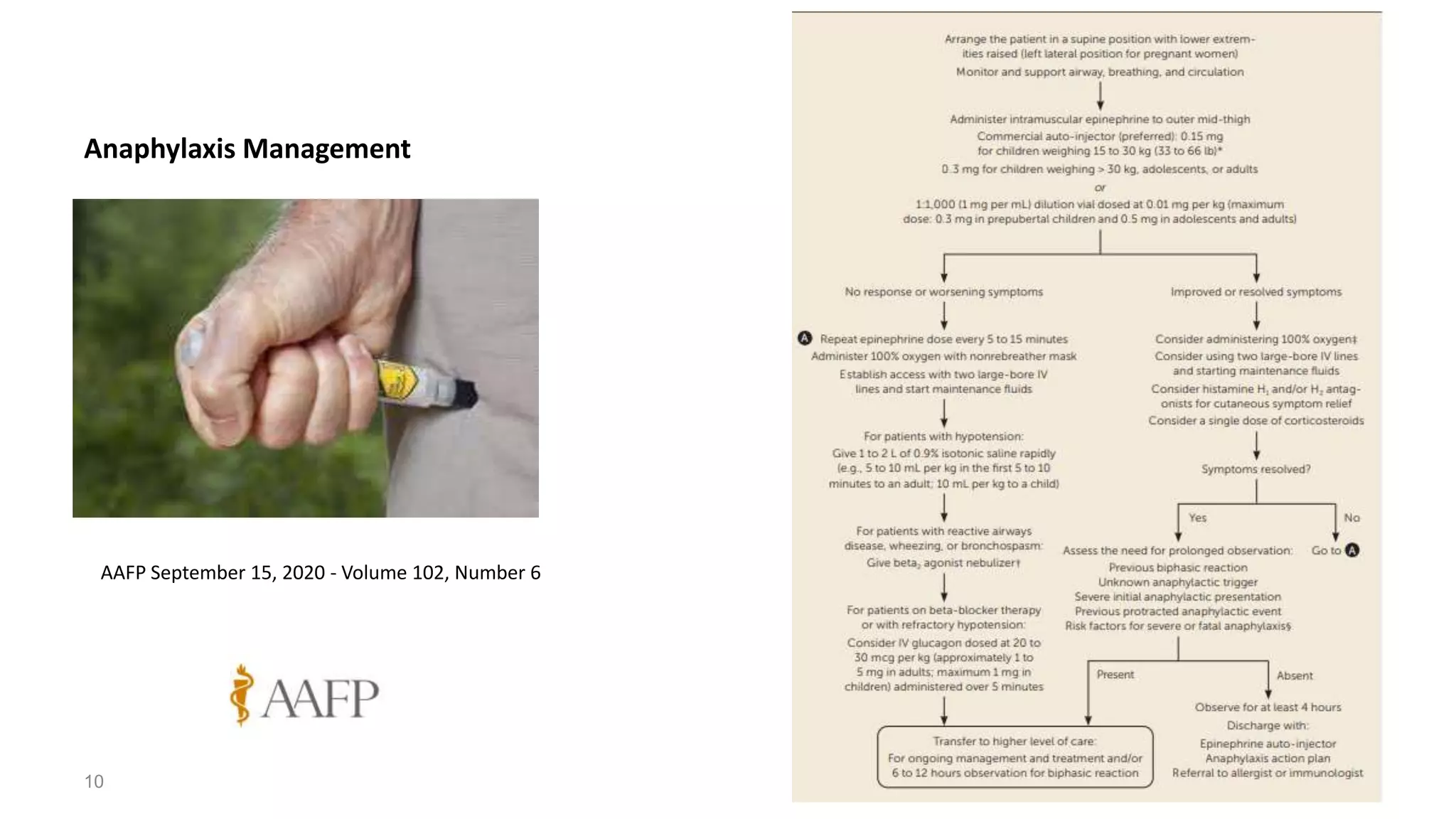
Anaphylaxis Management
AAFP September 15, 2020 - Volume 102, Number 6
10
Q4 AAFP
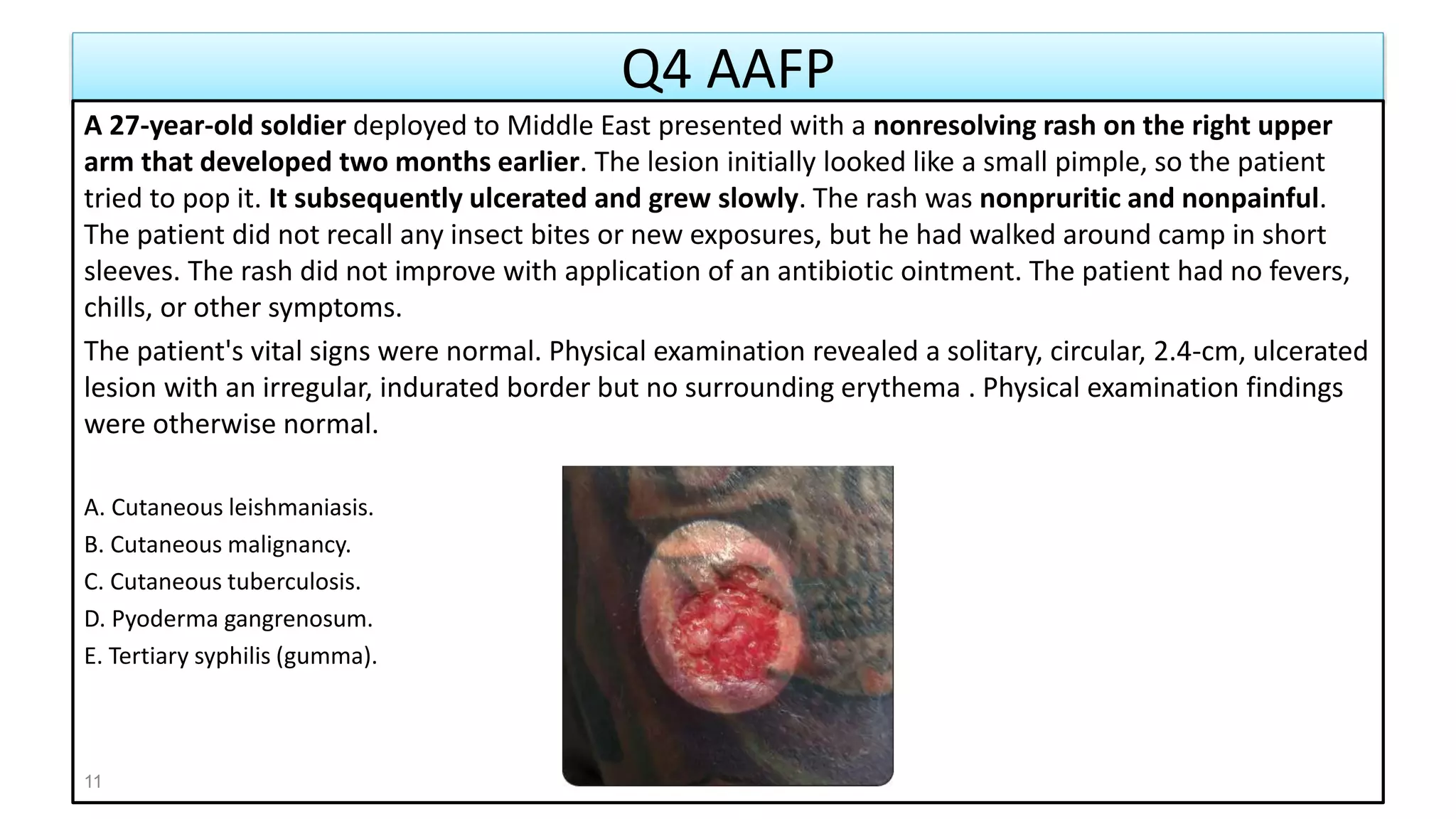
A 27-year-old soldier deployed to Middle East presented with a nonresolving rash on the right upper
arm that developed two months earlier. The lesion initially looked like a small pimple, so the patient
tried to pop it. It subsequently ulcerated and grew slowly. The rash was nonpruritic and nonpainful.
The patient did not recall any insect bites or new exposures, but he had walked around camp in short
sleeves. The rash did not improve with application of an antibiotic ointment. The patient had no fevers,
chills, or other symptoms.
The patient's vital signs were normal. Physical examination revealed a solitary, circular, 2.4-cm, ulcerated
lesion with an irregular, indurated border but no surrounding erythema . Physical examination findings
were otherwise normal.
A. Cutaneous leishmaniasis.
B. Cutaneous malignancy.
C. Cutaneous tuberculosis.
D. Pyoderma gangrenosum.
E. Tertiary syphilis (gumma).
11
Q4 AAFP
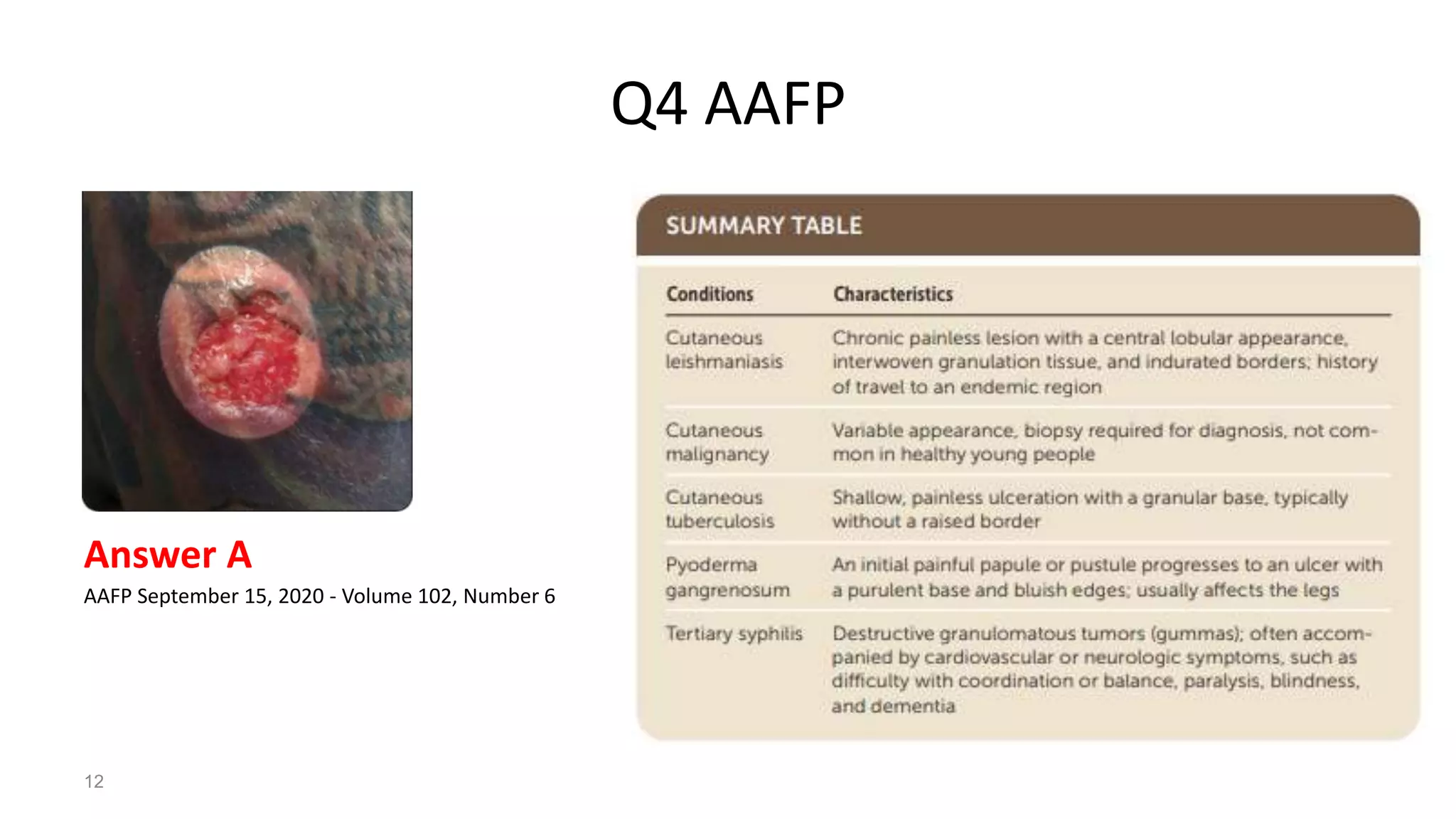
Answer A
AAFP September 15, 2020 - Volume 102, Number 6
12
Q5 AAFP
13
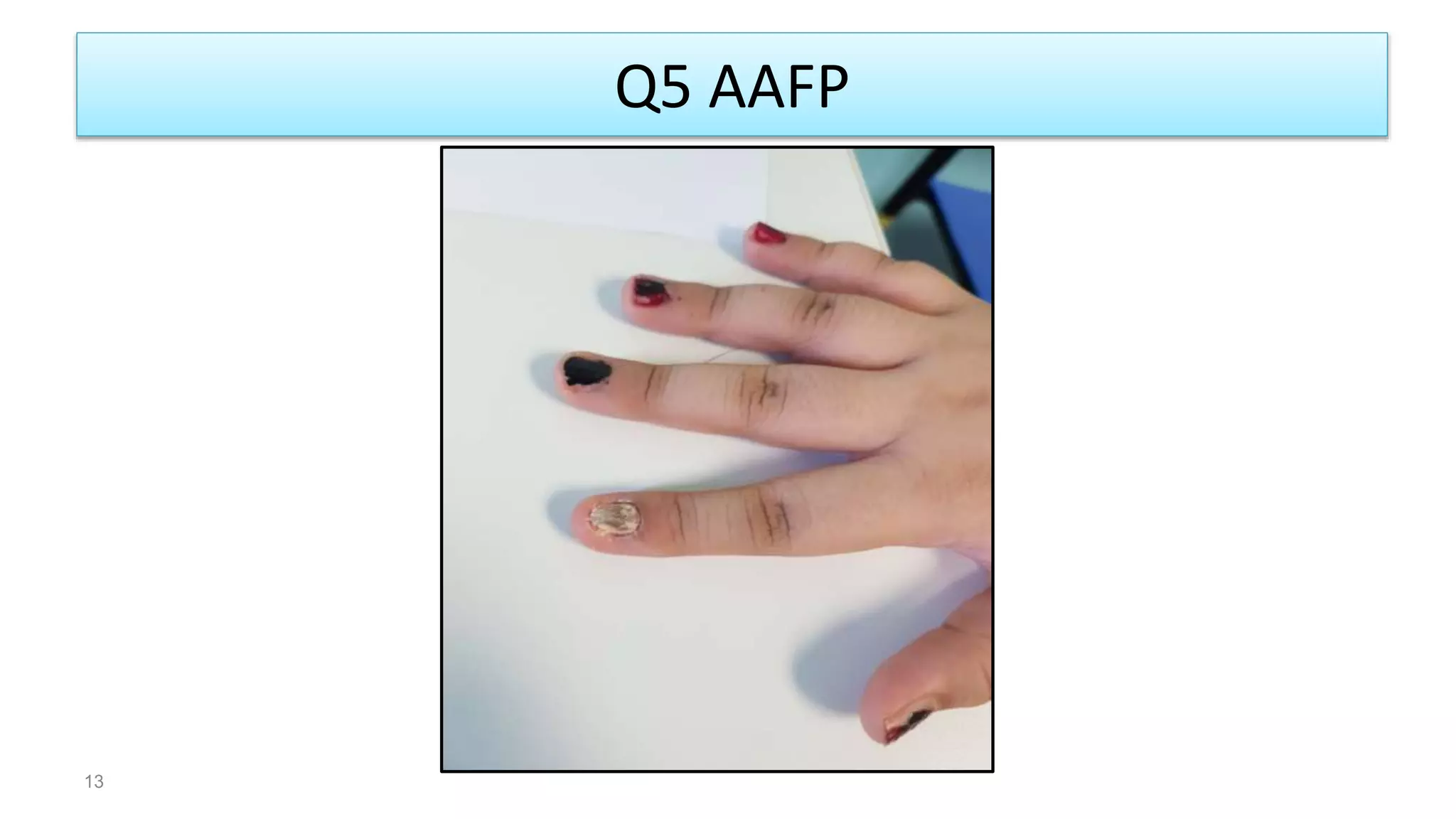
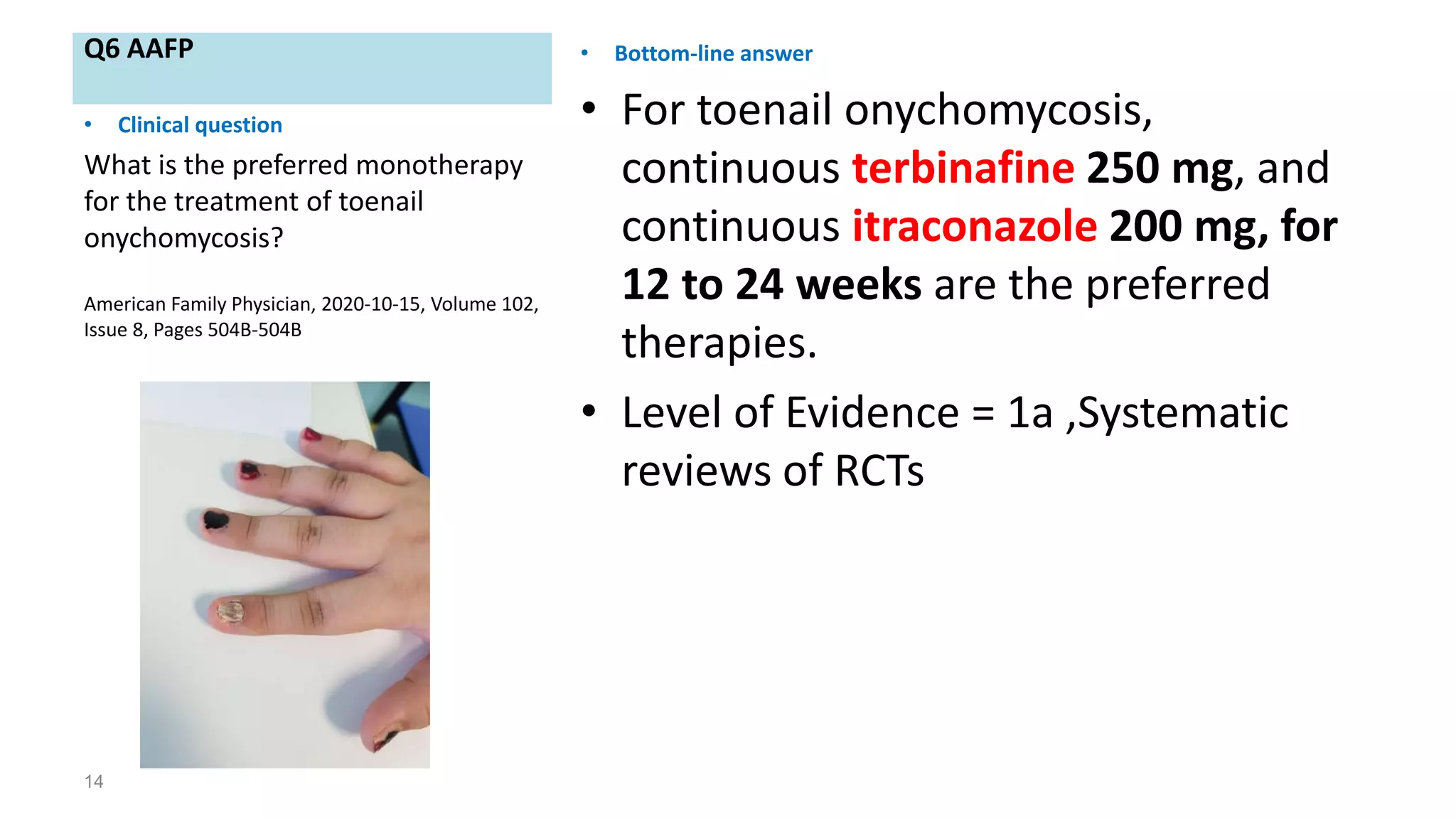
Q6 AAFP • Bottom-line answer
• For toenail onychomycosis,
continuous terbinafine 250 mg, and
continuous itraconazole 200 mg, for
12 to 24 weeks are the preferred
therapies.
• Level of Evidence = 1a ,Systematic
reviews of RCTs
14
• Clinical question
What is the preferred monotherapy
for the treatment of toenail
onychomycosis?
American Family Physician, 2020-10-15, Volume 102,
Issue 8, Pages 504B-504B
Q7 AAFP • Bottom-line answer
• Women with gestational diabetes
should be screened for diabetes with
a 75-g two-hour fasting oral glucose
tolerance test at 4-12 weeks
postpartum.
• Level of evidence : C
15
• Clinical question
When should women with
gestational diabetes mellitus receive
postpartum diabetes screening ?
Am Fam Physician. 2019 Oct 15;100(8):485-491
Q8 AAFP • Bottom-line answer
• NSAIDs are effective for reducing heavy menstrual
bleeding in premenopausal patients with
menorrhagia when compared with placebo.
• However, NSAIDs are less effective than
tranexamic acid and the levonorgestrel-releasing
intrauterine system (Mirena) for reducing heavy
menstrual bleeding.
• Strength of Recommendation: B
16
• Clinical question
Do NSAIDs effectively reduce heavy
menstrual bleeding in
premenopausal patients?
American Family Physician, 2020-08-01, Volume 102,
Issue 3
17
Q1
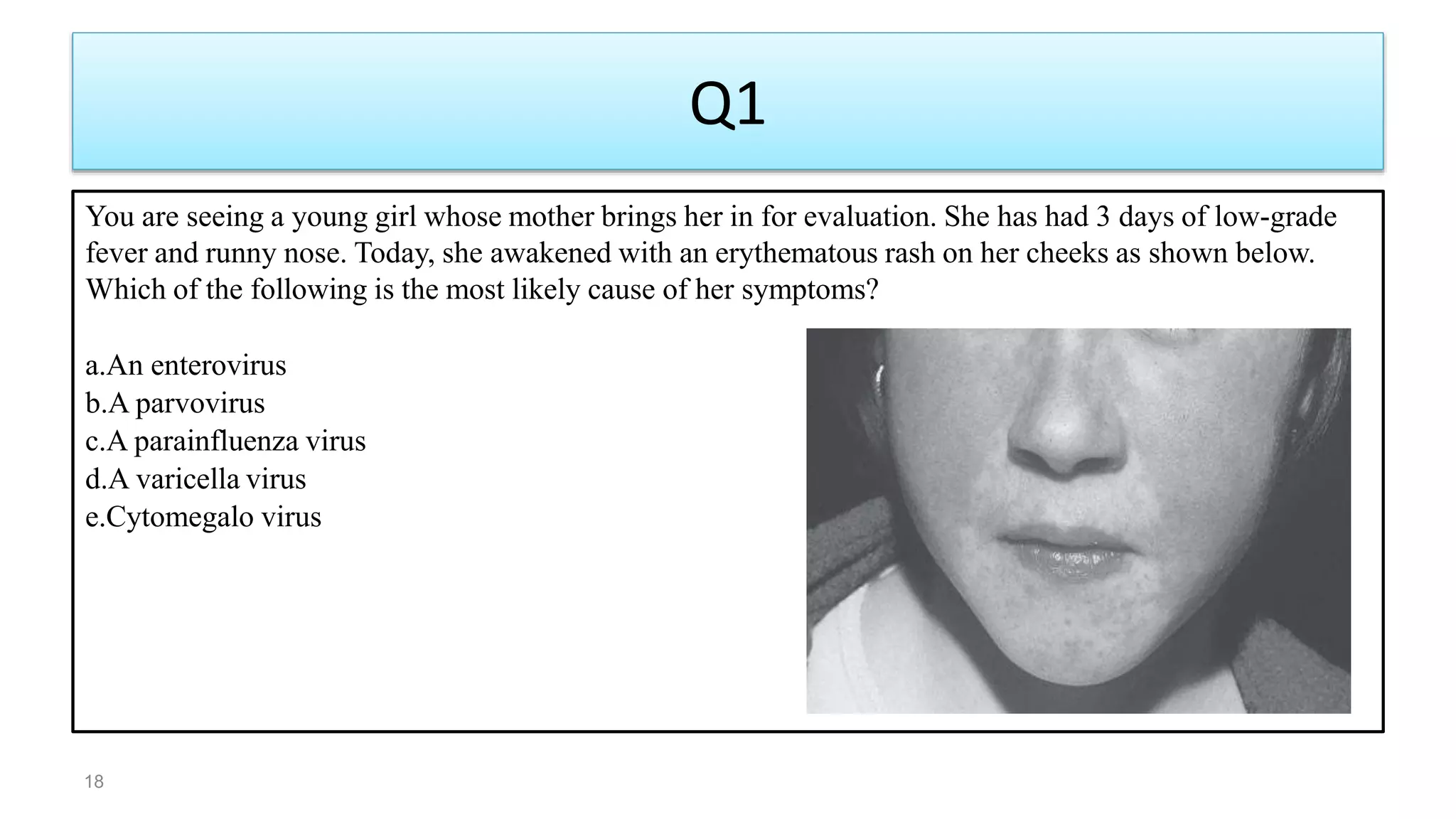
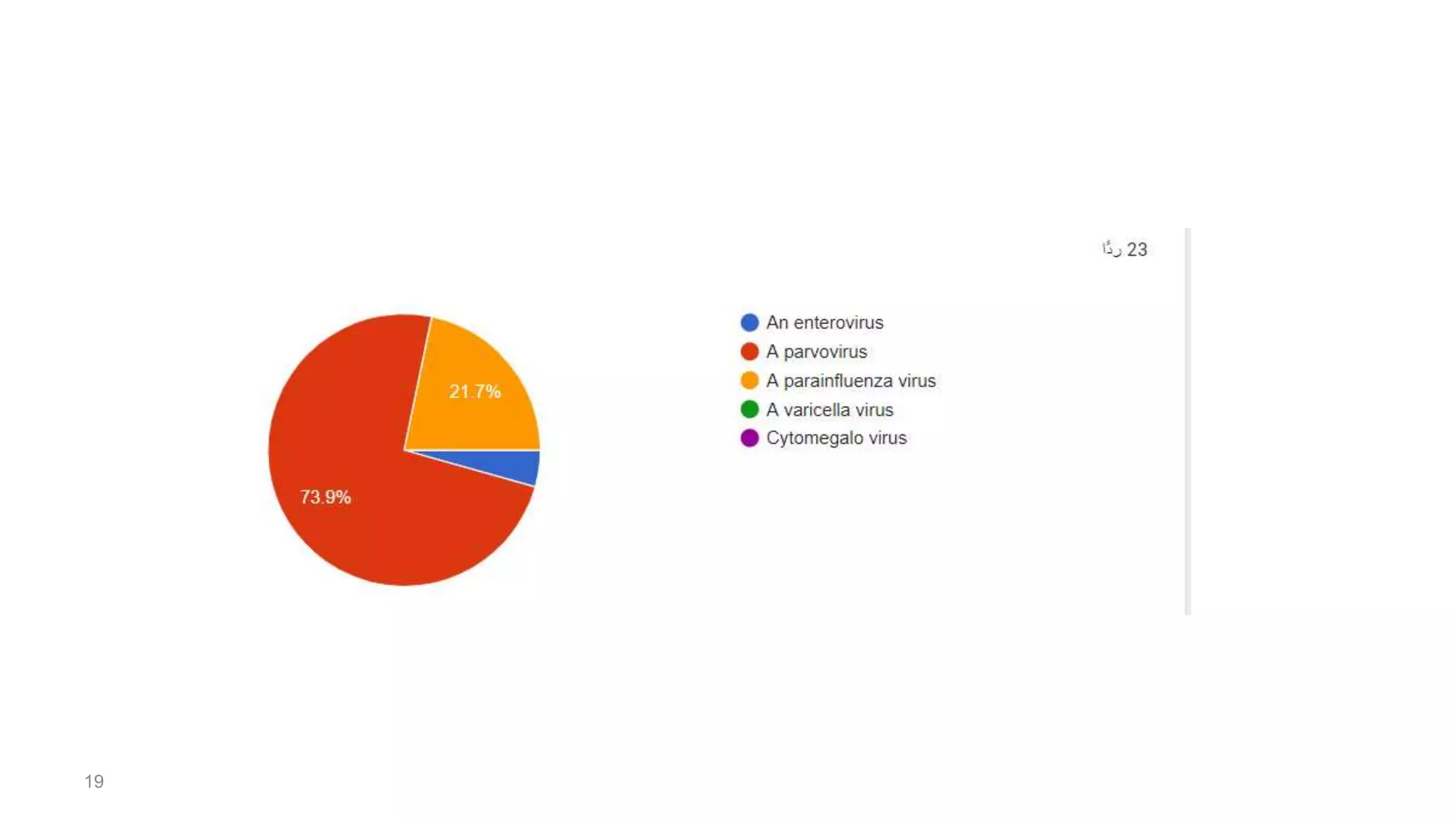
You are seeing a young girl whose mother brings her in for evaluation. She has had 3 days of low-grade
fever and runny nose. Today, she awakened with an erythematous rash on her cheeks as shown below.
Which of the following is the most likely cause of her symptoms?
a.An enterovirus
b.A parvovirus
c.A parainfluenza virus
d.A varicella virus
e.Cytomegalo virus
18
19
Q1
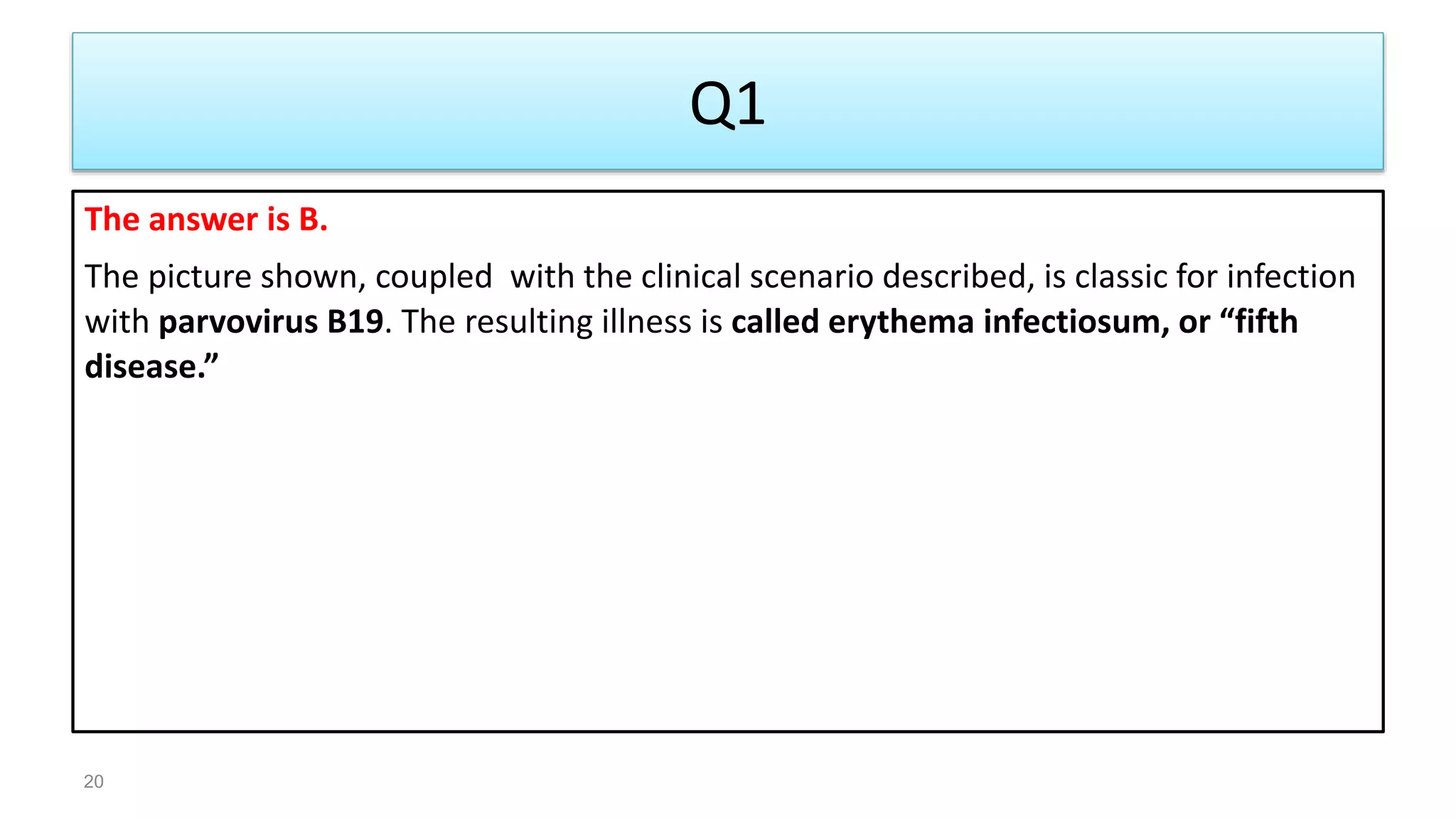
The answer is B.
The picture shown, coupled with the clinical scenario described, is classic for infection
with parvovirus B19. The resulting illness is called erythema infectiosum, or “fifth
disease.”
20
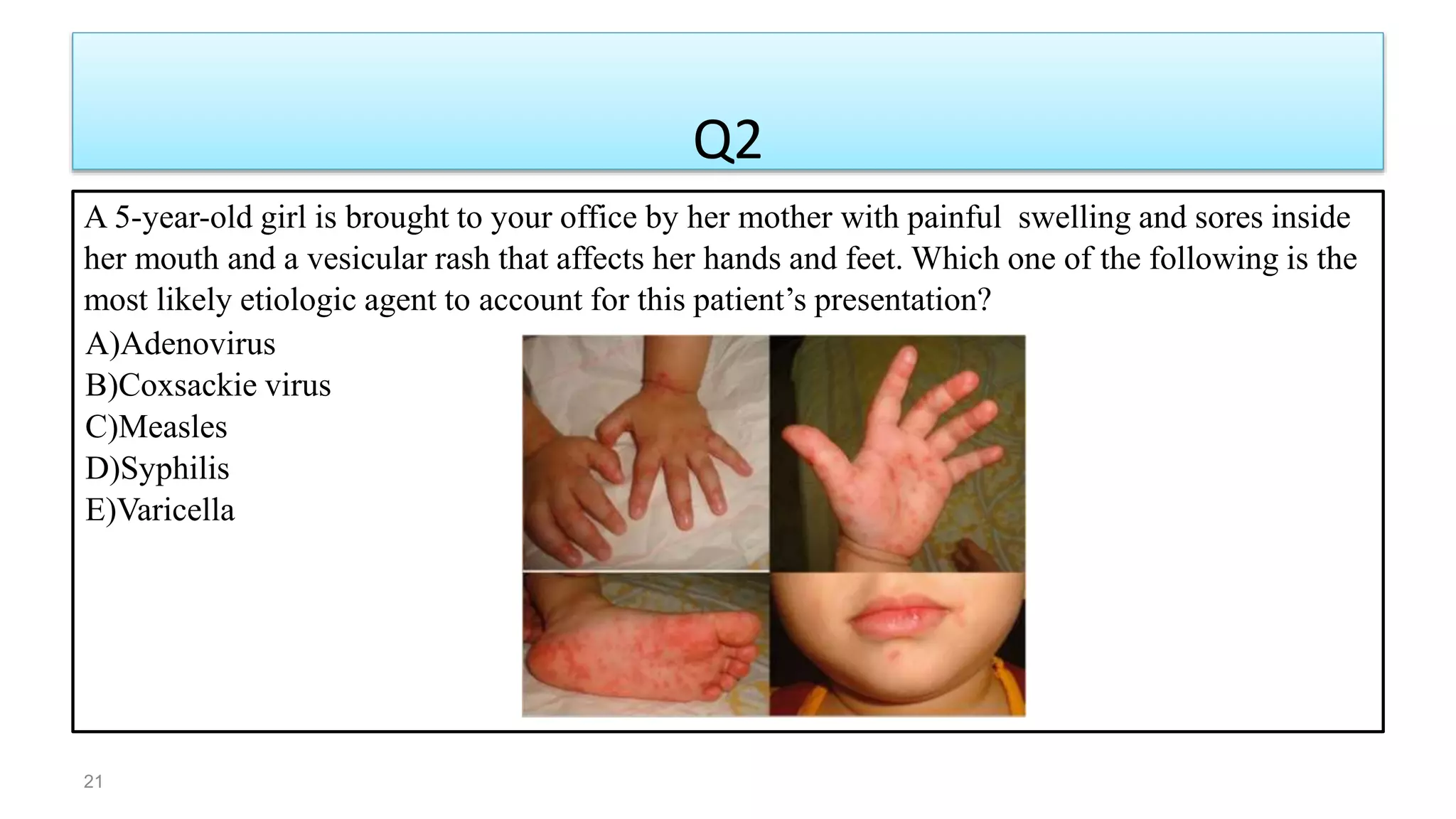
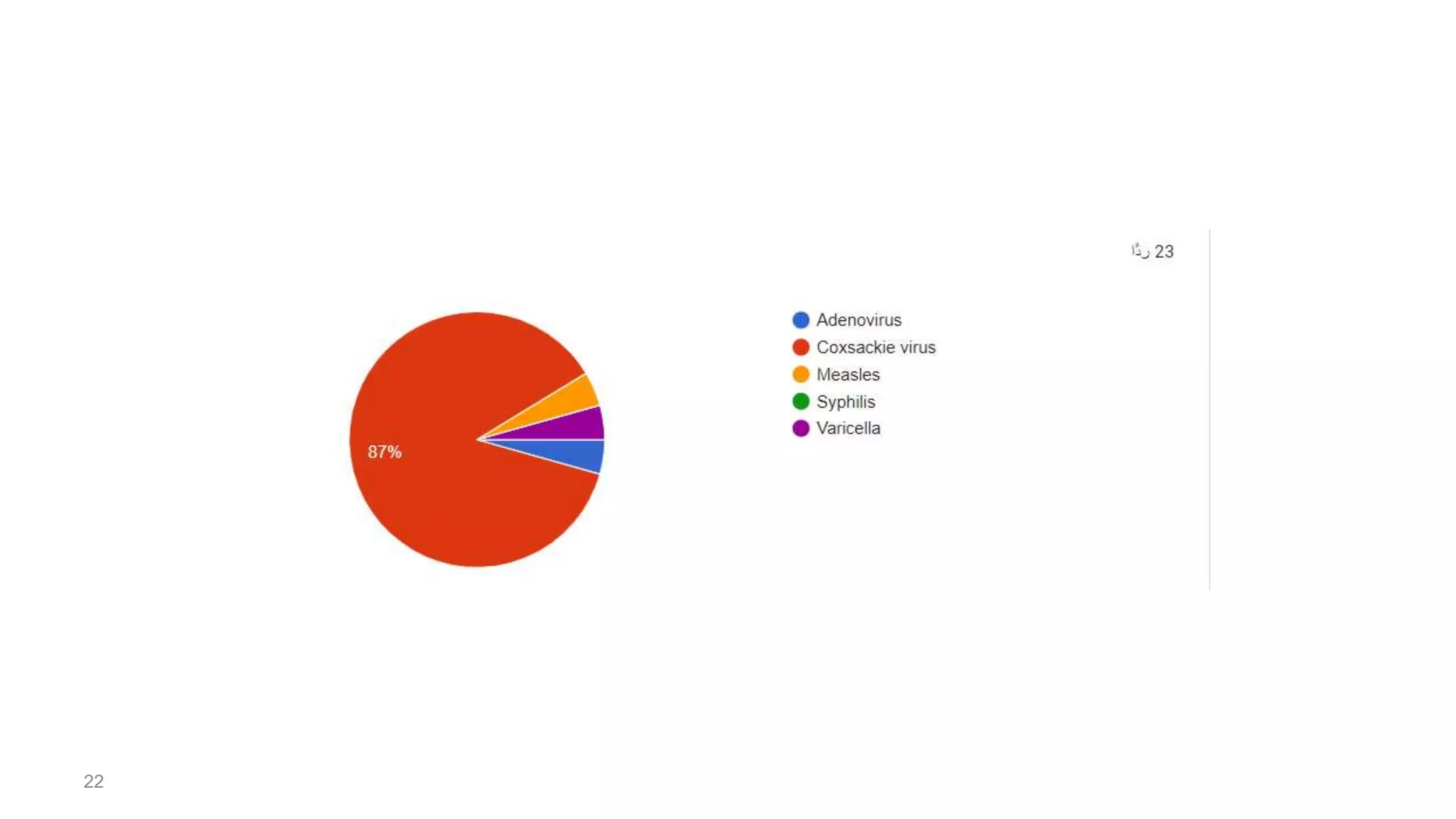
A 5-year-old girl is brought to your office by her mother with painful swelling and sores inside
her mouth and a vesicular rash that affects her hands and feet. Which one of the following is the
most likely etiologic agent to account for this patient’s presentation?
A)Adenovirus
B)Coxsackie virus
C)Measles
D)Syphilis
E)Varicella
Q2
21
22
Q2
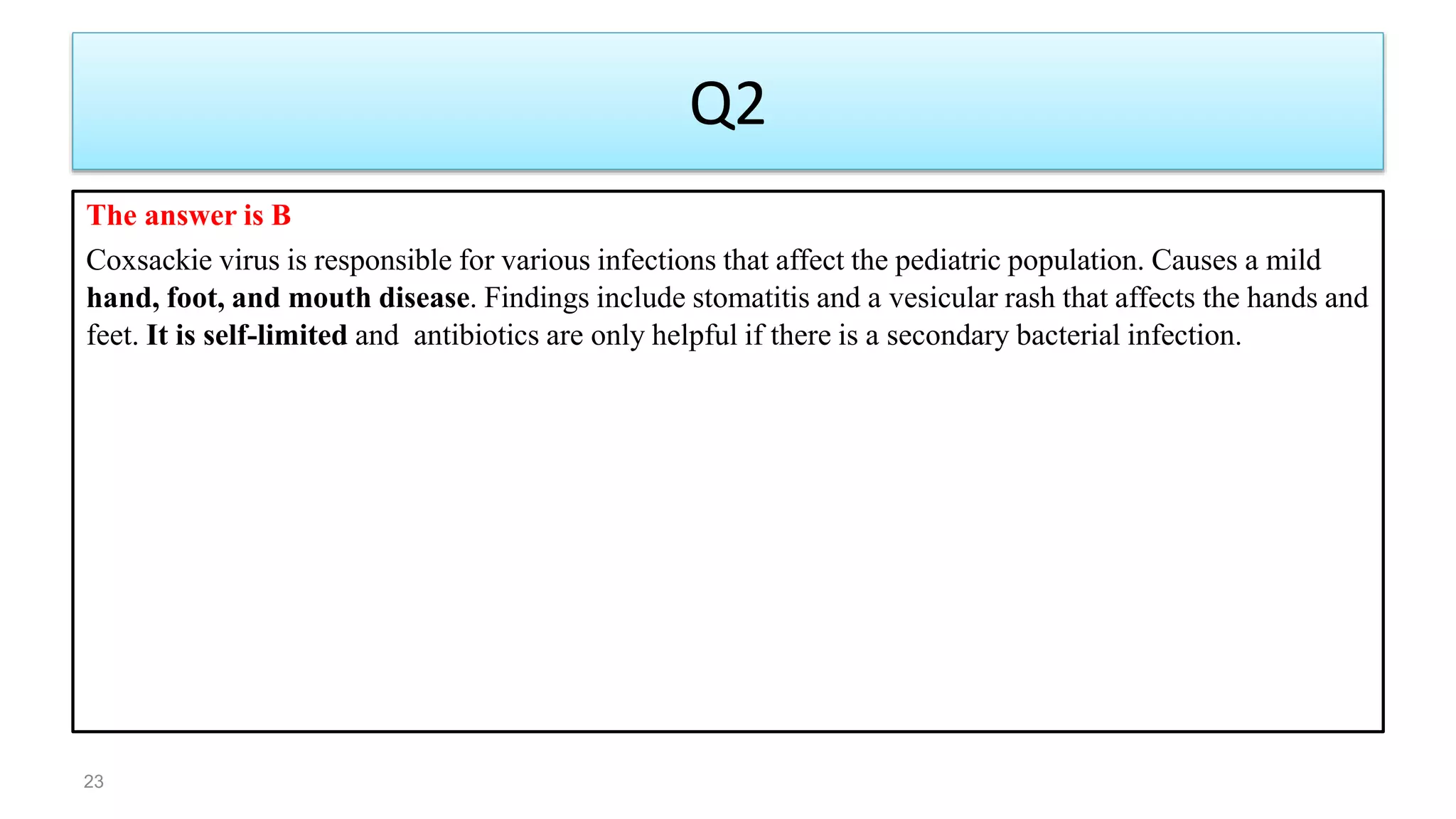
The answer is B
Coxsackie virus is responsible for various infections that affect the pediatric population. Causes a mild
hand, foot, and mouth disease. Findings include stomatitis and a vesicular rash that affects the hands and
feet. It is self-limited and antibiotics are only helpful if there is a secondary bacterial infection.
23
Q3
24
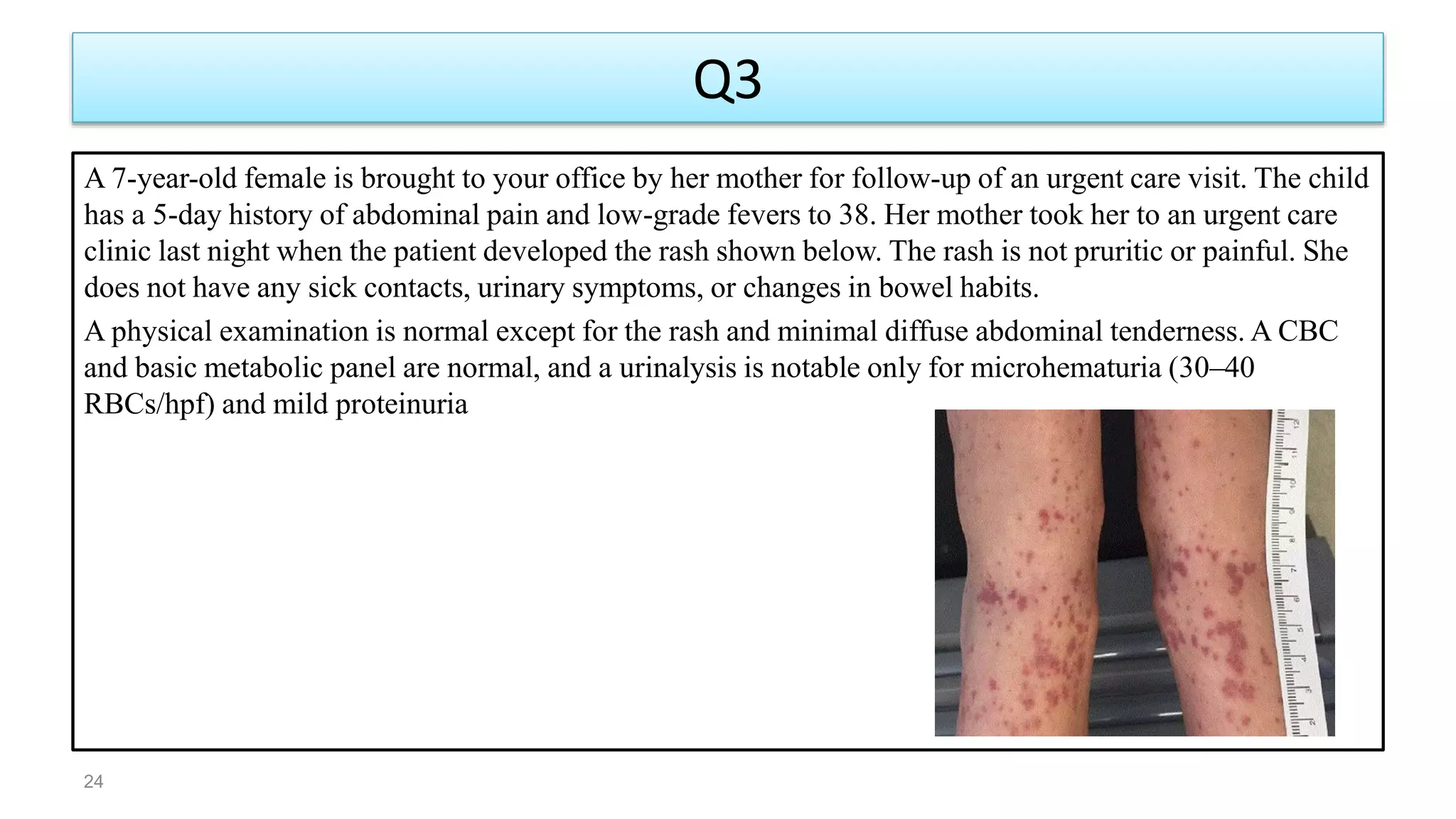
A 7-year-old female is brought to your office by her mother for follow-up of an urgent care visit. The child
has a 5-day history of abdominal pain and low-grade fevers to 38. Her mother took her to an urgent care
clinic last night when the patient developed the rash shown below. The rash is not pruritic or painful. She
does not have any sick contacts, urinary symptoms, or changes in bowel habits.
A physical examination is normal except for the rash and minimal diffuse abdominal tenderness. A CBC
and basic metabolic panel are normal, and a urinalysis is notable only for microhematuria (30–40
RBCs/hpf) and mild proteinuria
Q3
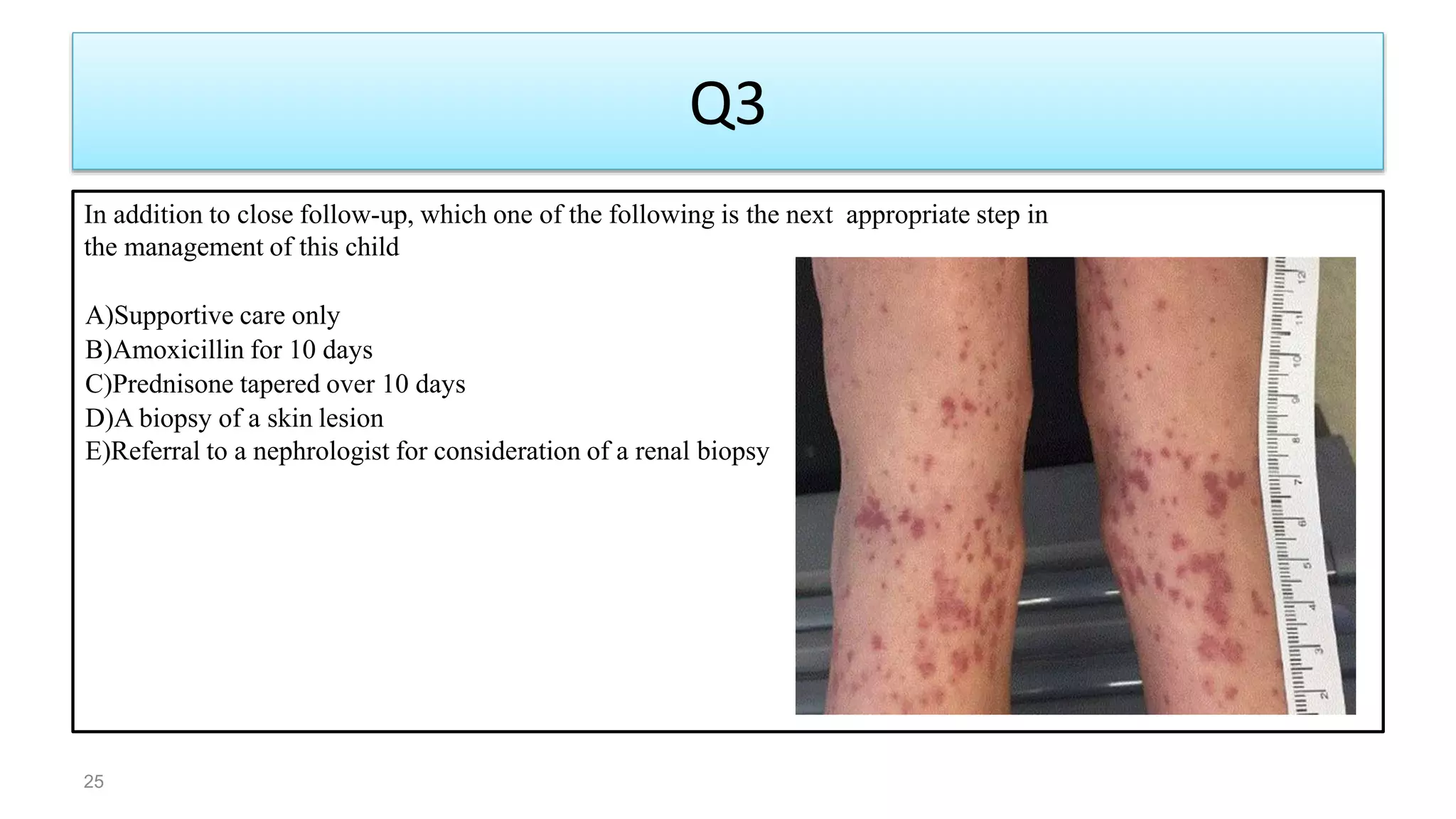
In addition to close follow-up, which one of the following is the next appropriate step in
the management of this child
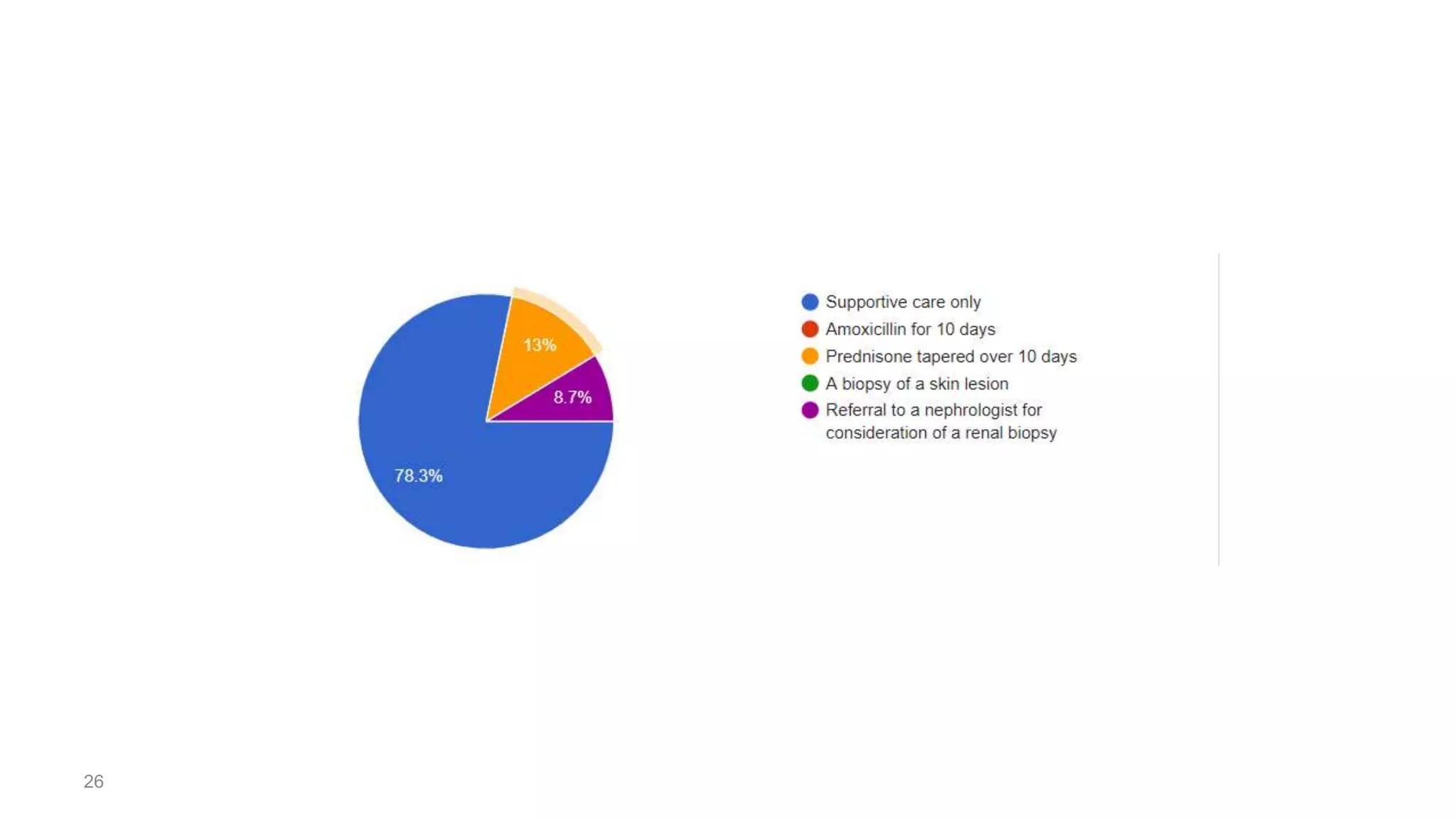
A)Supportive care only
B)Amoxicillin for 10 days
C)Prednisone tapered over 10 days
D)A biopsy of a skin lesion
E)Referral to a nephrologist for consideration of a renal biopsy
25
26
Q3
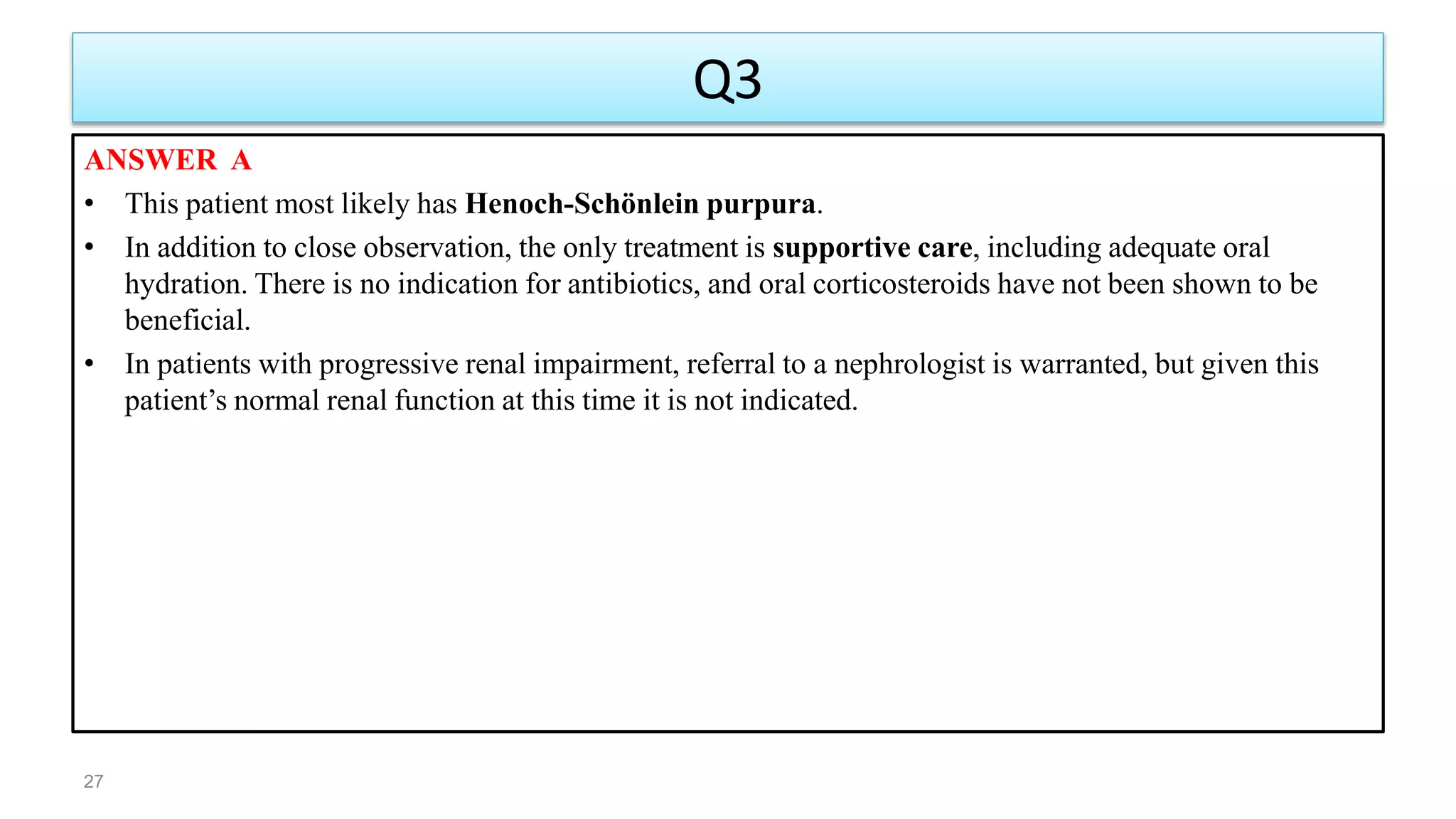
ANSWER A
• This patient most likely has Henoch-Schönlein purpura.
• In addition to close observation, the only treatment is supportive care, including adequate oral
hydration. There is no indication for antibiotics, and oral corticosteroids have not been shown to be
beneficial.
• In patients with progressive renal impairment, referral to a nephrologist is warranted, but given this
patient’s normal renal function at this time it is not indicated.
27
Q4
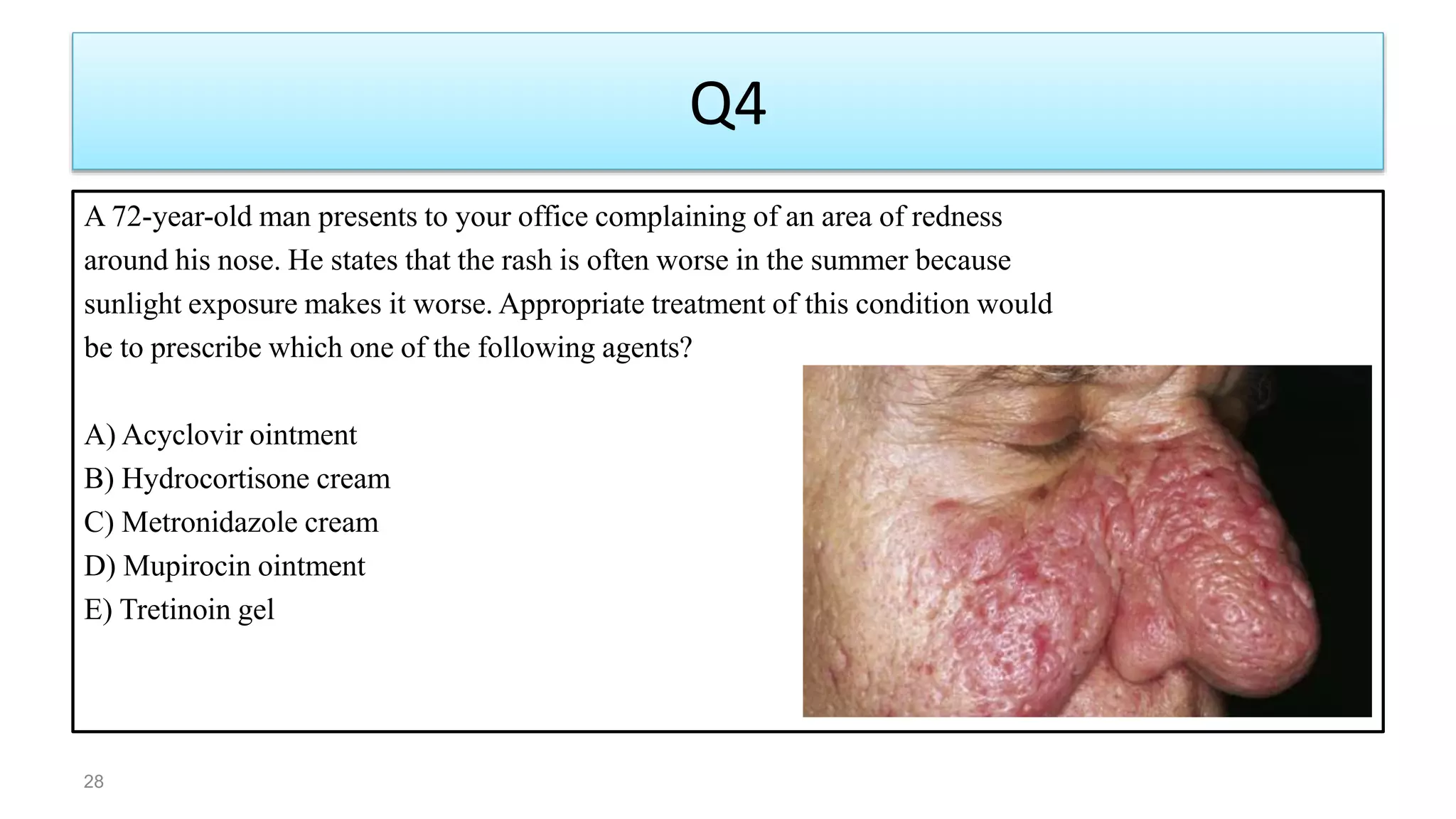
A 72-year-old man presents to your office complaining of an area of redness
around his nose. He states that the rash is often worse in the summer because
sunlight exposure makes it worse. Appropriate treatment of this condition would
be to prescribe which one of the following agents?
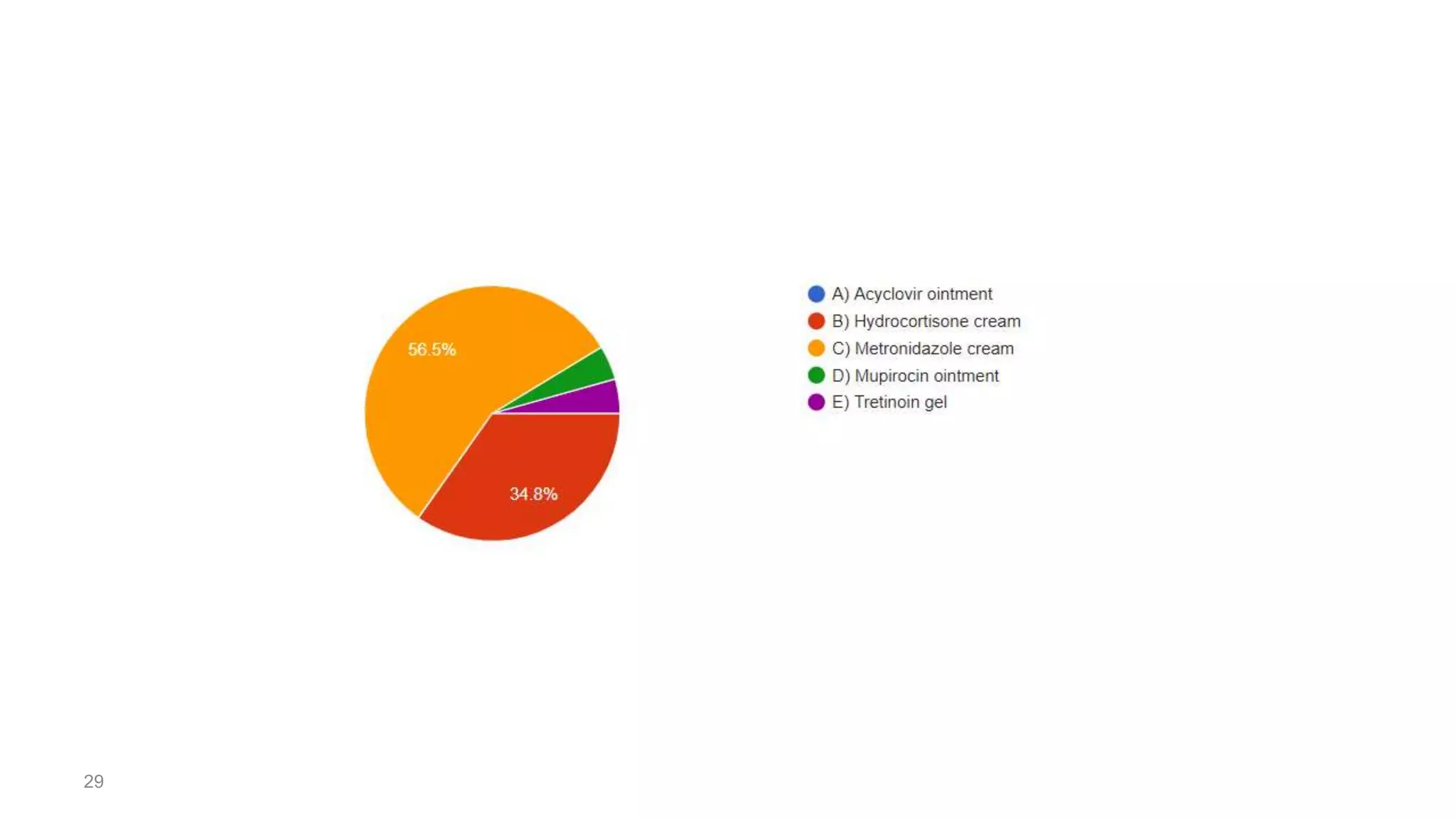
A) Acyclovir ointment
B) Hydrocortisone cream
C) Metronidazole cream
D) Mupirocin ointment
E) Tretinoin gel
28
29
Q4
The answer C
Rosacea is associated with areas of erythema and telangiectasia on the face. It is exacerbated by sunlight,
hot or spicy foods, and alcohol.
Treatment involves oral tetracycline or doxycycline. Topical metronidazole is also effective.
30
Q5
A 52-year-old male presents for evaluation of a long-standing facial rash. He reports that
the rash is itchy, with flaking and scaling around his mustache and nasolabial folds.
Which one of the following is most likely to be beneficial?
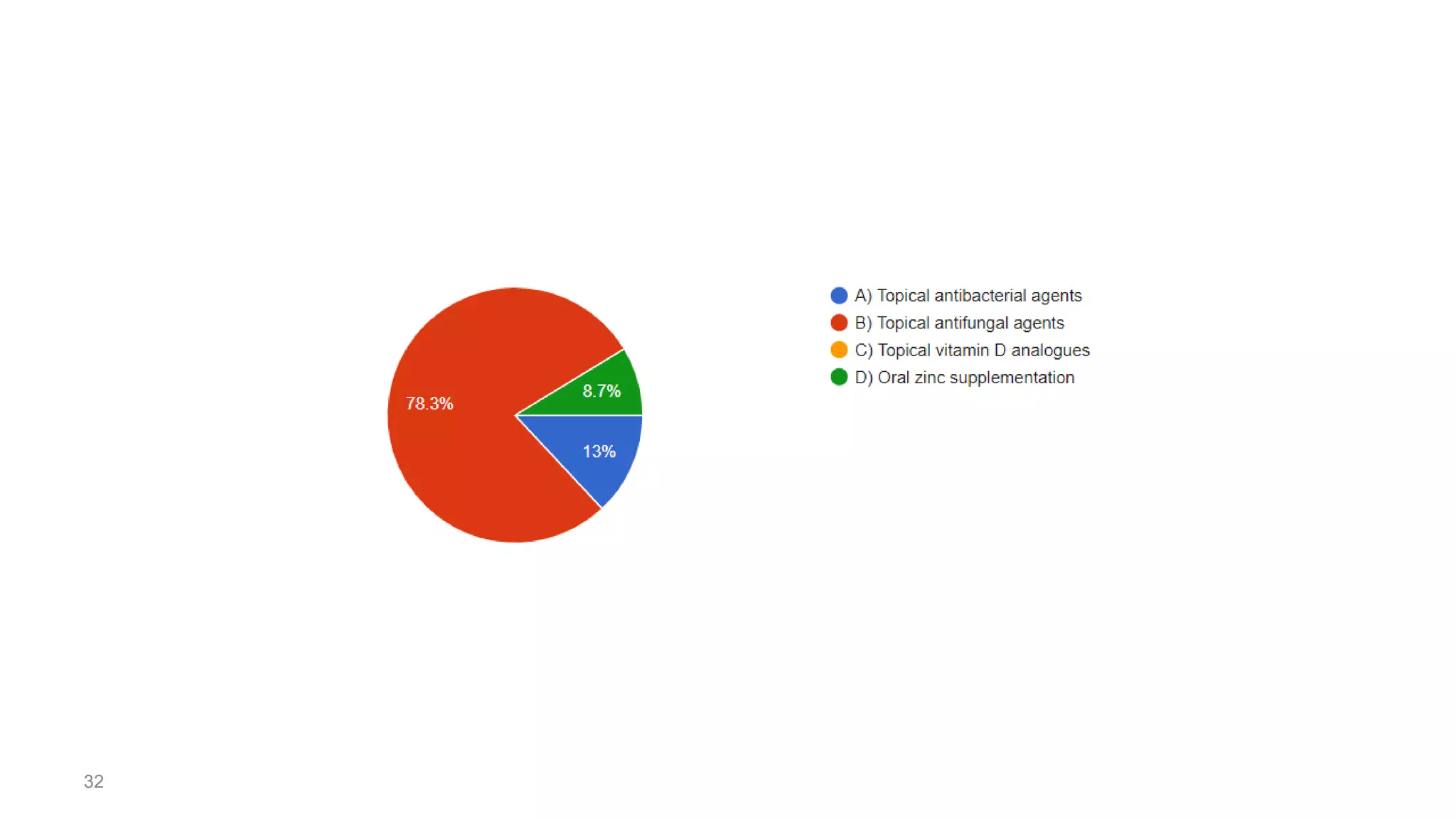
A) Topical antibacterial agents
B) Topical antifungal agents
C) Topical vitamin D analogues
D) Oral zinc supplementation
31
32
Q5
Answer is B
Seborrheic dermatitis is commonly seen in the office setting and affects the scalp, eyebrows, nasolabial
folds, and anterior chest. The affected skin appears as erythematous patches with white to yellow greasy
scales.
Topical antifungals are effective and recommended as first-line agents.
Topical low-potency corticosteroids are also effective alone or when used in combination with topical
antifungals, but they should be used carefully due to their adverse effects.
33
Q6
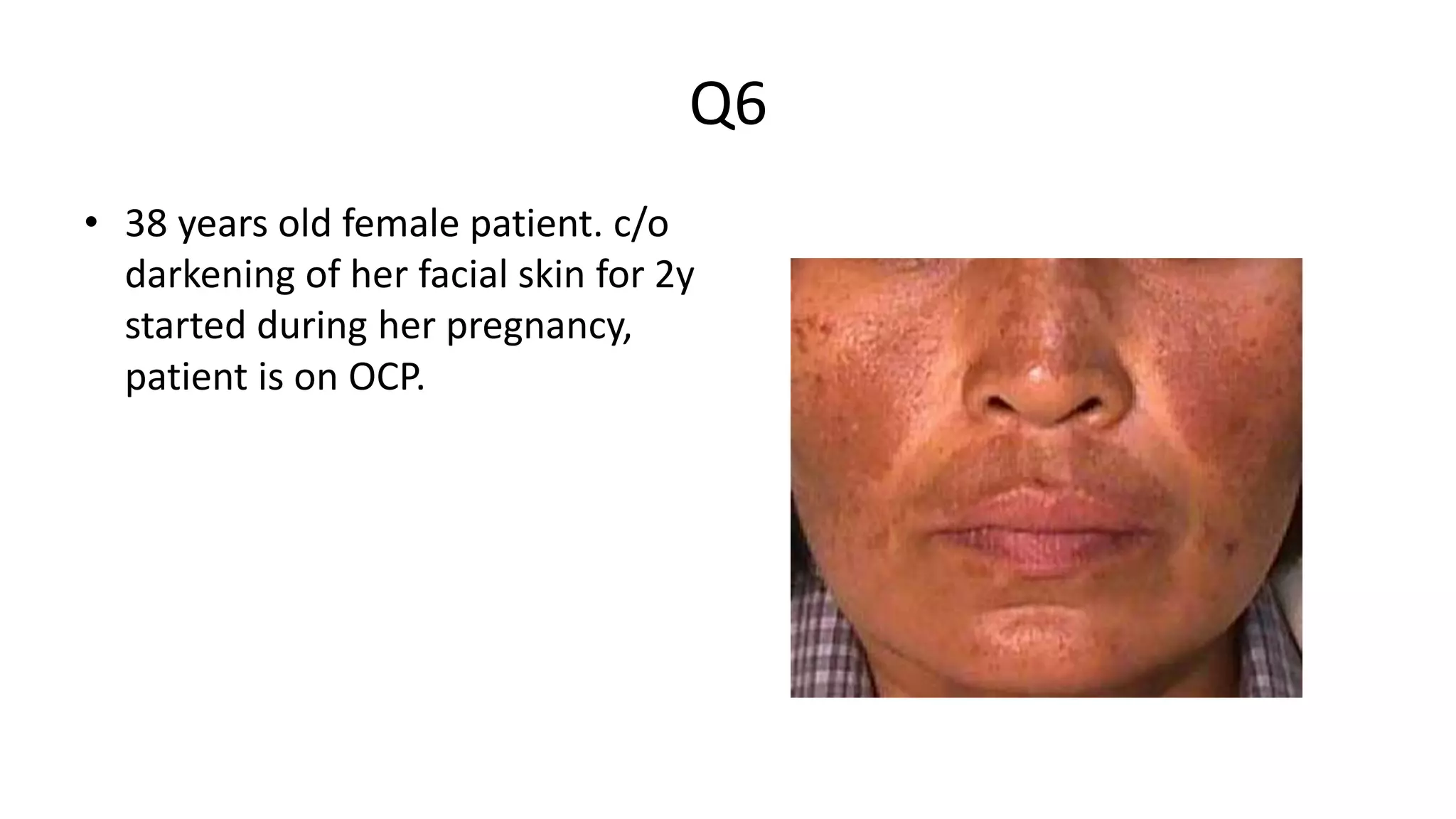
• 38 years old female patient. c/o
darkening of her facial skin for 2y
started during her pregnancy,
patient is on OCP.
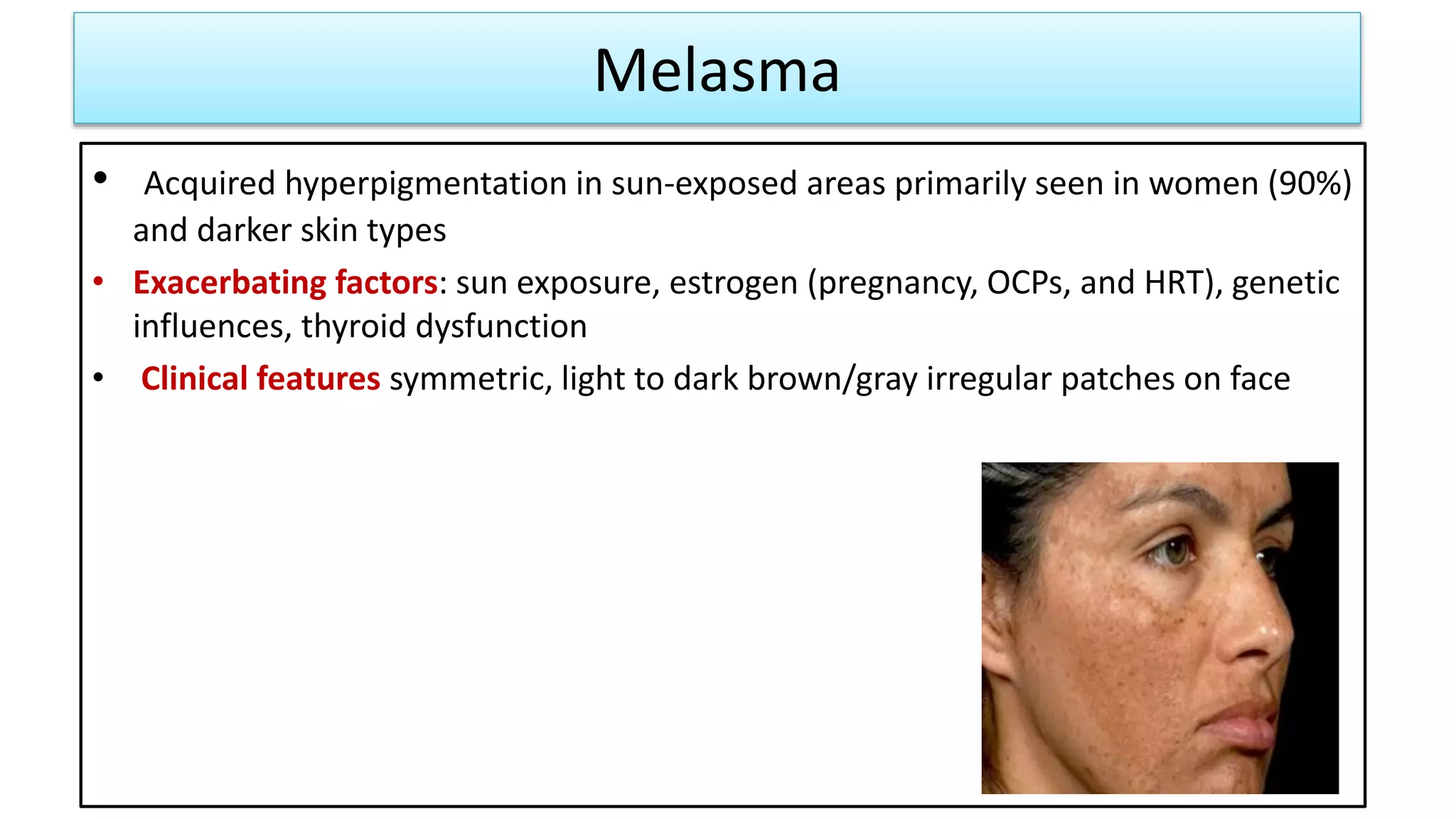
Melasma
• Acquired hyperpigmentation in sun-exposed areas primarily seen in women (90%)
and darker skin types
• Exacerbating factors: sun exposure, estrogen (pregnancy, OCPs, and HRT), genetic
influences, thyroid dysfunction
• Clinical features symmetric, light to dark brown/gray irregular patches on face
Q6
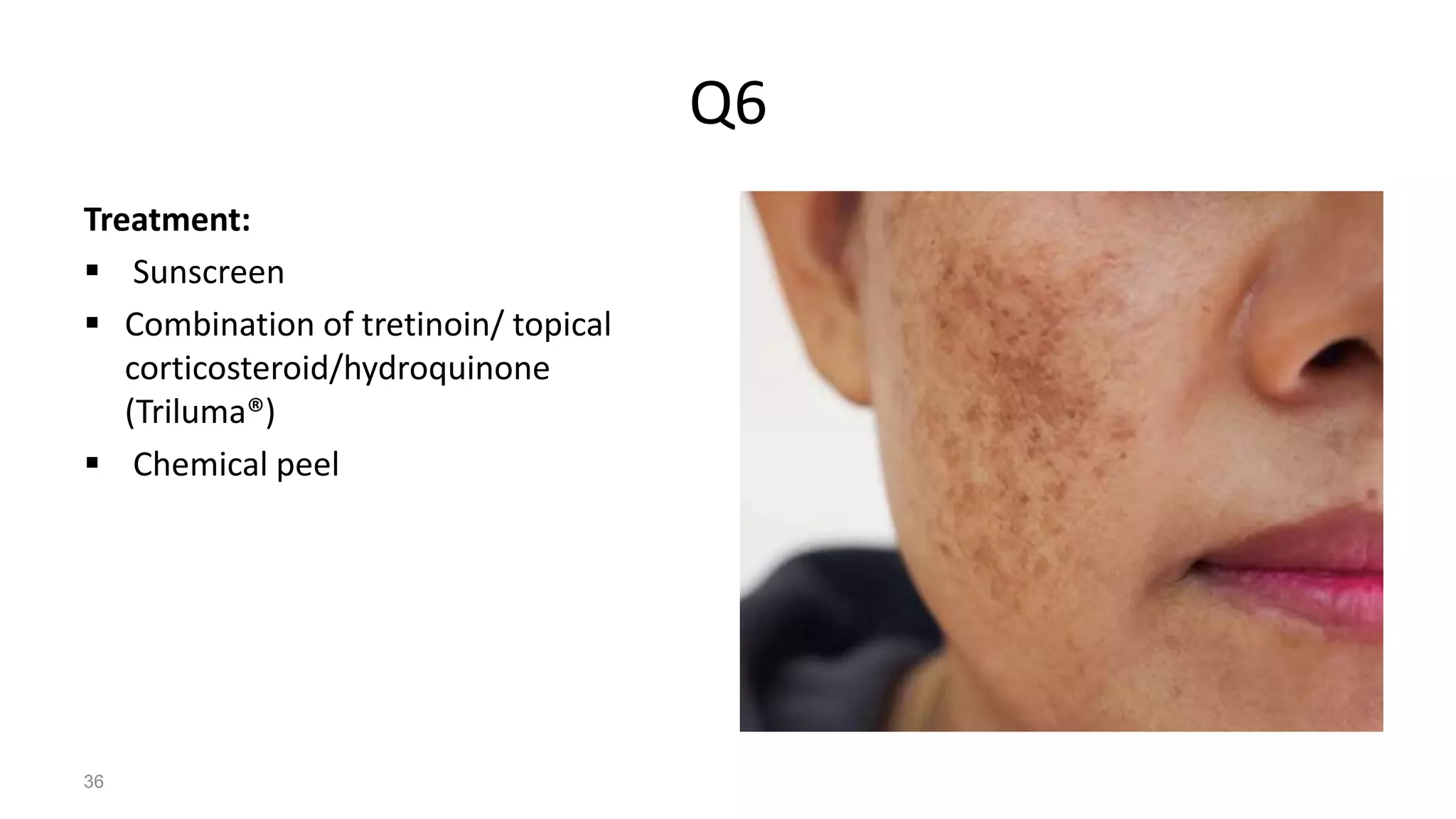
Treatment:
 Sunscreen
 Combination of tretinoin/ topical
corticosteroid/hydroquinone
(Triluma®)
 Chemical peel
36
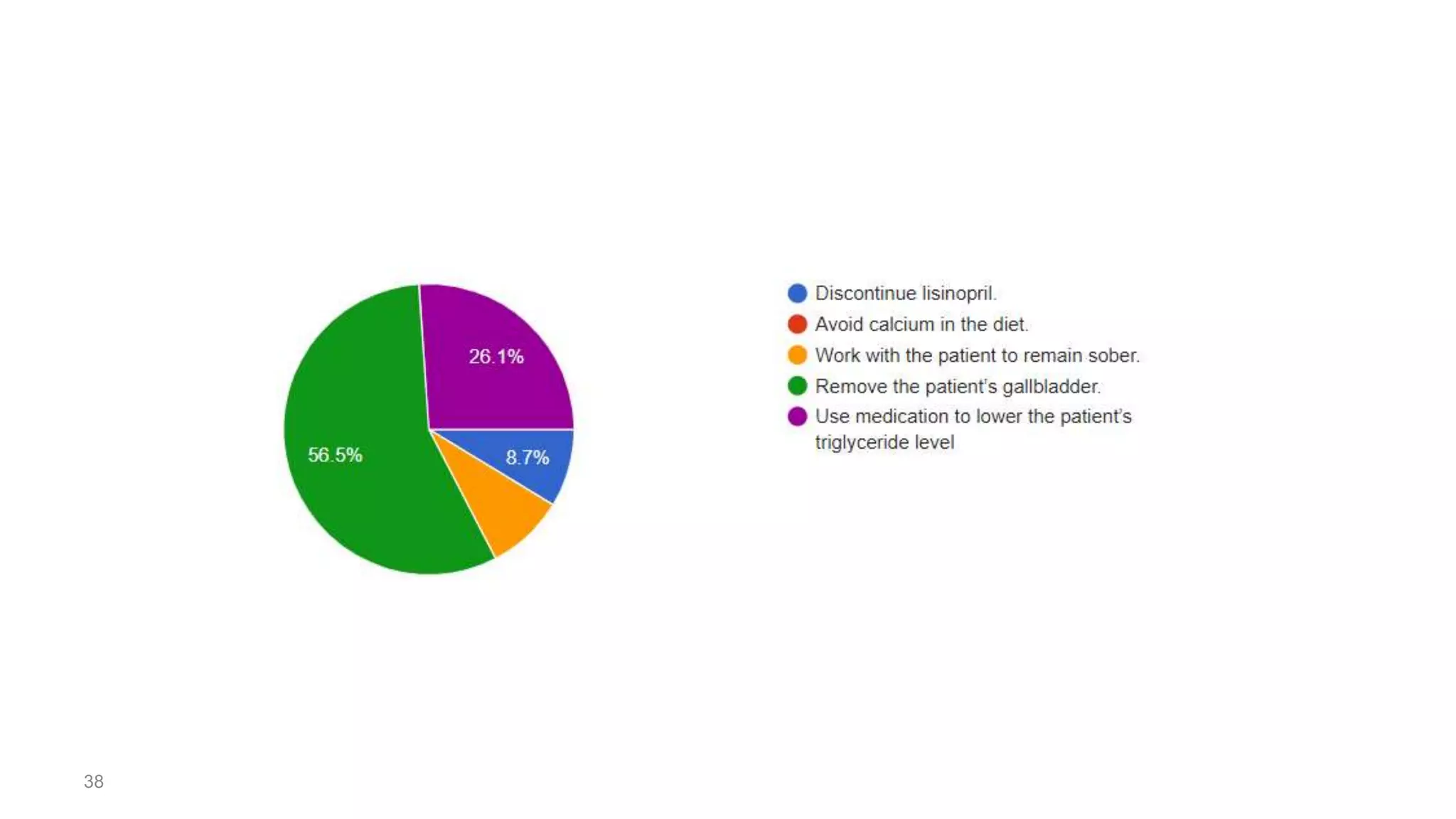
Q7
You are seeing a 44-year-old woman with hypertension controlled with lisinopril, who presents with
severe nausea and vomiting. She reports having months of occasional right upper quadrant pain, usually
after eating out with her husband, that resolves within a couple of hours. Over the last 24 hours, her
symptoms have been severe, and she is unable to eat or drink without vomiting. Her pain is significant,
radiates to her back, and is better when she leans forward. On laboratory evaluation, her amylase is
elevated, and her ALT is elevated. Which of the following would be the best approach to avoid recurrent
problems in her case?
A. Discontinue lisinopril.
B. Avoid calcium in the diet.
C. Work with the patient to remain sober.
D. Remove the patient’s gallbladder.
E. Use medication to lower the patient’s triglyceride level
37
38
Q7
The answer is D
• The patient described has pancreatitis, likely due to gallstones.
• While the laboratory findings in acute pancreatitis are often nonspecific, elevated serum amylase in
the right clinical setting is often suggestive.
• Radiographic evidence can help confirm the diagnosis.
• Elevated ALT is more suggestive of gallstone pancreatitis and is less likely when alcohol or
hypertriglyceridemia is the cause.
• ACE inhibitors are an uncommon cause of pancreatitis.
39
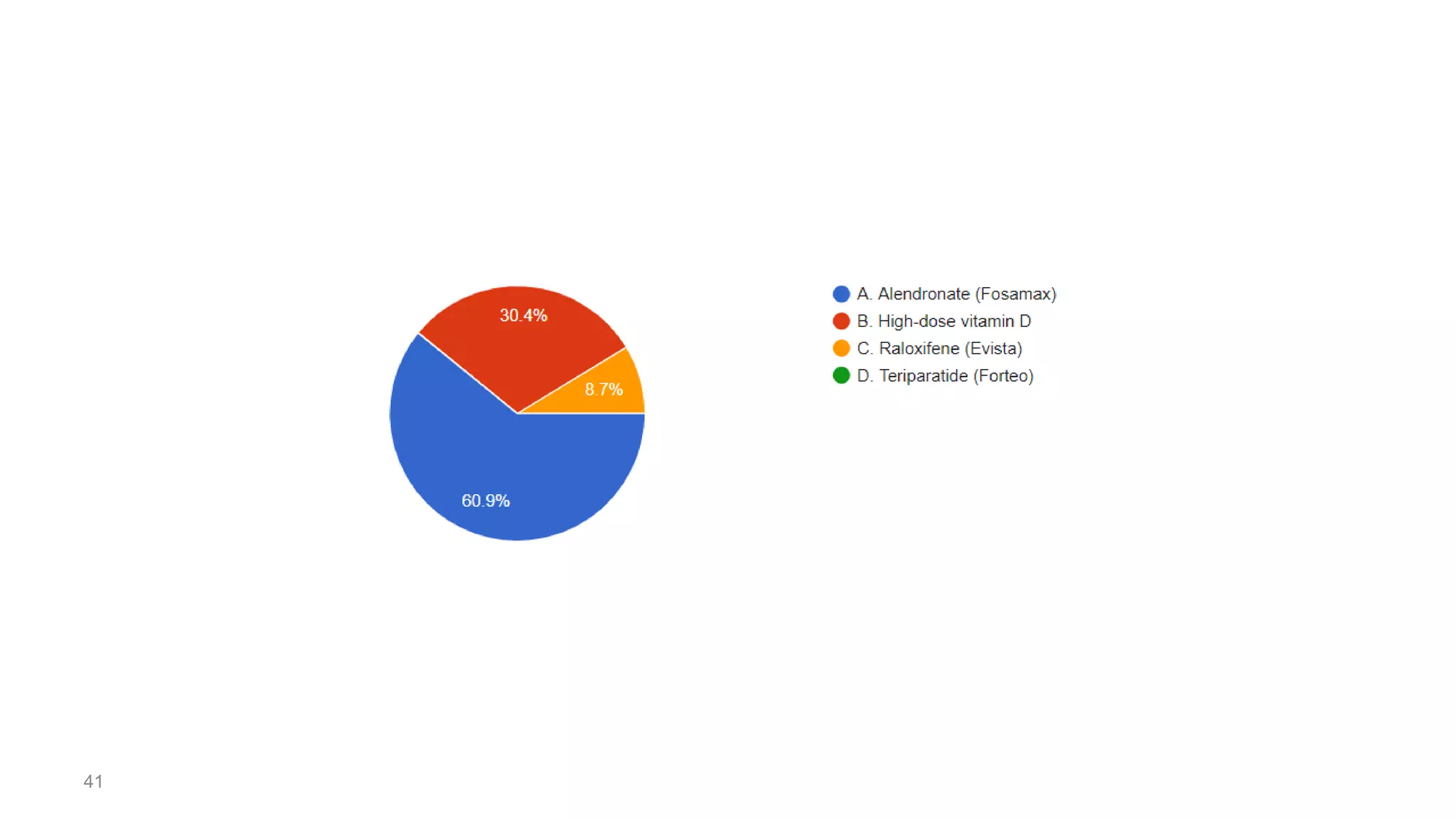
Q8
A 67-year-old male diagnosed with polymyalgia rheumatica is started on long-
term prednisone therapy. Which one of the following is the recommended first-
line agent to prevent steroid-induced osteoporosis?
A. Alendronate (Fosamax)
B. High-dose vitamin D
C. Raloxifene (Evista)
D. Teriparatide (Forteo)
40
41
Q8
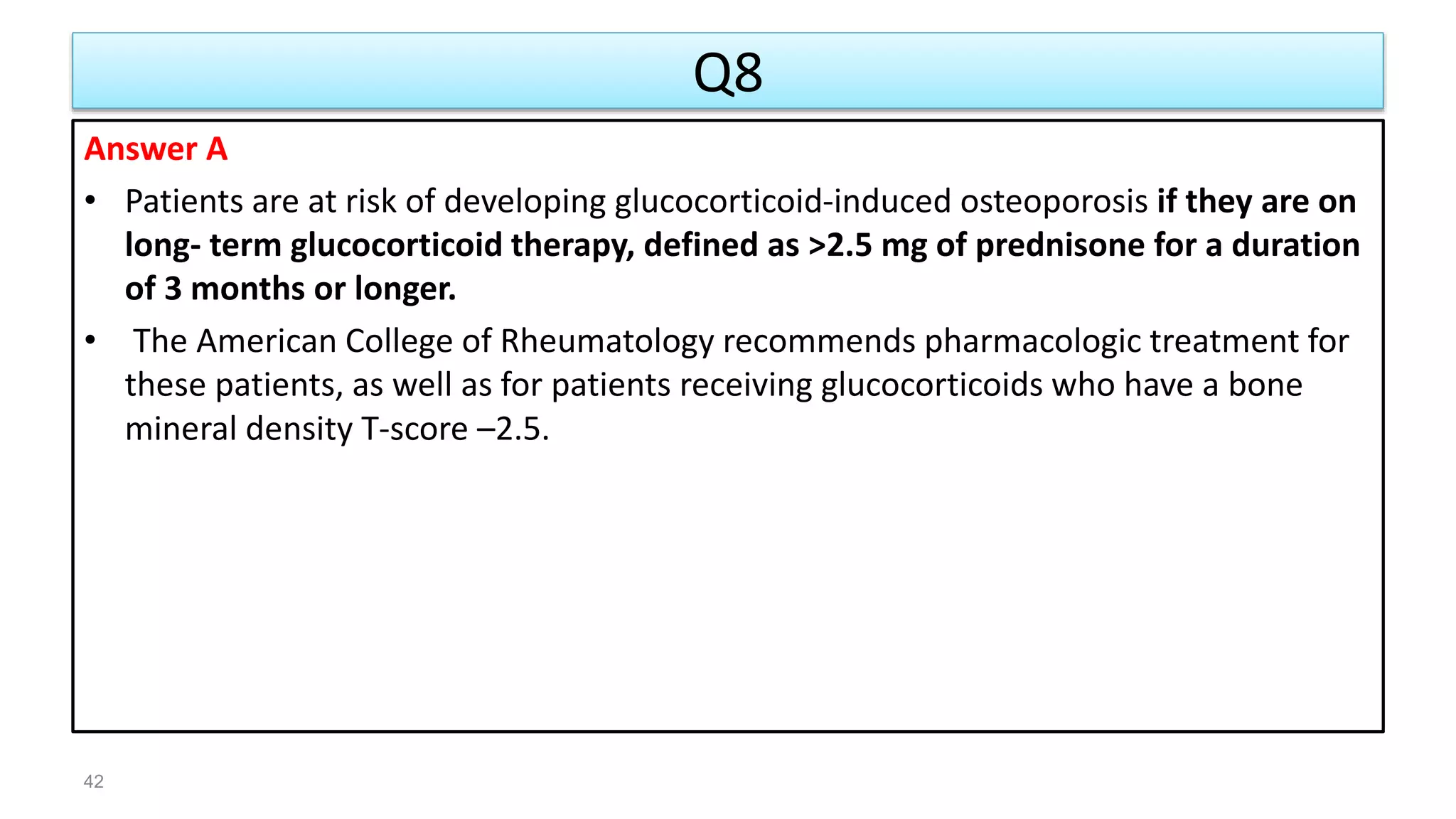
Answer A
• Patients are at risk of developing glucocorticoid-induced osteoporosis if they are on
long- term glucocorticoid therapy, defined as >2.5 mg of prednisone for a duration
of 3 months or longer.
• The American College of Rheumatology recommends pharmacologic treatment for
these patients, as well as for patients receiving glucocorticoids who have a bone
mineral density T-score –2.5.
42
Q9
A 22-year-old male presents to your office the morning after falling onto his outstretched right hand. He
has a deep, dull ache in the right wrist on the radial side. The pain is worsened by gripping and
squeezing. On examination there is some wrist fullness and the wrist is tender to palpation over the
anatomic snuffbox. Radiographs of the wrist are negative. Which one of the following would be most
appropriate at this time?
A. Rest, ice, compression, elevation, and NSAIDs with no specific follow-up
B. Rest, ice, compression, elevation, and NSAIDs with a follow-up examination in 2 weeks
C. Placement of a thumb spica splint, with a follow-up examination in 2 weeks
D. CT of the wrist to detect an occult fracture
E. Ultrasonography of the wrist to detect a ligament injury
43
44
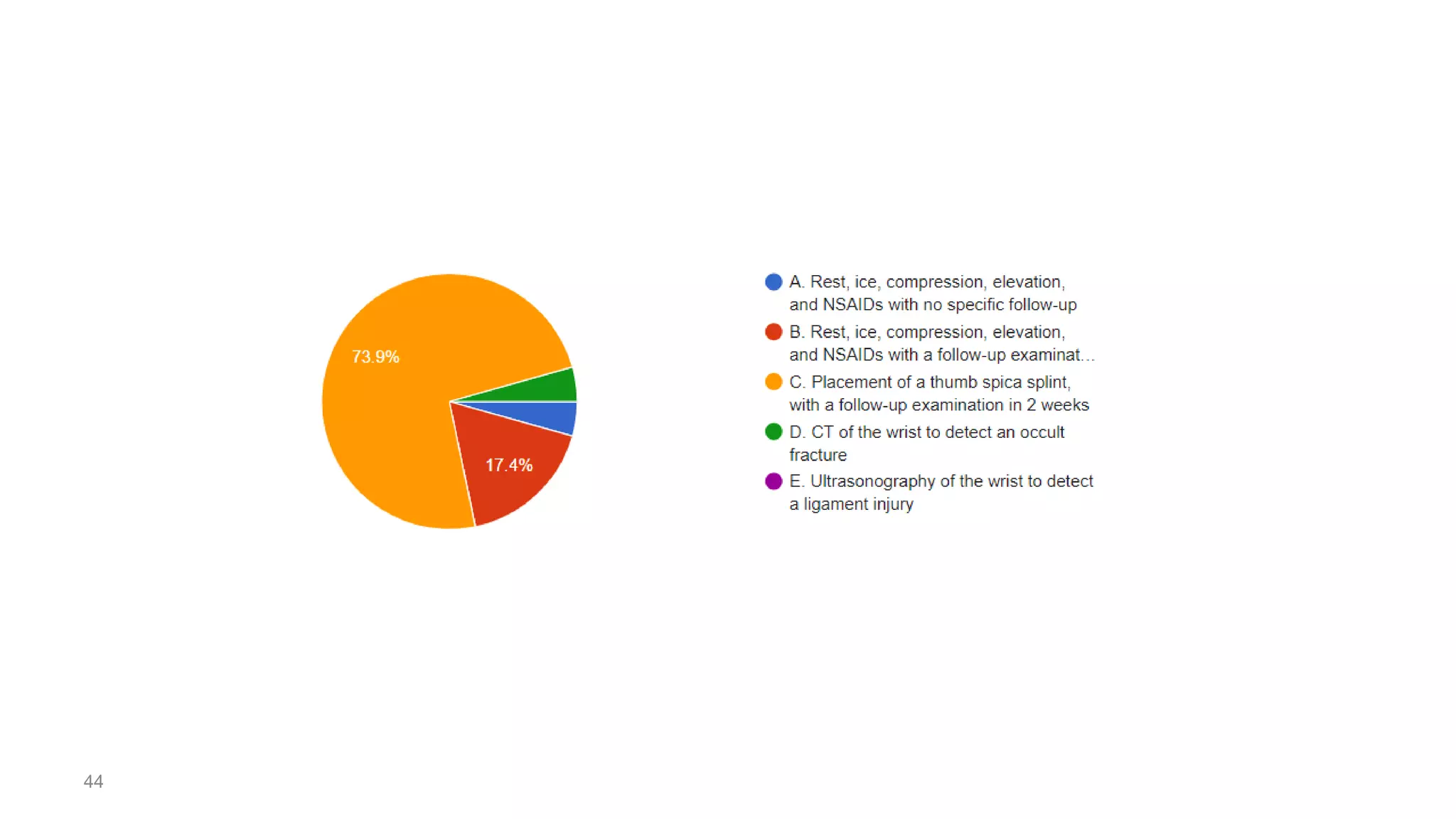
Q9
Answer C
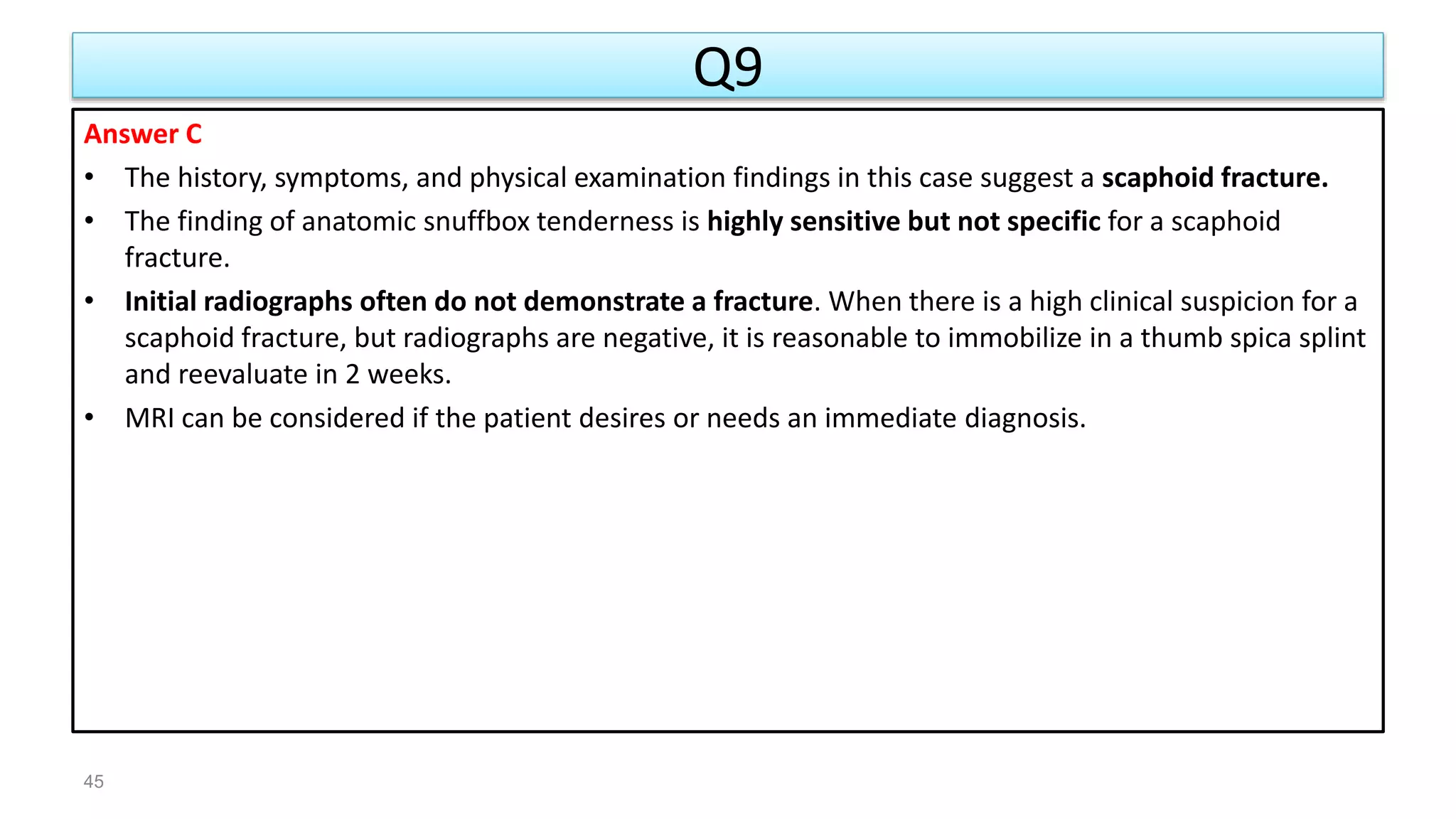
• The history, symptoms, and physical examination findings in this case suggest a scaphoid fracture.
• The finding of anatomic snuffbox tenderness is highly sensitive but not specific for a scaphoid
fracture.
• Initial radiographs often do not demonstrate a fracture. When there is a high clinical suspicion for a
scaphoid fracture, but radiographs are negative, it is reasonable to immobilize in a thumb spica splint
and reevaluate in 2 weeks.
• MRI can be considered if the patient desires or needs an immediate diagnosis.
45
Q10
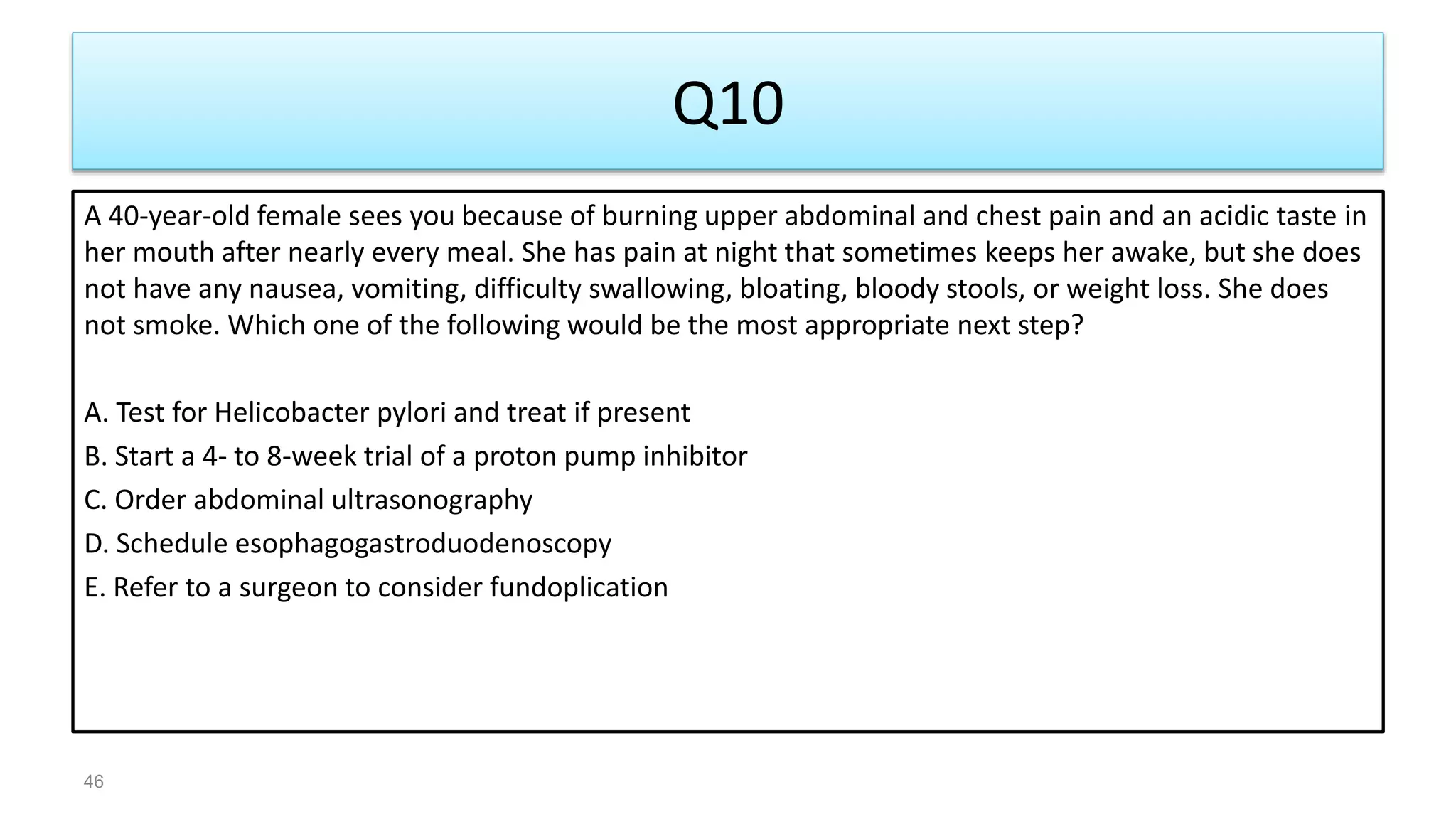
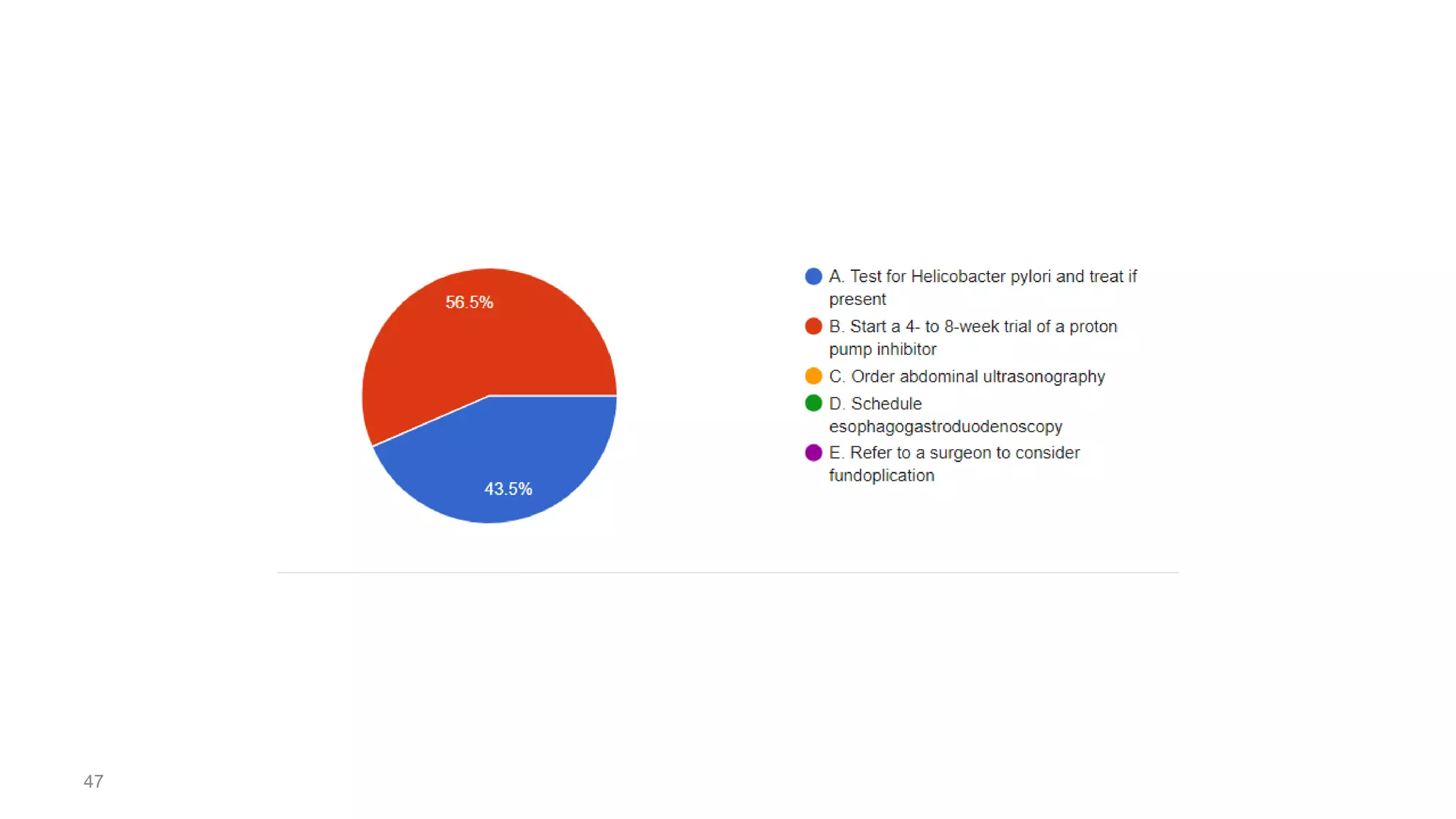
A 40-year-old female sees you because of burning upper abdominal and chest pain and an acidic taste in
her mouth after nearly every meal. She has pain at night that sometimes keeps her awake, but she does
not have any nausea, vomiting, difficulty swallowing, bloating, bloody stools, or weight loss. She does
not smoke. Which one of the following would be the most appropriate next step?
A. Test for Helicobacter pylori and treat if present
B. Start a 4- to 8-week trial of a proton pump inhibitor
C. Order abdominal ultrasonography
D. Schedule esophagogastroduodenoscopy
E. Refer to a surgeon to consider fundoplication
46
47
Q10
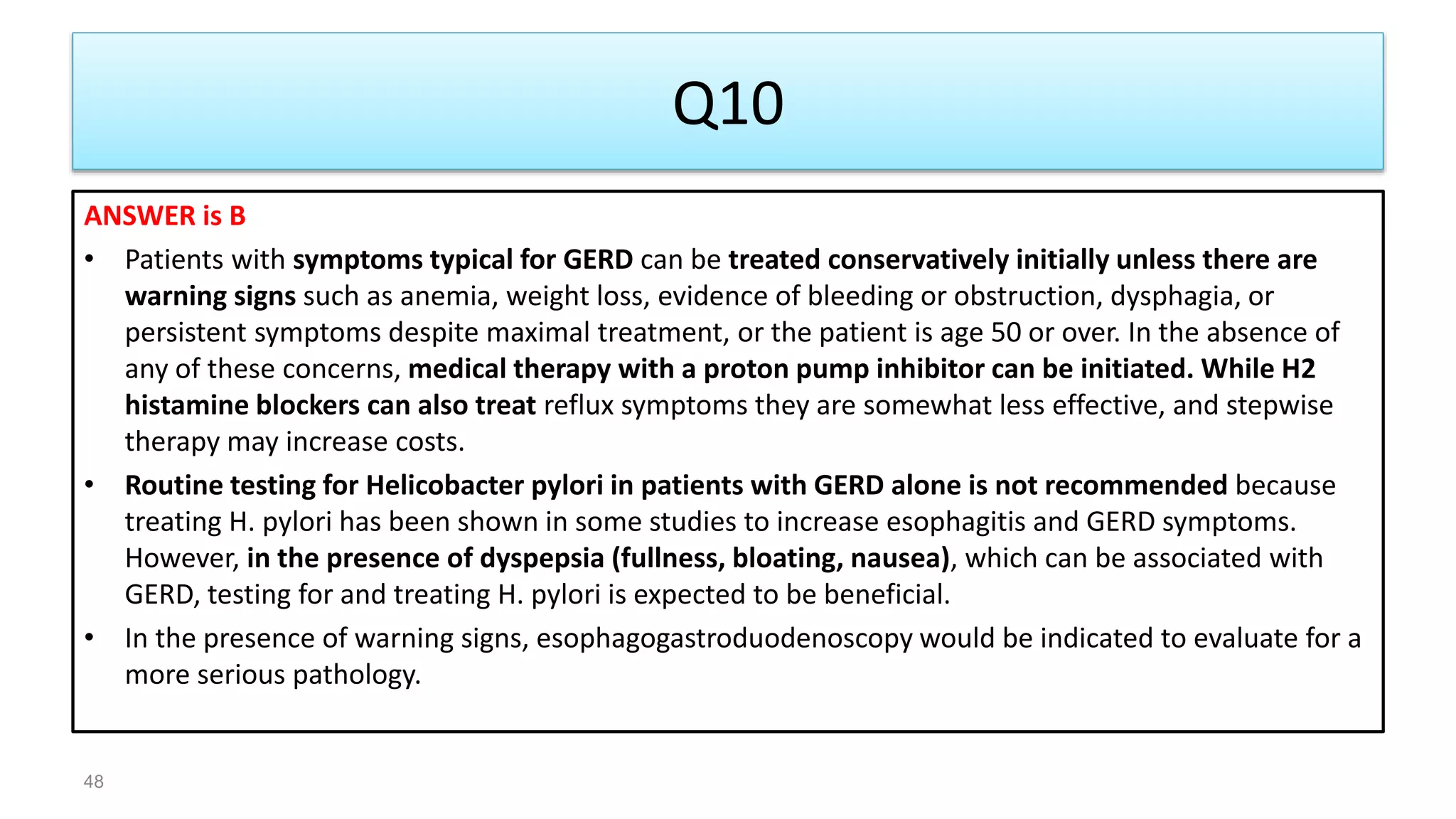
ANSWER is B
• Patients with symptoms typical for GERD can be treated conservatively initially unless there are
warning signs such as anemia, weight loss, evidence of bleeding or obstruction, dysphagia, or
persistent symptoms despite maximal treatment, or the patient is age 50 or over. In the absence of
any of these concerns, medical therapy with a proton pump inhibitor can be initiated. While H2
histamine blockers can also treat reflux symptoms they are somewhat less effective, and stepwise
therapy may increase costs.
• Routine testing for Helicobacter pylori in patients with GERD alone is not recommended because
treating H. pylori has been shown in some studies to increase esophagitis and GERD symptoms.
However, in the presence of dyspepsia (fullness, bloating, nausea), which can be associated with
GERD, testing for and treating H. pylori is expected to be beneficial.
• In the presence of warning signs, esophagogastroduodenoscopy would be indicated to evaluate for a
more serious pathology.
48
Q11
A 3-year-old boy presents with his mother, who is concerned about a high fever that he has had over the
past few days. On examination, you note that he has bilateral conjunctivitis, cracked lips, cervical
lymphadenopathy, and redness with swelling of his hands and feet. The most likely diagnosis is which
one of the following conditions?
A) Infectious mononucleosis
B) Kawasaki disease
C) Lyme disease
D) Rocky Mountain fever
E) Scarlet fever
49
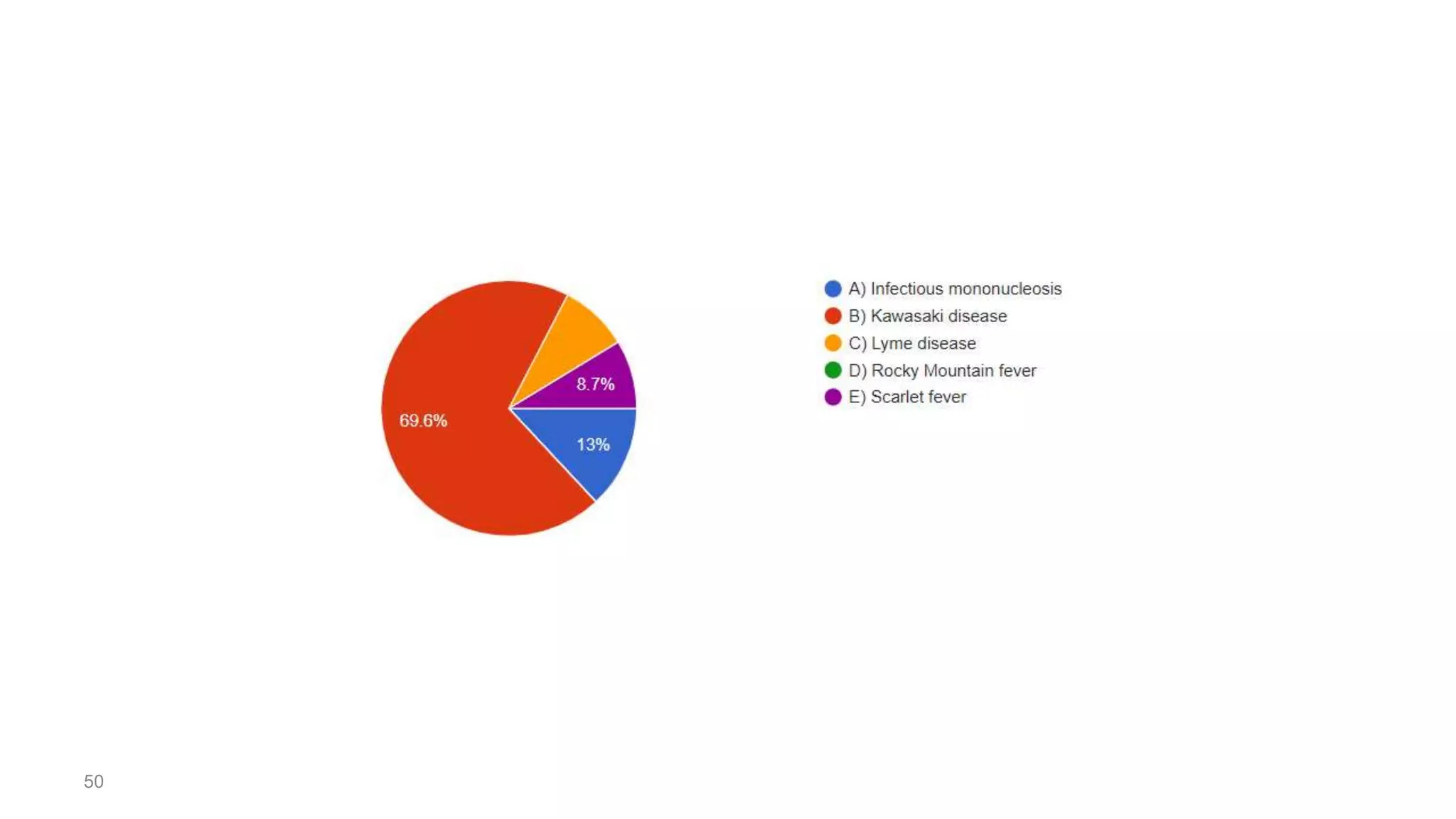
50
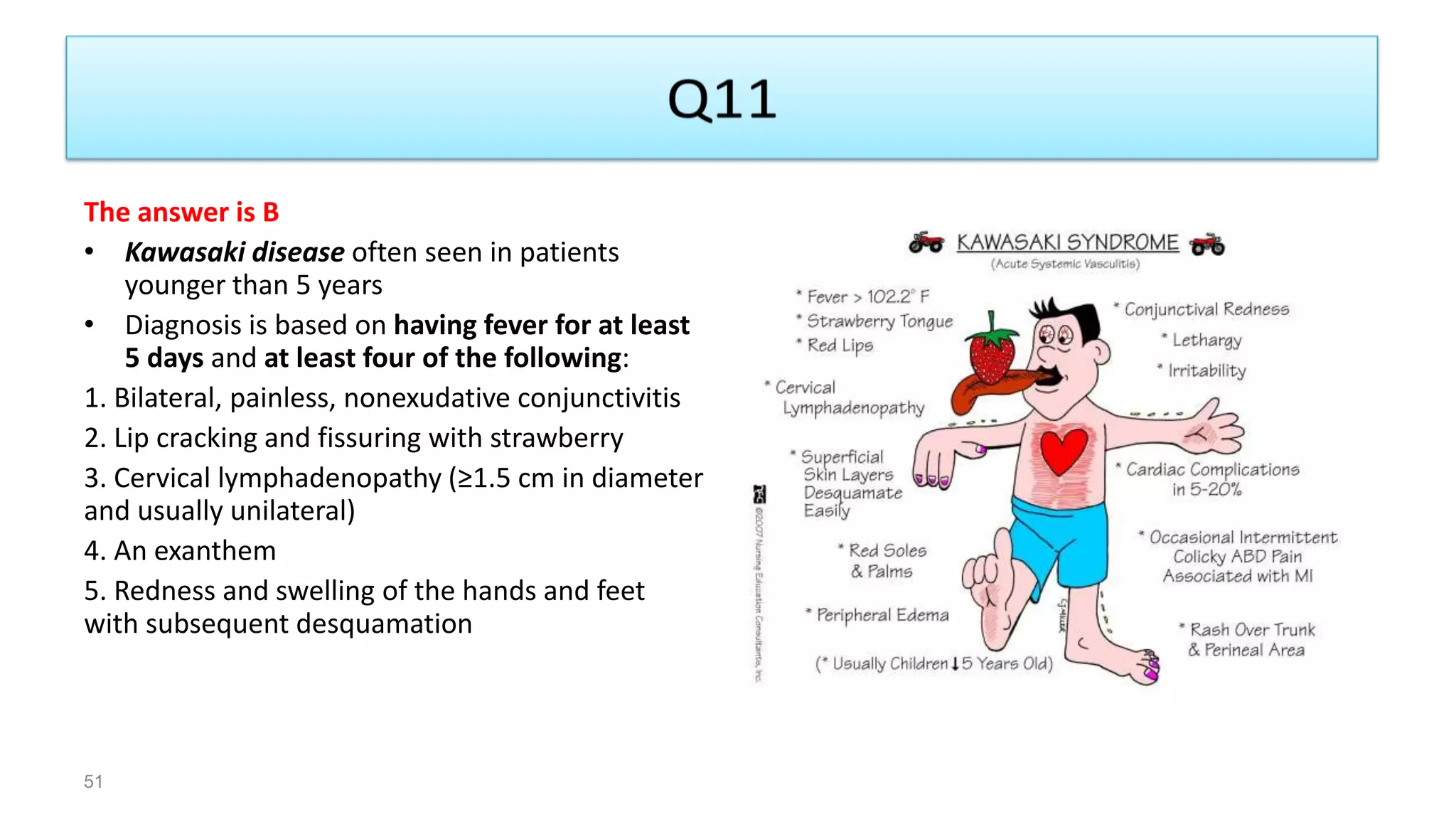
The answer is B
• Kawasaki disease often seen in patients
younger than 5 years
• Diagnosis is based on having fever for at least
5 days and at least four of the following:
1. Bilateral, painless, nonexudative conjunctivitis
2. Lip cracking and fissuring with strawberry
3. Cervical lymphadenopathy (≥1.5 cm in diameter
and usually unilateral)
4. An exanthem
5. Redness and swelling of the hands and feet
with subsequent desquamation
51
References
• Am Fam Physician, 2020; 102(6): 339-346.
• Am Fam Physician, September 15, 2020 - Volume 102, Number 6
• Am Fam Physician, 2020-10-15, Volume 102, Issue 8, Pages 504B-504B
• Am Fam Physician, 2020-08-01, Volume 102, Issue 3
• Pretest family medicine
• American board FM 2019
• Bratton FM
52
Thank you !

Dermatology MCQ and AAFP.pptx

  • 1.
    MCQ/AAFP updates Presented by AbdulazizBagasi R4 Family Medicine NGHA-Jeddah Supervised by Dr.Razaz Wali October 2020 1
  • 2.
    Objectives 2 We will discuss8 AAFP outlines •6 Derma cases •2 other specialties We will discuss 11 MCQs •6 Derma cases •5 other specialties
  • 3.
    Q1 AAFP Which oneof the following skin cancer prevention recommendations from the U.S. Preventive Services Task Force is correct? A. All adults 25 years and older with fair skin should be counseled on minimizing ultraviolet radiation exposure. B. Patients six months to 24 years of age with fair skin should be counseled on minimizing exposure to ultraviolet radiation. C. Adult patients should be counseled to perform regular skin self-examination. D. Adult patients should be regularly screened for skin cancer. 3
  • 4.
  • 5.
    Q1 AAFP Answer B •The U.S. Preventive Services Task Force recommends counseling about minimizing exposure to ultraviolet radiation for people aged six months to 24 years with fair skin types to decrease their risk of skin cancer. • Routine screening for skin cancer is controversial. The U.S. Preventive Services Task Force concludes that current evidence is insufficient to assess the balance of benefits and harms of a routine whole-body skin examination to screen for skin cancer Am Fam Physician. 2020; 102(6): 339-346. 2020 American Academy of Family Physicians 5
  • 6.
    Q2 AAFP A 23-year-oldpatient with a known peanut allergy presents to your office after accidental exposure to peanut butter. The patient is experiencing tingling of the lips and abdominal cramping. Vital signs are normal. Which one of the following is the best initial treatment? A. Intramuscular antihistamine. B. Oral antihisamine. C. Intramuscular epinephrine. D. Intravenous corticosteroids. 6
  • 7.
  • 8.
    Q3 AAFP Which oneof the following statements about biphasic anaphylactic reactions is correct? A. Biphasic reactions occur in less than 1% of cases of anaphylaxis. B. Biphasic reaction is defined as the recurrence of anaphylaxis within 24 hours. C. There is no risk of a biphasic reaction if the patient is treated with corticosteroids. D. An observation period of more than six hours can exclude 95% of biphasic reactions. 8
  • 9.
    Q3 AAFP Answer D •Observation Period Biphasic reactions are defined as the recurrence of anaphylaxis within 72 hours of the initial reaction without reexposure to the allergen. • A recent meta-analysis showed that an observation time greater than six hours after resolution of anaphylactic symptoms could exclude the recurrence of a secondary reaction in more than 95% of patients AAFP September 15, 2020 - Volume 102, Number 6 9
  • 10.
    Anaphylaxis Management AAFP September15, 2020 - Volume 102, Number 6 10
  • 11.
    Q4 AAFP A 27-year-oldsoldier deployed to Middle East presented with a nonresolving rash on the right upper arm that developed two months earlier. The lesion initially looked like a small pimple, so the patient tried to pop it. It subsequently ulcerated and grew slowly. The rash was nonpruritic and nonpainful. The patient did not recall any insect bites or new exposures, but he had walked around camp in short sleeves. The rash did not improve with application of an antibiotic ointment. The patient had no fevers, chills, or other symptoms. The patient's vital signs were normal. Physical examination revealed a solitary, circular, 2.4-cm, ulcerated lesion with an irregular, indurated border but no surrounding erythema . Physical examination findings were otherwise normal. A. Cutaneous leishmaniasis. B. Cutaneous malignancy. C. Cutaneous tuberculosis. D. Pyoderma gangrenosum. E. Tertiary syphilis (gumma). 11
  • 12.
    Q4 AAFP Answer A AAFPSeptember 15, 2020 - Volume 102, Number 6 12
  • 13.
  • 14.
    Q6 AAFP •Bottom-line answer • For toenail onychomycosis, continuous terbinafine 250 mg, and continuous itraconazole 200 mg, for 12 to 24 weeks are the preferred therapies. • Level of Evidence = 1a ,Systematic reviews of RCTs 14 • Clinical question What is the preferred monotherapy for the treatment of toenail onychomycosis? American Family Physician, 2020-10-15, Volume 102, Issue 8, Pages 504B-504B
  • 15.
    Q7 AAFP •Bottom-line answer • Women with gestational diabetes should be screened for diabetes with a 75-g two-hour fasting oral glucose tolerance test at 4-12 weeks postpartum. • Level of evidence : C 15 • Clinical question When should women with gestational diabetes mellitus receive postpartum diabetes screening ? Am Fam Physician. 2019 Oct 15;100(8):485-491
  • 16.
    Q8 AAFP •Bottom-line answer • NSAIDs are effective for reducing heavy menstrual bleeding in premenopausal patients with menorrhagia when compared with placebo. • However, NSAIDs are less effective than tranexamic acid and the levonorgestrel-releasing intrauterine system (Mirena) for reducing heavy menstrual bleeding. • Strength of Recommendation: B 16 • Clinical question Do NSAIDs effectively reduce heavy menstrual bleeding in premenopausal patients? American Family Physician, 2020-08-01, Volume 102, Issue 3
  • 17.
  • 18.
    Q1 You are seeinga young girl whose mother brings her in for evaluation. She has had 3 days of low-grade fever and runny nose. Today, she awakened with an erythematous rash on her cheeks as shown below. Which of the following is the most likely cause of her symptoms? a.An enterovirus b.A parvovirus c.A parainfluenza virus d.A varicella virus e.Cytomegalo virus 18
  • 19.
  • 20.
    Q1 The answer isB. The picture shown, coupled with the clinical scenario described, is classic for infection with parvovirus B19. The resulting illness is called erythema infectiosum, or “fifth disease.” 20
  • 21.
    A 5-year-old girlis brought to your office by her mother with painful swelling and sores inside her mouth and a vesicular rash that affects her hands and feet. Which one of the following is the most likely etiologic agent to account for this patient’s presentation? A)Adenovirus B)Coxsackie virus C)Measles D)Syphilis E)Varicella Q2 21
  • 22.
  • 23.
    Q2 The answer isB Coxsackie virus is responsible for various infections that affect the pediatric population. Causes a mild hand, foot, and mouth disease. Findings include stomatitis and a vesicular rash that affects the hands and feet. It is self-limited and antibiotics are only helpful if there is a secondary bacterial infection. 23
  • 24.
    Q3 24 A 7-year-old femaleis brought to your office by her mother for follow-up of an urgent care visit. The child has a 5-day history of abdominal pain and low-grade fevers to 38. Her mother took her to an urgent care clinic last night when the patient developed the rash shown below. The rash is not pruritic or painful. She does not have any sick contacts, urinary symptoms, or changes in bowel habits. A physical examination is normal except for the rash and minimal diffuse abdominal tenderness. A CBC and basic metabolic panel are normal, and a urinalysis is notable only for microhematuria (30–40 RBCs/hpf) and mild proteinuria
  • 25.
    Q3 In addition toclose follow-up, which one of the following is the next appropriate step in the management of this child A)Supportive care only B)Amoxicillin for 10 days C)Prednisone tapered over 10 days D)A biopsy of a skin lesion E)Referral to a nephrologist for consideration of a renal biopsy 25
  • 26.
  • 27.
    Q3 ANSWER A • Thispatient most likely has Henoch-Schönlein purpura. • In addition to close observation, the only treatment is supportive care, including adequate oral hydration. There is no indication for antibiotics, and oral corticosteroids have not been shown to be beneficial. • In patients with progressive renal impairment, referral to a nephrologist is warranted, but given this patient’s normal renal function at this time it is not indicated. 27
  • 28.
    Q4 A 72-year-old manpresents to your office complaining of an area of redness around his nose. He states that the rash is often worse in the summer because sunlight exposure makes it worse. Appropriate treatment of this condition would be to prescribe which one of the following agents? A) Acyclovir ointment B) Hydrocortisone cream C) Metronidazole cream D) Mupirocin ointment E) Tretinoin gel 28
  • 29.
  • 30.
    Q4 The answer C Rosaceais associated with areas of erythema and telangiectasia on the face. It is exacerbated by sunlight, hot or spicy foods, and alcohol. Treatment involves oral tetracycline or doxycycline. Topical metronidazole is also effective. 30
  • 31.
    Q5 A 52-year-old malepresents for evaluation of a long-standing facial rash. He reports that the rash is itchy, with flaking and scaling around his mustache and nasolabial folds. Which one of the following is most likely to be beneficial? A) Topical antibacterial agents B) Topical antifungal agents C) Topical vitamin D analogues D) Oral zinc supplementation 31
  • 32.
  • 33.
    Q5 Answer is B Seborrheicdermatitis is commonly seen in the office setting and affects the scalp, eyebrows, nasolabial folds, and anterior chest. The affected skin appears as erythematous patches with white to yellow greasy scales. Topical antifungals are effective and recommended as first-line agents. Topical low-potency corticosteroids are also effective alone or when used in combination with topical antifungals, but they should be used carefully due to their adverse effects. 33
  • 34.
    Q6 • 38 yearsold female patient. c/o darkening of her facial skin for 2y started during her pregnancy, patient is on OCP.
  • 35.
    Melasma • Acquired hyperpigmentationin sun-exposed areas primarily seen in women (90%) and darker skin types • Exacerbating factors: sun exposure, estrogen (pregnancy, OCPs, and HRT), genetic influences, thyroid dysfunction • Clinical features symmetric, light to dark brown/gray irregular patches on face
  • 36.
    Q6 Treatment:  Sunscreen  Combinationof tretinoin/ topical corticosteroid/hydroquinone (Triluma®)  Chemical peel 36
  • 37.
    Q7 You are seeinga 44-year-old woman with hypertension controlled with lisinopril, who presents with severe nausea and vomiting. She reports having months of occasional right upper quadrant pain, usually after eating out with her husband, that resolves within a couple of hours. Over the last 24 hours, her symptoms have been severe, and she is unable to eat or drink without vomiting. Her pain is significant, radiates to her back, and is better when she leans forward. On laboratory evaluation, her amylase is elevated, and her ALT is elevated. Which of the following would be the best approach to avoid recurrent problems in her case? A. Discontinue lisinopril. B. Avoid calcium in the diet. C. Work with the patient to remain sober. D. Remove the patient’s gallbladder. E. Use medication to lower the patient’s triglyceride level 37
  • 38.
  • 39.
    Q7 The answer isD • The patient described has pancreatitis, likely due to gallstones. • While the laboratory findings in acute pancreatitis are often nonspecific, elevated serum amylase in the right clinical setting is often suggestive. • Radiographic evidence can help confirm the diagnosis. • Elevated ALT is more suggestive of gallstone pancreatitis and is less likely when alcohol or hypertriglyceridemia is the cause. • ACE inhibitors are an uncommon cause of pancreatitis. 39
  • 40.
    Q8 A 67-year-old malediagnosed with polymyalgia rheumatica is started on long- term prednisone therapy. Which one of the following is the recommended first- line agent to prevent steroid-induced osteoporosis? A. Alendronate (Fosamax) B. High-dose vitamin D C. Raloxifene (Evista) D. Teriparatide (Forteo) 40
  • 41.
  • 42.
    Q8 Answer A • Patientsare at risk of developing glucocorticoid-induced osteoporosis if they are on long- term glucocorticoid therapy, defined as >2.5 mg of prednisone for a duration of 3 months or longer. • The American College of Rheumatology recommends pharmacologic treatment for these patients, as well as for patients receiving glucocorticoids who have a bone mineral density T-score –2.5. 42
  • 43.
    Q9 A 22-year-old malepresents to your office the morning after falling onto his outstretched right hand. He has a deep, dull ache in the right wrist on the radial side. The pain is worsened by gripping and squeezing. On examination there is some wrist fullness and the wrist is tender to palpation over the anatomic snuffbox. Radiographs of the wrist are negative. Which one of the following would be most appropriate at this time? A. Rest, ice, compression, elevation, and NSAIDs with no specific follow-up B. Rest, ice, compression, elevation, and NSAIDs with a follow-up examination in 2 weeks C. Placement of a thumb spica splint, with a follow-up examination in 2 weeks D. CT of the wrist to detect an occult fracture E. Ultrasonography of the wrist to detect a ligament injury 43
  • 44.
  • 45.
    Q9 Answer C • Thehistory, symptoms, and physical examination findings in this case suggest a scaphoid fracture. • The finding of anatomic snuffbox tenderness is highly sensitive but not specific for a scaphoid fracture. • Initial radiographs often do not demonstrate a fracture. When there is a high clinical suspicion for a scaphoid fracture, but radiographs are negative, it is reasonable to immobilize in a thumb spica splint and reevaluate in 2 weeks. • MRI can be considered if the patient desires or needs an immediate diagnosis. 45
  • 46.
    Q10 A 40-year-old femalesees you because of burning upper abdominal and chest pain and an acidic taste in her mouth after nearly every meal. She has pain at night that sometimes keeps her awake, but she does not have any nausea, vomiting, difficulty swallowing, bloating, bloody stools, or weight loss. She does not smoke. Which one of the following would be the most appropriate next step? A. Test for Helicobacter pylori and treat if present B. Start a 4- to 8-week trial of a proton pump inhibitor C. Order abdominal ultrasonography D. Schedule esophagogastroduodenoscopy E. Refer to a surgeon to consider fundoplication 46
  • 47.
  • 48.
    Q10 ANSWER is B •Patients with symptoms typical for GERD can be treated conservatively initially unless there are warning signs such as anemia, weight loss, evidence of bleeding or obstruction, dysphagia, or persistent symptoms despite maximal treatment, or the patient is age 50 or over. In the absence of any of these concerns, medical therapy with a proton pump inhibitor can be initiated. While H2 histamine blockers can also treat reflux symptoms they are somewhat less effective, and stepwise therapy may increase costs. • Routine testing for Helicobacter pylori in patients with GERD alone is not recommended because treating H. pylori has been shown in some studies to increase esophagitis and GERD symptoms. However, in the presence of dyspepsia (fullness, bloating, nausea), which can be associated with GERD, testing for and treating H. pylori is expected to be beneficial. • In the presence of warning signs, esophagogastroduodenoscopy would be indicated to evaluate for a more serious pathology. 48
  • 49.
    Q11 A 3-year-old boypresents with his mother, who is concerned about a high fever that he has had over the past few days. On examination, you note that he has bilateral conjunctivitis, cracked lips, cervical lymphadenopathy, and redness with swelling of his hands and feet. The most likely diagnosis is which one of the following conditions? A) Infectious mononucleosis B) Kawasaki disease C) Lyme disease D) Rocky Mountain fever E) Scarlet fever 49
  • 50.
  • 51.
    The answer isB • Kawasaki disease often seen in patients younger than 5 years • Diagnosis is based on having fever for at least 5 days and at least four of the following: 1. Bilateral, painless, nonexudative conjunctivitis 2. Lip cracking and fissuring with strawberry 3. Cervical lymphadenopathy (≥1.5 cm in diameter and usually unilateral) 4. An exanthem 5. Redness and swelling of the hands and feet with subsequent desquamation 51
  • 52.
    References • Am FamPhysician, 2020; 102(6): 339-346. • Am Fam Physician, September 15, 2020 - Volume 102, Number 6 • Am Fam Physician, 2020-10-15, Volume 102, Issue 8, Pages 504B-504B • Am Fam Physician, 2020-08-01, Volume 102, Issue 3 • Pretest family medicine • American board FM 2019 • Bratton FM 52
  • 53.