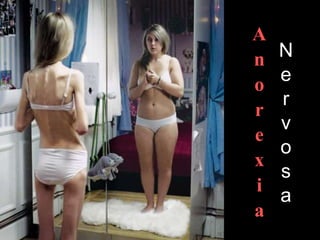
AnorexiaNervosa
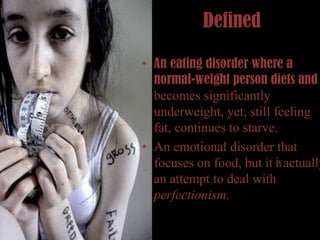
DefinedAn eating disorder where a normal-weight person diets and becomes significantly underweight, yet, still feeling fat, continues to starve.An emotional disorder that focuses on food, but it is actually an attempt to deal with perfectionism.
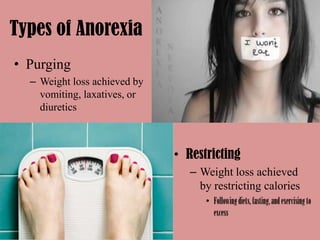
Types of AnorexiaPurging
Weight loss achieved by vomiting, laxatives, or diureticsRestrictingWeight loss achieved by restricting caloriesFollowing diets, fasting, and exercising to excess
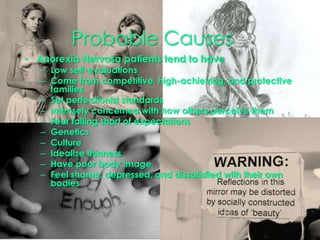
Probable CausesAnorexia Nervosa patients tend to haveLow self-evaluationsCome from competitive, high-achieving, and protective familiesSet perfectionist standardsIntensely concerned with how others perceive themFear falling short of expectationsGeneticsCultureIdealize thinnessHave poor body imageFeel shame, depressed, and dissatisfied with their own bodies
GeneticsThe chances for identical twins sharing the disorder are greater than for fraternal twinsWhen ancestors were faced with famine, those who denied starvation and became hyperactive may have been more likely to search for food.
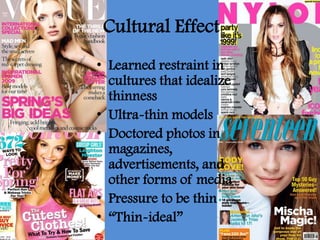
Cultural EffectLearned restraint in cultures that idealize thinnessUltra-thin modelsDoctored photos in magazines, advertisements, and other forms of mediaPressure to be thin“Thin-ideal”
SymptomsDramatic weight lossPreoccupation with weight, food, calories, fat grams, and dietingRefusal to eat certain foods, or whole categories of food (e.g. no carbohydrates)Denial of hungerExcessive, rigid exercise regimenWithdrawal from usual friends and activitiesWeight loss and dieting become primary concerns in life.Constant excuses to avoid mealtimesAnxiety about gaining weight or being fat
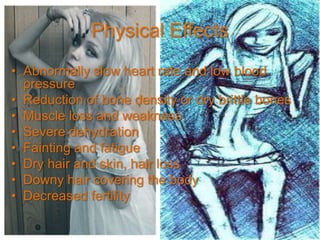
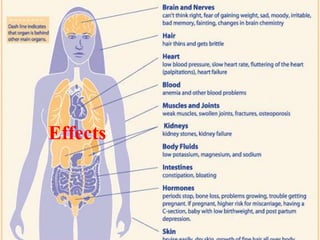
Physical EffectsAbnormally slow heart rate and low blood pressureReduction of bone density or dry brittle bonesMuscle loss and weaknessSevere dehydration Fainting and fatigueDry hair and skin, hair lossDowny hair covering the bodyDecreased fertility
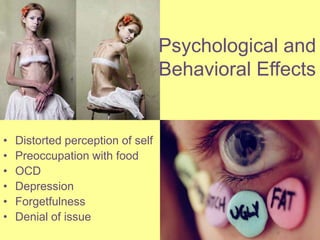
Psychological and Behavioral EffectsDistorted perception of selfPreoccupation with foodOCDDepressionForgetfulnessDenial of issue
Effects
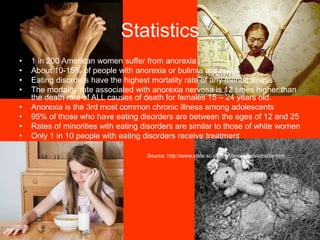
Statistics 1 in 200 American women suffer from anorexiaAbout 10-15% of people with anorexia or bulimia are malesEating disorders have the highest mortality rate of any mental illnessThe mortality rate associated with anorexia nervosa is 12 times higher than the death rate of ALL causes of death for females 15 – 24 years old. Anorexia is the 3rd most common chronic illness among adolescents95% of those who have eating disorders are between the ages of 12 and 25 Rates of minorities with eating disorders are similar to those of white womenOnly 1 in 10 people with eating disorders receive treatment 	Source: http://www.state.sc.us/dmh/anorexia/statistics.htm
TreatmentPsychotherapyFamily TherapyMedication- Anti depressants (Prozac), potassium or iron supplementsHypnosisBiofeedbackCognitive Behavioral Therapy
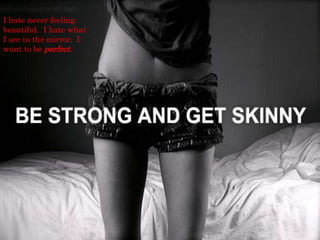
I hate never feeling beautiful. I hate what I see in the mirror.  I want to be perfect.
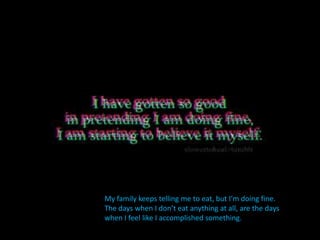
My family keeps telling me to eat, but I’m doing fine. The days when I don’t eat anything at all, are the days when I feel like I accomplished something.
I want to look like them. These photos are my inspiration and my aspirations.Skinnies look good in everything.
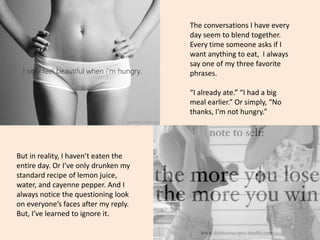
The conversations I have every day seem to blend together. Every time someone asks if I want anything to eat,  I always say one of my three favorite phrases.“I already ate.” “I had a big meal earlier.” Or simply, “No thanks, I’m not hungry.”But in reality, I haven’t eaten the entire day. Or I’ve only drunken my standard recipe of lemon juice, water, and cayenne pepper. And I always notice the questioning look on everyone’s faces after my reply. But, I’ve learned to ignore it.
I don’t want to eat. I don’t like eating. I find it revolting now. All those calories, fats, and hidden pounds lurking in everything. They are all just waiting until I become weak. So they can destroy me and all that I’ve accomplished.
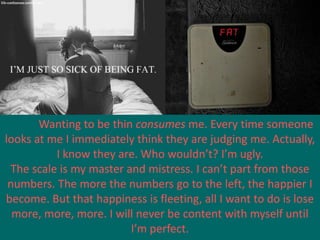
Wanting to be thin consumes me. Every time someone looks at me I immediately think they are judging me. Actually, I know they are. Who wouldn’t? I’m ugly. The scale is my master and mistress. I can’t part from those numbers. The more the numbers go to the left, the happier I become. But that happiness is fleeting, all I want to do is lose more, more, more. I will never be content with myself until I’m perfect.
When I first started not eating, it was so that my boyfriend would love me more. I thought that he would find me to be the most beautiful girl in the world as long as I remained thin. I wanted him to not even strain a muscle when he gave me piggy back rides, or have to ever debate with his friends who had the hotter girlfriend. I wanted to be the best.

Powerpoint anorexia

  • 1.
  • 2.
    DefinedAn eating disorderwhere a normal-weight person diets and becomes significantly underweight, yet, still feeling fat, continues to starve.An emotional disorder that focuses on food, but it is actually an attempt to deal with perfectionism.
  • 3.
  • 4.
    Weight loss achievedby vomiting, laxatives, or diureticsRestrictingWeight loss achieved by restricting caloriesFollowing diets, fasting, and exercising to excess
  • 5.
    Probable CausesAnorexia Nervosapatients tend to haveLow self-evaluationsCome from competitive, high-achieving, and protective familiesSet perfectionist standardsIntensely concerned with how others perceive themFear falling short of expectationsGeneticsCultureIdealize thinnessHave poor body imageFeel shame, depressed, and dissatisfied with their own bodies
  • 6.
    GeneticsThe chances foridentical twins sharing the disorder are greater than for fraternal twinsWhen ancestors were faced with famine, those who denied starvation and became hyperactive may have been more likely to search for food.
  • 7.
    Cultural EffectLearned restraintin cultures that idealize thinnessUltra-thin modelsDoctored photos in magazines, advertisements, and other forms of mediaPressure to be thin“Thin-ideal”
  • 8.
    SymptomsDramatic weight lossPreoccupationwith weight, food, calories, fat grams, and dietingRefusal to eat certain foods, or whole categories of food (e.g. no carbohydrates)Denial of hungerExcessive, rigid exercise regimenWithdrawal from usual friends and activitiesWeight loss and dieting become primary concerns in life.Constant excuses to avoid mealtimesAnxiety about gaining weight or being fat
  • 9.
    Physical EffectsAbnormally slowheart rate and low blood pressureReduction of bone density or dry brittle bonesMuscle loss and weaknessSevere dehydration Fainting and fatigueDry hair and skin, hair lossDowny hair covering the bodyDecreased fertility
  • 10.
    Psychological and BehavioralEffectsDistorted perception of selfPreoccupation with foodOCDDepressionForgetfulnessDenial of issue
  • 11.
  • 12.
    Statistics 1 in200 American women suffer from anorexiaAbout 10-15% of people with anorexia or bulimia are malesEating disorders have the highest mortality rate of any mental illnessThe mortality rate associated with anorexia nervosa is 12 times higher than the death rate of ALL causes of death for females 15 – 24 years old. Anorexia is the 3rd most common chronic illness among adolescents95% of those who have eating disorders are between the ages of 12 and 25 Rates of minorities with eating disorders are similar to those of white womenOnly 1 in 10 people with eating disorders receive treatment Source: http://www.state.sc.us/dmh/anorexia/statistics.htm
  • 13.
    TreatmentPsychotherapyFamily TherapyMedication- Antidepressants (Prozac), potassium or iron supplementsHypnosisBiofeedbackCognitive Behavioral Therapy
  • 14.
    I hate neverfeeling beautiful. I hate what I see in the mirror. I want to be perfect.
  • 15.
    My family keepstelling me to eat, but I’m doing fine. The days when I don’t eat anything at all, are the days when I feel like I accomplished something.
  • 16.
    I want tolook like them. These photos are my inspiration and my aspirations.Skinnies look good in everything.
  • 17.
    The conversations Ihave every day seem to blend together. Every time someone asks if I want anything to eat, I always say one of my three favorite phrases.“I already ate.” “I had a big meal earlier.” Or simply, “No thanks, I’m not hungry.”But in reality, I haven’t eaten the entire day. Or I’ve only drunken my standard recipe of lemon juice, water, and cayenne pepper. And I always notice the questioning look on everyone’s faces after my reply. But, I’ve learned to ignore it.
  • 18.
    I don’t wantto eat. I don’t like eating. I find it revolting now. All those calories, fats, and hidden pounds lurking in everything. They are all just waiting until I become weak. So they can destroy me and all that I’ve accomplished.
  • 19.
    Wanting to bethin consumes me. Every time someone looks at me I immediately think they are judging me. Actually, I know they are. Who wouldn’t? I’m ugly. The scale is my master and mistress. I can’t part from those numbers. The more the numbers go to the left, the happier I become. But that happiness is fleeting, all I want to do is lose more, more, more. I will never be content with myself until I’m perfect.
  • 20.
    When I firststarted not eating, it was so that my boyfriend would love me more. I thought that he would find me to be the most beautiful girl in the world as long as I remained thin. I wanted him to not even strain a muscle when he gave me piggy back rides, or have to ever debate with his friends who had the hotter girlfriend. I wanted to be the best.