DEPARTMENTOF CONSERVATIVE DENTISTRYAND ENDODONTICS
BY A.MAHISHALINI
3RD BDS
 Definition
 Prevalence
 Etiology
 Measures of sensitivity
 Causes
 Theories of hypersensitivity and treatment
 Grossman ‘s criteria for desensitising material
 Chemical agents
 Mechanism of action
 Physical agents
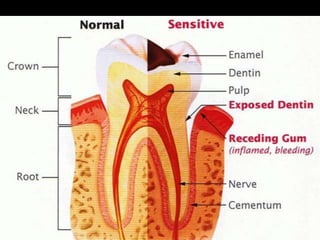
 Defined as pain arising from exposed dentin
typically in response to thermal, chemical, or
osmotic stimuli it cannot be explained as
arising from dental defect or pathology
 Exaggerated response to non noxious
sensory stimuli . It is basically a chronic
situation with acute episodes
 It shold be differentiated from dental pain
which is a response to noxious stimulus and is
a acute condition
 One out of seven people (1:7)
 Males more than female
 Age – 20 to 40 years ( 30 years)
 Less as age increases due to
 1 . Laying down of sclerotic or secondary
dentine which blocks the tubules
 2. more fibrosis of pulp
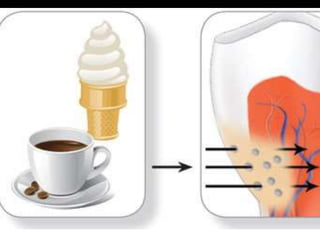
 Due to exposure of dentine and presence of
open dentinal tubules on the surface
 Two types
1. sudden pain at an isolated site
2. generalized hypersensitivity
 Vabal rating of scale – stimulate the area with
compressed air
 0 – no discomfort
 1 – mild
 2 – moderate
 3 - severe
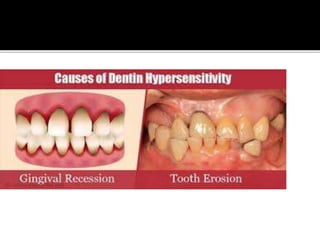
 Loss of enamel – para function habits
- occlusal wear
- toothbrushing abrasion
- dietary erosion
 Denudation of root surface – gingival
recession , aging, chronic periodontal
disease,abnormality position of tooth in arch,
exposure after periodontal surgery, incorrect
tooth brush
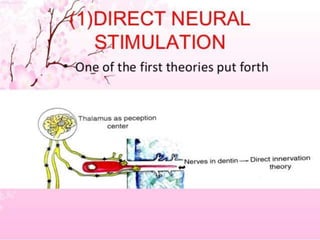
DIRECT NERVE STIMULATIONTHEORY
Suggest that the responseof patient is due to
excitation of the nerve endings present
within the tubules and nerve signals are then
conducted along the afferent nerve into the
pulp and from there to the brain
 Not accepted an nerve fibres are less near the
exposed surfacenerves are in plenty only in
deep interdentin
 Intertubular dentin arises only after eruption.
And does not extend to occlusal surface
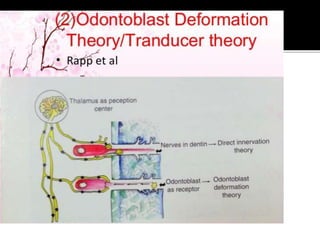
 Stimuli initially excite either the processes or
body of odontoblast. Odontoblast is close to
nerve so stimulates the nerve which inturn
stimulates the brain
 Not accepted – there is no evidence of
synaptic relation present between
odontiblast and nerve
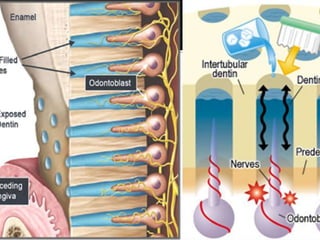
 Accounts for the pain transmission by small
rapid movements of fluid that occur within
the tubule brings of the pain transmission.
Mechano receptor nerves are seen aruond
the odontoblastic process when the fluid is
stimulated – nerves are stimulated – pain
 Movement of fluid may be due to cutting
pressure changes
 If tubules are full there is less space for fluid
to move , so mere is pain
 TUBULAR OCCLUSION
 IONTOPHORESIS
 INHIBIT SENSORY NERVE ACTIVITY
 Non irritant
 Should not emdanger integrity of pulp
 It should be painless
 It should be easily applied by the dentist
 It is rapid action
 It is permanently effective
 It should not discolour the tooth structure
 Chemical agents
 Physical agents
 Rubber cups
 If root – root planning instruments
 Remove hards soft deposits
 Isolate and dry the area
 protect the soft tissues fot the agent
 Caustic effect
 1. corticosteroids
 -when hypersensitivity was thought to be
due to pulpal irritation
 - used topically
 Found ineffective now a days
 2. AgNO3 and ZnCl3
Acts by its ability to ppt. Protein of
odontoblastic process . Hereby locking the
fibrils.
 Ca (OH) 2 : It blocks the dentinal tubules .
Promote peritubular dentin formation.
Exposed dentin.
Ca combine with full protein and brings abt.
Reminecalcification of exposed dentin.
Blocks the tubules
 Fluoride iontophoresis : iontophoresis device
is attaches to the tooth and tooth substance
is positive charges and negative ions are
forced into the tubules
 Burnishing of dentin
 Varnish and scalants
 Composite adhesive and dentin bonding
agent: they attach to tooth by lining ofa
a. Micro tage called micro mechanical bonding
b. by forming hybrid layer
 After etching apply a primer . It crosses a
smear layer and combines with collagen of
dentin forming hybrid later
 4 and 5 generation bonding agents .
 4 scotch bond
 5 primer bond
 Soft tissue grafts : denudation of rock surface
are covered with liners
FUNDAMENTALSOF OPERATIVE DENTISTRY
BY BALWANT RAI AND JASDEEP KAUR
Dentin hypersensitivity

Dentin hypersensitivity

  • 1.
    DEPARTMENTOF CONSERVATIVE DENTISTRYANDENDODONTICS BY A.MAHISHALINI 3RD BDS
  • 2.
     Definition  Prevalence Etiology  Measures of sensitivity  Causes  Theories of hypersensitivity and treatment  Grossman ‘s criteria for desensitising material  Chemical agents  Mechanism of action  Physical agents
  • 3.
     Defined aspain arising from exposed dentin typically in response to thermal, chemical, or osmotic stimuli it cannot be explained as arising from dental defect or pathology  Exaggerated response to non noxious sensory stimuli . It is basically a chronic situation with acute episodes  It shold be differentiated from dental pain which is a response to noxious stimulus and is a acute condition
  • 5.
     One outof seven people (1:7)  Males more than female  Age – 20 to 40 years ( 30 years)  Less as age increases due to  1 . Laying down of sclerotic or secondary dentine which blocks the tubules  2. more fibrosis of pulp
  • 6.
     Due toexposure of dentine and presence of open dentinal tubules on the surface  Two types 1. sudden pain at an isolated site 2. generalized hypersensitivity
  • 8.
     Vabal ratingof scale – stimulate the area with compressed air  0 – no discomfort  1 – mild  2 – moderate  3 - severe
  • 9.
     Loss ofenamel – para function habits - occlusal wear - toothbrushing abrasion - dietary erosion  Denudation of root surface – gingival recession , aging, chronic periodontal disease,abnormality position of tooth in arch, exposure after periodontal surgery, incorrect tooth brush
  • 11.
    DIRECT NERVE STIMULATIONTHEORY Suggestthat the responseof patient is due to excitation of the nerve endings present within the tubules and nerve signals are then conducted along the afferent nerve into the pulp and from there to the brain  Not accepted an nerve fibres are less near the exposed surfacenerves are in plenty only in deep interdentin  Intertubular dentin arises only after eruption. And does not extend to occlusal surface
  • 13.
     Stimuli initiallyexcite either the processes or body of odontoblast. Odontoblast is close to nerve so stimulates the nerve which inturn stimulates the brain  Not accepted – there is no evidence of synaptic relation present between odontiblast and nerve
  • 15.
     Accounts forthe pain transmission by small rapid movements of fluid that occur within the tubule brings of the pain transmission. Mechano receptor nerves are seen aruond the odontoblastic process when the fluid is stimulated – nerves are stimulated – pain  Movement of fluid may be due to cutting pressure changes  If tubules are full there is less space for fluid to move , so mere is pain
  • 17.
     TUBULAR OCCLUSION IONTOPHORESIS  INHIBIT SENSORY NERVE ACTIVITY
  • 18.
     Non irritant Should not emdanger integrity of pulp  It should be painless  It should be easily applied by the dentist  It is rapid action  It is permanently effective  It should not discolour the tooth structure
  • 19.
     Chemical agents Physical agents
  • 20.
     Rubber cups If root – root planning instruments  Remove hards soft deposits  Isolate and dry the area  protect the soft tissues fot the agent  Caustic effect
  • 21.
     1. corticosteroids -when hypersensitivity was thought to be due to pulpal irritation  - used topically  Found ineffective now a days  2. AgNO3 and ZnCl3 Acts by its ability to ppt. Protein of odontoblastic process . Hereby locking the fibrils.
  • 22.
     Ca (OH)2 : It blocks the dentinal tubules . Promote peritubular dentin formation. Exposed dentin. Ca combine with full protein and brings abt. Reminecalcification of exposed dentin. Blocks the tubules  Fluoride iontophoresis : iontophoresis device is attaches to the tooth and tooth substance is positive charges and negative ions are forced into the tubules
  • 23.
     Burnishing ofdentin  Varnish and scalants  Composite adhesive and dentin bonding agent: they attach to tooth by lining ofa a. Micro tage called micro mechanical bonding b. by forming hybrid layer
  • 24.
     After etchingapply a primer . It crosses a smear layer and combines with collagen of dentin forming hybrid later  4 and 5 generation bonding agents .  4 scotch bond  5 primer bond  Soft tissue grafts : denudation of rock surface are covered with liners
  • 25.
    FUNDAMENTALSOF OPERATIVE DENTISTRY BYBALWANT RAI AND JASDEEP KAUR