Adhesion (or Bonding) :-is defined in dentistry as :the forces or energies between atoms or
molecules at an interface that hold two surfaces together .
Adhesive (adherent) : the material or film added to produce adhesion .
Adherend : the substrate to which the material adhere e.g , enamel & dentin .
Adaptation : maximum degree of proximity between two adjacent surfaces .
Adhesive strength :is the load bearing capacity .
Durability : is the time period of effective bond in clinical use .
Mechanisms of bonding of resin-based materials to tooth structures :-
1. Mechanical :- penetration of resin and formation of resin tags within the tooth surface
2. Adsorption :- chemical bonding to the inorganic component (hydroxyapatite) or organic
components (mainly type I collagen) of tooth structure
3. Diffusion :- precipitation of substances on the tooth surfaces to which resin monomers can
bond mechanically or chemically
4. A combination of the previous three mechanisms
Failures of adhesive joints :-
I. Cohesive failure in the substrate .
II. Cohesive failure within the adhesive .
III. Adhesive failure, or failure at the interface of
substrate and adhesive.
Enamel Composition& Histology Dentin Composition & Histology
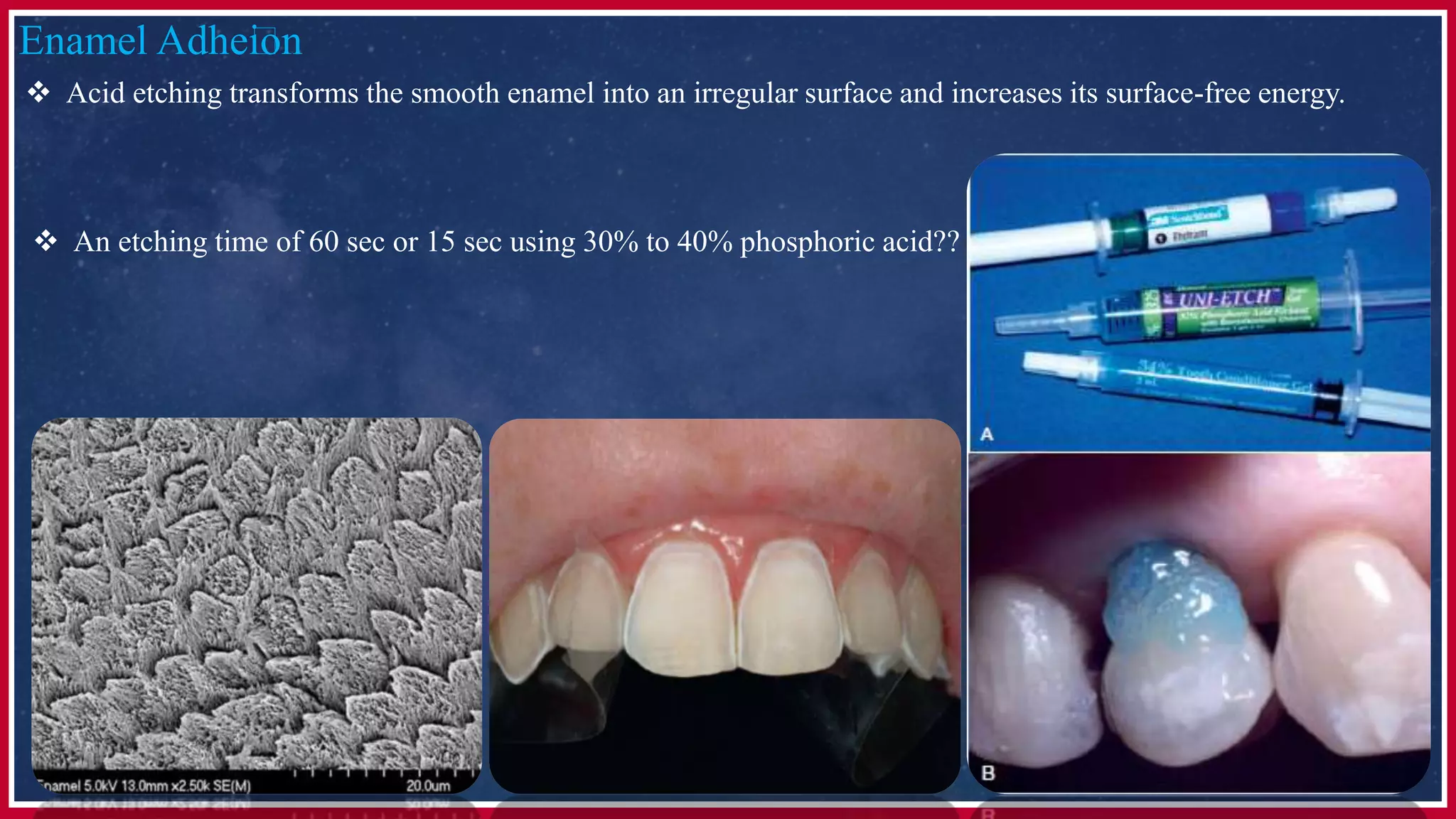
Enamel Adheion
 Acid etching transforms the smooth enamel into an irregular surface and increases its surface-free energy.
 An etching time of 60 sec or 15 sec using 30% to 40% phosphoric acid??
 Monomers in the material polymerize, and the material becomes interlocked with the enamel
surface .
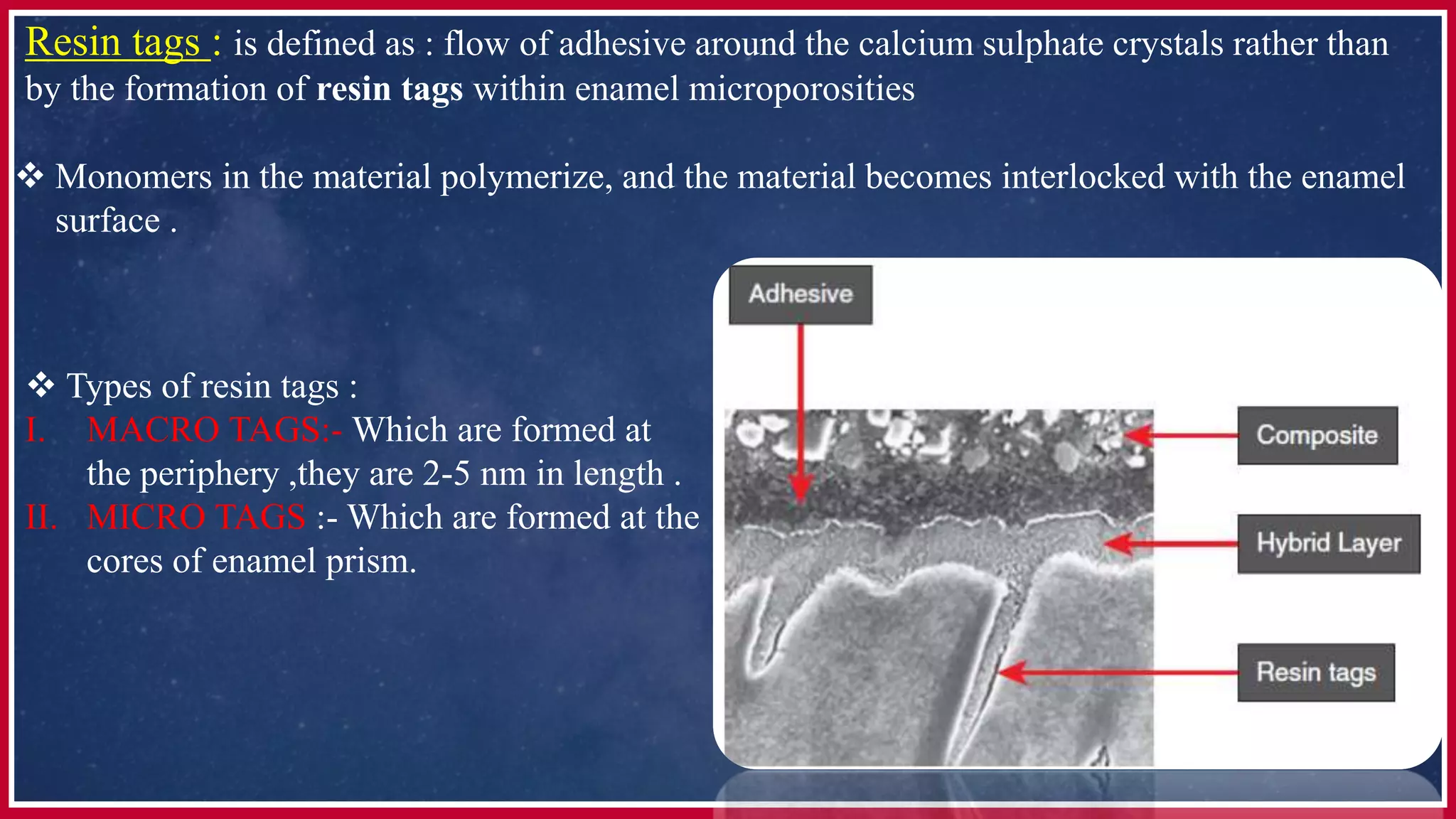
Resin tags : is defined as : flow of adhesive around the calcium sulphate crystals rather than
by the formation of resin tags within enamel microporosities
 Types of resin tags :
I. MACRO TAGS:- Which are formed at
the periphery ,they are 2-5 nm in length .
II. MICRO TAGS :- Which are formed at the
cores of enamel prism.
The Smear Layer is (3 to 5 microns thick ) of a residual organic and inorganic components as a
result of tooth structure preparation which fill the orifices of dentinal tubules to form a smear pulgs .
 It does haven a significant protective
function, but most importantly for dentin
bonding , it is not firmly attached to the
underlying dentin.
It consists of
i. Ground dentin.
ii. Fragments from the rotary instruments.
iii. Denatured protein .
iv. Both live and dead bacteria .
Surface Energy
Contact AngleWetting
Factors Affect Adhesion :-
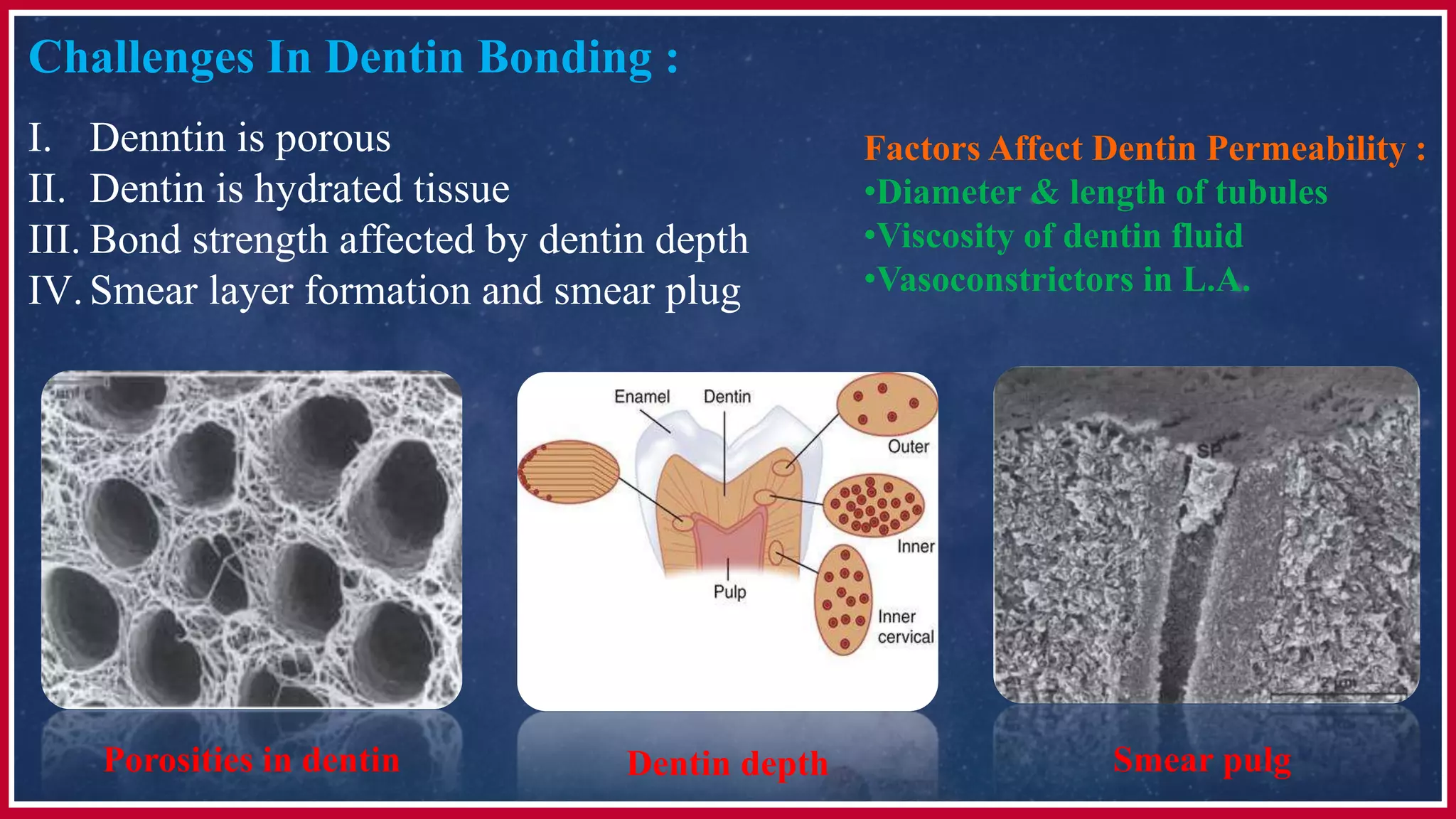
Challenges In Dentin Bonding :
I. Denntin is porous
II. Dentin is hydrated tissue
III. Bond strength affected by dentin depth
IV.Smear layer formation and smear plug
Factors Affect Dentin Permeability :
•Diameter & length of tubules
•Viscosity of dentin fluid
•Vasoconstrictors in L.A.
Porosities in dentin Dentin depth Smear pulg
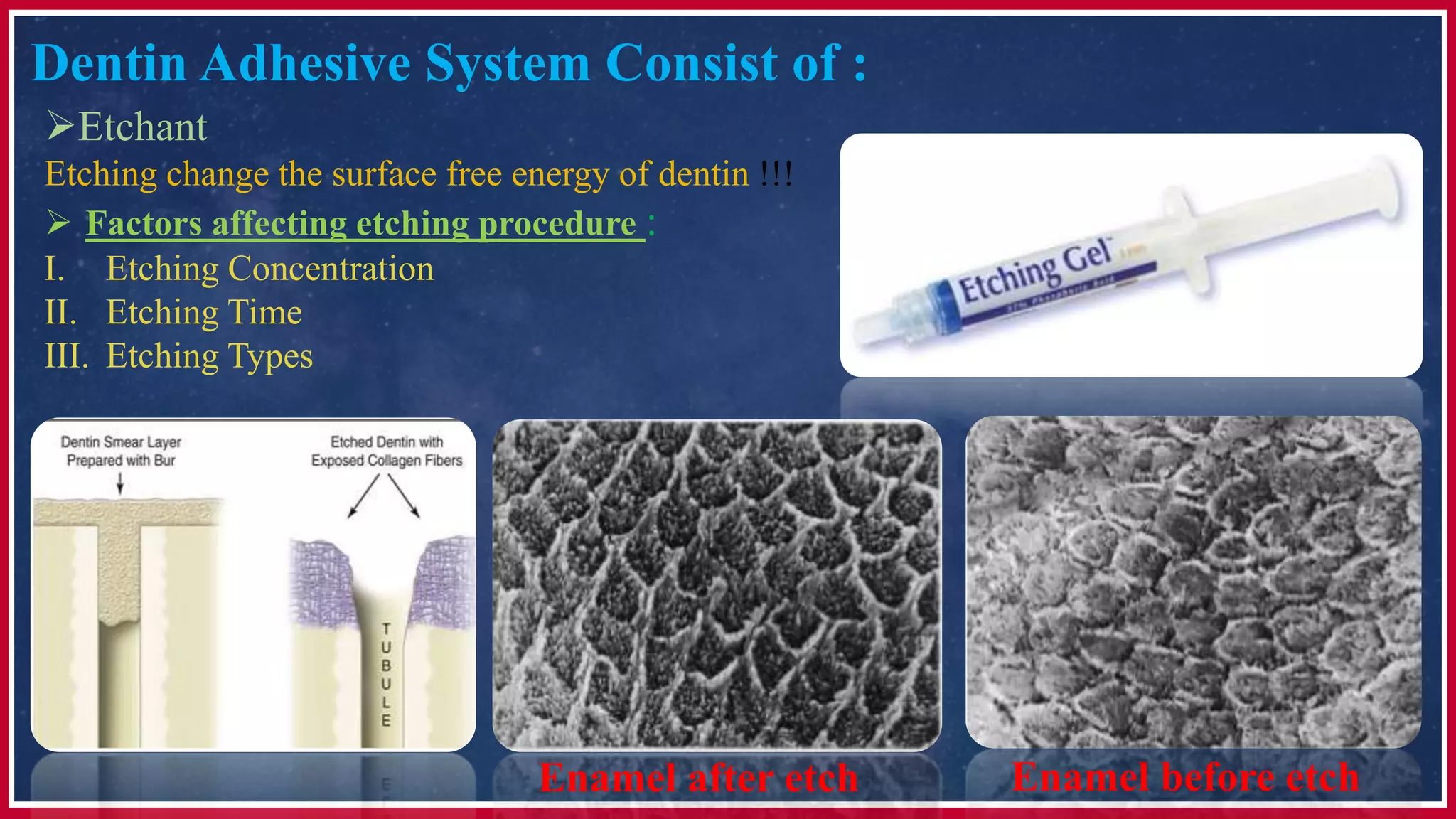
Dentin Adhesive System Consist of :
Etchant
Etching change the surface free energy of dentin !!!
 Factors affecting etching procedure :
I. Etching Concentration
II. Etching Time
III. Etching Types
Enamel before etchEnamel after etch
Primers
Hydrophilic monomers dissolved in :
 Organic (Ethanol , Acetone)
 Inorganic(Water)
Adhesive
Adhesives are hydrophobic dimethacrylate oligomers
Initiators & Accelerators
Most bonding agent are light cures and contain activators such as
camphorquinone and organic amine.
Other Ingredients
Fluoride as antimicrobial agents.
Gluteraldehyde as desensitizers.
Fillers
Ranging from 0.5-40% by weight includes nanofillers submicron glass.
They aid in easier to place on tooth and higher bond strength. Provide some
elasticity.
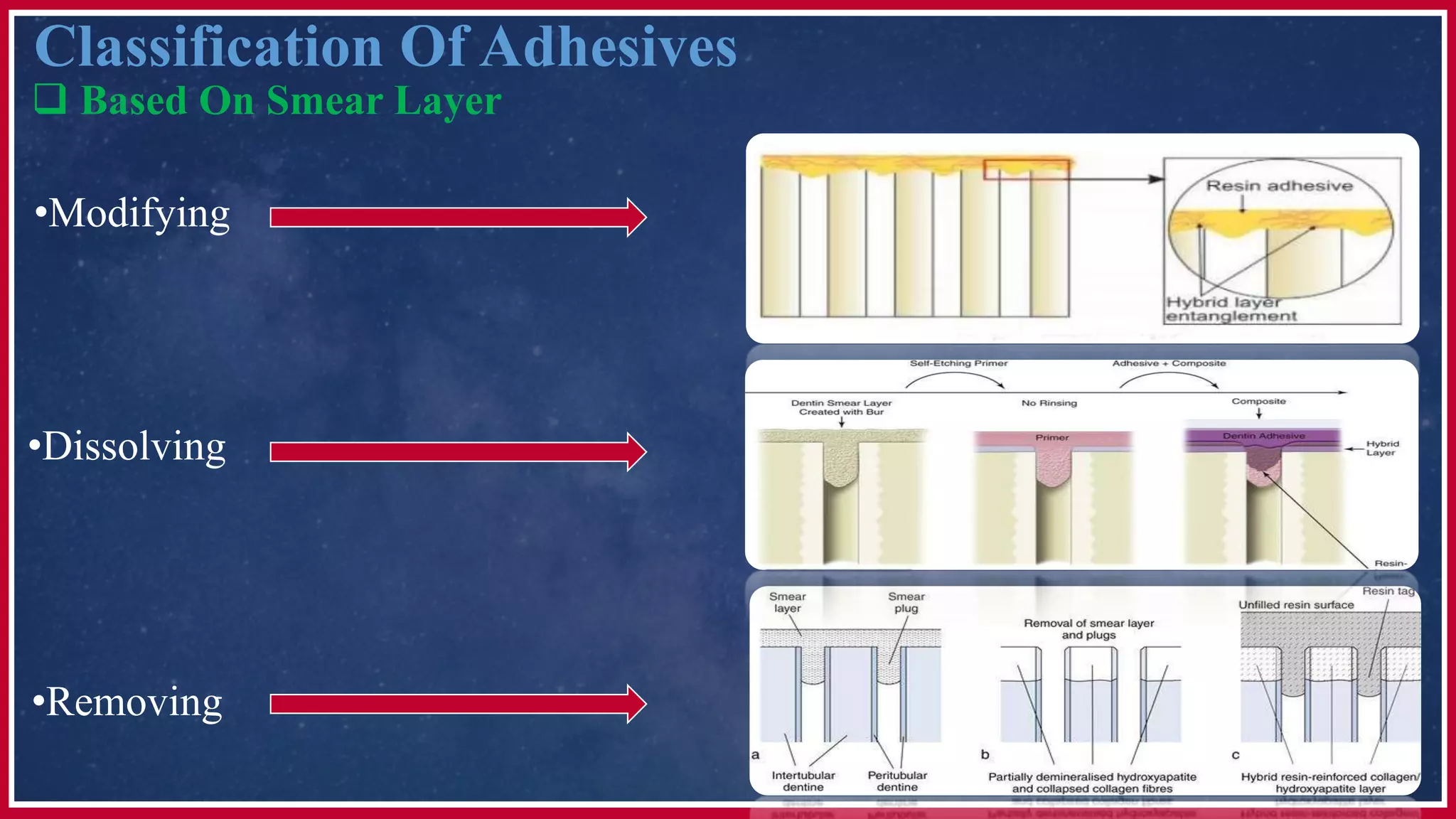
Classification Of Adhesives
 Based On Smear Layer
•Modifying
•Dissolving
•Removing
 Based On Number Of Steps
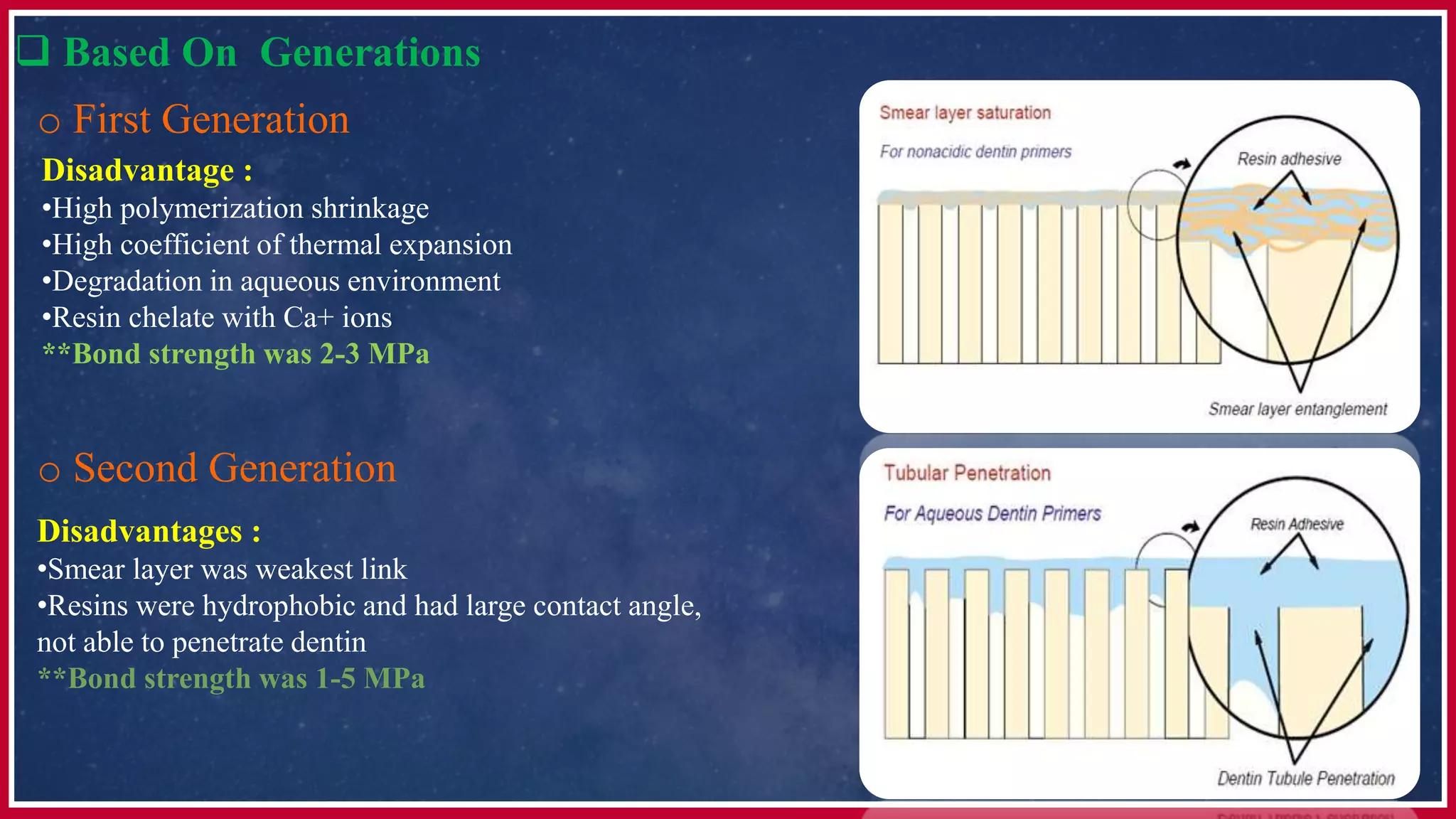
 Based On Generations
o First Generation
Disadvantage :
•High polymerization shrinkage
•High coefficient of thermal expansion
•Degradation in aqueous environment
•Resin chelate with Ca+ ions
**Bond strength was 2-3 MPa
o Second Generation
Disadvantages :
•Smear layer was weakest link
•Resins were hydrophobic and had large contact angle,
not able to penetrate dentin
**Bond strength was 1-5 MPa
o Third Generation
Disadvantage :
•Acidic conditionerprimers used creates precipitates on dentin surface preventing resin penetration
** Bond strength was 10-12 MPa
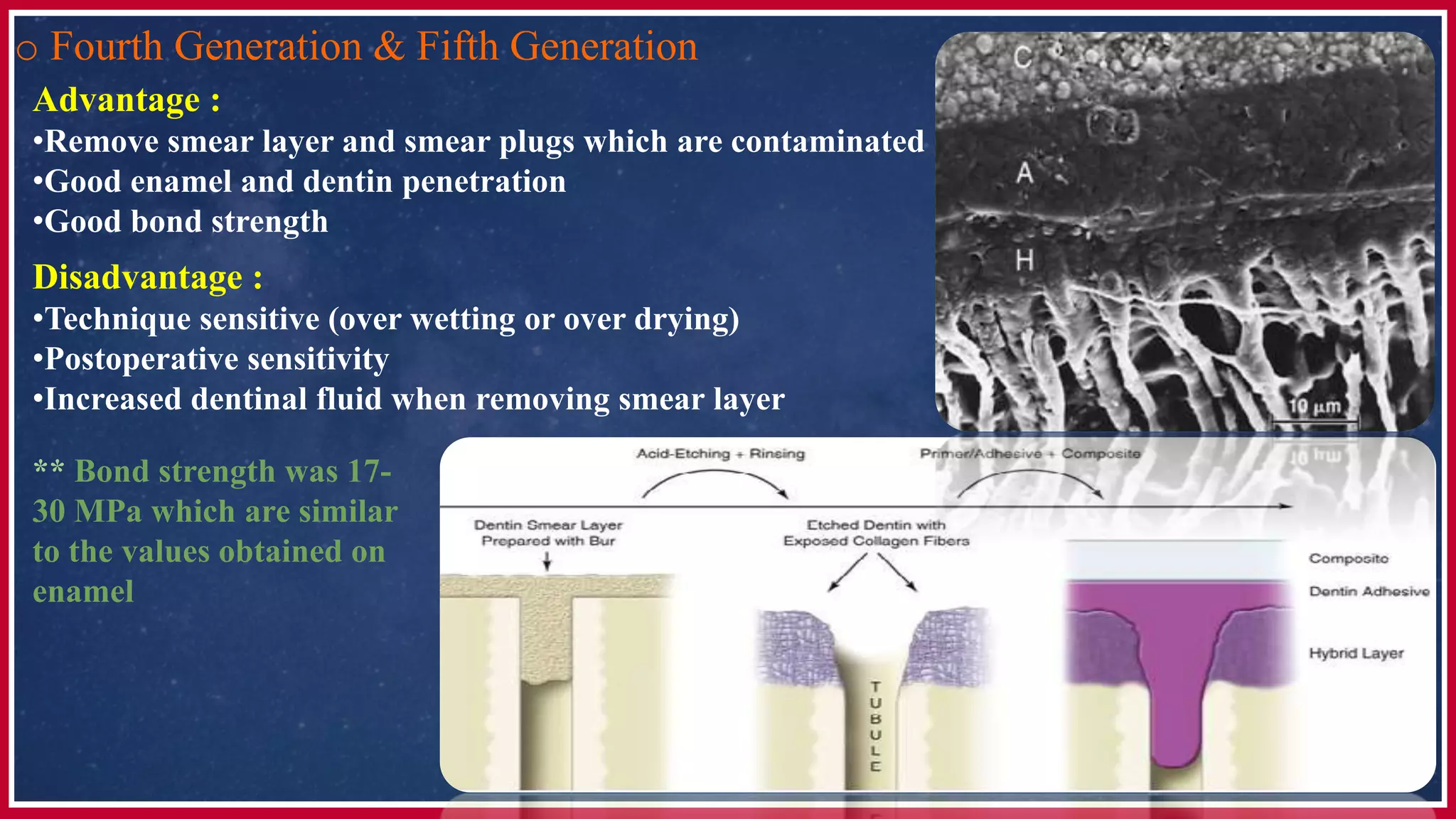
o Fourth Generation & Fifth Generation
Disadvantage :
•Technique sensitive (over wetting or over drying)
•Postoperative sensitivity
•Increased dentinal fluid when removing smear layer
** Bond strength was 17-
30 MPa which are similar
to the values obtained on
enamel
Advantage :
•Remove smear layer and smear plugs which are contaminated
•Good enamel and dentin penetration
•Good bond strength
o Fifth Generation
Advantage :
 Reduced working time “one step” or “one bottle” system.
 Minimize postoperative sensitivity
**Bond strength was 3-25 Mpa
Disadvantage :
 More susceptible to water degradation than 4th generation .
 Not all 5th generation adhesives are compatible with dual and self-cured or core materials
o Sixth Generation
Disadvantage :
•Non-rinsing conditioners did not etch enamel to the same depth as phosphoric acid
•Did not provide higher bond strengths or better clinical performance than phosphoric acid etchants
Advantage :
•No rinsing and drying steps
•Less technique sensitive
•Less postoperative sensitivity
•less likely to result in a discrepancy between the depth of demineralization and the depth of resin infiltration
o Seventh Generation
•Tend to behave as semi-permeable membranes, resulting in a hydrolytic
degradation of the resin–dentin interface
•A sufficiently wet surface is crucial to successful use of single-solution
systems
Single-solution bonding agents have the following limitations:
• Short shelf life
• Sensitivity to technique
• High variability in bond strength
•High volatility
o Eighth Generation
These are dual cured, self etching, nano reinforced, produces bond strength of more than 30
MPa to dentin and enamel with no post operative sensitivity.
It consists of three bottles:
•Etchant/conditioner
•Primer
•A separate hydrophobic bonding resin
** It resembles fourth generation materials that has etchant also has characteristics of the sixth
generation ( No-rinse system )
These Nanodhesives are solutions with nanoparticles which prevent agglomeration
thus producing :
I. High enamel and dentin bond strength
II. High stress absorption
III. Longer shelf life
IV. Durable marginal seal
V. Release of fluorides
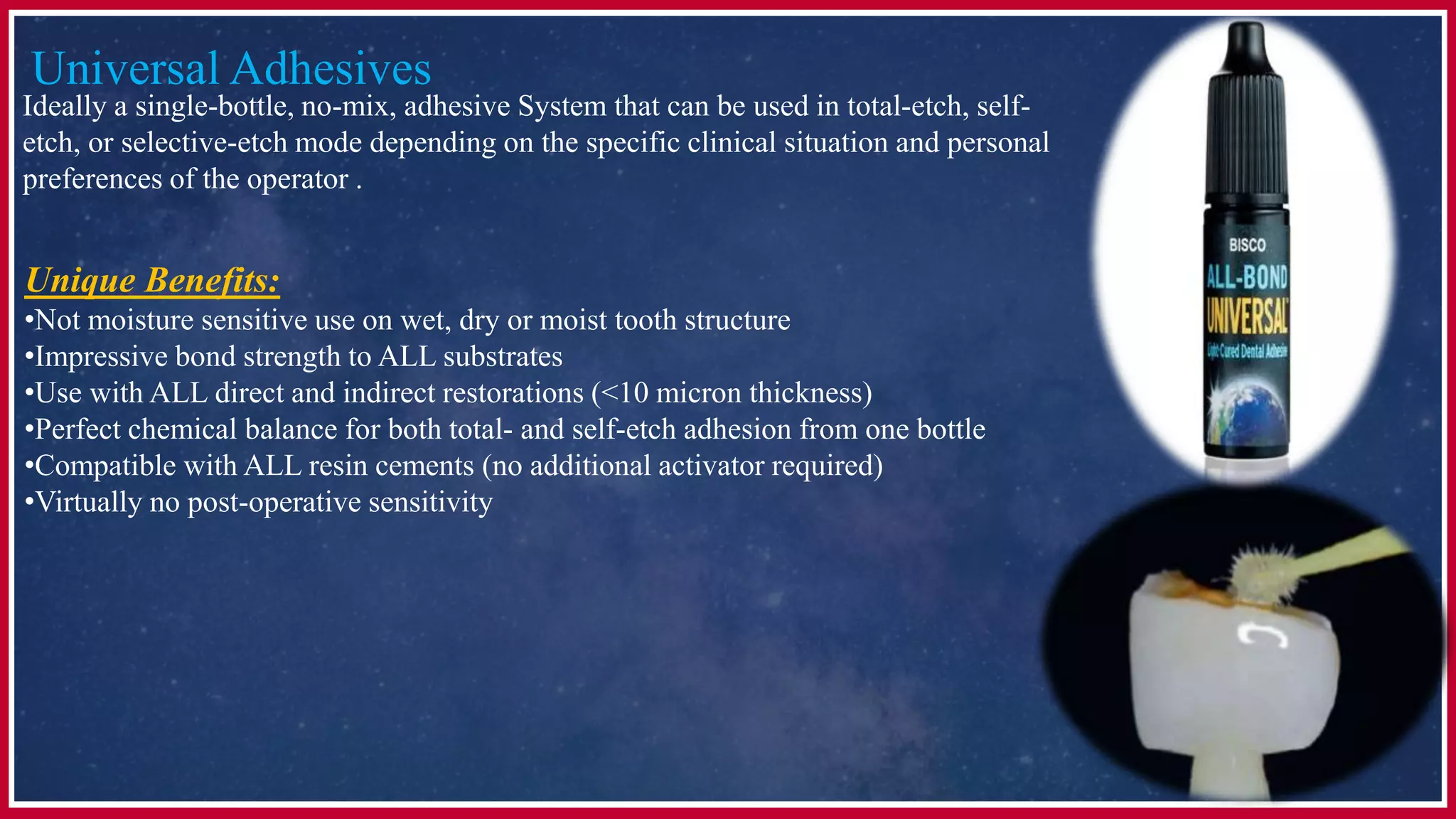
Universal Adhesives
Unique Benefits:
•Not moisture sensitive use on wet, dry or moist tooth structure
•Impressive bond strength to ALL substrates
•Use with ALL direct and indirect restorations (<10 micron thickness)
•Perfect chemical balance for both total- and self-etch adhesion from one bottle
•Compatible with ALL resin cements (no additional activator required)
•Virtually no post-operative sensitivity
Ideally a single-bottle, no-mix, adhesive System that can be used in total-etch, self-
etch, or selective-etch mode depending on the specific clinical situation and personal
preferences of the operator .
https://www.ncbi.nlm.nih.gov/pmc/articles/PMC5507161/
Moist Versus Dry Dentin Surfaces
Glistening Appearance
Role Of Proteins In Dentin Adhesion
 The dentin matrix contains MMPs
 MMPs play important role in degradation of
incompletely infiltrated collagen fibrils within
hybrid layer
 Chlorhexidine act as :-
 Rewetting of dentin
 Disinfectant
 MMPs inhibitor
Adhesion to Root Canal Dentin
Adhesive strategies used in root dentin are similar to those used in coronal dentin.
A. Substrate for Adhesion
 Dentin in the root walls of teeth with R.C.T. Contains 9% less moisture than root dentin of
vital teeth.
 The area occupied by sclerotic dentin in the root widens with aging.
 The apical area of root dentin has fewer tubules than the occlusal part.
Smear layer of root dentin includes two zones :-
I. The deepest part ( 1 to 2 μm thick and similar to that in coronal dentin.
II. The superficial zone forms smear plugs into the dentinal tubules to a depth of at least 10 μm
Composition of this deepest smear
 Organic tissue remnants
 Residual gutta-percha and
 Endodontic sealer
Adhesion to Root Canal Dentin
B. Restorative Technique
 C-factor in the root canal may exceed 200
 Minimal degree of compliance (or deformation) of the substrate in the root canal space makes all root canal
luting procedures that involve radical polymerization resins are challenging
Clinical Factors In Dentin Adhesion
•Aged dentin
•Dentin beneath a carious lesion
•Dentin exposed to the oral cavity in noncarious cervical lesions
•Primary Teeth
•Fluorosis Teeth
 The mineral content of dentin increases in different situations :-
 C-Factor
A ratio of bonded to unbonded surfaces
 Handpiece Oil
X Acid etching solutions do not remove oils
 Alcohol, ethanol-containing mouthwash, or other organic
solvent should be used to wipe down a preparation prior
to bonding
 An air- or water abrasion device is another option,
although generally less convenient.
 Inter-sulcular fluid
X Inter-sulcular fluid contact with the bonded surfaces
causes catastrophic failure.
 Re-etching for 15 seconds, rinsing, drying, and re-
bonding will recover the bond strength with most
materials.
 Saliva Contamination
Effect of saliva before polymerization causes greater decrease
in bond strength as compared to after polymerization
 Blood Contamination
 For 5th generation before polymerization causes greater
decrease than after polymerization
 For 7th & 8th generations after polymerization causes greater
decrease than before polymerization
**Blood contamination produce lowest shear bond strength in all conditions than saliva
 Rubber Dam
Good isolation of tooth from saliva or blood contamination or even from oral humidity increases
bonding strength
Bonding Application
I. Etching and rinse
II. Rinse with chlorhexidine
III. Removing remnant of water , chlorhexidine by cotton pellet
IV. Spread of adhesive liquid by fine brush on the etching site for (at least 20 sec.)
V. Evaporate the solvents as completely as possible by air-drying prior to polymerization.
VI. Light curing (20 sec)
Inadequate solvent evaporation lead to :-
 Incomplete resin polymerization,
 Nanoleakage
 Decreased bond strength.
Dental adhesive system

Dental adhesive system

  • 2.
    Adhesion (or Bonding):-is defined in dentistry as :the forces or energies between atoms or molecules at an interface that hold two surfaces together . Adhesive (adherent) : the material or film added to produce adhesion . Adherend : the substrate to which the material adhere e.g , enamel & dentin . Adaptation : maximum degree of proximity between two adjacent surfaces . Adhesive strength :is the load bearing capacity . Durability : is the time period of effective bond in clinical use .
  • 3.
    Mechanisms of bondingof resin-based materials to tooth structures :- 1. Mechanical :- penetration of resin and formation of resin tags within the tooth surface 2. Adsorption :- chemical bonding to the inorganic component (hydroxyapatite) or organic components (mainly type I collagen) of tooth structure 3. Diffusion :- precipitation of substances on the tooth surfaces to which resin monomers can bond mechanically or chemically 4. A combination of the previous three mechanisms Failures of adhesive joints :- I. Cohesive failure in the substrate . II. Cohesive failure within the adhesive . III. Adhesive failure, or failure at the interface of substrate and adhesive.
  • 4.
    Enamel Composition& HistologyDentin Composition & Histology
  • 5.
    Enamel Adheion  Acidetching transforms the smooth enamel into an irregular surface and increases its surface-free energy.  An etching time of 60 sec or 15 sec using 30% to 40% phosphoric acid??
  • 6.
     Monomers inthe material polymerize, and the material becomes interlocked with the enamel surface . Resin tags : is defined as : flow of adhesive around the calcium sulphate crystals rather than by the formation of resin tags within enamel microporosities  Types of resin tags : I. MACRO TAGS:- Which are formed at the periphery ,they are 2-5 nm in length . II. MICRO TAGS :- Which are formed at the cores of enamel prism.
  • 7.
    The Smear Layeris (3 to 5 microns thick ) of a residual organic and inorganic components as a result of tooth structure preparation which fill the orifices of dentinal tubules to form a smear pulgs .  It does haven a significant protective function, but most importantly for dentin bonding , it is not firmly attached to the underlying dentin. It consists of i. Ground dentin. ii. Fragments from the rotary instruments. iii. Denatured protein . iv. Both live and dead bacteria .
  • 8.
  • 9.
    Challenges In DentinBonding : I. Denntin is porous II. Dentin is hydrated tissue III. Bond strength affected by dentin depth IV.Smear layer formation and smear plug Factors Affect Dentin Permeability : •Diameter & length of tubules •Viscosity of dentin fluid •Vasoconstrictors in L.A. Porosities in dentin Dentin depth Smear pulg
  • 10.
    Dentin Adhesive SystemConsist of : Etchant Etching change the surface free energy of dentin !!!  Factors affecting etching procedure : I. Etching Concentration II. Etching Time III. Etching Types Enamel before etchEnamel after etch
  • 11.
    Primers Hydrophilic monomers dissolvedin :  Organic (Ethanol , Acetone)  Inorganic(Water) Adhesive Adhesives are hydrophobic dimethacrylate oligomers
  • 12.
    Initiators & Accelerators Mostbonding agent are light cures and contain activators such as camphorquinone and organic amine. Other Ingredients Fluoride as antimicrobial agents. Gluteraldehyde as desensitizers. Fillers Ranging from 0.5-40% by weight includes nanofillers submicron glass. They aid in easier to place on tooth and higher bond strength. Provide some elasticity.
  • 13.
    Classification Of Adhesives Based On Smear Layer •Modifying •Dissolving •Removing
  • 14.
     Based OnNumber Of Steps
  • 15.
     Based OnGenerations o First Generation Disadvantage : •High polymerization shrinkage •High coefficient of thermal expansion •Degradation in aqueous environment •Resin chelate with Ca+ ions **Bond strength was 2-3 MPa o Second Generation Disadvantages : •Smear layer was weakest link •Resins were hydrophobic and had large contact angle, not able to penetrate dentin **Bond strength was 1-5 MPa
  • 16.
    o Third Generation Disadvantage: •Acidic conditionerprimers used creates precipitates on dentin surface preventing resin penetration ** Bond strength was 10-12 MPa
  • 17.
    o Fourth Generation& Fifth Generation Disadvantage : •Technique sensitive (over wetting or over drying) •Postoperative sensitivity •Increased dentinal fluid when removing smear layer ** Bond strength was 17- 30 MPa which are similar to the values obtained on enamel Advantage : •Remove smear layer and smear plugs which are contaminated •Good enamel and dentin penetration •Good bond strength
  • 18.
    o Fifth Generation Advantage:  Reduced working time “one step” or “one bottle” system.  Minimize postoperative sensitivity **Bond strength was 3-25 Mpa Disadvantage :  More susceptible to water degradation than 4th generation .  Not all 5th generation adhesives are compatible with dual and self-cured or core materials
  • 19.
    o Sixth Generation Disadvantage: •Non-rinsing conditioners did not etch enamel to the same depth as phosphoric acid •Did not provide higher bond strengths or better clinical performance than phosphoric acid etchants Advantage : •No rinsing and drying steps •Less technique sensitive •Less postoperative sensitivity •less likely to result in a discrepancy between the depth of demineralization and the depth of resin infiltration
  • 20.
    o Seventh Generation •Tendto behave as semi-permeable membranes, resulting in a hydrolytic degradation of the resin–dentin interface •A sufficiently wet surface is crucial to successful use of single-solution systems Single-solution bonding agents have the following limitations: • Short shelf life • Sensitivity to technique • High variability in bond strength •High volatility
  • 21.
    o Eighth Generation Theseare dual cured, self etching, nano reinforced, produces bond strength of more than 30 MPa to dentin and enamel with no post operative sensitivity. It consists of three bottles: •Etchant/conditioner •Primer •A separate hydrophobic bonding resin ** It resembles fourth generation materials that has etchant also has characteristics of the sixth generation ( No-rinse system ) These Nanodhesives are solutions with nanoparticles which prevent agglomeration thus producing : I. High enamel and dentin bond strength II. High stress absorption III. Longer shelf life IV. Durable marginal seal V. Release of fluorides
  • 22.
    Universal Adhesives Unique Benefits: •Notmoisture sensitive use on wet, dry or moist tooth structure •Impressive bond strength to ALL substrates •Use with ALL direct and indirect restorations (<10 micron thickness) •Perfect chemical balance for both total- and self-etch adhesion from one bottle •Compatible with ALL resin cements (no additional activator required) •Virtually no post-operative sensitivity Ideally a single-bottle, no-mix, adhesive System that can be used in total-etch, self- etch, or selective-etch mode depending on the specific clinical situation and personal preferences of the operator .
  • 23.
  • 24.
    Moist Versus DryDentin Surfaces Glistening Appearance
  • 25.
    Role Of ProteinsIn Dentin Adhesion  The dentin matrix contains MMPs  MMPs play important role in degradation of incompletely infiltrated collagen fibrils within hybrid layer  Chlorhexidine act as :-  Rewetting of dentin  Disinfectant  MMPs inhibitor
  • 26.
    Adhesion to RootCanal Dentin Adhesive strategies used in root dentin are similar to those used in coronal dentin. A. Substrate for Adhesion  Dentin in the root walls of teeth with R.C.T. Contains 9% less moisture than root dentin of vital teeth.  The area occupied by sclerotic dentin in the root widens with aging.  The apical area of root dentin has fewer tubules than the occlusal part. Smear layer of root dentin includes two zones :- I. The deepest part ( 1 to 2 μm thick and similar to that in coronal dentin. II. The superficial zone forms smear plugs into the dentinal tubules to a depth of at least 10 μm Composition of this deepest smear  Organic tissue remnants  Residual gutta-percha and  Endodontic sealer
  • 27.
    Adhesion to RootCanal Dentin B. Restorative Technique  C-factor in the root canal may exceed 200  Minimal degree of compliance (or deformation) of the substrate in the root canal space makes all root canal luting procedures that involve radical polymerization resins are challenging
  • 28.
    Clinical Factors InDentin Adhesion •Aged dentin •Dentin beneath a carious lesion •Dentin exposed to the oral cavity in noncarious cervical lesions •Primary Teeth •Fluorosis Teeth  The mineral content of dentin increases in different situations :-  C-Factor A ratio of bonded to unbonded surfaces
  • 29.
     Handpiece Oil XAcid etching solutions do not remove oils  Alcohol, ethanol-containing mouthwash, or other organic solvent should be used to wipe down a preparation prior to bonding  An air- or water abrasion device is another option, although generally less convenient.  Inter-sulcular fluid X Inter-sulcular fluid contact with the bonded surfaces causes catastrophic failure.  Re-etching for 15 seconds, rinsing, drying, and re- bonding will recover the bond strength with most materials.
  • 30.
     Saliva Contamination Effectof saliva before polymerization causes greater decrease in bond strength as compared to after polymerization  Blood Contamination  For 5th generation before polymerization causes greater decrease than after polymerization  For 7th & 8th generations after polymerization causes greater decrease than before polymerization **Blood contamination produce lowest shear bond strength in all conditions than saliva
  • 31.
     Rubber Dam Goodisolation of tooth from saliva or blood contamination or even from oral humidity increases bonding strength
  • 32.
    Bonding Application I. Etchingand rinse II. Rinse with chlorhexidine III. Removing remnant of water , chlorhexidine by cotton pellet IV. Spread of adhesive liquid by fine brush on the etching site for (at least 20 sec.) V. Evaporate the solvents as completely as possible by air-drying prior to polymerization. VI. Light curing (20 sec) Inadequate solvent evaporation lead to :-  Incomplete resin polymerization,  Nanoleakage  Decreased bond strength.

Editor's Notes

  • #37 © Copyright PresentationGo.com – The free PowerPoint template library