Dehydration
 Krizza Anne C. Bucok, RN
CLINICAL PICTURE
The patient may have
• Increased thirst, dry mouth, swollen
  tongue
• Weakness, dizziness, palpitations
• Tachycardia, hypotension
• Confusion, sluggishness, fainting, seizu
  re
• Decreased urine output
IMMEDIATE INTERVENTIONS
• Assess VS
  – Check BP lying, sitting, standing
  – Note changes
• Assess current urine output and recent
  I&O
• Make sure patient is comfortable and
  safe
• Notify physician
• Document the following:
  – Patient’s status
  – Phone call to physician or NP
  – Physician or NP response
FOCUSED ASSESSMENT
Assess:
• VS including temperature
• Skin for
  color, moistness, temperature, integrity
• Mucous membranes
• LOC and orientation
• For patent IV access
STABILIZING AND
MONITORING
• Administer or oral IVF
• Closely monitor I&O
• Monitor urine output for adequate
  hourly rate
• Assess electrolytes, BUN, creatinine
• Maintain safe environment
• Provide oral care
• Chart patient status and convey to
  physician or NP
BE PREPARED TO
• Obtain IV access
• Obtain a nutritional/dietary assessment
• Insert a urinary catheter with a urometer
  to monitor hourly output
POSSIBLE ETIOLOGIES
• Gastroenteritis   • Gastrointestinal
• Stomatitis          obstruction
• Diabetic          • Heat stroke
  ketoacidosis      • Diabetes insipidus
• Febrile illness   • thyrotoxicosis
• Pharyngitis
• Burns
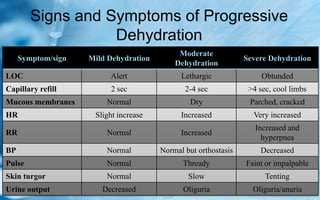
Signs and Symptoms of Progressive
                   Dehydration
                                            Moderate
     Symptom/sign   Mild Dehydration                            Severe Dehydration
                                           Dehydration
LOC                      Alert               Lethargic               Obtunded
Capillary refill         2 sec                2-4 sec            >4 sec, cool limbs
Mucous membranes        Normal                  Dry              Parched, cracked
HR                   Slight increase         Increased            Very increased
                                                                   Increased and
RR                      Normal               Increased
                                                                     hyperpnea
BP                      Normal         Normal but orthostasis       Decreased
Pulse                   Normal               Thready            Faint or impalpable
Skin turgor             Normal                 Slow                   Tenting
Urine output           Decreased             Oliguria             Oliguria/anuria
Dehydration

Dehydration

  • 1.
  • 2.
  • 3.
    The patient mayhave • Increased thirst, dry mouth, swollen tongue • Weakness, dizziness, palpitations • Tachycardia, hypotension • Confusion, sluggishness, fainting, seizu re • Decreased urine output
  • 4.
  • 5.
    • Assess VS – Check BP lying, sitting, standing – Note changes • Assess current urine output and recent I&O • Make sure patient is comfortable and safe • Notify physician
  • 6.
    • Document thefollowing: – Patient’s status – Phone call to physician or NP – Physician or NP response
  • 7.
  • 8.
    Assess: • VS includingtemperature • Skin for color, moistness, temperature, integrity • Mucous membranes • LOC and orientation • For patent IV access
  • 9.
  • 10.
    • Administer ororal IVF • Closely monitor I&O • Monitor urine output for adequate hourly rate • Assess electrolytes, BUN, creatinine • Maintain safe environment • Provide oral care • Chart patient status and convey to physician or NP
  • 11.
  • 12.
    • Obtain IVaccess • Obtain a nutritional/dietary assessment • Insert a urinary catheter with a urometer to monitor hourly output
  • 13.
  • 14.
    • Gastroenteritis • Gastrointestinal • Stomatitis obstruction • Diabetic • Heat stroke ketoacidosis • Diabetes insipidus • Febrile illness • thyrotoxicosis • Pharyngitis • Burns
  • 15.
    Signs and Symptomsof Progressive Dehydration Moderate Symptom/sign Mild Dehydration Severe Dehydration Dehydration LOC Alert Lethargic Obtunded Capillary refill 2 sec 2-4 sec >4 sec, cool limbs Mucous membranes Normal Dry Parched, cracked HR Slight increase Increased Very increased Increased and RR Normal Increased hyperpnea BP Normal Normal but orthostasis Decreased Pulse Normal Thready Faint or impalpable Skin turgor Normal Slow Tenting Urine output Decreased Oliguria Oliguria/anuria