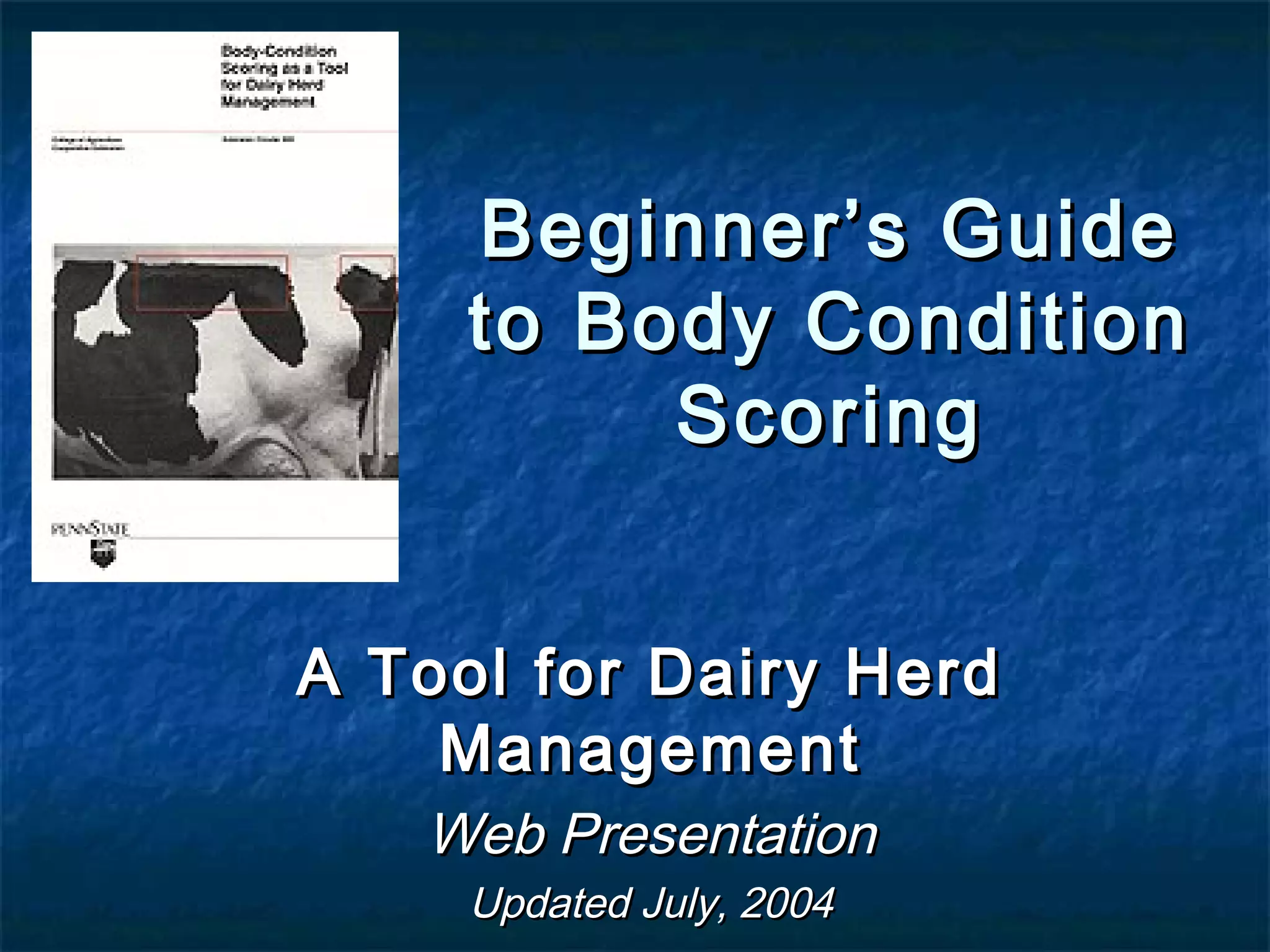
Beginner’s Guide
     to Body Condition
          Scoring


A Tool for Dairy Herd
    Management
   Web Presentation
     Updated July, 2004
   Using body condition scoring to fine tune
    herd nutrition and health management
    has become a widely accepted practice.

   This presentation is designed to
       Introduce you to body condition scoring
       Provide examples of cows scored 1 to 5
Evaluating Body Condition vs. Type

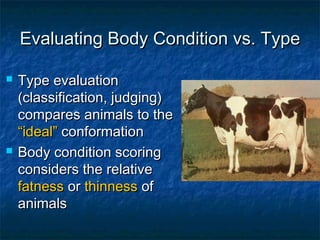
   Type evaluation
    (classification, judging)
    compares animals to the
    “ideal” conformation
   Body condition scoring
    considers the relative
    fatness or thinness of
    animals
Goals of Body Condition
               Scoring
   Early detection of potential health
    problems
   Identify areas for improved feeding
    management
   Improve herd health, production,
    reproduction, profitability
Body Condition Scoring
   Visual and tactile evaluation of body fat
    reserves
   Indication of energy balance
   Scale of 1 to 5, increments of 0.25
   Body Condition Score = BCS
       BCS 1 = emaciated cow (too thin)
       BCS 3 = average body condition
       BCS 5 = excessively fat cow
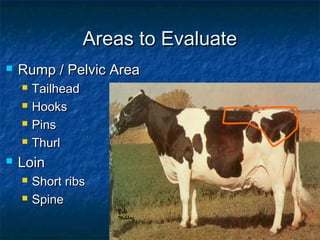
Areas to Evaluate
   Rump / Pelvic Area
       Tailhead
       Hooks
       Pins
       Thurl
   Loin
       Short ribs
       Spine
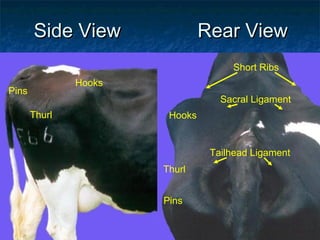
Side View                Rear View
                                     Short Ribs
               Hooks
Pins
                                   Sacral Ligament
       Thurl            Hooks


                                 Tailhead Ligament
                       Thurl


                       Pins
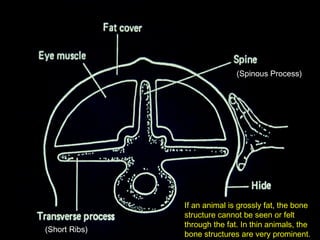
(Spinous Process)


               If an animal is grossly fat, the bone
               structure cannot be seen or felt
               through the fat. In thin animals, the
(Short Ribs)
               bone structures are very prominent.
Step-by-Step Process
   See “Learn to Score Body Condition”
    presentation from Penn State
   Not a perfect science
       Scores should be similar (± 0.25)
          When measured on one animal or
          When measured by different people

       Separates average condition from extremes
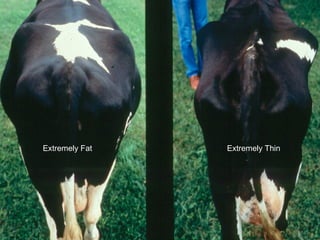
Extremely Fat   Extremely Thin
Examples of Scores
Presented to help you see the major differences –
    for a more detailed system of scoring, see
          “Learn to Score Body Condition”
BCS 1: Severely Under-conditioned

    Side view
        Bones of tailhead easy to see
        Prominent backbone
        Tips of short ribs are clearly visible
        Hooks, thurl, and pins very prominent


                                             Photo Not Available
BCS 1
Rear view                 All boney
                           prominences easily
                           visible
                          Hooks, pins, spine, &
                           ribs very sharp
 Photo Not Available
                          Deep cavities around
                           tailhead
                          Thin legs, poor
                           muscle condition
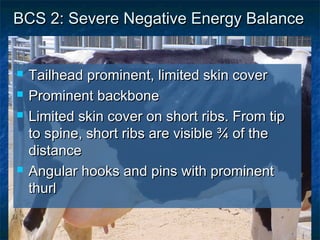
BCS 2: Severe Negative Energy Balance


   Tailhead prominent, limited skin cover
   Prominent backbone
   Limited skin cover on short ribs. From tip
    to spine, short ribs are visible ¾ of the
    distance
   Angular hooks and pins with prominent
    thurl
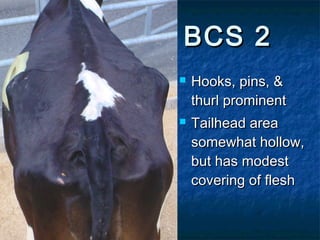
BCS 2
   Hooks, pins, &
    thurl prominent
   Tailhead area
    somewhat hollow,
    but has modest
    covering of flesh
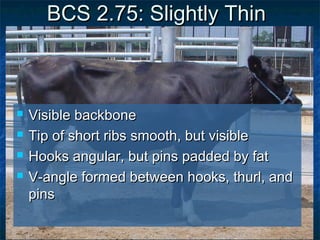
BCS 2.75: Slightly Thin


   Visible backbone
   Tip of short ribs smooth, but visible
   Hooks angular, but pins padded by fat
   V-angle formed between hooks, thurl, and
    pins
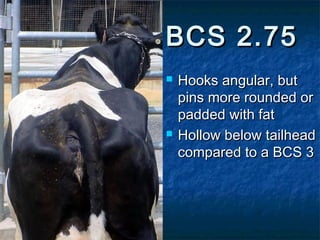
BCS 2.75
   Hooks angular, but
    pins more rounded or
    padded with fat
   Hollow below tailhead
    compared to a BCS 3
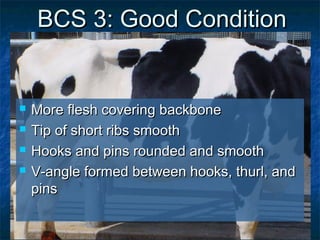
BCS 3: Good Condition


   More flesh covering backbone
   Tip of short ribs smooth
   Hooks and pins rounded and smooth
   V-angle formed between hooks, thurl, and
    pins
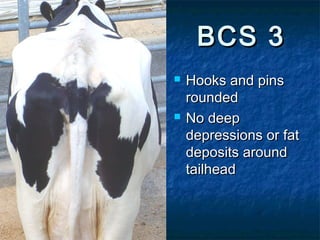
BCS 3
   Hooks and pins
    rounded
   No deep
    depressions or fat
    deposits around
    tailhead
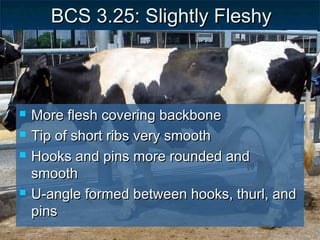
BCS 3.25: Slightly Fleshy


   More flesh covering backbone
   Tip of short ribs very smooth
   Hooks and pins more rounded and
    smooth
   U-angle formed between hooks, thurl, and
    pins
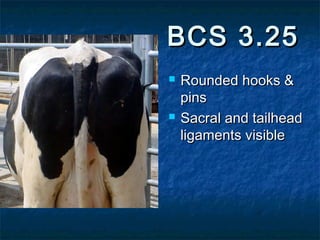
BCS 3.25
   Rounded hooks &
    pins
   Sacral and tailhead
    ligaments visible
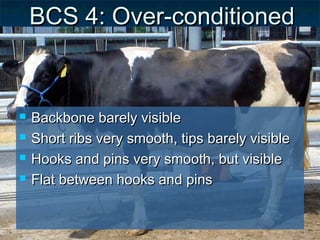
BCS 4: Over-conditioned


   Backbone barely visible
   Short ribs very smooth, tips barely visible
   Hooks and pins very smooth, but visible
   Flat between hooks and pins
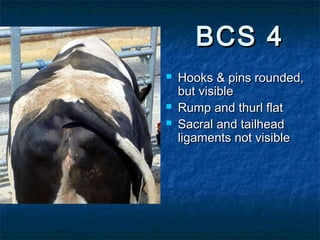
BCS 4
   Hooks & pins rounded,
    but visible
   Rump and thurl flat
   Sacral and tailhead
    ligaments not visible
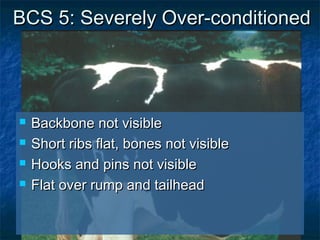
BCS 5: Severely Over-conditioned


   Backbone not visible
   Short ribs flat, bones not visible
   Hooks and pins not visible
   Flat over rump and tailhead
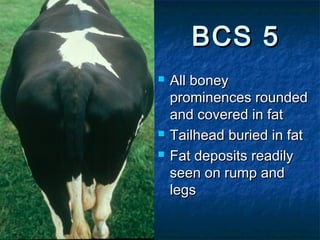
BCS 5
   All boney
    prominences rounded
    and covered in fat
   Tailhead buried in fat
   Fat deposits readily
    seen on rump and
    legs
Summary
   The body condition scoring scale
       Under-conditioned cows = BCS 1
       Over-conditioned cows = BCS 5

   Determining a cow's BCS
       Look at pelvic area and loin
       Fat deposits become evident  cow is over
        conditioned
       Bone structures become prominent  cow is thin

Beginner's Guide to Body Condition Scoring

  • 1.
    Beginner’s Guide to Body Condition Scoring A Tool for Dairy Herd Management Web Presentation Updated July, 2004
  • 2.
    Using body condition scoring to fine tune herd nutrition and health management has become a widely accepted practice.  This presentation is designed to  Introduce you to body condition scoring  Provide examples of cows scored 1 to 5
  • 3.
    Evaluating Body Conditionvs. Type  Type evaluation (classification, judging) compares animals to the “ideal” conformation  Body condition scoring considers the relative fatness or thinness of animals
  • 4.
    Goals of BodyCondition Scoring  Early detection of potential health problems  Identify areas for improved feeding management  Improve herd health, production, reproduction, profitability
  • 5.
    Body Condition Scoring  Visual and tactile evaluation of body fat reserves  Indication of energy balance  Scale of 1 to 5, increments of 0.25  Body Condition Score = BCS  BCS 1 = emaciated cow (too thin)  BCS 3 = average body condition  BCS 5 = excessively fat cow
  • 6.
    Areas to Evaluate  Rump / Pelvic Area  Tailhead  Hooks  Pins  Thurl  Loin  Short ribs  Spine
  • 7.
    Side View Rear View Short Ribs Hooks Pins Sacral Ligament Thurl Hooks Tailhead Ligament Thurl Pins
  • 8.
    (Spinous Process) If an animal is grossly fat, the bone structure cannot be seen or felt through the fat. In thin animals, the (Short Ribs) bone structures are very prominent.
  • 9.
    Step-by-Step Process  See “Learn to Score Body Condition” presentation from Penn State  Not a perfect science  Scores should be similar (± 0.25)  When measured on one animal or  When measured by different people  Separates average condition from extremes
  • 10.
    Extremely Fat Extremely Thin
  • 11.
    Examples of Scores Presentedto help you see the major differences – for a more detailed system of scoring, see “Learn to Score Body Condition”
  • 12.
    BCS 1: SeverelyUnder-conditioned  Side view  Bones of tailhead easy to see  Prominent backbone  Tips of short ribs are clearly visible  Hooks, thurl, and pins very prominent Photo Not Available
  • 13.
    BCS 1 Rear view  All boney prominences easily visible  Hooks, pins, spine, & ribs very sharp Photo Not Available  Deep cavities around tailhead  Thin legs, poor muscle condition
  • 14.
    BCS 2: SevereNegative Energy Balance  Tailhead prominent, limited skin cover  Prominent backbone  Limited skin cover on short ribs. From tip to spine, short ribs are visible ¾ of the distance  Angular hooks and pins with prominent thurl
  • 15.
    BCS 2  Hooks, pins, & thurl prominent  Tailhead area somewhat hollow, but has modest covering of flesh
  • 16.
    BCS 2.75: SlightlyThin  Visible backbone  Tip of short ribs smooth, but visible  Hooks angular, but pins padded by fat  V-angle formed between hooks, thurl, and pins
  • 17.
    BCS 2.75  Hooks angular, but pins more rounded or padded with fat  Hollow below tailhead compared to a BCS 3
  • 18.
    BCS 3: GoodCondition  More flesh covering backbone  Tip of short ribs smooth  Hooks and pins rounded and smooth  V-angle formed between hooks, thurl, and pins
  • 19.
    BCS 3  Hooks and pins rounded  No deep depressions or fat deposits around tailhead
  • 20.
    BCS 3.25: SlightlyFleshy  More flesh covering backbone  Tip of short ribs very smooth  Hooks and pins more rounded and smooth  U-angle formed between hooks, thurl, and pins
  • 21.
    BCS 3.25  Rounded hooks & pins  Sacral and tailhead ligaments visible
  • 22.
    BCS 4: Over-conditioned  Backbone barely visible  Short ribs very smooth, tips barely visible  Hooks and pins very smooth, but visible  Flat between hooks and pins
  • 23.
    BCS 4  Hooks & pins rounded, but visible  Rump and thurl flat  Sacral and tailhead ligaments not visible
  • 24.
    BCS 5: SeverelyOver-conditioned  Backbone not visible  Short ribs flat, bones not visible  Hooks and pins not visible  Flat over rump and tailhead
  • 25.
    BCS 5  All boney prominences rounded and covered in fat  Tailhead buried in fat  Fat deposits readily seen on rump and legs
  • 26.
    Summary  The body condition scoring scale  Under-conditioned cows = BCS 1  Over-conditioned cows = BCS 5  Determining a cow's BCS  Look at pelvic area and loin  Fat deposits become evident  cow is over conditioned  Bone structures become prominent  cow is thin

Editor's Notes

  • #20 Score 3 is used for cows in good condition. This is a result of proper attention given to ration formulation, monitoring cows for changes in bodyweight, and making ration adjustments when necessary.