Deepavali or diwali (festival of light )
Deep(light) + avali ( a row of )
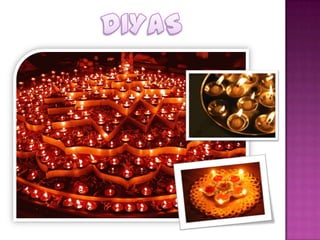
Involves the lighting of small clay lamps (diyas
or dipas) filled with oil.
Celebrated between mid october and mid
december for difference reason
To commemorate the story of rama and sita.
Means the triumph of good over evil.
These lamps are kept on during the night and
one‟s house is cleaned, in order to make the
goddess lakshmi feel welcome.
The celebration of Diwali last for four to five
Days
Each day has its own ideologies and special
thoughts
The five days:
 1st day: Dhanteras
 2nd day: Choti Diwali
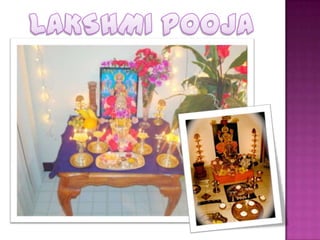
 3rd day: Lakshmi Pooja
 4th day: Padwa & Govardhan Pooja
 5th day: Bhai Duj
Also known as; Dhantrayodashi (seek
blessing of Goddess Lakshmi)
Falls on 13th day of the dark fortnight in
the month of Kartik (Oct – Nov)
“Dhan” = wealth
A Diwali eve
Lakshmi is worshipped to provide
prosperity & well-being
Observe a fast – broken only after sunset with
sweetmeats, puri & other delicacies.
In villages – cattle are adorned & worshipped
by farmers
In South India – cows are offered special
veneration and they are adorned &
worshipped on this day
Story of Yamadeepdan
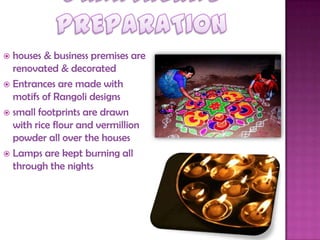
 houses & business premises are
renovated & decorated
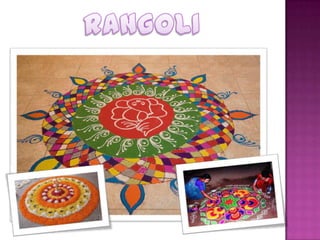
 Entrances are made with
motifs of Rangoli designs
 small footprints are drawn
with rice flour and vermillion
powder all over the houses
 Lamps are kept burning all
through the nights
HISTORY
Narak Chaturdashi
Worshipping Kali, goddess of
strength
Special emphasis
• Defeating Lord Indra
• Snatched Aditi, the Mother Goddess
• Imprisoned 16000 daughters of Gods and saints in his harem
• Lord Krishna killed the demon before Choti Diwali
• Liberated the women
• Recovering the Aditi
• Lord Krishna smeared his forehead with demon‟s blood
• Back home in wee hours of Narak Chaturdashi
• Womenfolk scented oil on the Lord‟s body and gave him
a special bath
• Then, the custom of taking bath before sunrise on Narak
Chaturdashi began
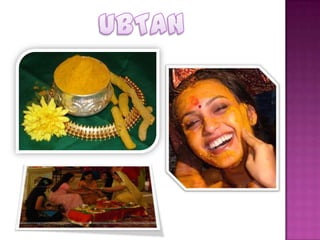
Wake up early in the
morning, break bitter fruit, apply
„ubtan‟ (kumkum oil paste) and
take bath
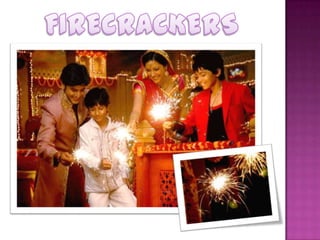
Lighten the diyas and candle in the
evening and burst the crackers
(mark the celebration)
Badi Diwali
Main day of Diwali
15th of the lunar month
Goddess of wealthy and
generosity
Worship to acquire/preserve
wealth
“Iswarigm Sarva Bhootanam”-
supreme goddess (Sri
Vaishnava)
Put small oil lamps outside
homes and hope Lakshmi will
comes and gives blessing
Lamps are lit in the evening
Draw Rangoli at the doorstep
Lakshmi only goes to the clean
house and hardworking people
 Celebrated on a day after Deepavali
 GUDI PADWA-celebrated as a symbol of love and
affection between husband and wife.
THE CELEBRATION OF GUDI PADWA
 Exchanged of gifts between married couple
 Parents will invite married daughter and son-in-
law for a special meal and giving them gifts
 GOVARDHAN PUJA-celebrated to commerate
the lifting of mount Govardhan by Lord Krishna
Lord Inda(god of rain) was so angry,then
he sent a deluge to submerge the village
called Gokul
Lord Krishna,lifted the amount of
Govardhan,so that the villagers could take
shelter under it and save from the
torrential rain
Lord Indra accept the supremacy of Lord
Krishna
Also celebrated as “Annakoot”
People will stay awake for the whole night
and cook 56 or 108 different type of foods as
“Chappan Bhog” to offered to Lord Krishna
Deities are given milk bath and dressed in
shining attires
People start to raise various of sweets in
shape of mountain
Devotees can take Prasad from the
mountain of sweets
Celebrated on a day after Deepavali
Other names:
 Yamadwitheya
 Bhai Foto
 Bhai Tika
Celebrated to:
 cultivate the love between brothers and
sisters
 spirit of love and togetherness
According to religious scriptures Yamaraj, the
God of Death went to visit his sister‟s house
His sister,Yami was happy to see him and
welcomed him by putting an auspicious mark
on his forehead for his welfare
Yami and Yamraj then shared a meal
He proclaimed that every year on the dum
day,if a sister puts a tilak on her brother‟s
forehead,then no one can harm her brother
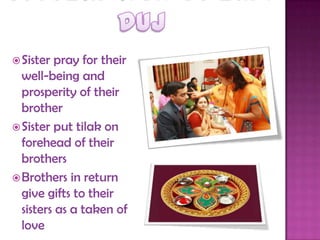
Sister pray for their
well-being and
prosperity of their
brother
Sister put tilak on
forehead of their
brothers
Brothers in return
give gifts to their
sisters as a taken of
love
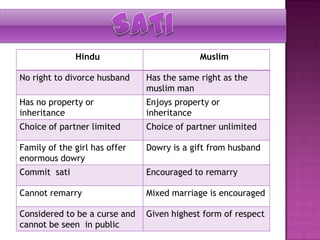
Hindu Muslim
No right to divorce husband Has the same right as the
muslim man
Has no property or
inheritance
Enjoys property or
inheritance
Choice of partner limited Choice of partner unlimited
Family of the girl has offer
enormous dowry
Dowry is a gift from husband
Commit sati Encouraged to remarry
Cannot remarry Mixed marriage is encouraged
Considered to be a curse and
cannot be seen in public
Given highest form of respect

Deepavali (Religions In Malaysia)

  • 2.
    Deepavali or diwali(festival of light ) Deep(light) + avali ( a row of ) Involves the lighting of small clay lamps (diyas or dipas) filled with oil. Celebrated between mid october and mid december for difference reason To commemorate the story of rama and sita. Means the triumph of good over evil. These lamps are kept on during the night and one‟s house is cleaned, in order to make the goddess lakshmi feel welcome.
  • 4.
    The celebration ofDiwali last for four to five Days Each day has its own ideologies and special thoughts The five days:  1st day: Dhanteras  2nd day: Choti Diwali  3rd day: Lakshmi Pooja  4th day: Padwa & Govardhan Pooja  5th day: Bhai Duj
  • 5.
    Also known as;Dhantrayodashi (seek blessing of Goddess Lakshmi) Falls on 13th day of the dark fortnight in the month of Kartik (Oct – Nov) “Dhan” = wealth A Diwali eve Lakshmi is worshipped to provide prosperity & well-being
  • 6.
    Observe a fast– broken only after sunset with sweetmeats, puri & other delicacies. In villages – cattle are adorned & worshipped by farmers In South India – cows are offered special veneration and they are adorned & worshipped on this day
  • 7.
  • 8.
     houses &business premises are renovated & decorated  Entrances are made with motifs of Rangoli designs  small footprints are drawn with rice flour and vermillion powder all over the houses  Lamps are kept burning all through the nights
  • 9.
    HISTORY Narak Chaturdashi Worshipping Kali,goddess of strength Special emphasis
  • 10.
    • Defeating LordIndra • Snatched Aditi, the Mother Goddess • Imprisoned 16000 daughters of Gods and saints in his harem • Lord Krishna killed the demon before Choti Diwali • Liberated the women • Recovering the Aditi • Lord Krishna smeared his forehead with demon‟s blood • Back home in wee hours of Narak Chaturdashi • Womenfolk scented oil on the Lord‟s body and gave him a special bath • Then, the custom of taking bath before sunrise on Narak Chaturdashi began
  • 11.
    Wake up earlyin the morning, break bitter fruit, apply „ubtan‟ (kumkum oil paste) and take bath Lighten the diyas and candle in the evening and burst the crackers (mark the celebration)
  • 15.
    Badi Diwali Main dayof Diwali 15th of the lunar month
  • 16.
    Goddess of wealthyand generosity Worship to acquire/preserve wealth “Iswarigm Sarva Bhootanam”- supreme goddess (Sri Vaishnava)
  • 17.
    Put small oillamps outside homes and hope Lakshmi will comes and gives blessing Lamps are lit in the evening Draw Rangoli at the doorstep Lakshmi only goes to the clean house and hardworking people
  • 20.
     Celebrated ona day after Deepavali  GUDI PADWA-celebrated as a symbol of love and affection between husband and wife. THE CELEBRATION OF GUDI PADWA  Exchanged of gifts between married couple  Parents will invite married daughter and son-in- law for a special meal and giving them gifts  GOVARDHAN PUJA-celebrated to commerate the lifting of mount Govardhan by Lord Krishna
  • 21.
    Lord Inda(god ofrain) was so angry,then he sent a deluge to submerge the village called Gokul Lord Krishna,lifted the amount of Govardhan,so that the villagers could take shelter under it and save from the torrential rain Lord Indra accept the supremacy of Lord Krishna
  • 22.
    Also celebrated as“Annakoot” People will stay awake for the whole night and cook 56 or 108 different type of foods as “Chappan Bhog” to offered to Lord Krishna Deities are given milk bath and dressed in shining attires People start to raise various of sweets in shape of mountain Devotees can take Prasad from the mountain of sweets
  • 23.
    Celebrated on aday after Deepavali Other names:  Yamadwitheya  Bhai Foto  Bhai Tika Celebrated to:  cultivate the love between brothers and sisters  spirit of love and togetherness
  • 24.
    According to religiousscriptures Yamaraj, the God of Death went to visit his sister‟s house His sister,Yami was happy to see him and welcomed him by putting an auspicious mark on his forehead for his welfare Yami and Yamraj then shared a meal He proclaimed that every year on the dum day,if a sister puts a tilak on her brother‟s forehead,then no one can harm her brother
  • 25.
    Sister pray fortheir well-being and prosperity of their brother Sister put tilak on forehead of their brothers Brothers in return give gifts to their sisters as a taken of love
  • 26.
    Hindu Muslim No rightto divorce husband Has the same right as the muslim man Has no property or inheritance Enjoys property or inheritance Choice of partner limited Choice of partner unlimited Family of the girl has offer enormous dowry Dowry is a gift from husband Commit sati Encouraged to remarry Cannot remarry Mixed marriage is encouraged Considered to be a curse and cannot be seen in public Given highest form of respect