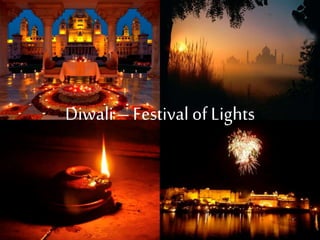
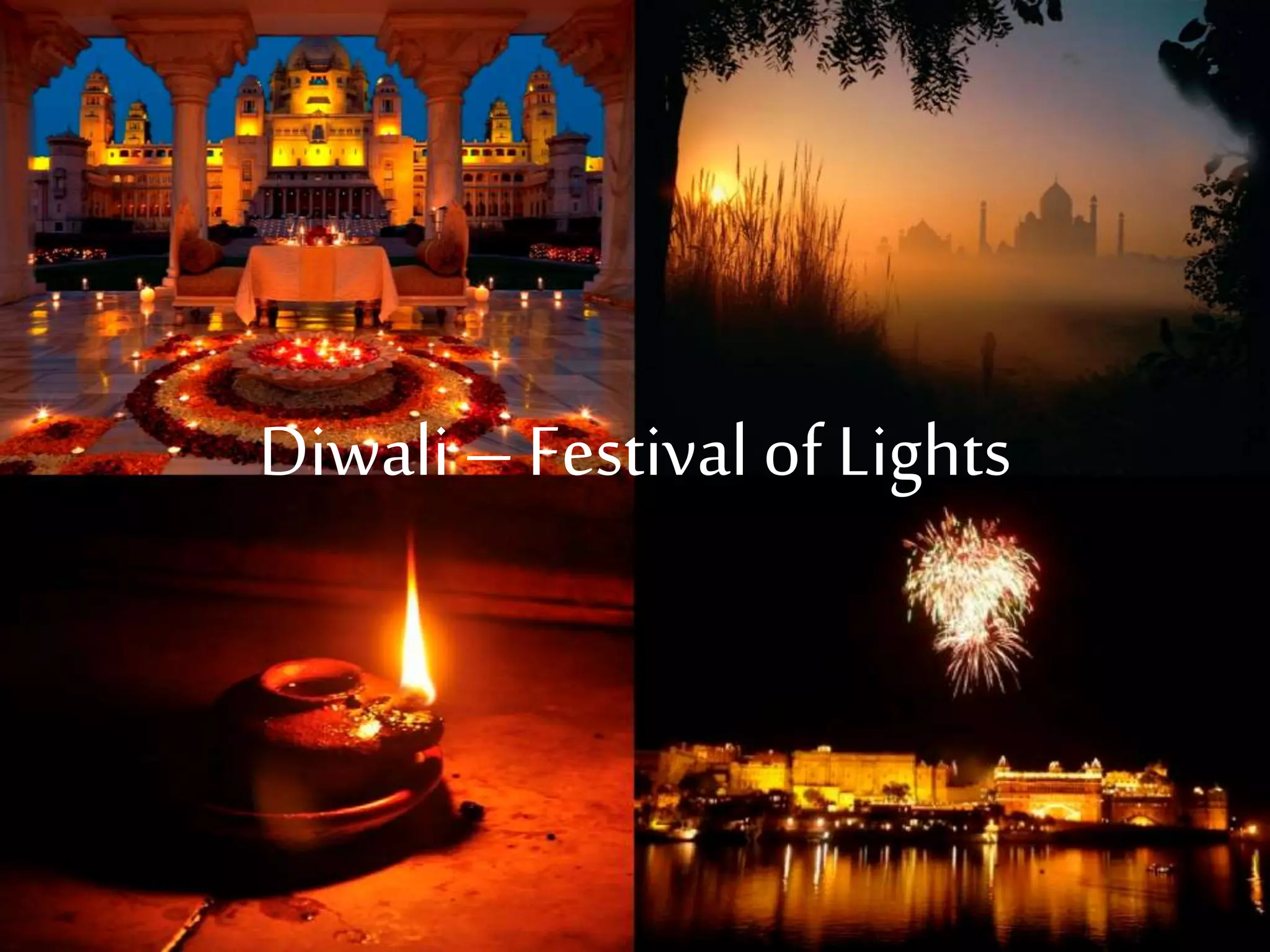
Diwali – Festival of Lights
“Deepavali” or Diwali is the Indian Festival 
of lights. 
‘Deepa’ means lamp or light and ‘Vali’ 
means ‘string of’.
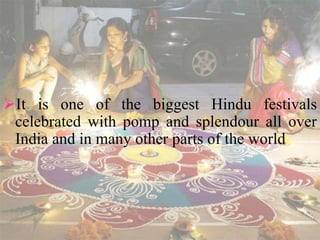
It is one of the biggest Hindu festivals 
celebrated with pomp and splendour all over 
India and in many other parts of the world
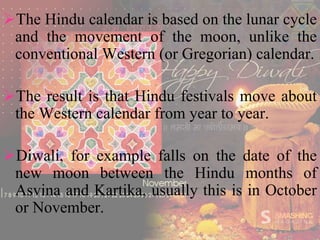
The Hindu calendar is based on the lunar cycle 
and the movement of the moon, unlike the 
conventional Western (or Gregorian) calendar. 
The result is that Hindu festivals move about 
the Western calendar from year to year. 
Diwali, for example falls on the date of the 
new moon between the Hindu months of 
Asvina and Kartika, usually this is in October 
or November.
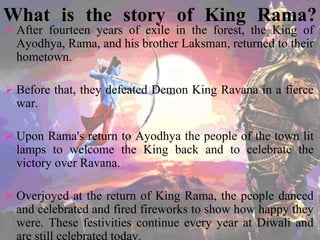
What is the story of King Rama? 
 After fourteen years of exile in the forest, the King of 
Ayodhya, Rama, and his brother Laksman, returned to their 
hometown. 
 Before that, they defeated Demon King Ravana in a fierce 
war. 
 Upon Rama's return to Ayodhya the people of the town lit 
lamps to welcome the King back and to celebrate the 
victory over Ravana. 
 Overjoyed at the return of King Rama, the people danced 
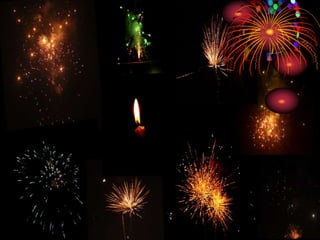
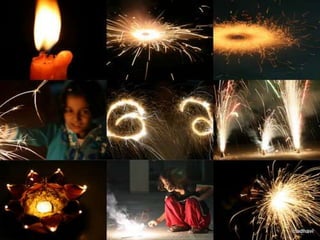
and celebrated and fired fireworks to show how happy they 
were. These festivities continue every year at Diwali and 
are still celebrated today.
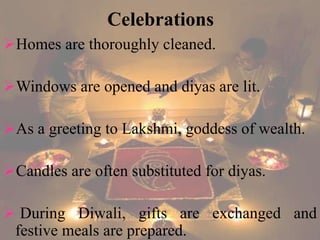
Celebrations 
Homes are thoroughly cleaned. 
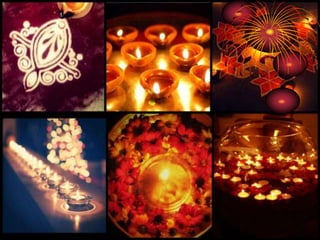
Windows are opened and diyas are lit. 
As a greeting to Lakshmi, goddess of wealth. 
Candles are often substituted for diyas. 
 During Diwali, gifts are exchanged and 
festive meals are prepared.
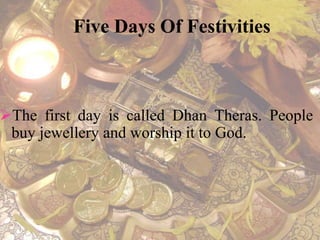
Five Days Of Festivities 
The first day is called Dhan Theras. People 
buy jewellery and worship it to God.
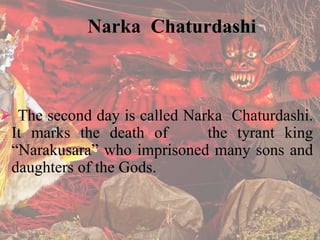
Narka Chaturdashi 
 The second day is called Narka Chaturdashi. 
It marks the death of the tyrant king 
“Narakusara” who imprisoned many sons and 
daughters of the Gods.
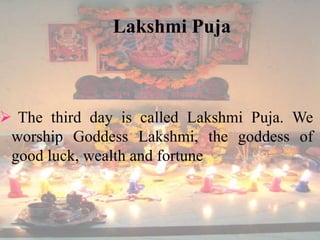
Lakshmi Puja 
 The third day is called Lakshmi Puja. We 
worship Goddess Lakshmi, the goddess of 
good luck, wealth and fortune
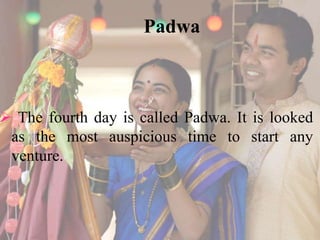
Padwa 
 The fourth day is called Padwa. It is looked 
as the most auspicious time to start any 
venture.
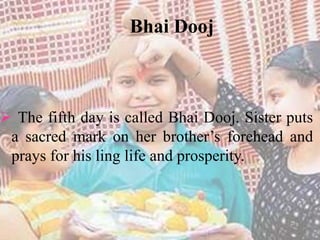
Bhai Dooj 
 The fifth day is called Bhai Dooj. Sister puts 
a sacred mark on her brother’s forehead and 
prays for his ling life and prosperity.
Diwali
Diwali
Diwali

Diwali

  • 1.
  • 2.
    “Deepavali” or Diwaliis the Indian Festival of lights. ‘Deepa’ means lamp or light and ‘Vali’ means ‘string of’.
  • 3.
    It is oneof the biggest Hindu festivals celebrated with pomp and splendour all over India and in many other parts of the world
  • 4.
    The Hindu calendaris based on the lunar cycle and the movement of the moon, unlike the conventional Western (or Gregorian) calendar. The result is that Hindu festivals move about the Western calendar from year to year. Diwali, for example falls on the date of the new moon between the Hindu months of Asvina and Kartika, usually this is in October or November.
  • 5.
    What is thestory of King Rama?  After fourteen years of exile in the forest, the King of Ayodhya, Rama, and his brother Laksman, returned to their hometown.  Before that, they defeated Demon King Ravana in a fierce war.  Upon Rama's return to Ayodhya the people of the town lit lamps to welcome the King back and to celebrate the victory over Ravana.  Overjoyed at the return of King Rama, the people danced and celebrated and fired fireworks to show how happy they were. These festivities continue every year at Diwali and are still celebrated today.
  • 6.
    Celebrations Homes arethoroughly cleaned. Windows are opened and diyas are lit. As a greeting to Lakshmi, goddess of wealth. Candles are often substituted for diyas.  During Diwali, gifts are exchanged and festive meals are prepared.
  • 7.
    Five Days OfFestivities The first day is called Dhan Theras. People buy jewellery and worship it to God.
  • 8.
    Narka Chaturdashi The second day is called Narka Chaturdashi. It marks the death of the tyrant king “Narakusara” who imprisoned many sons and daughters of the Gods.
  • 9.
    Lakshmi Puja The third day is called Lakshmi Puja. We worship Goddess Lakshmi, the goddess of good luck, wealth and fortune
  • 10.
    Padwa  Thefourth day is called Padwa. It is looked as the most auspicious time to start any venture.
  • 11.
    Bhai Dooj The fifth day is called Bhai Dooj. Sister puts a sacred mark on her brother’s forehead and prays for his ling life and prosperity.