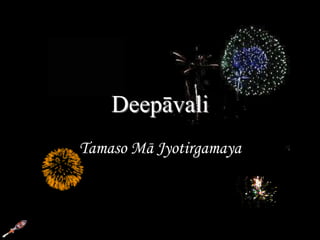
Deepāvali
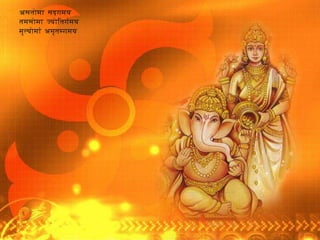
Tamaso Mā Jyotirgamaya
Deepāvali
• Also known as Diwāli
• Literal meaning, a row of lamps
• One of the biggest festival of Hindus
• Celebrated all over India
– In Kenya, Thailand, Trinidad and in many
more countries
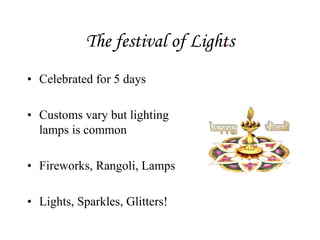
The festival of Lights
• Celebrated for 5 days
• Customs vary but lighting
lamps is common
• Fireworks, Rangoli, Lamps
• Lights, Sparkles, Glitters!
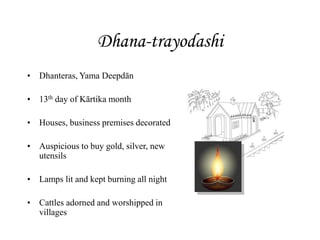
Dhana-trayodashi
• Dhanteras, Yama Deepdān
• 13th day of Kārtika month
• Houses, business premises decorated
• Auspicious to buy gold, silver, new
utensils
• Lamps lit and kept burning all night
• Cattles adorned and worshipped in
villages
Dhana-trayodashi - Stories
• Son of King Hima, as per horoscope,
was doomed to die on this night
• His wife did not allow him to sleep
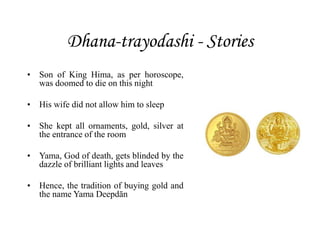
• She kept all ornaments, gold, silver at
the entrance of the room
• Yama, God of death, gets blinded by the
dazzle of brilliant lights and leaves
• Hence, the tradition of buying gold and
the name Yama Deepdān
Narak-chaturdashi
• Chhoti Diwāli, or little Diwāli
• Falls on 14th day of Kārtika
month
• Tradition is to get very early and
have an oil bath before the
sunrise
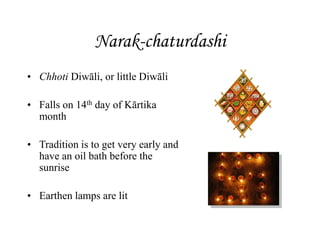
• Earthen lamps are lit
Narak-chaturdashi - Stories
• Narakāsur, the demon king of
Prāgjyotishpur, was killed by Lord Krishna
• After defeating the demon, Krishna
returned early in the morning and had
scented oil bath
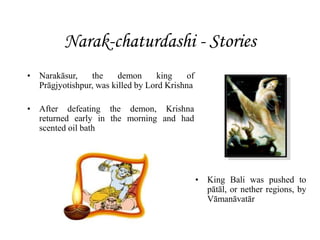
• King Bali was pushed to
pātāl, or nether regions, by
Vāmanāvatār
Lakshmi Pujā
• Diwāli, Kaumudi Mahotsam
• Amāvasyā, or no moon night
• Day of Lakshmi, the Goddess
of wealth
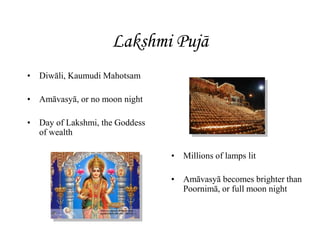
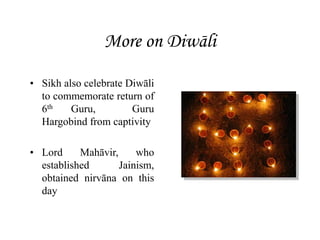
• Millions of lamps lit
• Amāvasyā becomes brighter than
Poornimā, or full moon night
Lakshmi Pujā - Stories
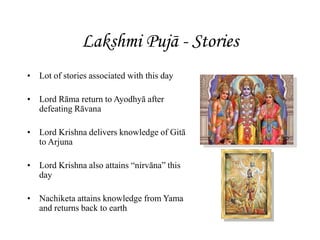
• Lot of stories associated with this day
• Lord Rāma return to Ayodhyā after
defeating Rāvana
• Lord Krishna delivers knowledge of Gitā
to Arjuna
• Lord Krishna also attains “nirvāna” this
day
• Nachiketa attains knowledge from Yama
and returns back to earth
Bali Padya
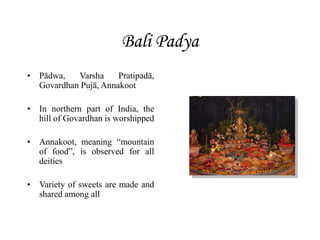
• Pādwa, Varsha Pratipadā,
Govardhan Pujā, Annakoot
• In northern part of India, the
hill of Govardhan is worshipped
• Annakoot, meaning “mountain
of food”, is observed for all
deities
• Variety of sweets are made and
shared among all
Bali Padya - Stories
• Vikramāditya the great, held his
coronation and started a hindu
calendar, vikram samvat
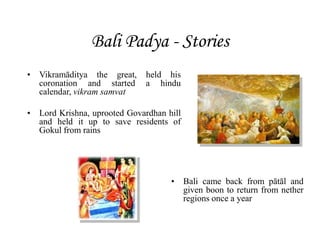
• Lord Krishna, uprooted Govardhan hill
and held it up to save residents of
Gokul from rains
• Bali came back from pātāl and
given boon to return from nether
regions once a year
Bhāi Dooj
• Bhāv Beej, Bhāi Tika, Yama Dwiteeyā
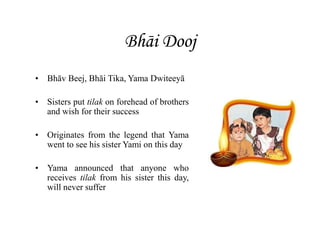
• Sisters put tilak on forehead of brothers
and wish for their success
• Originates from the legend that Yama
went to see his sister Yami on this day
• Yama announced that anyone who
receives tilak from his sister this day,
will never suffer
More on Diwāli
• Sikh also celebrate Diwāli
to commemorate return of
6th Guru, Guru
Hargobind from captivity
• Lord Mahāvir, who
established Jainism,
obtained nirvāna on this
day
Significance of Diwāli
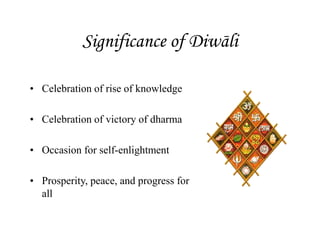
• Celebration of rise of knowledge
• Celebration of victory of dharma
• Occasion for self-enlightment
• Prosperity, peace, and progress for
all
deepavali.ppt

deepavali.ppt

  • 1.
  • 2.
    Deepāvali • Also knownas Diwāli • Literal meaning, a row of lamps • One of the biggest festival of Hindus • Celebrated all over India – In Kenya, Thailand, Trinidad and in many more countries
  • 3.
    The festival ofLights • Celebrated for 5 days • Customs vary but lighting lamps is common • Fireworks, Rangoli, Lamps • Lights, Sparkles, Glitters!
  • 4.
    Dhana-trayodashi • Dhanteras, YamaDeepdān • 13th day of Kārtika month • Houses, business premises decorated • Auspicious to buy gold, silver, new utensils • Lamps lit and kept burning all night • Cattles adorned and worshipped in villages
  • 5.
    Dhana-trayodashi - Stories •Son of King Hima, as per horoscope, was doomed to die on this night • His wife did not allow him to sleep • She kept all ornaments, gold, silver at the entrance of the room • Yama, God of death, gets blinded by the dazzle of brilliant lights and leaves • Hence, the tradition of buying gold and the name Yama Deepdān
  • 6.
    Narak-chaturdashi • Chhoti Diwāli,or little Diwāli • Falls on 14th day of Kārtika month • Tradition is to get very early and have an oil bath before the sunrise • Earthen lamps are lit
  • 7.
    Narak-chaturdashi - Stories •Narakāsur, the demon king of Prāgjyotishpur, was killed by Lord Krishna • After defeating the demon, Krishna returned early in the morning and had scented oil bath • King Bali was pushed to pātāl, or nether regions, by Vāmanāvatār
  • 8.
    Lakshmi Pujā • Diwāli,Kaumudi Mahotsam • Amāvasyā, or no moon night • Day of Lakshmi, the Goddess of wealth • Millions of lamps lit • Amāvasyā becomes brighter than Poornimā, or full moon night
  • 9.
    Lakshmi Pujā -Stories • Lot of stories associated with this day • Lord Rāma return to Ayodhyā after defeating Rāvana • Lord Krishna delivers knowledge of Gitā to Arjuna • Lord Krishna also attains “nirvāna” this day • Nachiketa attains knowledge from Yama and returns back to earth
  • 10.
    Bali Padya • Pādwa,Varsha Pratipadā, Govardhan Pujā, Annakoot • In northern part of India, the hill of Govardhan is worshipped • Annakoot, meaning “mountain of food”, is observed for all deities • Variety of sweets are made and shared among all
  • 11.
    Bali Padya -Stories • Vikramāditya the great, held his coronation and started a hindu calendar, vikram samvat • Lord Krishna, uprooted Govardhan hill and held it up to save residents of Gokul from rains • Bali came back from pātāl and given boon to return from nether regions once a year
  • 12.
    Bhāi Dooj • BhāvBeej, Bhāi Tika, Yama Dwiteeyā • Sisters put tilak on forehead of brothers and wish for their success • Originates from the legend that Yama went to see his sister Yami on this day • Yama announced that anyone who receives tilak from his sister this day, will never suffer
  • 13.
    More on Diwāli •Sikh also celebrate Diwāli to commemorate return of 6th Guru, Guru Hargobind from captivity • Lord Mahāvir, who established Jainism, obtained nirvāna on this day
  • 14.
    Significance of Diwāli •Celebration of rise of knowledge • Celebration of victory of dharma • Occasion for self-enlightment • Prosperity, peace, and progress for all