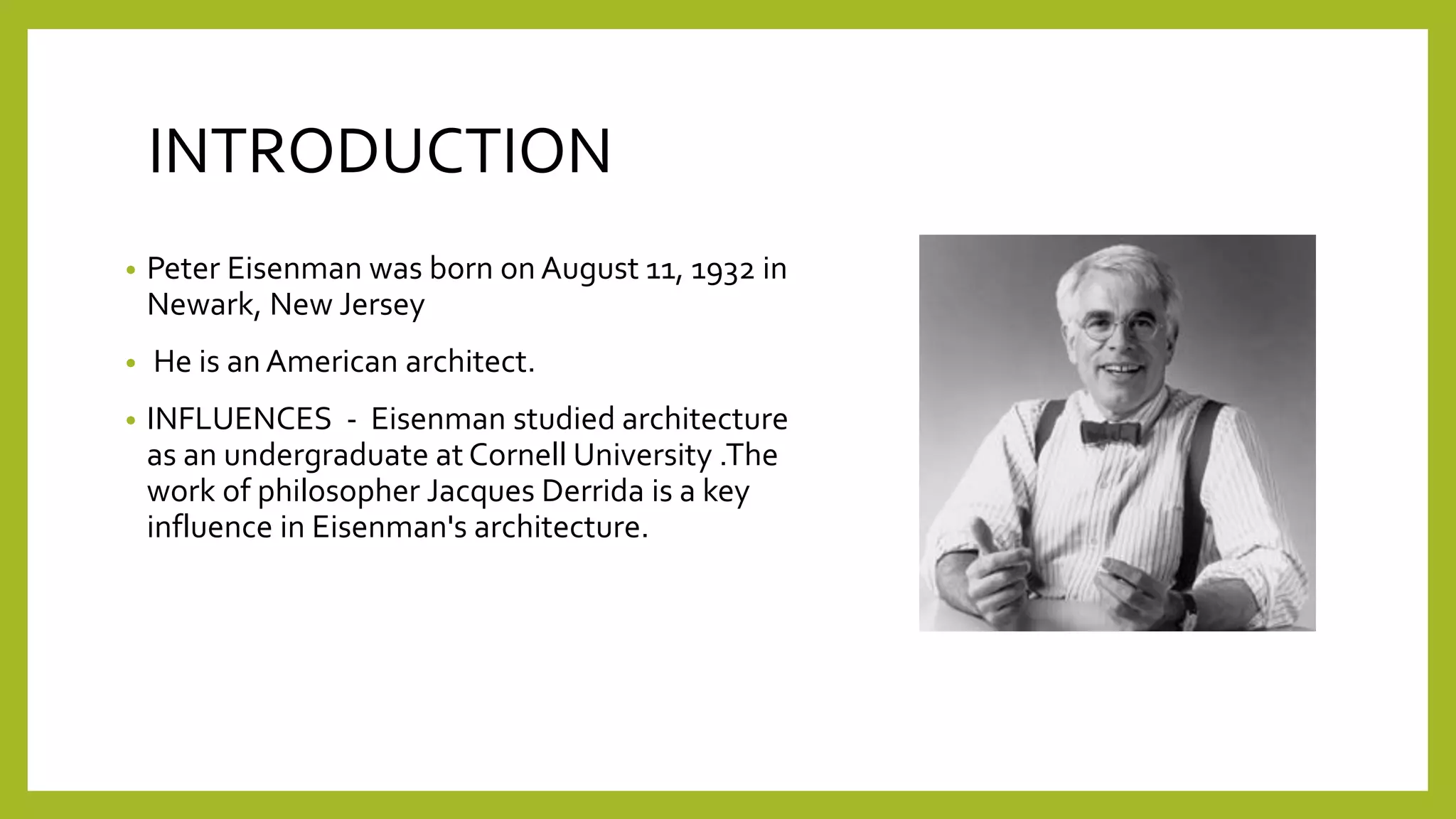
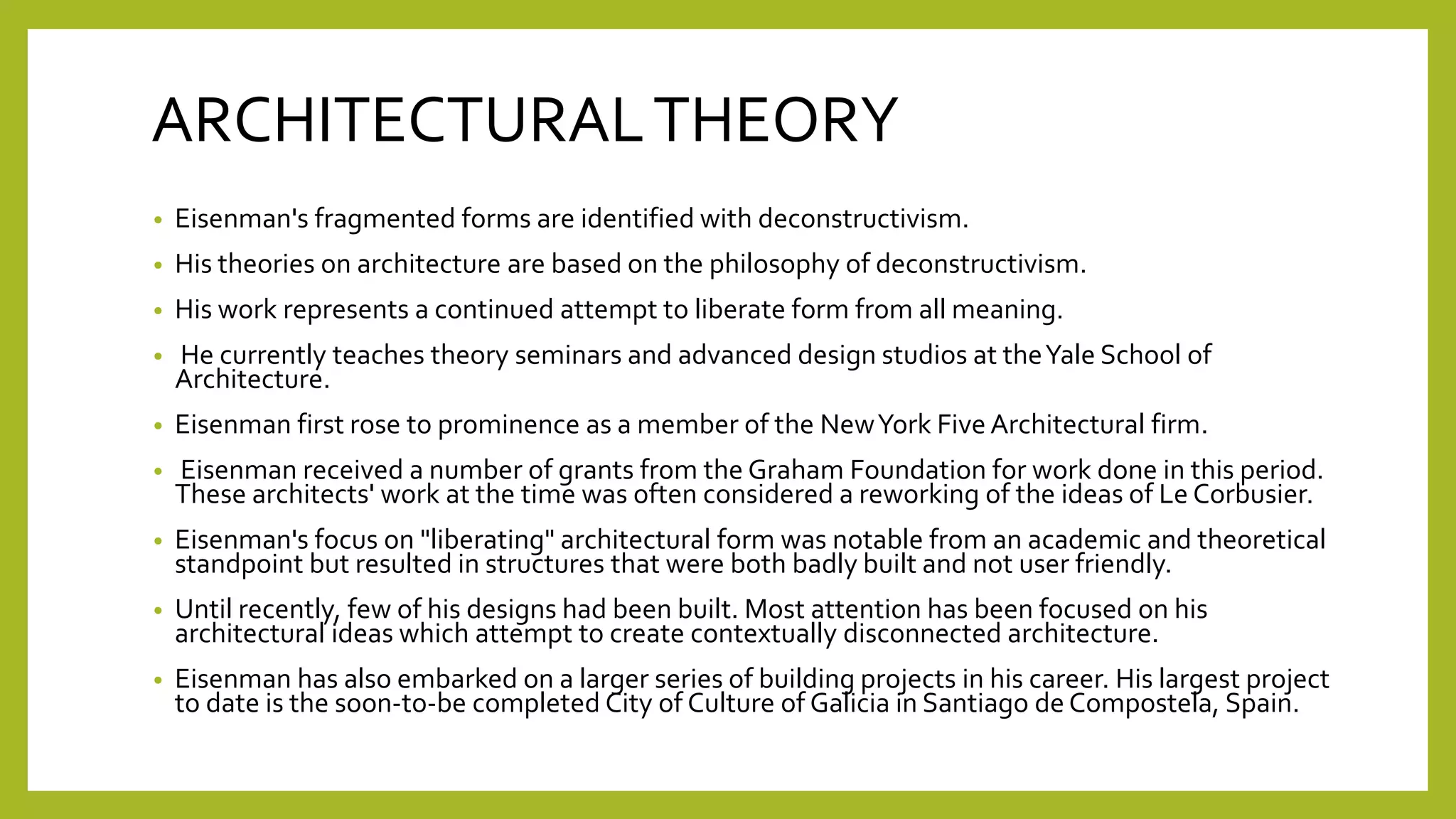
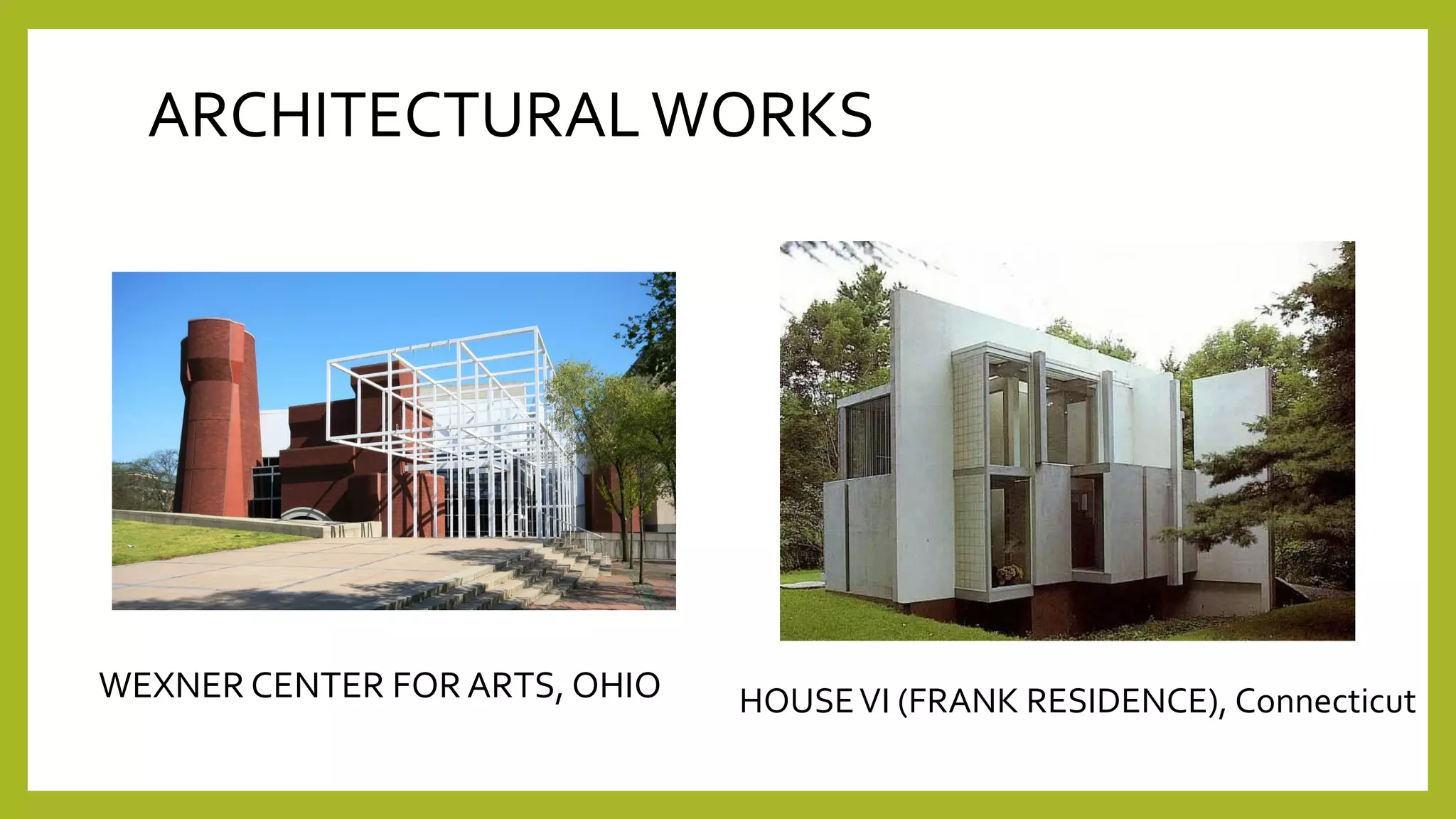
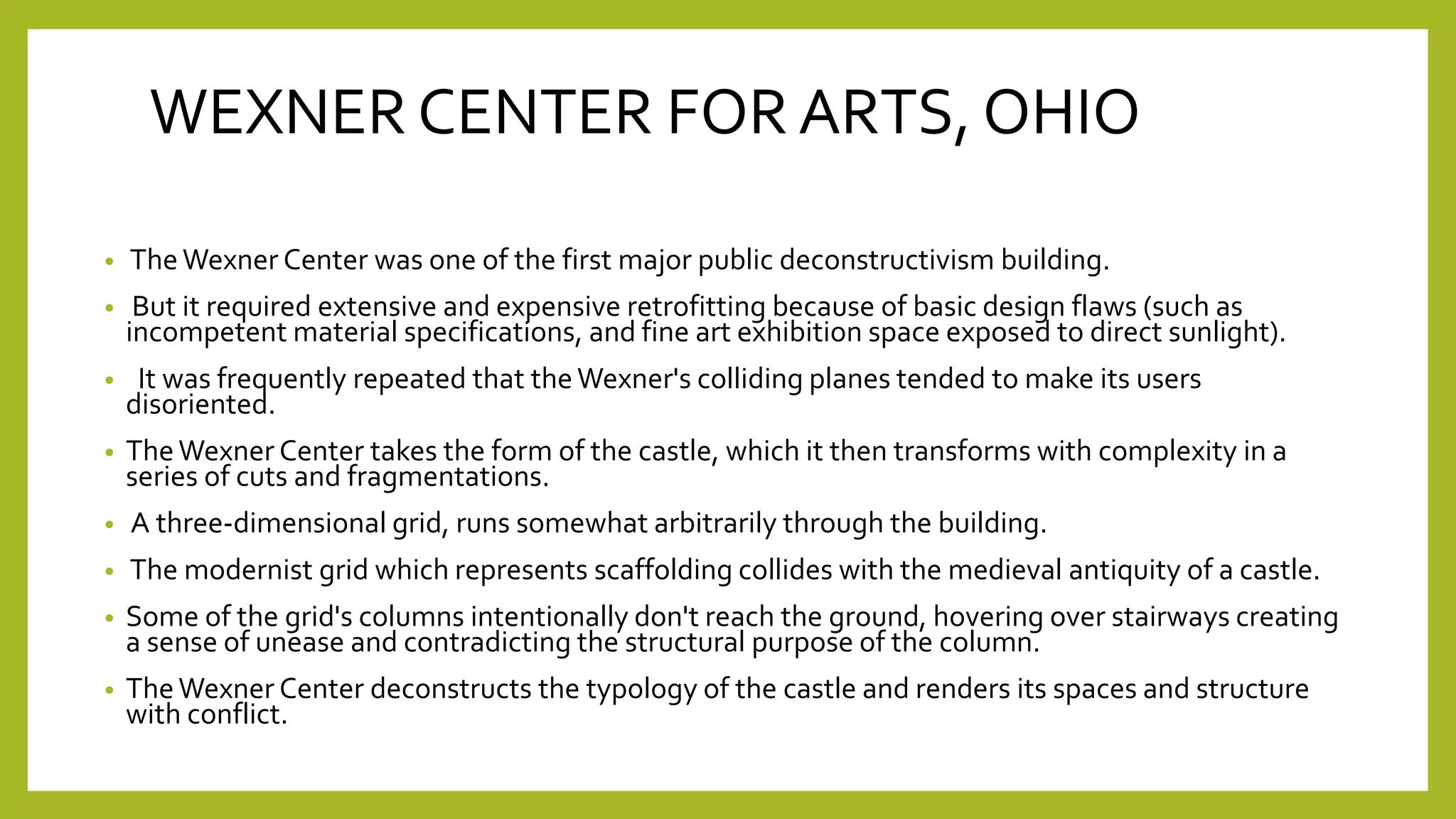
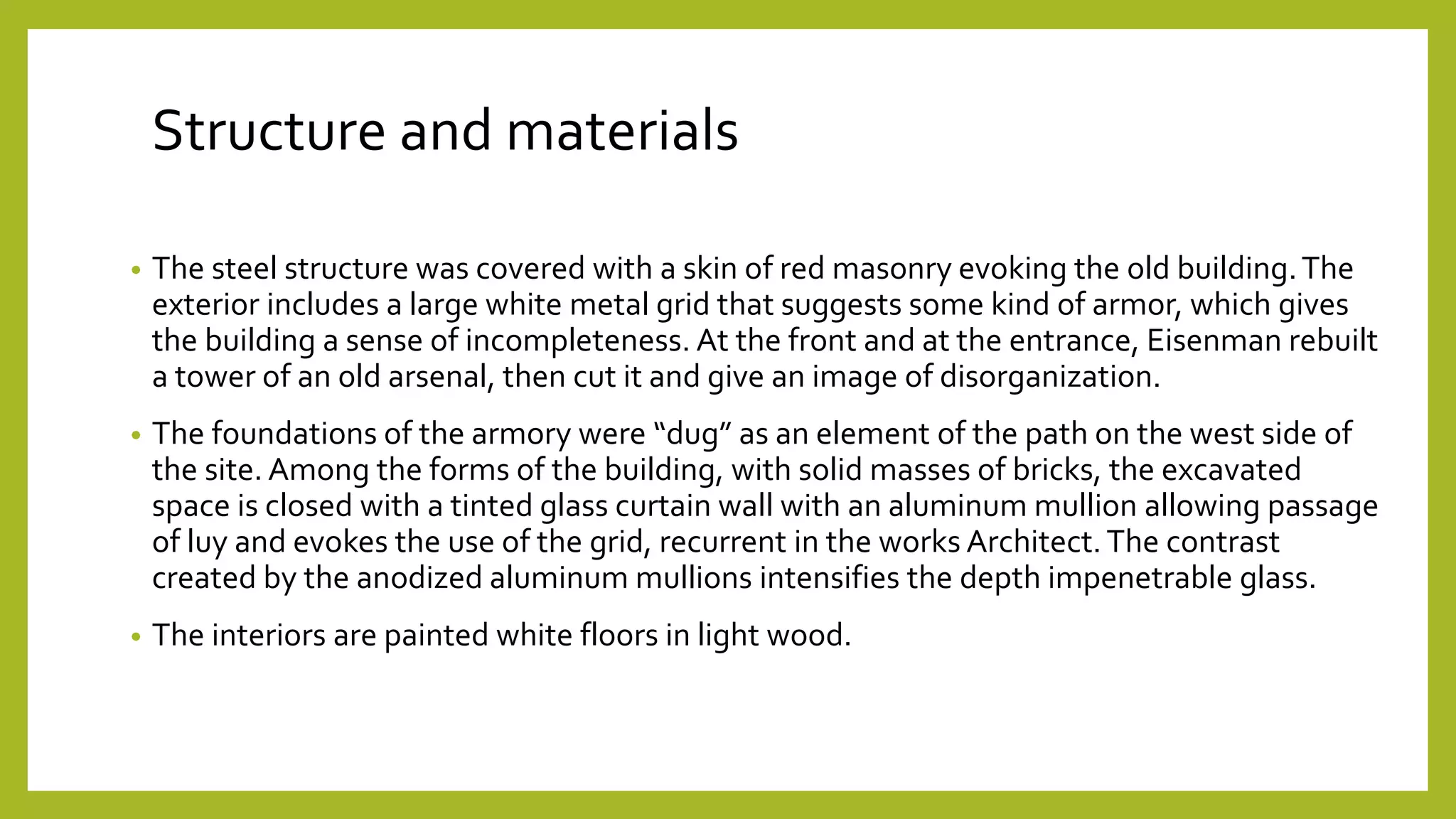
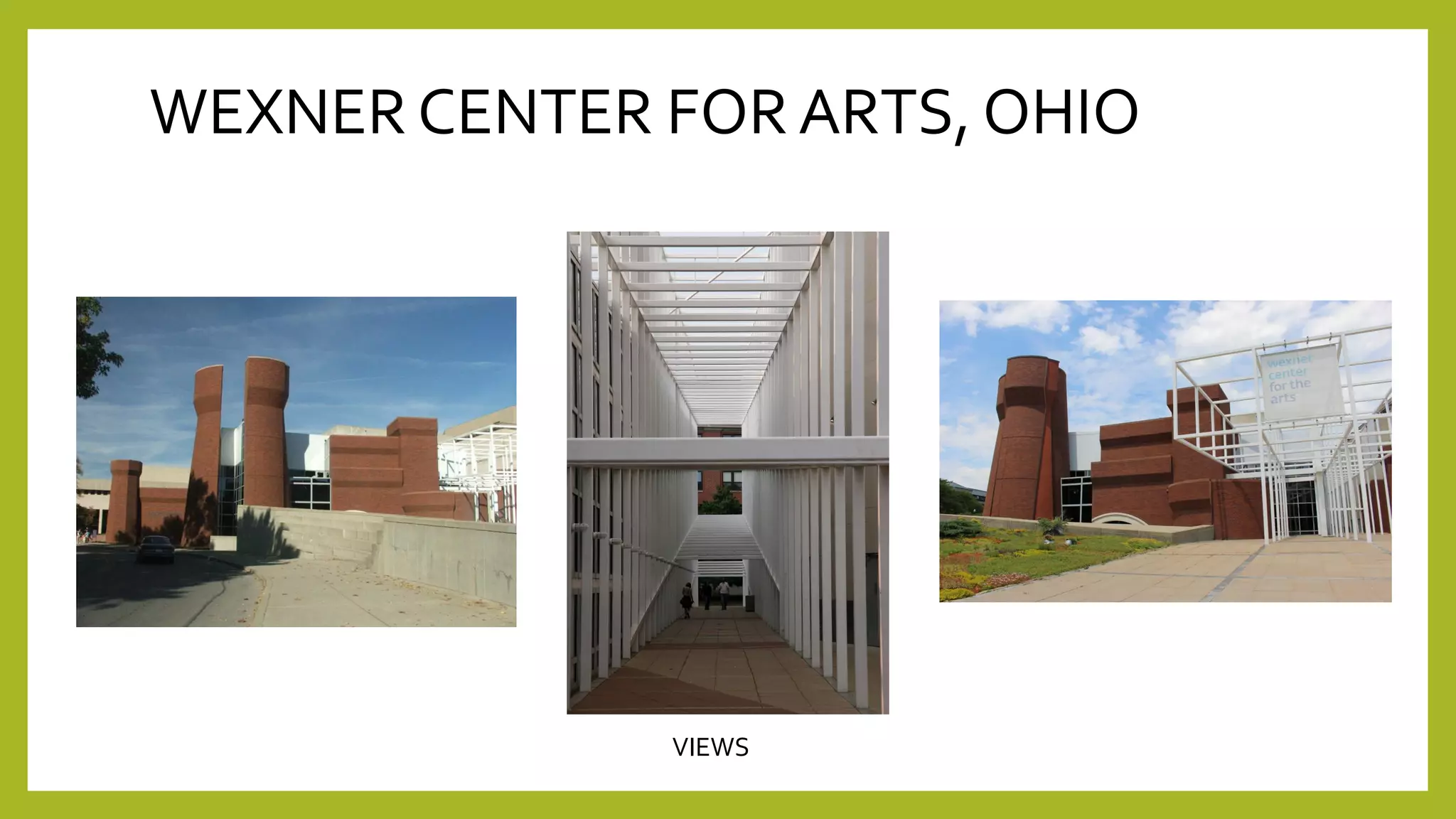
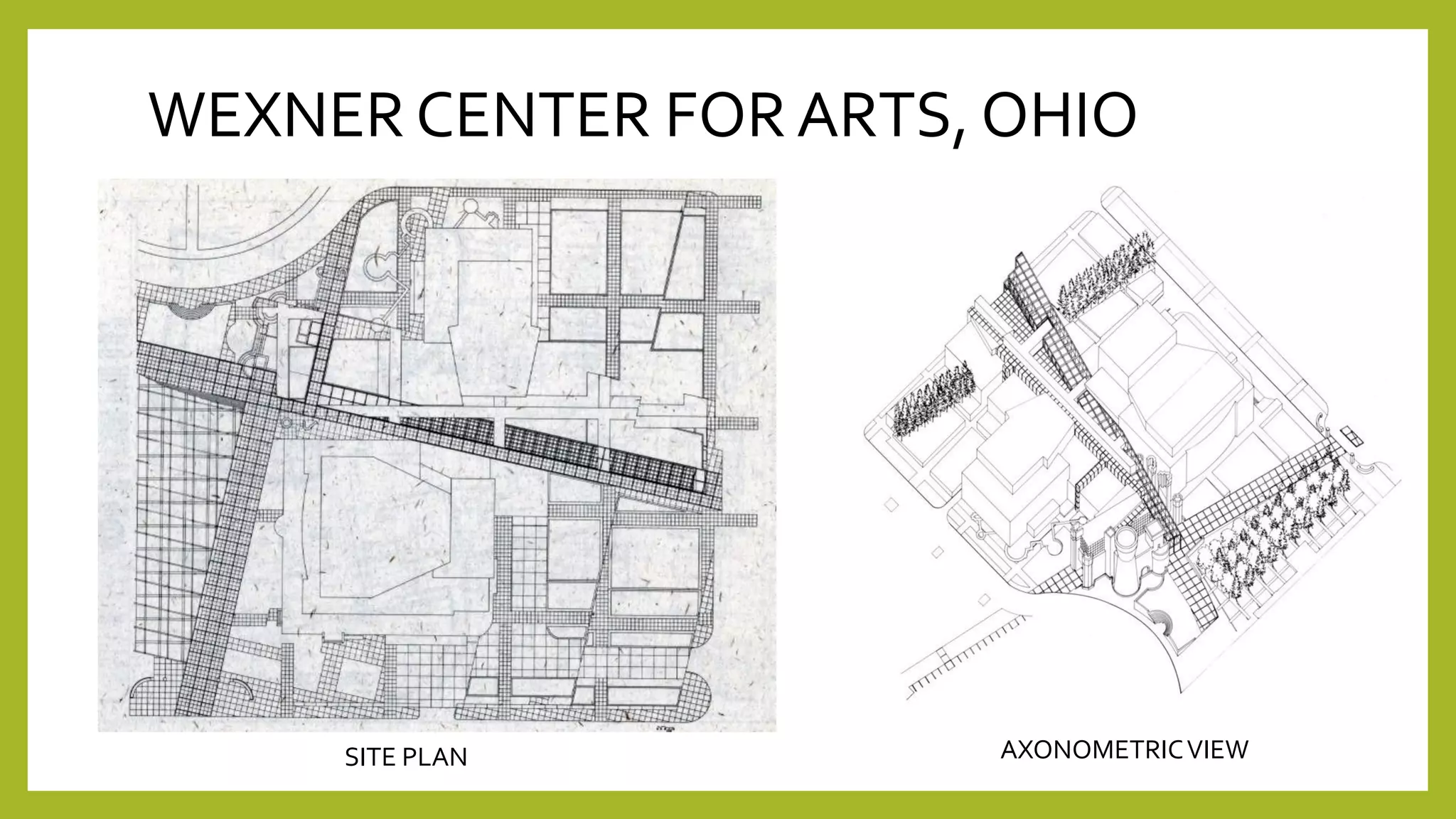
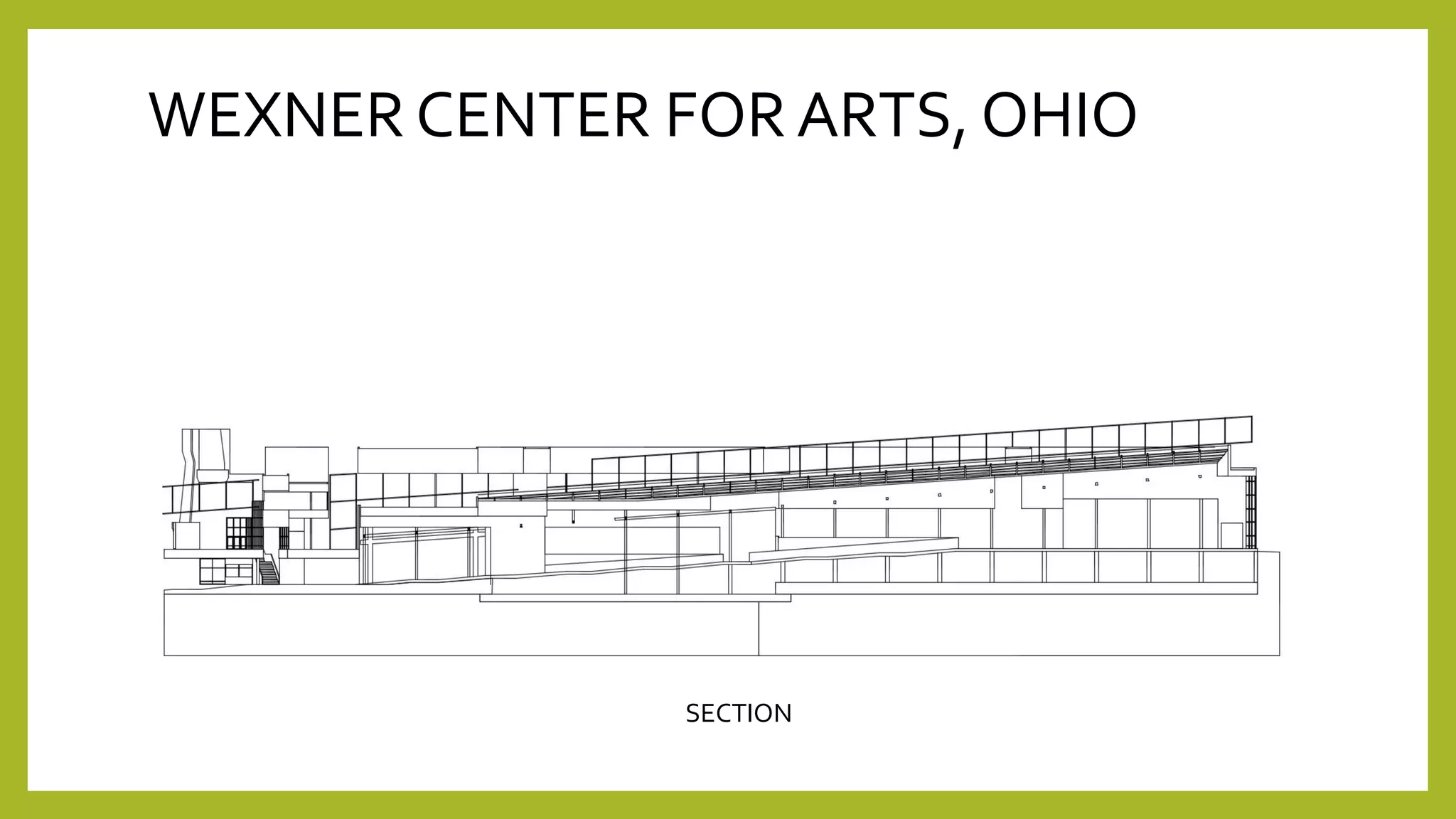
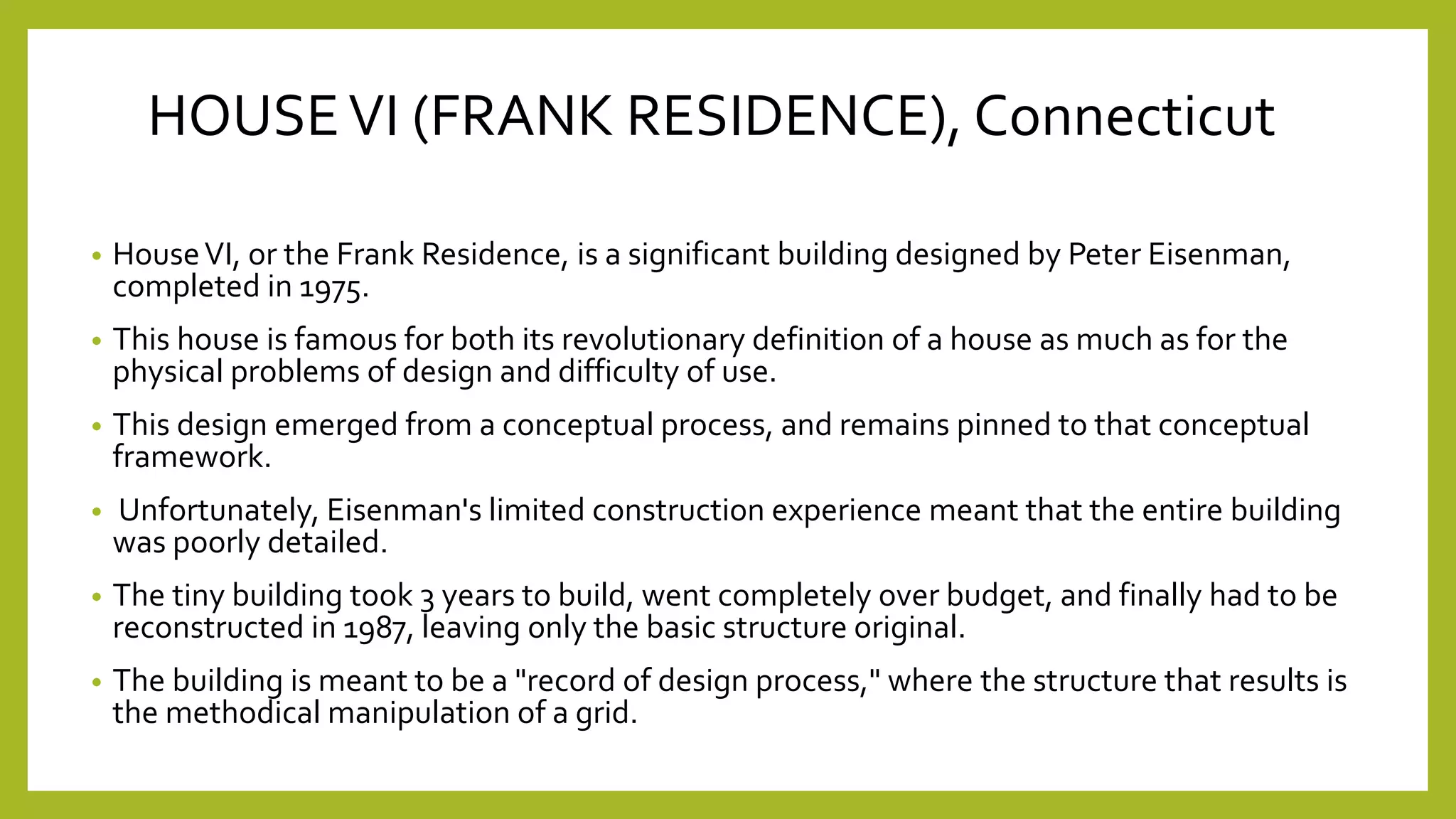
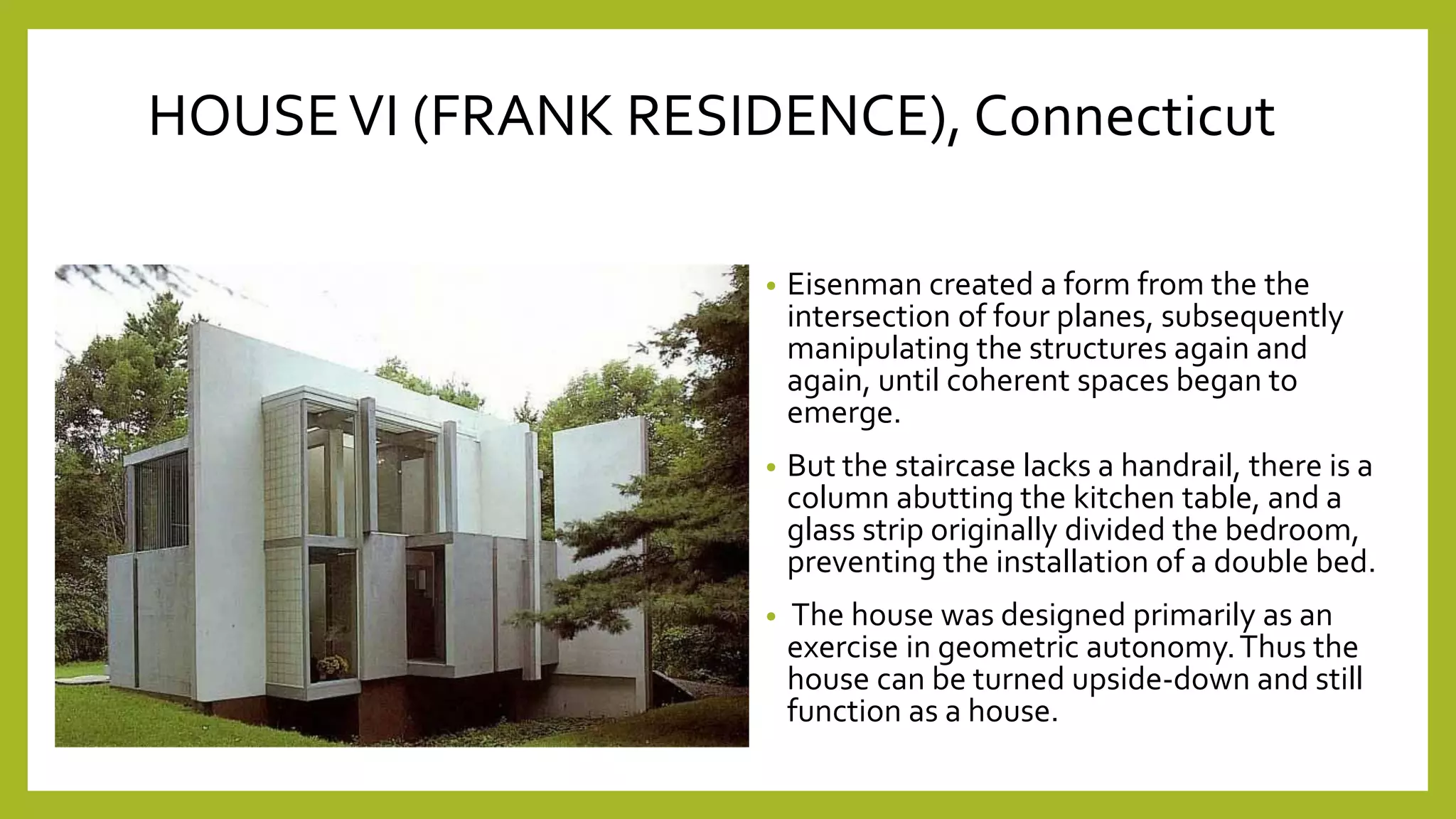
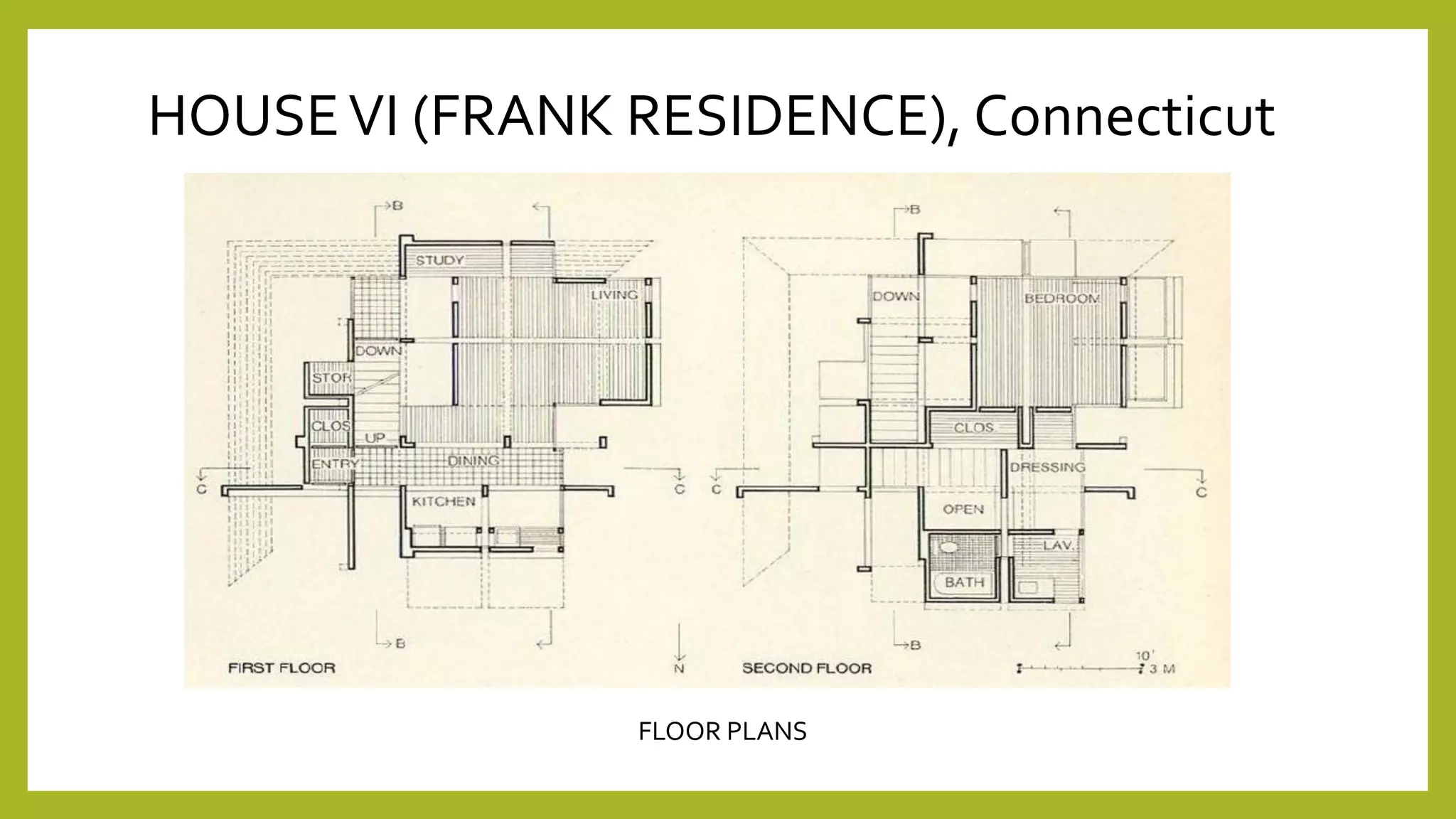
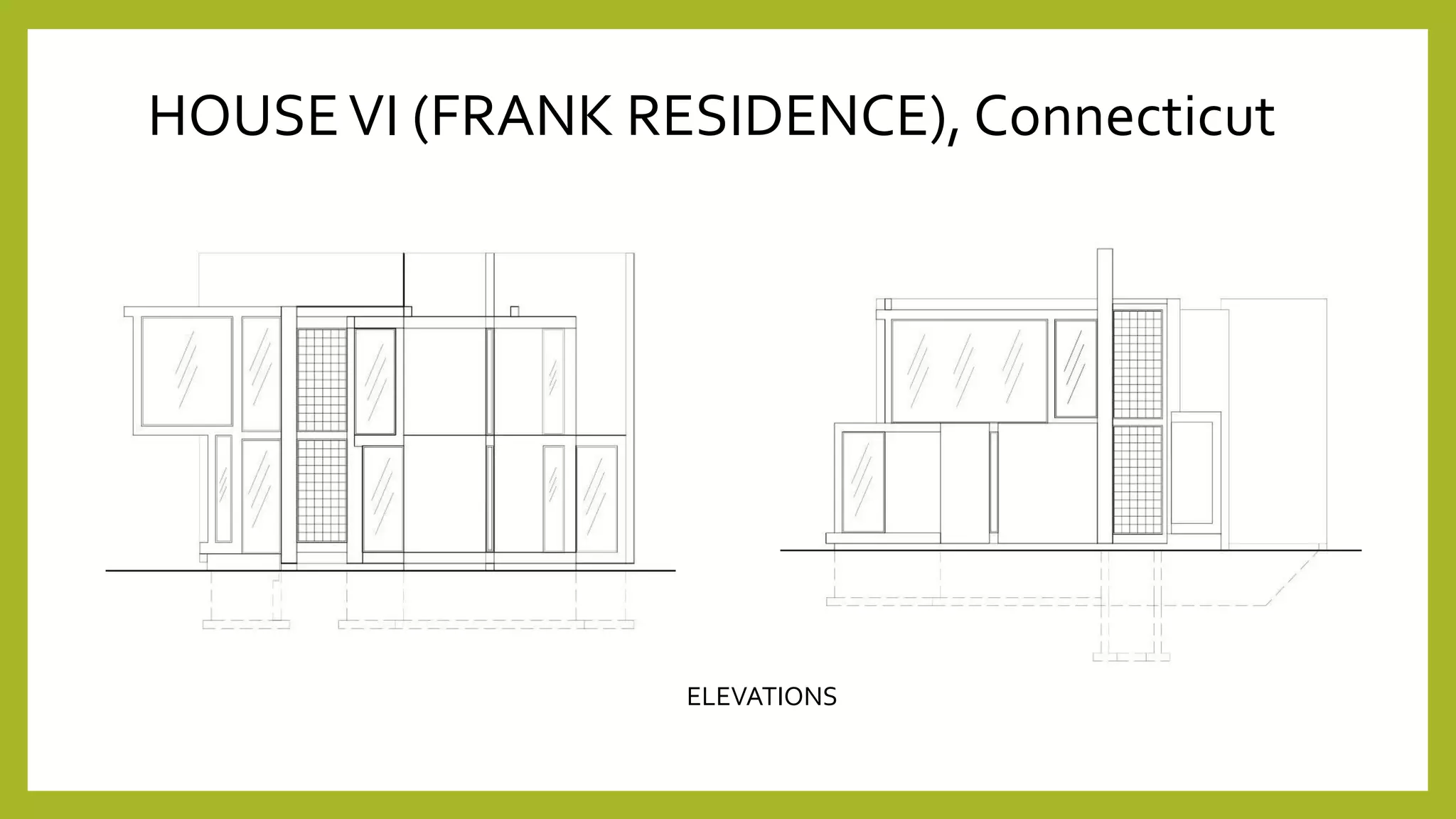
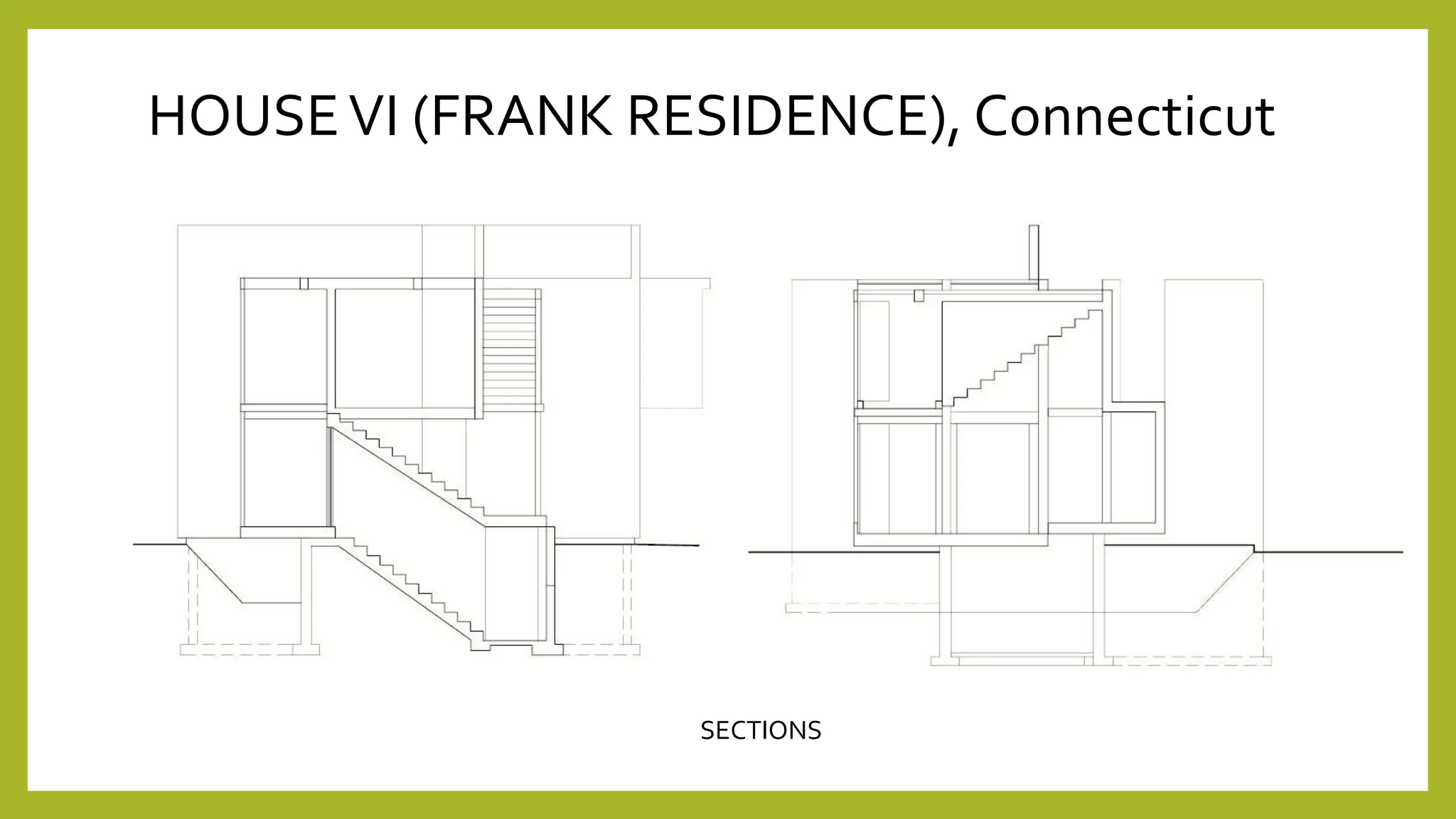
Deconstructivism is an architectural movement that emerged in the late 1980s, emphasizing fragmentation, non-rectilinear shapes, and unpredictability, heavily influenced by Jacques Derrida's philosophy. Peter Eisenman, a key figure in this movement, employs deconstructivist principles in his designs, which often prioritize theoretical concepts over practical usability, resulting in structures that are visually complex but sometimes flawed in function. Notable works include the Wexner Center for Arts, characterized by its disorienting design, and House VI, known for its conceptual challenges and construction issues.