
Downloaded 29 times
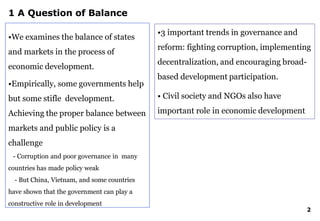
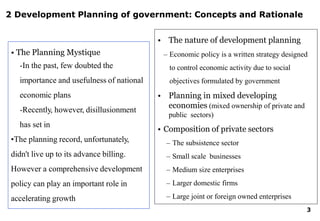
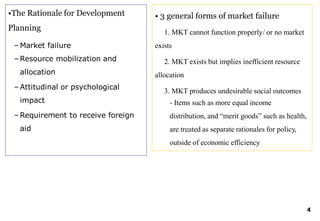
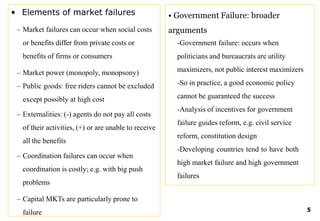
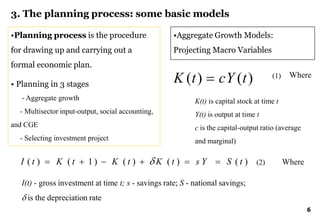
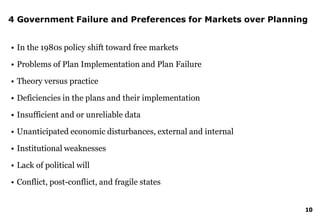
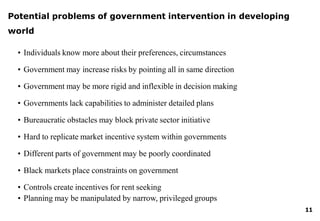
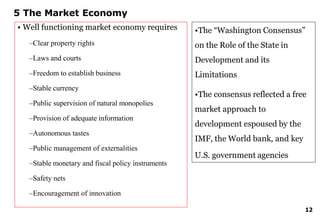
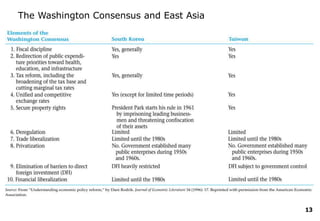
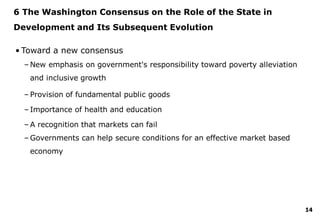
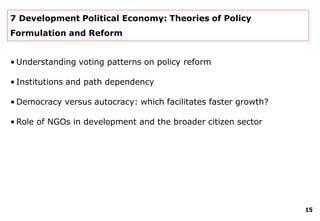
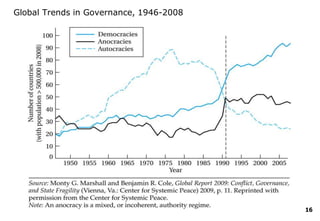
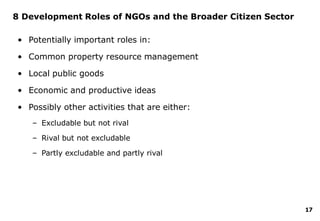
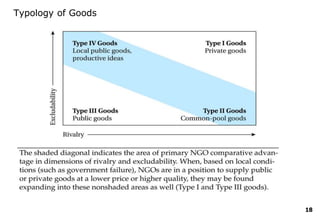
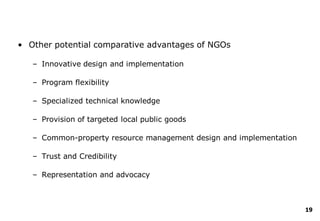
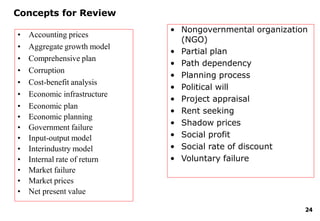
The document discusses the balance between markets and governments in economic development. It examines different development planning models and their limitations in practice due to issues like poor governance, corruption, and government failure. While early development strategies emphasized centralized planning, more recent approaches favor market-based solutions but recognize an important role for governments in providing public goods, infrastructure, and policies to address market failures. NGOs and civil society can also contribute by managing local resources and implementing targeted programs. Overall, achieving the proper balance between markets, governments, and civil society remains a key challenge for promoting inclusive economic growth.


