So what?
You’ve been
(D)Dosed!
Agenda
DoS & DDoS
About DoS and DDoS
Volumetric Attack
<
<
>
>
Identify & Mitigate
How to identify and Mitigate
using tool
Security Best Practice
DoS and DDoS
Volumetric
Attack
Injection
Attack
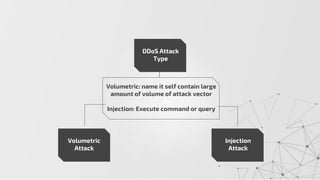
Volumetric: name it self contain large
amount of volume of attack vector
Injection: Execute command or query
DDoS Attack
Type
Volumetric Attack
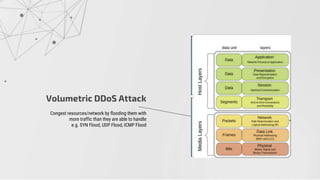
Volumetric DDoS Attack
Congest resources/network by flooding them with
more traffic than they are able to handle
e.g. SYN Flood, UDP Flood, ICMP Flood
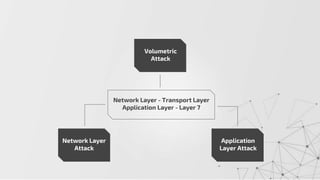
Network Layer
Attack
Application
Layer Attack
Network Layer - Transport Layer
Application Layer - Layer 7
Volumetric
Attack
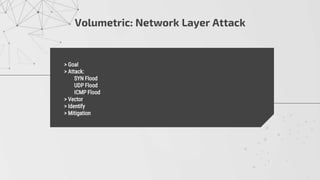
Volumetric: Network Layer Attack
> Goal
> Attack:
• SYN Flood
• UDP Flood
• ICMP Flood
> Vector
> Identify
> Mitigation
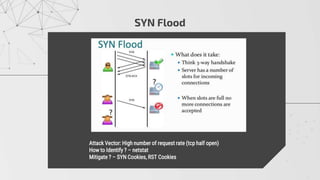
SYN Flood
 Attack Vector: High number of request rate (tcp half open)
 How to Identify ? – netstat
 Mitigate ? – SYN Cookies, RST Cookies
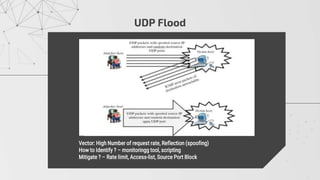
UDP Flood
 Vector: High Number of request rate, Reflection (spoofing)
 How to Identify ? – monitoringg tool, scripting
 Mitigate ? – Rate limit, Access-list, Source Port Block
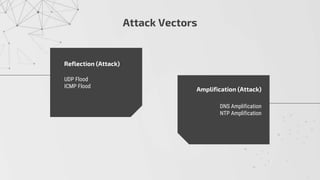
Attack Vectors
Reflection (Attack)
UDP Flood
ICMP Flood
Amplification (Attack)
DNS Amplification
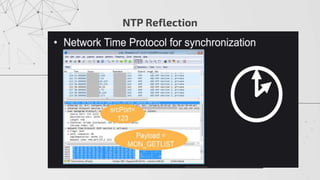
NTP Amplification
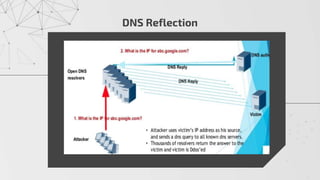
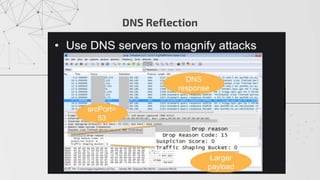
DNS Reflection
DNS Reflection
NTP Reflection
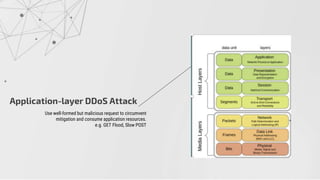
Application-layer DDoS Attack
Use well-formed but malicious request to circumvent
mitigation and consume application resources.
e.g. GET Flood, Slow POST
Volumetric: Application Layer Attack
> Goal
> Attack:
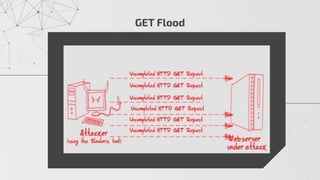
• GET Flood
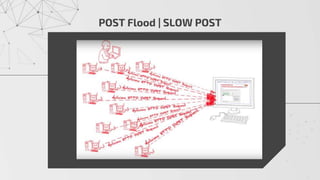
• Slow POST
> Vector
> Identify
> Mitigation
GET Flood
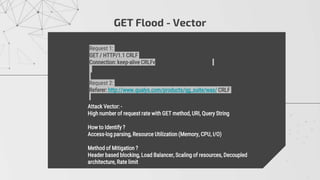
GET Flood - Vector
 Attack Vector: -
 High number of request rate with GET method, URI, Query String
 How to Identify ?
 Access-log parsing, Resource Utilization (Memory, CPU, I/O)
 Method of Mitigation ?
 Header based blocking, Load Balancer, Scaling of resources, Decoupled
architecture, Rate limit
Request 1:
GET / HTTP/1.1 CRLF
Connection: keep-alive CRLFv019-09-18 at 10.27.58 PM
Request 2:
Referer: http://www.qualys.com/products/qg_suite/was/ CRLF
POST Flood | SLOW POST
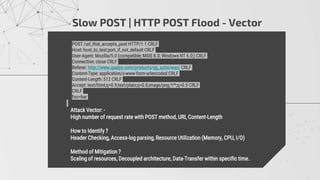
Slow POST | HTTP POST Flood - Vector
 Attack Vector: -
 High number of request rate with POST method, URI, Content-Length
 How to Identify ?
 Header Checking, Access-log parsing, Resource Utilization (Memory, CPU, I/O)
 Method of Mitigation ?
 Scaling of resources, Decoupled architecture, Data-Transfer within specific time.
POST /url_that_accepts_post HTTP/1.1 CRLF
Host: host_to_test:port_if_not_default CRLF
User-Agent: Mozilla/5.0 (compatible; MSIE 8.0; Windows NT 6.0;) CRLF
Connection: close CRLF
Referer: http://www.qualys.com/products/qg_suite/was/ CRLF
Content-Type: application/x-www-form-urlencoded CRLF
Content-Length: 512 CRLF
Accept: text/html;q=0.9,text/plain;q=0.8,image/png,*/*;q=0.5 CRLF
CRLF
foo=bar
Any question?
Thank You

DDoS Attack and Mitigation

  • 1.
  • 2.
    Agenda DoS & DDoS AboutDoS and DDoS Volumetric Attack < < > > Identify & Mitigate How to identify and Mitigate using tool Security Best Practice
  • 3.
  • 4.
    Volumetric Attack Injection Attack Volumetric: name itself contain large amount of volume of attack vector Injection: Execute command or query DDoS Attack Type
  • 5.
  • 6.
    Volumetric DDoS Attack Congestresources/network by flooding them with more traffic than they are able to handle e.g. SYN Flood, UDP Flood, ICMP Flood
  • 7.
    Network Layer Attack Application Layer Attack NetworkLayer - Transport Layer Application Layer - Layer 7 Volumetric Attack
  • 8.
    Volumetric: Network LayerAttack > Goal > Attack: • SYN Flood • UDP Flood • ICMP Flood > Vector > Identify > Mitigation
  • 9.
    SYN Flood  AttackVector: High number of request rate (tcp half open)  How to Identify ? – netstat  Mitigate ? – SYN Cookies, RST Cookies
  • 10.
    UDP Flood  Vector:High Number of request rate, Reflection (spoofing)  How to Identify ? – monitoringg tool, scripting  Mitigate ? – Rate limit, Access-list, Source Port Block
  • 11.
    Attack Vectors Reflection (Attack) UDPFlood ICMP Flood Amplification (Attack) DNS Amplification NTP Amplification
  • 12.
  • 13.
  • 14.
  • 15.
    Application-layer DDoS Attack Usewell-formed but malicious request to circumvent mitigation and consume application resources. e.g. GET Flood, Slow POST
  • 16.
    Volumetric: Application LayerAttack > Goal > Attack: • GET Flood • Slow POST > Vector > Identify > Mitigation
  • 17.
  • 18.
    GET Flood -Vector  Attack Vector: -  High number of request rate with GET method, URI, Query String  How to Identify ?  Access-log parsing, Resource Utilization (Memory, CPU, I/O)  Method of Mitigation ?  Header based blocking, Load Balancer, Scaling of resources, Decoupled architecture, Rate limit Request 1: GET / HTTP/1.1 CRLF Connection: keep-alive CRLFv019-09-18 at 10.27.58 PM Request 2: Referer: http://www.qualys.com/products/qg_suite/was/ CRLF
  • 19.
    POST Flood |SLOW POST
  • 20.
    Slow POST |HTTP POST Flood - Vector  Attack Vector: -  High number of request rate with POST method, URI, Content-Length  How to Identify ?  Header Checking, Access-log parsing, Resource Utilization (Memory, CPU, I/O)  Method of Mitigation ?  Scaling of resources, Decoupled architecture, Data-Transfer within specific time. POST /url_that_accepts_post HTTP/1.1 CRLF Host: host_to_test:port_if_not_default CRLF User-Agent: Mozilla/5.0 (compatible; MSIE 8.0; Windows NT 6.0;) CRLF Connection: close CRLF Referer: http://www.qualys.com/products/qg_suite/was/ CRLF Content-Type: application/x-www-form-urlencoded CRLF Content-Length: 512 CRLF Accept: text/html;q=0.9,text/plain;q=0.8,image/png,*/*;q=0.5 CRLF CRLF foo=bar
  • 21.