Download to read offline
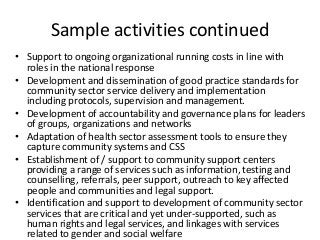
![Sample Activities
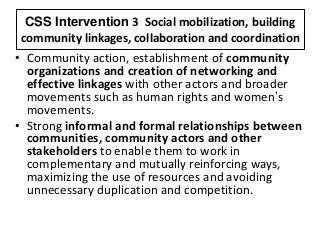
• Develop and maintain coordination and joint planning
mechanisms to link community actors with each other, and with
other relevant actors, at local, national, regional and
international levels
• Develop and support networking of community groups [on HIV,
TB, malaria, health and women’s], particularly of key
populations, to ensure representation and advocacy at national
level is effective, and for experience sharing, mentoring etc.
• Core support for participation in coordination mechanisms by
community representatives (including transport/travel costs)
• Community level groups (e.g. health committees) whose
mandate includes coordination and networking, identifying and
responding to issues and barriers and mobilizing actions,
support, linking with the health system, etc.](https://image.slidesharecdn.com/day2satmalawicssandnfmrev-140423104341-phpapp02/85/Day-2-sat-malawi-css-and-nfm-rev-15-320.jpg?cb=1675834467)
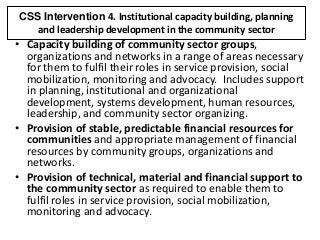
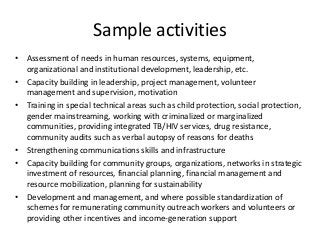
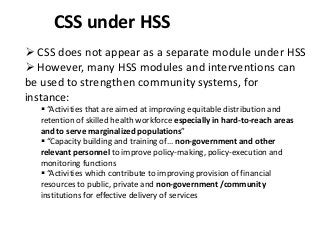
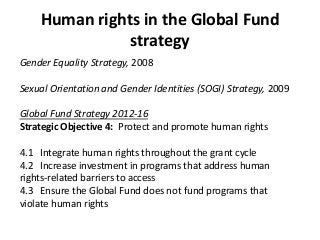
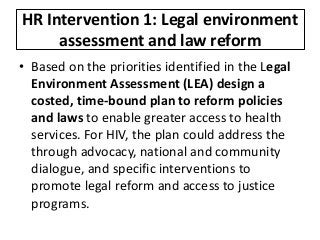
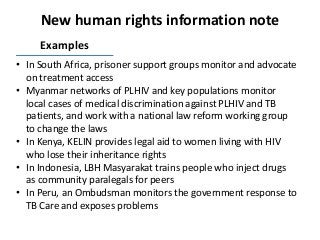

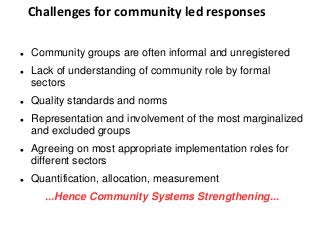
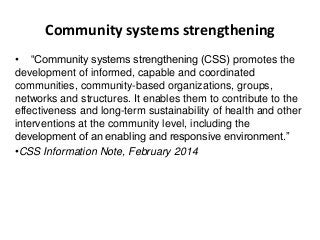
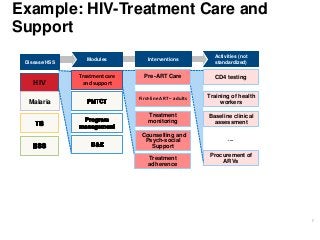
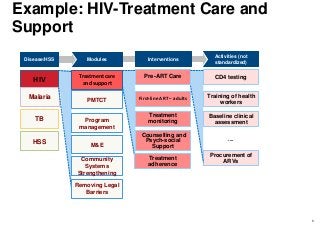
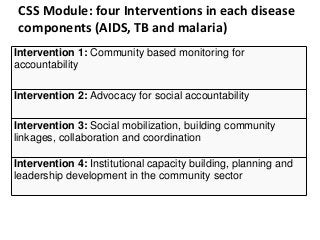
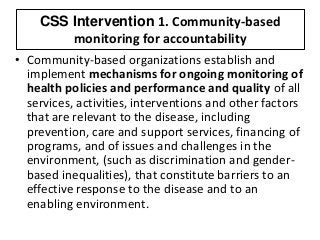
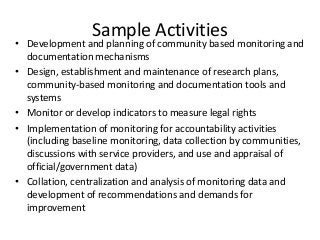
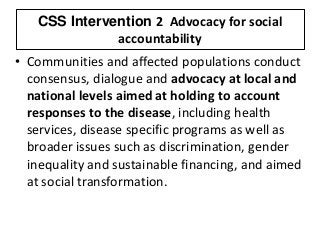
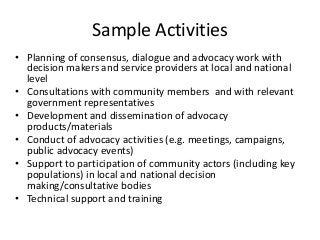
The document discusses community systems strengthening (CSS) and its importance for health responses. It provides definitions of CSS and outlines four interventions for CSS: 1) community-based monitoring for accountability, 2) advocacy for social accountability, 3) social mobilization and building community linkages, and 4) institutional capacity building for the community sector. Sample activities are described for each intervention, such as monitoring health services, conducting advocacy campaigns, coordinating community actors, and providing training and support to strengthen community organizations.


