Downloaded 10 times
![Global Fund Information Note: Community Systems Strengthening (February 2014) 14
Interventions
Scope and description of intervention
package
(Includes human resources required under
each intervention)
Illustrative activities
Social
mobilization,
building
community
linkages,
collaboration
and
coordination
Community action, establishment of
community organizations and creation of
networking and effective linkages with other
actors and broader movements such as
human rights and women’s movements.
Strong informal and formal relationships
between communities, community actors
and other stakeholders enable them to work
in complementary and mutually reinforcing
ways, maximizing the use of resources and
avoiding unnecessary duplication and
competition.
Community/social mobilization activities (including participatory assessments, community
meetings and identification of issues, mapping of community efforts, planning)
Support to establishment of community organizations
Develop and maintain coordination and joint planning mechanisms to link community
actors with each other, and with other relevant actors, at local, national, regional and
international levels
Develop and maintain referral mechanisms between different service providers, in
particular between community and other sector providers, and across borders where
relevant
Develop and support networking of community groups [on HIV, TB, malaria, health and
women’s], particularly of key populations, to ensure representation and advocacy at
national level is effective, and for experience sharing, mentoring etc.
Core support for participation in coordination mechanisms by community representatives
(including transport/travel costs)
Establishment of community health worker programming, strengthening, integration within
the health systems and linkages with the community systems.
Community level groups (e.g. health committees) whose mandate includes coordination
and networking, identifying and responding to issues and barriers and mobilizing actions,
support, linking with the health system, etc.
Awareness-raising amongst community members about their entitlements, as specified in
service-provider commitments
Technical support and training
Other](https://image.slidesharecdn.com/corecssinfonoteen-140611103535-phpapp01/75/COMMUNITY-SYSTEMS-STRENGTHENING-14-2048.jpg)
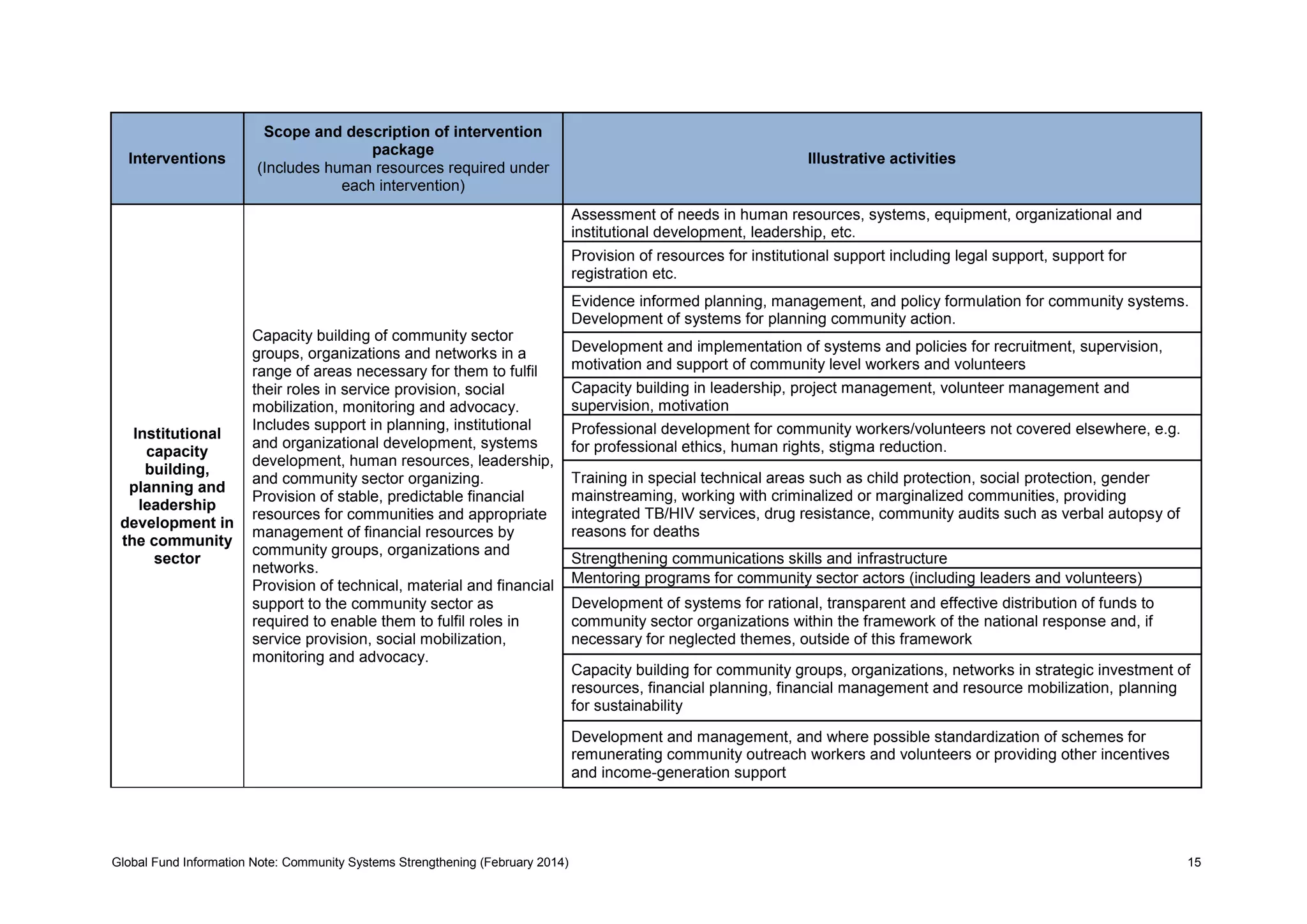
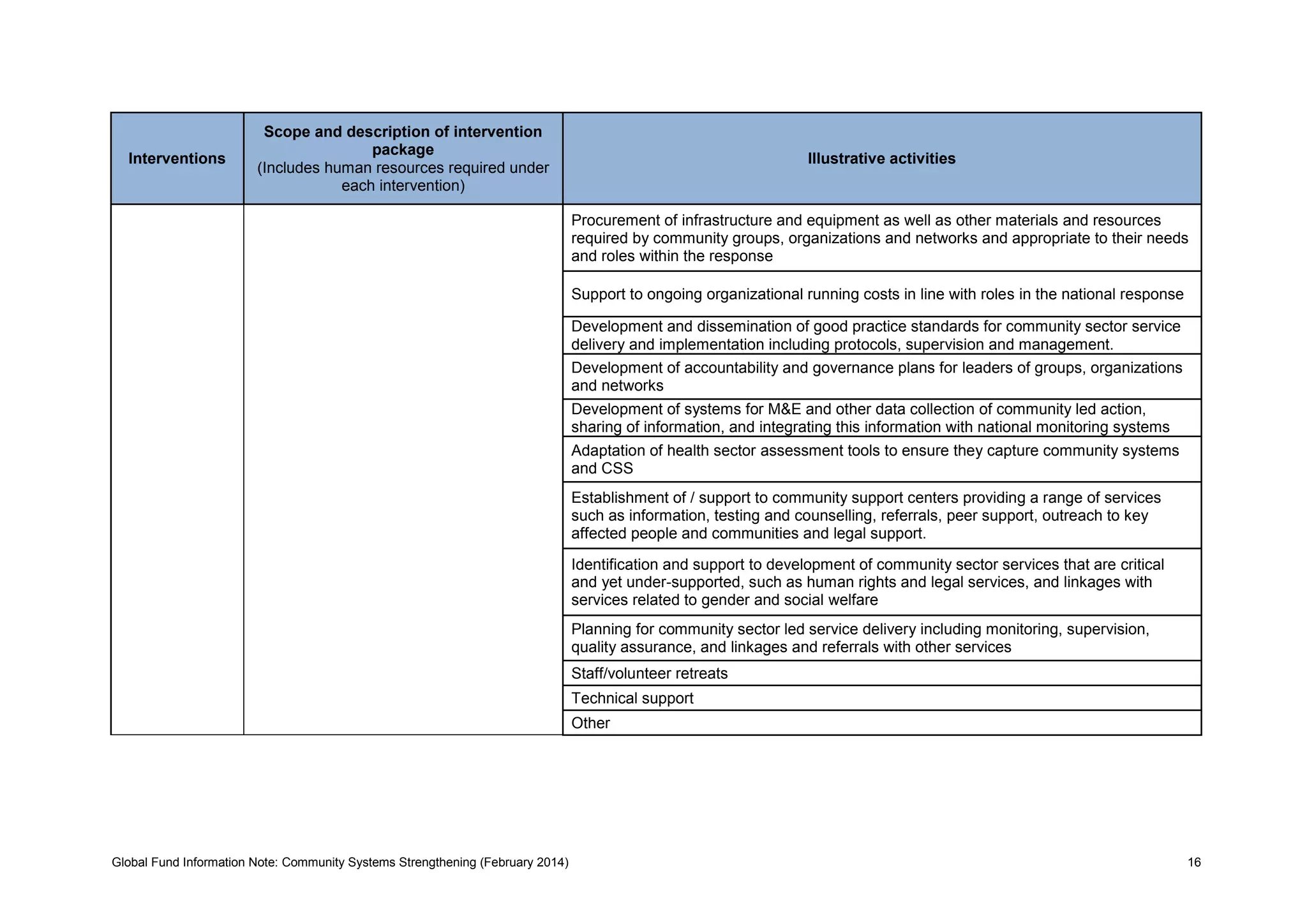

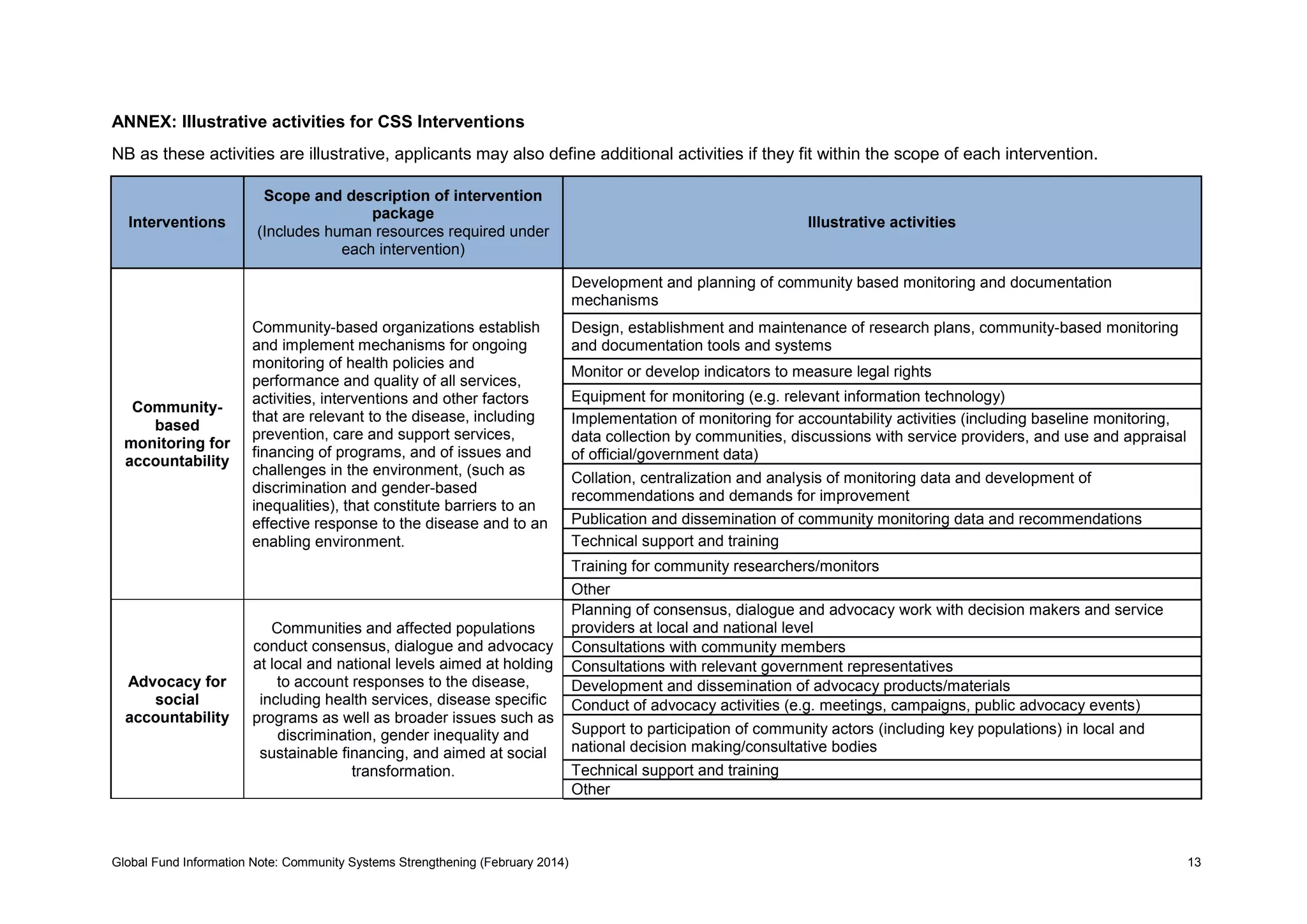
This document discusses community systems strengthening (CSS) as supported by the Global Fund. It defines community systems as structures made up of community members and organizations that are close to communities and understand their needs. CSS aims to build the capacity of these community groups to monitor health services, advocate for change, deliver services, and coordinate their work. The Global Fund recognizes community systems as critical to ensuring access to health services for marginalized groups. It supports CSS through funding modules in its measurement frameworks for HIV/AIDS, tuberculosis and malaria. The modules include interventions for community monitoring, advocacy, social mobilization, and building institutional capacity of community sector organizations. The Global Fund's rationale is that strong community systems are essential for effective and sustainable responses to diseases


![Apporach to lung biopsy [Auto-saved].pptx latest](https://cdn.slidesharecdn.com/ss_thumbnails/apporachtolungbiopsyauto-saved-251211225655-93258539-thumbnail.jpg?width=640&height=640&fit=bounds)


