Assessing sustainability,
partnerships and health systems
changes
Anne Buffardi
THET Partnerships for Global Health
23-25 October 2017, London
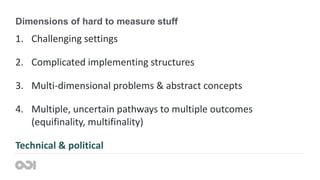
Dimensions of hard to measure stuff
1. Challenging settings
2. Complicated implementing structures
3. Multi-dimensional problems & abstract concepts
4. Multiple, uncertain pathways to multiple outcomes
(equifinality, multifinality)
Technical & political
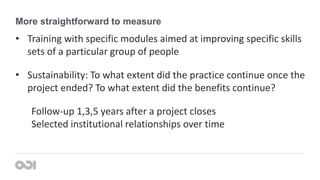
More straightforward to measure
• Training with specific modules aimed at improving specific skills
sets of a particular group of people
• Sustainability: To what extent did the practice continue once the
project ended? To what extent did the benefits continue?
Follow-up 1,3,5 years after a project closes
Selected institutional relationships over time
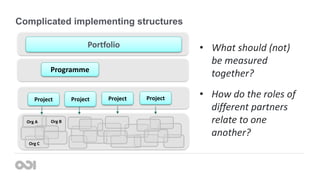
Complicated implementing structures
Portfolio
Project ProjectProject Project
Org C
Org BOrg A
Programme
• What should (not)
be measured
together?
• How do the roles of
different partners
relate to one
another?
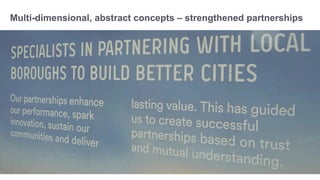
Multi-dimensional, abstract concepts – strengthened partnerships
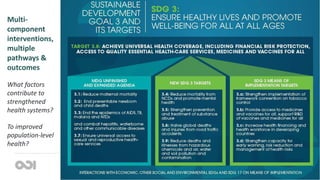
Multi-
component
interventions,
multiple
pathways &
outcomes
What factors
contribute to
strengthened
health systems?
To improved
population-level
health?
Assessing sustainability, partnerships and health systems changes
• Utility: what are the primary uses and users of information?
• Plausibility: what can reasonably be expected to observe, when?
• Feasibility: what is possible to measure?
Processes of prioritisation, discussion of underlying, more
fundamental questions
www.odi.org/publications/10378-methods-lab-evaluation-toolkit
http://www.betterevaluation.org/
‘Pretending to evaluate comprehensive policy
interventions without telling policymakers
that what they’re asking for can’t be done,
but we’ll take a shot at it anyway and blame
the inadequate results on complexity’
- Michael Quinn Patton 2015, p.8

Day 1 Speaker Presentation - Anne Buffardi

  • 1.
    Assessing sustainability, partnerships andhealth systems changes Anne Buffardi THET Partnerships for Global Health 23-25 October 2017, London
  • 2.
    Dimensions of hardto measure stuff 1. Challenging settings 2. Complicated implementing structures 3. Multi-dimensional problems & abstract concepts 4. Multiple, uncertain pathways to multiple outcomes (equifinality, multifinality) Technical & political
  • 3.
    More straightforward tomeasure • Training with specific modules aimed at improving specific skills sets of a particular group of people • Sustainability: To what extent did the practice continue once the project ended? To what extent did the benefits continue? Follow-up 1,3,5 years after a project closes Selected institutional relationships over time
  • 4.
    Complicated implementing structures Portfolio ProjectProjectProject Project Org C Org BOrg A Programme • What should (not) be measured together? • How do the roles of different partners relate to one another?
  • 5.
    Multi-dimensional, abstract concepts– strengthened partnerships
  • 6.
    Multi- component interventions, multiple pathways & outcomes What factors contributeto strengthened health systems? To improved population-level health?
  • 7.
    Assessing sustainability, partnershipsand health systems changes • Utility: what are the primary uses and users of information? • Plausibility: what can reasonably be expected to observe, when? • Feasibility: what is possible to measure? Processes of prioritisation, discussion of underlying, more fundamental questions www.odi.org/publications/10378-methods-lab-evaluation-toolkit http://www.betterevaluation.org/
  • 9.
    ‘Pretending to evaluatecomprehensive policy interventions without telling policymakers that what they’re asking for can’t be done, but we’ll take a shot at it anyway and blame the inadequate results on complexity’ - Michael Quinn Patton 2015, p.8