Inventory of Biodiversity
Urban and Suburban Carbon Farming Conference
Biodiversity for a Livable Climate,
May 3rd, 2015
David Lefcourt
MCA, MCLP, ISA Municipal Specialist, TRAQ
City Arborist/Tree Warden
City of Cambridge, MA
617-349-6433
dlefcourt@cambridgema.gov
www.cambridgema.gov/tree
President – Society of Municipal Arborists
Past President – MA Tree Wardens’ and Foresters’ Association
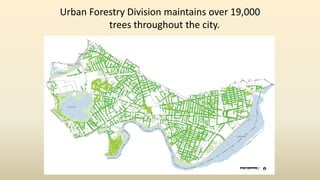
Urban Forestry Division maintains over 19,000
trees throughout the city.
As compared to:
3,070 Parking meters
6,600 Street lights
Over time, the value of a tree increases while the value
other city assets decrease
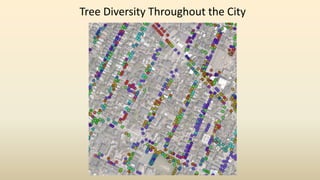
Tree Diversity Throughout the City
Trees Species Throughout the City
Native*
Potential New Tree
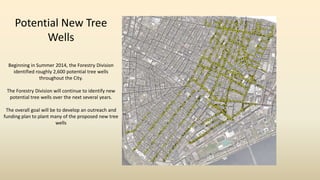
Wells
Beginning in Summer 2014, the Forestry Division
identified roughly 2,600 potential tree wells
throughout the City.
The Forestry Division will continue to identify new
potential tree wells over the next several years.
The overall goal will be to develop an outreach and
funding plan to plant many of the proposed new tree
wells
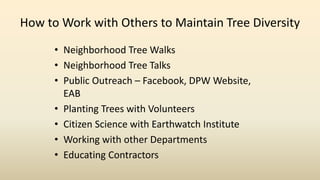
How to Work with Others to Maintain Tree Diversity
• Neighborhood Tree Walks
• Neighborhood Tree Talks
• Public Outreach – Facebook, DPW Website,
EAB
• Planting Trees with Volunteers
• Citizen Science with Earthwatch Institute
• Working with other Departments
• Educating Contractors
Neighborhood Tree Walks
Cambridgeport
Neighborhood
Tree Talk
Cambridgeport vs. Citywide
9/15/2011 Cambridgeport City of Cambridge
Cambridgeport as
Percentage of
Citywide Count
# of Trees 1,739 12,995 13.38%
# of Planting Sites 57 624 9.13%
# of Retired Sites 0 137 0.00%
# of Stumps 23 234 9.83%
Tree Density
Number of
Trees
NAME Total Street Length Density
765 WELLINGTON HARRINGTON 30536.96 0.02505
1211 MID-CAMBRIDGE 51414.62 0.02355
560 AGASSIZ 23882.84 0.02345
1738 CAMBRIDGEPORT 74861.15 0.02322
892 AREA IV 40287.77 0.02214
1556 EAST CAMBRIDGE 73128.31 0.02128
1266 NEIGHBORHOOD 9 67418.83 0.01878
804 RIVERSIDE 43901.87 0.01831
1333 NORTH CAMBRIDGE 78165.94 0.01705
1906 NEIGHBORHOOD 10 112724.25 0.01691
266 STRAWBERRY HILL 17149.87 0.01551
410 MIT / AREA 2 36659.18 0.01118
199 CAMBRIDGE HIGHLANDS 19924.67 0.00999
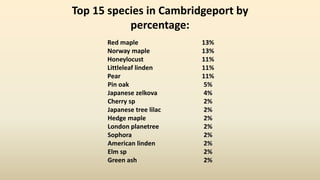
Top 15 species in Cambridgeport by
percentage:
Red maple 13%
Norway maple 13%
Honeylocust 11%
Littleleaf linden 11%
Pear 11%
Pin oak 5%
Japanese zelkova 4%
Cherry sp 2%
Japanese tree lilac 2%
Hedge maple 2%
London planetree 2%
Sophora 2%
American linden 2%
Elm sp 2%
Green ash 2%
M
em
orial
Brookline
M
assachusetts
M
agazine
Brookline
Putnam
Albany
River
Waverly
Erie
Central
Henry
W
averly
River
Em
ily
Tudor
Andrew
Laurel
Salem
Rockw
ell
Kenwood
Talbot
Speridakis
Blanche
°0 250 500 750 1,000125
Feet
N
Charles River
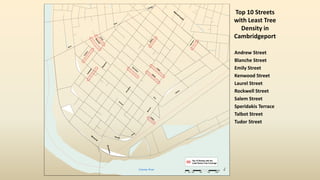
Top 10 Streets with the
Least Dense Tree Coverage
Andrew Street
Blanche Street
Emily Street
Kenwood Street
Laurel Street
Rockwell Street
Salem Street
Speridakis Terrace
Talbot Street
Tudor Street
Top 10 Streets
with Least Tree
Density in
Cambridgeport
Boston Globe
May 14, 2014
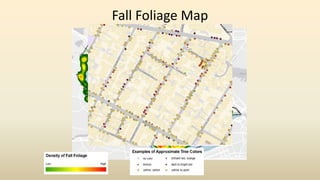
Fall Foliage Map
Working with Volunteers
Bare root tree planting project with local girl scout troop
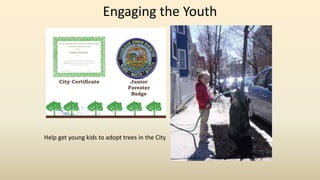
Engaging the Youth
Help get young kids to adopt trees in the City
Citizen scientists spend the day measuring and assessing
trees throughout the City of Cambridge
Collaborating with the
Earthwatch Institute
Other projects in the works:
- Coring trees to determine historical
growth rate data
- Development of an Urban Forestry
management plan
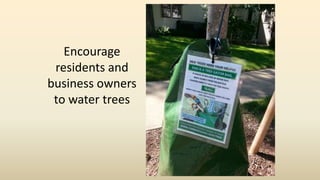
Encourage
residents and
business owners
to water trees
Encourage residents and business owners to water
trees
Water-By-Bike/Tree Ambassador
Honeylocust
Honeylocust
Honeylocust
Elm
Linden
No Trees
15
City of Cambridge
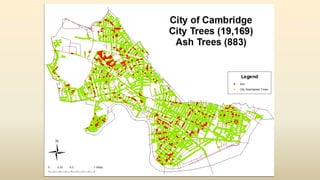
Emerald Ash Borer
Management Plan
Emerald Ash Borer (EAB)
Management Plan
• EAB was recently found at the Arnold Arboretum, which is about 6
miles away from Cambridge
– Could arrive in Cambridge any time now. May already be present.
– Depending on existing condition and/or size of tree, could take 3-7
years for EAB to kill a tree
– Standing dead ash present high risk to public safety due to how quickly
branches will fail
• There are roughly 883 City maintained ash trees (4.6% of overall
City maintained tree canopy)
– Good – 769 trees
– Poor – 114 trees
• Good trees can be protected through proactive treatment; trees in
poor condition need to be removed as potential high risk trees.
• It is more cost effective for the City to treat now as oppose to
removing all dead ash trees 3-7 years from now
Trees and Construction
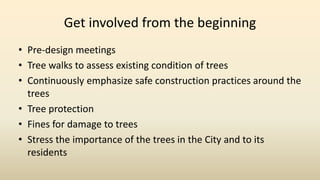
Get involved from the beginning
• Pre-design meetings
• Tree walks to assess existing condition of trees
• Continuously emphasize safe construction practices around the
trees
• Tree protection
• Fines for damage to trees
• Stress the importance of the trees in the City and to its
residents
Avoid the Following When Working Around Trees:
• Wounding the tree
• Exposing Roots to Elements for Long Periods
• Cutting or Ripping Roots
• Compacting Rooting Soil with Materials and
Equipment
• Breaking Branches
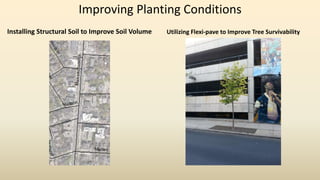
Improving Planting Conditions
Installing Structural Soil to Improve Soil Volume Utilizing Flexi-pave to Improve Tree Survivability
Thank You!
David Lefcourt
MCA, MCLP, ISA Municipal Specialist, TRAQ
City Arborist/Tree Warden
City of Cambridge, MA
617-349-6433
dlefcourt@cambridgema.gov
www.cambridgema.gov/tree

David Lefcourt - City Trees

  • 1.
    Inventory of Biodiversity Urbanand Suburban Carbon Farming Conference Biodiversity for a Livable Climate, May 3rd, 2015
  • 2.
    David Lefcourt MCA, MCLP,ISA Municipal Specialist, TRAQ City Arborist/Tree Warden City of Cambridge, MA 617-349-6433 dlefcourt@cambridgema.gov www.cambridgema.gov/tree President – Society of Municipal Arborists Past President – MA Tree Wardens’ and Foresters’ Association
  • 3.
    Urban Forestry Divisionmaintains over 19,000 trees throughout the city. As compared to: 3,070 Parking meters 6,600 Street lights Over time, the value of a tree increases while the value other city assets decrease
  • 4.
  • 5.
  • 6.
    Trees Species Throughoutthe City Native*
  • 7.
    Potential New Tree Wells Beginningin Summer 2014, the Forestry Division identified roughly 2,600 potential tree wells throughout the City. The Forestry Division will continue to identify new potential tree wells over the next several years. The overall goal will be to develop an outreach and funding plan to plant many of the proposed new tree wells
  • 8.
    How to Workwith Others to Maintain Tree Diversity • Neighborhood Tree Walks • Neighborhood Tree Talks • Public Outreach – Facebook, DPW Website, EAB • Planting Trees with Volunteers • Citizen Science with Earthwatch Institute • Working with other Departments • Educating Contractors
  • 9.
  • 10.
  • 11.
    Cambridgeport vs. Citywide 9/15/2011Cambridgeport City of Cambridge Cambridgeport as Percentage of Citywide Count # of Trees 1,739 12,995 13.38% # of Planting Sites 57 624 9.13% # of Retired Sites 0 137 0.00% # of Stumps 23 234 9.83%
  • 12.
    Tree Density Number of Trees NAMETotal Street Length Density 765 WELLINGTON HARRINGTON 30536.96 0.02505 1211 MID-CAMBRIDGE 51414.62 0.02355 560 AGASSIZ 23882.84 0.02345 1738 CAMBRIDGEPORT 74861.15 0.02322 892 AREA IV 40287.77 0.02214 1556 EAST CAMBRIDGE 73128.31 0.02128 1266 NEIGHBORHOOD 9 67418.83 0.01878 804 RIVERSIDE 43901.87 0.01831 1333 NORTH CAMBRIDGE 78165.94 0.01705 1906 NEIGHBORHOOD 10 112724.25 0.01691 266 STRAWBERRY HILL 17149.87 0.01551 410 MIT / AREA 2 36659.18 0.01118 199 CAMBRIDGE HIGHLANDS 19924.67 0.00999
  • 13.
    Top 15 speciesin Cambridgeport by percentage: Red maple 13% Norway maple 13% Honeylocust 11% Littleleaf linden 11% Pear 11% Pin oak 5% Japanese zelkova 4% Cherry sp 2% Japanese tree lilac 2% Hedge maple 2% London planetree 2% Sophora 2% American linden 2% Elm sp 2% Green ash 2%
  • 14.
    M em orial Brookline M assachusetts M agazine Brookline Putnam Albany River Waverly Erie Central Henry W averly River Em ily Tudor Andrew Laurel Salem Rockw ell Kenwood Talbot Speridakis Blanche °0 250 500750 1,000125 Feet N Charles River Top 10 Streets with the Least Dense Tree Coverage Andrew Street Blanche Street Emily Street Kenwood Street Laurel Street Rockwell Street Salem Street Speridakis Terrace Talbot Street Tudor Street Top 10 Streets with Least Tree Density in Cambridgeport
  • 15.
  • 16.
  • 17.
    Working with Volunteers Bareroot tree planting project with local girl scout troop
  • 18.
    Engaging the Youth Helpget young kids to adopt trees in the City
  • 19.
    Citizen scientists spendthe day measuring and assessing trees throughout the City of Cambridge Collaborating with the Earthwatch Institute Other projects in the works: - Coring trees to determine historical growth rate data - Development of an Urban Forestry management plan
  • 20.
  • 21.
    Encourage residents andbusiness owners to water trees
  • 22.
  • 23.
  • 24.
    City of Cambridge EmeraldAsh Borer Management Plan
  • 25.
    Emerald Ash Borer(EAB) Management Plan • EAB was recently found at the Arnold Arboretum, which is about 6 miles away from Cambridge – Could arrive in Cambridge any time now. May already be present. – Depending on existing condition and/or size of tree, could take 3-7 years for EAB to kill a tree – Standing dead ash present high risk to public safety due to how quickly branches will fail • There are roughly 883 City maintained ash trees (4.6% of overall City maintained tree canopy) – Good – 769 trees – Poor – 114 trees • Good trees can be protected through proactive treatment; trees in poor condition need to be removed as potential high risk trees. • It is more cost effective for the City to treat now as oppose to removing all dead ash trees 3-7 years from now
  • 27.
  • 28.
    Get involved fromthe beginning • Pre-design meetings • Tree walks to assess existing condition of trees • Continuously emphasize safe construction practices around the trees • Tree protection • Fines for damage to trees • Stress the importance of the trees in the City and to its residents
  • 29.
    Avoid the FollowingWhen Working Around Trees: • Wounding the tree • Exposing Roots to Elements for Long Periods • Cutting or Ripping Roots • Compacting Rooting Soil with Materials and Equipment • Breaking Branches
  • 30.
    Improving Planting Conditions InstallingStructural Soil to Improve Soil Volume Utilizing Flexi-pave to Improve Tree Survivability
  • 31.
    Thank You! David Lefcourt MCA,MCLP, ISA Municipal Specialist, TRAQ City Arborist/Tree Warden City of Cambridge, MA 617-349-6433 dlefcourt@cambridgema.gov www.cambridgema.gov/tree