CUSTOMER FIRST
POINTING OUR
TEAM IN THE
RIGHT DIRECTION
How can we transform our IT organisation and structure – and more crucially – our team’s energies and
mind sets – to deliver services and solutions which meet the needs of our business?
David Bottomley speaks of his experiences in attempting to do this through organisational redesign and
cultural change in a number of major businesses.
Stop before you start . .
“I want to transform IT
do I really need to do this?
it will take loads of time and energy
it might not make any difference
let’s just work harder . . . .
. . . but that would be Insanity
so let’s do it . . .

and let’s do it properly”

"Insanity: doing the
same thing over
and over again and
expecting different
results”
1. Know your business . . .
• Strategic – Tactical
• Inflexible – Flexible
• Innovative – Conservative
• Investing – Cost-conscious
• Expanding – Stable

• Mature – Adolescent
• International – National
• Fast-moving – Slow-moving
• Controlling – Empowering
• Risk taking – Risk averse
2. Know your IT function . . .
• What does IT do well?
• What does IT not do well?
• What does your team think?
• What do your customers think?

Interviews

Benchmarks

Flashpoints
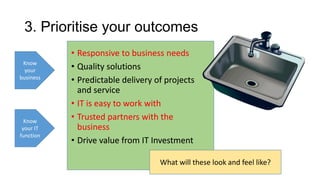
3. Prioritise your outcomes
Know
your
business

Know
your IT
function

• Responsive to business needs
• Quality solutions
• Predictable delivery of projects
and service
• IT is easy to work with
• Trusted partners with the
business
• Drive value from IT Investment
What will these look and feel like?
4. Establish Organisational Design
Principles
•
•
•
•
•
•
•

Clear accountabilities
Delegated authority
Collaboration
Flat structure
Leverage global capability
Timely / effective decision-making
Empowering leadership
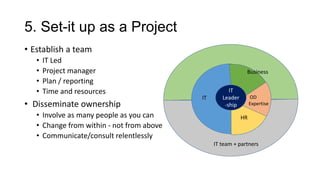
5. Set-it up as a Project
• Establish a team
•
•
•
•

IT Led
Project manager
Plan / reporting
Time and resources

• Disseminate ownership
• Involve as many people as you can
• Change from within - not from above
• Communicate/consult relentlessly

Business

IT

IT
Leader
-ship

OD
Expertise

HR

IT team + partners
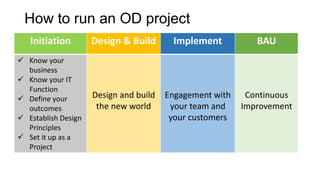
How to run an OD project
Initiation

Design & Build

Implement

BAU

 Know your
business
 Know your IT
Function
 Define your
outcomes
 Establish Design
Principles
 Set it up as a
Project

Design and build
the new world

Engagement with
your team and
your customers

Continuous
Improvement
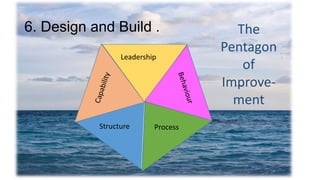
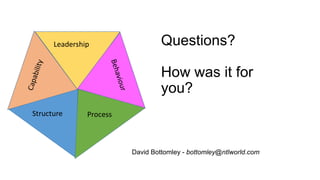
6. Design and Build .
Leadership

Structure

Process

The
Pentagon
of
Improvement
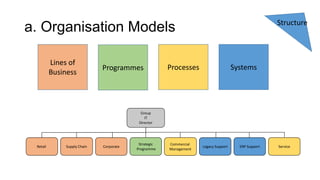
Structure

a. Organisation Models
Lines of
Business

Programmes

Systems

Processes

Group
IT
Director

Retail

Supply Chain

Corporate

Strategic
Programme

Commercial
Management

Legacy Support

ERP Support

Service
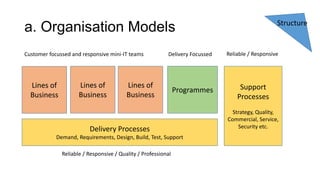
Structure

a. Organisation Models
Customer focussed and responsive mini-IT teams

Lines of
Business

Lines of
Business

Delivery Focussed

Lines of
Business

Programmes

Delivery Processes
Demand, Requirements, Design, Build, Test, Support
Reliable / Responsive / Quality / Professional

Reliable / Responsive

Support
Processes
Strategy, Quality,
Commercial, Service,
Security etc.
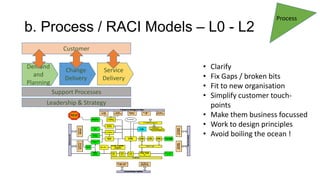
b. Process / RACI Models – L0 - L2

Process

Customer
Demand
and
Planning

Change
Delivery

Service
Delivery

Support Processes
Leadership & Strategy

•
•
•
•

Clarify
Fix Gaps / broken bits
Fit to new organisation
Simplify customer touchpoints
• Make them business focussed
• Work to design principles
• Avoid boiling the ocean !
Retail IT
Director

Org Design

Head of Change
Delivery
Apps
Architect

Lead Project
Manager

Process
Flow

Product Dev.
Manager

Test Lead

Portfolio Planning

Role Description

Head of Change Delivery
Behaviour
s

Skills &
Knowledge

Accounta
ble

Responsi
ble

OUT

IN
Consult
Inform

Role 1

A

-

PP-1
-

PP-3
-

PP-4-

A

R

C

Role 3

C

A

C

Test lead

-

Head of
Change
Delivery

R

I

R
RACI

Behaviours

Capability
Governance &
Policies
Transformation
only happens when
people change.
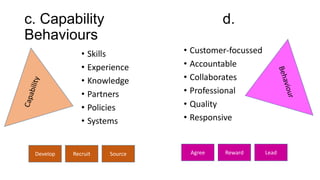
c. Capability
Behaviours

d.

• Skills
• Experience
• Knowledge
• Partners
• Policies
• Systems

Develop

Recruit

Source

• Customer-focussed
• Accountable
• Collaborates
• Professional
• Quality
• Responsive

Agree

Reward

Lead
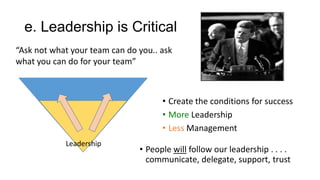
e. Leadership is Critical
“Ask not what your team can do you.. ask
what you can do for your team”

• Create the conditions for success
• More Leadership
• Less Management
Leadership

• People will follow our leadership . . . .
communicate, delegate, support, trust
6. Engagement and Implementation
• We already have engagement and ownership . . .
•
•
•
•
•

IT led
Disseminated ownership
Involved as many people as you could
Changed from within - not from above
Communicates/consulted relentlessly

• Implementation
•
•
•
•

Staged
Team-based / imaginative
One-to-one conversations
Business road-show
Leadership

Questions?
How was it for
you?

Structure

Process

David Bottomley - bottomley@ntlworld.com

David Bottomley, Formerly Head of IT Delivery at Specsavers - Customer First – Pointing our team in the right direction

  • 1.
    CUSTOMER FIRST POINTING OUR TEAMIN THE RIGHT DIRECTION How can we transform our IT organisation and structure – and more crucially – our team’s energies and mind sets – to deliver services and solutions which meet the needs of our business? David Bottomley speaks of his experiences in attempting to do this through organisational redesign and cultural change in a number of major businesses.
  • 2.
    Stop before youstart . . “I want to transform IT do I really need to do this? it will take loads of time and energy it might not make any difference let’s just work harder . . . . . . . but that would be Insanity so let’s do it . . . and let’s do it properly” "Insanity: doing the same thing over and over again and expecting different results”
  • 3.
    1. Know yourbusiness . . . • Strategic – Tactical • Inflexible – Flexible • Innovative – Conservative • Investing – Cost-conscious • Expanding – Stable • Mature – Adolescent • International – National • Fast-moving – Slow-moving • Controlling – Empowering • Risk taking – Risk averse
  • 4.
    2. Know yourIT function . . . • What does IT do well? • What does IT not do well? • What does your team think? • What do your customers think? Interviews Benchmarks Flashpoints
  • 5.
    3. Prioritise youroutcomes Know your business Know your IT function • Responsive to business needs • Quality solutions • Predictable delivery of projects and service • IT is easy to work with • Trusted partners with the business • Drive value from IT Investment What will these look and feel like?
  • 6.
    4. Establish OrganisationalDesign Principles • • • • • • • Clear accountabilities Delegated authority Collaboration Flat structure Leverage global capability Timely / effective decision-making Empowering leadership
  • 7.
    5. Set-it upas a Project • Establish a team • • • • IT Led Project manager Plan / reporting Time and resources • Disseminate ownership • Involve as many people as you can • Change from within - not from above • Communicate/consult relentlessly Business IT IT Leader -ship OD Expertise HR IT team + partners
  • 8.
    How to runan OD project Initiation Design & Build Implement BAU  Know your business  Know your IT Function  Define your outcomes  Establish Design Principles  Set it up as a Project Design and build the new world Engagement with your team and your customers Continuous Improvement
  • 9.
    6. Design andBuild . Leadership Structure Process The Pentagon of Improvement
  • 10.
    Structure a. Organisation Models Linesof Business Programmes Systems Processes Group IT Director Retail Supply Chain Corporate Strategic Programme Commercial Management Legacy Support ERP Support Service
  • 11.
    Structure a. Organisation Models Customerfocussed and responsive mini-IT teams Lines of Business Lines of Business Delivery Focussed Lines of Business Programmes Delivery Processes Demand, Requirements, Design, Build, Test, Support Reliable / Responsive / Quality / Professional Reliable / Responsive Support Processes Strategy, Quality, Commercial, Service, Security etc.
  • 12.
    b. Process /RACI Models – L0 - L2 Process Customer Demand and Planning Change Delivery Service Delivery Support Processes Leadership & Strategy • • • • Clarify Fix Gaps / broken bits Fit to new organisation Simplify customer touchpoints • Make them business focussed • Work to design principles • Avoid boiling the ocean !
  • 13.
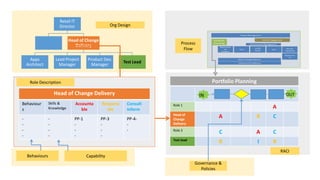
    Retail IT Director Org Design Headof Change Delivery Apps Architect Lead Project Manager Process Flow Product Dev. Manager Test Lead Portfolio Planning Role Description Head of Change Delivery Behaviour s Skills & Knowledge Accounta ble Responsi ble OUT IN Consult Inform Role 1 A - PP-1 - PP-3 - PP-4- A R C Role 3 C A C Test lead - Head of Change Delivery R I R RACI Behaviours Capability Governance & Policies
  • 14.
  • 15.
    c. Capability Behaviours d. • Skills •Experience • Knowledge • Partners • Policies • Systems Develop Recruit Source • Customer-focussed • Accountable • Collaborates • Professional • Quality • Responsive Agree Reward Lead
  • 16.
    e. Leadership isCritical “Ask not what your team can do you.. ask what you can do for your team” • Create the conditions for success • More Leadership • Less Management Leadership • People will follow our leadership . . . . communicate, delegate, support, trust
  • 17.
    6. Engagement andImplementation • We already have engagement and ownership . . . • • • • • IT led Disseminated ownership Involved as many people as you could Changed from within - not from above Communicates/consulted relentlessly • Implementation • • • • Staged Team-based / imaginative One-to-one conversations Business road-show
  • 18.
    Leadership Questions? How was itfor you? Structure Process David Bottomley - bottomley@ntlworld.com

Editor's Notes

  • #17 JFK – and he got a man on the moon. Explain diagrams.