Downloaded 152 times

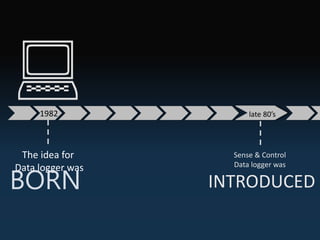
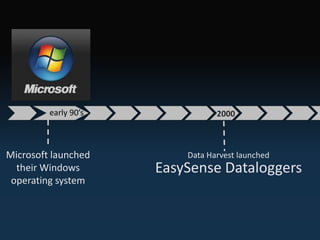
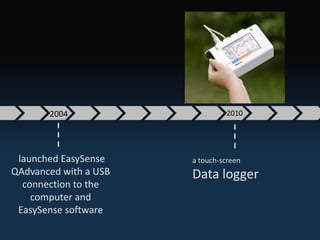

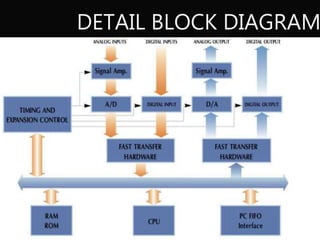
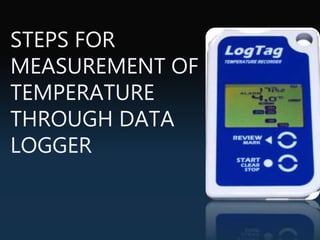
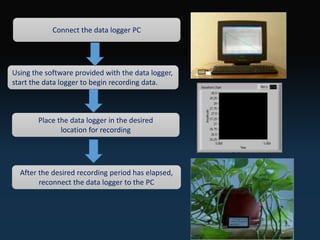
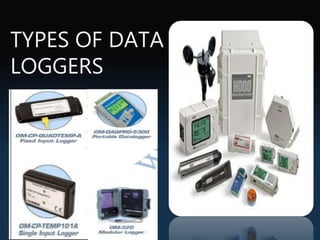
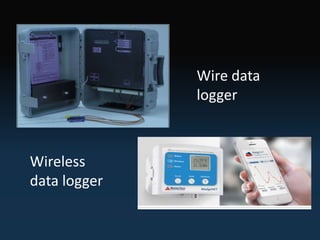
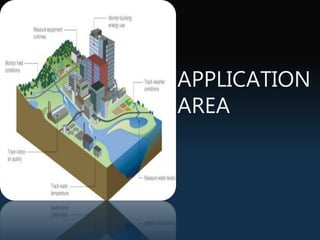
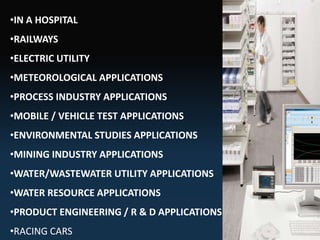
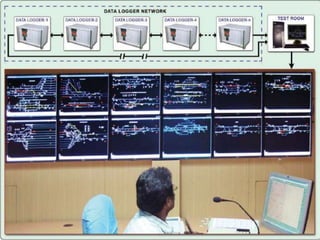
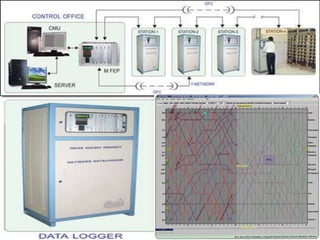
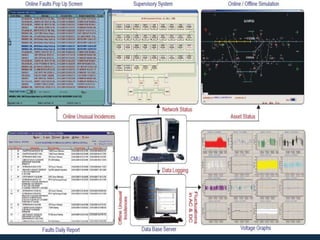



1. Data loggers are devices that record data over time from electrical sensors. They allow monitoring and recording of temperature, humidity, and other variables remotely and automatically without someone present. 2. A data logger works by connecting sensors to a microprocessor that records the sensor measurements in a database. It can record data 24/7 and at frequent, regular time intervals for applications like monitoring industrial processes, environmental conditions, vehicle testing, and more. 3. Advantages of data loggers include monitoring dangerous or remote areas without someone present, accurate frequent recordings without human error, and collecting data continuously for long periods. Disadvantages include upfront equipment costs and potential data loss if equipment fails between recording intervals.


