DATABASE
MODELS AND
DBMS
Types of
Database
models and
objectives of
data base
management
system
OBJECTIVES
 Define what a database model is.
 Describe the different types of
database models.
 Define what a database
management system (DBMS) is.
 Discuss the objectives of a
DBMS.
DEFINE DATABASE MODEL
A set of rules and standards that
define how data is organized.
Defines how users view the
organization of data.
TYPES OF DATABASE MODELS
Hierarchical Model
Network Model
Relational Model
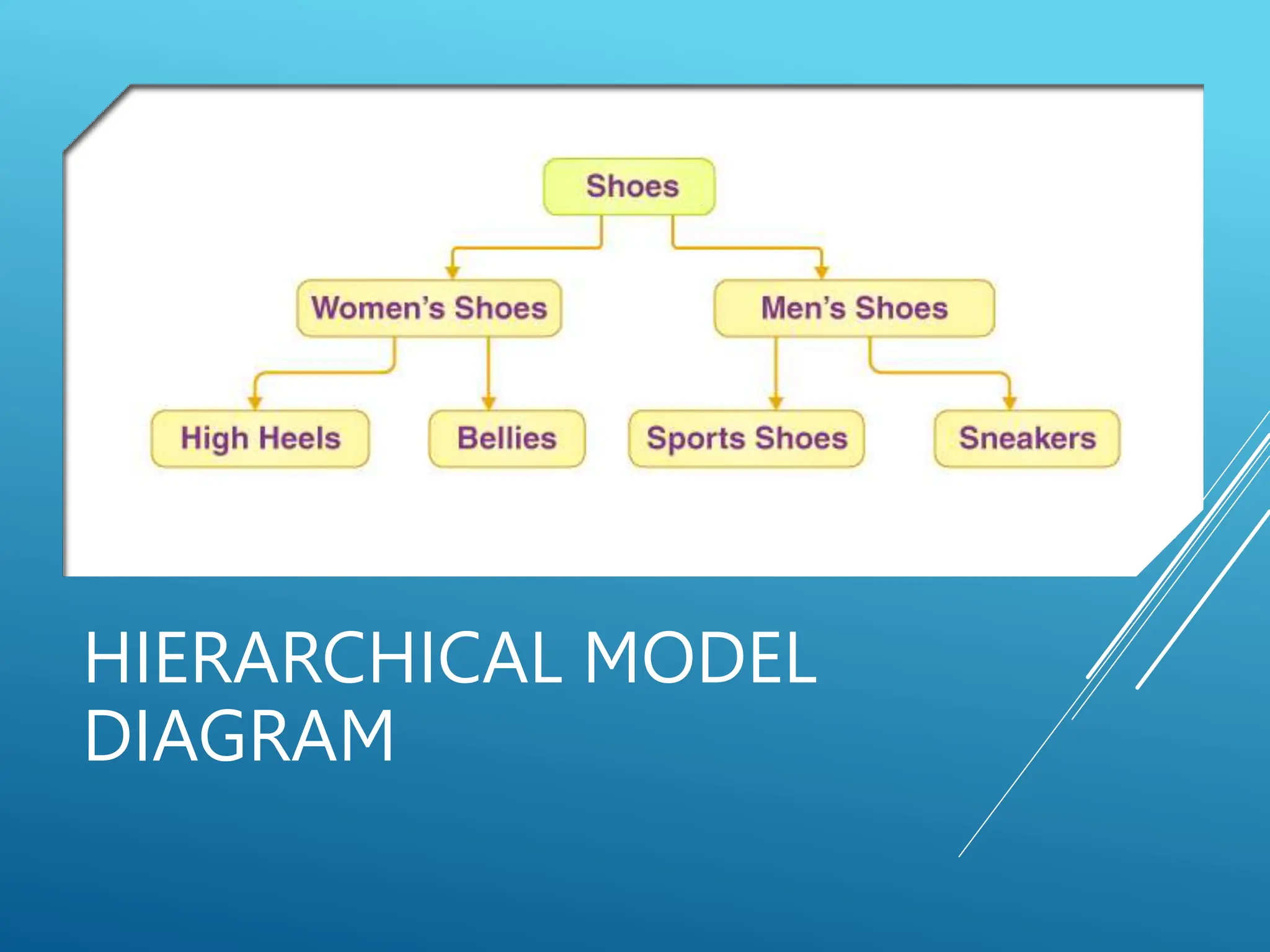
HIERARCHICAL MODEL
 Arranges records in a hierarchy like an
organizational chart.
 Each record is called a node or segment.
 Nodes represent entities.
 Top-most node is called root.
 Higher level node: Parent
 Lower level node: Child
 Each child has one parent.
 Structure is often called an inverted tree.
HIERARCHICAL MODEL
DIAGRAM
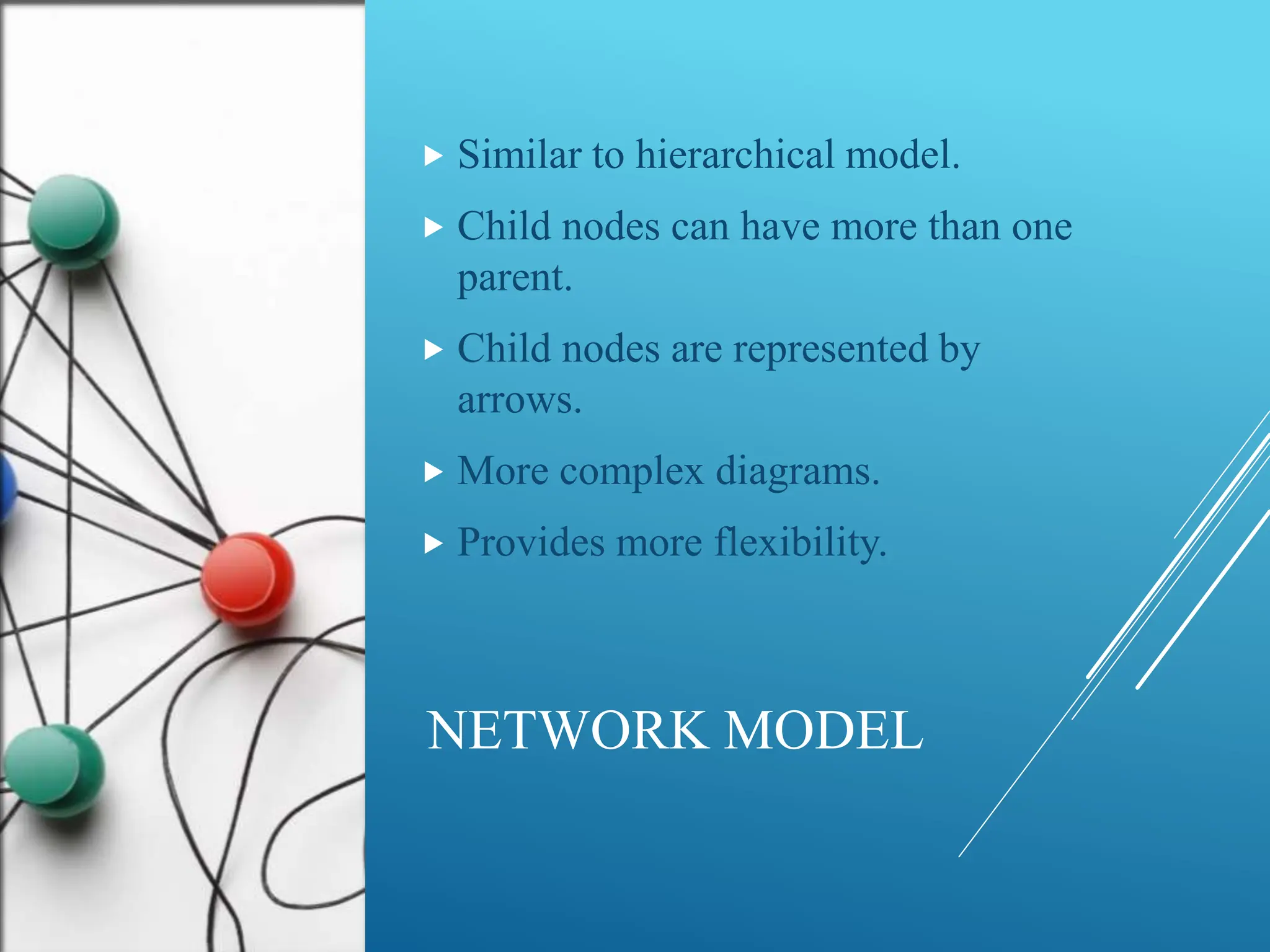
NETWORK MODEL
 Similar to hierarchical model.
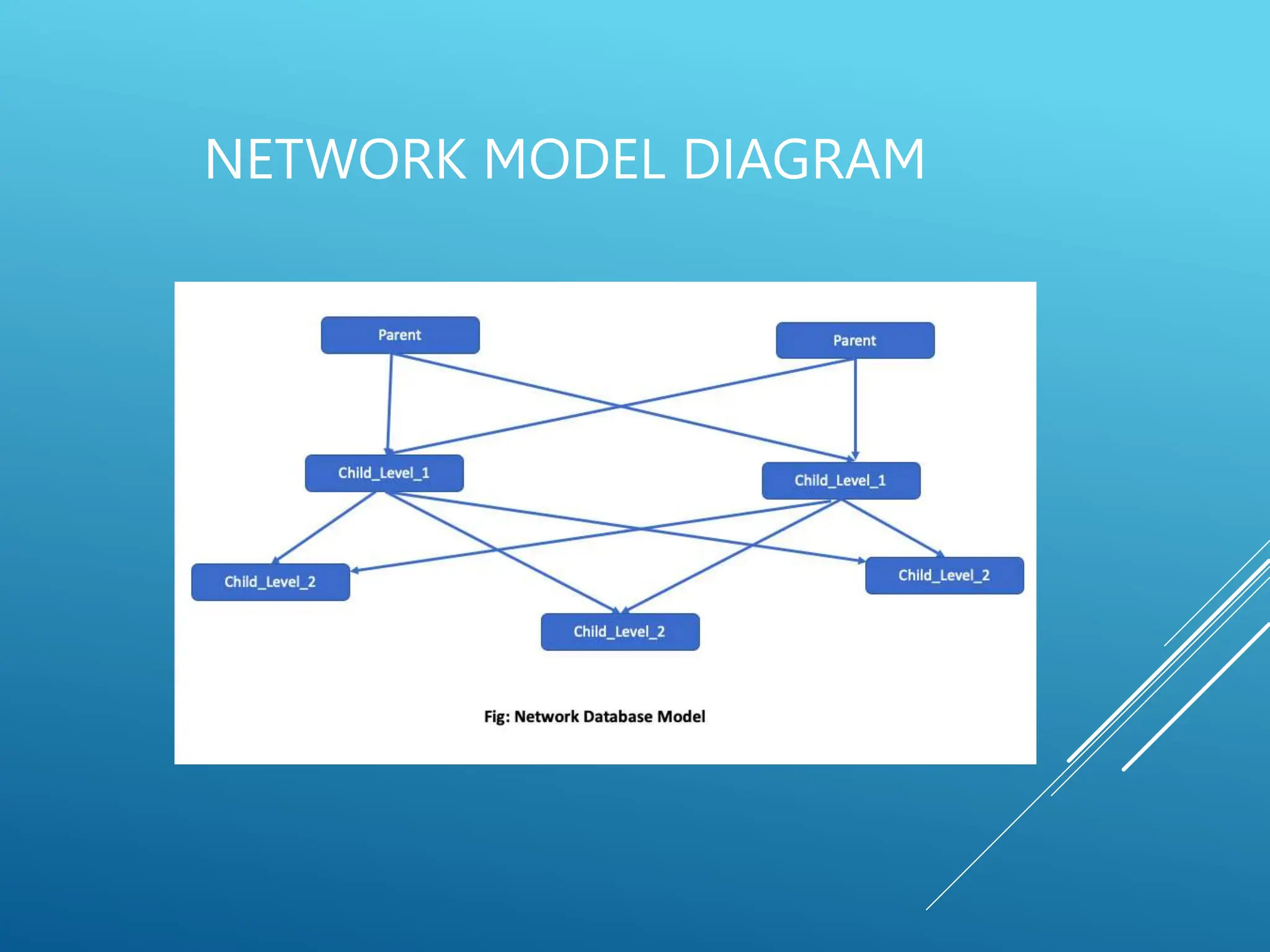
 Child nodes can have more than one
parent.
 Child nodes are represented by
arrows.
 More complex diagrams.
 Provides more flexibility.
NETWORK MODEL DIAGRAM
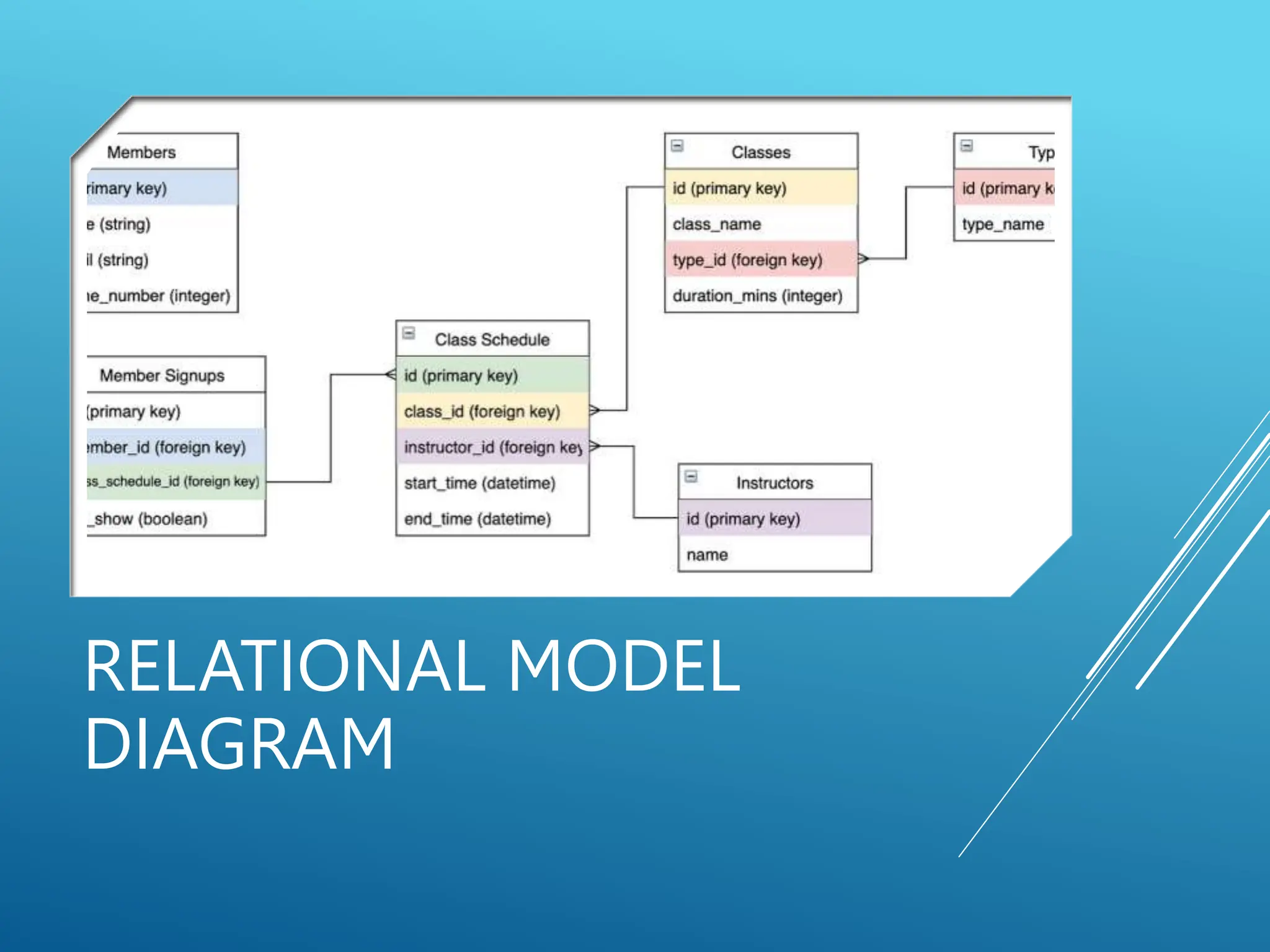
RELATIONAL MODEL
 Most commonly used database model.
 More flexible than hierarchical and
network models.
 Consists of simple relations (tables).
 Relations represent entities.
 Used to store information about entities.
 Relationships based on data of entities.
RELATIONAL MODEL
DIAGRAM
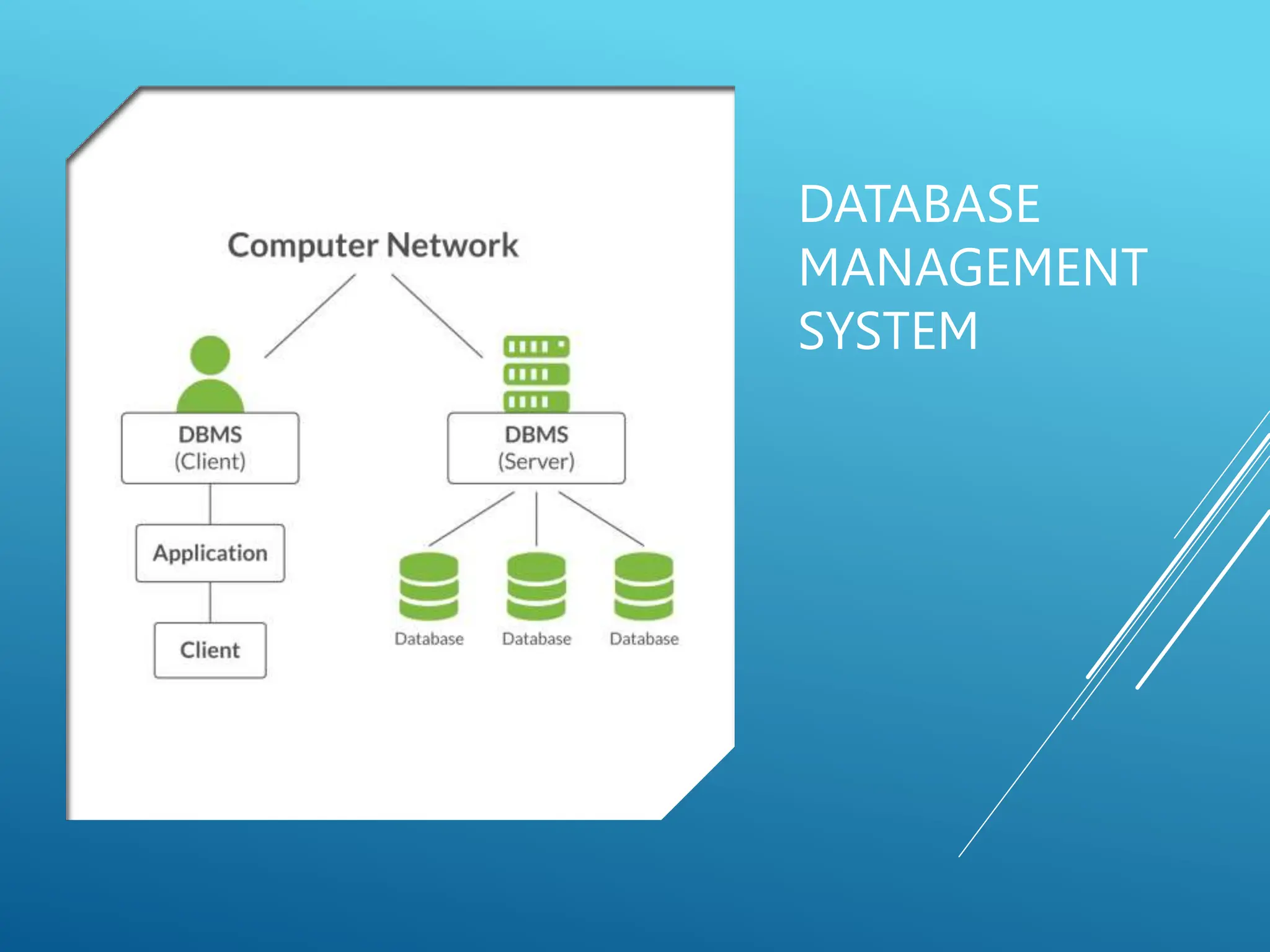
WHAT IS DBMS?
Collection of programs to create, maintain, and access databases.
Uses database manager software.
Controls the overall structure of a database.
Used by different organizations for various purposes.
DATABASE
MANAGEMENT
SYSTEM
OBJECTIVES OF DBMS
Shareability
Availability
Evolvability
Database Integrity
SHAREABILITY
Fundamental objective of DBMS.
Allows data to be shared by
different people simultaneously.
Data is stored centrally.
Accessible from different locations.
Reduces storage cost and ensures
consistency.
AVAILABILITY
Users must be able to
access data and DBMS
easily.
Data should be
available when and
where required.
EVOLVABILITY
DBMS should facilitate
changes due to increasing user
requirements or technology
changes.
Changes may occur by
contents or structure.
Example: Structure change if
an organization expands.
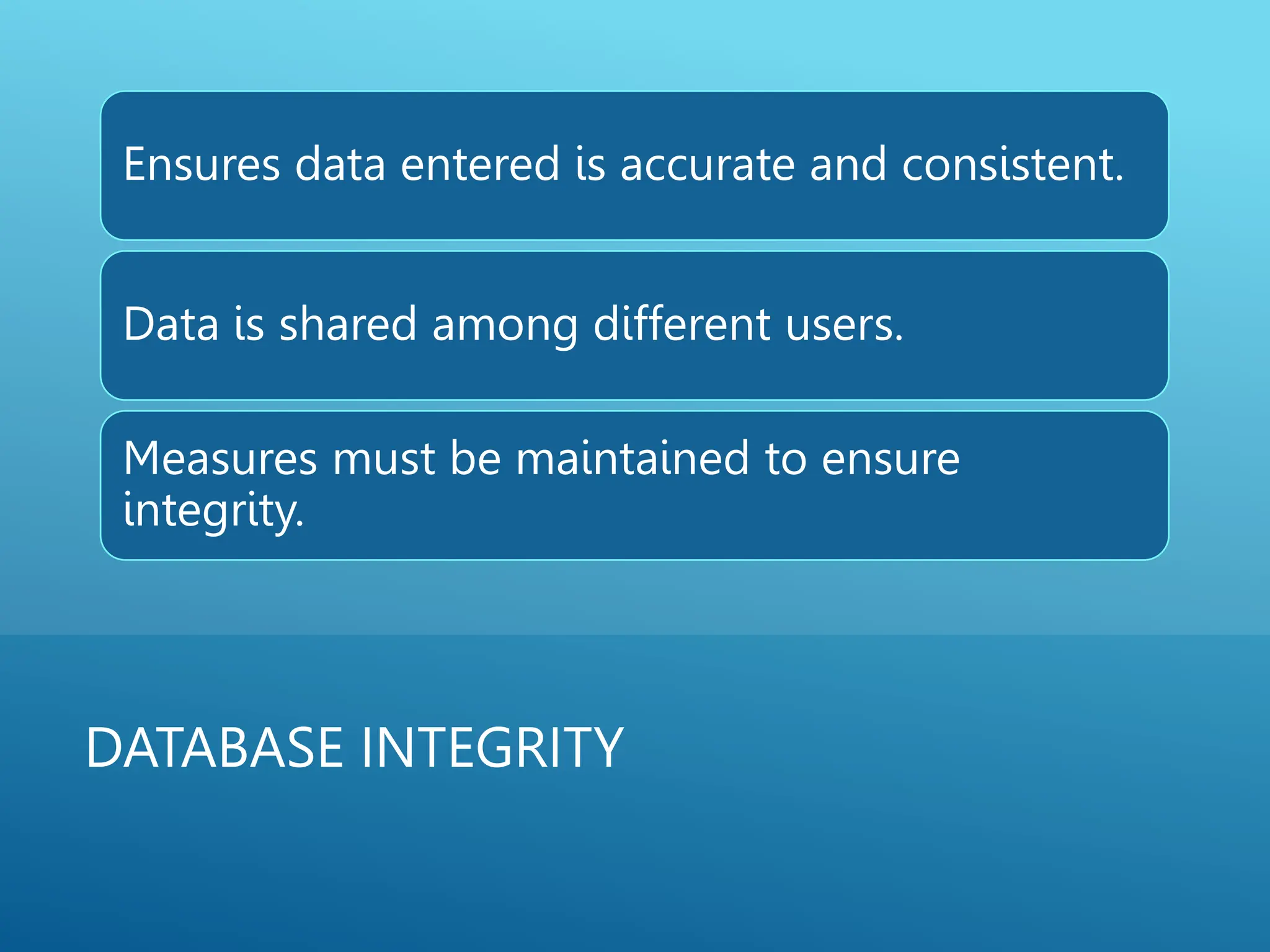
DATABASE INTEGRITY
Ensures data entered is accurate and consistent.
Data is shared among different users.
Measures must be maintained to ensure
integrity.
CONCLUSION
 Database models organize data
efficiently.
 Different models offer various
structures and flexibilities.
 Hierarchical, Network, and Relational
models serve different needs.
 DBMS efficiently manages data.
 Objectives ensure data is shareable,
available, adaptable, and consistent.

Database_Models objectives of DBMS .pptx