SUBMITTED BY
 In recent years, there is a rapid development in the
solid state light-emitting diode (LED) materials
which gave way for the next generation data
communication known as visible light
communication.
 VLC has a promising future and it acts as a
complement to the present RF communication by
achieving larger bandwidth and high data rate.
 At present, the day to day activities use lot of LED
based lights for illumination, which can also be used for
communication because of the advantages like fast
switching, high power efficiency and safe to human
vision.
 Hence, this project presents about ecofriendly data
communication through visible light which consists of
the white LEDs that transmit audio signals to the
receiver.
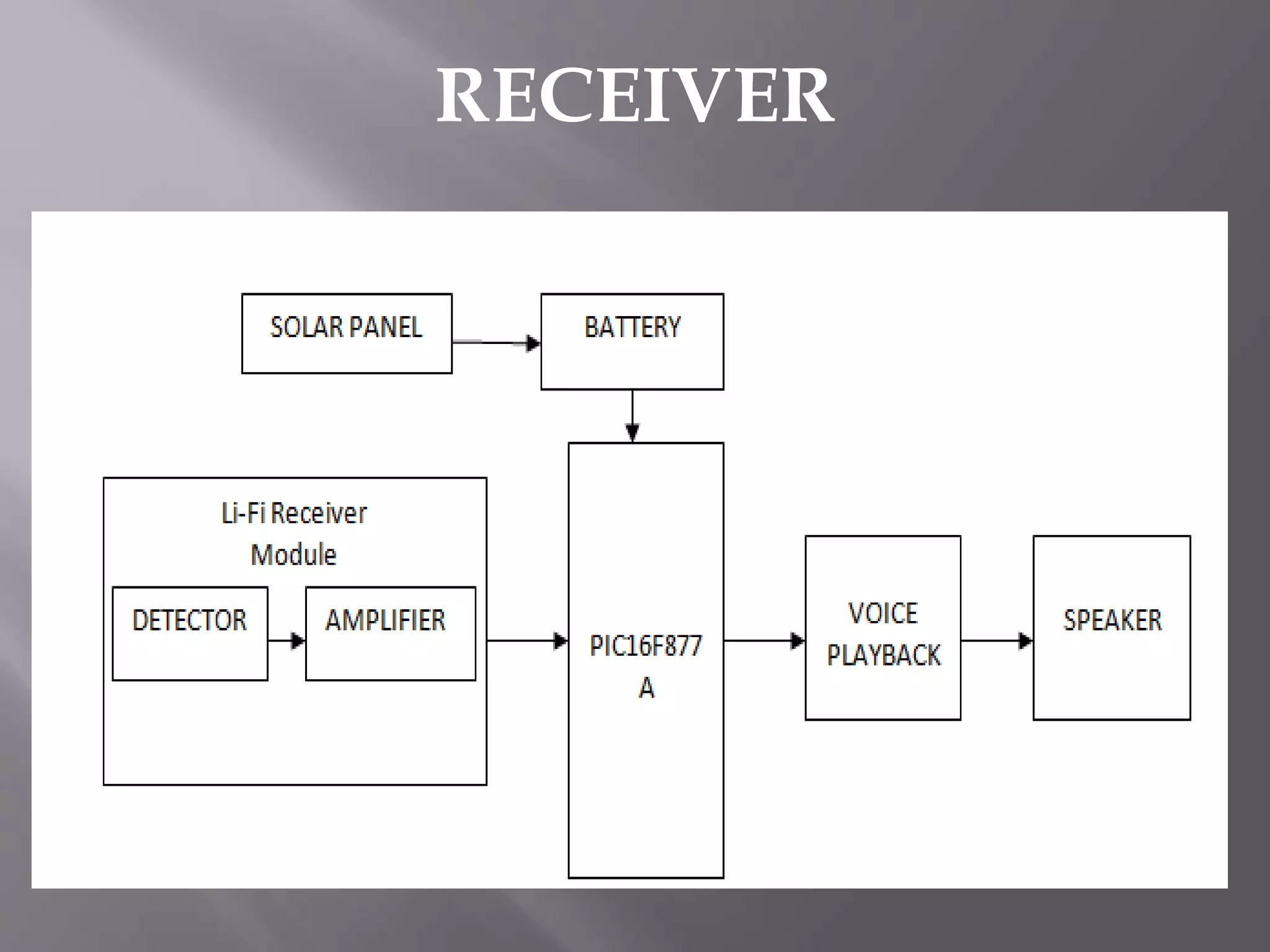
 The receiver circuit consists of solar panel connected
with the amplifier and speakers to recover back the
amplified version of original input signal.
 In existing system, uses Rf based communication
,so the inference and noise of the signal is high.
 Power consumption of existing system is high
compared to proposed system.
 installation cost and environmental hazards are
high compared to proposed system.
 The proposed system can be used in situations where a
household has many appliances with audio output such as
TV, PC, Hi-fi radio and phone systems.
 It consists of transmitter, free space channel and the receiver.
In the receiver side, solar panel is used instead of using the
photodiode receiver as they have the advantage of having a
large surface area, which is used to target light easier.
 As the efficiency of multicrystalline solar panel used in this
work is 10%, the output voltage achieved from the solar
panel is less. Still an eco friendly audio VLC is implemented
without photodiode receiver and other power supplies.
RECEIVER
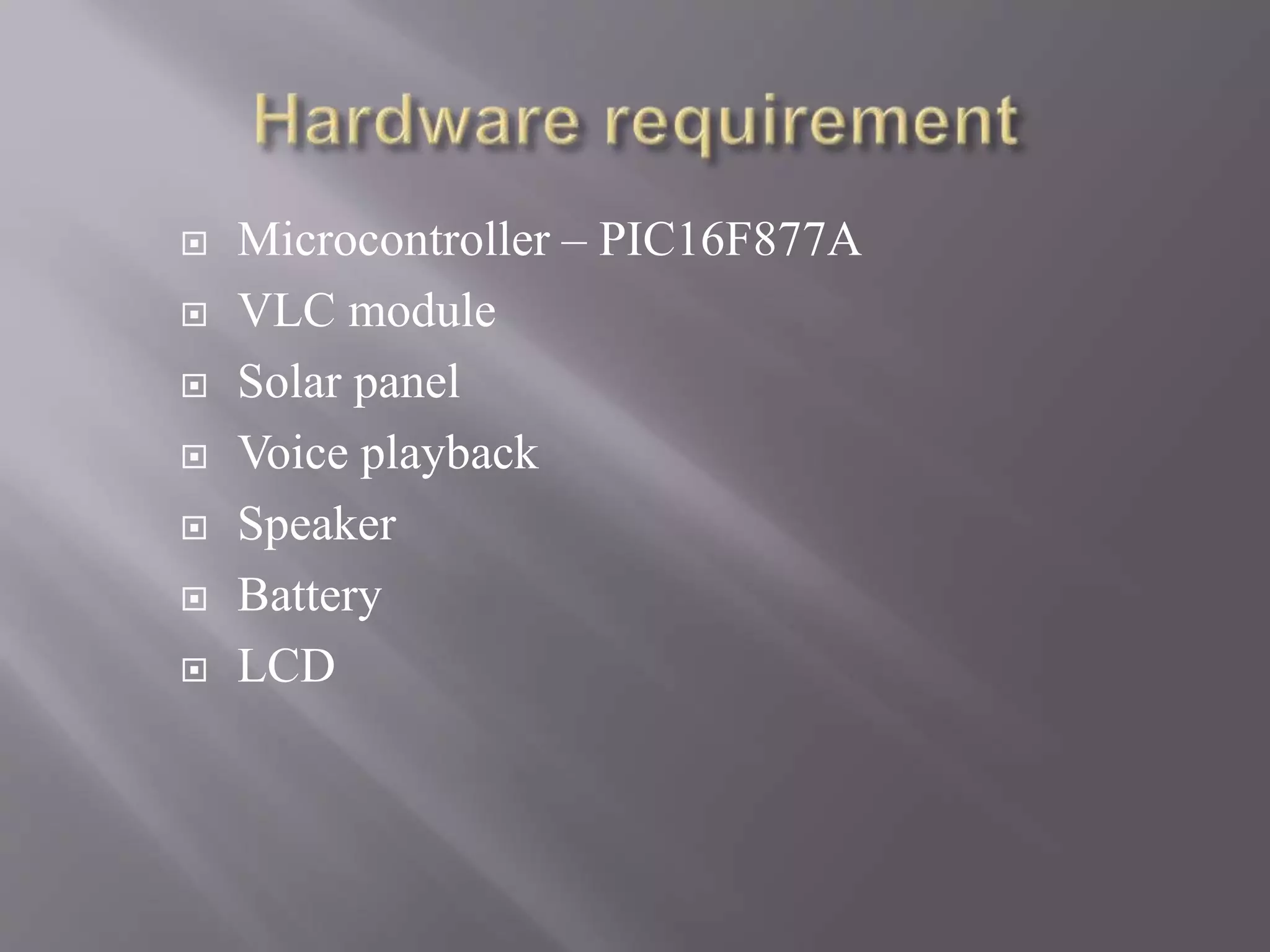
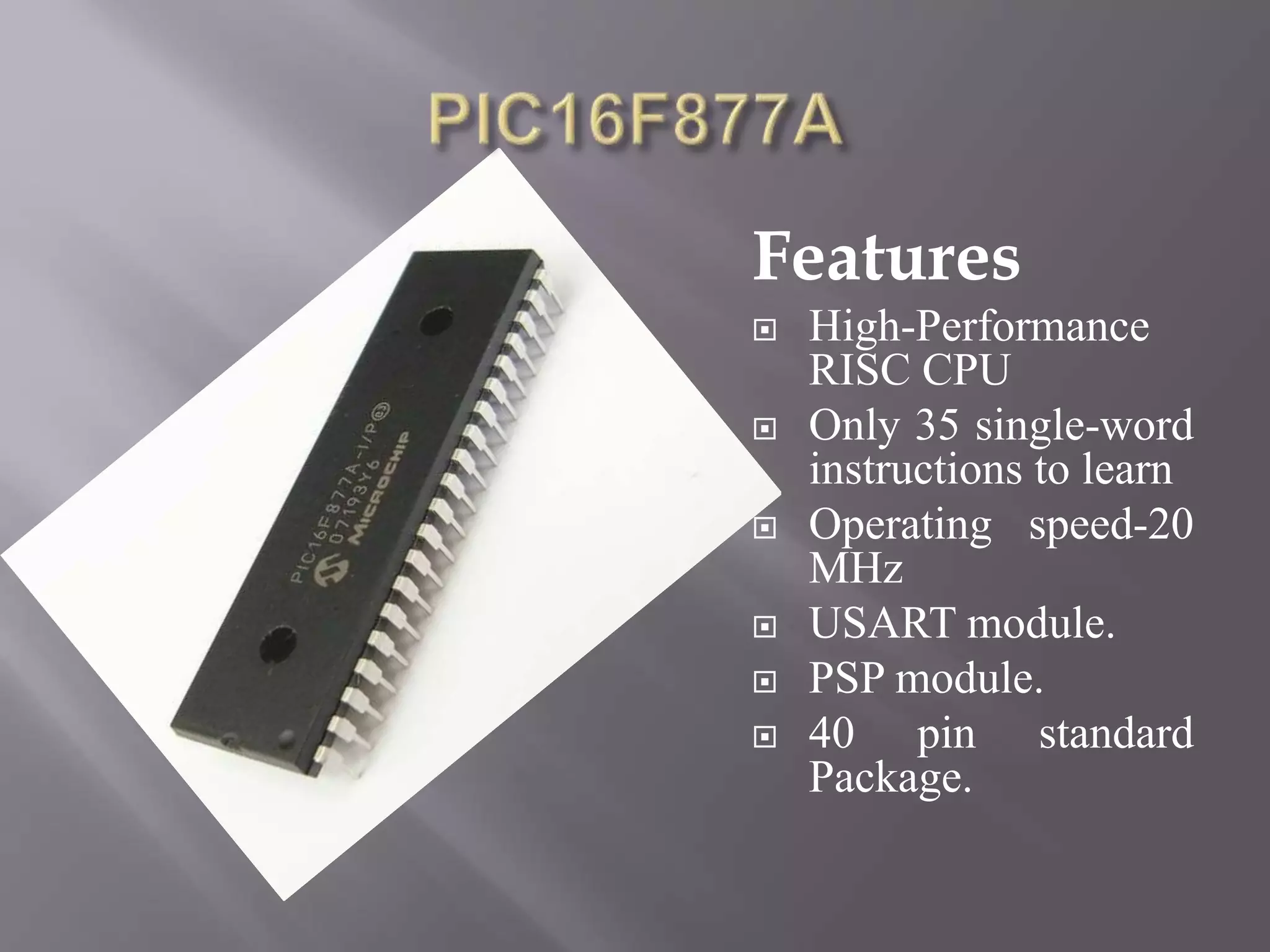
 Microcontroller – PIC16F877A
 VLC module
 Solar panel
 Voice playback
 Speaker
 Battery
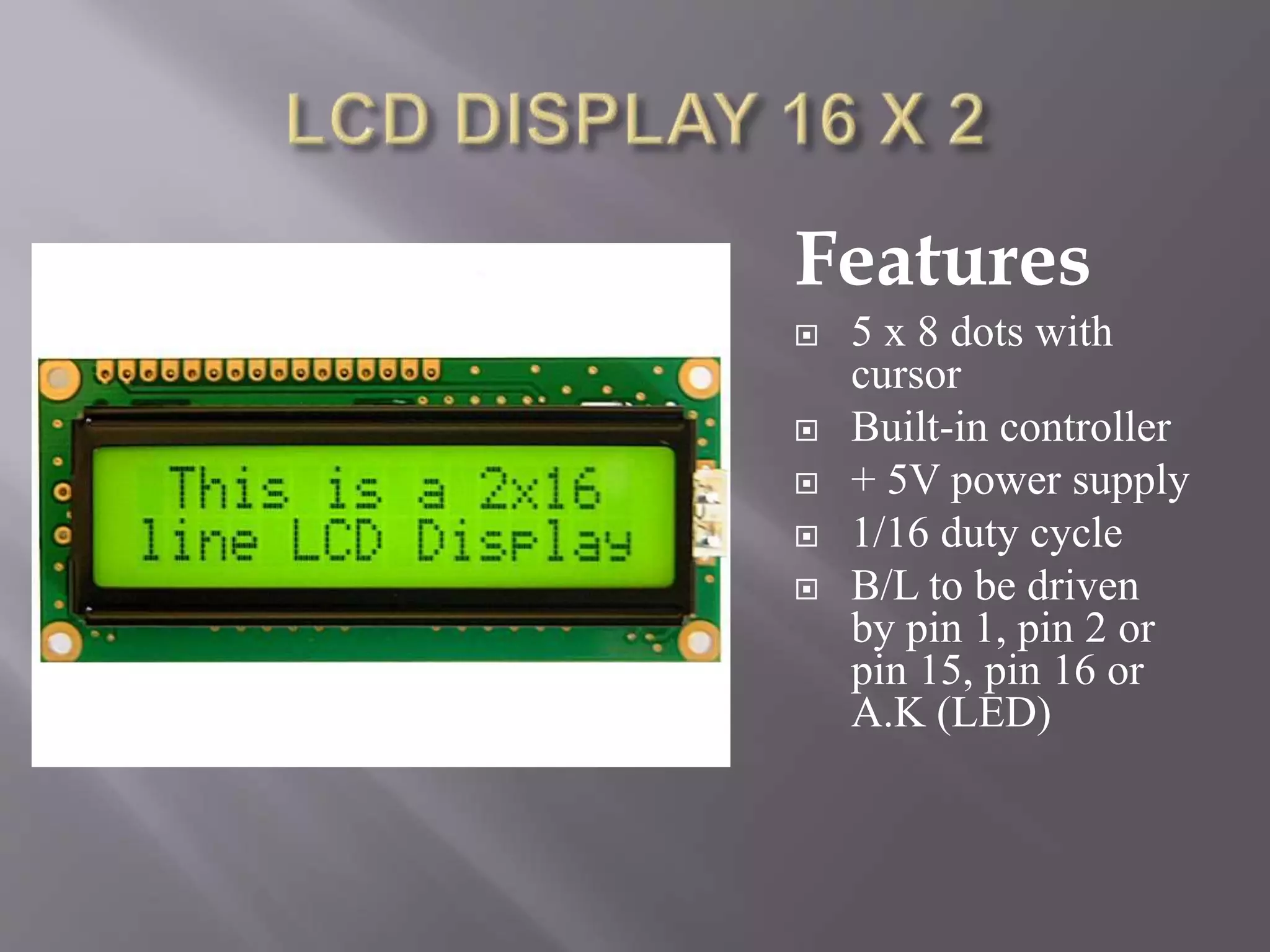
 LCD
Features
 High-Performance
RISC CPU
 Only 35 single-word
instructions to learn
 Operating speed-20
MHz
 USART module.
 PSP module.
 40 pin standard
Package.
Features
 5 x 8 dots with
cursor
 Built-in controller
 + 5V power supply
 1/16 duty cycle
 B/L to be driven
by pin 1, pin 2 or
pin 15, pin 16 or
A.K (LED)
 It can transmit data 57600
baud rate serialy.
 Distance can be acheived 1
Feet to 10 Feet for wireless
open optical
communication.
 High intensity LED
matrix.
 High quality PCB FR4
Grade with FPT Certified.
 Power input: DC 2.4-
5.5V
 With internal audio
amplifier, this board can
drive 8 Ohm 0.5W
speaker directly.
 Microphone is on board
 Board dimension: 54mm
x 38mm
 MPLAB
 Embedded C
 Proteus
Thank you

DATA TRANSMISSION USING LIFI TECHNOLOGY

  • 1.
  • 2.
     In recentyears, there is a rapid development in the solid state light-emitting diode (LED) materials which gave way for the next generation data communication known as visible light communication.  VLC has a promising future and it acts as a complement to the present RF communication by achieving larger bandwidth and high data rate.
  • 3.
     At present,the day to day activities use lot of LED based lights for illumination, which can also be used for communication because of the advantages like fast switching, high power efficiency and safe to human vision.  Hence, this project presents about ecofriendly data communication through visible light which consists of the white LEDs that transmit audio signals to the receiver.  The receiver circuit consists of solar panel connected with the amplifier and speakers to recover back the amplified version of original input signal.
  • 4.
     In existingsystem, uses Rf based communication ,so the inference and noise of the signal is high.  Power consumption of existing system is high compared to proposed system.  installation cost and environmental hazards are high compared to proposed system.
  • 5.
     The proposedsystem can be used in situations where a household has many appliances with audio output such as TV, PC, Hi-fi radio and phone systems.  It consists of transmitter, free space channel and the receiver. In the receiver side, solar panel is used instead of using the photodiode receiver as they have the advantage of having a large surface area, which is used to target light easier.  As the efficiency of multicrystalline solar panel used in this work is 10%, the output voltage achieved from the solar panel is less. Still an eco friendly audio VLC is implemented without photodiode receiver and other power supplies.
  • 7.
  • 8.
     Microcontroller –PIC16F877A  VLC module  Solar panel  Voice playback  Speaker  Battery  LCD
  • 9.
    Features  High-Performance RISC CPU Only 35 single-word instructions to learn  Operating speed-20 MHz  USART module.  PSP module.  40 pin standard Package.
  • 10.
    Features  5 x8 dots with cursor  Built-in controller  + 5V power supply  1/16 duty cycle  B/L to be driven by pin 1, pin 2 or pin 15, pin 16 or A.K (LED)
  • 11.
     It cantransmit data 57600 baud rate serialy.  Distance can be acheived 1 Feet to 10 Feet for wireless open optical communication.  High intensity LED matrix.  High quality PCB FR4 Grade with FPT Certified.
  • 12.
     Power input:DC 2.4- 5.5V  With internal audio amplifier, this board can drive 8 Ohm 0.5W speaker directly.  Microphone is on board  Board dimension: 54mm x 38mm
  • 13.
  • 14.