DATA STRUCTURE
UNIT I
LECTURE HOUR 2
Dr.M.UMADEVI
ASSISTANT PROFESSOR
DEPARTMENT OF CS
SACWC, CUMBUM
Elementary Data Organization
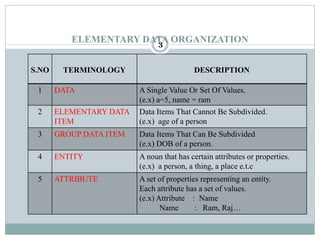
ELEMENTARY DATA ORGANIZATION3
S.NO TERMINOLOGY DESCRIPTION
1 DATA A Single Value Or Set Of Values.
(e.x) a=5, name = ram
2 ELEMENTARY DATA
ITEM
Data Items That Cannot Be Subdivided.
(e.x) age of a person
3 GROUP DATA ITEM Data Items That Can Be Subdivided
(e.x) DOB of a person.
4 ENTITY A noun that has certain attributes or properties.
(e.x) a person, a thing, a place e.t.c
5 ATTRIBUTE A set of properties representing an entity.
Each attribute has a set of values.
(e.x) Attribute : Name
Name : Ram, Raj…
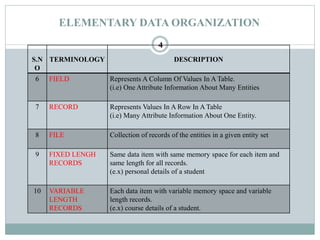
ELEMENTARY DATA ORGANIZATION
4
S.N
O
TERMINOLOGY DESCRIPTION
6 FIELD Represents A Column Of Values In A Table.
(i.e) One Attribute Information About Many Entities
7 RECORD Represents Values In A Row In A Table
(i.e) Many Attribute Information About One Entity.
8 FILE Collection of records of the entities in a given entity set
9 FIXED LENGH
RECORDS
Same data item with same memory space for each item and
same length for all records.
(e.x) personal details of a student
10 VARIABLE
LENGTH
RECORDS
Each data item with variable memory space and variable
length records.
(e.x) course details of a student.
Outline
 Data, Entity and Information
 Primitive data types
 Non primitive data Types
 Data structure
 Definition
 Classification
 Data structure operations.
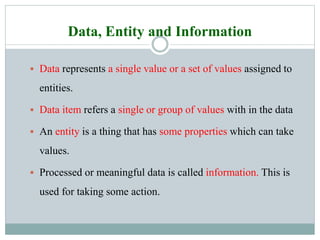
Data, Entity and Information
 Data represents a single value or a set of values assigned to
entities.
 Data item refers a single or group of values with in the data
 An entity is a thing that has some properties which can take
values.
 Processed or meaningful data is called information. This is
used for taking some action.
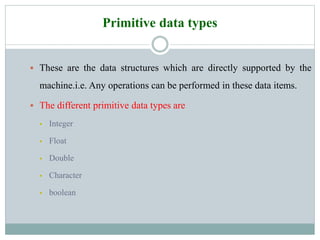
Primitive data types
 These are the data structures which are directly supported by the
machine.i.e. Any operations can be performed in these data items.
 The different primitive data types are
 Integer
 Float
 Double
 Character
 boolean
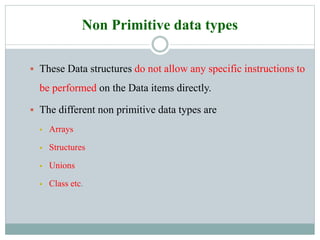
Non Primitive data types
 These Data structures do not allow any specific instructions to
be performed on the Data items directly.
 The different non primitive data types are
 Arrays
 Structures
 Unions
 Class etc.
Data structure
 A data structure is an arrangement of data in a computer's memory or
even disk storage.
 An example of several common data structures are arrays, linked lists,
queues, stacks, binary trees, and hash tables.
 Algorithms, on the other hand, are used to manipulate the data
contained in these data structures as in searching and sorting.
 Many algorithms apply directly to a specific data structures.
Data structure
 When working with certain data structures you need to know
how to insert new data, search for a specified item, and deleting
a specific item.
 Commonly used algorithms include are useful for:
 Searching for a particular data item (or record).
 Sorting the data. There are many ways to sort data. Simple sorting,
Advanced sorting
 Iterating through all the items in a data structure. (Visiting each item
in turn so as to display it or perform some other action on these items)
Data structure operations
 Operation means processing the data in the data structure. The
following are some important operations.
 Traversing
 Searching
 Inserting
 Deleting
 Sorting
 Merging
operations
 Traversing
 To visit or process each data exactly once in the data structure
 Searching
 To search for a particular value in the data structure for the
given key value.
 Inserting
 To add a new value to the data structure
operations
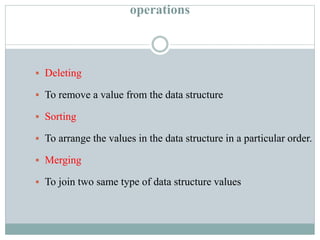
 Deleting
 To remove a value from the data structure
 Sorting
 To arrange the values in the data structure in a particular order.
 Merging
 To join two same type of data structure values
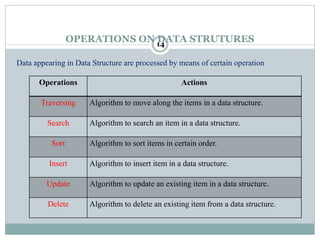
OPERATIONS ON DATA STRUTURES14
Data appearing in Data Structure are processed by means of certain operation
Operations Actions
Traversing Algorithm to move along the items in a data structure.
Search Algorithm to search an item in a data structure.
Sort Algorithm to sort items in certain order.
Insert Algorithm to insert item in a data structure.
Update Algorithm to update an existing item in a data structure.
Delete Algorithm to delete an existing item from a data structure.
15
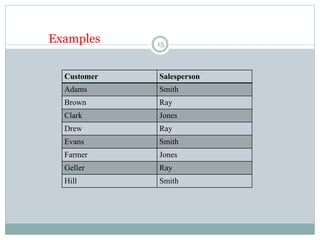
Examples
Customer Salesperson
Adams Smith
Brown Ray
Clark Jones
Drew Ray
Evans Smith
Farmer Jones
Geller Ray
Hill Smith
16
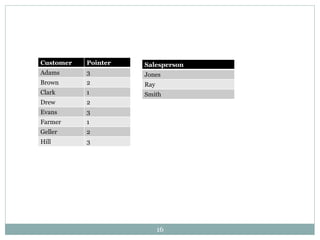
Customer Pointer
Adams 3
Brown 2
Clark 1
Drew 2
Evans 3
Farmer 1
Geller 2
Hill 3
Salesperson
Jones
Ray
Smith
INTRODUCTION ( Data Structures And
Algorithms)
17
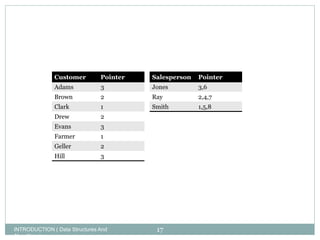
Customer Pointer
Adams 3
Brown 2
Clark 1
Drew 2
Evans 3
Farmer 1
Geller 2
Hill 3
Salesperson Pointer
Jones 3,6
Ray 2,4,7
Smith 1,5,8
INTRODUCTION ( Data Structures And
Algorithms)
18
Customer Pointer
Adams 5
Brown 4
Clark 6
Drew 7
Evans 8
Farmer 0
Geller 0
Hill 0
Salesperson Pointer
Jones 3
Ray 2
Smith 1

Data Structure - Elementary Data Organization

  • 1.
    DATA STRUCTURE UNIT I LECTUREHOUR 2 Dr.M.UMADEVI ASSISTANT PROFESSOR DEPARTMENT OF CS SACWC, CUMBUM
  • 2.
  • 3.
    ELEMENTARY DATA ORGANIZATION3 S.NOTERMINOLOGY DESCRIPTION 1 DATA A Single Value Or Set Of Values. (e.x) a=5, name = ram 2 ELEMENTARY DATA ITEM Data Items That Cannot Be Subdivided. (e.x) age of a person 3 GROUP DATA ITEM Data Items That Can Be Subdivided (e.x) DOB of a person. 4 ENTITY A noun that has certain attributes or properties. (e.x) a person, a thing, a place e.t.c 5 ATTRIBUTE A set of properties representing an entity. Each attribute has a set of values. (e.x) Attribute : Name Name : Ram, Raj…
  • 4.
    ELEMENTARY DATA ORGANIZATION 4 S.N O TERMINOLOGYDESCRIPTION 6 FIELD Represents A Column Of Values In A Table. (i.e) One Attribute Information About Many Entities 7 RECORD Represents Values In A Row In A Table (i.e) Many Attribute Information About One Entity. 8 FILE Collection of records of the entities in a given entity set 9 FIXED LENGH RECORDS Same data item with same memory space for each item and same length for all records. (e.x) personal details of a student 10 VARIABLE LENGTH RECORDS Each data item with variable memory space and variable length records. (e.x) course details of a student.
  • 5.
    Outline  Data, Entityand Information  Primitive data types  Non primitive data Types  Data structure  Definition  Classification  Data structure operations.
  • 6.
    Data, Entity andInformation  Data represents a single value or a set of values assigned to entities.  Data item refers a single or group of values with in the data  An entity is a thing that has some properties which can take values.  Processed or meaningful data is called information. This is used for taking some action.
  • 7.
    Primitive data types These are the data structures which are directly supported by the machine.i.e. Any operations can be performed in these data items.  The different primitive data types are  Integer  Float  Double  Character  boolean
  • 8.
    Non Primitive datatypes  These Data structures do not allow any specific instructions to be performed on the Data items directly.  The different non primitive data types are  Arrays  Structures  Unions  Class etc.
  • 9.
    Data structure  Adata structure is an arrangement of data in a computer's memory or even disk storage.  An example of several common data structures are arrays, linked lists, queues, stacks, binary trees, and hash tables.  Algorithms, on the other hand, are used to manipulate the data contained in these data structures as in searching and sorting.  Many algorithms apply directly to a specific data structures.
  • 10.
    Data structure  Whenworking with certain data structures you need to know how to insert new data, search for a specified item, and deleting a specific item.  Commonly used algorithms include are useful for:  Searching for a particular data item (or record).  Sorting the data. There are many ways to sort data. Simple sorting, Advanced sorting  Iterating through all the items in a data structure. (Visiting each item in turn so as to display it or perform some other action on these items)
  • 11.
    Data structure operations Operation means processing the data in the data structure. The following are some important operations.  Traversing  Searching  Inserting  Deleting  Sorting  Merging
  • 12.
    operations  Traversing  Tovisit or process each data exactly once in the data structure  Searching  To search for a particular value in the data structure for the given key value.  Inserting  To add a new value to the data structure
  • 13.
    operations  Deleting  Toremove a value from the data structure  Sorting  To arrange the values in the data structure in a particular order.  Merging  To join two same type of data structure values
  • 14.
    OPERATIONS ON DATASTRUTURES14 Data appearing in Data Structure are processed by means of certain operation Operations Actions Traversing Algorithm to move along the items in a data structure. Search Algorithm to search an item in a data structure. Sort Algorithm to sort items in certain order. Insert Algorithm to insert item in a data structure. Update Algorithm to update an existing item in a data structure. Delete Algorithm to delete an existing item from a data structure.
  • 15.
    15 Examples Customer Salesperson Adams Smith BrownRay Clark Jones Drew Ray Evans Smith Farmer Jones Geller Ray Hill Smith
  • 16.
    16 Customer Pointer Adams 3 Brown2 Clark 1 Drew 2 Evans 3 Farmer 1 Geller 2 Hill 3 Salesperson Jones Ray Smith
  • 17.
    INTRODUCTION ( DataStructures And Algorithms) 17 Customer Pointer Adams 3 Brown 2 Clark 1 Drew 2 Evans 3 Farmer 1 Geller 2 Hill 3 Salesperson Pointer Jones 3,6 Ray 2,4,7 Smith 1,5,8
  • 18.
    INTRODUCTION ( DataStructures And Algorithms) 18 Customer Pointer Adams 5 Brown 4 Clark 6 Drew 7 Evans 8 Farmer 0 Geller 0 Hill 0 Salesperson Pointer Jones 3 Ray 2 Smith 1