Data Structure
What is Computer Science:
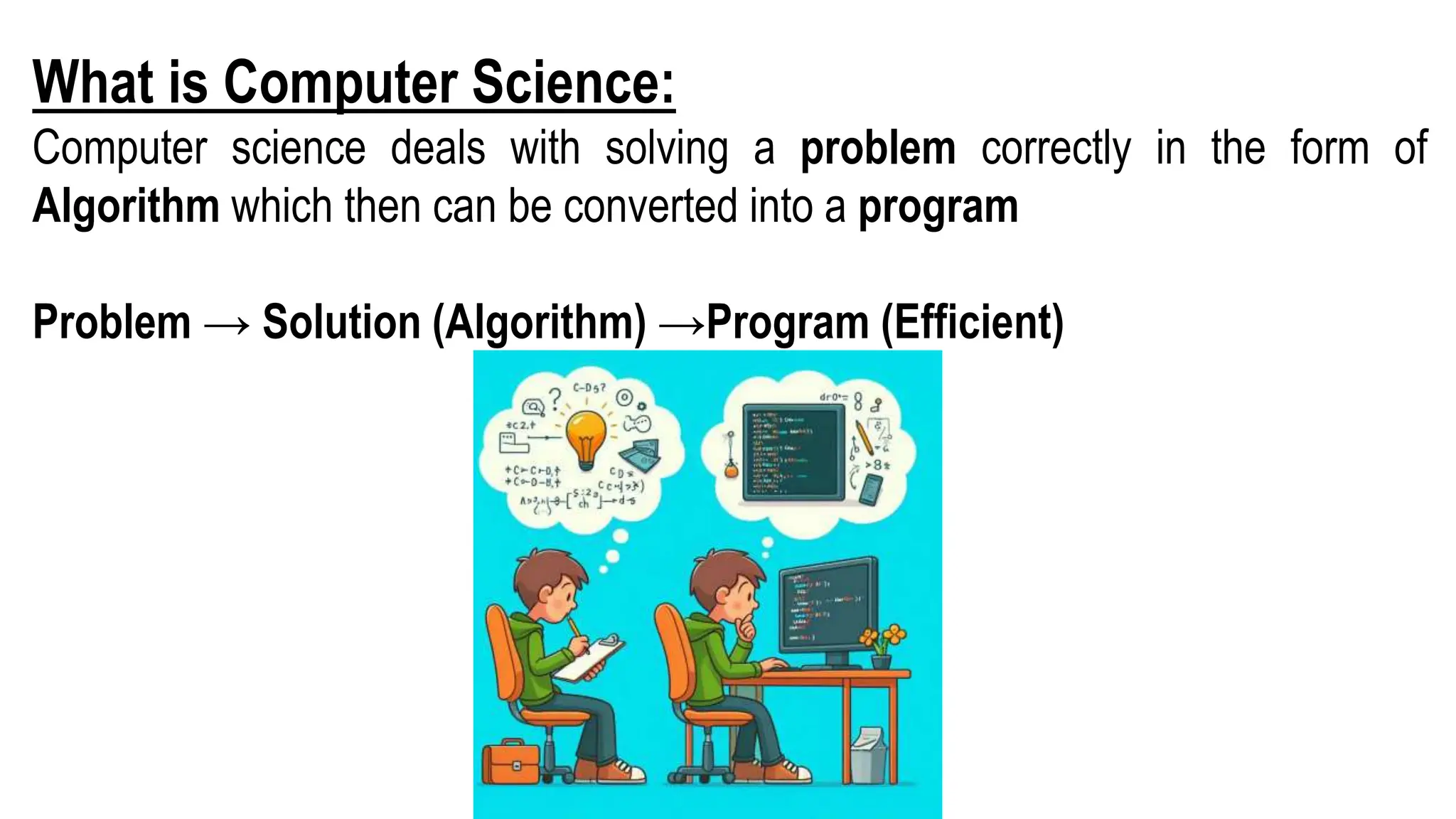
Computer science deals with solving a problem correctly in the form of
Algorithm which then can be converted into a program
Problem → Solution (Algorithm) →Program (Efficient)
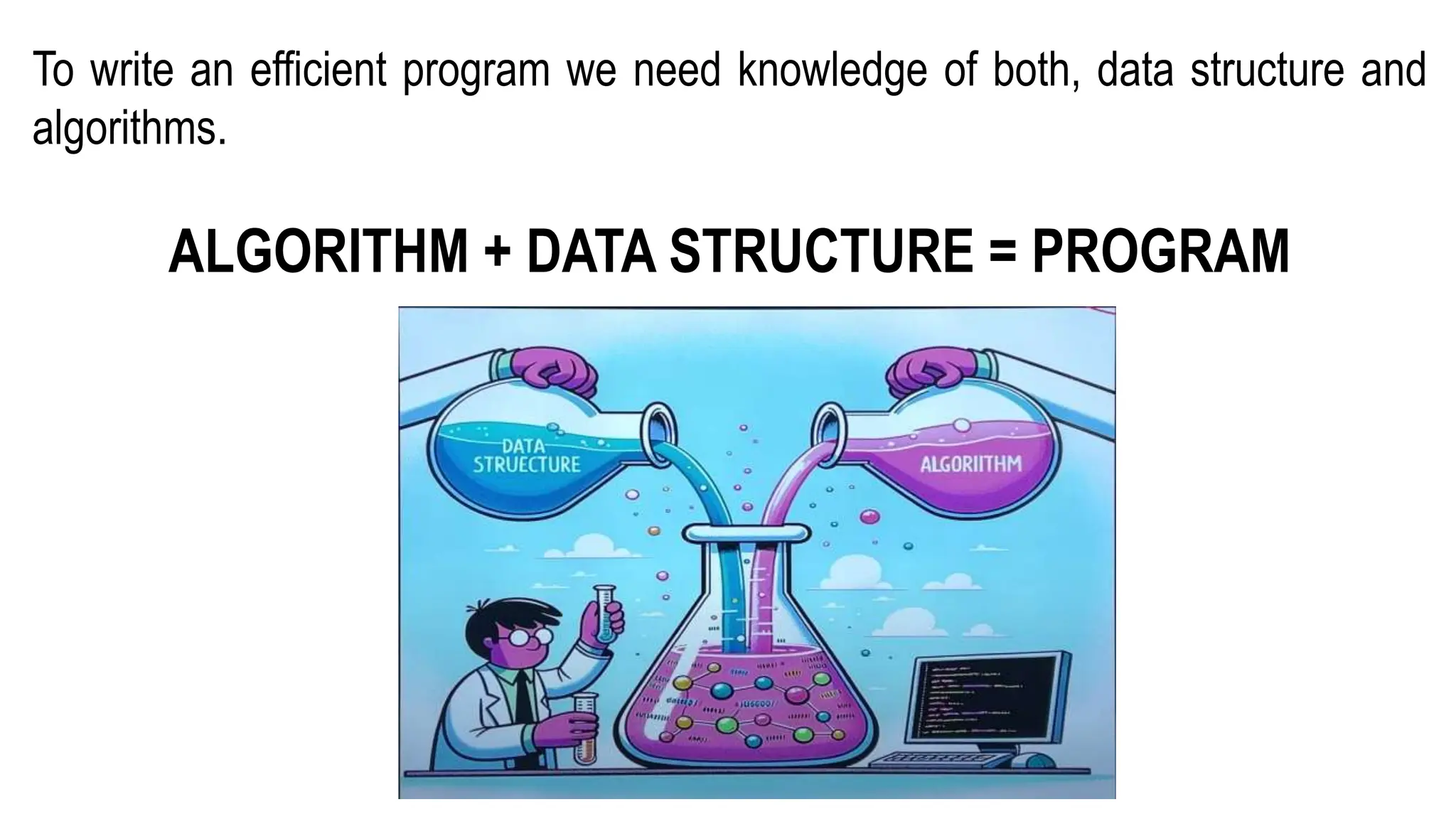
To write an efficient program we need knowledge of both, data structure and
algorithms.
ALGORITHM + DATA STRUCTURE = PROGRAM
Why we study data structure
• Objective is to teach you how to code efficiently
• What is meaning of efficiency (time, space, battery, system buses, registers)
What is Data Structure:
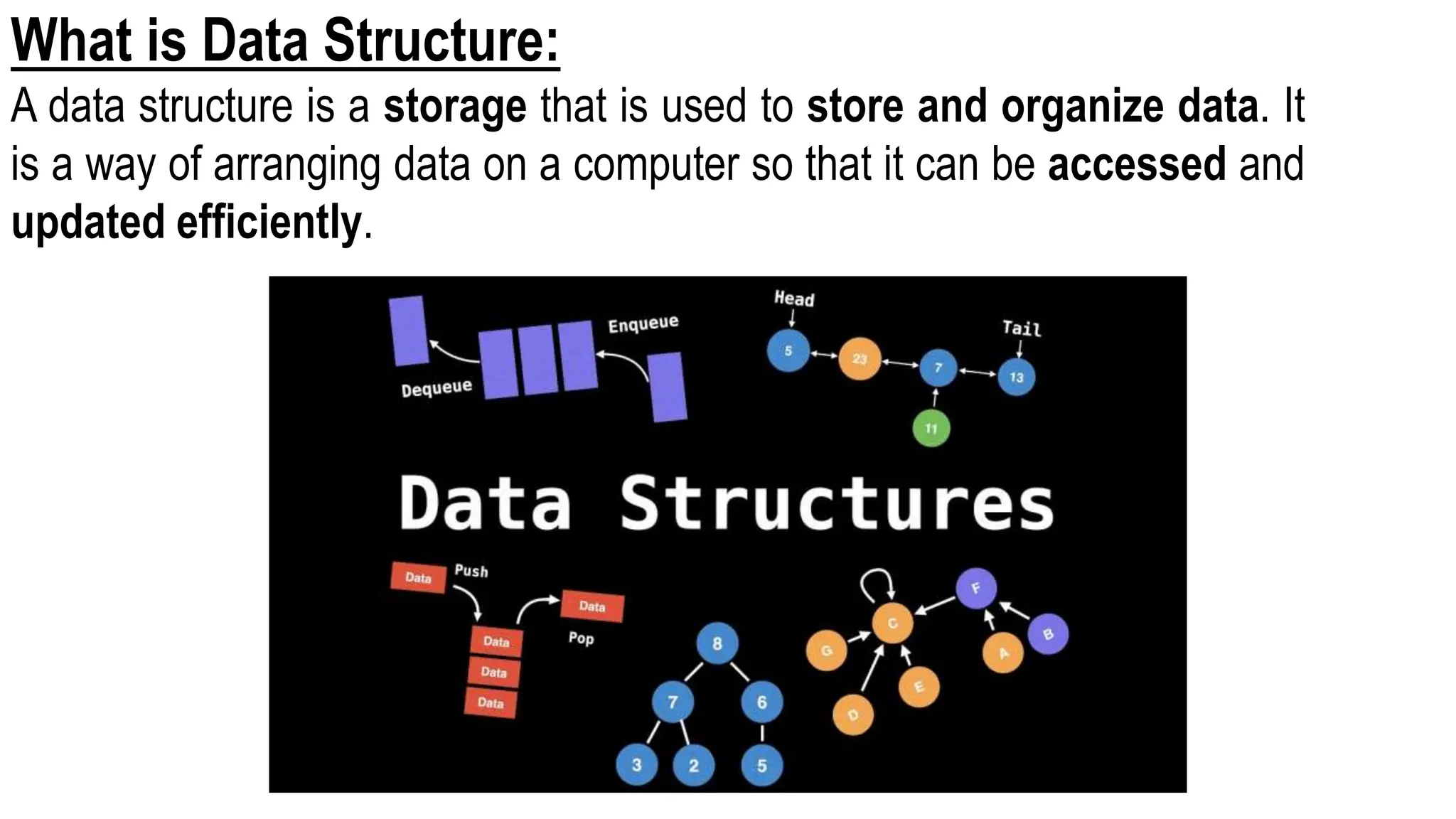
A data structure is a storage that is used to store and organize data. It
is a way of arranging data on a computer so that it can be accessed and
updated efficiently.
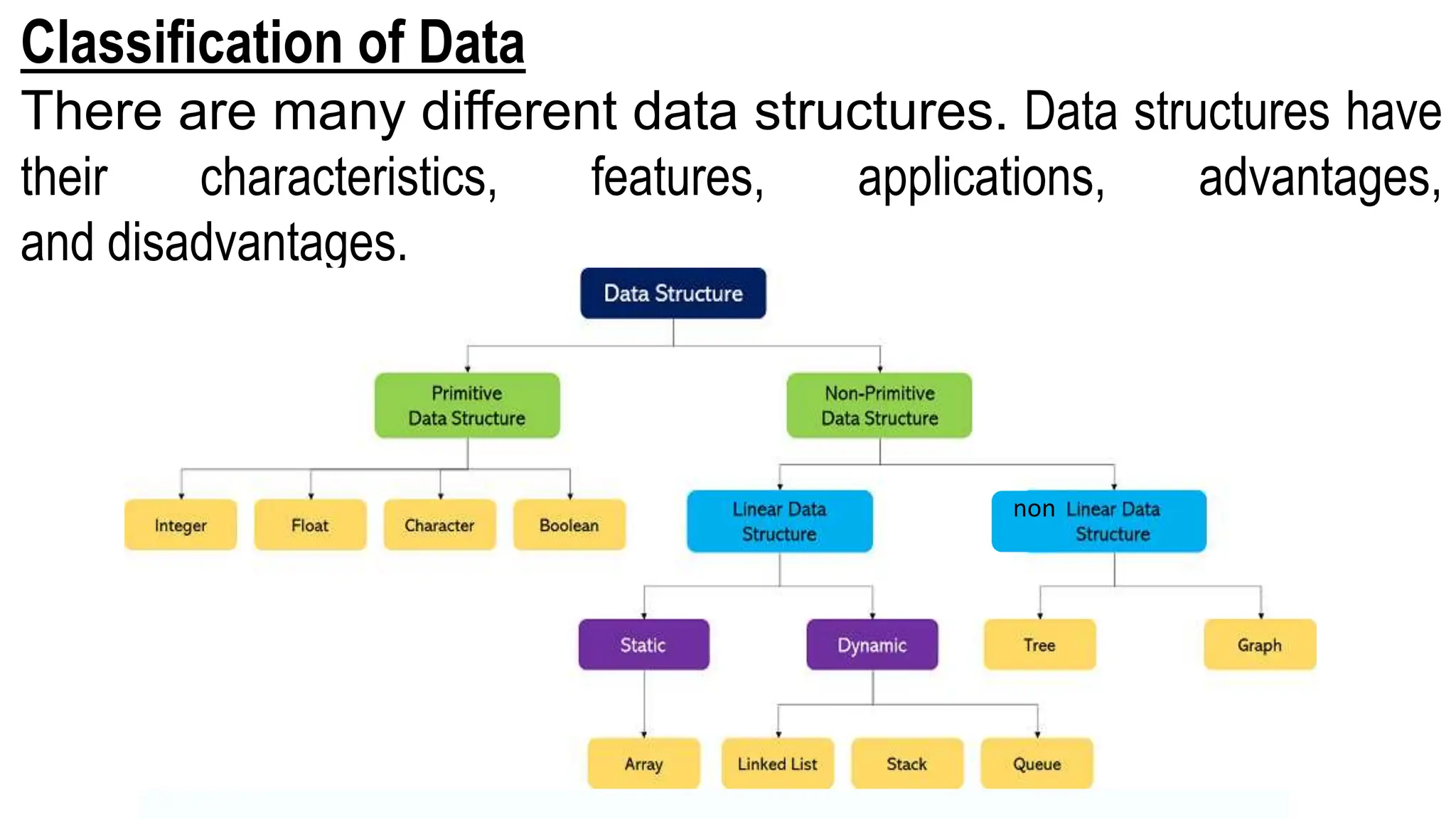
Classification of Data
There are many different data structures. Data structures have
their characteristics, features, applications, advantages,
and disadvantages.
non
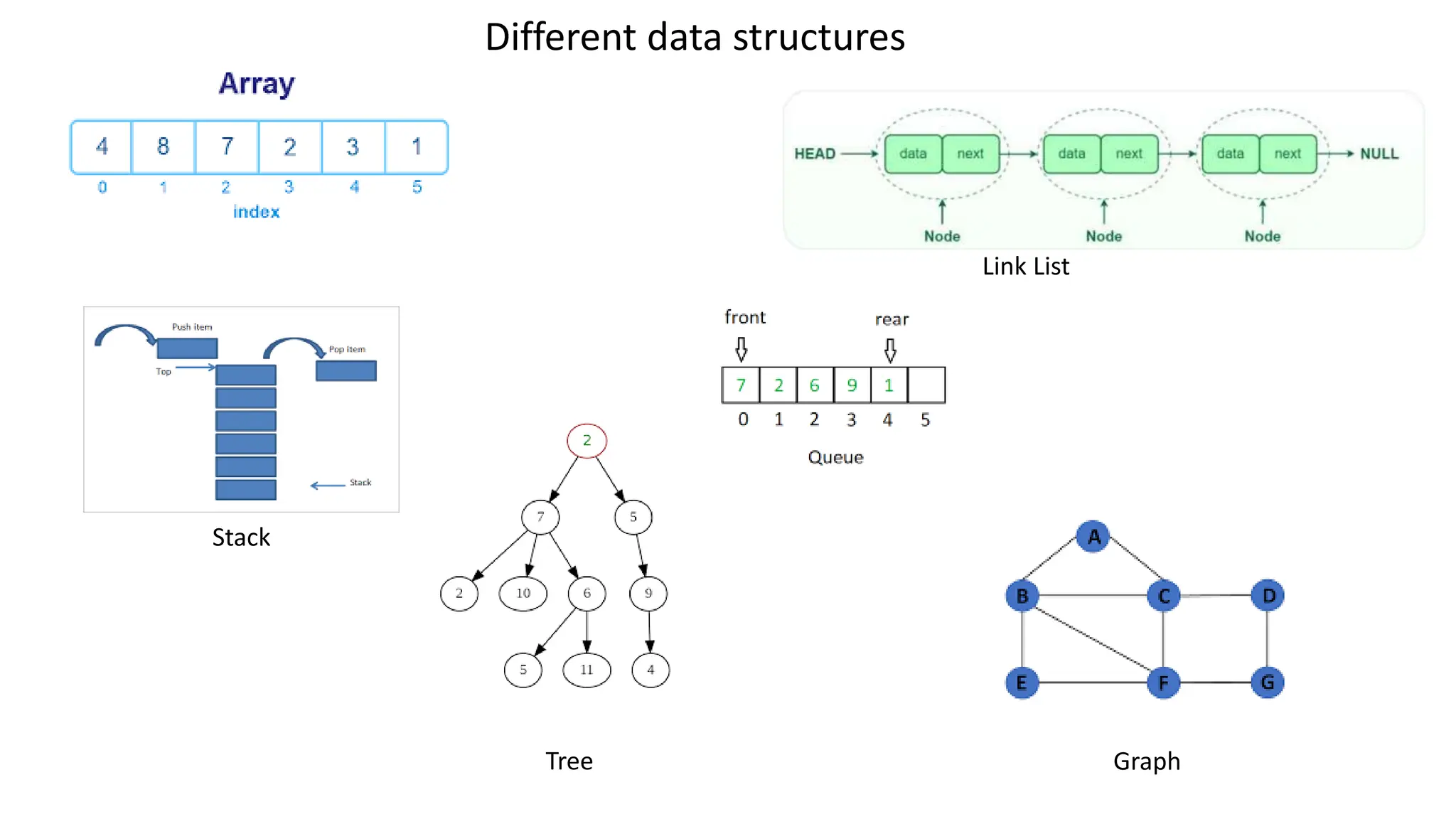
Graph
Stack
Tree
Link List
Different data structures
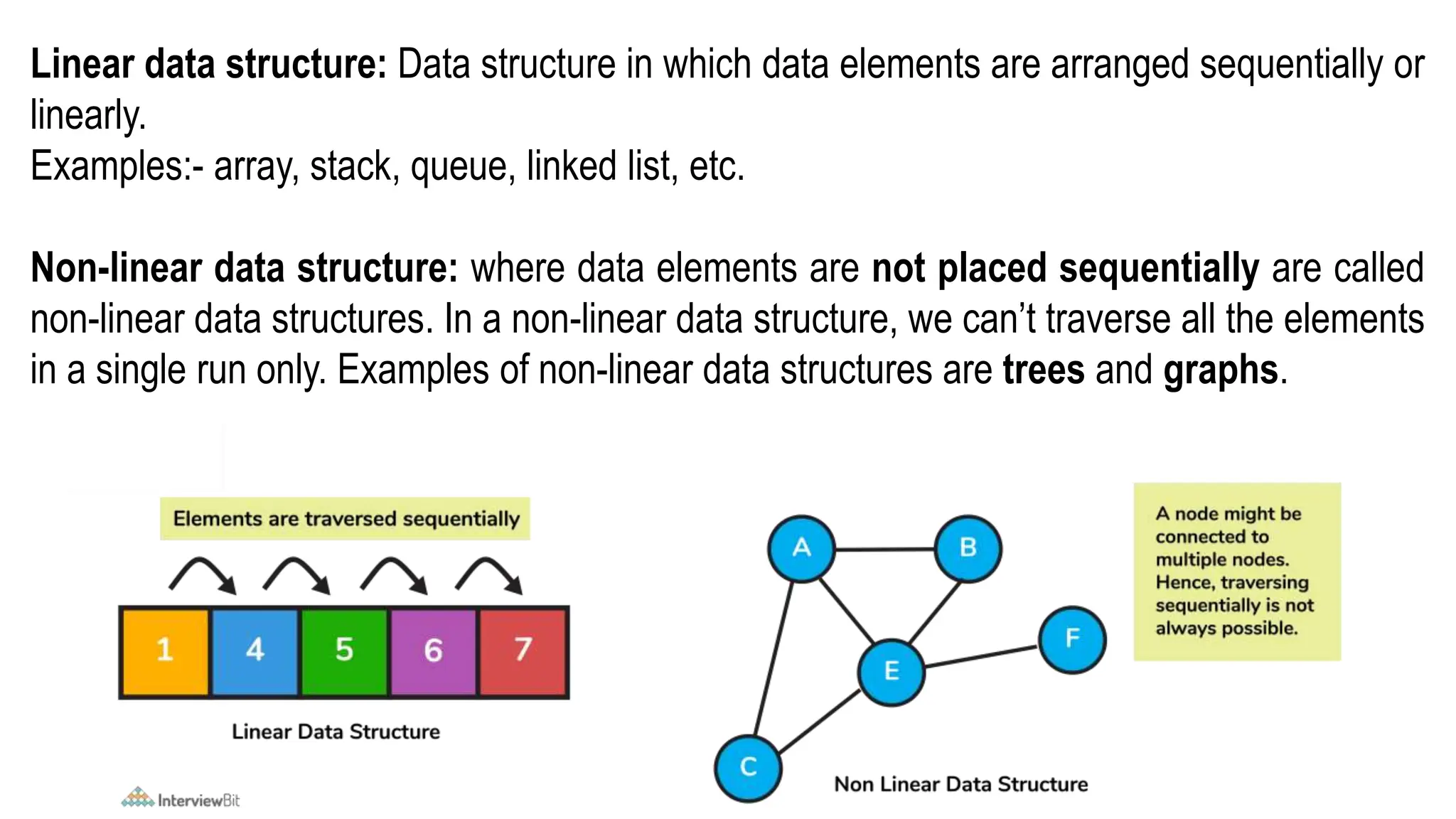
Linear data structure: Data structure in which data elements are arranged sequentially or
linearly.
Examples:- array, stack, queue, linked list, etc.
Non-linear data structure: where data elements are not placed sequentially are called
non-linear data structures. In a non-linear data structure, we can’t traverse all the elements
in a single run only. Examples of non-linear data structures are trees and graphs.
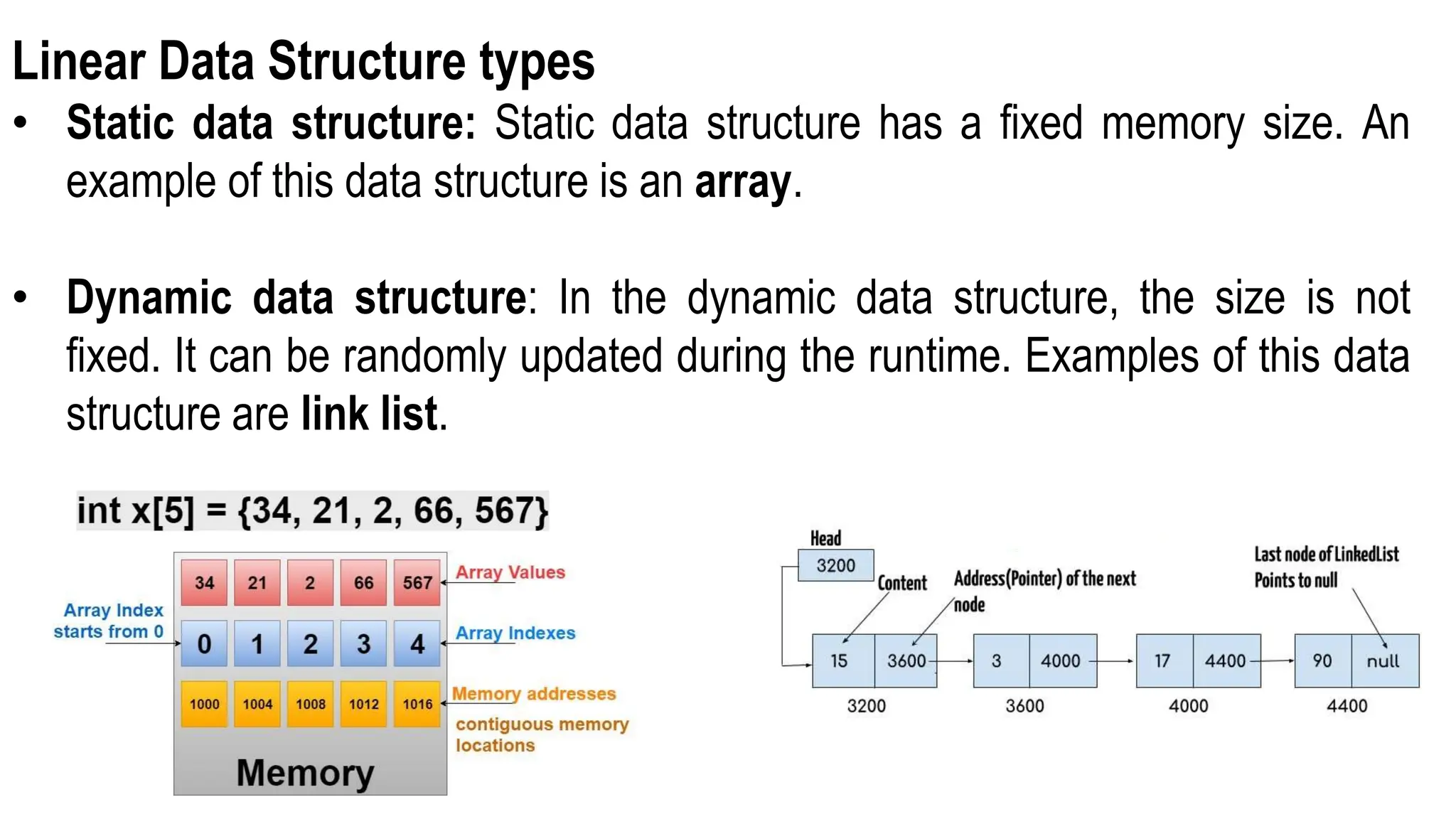
Linear Data Structure types
• Static data structure: Static data structure has a fixed memory size. An
example of this data structure is an array.
• Dynamic data structure: In the dynamic data structure, the size is not
fixed. It can be randomly updated during the runtime. Examples of this data
structure are link list.
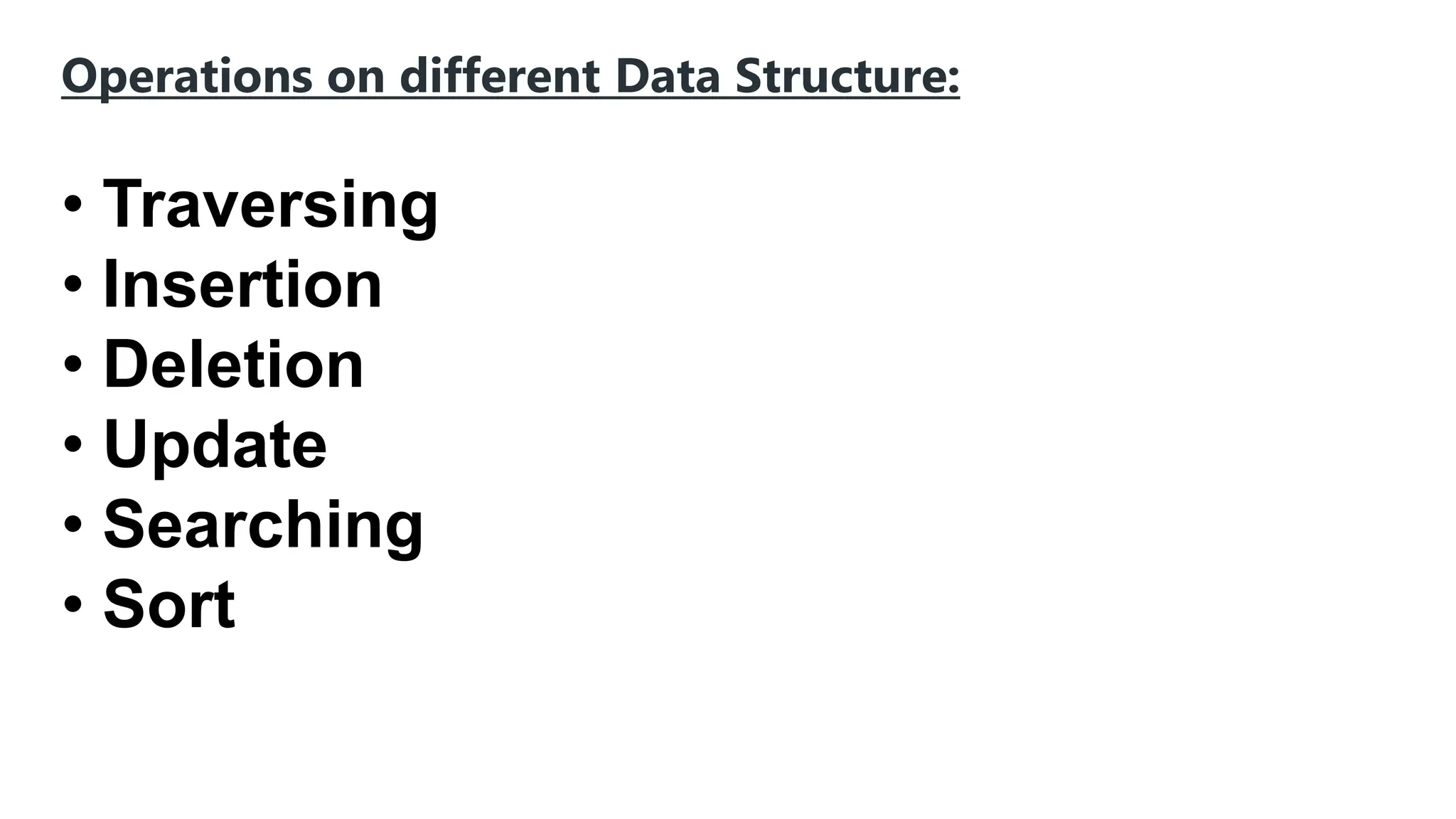
Operations on different Data Structure:
• Traversing
• Insertion
• Deletion
• Update
• Searching
• Sort
Operations on different Data Structure:
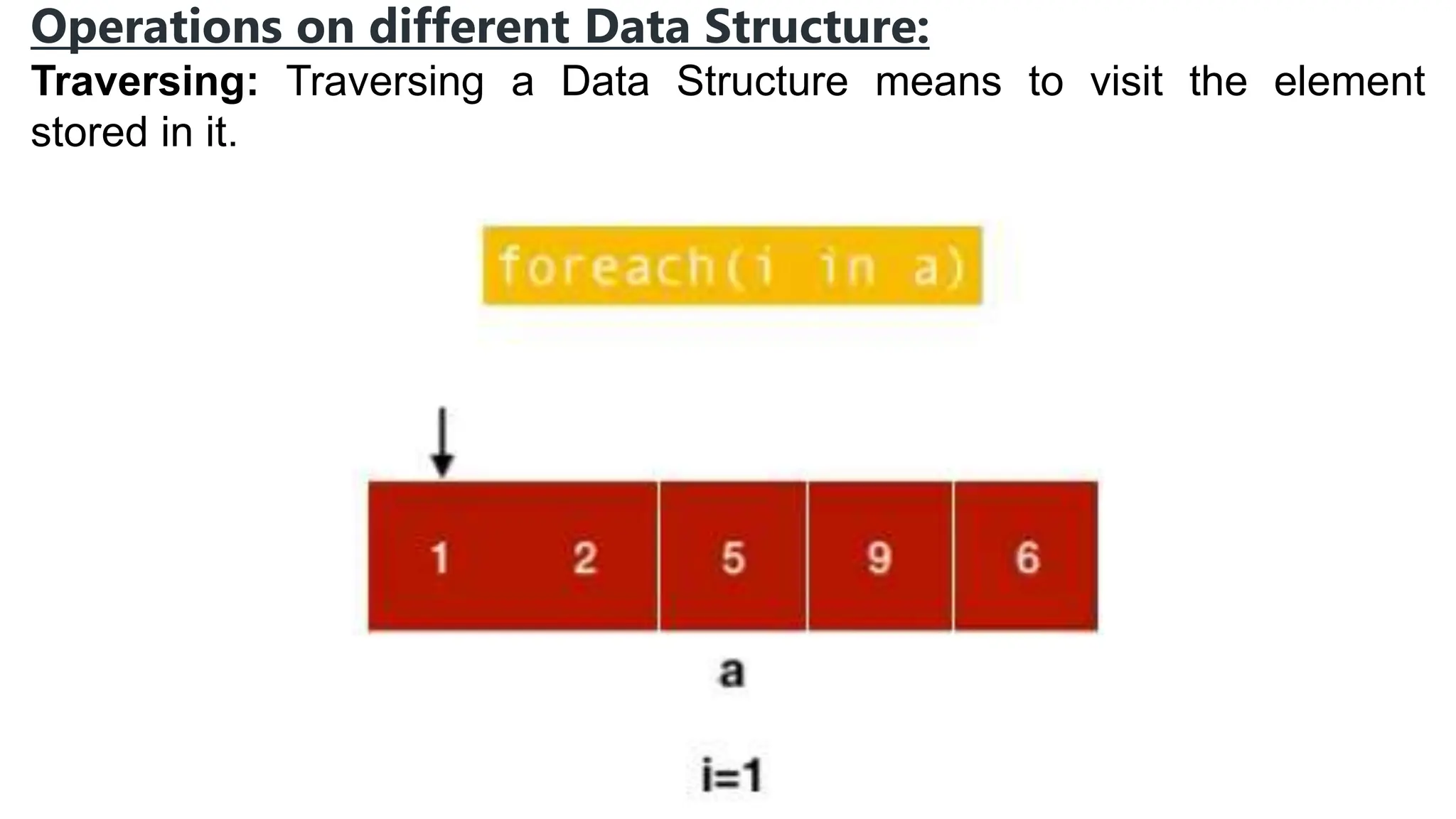
Traversing: Traversing a Data Structure means to visit the element
stored in it.
Operations on different Data Structure:
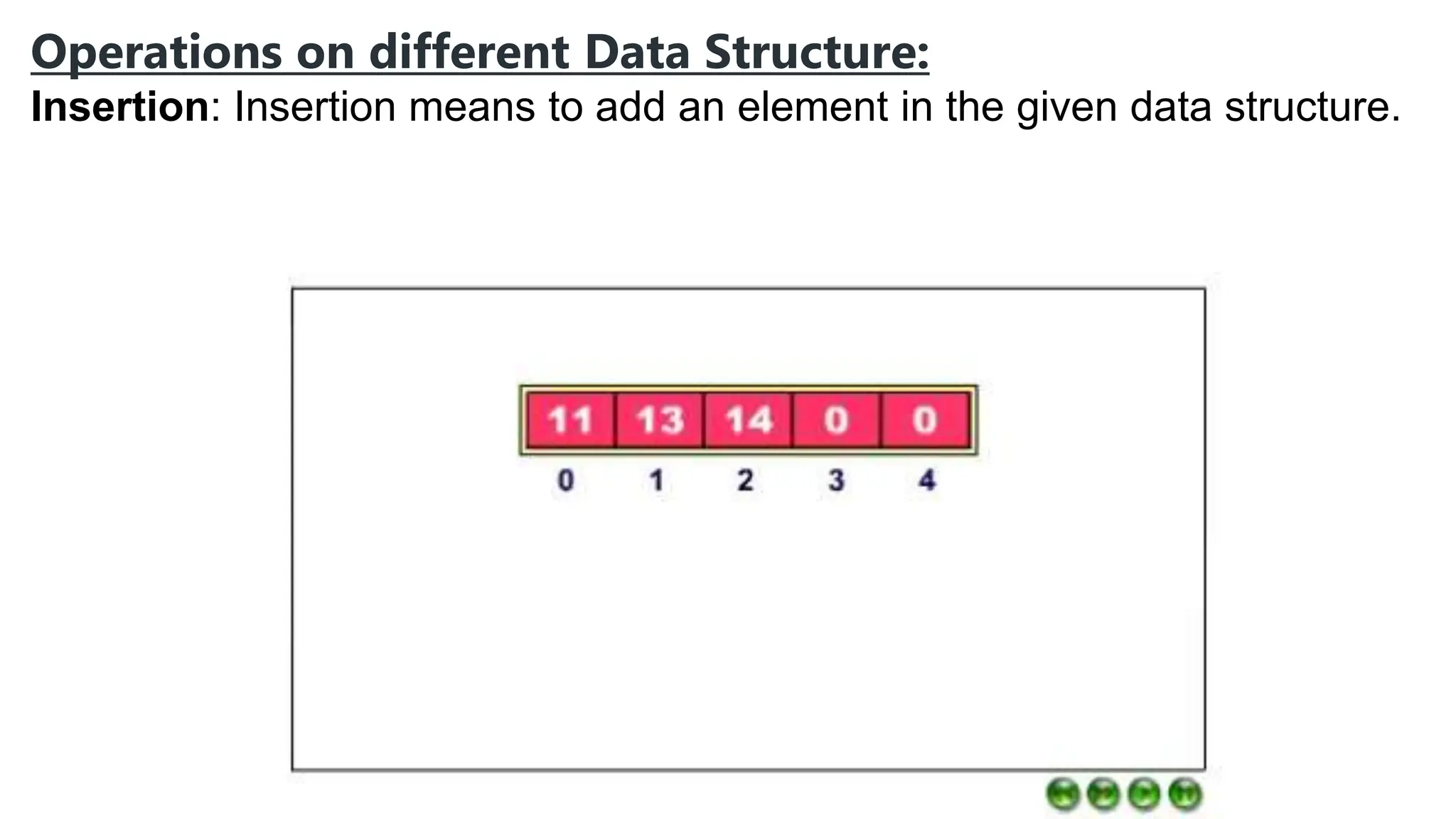
Insertion: Insertion means to add an element in the given data structure.
Operations on different Data Structure:
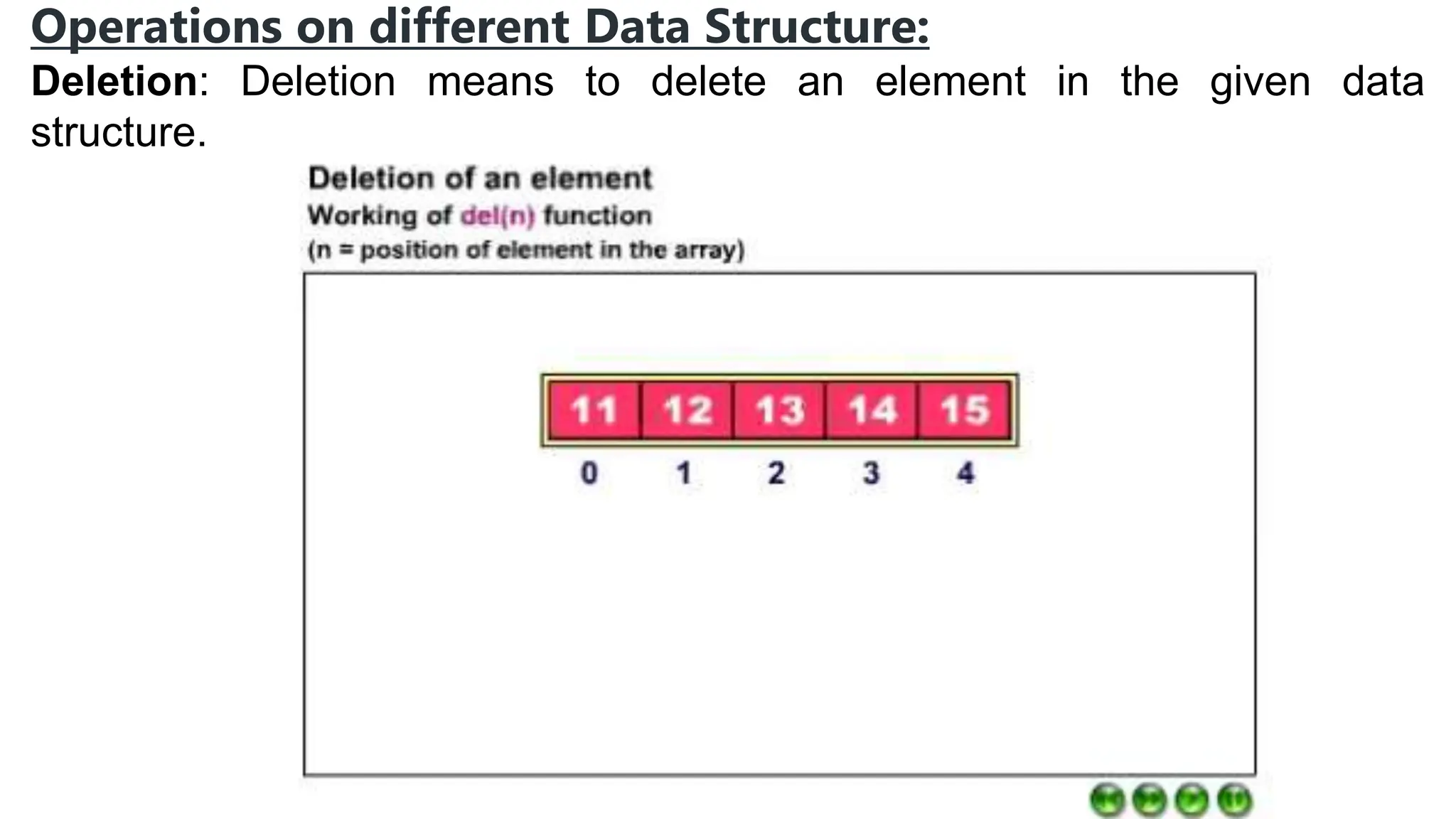
Deletion: Deletion means to delete an element in the given data
structure.
Operations on different Data Structure:
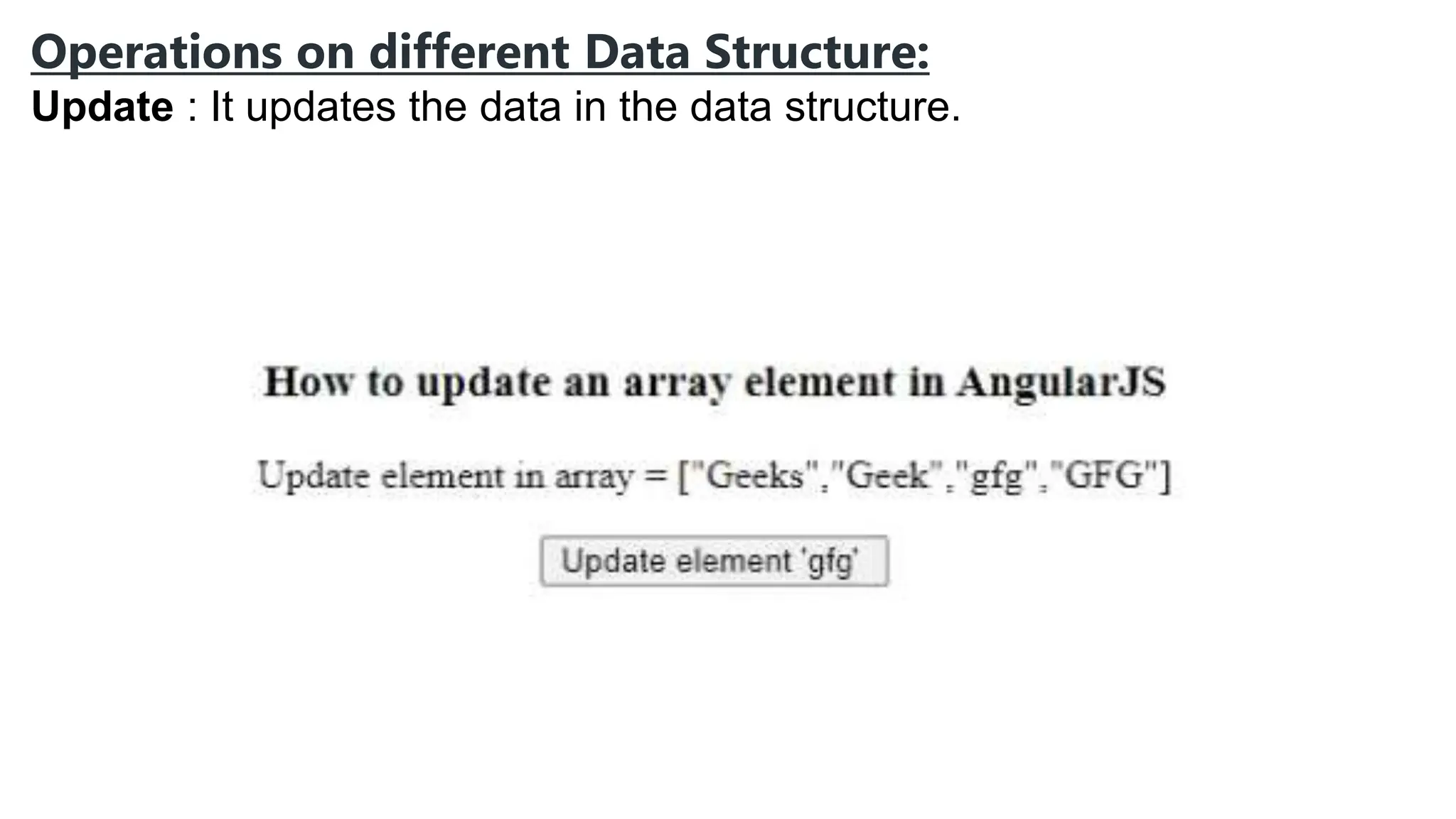
Update : It updates the data in the data structure.
Operations on different Data Structure:
Searching: Searching means to find a particular element in the given
data-structure.
Operations on different Data Structure:
Sort: Sorting data in a particular order (ascending or descending).

Data Structure 1..Vary Basic introduction about DSA using c++.pptx

  • 1.
  • 2.
    What is ComputerScience: Computer science deals with solving a problem correctly in the form of Algorithm which then can be converted into a program Problem → Solution (Algorithm) →Program (Efficient)
  • 3.
    To write anefficient program we need knowledge of both, data structure and algorithms. ALGORITHM + DATA STRUCTURE = PROGRAM
  • 4.
    Why we studydata structure • Objective is to teach you how to code efficiently • What is meaning of efficiency (time, space, battery, system buses, registers)
  • 5.
    What is DataStructure: A data structure is a storage that is used to store and organize data. It is a way of arranging data on a computer so that it can be accessed and updated efficiently.
  • 7.
    Classification of Data Thereare many different data structures. Data structures have their characteristics, features, applications, advantages, and disadvantages. non
  • 8.
  • 9.
    Linear data structure:Data structure in which data elements are arranged sequentially or linearly. Examples:- array, stack, queue, linked list, etc. Non-linear data structure: where data elements are not placed sequentially are called non-linear data structures. In a non-linear data structure, we can’t traverse all the elements in a single run only. Examples of non-linear data structures are trees and graphs.
  • 10.
    Linear Data Structuretypes • Static data structure: Static data structure has a fixed memory size. An example of this data structure is an array. • Dynamic data structure: In the dynamic data structure, the size is not fixed. It can be randomly updated during the runtime. Examples of this data structure are link list.
  • 11.
    Operations on differentData Structure: • Traversing • Insertion • Deletion • Update • Searching • Sort
  • 12.
    Operations on differentData Structure: Traversing: Traversing a Data Structure means to visit the element stored in it.
  • 13.
    Operations on differentData Structure: Insertion: Insertion means to add an element in the given data structure.
  • 14.
    Operations on differentData Structure: Deletion: Deletion means to delete an element in the given data structure.
  • 15.
    Operations on differentData Structure: Update : It updates the data in the data structure.
  • 16.
    Operations on differentData Structure: Searching: Searching means to find a particular element in the given data-structure.
  • 17.
    Operations on differentData Structure: Sort: Sorting data in a particular order (ascending or descending).

Editor's Notes

  • #5 Better time is obtained from the use of appropriate data structure. Rather than removing few line lines of clever coding.
  • #10 where each element is attached to its previous and next adjacent elements, is called a linear data structure.
  • #11 which may be considered efficient concerning the memory (space) complexity of the code.