Data and Analytics
Point of View
2
Phil Antonelli
Dir. Business Strategy and Innovation
Xerox (soon to be CONDUENT) Learning Services
@pantonelli
Xerox Confidential
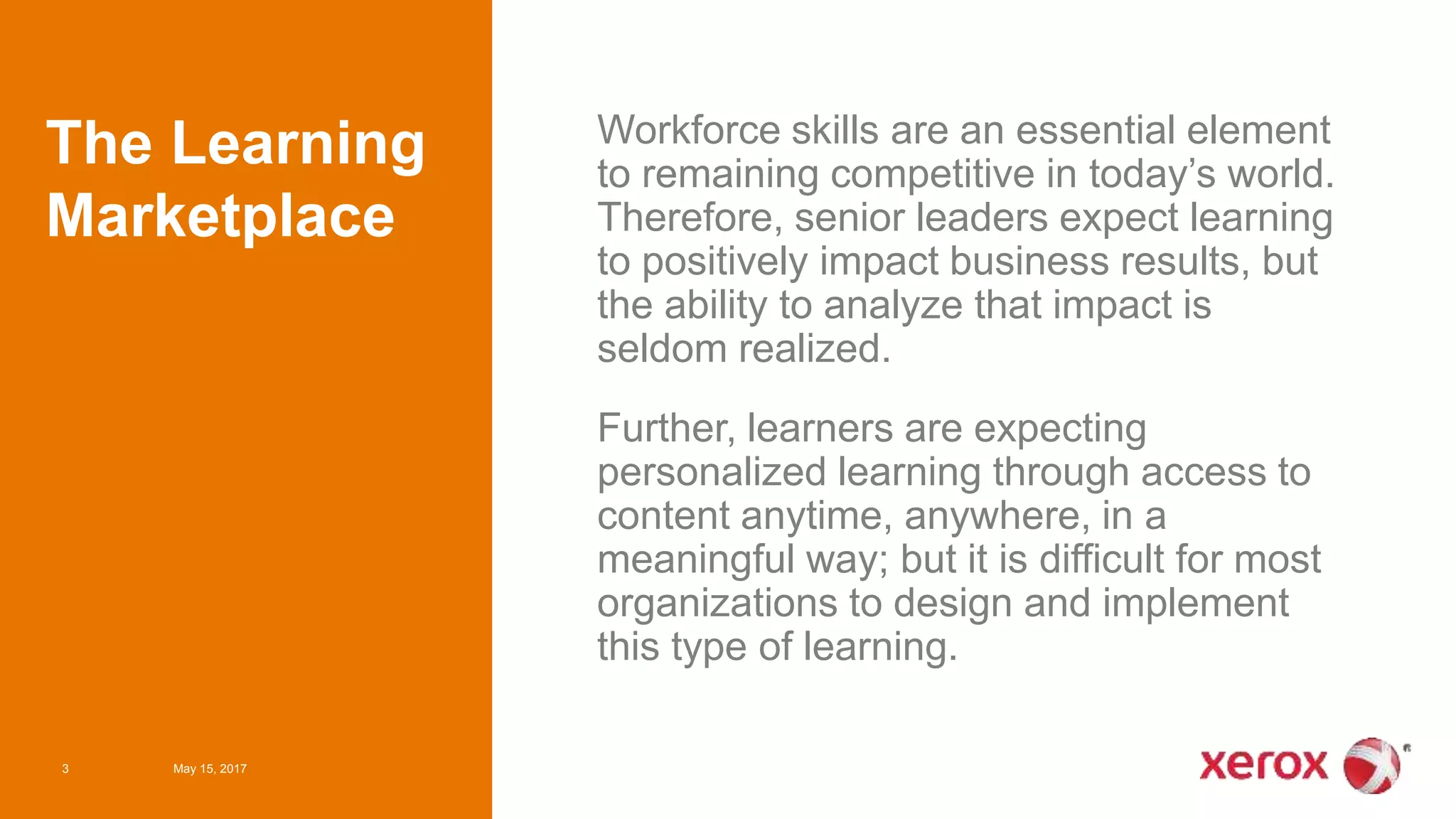
The Learning
Marketplace
3 May 15, 2017
Workforce skills are an essential element
to remaining competitive in today’s world.
Therefore, senior leaders expect learning
to positively impact business results, but
the ability to analyze that impact is
seldom realized.
Further, learners are expecting
personalized learning through access to
content anytime, anywhere, in a
meaningful way; but it is difficult for most
organizations to design and implement
this type of learning.
4
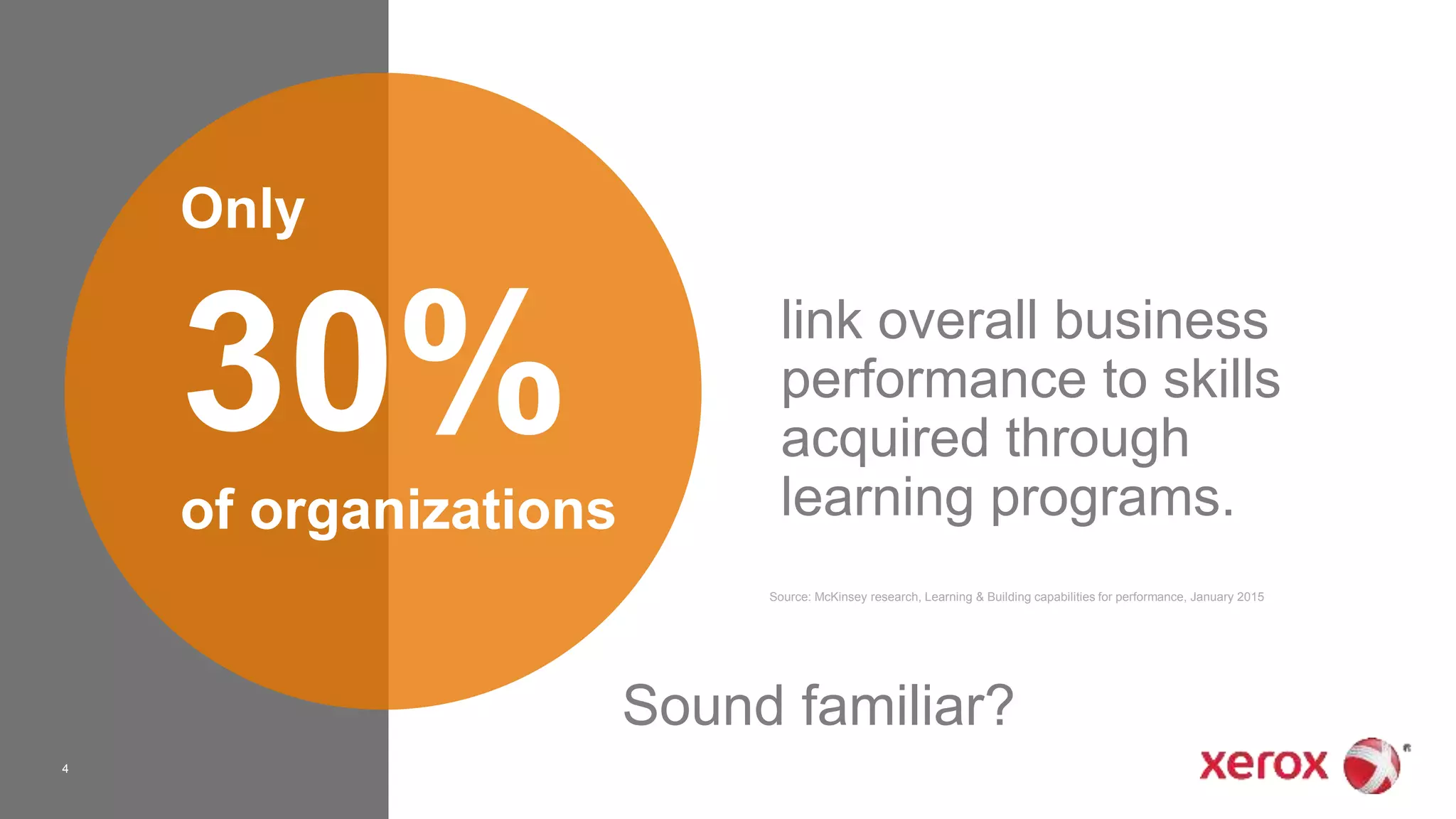
link overall business
performance to skills
acquired through
learning programs.
Only
30%
of organizations
Source: McKinsey research, Learning & Building capabilities for performance, January 2015
Sound familiar?
5 May 15, 2017
Current learning measurement methods aren’t working
It is time to rethink our approach and start fresh.
Xerox Confidential
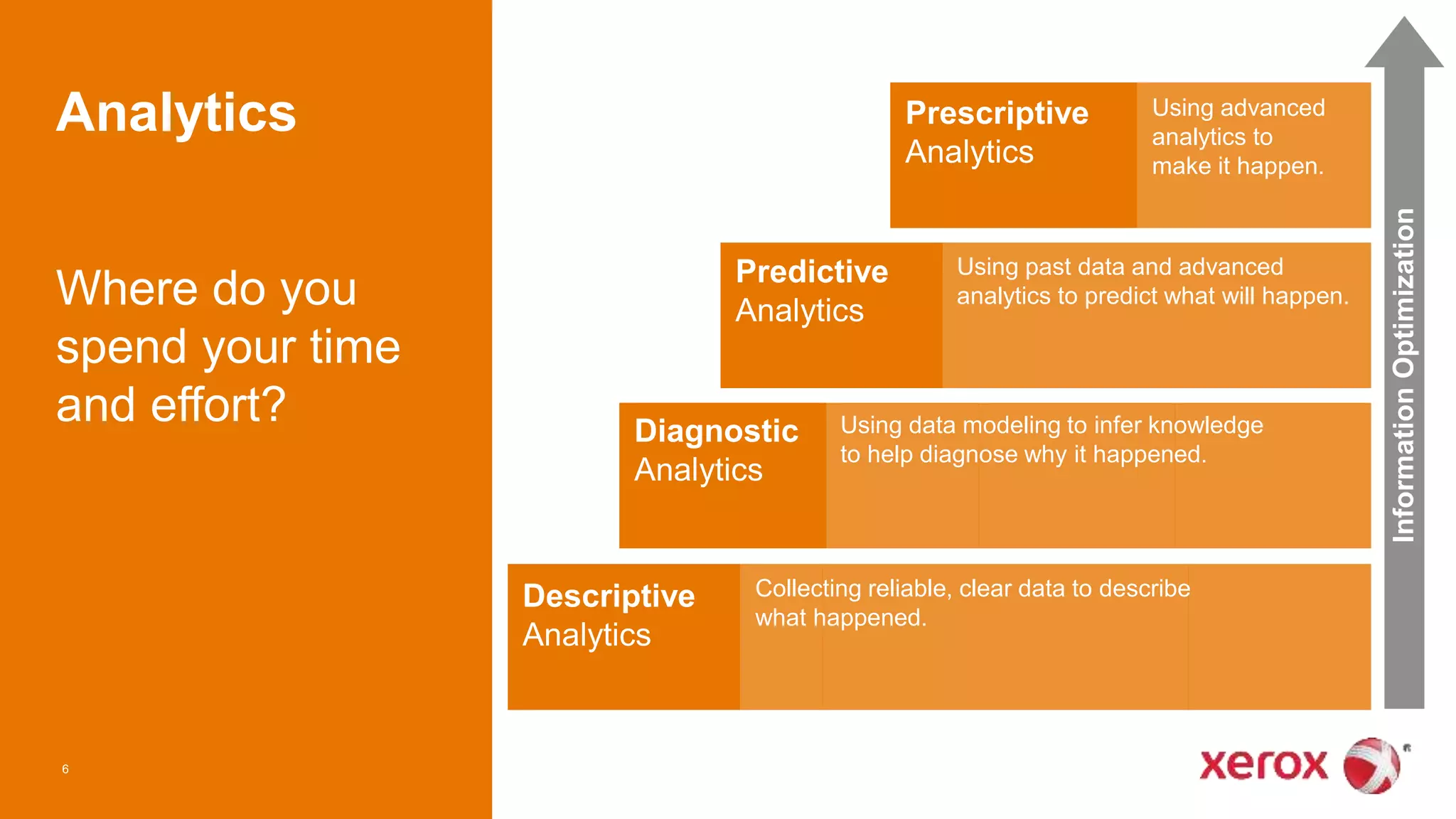
Analytics
Where do you
spend your time
and effort?
6
Descriptive
Analytics
Collecting reliable, clear data to describe
what happened.
Diagnostic
Analytics
Using data modeling to infer knowledge
to help diagnose why it happened.
Predictive
Analytics
Using past data and advanced
analytics to predict what will happen.
Prescriptive
Analytics
Using advanced
analytics to
make it happen.
InformationOptimization
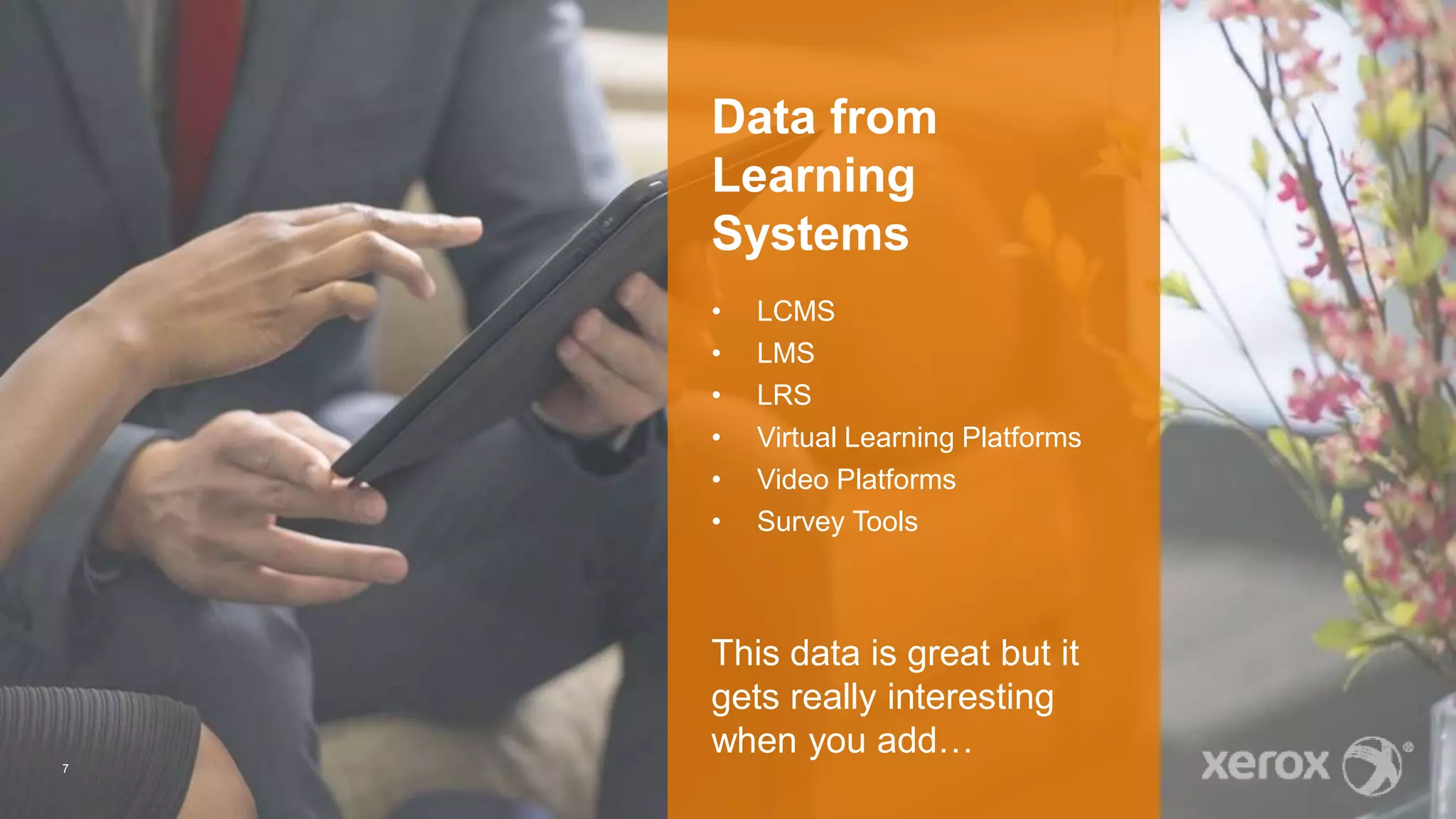
Data from
Learning
Systems
• LCMS
• LMS
• LRS
• Virtual Learning Platforms
• Video Platforms
• Survey Tools
This data is great but it
gets really interesting
when you add…
7
8
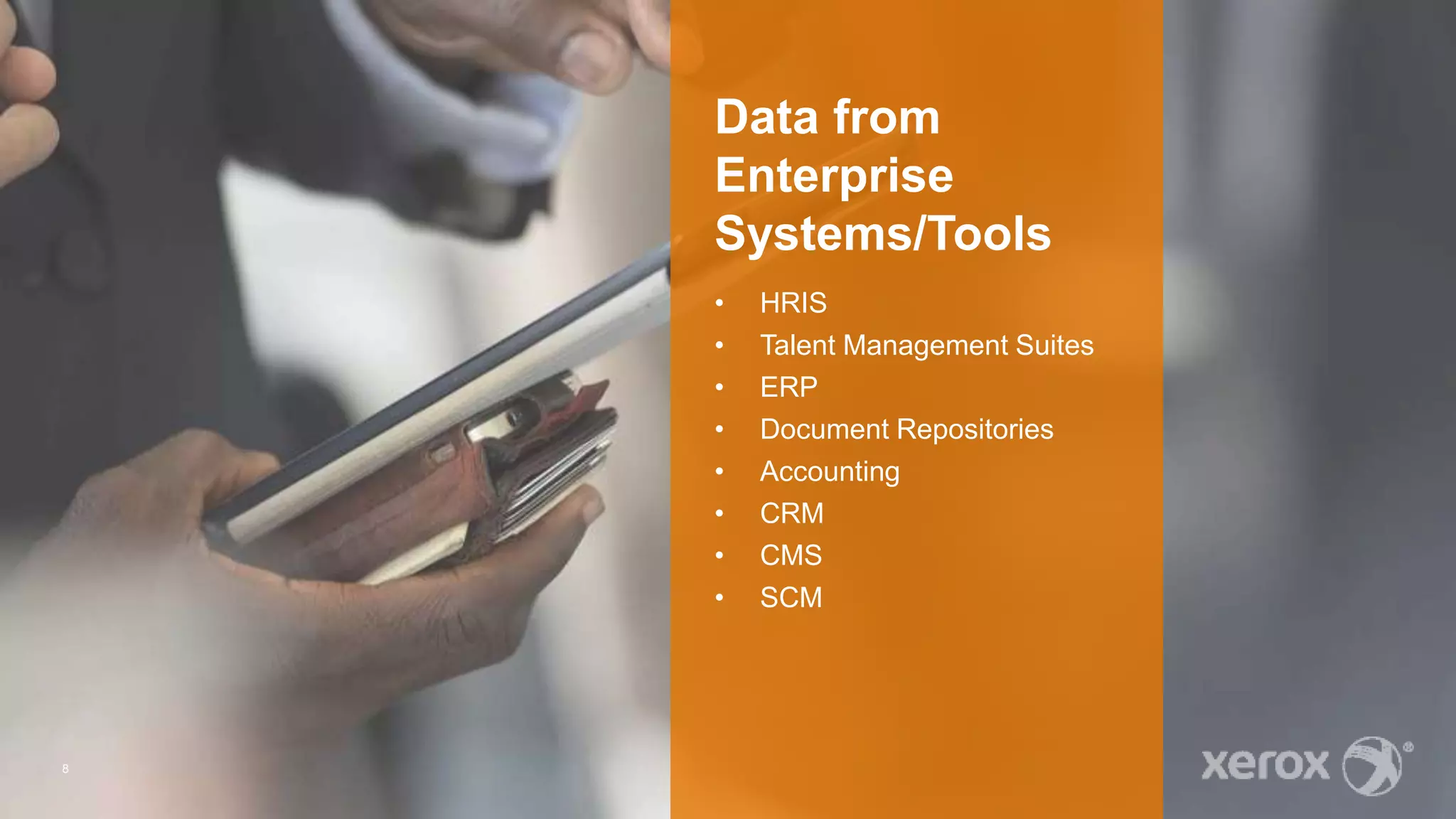
Data from
Enterprise
Systems/Tools
• HRIS
• Talent Management Suites
• ERP
• Document Repositories
• Accounting
• CRM
• CMS
• SCM
9 May 15, 2017
What has all this to do with xAPI?
Disregard the “x” – focus on the API
A standard to extract, transform, load (ETL) data
10
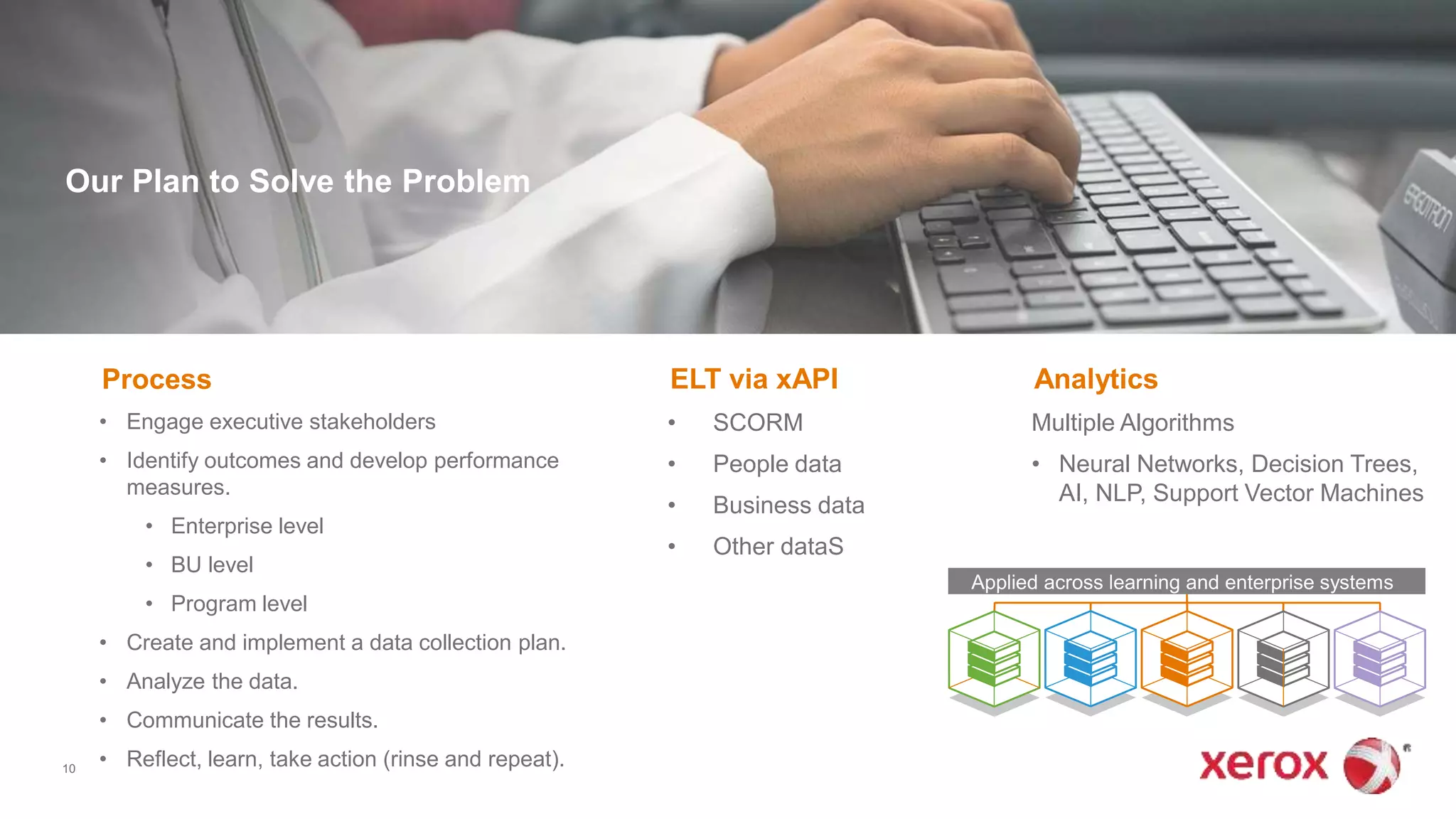
Our Plan to Solve the Problem
Process
• Engage executive stakeholders
• Identify outcomes and develop performance
measures.
• Enterprise level
• BU level
• Program level
• Create and implement a data collection plan.
• Analyze the data.
• Communicate the results.
• Reflect, learn, take action (rinse and repeat).
ELT via xAPI
• SCORM
• People data
• Business data
• Other dataS
Analytics
Multiple Algorithms
• Neural Networks, Decision Trees,
AI, NLP, Support Vector Machines
Applied across learning and enterprise systems
Benefits to the Business
• Selecting employees who are mostly likely to meet the needs of the business.
• Reducing time to proficiency.
• Training initiatives that drive business outcomes.
• Identifying Hi-pos and prescribing personalized learning paths.
Benefits to the Learner
• Personalized learning paths that adapt content and experience based upon
role, preference, and interest.
• “Over the top” services that deliver context aware content to support point of
need learning.
Actions from Analytical Insights
11
© 2015 Xerox Corporation. All rights reserved. Xerox®, Xerox and Design® and “Work Can Work Better” are trademarks of Xerox Corporation in the United States and/or other countries.

Data & Analytics: A Point of View

  • 1.
  • 2.
    2 Phil Antonelli Dir. BusinessStrategy and Innovation Xerox (soon to be CONDUENT) Learning Services @pantonelli
  • 3.
    Xerox Confidential The Learning Marketplace 3May 15, 2017 Workforce skills are an essential element to remaining competitive in today’s world. Therefore, senior leaders expect learning to positively impact business results, but the ability to analyze that impact is seldom realized. Further, learners are expecting personalized learning through access to content anytime, anywhere, in a meaningful way; but it is difficult for most organizations to design and implement this type of learning.
  • 4.
    4 link overall business performanceto skills acquired through learning programs. Only 30% of organizations Source: McKinsey research, Learning & Building capabilities for performance, January 2015 Sound familiar?
  • 5.
    5 May 15,2017 Current learning measurement methods aren’t working It is time to rethink our approach and start fresh.
  • 6.
    Xerox Confidential Analytics Where doyou spend your time and effort? 6 Descriptive Analytics Collecting reliable, clear data to describe what happened. Diagnostic Analytics Using data modeling to infer knowledge to help diagnose why it happened. Predictive Analytics Using past data and advanced analytics to predict what will happen. Prescriptive Analytics Using advanced analytics to make it happen. InformationOptimization
  • 7.
    Data from Learning Systems • LCMS •LMS • LRS • Virtual Learning Platforms • Video Platforms • Survey Tools This data is great but it gets really interesting when you add… 7
  • 8.
    8 Data from Enterprise Systems/Tools • HRIS •Talent Management Suites • ERP • Document Repositories • Accounting • CRM • CMS • SCM
  • 9.
    9 May 15,2017 What has all this to do with xAPI? Disregard the “x” – focus on the API A standard to extract, transform, load (ETL) data
  • 10.
    10 Our Plan toSolve the Problem Process • Engage executive stakeholders • Identify outcomes and develop performance measures. • Enterprise level • BU level • Program level • Create and implement a data collection plan. • Analyze the data. • Communicate the results. • Reflect, learn, take action (rinse and repeat). ELT via xAPI • SCORM • People data • Business data • Other dataS Analytics Multiple Algorithms • Neural Networks, Decision Trees, AI, NLP, Support Vector Machines Applied across learning and enterprise systems
  • 11.
    Benefits to theBusiness • Selecting employees who are mostly likely to meet the needs of the business. • Reducing time to proficiency. • Training initiatives that drive business outcomes. • Identifying Hi-pos and prescribing personalized learning paths. Benefits to the Learner • Personalized learning paths that adapt content and experience based upon role, preference, and interest. • “Over the top” services that deliver context aware content to support point of need learning. Actions from Analytical Insights 11
  • 12.
    © 2015 XeroxCorporation. All rights reserved. Xerox®, Xerox and Design® and “Work Can Work Better” are trademarks of Xerox Corporation in the United States and/or other countries.

Editor's Notes

  • #4 Ensuring that a workforce –whether employees or partners – has the right knowledge, skills and ability to perform their roles effectively, is critical to organizational competitiveness and growth of the business. Learning provides the best route for organizations to do so but it must be designed “right”: Learning MUST be aligned directly to business objectives. Learning content must be personalized to exactly what a “learner” needs at the moment it is needed and created as small nuggets, with spacing in between providing opportunities to practice.
  • #5 Linking business performance to skills acquired through learning programs is one of the most critical components of ensuring you are wisely spending your learning investment, as an organization. Most organizations struggle with this, but according to the research, companies that build skills most effectively do a better job of linking those skills to performance and of meeting business targets. (Exhibit 7, - the group of non-effective capability-building respondents.) At the organizations that do measure impact, employee or manager feedback is the most commonly cited metric; only 13 percent say their organizations calculate the quantifiable returns on their learning investments. http://www.mckinsey.com/Insights/Organization/Building_capabilities_for_performance?cid=other-eml-alt-mip-mck-oth-1501