Dampening Solutions in Offset Printing

1
Foreword

Next to the printing plate and the offset ink, the dampening solution
represents the third significant factor in offset printing. Perfect
print output – even during high print runs – results from the optimal
interaction of these system components. The current guidebook
is intended to help you to develop a general understanding of the
dampening solution, its composition, and its application in the
printing industry.

2
Contents
1Dampening Solution and dampening Solution Additives
2The Basis: Water
3 Water Hardness
4 pH-Balance
5 pH-Balance und Buffer
6 Conducivity = µS/cm
7 Wetting the Plates
8 Testing Alcohol
9 Araeometer Readings
10 Alcohol Measurement
11 Drawbacks of Alcohol
12 Preparing the Dampening Solution
13 Dampening Solution and Print Problems C

3
Dampening Solution and Dampening Solution Additives

• Ideally, the dampening solution should possess a water
hardness of 8 ° dH to 12 ° dH and a pH-balance of 4.8 to 5.5.
• The typical dampening solution temperature ranges between 10 °C to
15 °C. At the same time, a printer must know that at low temperatures
condensation water collects on tubes and in the dampening solution
vats, and this may lead to the formation of water droplets.
Dampening solution additives are complex material systems with various
components included to promote adequate emulgation and wetting (surface
tension). They are important for pH-Balance adjustment and for stabilisation
(buffer systems), protection against corrosion, for a cooling effect, and in
avoiding slime formation (biocide)..
The Basis: Water

In view of the wide-ranging and varied quality of water,
selecting the appropriate additive is essential.
Water found in nature is not clean, rather it contains numerous gasses and
minerals. A printer uses tap water as the source material for his dampening
solution. To assess the quality of water the water’s hardness is measured,
which largely depends on the quantities of calcium and magnesium present.
Test-strips are used for a simple determination
of the total water hardness.

5
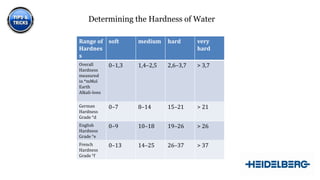
Determining the Hardness of Water
Range of soft
Hardnes
s

medium

hard

very
hard

Overall
Hardness
measured
in *mMol
Earth
Alkali-Ions

0–1,3

1,4–2,5

2,6–3,7

> 3,7

German
Hardness
Grade °d

0–7

8–14

15–21

> 21

English
Hardness
Grade °e

0–9

10–18

19–26

> 26

French
Hardness
Grade °f

0–13

14–25

26–37

> 37
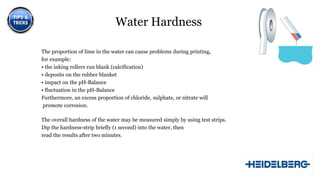
Water Hardness
The proportion of lime in the water can cause problems during printing,
for example:
• the inking rollers run blank (calcification)
• deposits on the rubber blanket
• impact on the pH-Balance
• fluctuation in the pH-Balance
Furthermore, an excess proportion of chloride, sulphate, or nitrate will
promote corrosion.
The overall hardness of the water may be measured simply by using test strips.
Dip the hardness-strip briefly (1 second) into the water, then
read the results after two minutes.

7
pH-Balance

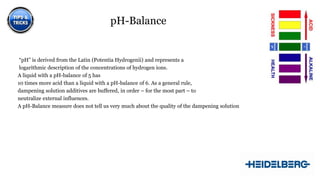
“pH” is derived from the Latin (Potentia Hydrogenii) and represents a
logarithmic description of the concentrations of hydrogen ions.
A liquid with a pH-balance of 5 has
10 times more acid than a liquid with a pH-balance of 6. As a general rule,
dampening solution additives are buffered, in order – for the most part – to
neutralize external influences.
A pH-Balance measure does not tell us very much about the quality of the dampening solution

8
pH-Balance and Buffer
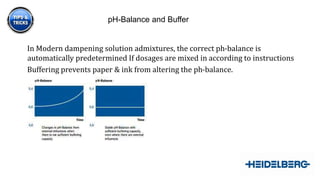
In Modern dampening solution admixtures, the correct ph-balance is
automatically predetermined If dosages are mixed in according to instructions
Buffering prevents paper & ink from altering the ph-balance.

9
Conductivity = µS/cm

Conductivity describes how electricity is conducted through a
liquid; impurities
in the dampening solution allow conductivity to increase.
Conductivity varies
depending on the water and additives. The temperature, and the
concentration
of alcohol also influence conductivity.
By increasing isopropanol(IPA), conductivity declines
Conductivity should be determined using a “freshly
prepared dampening solution”, so that this measure
can then serve as a “benchmark” When the dampening solution is
later exchanged.

10
Wetting the Plate
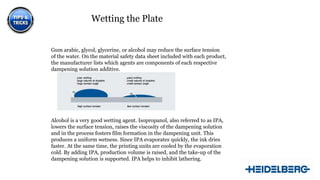
Gum arabic, glycol, glycerine, or alcohol may reduce the surface tension
of the water. On the material safety data sheet included with each product,
the manufacturer lists which agents are components of each respective
dampening solution additive.

Alcohol is a very good wetting agent. Isopropanol, also referred to as IPA,
lowers the surface tension, raises the viscosity of the dampening solution
and in the process fosters film formation in the dampening unit. This
produces a uniform wetness. Since IPA evaporates quickly, the ink dries
faster. At the same time, the printing units are cooled by the evaporation
cold. By adding IPA, production volume is raised, and the take-up of the
dampening solution is supported. IPA helps to inhibit lathering.
11
Testing the Alcohol

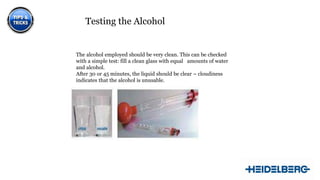
The alcohol employed should be very clean. This can be checked
with a simple test: fill a clean glass with equal amounts of water
and alcohol.
After 30 or 45 minutes, the liquid should be clear – cloudiness
indicates that the alcohol is unusable.

12
Areometer Readings

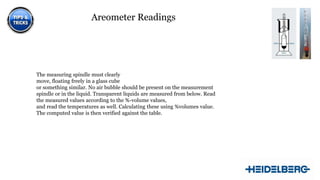
The measuring spindle must clearly
move, floating freely in a glass cube
or something similar. No air bubble should be present on the measurement
spindle or in the liquid. Transparent liquids are measured from below. Read
the measured values according to the %-volume values,
and read the temperatures as well. Calculating these using %volumes value.
The computed value is then verified against the table.

13
…Continued

The areometer can be used to measure the IPA-content in the water. The
device indicates percent by volume and by weight. Percent by volume
should be principally measured. Since temperature plays an important role
in determining IPA, please do pay careful attention to the temperature
balance. Include the specific weight (density), of the dampening solution
additive when making the determination

14
Preparing the Dampening Solution

Basically, there are three different variants of dampening solution
1. Water and additives for an older dampening system with plush rollers
2. Osmosis water, additives and alcohol for modern continuous-film
dampening systems with unupholstered rubber rollers
3. Osmosis water and alcohol substitute for IPA-free printing
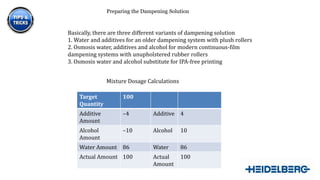
Mixture Dosage Calculations
Target
Quantity

100

Additive
Amount

–4

Additive 4

Alcohol
Amount

–10

Alcohol

10

Water Amount 86

Water

86

Actual Amount 100

Actual
Amount

100
15
Dampening Solutions in Offset Printing

Dampening Solutions in Offset Printing

  • 1.
    Dampening Solutions inOffset Printing 1
  • 2.
    Foreword Next to theprinting plate and the offset ink, the dampening solution represents the third significant factor in offset printing. Perfect print output – even during high print runs – results from the optimal interaction of these system components. The current guidebook is intended to help you to develop a general understanding of the dampening solution, its composition, and its application in the printing industry. 2
  • 3.
    Contents 1Dampening Solution anddampening Solution Additives 2The Basis: Water 3 Water Hardness 4 pH-Balance 5 pH-Balance und Buffer 6 Conducivity = µS/cm 7 Wetting the Plates 8 Testing Alcohol 9 Araeometer Readings 10 Alcohol Measurement 11 Drawbacks of Alcohol 12 Preparing the Dampening Solution 13 Dampening Solution and Print Problems C 3
  • 4.
    Dampening Solution andDampening Solution Additives • Ideally, the dampening solution should possess a water hardness of 8 ° dH to 12 ° dH and a pH-balance of 4.8 to 5.5. • The typical dampening solution temperature ranges between 10 °C to 15 °C. At the same time, a printer must know that at low temperatures condensation water collects on tubes and in the dampening solution vats, and this may lead to the formation of water droplets. Dampening solution additives are complex material systems with various components included to promote adequate emulgation and wetting (surface tension). They are important for pH-Balance adjustment and for stabilisation (buffer systems), protection against corrosion, for a cooling effect, and in avoiding slime formation (biocide)..
  • 5.
    The Basis: Water Inview of the wide-ranging and varied quality of water, selecting the appropriate additive is essential. Water found in nature is not clean, rather it contains numerous gasses and minerals. A printer uses tap water as the source material for his dampening solution. To assess the quality of water the water’s hardness is measured, which largely depends on the quantities of calcium and magnesium present. Test-strips are used for a simple determination of the total water hardness. 5
  • 6.
    Determining the Hardnessof Water Range of soft Hardnes s medium hard very hard Overall Hardness measured in *mMol Earth Alkali-Ions 0–1,3 1,4–2,5 2,6–3,7 > 3,7 German Hardness Grade °d 0–7 8–14 15–21 > 21 English Hardness Grade °e 0–9 10–18 19–26 > 26 French Hardness Grade °f 0–13 14–25 26–37 > 37
  • 7.
    Water Hardness The proportionof lime in the water can cause problems during printing, for example: • the inking rollers run blank (calcification) • deposits on the rubber blanket • impact on the pH-Balance • fluctuation in the pH-Balance Furthermore, an excess proportion of chloride, sulphate, or nitrate will promote corrosion. The overall hardness of the water may be measured simply by using test strips. Dip the hardness-strip briefly (1 second) into the water, then read the results after two minutes. 7
  • 8.
    pH-Balance “pH” is derivedfrom the Latin (Potentia Hydrogenii) and represents a logarithmic description of the concentrations of hydrogen ions. A liquid with a pH-balance of 5 has 10 times more acid than a liquid with a pH-balance of 6. As a general rule, dampening solution additives are buffered, in order – for the most part – to neutralize external influences. A pH-Balance measure does not tell us very much about the quality of the dampening solution 8
  • 9.
    pH-Balance and Buffer InModern dampening solution admixtures, the correct ph-balance is automatically predetermined If dosages are mixed in according to instructions Buffering prevents paper & ink from altering the ph-balance. 9
  • 10.
    Conductivity = µS/cm Conductivitydescribes how electricity is conducted through a liquid; impurities in the dampening solution allow conductivity to increase. Conductivity varies depending on the water and additives. The temperature, and the concentration of alcohol also influence conductivity. By increasing isopropanol(IPA), conductivity declines Conductivity should be determined using a “freshly prepared dampening solution”, so that this measure can then serve as a “benchmark” When the dampening solution is later exchanged. 10
  • 11.
    Wetting the Plate Gumarabic, glycol, glycerine, or alcohol may reduce the surface tension of the water. On the material safety data sheet included with each product, the manufacturer lists which agents are components of each respective dampening solution additive. Alcohol is a very good wetting agent. Isopropanol, also referred to as IPA, lowers the surface tension, raises the viscosity of the dampening solution and in the process fosters film formation in the dampening unit. This produces a uniform wetness. Since IPA evaporates quickly, the ink dries faster. At the same time, the printing units are cooled by the evaporation cold. By adding IPA, production volume is raised, and the take-up of the dampening solution is supported. IPA helps to inhibit lathering. 11
  • 12.
    Testing the Alcohol Thealcohol employed should be very clean. This can be checked with a simple test: fill a clean glass with equal amounts of water and alcohol. After 30 or 45 minutes, the liquid should be clear – cloudiness indicates that the alcohol is unusable. 12
  • 13.
    Areometer Readings The measuringspindle must clearly move, floating freely in a glass cube or something similar. No air bubble should be present on the measurement spindle or in the liquid. Transparent liquids are measured from below. Read the measured values according to the %-volume values, and read the temperatures as well. Calculating these using %volumes value. The computed value is then verified against the table. 13
  • 14.
    …Continued The areometer canbe used to measure the IPA-content in the water. The device indicates percent by volume and by weight. Percent by volume should be principally measured. Since temperature plays an important role in determining IPA, please do pay careful attention to the temperature balance. Include the specific weight (density), of the dampening solution additive when making the determination 14
  • 15.
    Preparing the DampeningSolution Basically, there are three different variants of dampening solution 1. Water and additives for an older dampening system with plush rollers 2. Osmosis water, additives and alcohol for modern continuous-film dampening systems with unupholstered rubber rollers 3. Osmosis water and alcohol substitute for IPA-free printing Mixture Dosage Calculations Target Quantity 100 Additive Amount –4 Additive 4 Alcohol Amount –10 Alcohol 10 Water Amount 86 Water 86 Actual Amount 100 Actual Amount 100 15