


![Acidosis
■ Double edged sword.
■ Correction – NaHCO3 ,THAM (tromethamine; tris[hydroxymethyl] aminomethane).
■ THAM - biologically inert amino alcohol of low toxicity that buffers CO2 and acids. Sodium free and limits the generation of
CO2 in the process of buffering. At 37° C, the pKa of THAM is 7.8, making it a more effective buffer than sodium
bicarbonate in the physiologic range of blood pH.
■ Unlike sodium bicarbonate, which requires an open system to eliminate CO2 to exert its buffering effect, THAM is effective
in a closed or semiclosed system, and it maintains its buffering ability during hypothermia.
■ Initial loading dose ofTHAM acetate (0.3 M, pH 8.6) for the treatment of academia:
THAM (in mL of 3M solution) = lean body weight (in kilograms) × the base deficit (in mmol/liter)
■ Maximal daily dose - 15 mmol/kilogram/day for an adult (3.5 liters of a 0.3 M solution in a patient weighing 70 kg).
■ Indications –
– Treatment of respiratory failure (acute respiratory distress syndrome [ARDS] and infant respiratory distress syndrome);
– Use during hypothermia and permissive hypercapnia (controlled hypoventilation).
– Diabetic and renal acidosis, salicylate and barbiturate intoxication, and increased intracranial pressure (ICP) associated
with brain trauma.
– Used in cardioplegic solutions and during liver transplantation.](https://image.slidesharecdn.com/shock-180405162729/85/Shock-7-320.jpg)


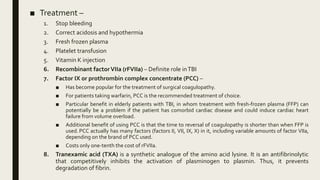
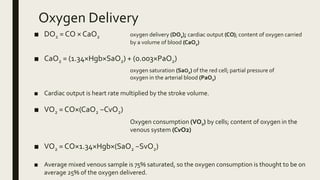


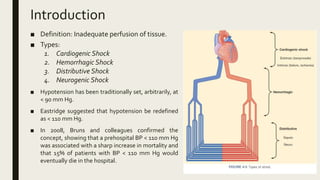
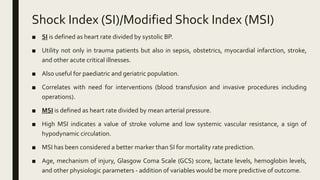
1) Shock is defined as inadequate tissue perfusion and can be cardiogenic, hemorrhagic, distributive, or neurogenic in type. Traditionally defined as a systolic blood pressure under 90 mmHg, studies show mortality increases sharply below 110 mmHg. 2) The shock index (heart rate divided by systolic blood pressure) and modified shock index (heart rate divided by mean arterial pressure) can help assess shock severity and predict outcomes. Lactate and base deficit also correlate with injury severity and outcomes. 3) Compensatory mechanisms in shock include shunting blood to vital organs, increased sympathetic activity, renal sodium retention, and fluid shifts. The "lethal triad"
![Thyroid ppt [autosaved]](https://cdn.slidesharecdn.com/ss_thumbnails/thyroidpptautosaved-170310134424-thumbnail.jpg?width=640&height=640&fit=bounds)


![Basic_Shock_Presentation[1].ppt](https://cdn.slidesharecdn.com/ss_thumbnails/basicshockpresentation1-230813124447-67551acc-thumbnail.jpg?width=640&height=640&fit=bounds)


