Cybersecurity Research Paper instructions
Select a research topic from the list below. After selecting your
topic, research the incident using news articles, magazine
articles (trade press), journal articles, and/or technical reports
from government and industry.
TJ Maxx Security breach
For a grade of A, a minimum of five authoritative sources are
required.
Your research is to be incorporated into the students' 3- to 5-
page written analysis of the attack or incident. Your report is to
be prepared using basic APA formatting (see below) and
submitted as an MS Word attachment to the Cybersecurity
Research Paper entry in your assignments folder.
This paper must be plagiarism free. I will have to turn it in
using turnitin.com!
Below is one source that should be used for this paper. I will
also send the full text pdf for the source.
Source 1
Berg, G. G., Freeman, M. S., & Schneider, K. N. (2008).
Analyzing the TJ Maxx Data Security Fiasco. CPA Journal,
78(8), 34-37.
A C C O U N T I N G & A U D I T I N G
a u d i t i n g
Analyzing the TJ Maxx Data Security Fiasco
Lessons for Auditors
By Gary G. Berg. Michelle S.
Freeman, and Kent N. Schneider
I n January 2007, TJX Companies,Inc. (TJX), the parent
company ofretail chains such as T,J. Maxx and
Marshalls, issued a press release announc-
ing that its computer systems had been
breached and that customer information
had heen stolen. As the investigation into
the crime continued during 2007, estimates
of the number of customers affected sky-
rocketed. Other reports indicated that at
least 94 million Visa and MasterCard
accounts had been compromised, with loss-
es projected to approach $4.5 biilion. As
expected, Visa and MasterCard are seek-
ing to recoup these losses from TJX. The
sheer scale of the security breach should
cause auditors to wonder about the impli-
cations for their professional practice.
What Went Wrong at TJX?
Investigations into the TJX case appear
to indicate that the company was not in
compliance with the Payment Card
Industry (PCI) data security standards
established in 2004 by American Express,
Discover Financial Services. JCB.
MasterCard Worldwide, and Visa
Intemational. Repxirts identified three major
areas of vulnerability: inadequate wireless
network security, improper storage of
customer data, and failure to encrypt cus-
tomer account data.
Inadequate wireless network security.
The store where the initial breach occurred
was using a wireless network that was
inadequately secured. Specifically, the net-
work was using a security protocol
known as wired equivalent privacy (WEP),
One problem with WEP security is that it
is easy to crack. In fact, researchers at
Darmstadt Technical University in
Germany have demonstrated that a WEP
key can be broken in less than a minute.
More important. WEP does not satisfy
industry standards that require the use of
the much stronger WPA (Wi-Ei Protected
Access) protocol. After breaking into the
store's network, the hackers then breached
security at the corporate headquarters and
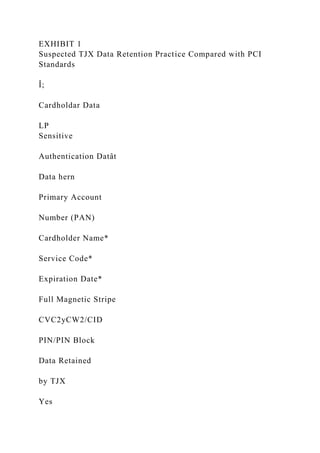
Security Standard 3.2 clearly states that
after payment authorization is received, a
merehant is not to store sensitive data, such
as the CVC. PIN. or full-track infonnation.
Exhibit I shows a comparison of key data
items believed to have been stored by TJX,
obtained the customer account information
stored there. According to a May 4, 2007,
Wall Street Joumal article, the intruders
had access to the TJX records for 18
months without being detected.
Improper storage of customer daia. The
TJX data storage practices also appear to
have violated industry standards. Reports
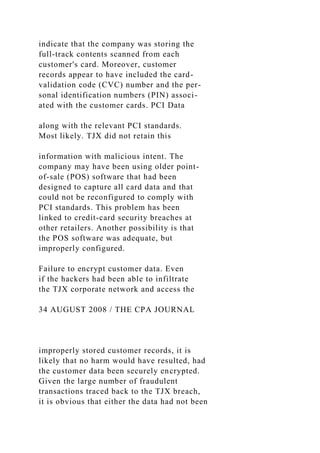
indicate that the company was storing the
full-track contents scanned from each
customer's card. Moreover, customer
records appear to have included the card-
validation code (CVC) number and the per-
sonal identification numbers (PIN) associ-
ated with the customer cards. PCI Data
along with the relevant PCI standards.
Most likely. TJX did not retain this
information with malicious intent. The
company may have been using older point-
of-sale (POS) software that had been
designed to capture all card data and that
could not be reconfigured to comply with
PCI standards. This problem has been
linked to credit-card security breaches at
other retailers. Another possibility is that
the POS software was adequate, but
improperly configured.
Failure to encrypt customer data. Even
if the hackers had been able to infiltrate
the TJX corporate network and access the
34 AUGUST 2008 / THE CPA JOURNAL
improperly stored customer records, it is
likely that no harm would have resulted, had
the customer data been securely encrypted.
Given the large number of fraudulent
transactions traced back to the TJX breach,
it is obvious that either the data had not been
encrypted, or the hackers stole the encryp-
tion key. In either case, industry standards
were not maintained hy TJX. PCI Data
Sectirity Standard 3.4 i-et]uires that at min-
imum, the customer's "primary account
number" (i.e.. the customer's card number)
be "rendered unreadable.'' Furtheniiore. PCI
Data Security Standards 3.5 and 3.6
nitjuire merchants to pnMect tlie encryption
keys used for protecting customer data from
disclosure and misuse.
How the TJX Breach Affects
Audit Practices
At firNt. the TJX fiasco appears to offer an
object lesson for retailers" IT departments,
rather tkui auditors. After all, aistomeni' cred-
it card numbeis are not the retailer's asset to
protect; rather, the sales transaction itself is
what accounting intentai controls have tradi-
tionally sought to secure. With the atlvent of
Statement on Auditing Standaitl (SAS) 109,
UnderstíUKÜng ¡Iw Entity and ¡ts Envimntnent
and Assessing the Risks of Material
Misstatemctu. internal control clearly
extends beyond protecting one's own assets.
SAS 109 requires auditors to "audit die
business, and not just the books'" when
evaluating the risks of a client's financial
statements containing a material misstate-
ment. Specifically, SAS 109 requires an
understanding of: 1 ) the entity and its envi-
ronment: 2) the entity's intemal control
environment: and 3) susceptibility of the
entity's ñnancial statements to material
misstatement resulting from liabilities.
Understanding the entity and its envi-
ronment. RetaileiN ciinnot continue to oper-
ate by kxĂŻking after only their own assets.
as seen in the TJX debacle. Customer cred-
it and debit card information is a valued
target of data thieves. Technology bas
made purchasing information more valu-
able than actual cuirency. because it can
be used to nin up huge bills for the origi-
nal cardholders. These victims are left with
the lengthy, painful task of restoring their
good credit ratings. To protect against data
theft, consumers can refrain from using
debit and credit cards (an inconvenient
option), or refrain from shopping at stores
that suffer data breaches. In other words,
it is ultimately in the best interest of
retailers to follow industry standards and
protect customer credit and debit card
records.
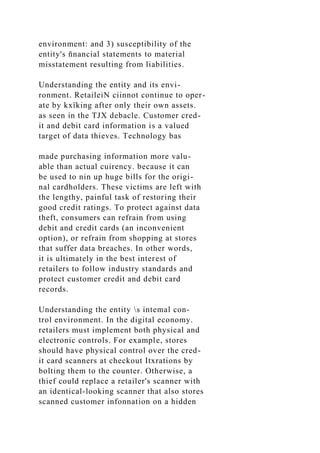
Understanding the entity s intemal con-
trol environment. In the digital economy.
retailers must implement both physical and
electronic controls. For example, stores
should have physical control over the cred-
it card scanners at checkout Itxrations by
bolting them to the counter. Otherwise, a
thief could replace a retailer's scanner with
an identical-looking scanner that also stores
scanned customer infonnation on a hidden
^JVlinutes
FOCUSED
LEGAL
COUNSEL
*':
a IN
nĂŒUH Ja ‱
we are a law firm,
that's all.
we form
california
incorporation
Determine Name Avallabiitty and Reserve Nar^e
Prepare and File Articles/Certificate of Formation
Ail Secretary of State Filing Fees
Custom Bylaws
Custom Organizational Minutes, authorizing the election ot
officers and directors, establishment of bartk accounts,
issuance of stock, and other matters
Preparation and Issuance of Share Certificates
Statement ol Information and Filing Fees
Preparation ol 25iO2(f) Certificate and Filing Fees'
Prepare 1RS Form SS-4 and Obtain Tax Identification Na
Prepare and Rle IHS Form Z553 (NY State CT-6)
to make "S" Election
Ancillary Documents, including Pmmissory Notes. Medical
E<pense Reimbursement Plan, Employment Agreement
Resident Agent Services for one year
Follow up to ensure all documents are prtqierlY signed,
filed, fees are paid, ano formation is properly completed
Experienced Counsel handling every formation and
avaiiable to consult on aii aspects of the process
Corporate Kit Seal, and duplicate Set of Documents on CO
Accountan! Copy of AN Documents Delivered on CD-ROM
eMinutes Entity Management System (with online
document iihrary. real-time monitoring ot corporate
deadiines) via secure web-based Interface
Automatic Enrollment tn Annual Minutes System
i/
x/
x/
‱
‱
x/
* /
and maintain entities.
non-lawyer
delaware new york ! incorporation
ncorporation incorpora lion online service
^/
i /
^
n/a
n/B
‱
I
%/ x/
i /
*/
s/
n/a
n/a
‱ ‱
^^
^^
^^
ĂȘ ^
t/
Cost 'For capitaliistiDn up to $100,000 J E 4 ? Í ! I ) 
aS.A7>tĂ­' Ă©t^Ít
Admitted to practice law in Callfornia and New York,
www.eMinutes.com Toil-Free 877 UNGERLAW
AUGUST 2008 / THE CPA JOURNAL 35
chip. Later, the thief could retum to the
store and switch scanners again, walking
away with the customer data accumulated
in the interim.
Understatiding the risk of material mis-
statement resulting from contingent lia-
bilities. Although customer purchasing
infomiation is not an asset of the retailer,
possession of that information imposes
great responsibility on the retailer, and fail-
ure to protect that information can result
in huge liabilities.
EXHIBIT 1
Suspected TJX Data Retention Practice Compared with PCI
Standards
Î;
Cardholdar Data
LP
Sensitive
Authentication DatĂąt
Data hern
Primary Account
Number (PAN)
Cardholder Name*
Service Code*
Expiration Date*
Full Magnetic Stripe
CVC2yCW2/CID
PIN/PIN Block
Data Retained
by TJX
Yes
Yes
Yes
Yes
Yes
Yes
Yes
PCI Retention
Standards
Yes
Yes
Yes
Yes
No
No
No
* Must be protected if stored in conjunction with PAN.
[. t Sensitive authenticaton data must not be stored after
authorization (even if encrypted].
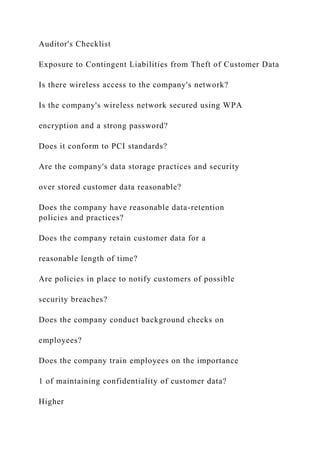
EXHIBIT 2
Auditor's Checklist
Exposure to Contingent Liabilities from Theft of Customer Data
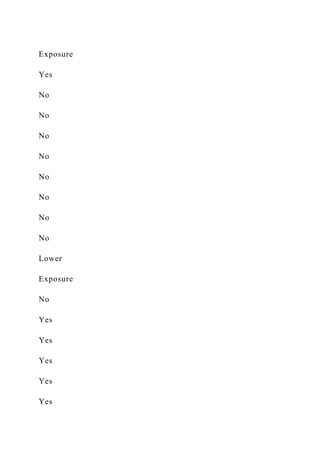
Is there wireless access to the company's network?
Is the company's wireless network secured using WPA
encryption and a strong password?
Does it conform to PCI standards?
Are the company's data storage practices and security
over stored customer data reasonable?
Does the company have reasonable data-retention
policies and practices?
Does the company retain customer data for a
reasonable length of time?
Are policies in place to notify customers of possible
security breaches?
Does the company conduct background checks on
employees?
Does the company train employees on the importance
1 of maintaining confidentiality of customer data?
Higher
Exposure
Yes
No
No
No
No
No
No
No
No
Lower
Exposure
No
Yes
Yes
Yes
Yes
Yes
Yes
Yes
Yes
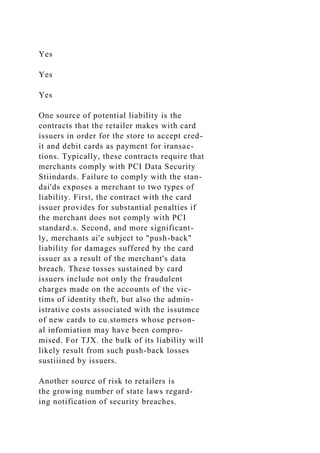
One source of potential liability is the
contracts that the retailer makes with card
issuers in order for the store to accept cred-
it and debit cards as payment for iransac-
tions. Typically, these contracts require that
merchants comply with PCI Data Security
Stiindards. Failure to comply with the stan-
dai'ds exposes a merchant to two types of
liability. First, the contract with the card
issuer provides for substantial penalties if
the merchant does not comply with PCI
standard.s. Second, and more significant-
ly, merchants ai'e subject to "push-back"
liability for damages suffered by the card
issuer as a result of the merchant's data
breach. These tosses sustained by card
issuers include not only the fraudulent
charges made on the accounts of the vic-
tims of identity theft, but also the admin-
istrative costs associated with the issutmce
of new cards to cu.stomers whose person-
al infomiation may have been compro-
mised. For TJX. the bulk of its liability will
likely result from such push-back losses
sustiiined by issuers.
Another source of risk to retailers is
the growing number of state laws regard-
ing notification of security breaches.
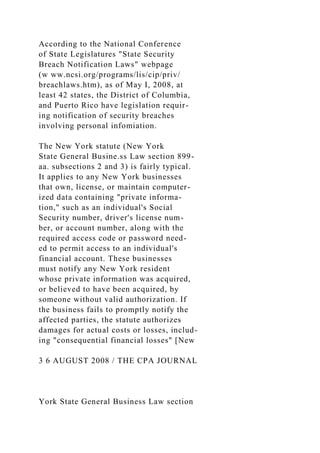
According to the National Conference
of State Legislatures "State Security
Breach Notification Laws" webpage
(w ww.ncsi.org/programs/lis/cip/priv/
breachlaws.htm), as of May I, 2008, at
least 42 states, the District of Columbia,
and Puerto Rico have legislation requir-
ing notification of security breaches
involving personal infomiation.
The New York statute (New York
State General Busine.ss Law section 899-
aa. subsections 2 and 3) is fairly typical.
It applies to any New York businesses
that own, license, or maintain computer-
ized data containing "private informa-
tion," such as an individual's Social
Security number, driver's license num-
ber, or account number, along with the
required access code or password need-
ed to permit access to an individual's
financial account. These businesses
must notify any New York resident
whose private information was acquired,
or believed to have been acquired, by
someone without valid authorization. If
the business fails to promptly notify the
affected parties, the statute authorizes
damages for actual costs or losses, includ-
ing "consequential financial losses" [New
3 6 AUGUST 2008 / THE CPA JOURNAL
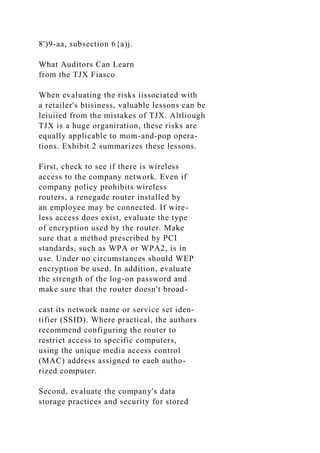
York State General Business Law section
8')9-aa, subsection 6{a)j.
What Auditors Can Learn
from the TJX Fiasco
When evaluating the risks iissociated with
a retailer's btisiness, valuable lessons can be
leiuiied from the mistakes of TJX. Altliough
TJX is a huge organiration, these risks are
equally applicable to mom-and-pop opera-
tions. Exhibit 2 summarizes these lessons.
First, check to see if there is wireless
access to the company network. Even if
company policy prohibits wireless
routers, a renegade router installed by
an employee may be connected. If wire-
less access does exist, evaluate the type
of encryption used by the router. Make
sure that a method prescribed by PCI
standards, such as WPA or WPA2, is in
use. Under no circumstances should WEP
encryption be used. In addition, evaluate
the strength of the log-on password and
make sure that the router doesn't broad-
cast its network name or service set iden-
tifier (SSID). Where practical, the authors
recommend configuring the router to
restrict access to specific computers,
using the unique media access control
(MAC) address assigned to eaeh autho-
rized computer.
Second, evaluate the company's data
storage practices and security for stored
customer data. Ascertain that the com-
pany complies with PCI security stan-
dards and is not retaining excess data
scanned from customer credit and debit
cards. Under no circumstances should a
merchant retain a customer's debit card
PIN. Also, make sure that customer dala
stored by the retailer are encrypted
using a strong key.
Finally, review the company's data-
retention [xilicies and practices. Make sure
die merchiuit divs not retain ctistomer data
any longer than permitted by the card
issuers. Even better, do not retain data
any longer than necessiuy to dtK'ument the
underlying transaction. Ensure that policies
lu-e in place to notify customers of possi-
ble security breaches and that a prtx;ess is
in place to implement the policies if a
breach occurs.
Ultimately, the security of a company's
infonnation system relies upon the com-
petency and honesty of its employees.
Therefore, it is important lo conduct
background checks on employees and to
train them about tlie possibility of securi-
ty breaches and how to avoid them. Ü
Gary G. Berg, PhD, CPA, is an associ-
ate professor of accountancy at East
Teiini's.see State University. Jolm.wn City.
Tenn. Michelle S. Freeman, EdD, CPA
(inaetive), is an assistant professor of lyusi-
ness administration at Tusculwn College.
Grecneville. Tenn. Kent N. Schneider, JD,
CPA, is a professor of accountancy, also
at East Tennessee Stale University,
Johnson City, Tenn.
Personal Financial Planning Community
SAVE
Join
the AICPA Personal Financial Planning
Membership Section
1st Edition! Get a discount on the AICPA Moss Adams
PFP Planning Practice Study
Access Forefield Advisor, a world-class client
education and communication tool {$399 value)
Stay informed about PFP legislation and developments
Receive valuable resources, templates and turnkey client
tools tailored for CPA financial planners
Attend Web seminars on cutting-edge topics
SAVE
$200
Become
a CPA Personal Financial Specialist
Credential Holder (PFS)
Enjoy complimentary membership in the PFP Section
Differentiate yourself from other financial planners:
only a CPA can become a PFS
Access marketing tools to promote yourself and
increase new business
Receive media training and opportunities to participate
in public relations activities
Network with other thought leaders in the industry
:AICPA:
Menlion ptonio code RHX
Questions?
e-mail [email protected]
ISO Certified
AUGUST 2008 / THE CPA JOURNAL 37

Cybersecurity Research Paper instructionsSelect a research topic.docx

  • 1.
    Cybersecurity Research Paperinstructions Select a research topic from the list below. After selecting your topic, research the incident using news articles, magazine articles (trade press), journal articles, and/or technical reports from government and industry. TJ Maxx Security breach For a grade of A, a minimum of five authoritative sources are required. Your research is to be incorporated into the students' 3- to 5- page written analysis of the attack or incident. Your report is to be prepared using basic APA formatting (see below) and submitted as an MS Word attachment to the Cybersecurity Research Paper entry in your assignments folder. This paper must be plagiarism free. I will have to turn it in using turnitin.com! Below is one source that should be used for this paper. I will also send the full text pdf for the source. Source 1 Berg, G. G., Freeman, M. S., & Schneider, K. N. (2008). Analyzing the TJ Maxx Data Security Fiasco. CPA Journal, 78(8), 34-37. A C C O U N T I N G & A U D I T I N G a u d i t i n g Analyzing the TJ Maxx Data Security Fiasco Lessons for Auditors
  • 2.
    By Gary G.Berg. Michelle S. Freeman, and Kent N. Schneider I n January 2007, TJX Companies,Inc. (TJX), the parent company ofretail chains such as T,J. Maxx and Marshalls, issued a press release announc- ing that its computer systems had been breached and that customer information had heen stolen. As the investigation into the crime continued during 2007, estimates of the number of customers affected sky- rocketed. Other reports indicated that at least 94 million Visa and MasterCard accounts had been compromised, with loss- es projected to approach $4.5 biilion. As expected, Visa and MasterCard are seek- ing to recoup these losses from TJX. The sheer scale of the security breach should cause auditors to wonder about the impli- cations for their professional practice. What Went Wrong at TJX? Investigations into the TJX case appear to indicate that the company was not in compliance with the Payment Card Industry (PCI) data security standards established in 2004 by American Express, Discover Financial Services. JCB. MasterCard Worldwide, and Visa Intemational. Repxirts identified three major areas of vulnerability: inadequate wireless network security, improper storage of customer data, and failure to encrypt cus- tomer account data.
  • 3.
    Inadequate wireless networksecurity. The store where the initial breach occurred was using a wireless network that was inadequately secured. Specifically, the net- work was using a security protocol known as wired equivalent privacy (WEP), One problem with WEP security is that it is easy to crack. In fact, researchers at Darmstadt Technical University in Germany have demonstrated that a WEP key can be broken in less than a minute. More important. WEP does not satisfy industry standards that require the use of the much stronger WPA (Wi-Ei Protected Access) protocol. After breaking into the store's network, the hackers then breached security at the corporate headquarters and Security Standard 3.2 clearly states that after payment authorization is received, a merehant is not to store sensitive data, such as the CVC. PIN. or full-track infonnation. Exhibit I shows a comparison of key data items believed to have been stored by TJX, obtained the customer account information stored there. According to a May 4, 2007, Wall Street Joumal article, the intruders had access to the TJX records for 18 months without being detected. Improper storage of customer daia. The TJX data storage practices also appear to have violated industry standards. Reports
  • 4.
    indicate that thecompany was storing the full-track contents scanned from each customer's card. Moreover, customer records appear to have included the card- validation code (CVC) number and the per- sonal identification numbers (PIN) associ- ated with the customer cards. PCI Data along with the relevant PCI standards. Most likely. TJX did not retain this information with malicious intent. The company may have been using older point- of-sale (POS) software that had been designed to capture all card data and that could not be reconfigured to comply with PCI standards. This problem has been linked to credit-card security breaches at other retailers. Another possibility is that the POS software was adequate, but improperly configured. Failure to encrypt customer data. Even if the hackers had been able to infiltrate the TJX corporate network and access the 34 AUGUST 2008 / THE CPA JOURNAL improperly stored customer records, it is likely that no harm would have resulted, had the customer data been securely encrypted. Given the large number of fraudulent transactions traced back to the TJX breach, it is obvious that either the data had not been
  • 5.
    encrypted, or thehackers stole the encryp- tion key. In either case, industry standards were not maintained hy TJX. PCI Data Sectirity Standard 3.4 i-et]uires that at min- imum, the customer's "primary account number" (i.e.. the customer's card number) be "rendered unreadable.'' Furtheniiore. PCI Data Security Standards 3.5 and 3.6 nitjuire merchants to pnMect tlie encryption keys used for protecting customer data from disclosure and misuse. How the TJX Breach Affects Audit Practices At firNt. the TJX fiasco appears to offer an object lesson for retailers" IT departments, rather tkui auditors. After all, aistomeni' cred- it card numbeis are not the retailer's asset to protect; rather, the sales transaction itself is what accounting intentai controls have tradi- tionally sought to secure. With the atlvent of Statement on Auditing Standaitl (SAS) 109, UnderstíUKÜng ¡Iw Entity and ¡ts Envimntnent and Assessing the Risks of Material Misstatemctu. internal control clearly extends beyond protecting one's own assets. SAS 109 requires auditors to "audit die business, and not just the books'" when evaluating the risks of a client's financial statements containing a material misstate- ment. Specifically, SAS 109 requires an understanding of: 1 ) the entity and its envi- ronment: 2) the entity's intemal control
  • 6.
    environment: and 3)susceptibility of the entity's ñnancial statements to material misstatement resulting from liabilities. Understanding the entity and its envi- ronment. RetaileiN ciinnot continue to oper- ate by kxïking after only their own assets. as seen in the TJX debacle. Customer cred- it and debit card information is a valued target of data thieves. Technology bas made purchasing information more valu- able than actual cuirency. because it can be used to nin up huge bills for the origi- nal cardholders. These victims are left with the lengthy, painful task of restoring their good credit ratings. To protect against data theft, consumers can refrain from using debit and credit cards (an inconvenient option), or refrain from shopping at stores that suffer data breaches. In other words, it is ultimately in the best interest of retailers to follow industry standards and protect customer credit and debit card records. Understanding the entity s intemal con- trol environment. In the digital economy. retailers must implement both physical and electronic controls. For example, stores should have physical control over the cred- it card scanners at checkout Itxrations by bolting them to the counter. Otherwise, a thief could replace a retailer's scanner with an identical-looking scanner that also stores scanned customer infonnation on a hidden
  • 7.
    ^JVlinutes FOCUSED LEGAL COUNSEL *': a IN nĂŒUH Ja‱ we are a law firm, that's all. we form california incorporation Determine Name Avallabiitty and Reserve Nar^e Prepare and File Articles/Certificate of Formation Ail Secretary of State Filing Fees Custom Bylaws Custom Organizational Minutes, authorizing the election ot officers and directors, establishment of bartk accounts, issuance of stock, and other matters Preparation and Issuance of Share Certificates Statement ol Information and Filing Fees Preparation ol 25iO2(f) Certificate and Filing Fees'
  • 8.
    Prepare 1RS FormSS-4 and Obtain Tax Identification Na Prepare and Rle IHS Form Z553 (NY State CT-6) to make "S" Election Ancillary Documents, including Pmmissory Notes. Medical E<pense Reimbursement Plan, Employment Agreement Resident Agent Services for one year Follow up to ensure all documents are prtqierlY signed, filed, fees are paid, ano formation is properly completed Experienced Counsel handling every formation and avaiiable to consult on aii aspects of the process Corporate Kit Seal, and duplicate Set of Documents on CO Accountan! Copy of AN Documents Delivered on CD-ROM eMinutes Entity Management System (with online document iihrary. real-time monitoring ot corporate deadiines) via secure web-based Interface Automatic Enrollment tn Annual Minutes System i/ x/ x/ ‱ ‱
  • 9.
    x/ * / and maintainentities. non-lawyer delaware new york ! incorporation ncorporation incorpora lion online service ^/ i / ^ n/a n/B ‱ I %/ x/ i / */ s/ n/a n/a
  • 10.
    ‱ ‱ ^^ ^^ ^^ ĂȘ ^ t/ Cost'For capitaliistiDn up to $100,000 J E 4 ? Í ! I ) aS.A7>tĂ­' Ă©t^Ít Admitted to practice law in Callfornia and New York, www.eMinutes.com Toil-Free 877 UNGERLAW AUGUST 2008 / THE CPA JOURNAL 35 chip. Later, the thief could retum to the store and switch scanners again, walking away with the customer data accumulated in the interim. Understatiding the risk of material mis- statement resulting from contingent lia- bilities. Although customer purchasing infomiation is not an asset of the retailer, possession of that information imposes great responsibility on the retailer, and fail- ure to protect that information can result in huge liabilities.
  • 11.
    EXHIBIT 1 Suspected TJXData Retention Practice Compared with PCI Standards Î; Cardholdar Data LP Sensitive Authentication Datñt Data hern Primary Account Number (PAN) Cardholder Name* Service Code* Expiration Date* Full Magnetic Stripe CVC2yCW2/CID PIN/PIN Block Data Retained by TJX Yes
  • 12.
    Yes Yes Yes Yes Yes Yes PCI Retention Standards Yes Yes Yes Yes No No No * Mustbe protected if stored in conjunction with PAN. [. t Sensitive authenticaton data must not be stored after authorization (even if encrypted]. EXHIBIT 2
  • 13.
    Auditor's Checklist Exposure toContingent Liabilities from Theft of Customer Data Is there wireless access to the company's network? Is the company's wireless network secured using WPA encryption and a strong password? Does it conform to PCI standards? Are the company's data storage practices and security over stored customer data reasonable? Does the company have reasonable data-retention policies and practices? Does the company retain customer data for a reasonable length of time? Are policies in place to notify customers of possible security breaches? Does the company conduct background checks on employees? Does the company train employees on the importance 1 of maintaining confidentiality of customer data? Higher
  • 14.
  • 15.
    Yes Yes Yes One source ofpotential liability is the contracts that the retailer makes with card issuers in order for the store to accept cred- it and debit cards as payment for iransac- tions. Typically, these contracts require that merchants comply with PCI Data Security Stiindards. Failure to comply with the stan- dai'ds exposes a merchant to two types of liability. First, the contract with the card issuer provides for substantial penalties if the merchant does not comply with PCI standard.s. Second, and more significant- ly, merchants ai'e subject to "push-back" liability for damages suffered by the card issuer as a result of the merchant's data breach. These tosses sustained by card issuers include not only the fraudulent charges made on the accounts of the vic- tims of identity theft, but also the admin- istrative costs associated with the issutmce of new cards to cu.stomers whose person- al infomiation may have been compro- mised. For TJX. the bulk of its liability will likely result from such push-back losses sustiiined by issuers. Another source of risk to retailers is the growing number of state laws regard- ing notification of security breaches.
  • 16.
    According to theNational Conference of State Legislatures "State Security Breach Notification Laws" webpage (w ww.ncsi.org/programs/lis/cip/priv/ breachlaws.htm), as of May I, 2008, at least 42 states, the District of Columbia, and Puerto Rico have legislation requir- ing notification of security breaches involving personal infomiation. The New York statute (New York State General Busine.ss Law section 899- aa. subsections 2 and 3) is fairly typical. It applies to any New York businesses that own, license, or maintain computer- ized data containing "private informa- tion," such as an individual's Social Security number, driver's license num- ber, or account number, along with the required access code or password need- ed to permit access to an individual's financial account. These businesses must notify any New York resident whose private information was acquired, or believed to have been acquired, by someone without valid authorization. If the business fails to promptly notify the affected parties, the statute authorizes damages for actual costs or losses, includ- ing "consequential financial losses" [New 3 6 AUGUST 2008 / THE CPA JOURNAL York State General Business Law section
  • 17.
    8')9-aa, subsection 6{a)j. WhatAuditors Can Learn from the TJX Fiasco When evaluating the risks iissociated with a retailer's btisiness, valuable lessons can be leiuiied from the mistakes of TJX. Altliough TJX is a huge organiration, these risks are equally applicable to mom-and-pop opera- tions. Exhibit 2 summarizes these lessons. First, check to see if there is wireless access to the company network. Even if company policy prohibits wireless routers, a renegade router installed by an employee may be connected. If wire- less access does exist, evaluate the type of encryption used by the router. Make sure that a method prescribed by PCI standards, such as WPA or WPA2, is in use. Under no circumstances should WEP encryption be used. In addition, evaluate the strength of the log-on password and make sure that the router doesn't broad- cast its network name or service set iden- tifier (SSID). Where practical, the authors recommend configuring the router to restrict access to specific computers, using the unique media access control (MAC) address assigned to eaeh autho- rized computer. Second, evaluate the company's data storage practices and security for stored
  • 18.
    customer data. Ascertainthat the com- pany complies with PCI security stan- dards and is not retaining excess data scanned from customer credit and debit cards. Under no circumstances should a merchant retain a customer's debit card PIN. Also, make sure that customer dala stored by the retailer are encrypted using a strong key. Finally, review the company's data- retention [xilicies and practices. Make sure die merchiuit divs not retain ctistomer data any longer than permitted by the card issuers. Even better, do not retain data any longer than necessiuy to dtK'ument the underlying transaction. Ensure that policies lu-e in place to notify customers of possi- ble security breaches and that a prtx;ess is in place to implement the policies if a breach occurs. Ultimately, the security of a company's infonnation system relies upon the com- petency and honesty of its employees. Therefore, it is important lo conduct background checks on employees and to train them about tlie possibility of securi- ty breaches and how to avoid them. Ü Gary G. Berg, PhD, CPA, is an associ- ate professor of accountancy at East Teiini's.see State University. Jolm.wn City. Tenn. Michelle S. Freeman, EdD, CPA (inaetive), is an assistant professor of lyusi-
  • 19.
    ness administration atTusculwn College. Grecneville. Tenn. Kent N. Schneider, JD, CPA, is a professor of accountancy, also at East Tennessee Stale University, Johnson City, Tenn. Personal Financial Planning Community SAVE Join the AICPA Personal Financial Planning Membership Section 1st Edition! Get a discount on the AICPA Moss Adams PFP Planning Practice Study Access Forefield Advisor, a world-class client education and communication tool {$399 value) Stay informed about PFP legislation and developments Receive valuable resources, templates and turnkey client tools tailored for CPA financial planners Attend Web seminars on cutting-edge topics SAVE $200 Become a CPA Personal Financial Specialist Credential Holder (PFS) Enjoy complimentary membership in the PFP Section
  • 20.
    Differentiate yourself fromother financial planners: only a CPA can become a PFS Access marketing tools to promote yourself and increase new business Receive media training and opportunities to participate in public relations activities Network with other thought leaders in the industry :AICPA: Menlion ptonio code RHX Questions? e-mail [email protected] ISO Certified AUGUST 2008 / THE CPA JOURNAL 37