

Growing Up Digital Parent Presentation December 14, 2006 Shanghai, China By Jeff Utecht http://jeff.scofer.com www.thethinkingstick.com www.utechtips.com
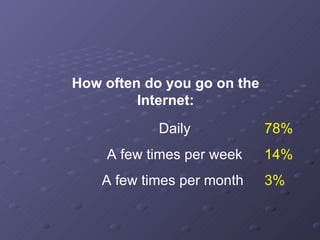
How often do you go on the Internet: Daily A few times per week A few times per month  78% 14% 3%
How much time do you spend on the computer surfing, relaxing or having fun per week? Less than one hour 2 to 4 hours 5 to 9 hours 10 to 14 hours 15 or more hours 23% 36% 20% 9% 12%
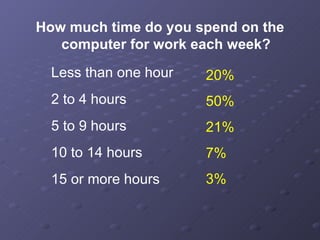
How much time do you spend on the computer for work each week? Less than one hour 2 to 4 hours 5 to 9 hours 10 to 14 hours 15 or more hours 20% 50% 21% 7% 3%
How often do you use computers at school each week?  Less than one hour 2 to 4 hours 5 to 9 hours 10 to 14 hours 15 or more hours 42% 47% 8% 3% 1% For Fun 23% 36% 20% 9% 12% Homework 20% 50% 21% 7% 3% 12% 41%  31%
Students As Creators and Contributors
On a typical day how much time does a student spend using an Instant Messaging program (IM, Chatting)? 54% spend more than an hour per day
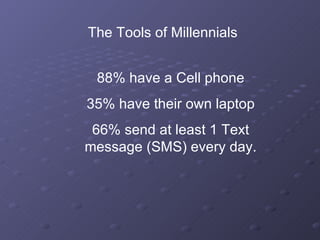
The Tools of Millennials 88% have a Cell phone 35% have their own laptop 66% send at least 1 Text message (SMS) every day.
What is Cyber Bullying? Using technology to deliberately harm another students’ emotional or social well-being
Real Life Bullying Vs. Cyber Bullying Similarities: Bully gains sense of power Victim loses self-esteem
What tools are used by a cyber bully? E-mail Cell phones Instant messaging (i.e. chatting) Personal websites Polling websites
What does cyber bullying look like? Threatening or insulting e-mails Rumors about a victim e-mailed to many people Websites or blogs created that say hateful things about a victim. The link to this site could then be emailed to many people Threatening or insulting text messages Built-in digital cameras in cell phones add a new dimension to the problem: pictures that can be distributed to many people in minutes.
What are the effects of cyber bullying? Mental and Emotional: Loss of self-esteem in victim Decreased concentration in school Lower grades Physical: Loss of sleep Decreased motivation to take part in physical activity Fear of physical danger Social: Not knowing who to trust Not wanting to be ‘out of the loop’
Why Cyber Bully Students may say things online that they would never say in person Bully does not see the consequences of their actions (i.e. facial expression of the victim) Minimal empathy and remorse Less chance of getting caught Victims may not know who the bully is Victims do not know how many people are involved Victims may not report cyber bullying because they are afraid parents will ‘freak out’ and take away privileges. Difficult for schools to enforce because it usually happens at home
Worried about your child Long hours on the computer Closes windows on their computer when you enter the room Is secretive about internet activities Is always ‘doing homework’ on the Internet yet still falls behind with school work Won’t say who they are talking to
Signs of cyber bullying Unexplained pictures on the computer Trouble sleeping Stomach and headaches Lack of appetite, throwing up Fear of going out of the house Crying for no apparent reason Lack of interest in social events that involve other students Complains of illness before school
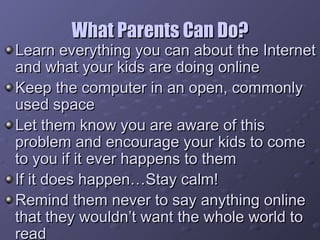
What Parents Can Do? Learn everything you can about the Internet and what your kids are doing online Keep the computer in an open, commonly used space Let them know you are aware of this problem and encourage your kids to come to you if it ever happens to them If it does happen…Stay calm! Remind them never to say anything online that they wouldn’t want the whole world to read
Guidelines for Students Never give out personal information online Don’t believe everything you see or read Use ‘Netiquette’ Don’t send a message when you are angry Don’t open anything from someone you don’t know If it doesn’t look or feel right, it probably isn’t
74% have never experienced Cyber-Bullying 62% say to their knowledge a friend or someone they know has never experienced Cyber-Bullying The Good News
We are no longer creating our filters in advance
 
With great power comes great responsibility! (Uncle Ben) ~ Spiderman
Get  Involved    Be Aware!

Growing Up Digital

  • 1.
    Growing Up DigitalParent Presentation December 14, 2006 Shanghai, China By Jeff Utecht http://jeff.scofer.com www.thethinkingstick.com www.utechtips.com
  • 2.
    How often doyou go on the Internet: Daily A few times per week A few times per month 78% 14% 3%
  • 3.
    How much timedo you spend on the computer surfing, relaxing or having fun per week? Less than one hour 2 to 4 hours 5 to 9 hours 10 to 14 hours 15 or more hours 23% 36% 20% 9% 12%
  • 4.
    How much timedo you spend on the computer for work each week? Less than one hour 2 to 4 hours 5 to 9 hours 10 to 14 hours 15 or more hours 20% 50% 21% 7% 3%
  • 5.
    How often doyou use computers at school each week? Less than one hour 2 to 4 hours 5 to 9 hours 10 to 14 hours 15 or more hours 42% 47% 8% 3% 1% For Fun 23% 36% 20% 9% 12% Homework 20% 50% 21% 7% 3% 12% 41% 31%
  • 6.
    Students As Creatorsand Contributors
  • 7.
    On a typicalday how much time does a student spend using an Instant Messaging program (IM, Chatting)? 54% spend more than an hour per day
  • 8.
    The Tools ofMillennials 88% have a Cell phone 35% have their own laptop 66% send at least 1 Text message (SMS) every day.
  • 9.
    What is CyberBullying? Using technology to deliberately harm another students’ emotional or social well-being
  • 10.
    Real Life BullyingVs. Cyber Bullying Similarities: Bully gains sense of power Victim loses self-esteem
  • 11.
    What tools areused by a cyber bully? E-mail Cell phones Instant messaging (i.e. chatting) Personal websites Polling websites
  • 12.
    What does cyberbullying look like? Threatening or insulting e-mails Rumors about a victim e-mailed to many people Websites or blogs created that say hateful things about a victim. The link to this site could then be emailed to many people Threatening or insulting text messages Built-in digital cameras in cell phones add a new dimension to the problem: pictures that can be distributed to many people in minutes.
  • 13.
    What are theeffects of cyber bullying? Mental and Emotional: Loss of self-esteem in victim Decreased concentration in school Lower grades Physical: Loss of sleep Decreased motivation to take part in physical activity Fear of physical danger Social: Not knowing who to trust Not wanting to be ‘out of the loop’
  • 14.
    Why Cyber BullyStudents may say things online that they would never say in person Bully does not see the consequences of their actions (i.e. facial expression of the victim) Minimal empathy and remorse Less chance of getting caught Victims may not know who the bully is Victims do not know how many people are involved Victims may not report cyber bullying because they are afraid parents will ‘freak out’ and take away privileges. Difficult for schools to enforce because it usually happens at home
  • 15.
    Worried about yourchild Long hours on the computer Closes windows on their computer when you enter the room Is secretive about internet activities Is always ‘doing homework’ on the Internet yet still falls behind with school work Won’t say who they are talking to
  • 16.
    Signs of cyberbullying Unexplained pictures on the computer Trouble sleeping Stomach and headaches Lack of appetite, throwing up Fear of going out of the house Crying for no apparent reason Lack of interest in social events that involve other students Complains of illness before school
  • 17.
    What Parents CanDo? Learn everything you can about the Internet and what your kids are doing online Keep the computer in an open, commonly used space Let them know you are aware of this problem and encourage your kids to come to you if it ever happens to them If it does happen…Stay calm! Remind them never to say anything online that they wouldn’t want the whole world to read
  • 18.
    Guidelines for StudentsNever give out personal information online Don’t believe everything you see or read Use ‘Netiquette’ Don’t send a message when you are angry Don’t open anything from someone you don’t know If it doesn’t look or feel right, it probably isn’t
  • 19.
    74% have neverexperienced Cyber-Bullying 62% say to their knowledge a friend or someone they know has never experienced Cyber-Bullying The Good News
  • 20.
    We are nolonger creating our filters in advance
  • 21.
  • 22.
    With great powercomes great responsibility! (Uncle Ben) ~ Spiderman
  • 23.
    Get Involved Be Aware!