CYBER SECURITY
Presented by-
• Sangeetha
• Ankitha
• Sheeba
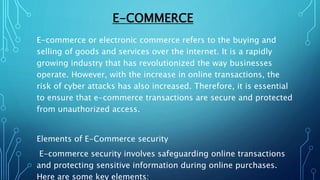
E-COMMERCE
E-commerce or electronic commerce refers to the buying and
selling of goods and services over the internet. It is a rapidly
growing industry that has revolutionized the way businesses
operate. However, with the increase in online transactions, the
risk of cyber attacks has also increased. Therefore, it is essential
to ensure that e-commerce transactions are secure and protected
from unauthorized access.
Elements of E-Commerce security
E-commerce security involves safeguarding online transactions
and protecting sensitive information during online purchases.
Here are some key elements:
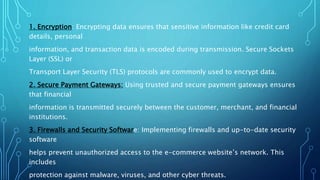
1. Encryption: Encrypting data ensures that sensitive information like credit card
details, personal
information, and transaction data is encoded during transmission. Secure Sockets
Layer (SSL) or
Transport Layer Security (TLS) protocols are commonly used to encrypt data.
2. Secure Payment Gateways: Using trusted and secure payment gateways ensures
that financial
information is transmitted securely between the customer, merchant, and financial
institutions.
3. Firewalls and Security Software: Implementing firewalls and up-to-date security
software
helps prevent unauthorized access to the e-commerce website’s network. This
includes
protection against malware, viruses, and other cyber threats.
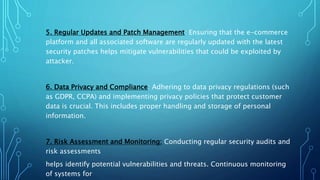
5. Regular Updates and Patch Management: Ensuring that the e-commerce
platform and all associated software are regularly updated with the latest
security patches helps mitigate vulnerabilities that could be exploited by
attacker.
6. Data Privacy and Compliance: Adhering to data privacy regulations (such
as GDPR, CCPA) and implementing privacy policies that protect customer
data is crucial. This includes proper handling and storage of personal
information.
7. Risk Assessment and Monitoring: Conducting regular security audits and
risk assessments
helps identify potential vulnerabilities and threats. Continuous monitoring
of systems for
8. Customer Education: Educating customers about safe online practices, such
as creating strong
passwords, avoiding public Wi-Fi for sensitive transactions, and being cautious
of phishing
attempts, can significantly enhance overall e-commerce security.
9. Physical Security Measures: Ensuring physical security of servers and data
centers where
customer information is stored is essential to prevent unauthorized access to
hardware and
infrastructure.
10.Backup and Disaster Recovery: Implementing robust backup and disaster
CYBERSECURITYBEST PRACTICES
Cyber security is the practice of protecting your devices,
networks, and data from unauthorized access, theft, or damage.
Cyber security best practices are the guidelines and
recommendations that can help you improve your cyber security
posture and reduce the risks of cyber attacks.
Some of the common cyber security best practices are:
• Use strong and unique passwords for your accounts and
devices, and change them regularly. You can use a password
manager to store and generate your passwords securely.
• Enable multi-factor authentication (MFA) whenever possible,
especially for your sensitive or critical accounts. MFA adds
an extra layer of verification, such as a code sent to your
phone or email, to prevent unauthorized access.
• Update your software and firmware regularly, as they may
contain security patches and bug fixes that can protect you
from known vulnerabilities and exploits.
• Install and use a reputable antivirus and firewall software on
your devices, and scan them regularly for malware and
viruses. You can also use a VPN (virtual private network) to
encrypt your online traffic and hide your IP address.
• Avoid clicking on suspicious links or attachments in emails,
messages, or websites, as they may contain phishing scams
or malware. You can check the URL or sender of the email
before opening it, and look for signs of spoofing or
impersonation.
• Backup your data regularly, either on an external hard drive
or a cloud service, to prevent data loss in case of a
ransomware attack, device failure, or theft. You can also
encrypt your data to make it unreadable to unauthorized
parties.
• Educate yourself and your team on the latest cyber security
threats and trends, and how to recognize and prevent
them. You can also conduct regular cyber security
CLASSIFICATION OF CYBER SECURITY…
Cybercrime is a criminal activity that either targets or uses a computer, a
computer network, or a networked device. It can be committed by
cybercriminals or hackers who want to make money, damage computers or
networks, or access information.
Typesof cybercrime..
• Phishing: Phishing is a type of cyber crime that involves sending
fraudulent emails or messages to trick users into revealing sensitive
information such as passwords, credit card numbers, and social security
numbers. For example, a user might receive an email that appears to be
from their bank, asking them to update their account information by
clicking on a link. The link takes the user to a fake website that looks
like the bank’s website, where they are prompted to enter their login
Identity theft: Identity theft is a type of personal data fraud that involves
stealing someone’s identity and using it for financial gain. For example, a
cyber criminal might use a user’s stolen identity to open a credit card account
in their name and make fraudulent purchases.
Denial-of-service attack: A denial-of-service (DoS) attack is a type of cyber
crime that involves overwhelming a server with traffic to make it unavailable
to users. For example, a cyber criminal might use a botnet to send a large
number of requests to a website’s server, causing it to crash and become
unavailable to users.
Ransomware: Ransomware is a type of data hostage-taking that involves
encrypting a user’s files and demanding payment in exchange for the
decryption key. For example, a user might download a file that appears to be
a legitimate software update, but is actuallyransomware that encrypts their
Automotive hacking: Automotive hacking is a type of vehicle control
hijacking that involves taking control of a vehicle’s systems remotely. For
example, a cyber criminal might use a vulnerability in a car’s software to
take control of the vehicle’s brakes, steering, or other systems.
Hacking: Hacking is a type of unauthorized system access that involves
gaining access to a computer system without permission. For example, a
cyber criminal might use a vulnerability in a company’s network to gain
access to sensitive data or cause damage to the network.
Malware: Malware is a type of malicious software that infects a computer
system and causes damage to the device or steals sensitive information.
For example, a user might download a file that appears to be a legitimate
software update, but is actually malware that installs itself on the user’s
computer and steals their personal data.
THANK
YOU

Cyber security best practices power point presentation

  • 1.
    CYBER SECURITY Presented by- •Sangeetha • Ankitha • Sheeba
  • 2.
    E-COMMERCE E-commerce or electroniccommerce refers to the buying and selling of goods and services over the internet. It is a rapidly growing industry that has revolutionized the way businesses operate. However, with the increase in online transactions, the risk of cyber attacks has also increased. Therefore, it is essential to ensure that e-commerce transactions are secure and protected from unauthorized access. Elements of E-Commerce security E-commerce security involves safeguarding online transactions and protecting sensitive information during online purchases. Here are some key elements:
  • 3.
    1. Encryption: Encryptingdata ensures that sensitive information like credit card details, personal information, and transaction data is encoded during transmission. Secure Sockets Layer (SSL) or Transport Layer Security (TLS) protocols are commonly used to encrypt data. 2. Secure Payment Gateways: Using trusted and secure payment gateways ensures that financial information is transmitted securely between the customer, merchant, and financial institutions. 3. Firewalls and Security Software: Implementing firewalls and up-to-date security software helps prevent unauthorized access to the e-commerce website’s network. This includes protection against malware, viruses, and other cyber threats.
  • 4.
    5. Regular Updatesand Patch Management: Ensuring that the e-commerce platform and all associated software are regularly updated with the latest security patches helps mitigate vulnerabilities that could be exploited by attacker. 6. Data Privacy and Compliance: Adhering to data privacy regulations (such as GDPR, CCPA) and implementing privacy policies that protect customer data is crucial. This includes proper handling and storage of personal information. 7. Risk Assessment and Monitoring: Conducting regular security audits and risk assessments helps identify potential vulnerabilities and threats. Continuous monitoring of systems for
  • 5.
    8. Customer Education:Educating customers about safe online practices, such as creating strong passwords, avoiding public Wi-Fi for sensitive transactions, and being cautious of phishing attempts, can significantly enhance overall e-commerce security. 9. Physical Security Measures: Ensuring physical security of servers and data centers where customer information is stored is essential to prevent unauthorized access to hardware and infrastructure. 10.Backup and Disaster Recovery: Implementing robust backup and disaster
  • 6.
    CYBERSECURITYBEST PRACTICES Cyber securityis the practice of protecting your devices, networks, and data from unauthorized access, theft, or damage. Cyber security best practices are the guidelines and recommendations that can help you improve your cyber security posture and reduce the risks of cyber attacks. Some of the common cyber security best practices are: • Use strong and unique passwords for your accounts and devices, and change them regularly. You can use a password manager to store and generate your passwords securely.
  • 7.
    • Enable multi-factorauthentication (MFA) whenever possible, especially for your sensitive or critical accounts. MFA adds an extra layer of verification, such as a code sent to your phone or email, to prevent unauthorized access. • Update your software and firmware regularly, as they may contain security patches and bug fixes that can protect you from known vulnerabilities and exploits. • Install and use a reputable antivirus and firewall software on your devices, and scan them regularly for malware and viruses. You can also use a VPN (virtual private network) to encrypt your online traffic and hide your IP address.
  • 8.
    • Avoid clickingon suspicious links or attachments in emails, messages, or websites, as they may contain phishing scams or malware. You can check the URL or sender of the email before opening it, and look for signs of spoofing or impersonation. • Backup your data regularly, either on an external hard drive or a cloud service, to prevent data loss in case of a ransomware attack, device failure, or theft. You can also encrypt your data to make it unreadable to unauthorized parties. • Educate yourself and your team on the latest cyber security threats and trends, and how to recognize and prevent them. You can also conduct regular cyber security
  • 9.
    CLASSIFICATION OF CYBERSECURITY… Cybercrime is a criminal activity that either targets or uses a computer, a computer network, or a networked device. It can be committed by cybercriminals or hackers who want to make money, damage computers or networks, or access information. Typesof cybercrime.. • Phishing: Phishing is a type of cyber crime that involves sending fraudulent emails or messages to trick users into revealing sensitive information such as passwords, credit card numbers, and social security numbers. For example, a user might receive an email that appears to be from their bank, asking them to update their account information by clicking on a link. The link takes the user to a fake website that looks like the bank’s website, where they are prompted to enter their login
  • 10.
    Identity theft: Identitytheft is a type of personal data fraud that involves stealing someone’s identity and using it for financial gain. For example, a cyber criminal might use a user’s stolen identity to open a credit card account in their name and make fraudulent purchases. Denial-of-service attack: A denial-of-service (DoS) attack is a type of cyber crime that involves overwhelming a server with traffic to make it unavailable to users. For example, a cyber criminal might use a botnet to send a large number of requests to a website’s server, causing it to crash and become unavailable to users. Ransomware: Ransomware is a type of data hostage-taking that involves encrypting a user’s files and demanding payment in exchange for the decryption key. For example, a user might download a file that appears to be a legitimate software update, but is actuallyransomware that encrypts their
  • 11.
    Automotive hacking: Automotivehacking is a type of vehicle control hijacking that involves taking control of a vehicle’s systems remotely. For example, a cyber criminal might use a vulnerability in a car’s software to take control of the vehicle’s brakes, steering, or other systems. Hacking: Hacking is a type of unauthorized system access that involves gaining access to a computer system without permission. For example, a cyber criminal might use a vulnerability in a company’s network to gain access to sensitive data or cause damage to the network. Malware: Malware is a type of malicious software that infects a computer system and causes damage to the device or steals sensitive information. For example, a user might download a file that appears to be a legitimate software update, but is actually malware that installs itself on the user’s computer and steals their personal data.
  • 12.