CVID
Common Variable
Immunodeficiency
Gizem Yazıcı
Emine Vildan Yavru
Ege Üniversitesi Tıp Fakültesi
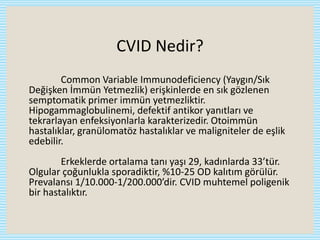
CVID Nedir?
Common Variable Immunodeficiency (Yaygın/Sık
Değişken İmmün Yetmezlik) erişkinlerde en sık gözlenen
semptomatik primer immün yetmezliktir.
Hipogammaglobulinemi, defektif antikor yanıtları ve
tekrarlayan enfeksiyonlarla karakterizedir. Otoimmün
hastalıklar, granülomatöz hastalıklar ve maligniteler de eşlik
edebilir.
Erkeklerde ortalama tanı yaşı 29, kadınlarda 33’tür.
Olgular çoğunlukla sporadiktir, %10-25 OD kalıtım görülür.
Prevalansı 1/10.000-1/200.000’dir. CVID muhtemel poligenik
bir hastalıktır.
Semptom ve Bulguları Nelerdir?
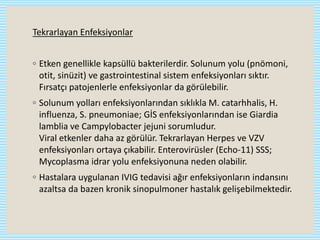
Tekrarlayan Enfeksiyonlar
◦ Etken genellikle kapsüllü bakterilerdir. Solunum yolu (pnömoni,
otit, sinüzit) ve gastrointestinal sistem enfeksiyonları sıktır.
Fırsatçı patojenlerle enfeksiyonlar da görülebilir.
◦ Solunum yolları enfeksiyonlarından sıklıkla M. catarhhalis, H.
influenza, S. pneumoniae; GİS enfeksiyonlarından ise Giardia
lamblia ve Campylobacter jejuni sorumludur.
Viral etkenler daha az görülür. Tekrarlayan Herpes ve VZV
enfeksiyonları ortaya çıkabilir. Enterovirüsler (Echo-11) SSS;
Mycoplasma idrar yolu enfeksiyonuna neden olabilir.
◦ Hastalara uygulanan IVIG tedavisi ağır enfeksiyonların indansını
azaltsa da bazen kronik sinopulmoner hastalık gelişebilmektedir.
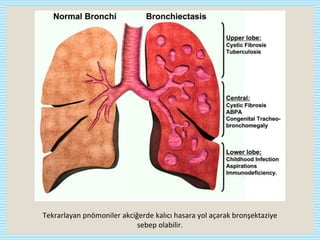
Tekrarlayan pnömoniler akciğerde kalıcı hasara yol açarak bronşektaziye
sebep olabilir.
Otoimmün fenomenler hastaların %20’sinde bulunurlar.
• Otoimmün Hemolitik Anemi
• Sistemik Lupus Eritematozus
• İdiyopatik (İmmün) Trombositopeni
• Romatoid Artrit, Otoimmün Tiroidit
• Primer Biliyer Siroz
• Atrofik Gastrit
• Pernisyöz Anemi
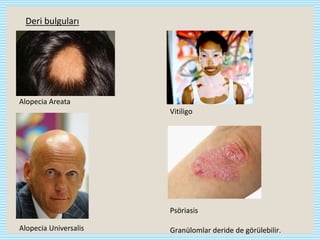
Deri bulguları
Alopecia Areata
Alopecia Universalis
Vitiligo
Psöriasis
Granülomlar deride de görülebilir.
Granülomatöz Hastalık
CVID’i diğer humoral immün yetmezliklerden ayıran en önemli
özelliktir. CVID’te %8-22 oranında ortaya çıkar. En sık visseral
granülomlar görülür. Başta akciğer olmak üzere karaciğer, dalak ve
konjonktivada sarkoid benzeri granülomatöz oluşumlar
saptanabilir. Akciğer granülomları prognozu etkiler.
Lenfoid Dokuların Hiperplazisi
Dokuların lenfoid hücrelerce infiltrasyonu sonucu;
- LAP
- Splenomegali
- Hepatomegali
- Tonsiller hiperplazi
- Granülom formasyonları görülür.
Akciğerdeki granülomlarda lenfositik infiltrasyon varlığına
Granülomatöz Lenfositik İnterstisyel Akciğer Hastalığı denir.
Malignite
Lenfoma riski 23 kat artmıştır. Hastaların %2-8’ine NHL tanısı konur ve
sıklıkla B hücrelidir. Gastrik kanser riski de 50 kat yüksektir.
Tanısı Nasıl Konulur?
Clinical Criteria for a Probable Diagnosis (= Clinical Diagnosis)
At least one of the following:
increased susceptibility to infection
autoimmune manifestations
granulomatous disease
unexplained polyclonal lymphoproliferation
affected family member with antibody deficiency
AND marked decrease of IgG and marked decrease of IgA with or without low IgM
levels (measured at least twice; <2SD of the normal levels for their age);
AND at least one of the following:
poor antibody response to vaccines (and/or absent isohaemagglutinins);
i.e. absence of protective levels despite vaccination where defined
low switched memory B cells (<70% of age-related normal value)
AND secondary causes of hypogammaglobulinaemia have been excluded (see
separate list)
AND diagnosis is established after the 4th year of life (but symptoms may be present
before)
AND no evidence of profound T-cell deficiency, defined as 2 out of the following
(y=year of life):
CD4 numbers/microliter: 2-6y <300, 6-12y <250, >12y <200
% naive CD4: 2-6y <25%, 6-16y <20%, >16y <10%
T cell proliferation absent
ESID 2016
https://esid.org/content/download/15138/418138/file/ESIDRegistry_ClinicalCriteria.pdf
Differential Diagnosis of
Hypogammaglobulinemia
Drug Induced
Antimalarial agents
Captopril
Carbamazepine
Glucocorticoids
Fenclofenac
Gold salts
Penicillamine
Phenytoin
Sulfasalazine
Genetic Disorders
Ataxia Telangiectasia
Autosomal forms of SCID
Hyper IgM Immunodeficiency
Transcobalamin II deficiency and hypogammaglobulinemia
X-linked agammaglobulinemia
X-linked lymphoproliferative disorder (EBV associated)
X-linked SCID
Some metabolic disorders
Chromosomal Anomalies
Chromosome 18q- Syndrome
Monosomy 22
Trisomy 8
Trisomy 21
Infectious Diseases
HIV
Congenital Rubella
Congenital infection with CMV
Congenital infection with Toxoplasma gondii
Epstein-Barr Virus
Malignancy
Chronic Lymphocytic Leukemia
Immunodeficiency with Thymoma
Non Hodgkin's lymphoma
B cell malignancy
Systemic Disorders
Immunodeficiency caused by
hypercatabolism of immunoglobulin
Immunodeficiency caused by excessive loss
of immunoglobulins (nephrosis, severe burns,
lymphangiectasia, severe diarrhea)
Kalıtsal Mıdır?
Genetic mutations can be identified as the cause of disease in about
10% of people, while familial inheritance accounts for 10-25% of cases.
Rather than arising from a single genetic mutation, CVID seems to
result from variety of mutations that all contribute to a failure in
antibody production.
Mutations in the genes encoding ICOS, TACI, CD19, CD20, CD21, CD80
and BAFFR have been identified as causative of CVID.
Susceptibility to CVID may also be linked to the Major
Histocompatibility Complex (MHC) of the genome, particularly to DR-
DQ haplotypes. A mutation in the NFKB2 gene has recently been
shown to cause CVID-like symptoms in a murine model. The frequency
of this NFKB2 mutation in the CVID population is, however, yet to be
established.
Tedavi Seçenekleri Nelerdir?
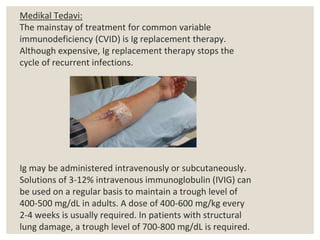
Medikal Tedavi:
The mainstay of treatment for common variable
immunodeficiency (CVID) is Ig replacement therapy.
Although expensive, Ig replacement therapy stops the
cycle of recurrent infections.
Ig may be administered intravenously or subcutaneously.
Solutions of 3-12% intravenous immunoglobulin (IVIG) can
be used on a regular basis to maintain a trough level of
400-500 mg/dL in adults. A dose of 400-600 mg/kg every
2-4 weeks is usually required. In patients with structural
lung damage, a trough level of 700-800 mg/dL is required.
A solution of 16% subcutaneous injection of IV immunoglobulin
(SCIG) is also an effective treatment in patients with poor
intravenous access. As expected, the volume required to achieve
adequate trough levels is much higher with SCIG than with IVIG.
A dose of 160 mg/kg/wk is comparable to an IVIG dose of 400
mg/kg/mo.
Adverse reactions to Ig administration must be monitored
during therapy. The most common reactions include backache,
nausea, vomiting, chills, low-grade fever, myalgias, and fatigue.
Adverse effects occur within 30 minutes of the infusion and
usually last for several hours. Slowing the rate of infusion or
interrupting the infusion for a few minutes greatly helps in
preventing symptoms. The effects can be treated with
antipyretics, diphenhydramine, and/or corticosteroids. Although
anaphylactic reactions to IVIG are uncommon, patients with IgA
deficiency have an increased risk for these effects. Long-term
intravenous access is not recommended because it can increase
the risk of infection.
The transmission of infectious agents during infusion has caused
problems in the past. Although no cases of HIV infection have been
linked to Ig therapy, the transmission of hepatitis C virus has been
reported. Current methods of viral inactivation help prevent
transmission. These methods include treatment with organic solvents
and detergents, pasteurization, and storage at a low pH. In the United
States, Ig products are derived from pooled human plasma, which
undergoes a manufacturing process that includes cold ethanol
fractionation and viral inactivation steps.
In most patients, CVID responds well to Ig therapy. The recurrence of
infections, arthritic symptoms, and the severity and/or incidence of the
autoimmune disease are reduced. Gastrointestinal disease shows little
improvement with IVIG. In some patients with severe autoimmune
disease, the concurrent use of steroids or other immunosuppressive
drugs may be needed.
Cyclosporin A has been successfully used in patients with CVID and
lymphoid interstitial pneumonitis. The administration of anti-CD20
monoclonal antibody has been used to treat autoimmune
thrombocytopenia and neutropenia. Studies are underway to evaluate
the efficacy of IL-2 administration in conjunction with polyethylene glycol.
Results of early in vitro studies show an increase in Ig production by B
lymphocytes.
Antimicrobial therapy should be initiated at the first sign of infection. A
narrow spectrum of drugs should be used when culture and sensitivity
results are available. The prophylactic use of antibiotics should be avoided
because of an increased risk of infection with fungi or other resistant
organisms.
Specific therapy is often necessary to target the organ system involved.
For instance, patients with chronic lung disease often develop airway
obstructive disease that requires treatment with inhaled corticosteroids
and other asthma medications.
In pregnant patients with CVID and lung disease, the pulmonary deficit is
often exacerbated in the third trimester. If the mother receives adequate
IVIG replacement therapy during pregnancy, her neonate (with CVID) has
IgG levels in the reference range because the antibody is actively
transported across the placenta.
Patients and their families may benefit from a periodical health-related
quality-of-life assessment, highlighting the value of psychological
support.
Inpatient care may be necessary, depending on the severity of the clinical
manifestations secondary to CVID.
Cerrahi Tedavi:
Surgery is required to treat the complications of common variable
immunodeficiency (CVID). Chronic sinusitis may require endoscopic sinus
surgery. Severe autoimmune thrombocytopenia or hemolytic anemia can
be treated with splenectomy. Biopsy should be considered to exclude
infection or malignancy in enlarging lymph nodes.
Aşılar:
Aşıların etkisi, vücutta antikor oluşturulmasını desteklemektir.
Antikor oluşumu CVID’te olduğu gibi hatalı gerçekleşiyorsa, aşılar
ancak sınırlı bir fayda sağlar. Bu nedenle canlı aşıların (örneğin
kızamık, kabakulak, kızamıkçık, BCG tüberkuloz aşısı) yapılmaması
gerekir, çünkü zayıf immün sisteme sahip insanlarda zararlı olabilir.
Öte yandan ölü aşılarda böyle bir risk yoktur. Bazı durumlarda
canlı olmayan aşıların uygulanması daha faydalı ve anlamlı olabilir
ancak bu konu sorumlu doktor tarafından değerlendirilmelidir.
Hastaların yakın çevresindekilere yılda bir defa İnfluenza aşısı
yaptırılması tavsiye edilir.
İlginiz İçin Teşekkür Ederiz 
1) http://www.guncelpediatri.com/makale_794/Iga-Eksikligi-Ve-Yaygin-Degisken-
Immun-Yetmezlik-Derleme
2) Ardeniz Ö. Cunningham-Rundles C. Granulomatous Disease in Common Variable
Immunodeficiency. Clin Immunol. 2009 Nov; 133(2): 198–207.
https://www.ncbi.nlm.nih.gov/pmc/articles/PMC2760682/
3) http://www.journals.istanbul.edu.tr/iuitfd/article/download/5000164626/5000177937
4) https://www.uptodate.com/contents/clinical-manifestations-epidemiology-and-
diagnosis-of-common-variable-immunodeficiency-in-adults
5) https://esid.org/content/download/15138/418138/file/ESIDRegistry_ClinicalCriteria.p
df
6) https://esid.org/Working-Parties/Clinical/Resources/Diagnostic-criteria-for-PID2#Q5
7) https://www.uniklinik-
freiburg.de/fileadmin/mediapool/09_zentren/cci/patienteninformationsblaetter/CVID
turk.pdf
8) http://emedicine.medscape.com/article/1051103-overview
9) https://ghr.nlm.nih.gov/condition/common-variable-immune-deficiency
10) http://www.aaaai.org/conditions-and-treatments/primary-immunodeficiency-
disease/common-variable-immunodeficiency
KAYNAKÇA

CVID

  • 1.
    CVID Common Variable Immunodeficiency Gizem Yazıcı EmineVildan Yavru Ege Üniversitesi Tıp Fakültesi
  • 2.
    CVID Nedir? Common VariableImmunodeficiency (Yaygın/Sık Değişken İmmün Yetmezlik) erişkinlerde en sık gözlenen semptomatik primer immün yetmezliktir. Hipogammaglobulinemi, defektif antikor yanıtları ve tekrarlayan enfeksiyonlarla karakterizedir. Otoimmün hastalıklar, granülomatöz hastalıklar ve maligniteler de eşlik edebilir. Erkeklerde ortalama tanı yaşı 29, kadınlarda 33’tür. Olgular çoğunlukla sporadiktir, %10-25 OD kalıtım görülür. Prevalansı 1/10.000-1/200.000’dir. CVID muhtemel poligenik bir hastalıktır.
  • 3.
  • 4.
    Tekrarlayan Enfeksiyonlar ◦ Etkengenellikle kapsüllü bakterilerdir. Solunum yolu (pnömoni, otit, sinüzit) ve gastrointestinal sistem enfeksiyonları sıktır. Fırsatçı patojenlerle enfeksiyonlar da görülebilir. ◦ Solunum yolları enfeksiyonlarından sıklıkla M. catarhhalis, H. influenza, S. pneumoniae; GİS enfeksiyonlarından ise Giardia lamblia ve Campylobacter jejuni sorumludur. Viral etkenler daha az görülür. Tekrarlayan Herpes ve VZV enfeksiyonları ortaya çıkabilir. Enterovirüsler (Echo-11) SSS; Mycoplasma idrar yolu enfeksiyonuna neden olabilir. ◦ Hastalara uygulanan IVIG tedavisi ağır enfeksiyonların indansını azaltsa da bazen kronik sinopulmoner hastalık gelişebilmektedir.
  • 5.
    Tekrarlayan pnömoniler akciğerdekalıcı hasara yol açarak bronşektaziye sebep olabilir.
  • 6.
    Otoimmün fenomenler hastaların%20’sinde bulunurlar. • Otoimmün Hemolitik Anemi • Sistemik Lupus Eritematozus • İdiyopatik (İmmün) Trombositopeni • Romatoid Artrit, Otoimmün Tiroidit • Primer Biliyer Siroz • Atrofik Gastrit • Pernisyöz Anemi
  • 7.
    Deri bulguları Alopecia Areata AlopeciaUniversalis Vitiligo Psöriasis Granülomlar deride de görülebilir.
  • 8.
    Granülomatöz Hastalık CVID’i diğerhumoral immün yetmezliklerden ayıran en önemli özelliktir. CVID’te %8-22 oranında ortaya çıkar. En sık visseral granülomlar görülür. Başta akciğer olmak üzere karaciğer, dalak ve konjonktivada sarkoid benzeri granülomatöz oluşumlar saptanabilir. Akciğer granülomları prognozu etkiler.
  • 9.
    Lenfoid Dokuların Hiperplazisi Dokularınlenfoid hücrelerce infiltrasyonu sonucu; - LAP - Splenomegali - Hepatomegali - Tonsiller hiperplazi - Granülom formasyonları görülür. Akciğerdeki granülomlarda lenfositik infiltrasyon varlığına Granülomatöz Lenfositik İnterstisyel Akciğer Hastalığı denir.
  • 10.
    Malignite Lenfoma riski 23kat artmıştır. Hastaların %2-8’ine NHL tanısı konur ve sıklıkla B hücrelidir. Gastrik kanser riski de 50 kat yüksektir.
  • 11.
  • 12.
    Clinical Criteria fora Probable Diagnosis (= Clinical Diagnosis) At least one of the following: increased susceptibility to infection autoimmune manifestations granulomatous disease unexplained polyclonal lymphoproliferation affected family member with antibody deficiency AND marked decrease of IgG and marked decrease of IgA with or without low IgM levels (measured at least twice; <2SD of the normal levels for their age); AND at least one of the following: poor antibody response to vaccines (and/or absent isohaemagglutinins); i.e. absence of protective levels despite vaccination where defined low switched memory B cells (<70% of age-related normal value) AND secondary causes of hypogammaglobulinaemia have been excluded (see separate list) AND diagnosis is established after the 4th year of life (but symptoms may be present before) AND no evidence of profound T-cell deficiency, defined as 2 out of the following (y=year of life): CD4 numbers/microliter: 2-6y <300, 6-12y <250, >12y <200 % naive CD4: 2-6y <25%, 6-16y <20%, >16y <10% T cell proliferation absent ESID 2016 https://esid.org/content/download/15138/418138/file/ESIDRegistry_ClinicalCriteria.pdf
  • 13.
    Differential Diagnosis of Hypogammaglobulinemia DrugInduced Antimalarial agents Captopril Carbamazepine Glucocorticoids Fenclofenac Gold salts Penicillamine Phenytoin Sulfasalazine Genetic Disorders Ataxia Telangiectasia Autosomal forms of SCID Hyper IgM Immunodeficiency Transcobalamin II deficiency and hypogammaglobulinemia X-linked agammaglobulinemia X-linked lymphoproliferative disorder (EBV associated) X-linked SCID Some metabolic disorders Chromosomal Anomalies Chromosome 18q- Syndrome Monosomy 22 Trisomy 8 Trisomy 21 Infectious Diseases HIV Congenital Rubella Congenital infection with CMV Congenital infection with Toxoplasma gondii Epstein-Barr Virus Malignancy Chronic Lymphocytic Leukemia Immunodeficiency with Thymoma Non Hodgkin's lymphoma B cell malignancy Systemic Disorders Immunodeficiency caused by hypercatabolism of immunoglobulin Immunodeficiency caused by excessive loss of immunoglobulins (nephrosis, severe burns, lymphangiectasia, severe diarrhea)
  • 14.
  • 15.
    Genetic mutations canbe identified as the cause of disease in about 10% of people, while familial inheritance accounts for 10-25% of cases. Rather than arising from a single genetic mutation, CVID seems to result from variety of mutations that all contribute to a failure in antibody production. Mutations in the genes encoding ICOS, TACI, CD19, CD20, CD21, CD80 and BAFFR have been identified as causative of CVID. Susceptibility to CVID may also be linked to the Major Histocompatibility Complex (MHC) of the genome, particularly to DR- DQ haplotypes. A mutation in the NFKB2 gene has recently been shown to cause CVID-like symptoms in a murine model. The frequency of this NFKB2 mutation in the CVID population is, however, yet to be established.
  • 16.
  • 17.
    Medikal Tedavi: The mainstayof treatment for common variable immunodeficiency (CVID) is Ig replacement therapy. Although expensive, Ig replacement therapy stops the cycle of recurrent infections. Ig may be administered intravenously or subcutaneously. Solutions of 3-12% intravenous immunoglobulin (IVIG) can be used on a regular basis to maintain a trough level of 400-500 mg/dL in adults. A dose of 400-600 mg/kg every 2-4 weeks is usually required. In patients with structural lung damage, a trough level of 700-800 mg/dL is required.
  • 18.
    A solution of16% subcutaneous injection of IV immunoglobulin (SCIG) is also an effective treatment in patients with poor intravenous access. As expected, the volume required to achieve adequate trough levels is much higher with SCIG than with IVIG. A dose of 160 mg/kg/wk is comparable to an IVIG dose of 400 mg/kg/mo. Adverse reactions to Ig administration must be monitored during therapy. The most common reactions include backache, nausea, vomiting, chills, low-grade fever, myalgias, and fatigue. Adverse effects occur within 30 minutes of the infusion and usually last for several hours. Slowing the rate of infusion or interrupting the infusion for a few minutes greatly helps in preventing symptoms. The effects can be treated with antipyretics, diphenhydramine, and/or corticosteroids. Although anaphylactic reactions to IVIG are uncommon, patients with IgA deficiency have an increased risk for these effects. Long-term intravenous access is not recommended because it can increase the risk of infection.
  • 19.
    The transmission ofinfectious agents during infusion has caused problems in the past. Although no cases of HIV infection have been linked to Ig therapy, the transmission of hepatitis C virus has been reported. Current methods of viral inactivation help prevent transmission. These methods include treatment with organic solvents and detergents, pasteurization, and storage at a low pH. In the United States, Ig products are derived from pooled human plasma, which undergoes a manufacturing process that includes cold ethanol fractionation and viral inactivation steps. In most patients, CVID responds well to Ig therapy. The recurrence of infections, arthritic symptoms, and the severity and/or incidence of the autoimmune disease are reduced. Gastrointestinal disease shows little improvement with IVIG. In some patients with severe autoimmune disease, the concurrent use of steroids or other immunosuppressive drugs may be needed.
  • 20.
    Cyclosporin A hasbeen successfully used in patients with CVID and lymphoid interstitial pneumonitis. The administration of anti-CD20 monoclonal antibody has been used to treat autoimmune thrombocytopenia and neutropenia. Studies are underway to evaluate the efficacy of IL-2 administration in conjunction with polyethylene glycol. Results of early in vitro studies show an increase in Ig production by B lymphocytes. Antimicrobial therapy should be initiated at the first sign of infection. A narrow spectrum of drugs should be used when culture and sensitivity results are available. The prophylactic use of antibiotics should be avoided because of an increased risk of infection with fungi or other resistant organisms. Specific therapy is often necessary to target the organ system involved. For instance, patients with chronic lung disease often develop airway obstructive disease that requires treatment with inhaled corticosteroids and other asthma medications.
  • 21.
    In pregnant patientswith CVID and lung disease, the pulmonary deficit is often exacerbated in the third trimester. If the mother receives adequate IVIG replacement therapy during pregnancy, her neonate (with CVID) has IgG levels in the reference range because the antibody is actively transported across the placenta. Patients and their families may benefit from a periodical health-related quality-of-life assessment, highlighting the value of psychological support. Inpatient care may be necessary, depending on the severity of the clinical manifestations secondary to CVID. Cerrahi Tedavi: Surgery is required to treat the complications of common variable immunodeficiency (CVID). Chronic sinusitis may require endoscopic sinus surgery. Severe autoimmune thrombocytopenia or hemolytic anemia can be treated with splenectomy. Biopsy should be considered to exclude infection or malignancy in enlarging lymph nodes.
  • 22.
    Aşılar: Aşıların etkisi, vücuttaantikor oluşturulmasını desteklemektir. Antikor oluşumu CVID’te olduğu gibi hatalı gerçekleşiyorsa, aşılar ancak sınırlı bir fayda sağlar. Bu nedenle canlı aşıların (örneğin kızamık, kabakulak, kızamıkçık, BCG tüberkuloz aşısı) yapılmaması gerekir, çünkü zayıf immün sisteme sahip insanlarda zararlı olabilir. Öte yandan ölü aşılarda böyle bir risk yoktur. Bazı durumlarda canlı olmayan aşıların uygulanması daha faydalı ve anlamlı olabilir ancak bu konu sorumlu doktor tarafından değerlendirilmelidir. Hastaların yakın çevresindekilere yılda bir defa İnfluenza aşısı yaptırılması tavsiye edilir.
  • 23.
  • 24.
    1) http://www.guncelpediatri.com/makale_794/Iga-Eksikligi-Ve-Yaygin-Degisken- Immun-Yetmezlik-Derleme 2) ArdenizÖ. Cunningham-Rundles C. Granulomatous Disease in Common Variable Immunodeficiency. Clin Immunol. 2009 Nov; 133(2): 198–207. https://www.ncbi.nlm.nih.gov/pmc/articles/PMC2760682/ 3) http://www.journals.istanbul.edu.tr/iuitfd/article/download/5000164626/5000177937 4) https://www.uptodate.com/contents/clinical-manifestations-epidemiology-and- diagnosis-of-common-variable-immunodeficiency-in-adults 5) https://esid.org/content/download/15138/418138/file/ESIDRegistry_ClinicalCriteria.p df 6) https://esid.org/Working-Parties/Clinical/Resources/Diagnostic-criteria-for-PID2#Q5 7) https://www.uniklinik- freiburg.de/fileadmin/mediapool/09_zentren/cci/patienteninformationsblaetter/CVID turk.pdf 8) http://emedicine.medscape.com/article/1051103-overview 9) https://ghr.nlm.nih.gov/condition/common-variable-immune-deficiency 10) http://www.aaaai.org/conditions-and-treatments/primary-immunodeficiency- disease/common-variable-immunodeficiency KAYNAKÇA