EDUCATION IN THE
PHILIPPINES DURING THE
AMERICAN PERIOD (1898-1942)


By: Yana, Nerissa P.
    Alfar, Florlyn Gill P.
Educational Goals

  To promote democratic ideals and
  way of life.

  Formation of good
  citizens, including the rights and
  responsibilities of people.
Highlights of Education During
the American Time:

 Education Act of 1901 laid the foundation
  of the Philippine Public school system.

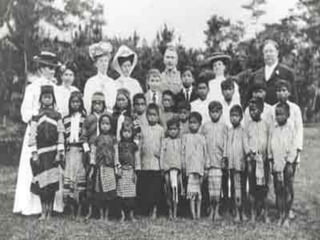
 In August 1901, 600 teachers called
  “Thomasites” arrived.

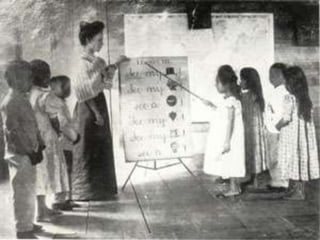
 English was made medium of instruction
 Curricular structure and programs were
  patterned from the U.S.

 There were 3 levels of education:
  Elementary level, Secondary or High
  school level, and College or Tertiary level.

 New subject areas were introduced.
 Religion was not included in the curriculum
  of the schools.

 Normal, vocational, agricultural, and
  business schools were also opened.

 Schools were also built in non- catholic
  areas like Sulu in Mindanao, and in
  Mountain Province.
 “Adult Education”

 the Pensionado Program was established
 on 26 August 1903.
Issues

 Public School System


 English language was used as a medium of
  instruction.
Strengths, and Weaknesses
during that time:

Strengths:
 Education allowed the Americans to
  spread, share their culture.

 Gave everyone chance to study.

 Equality between men and women
 Religious freedom.

 Technical/ vocational skills were
  emphasized.

 The knowledge of Filipinos in reading and
  writing were very high.
Weaknesses

 Americans’ main objective is to colonize and
  use the country and its people.

 Education was the most powerful means in
  pursuing peaceful relationship with the
  Philippines.
 Education under American colonization led to
  widespread Americanization of the
  Philippines.

 Through education, the Americans influenced
  the Filipinos in terms of what they eat, to love
  the American culture, and most of all, to
  prioritize their products.
Insights

 “Americans thought us the importance of
  education, and that importance is still evident today.
  Before the Americans, education was not for
  everyone, only the elite people were given the
  chance of the Spaniards to study. Americans
  introduced the public school system and by that we
  should thanked them because they’re the reason
  why there’s Cebu Normal University, our school. We
  all know that they had hidden agendas for their own
  good that’s why they helped and educated us. But In
  my own opinion, I must say that both parties
  benefitted, what they did had a mutual effect to the
  Americans and to us Filipinos.”
SOURCES

 http://en.wikipedia.org/wiki/Department_of_
  Education_(Philippines)
 http://www.deped.gov.ph/about_deped/histo
  ry.asp
 http://tabonwoman.blogspot.com/2009/05/a
  merican-period_22.html
 http://www.scribd.com/doc/6823019/A-
  Matrix-of-Philippine-Educational-System

Curriculum development.ppt

  • 1.
    EDUCATION IN THE PHILIPPINESDURING THE AMERICAN PERIOD (1898-1942) By: Yana, Nerissa P. Alfar, Florlyn Gill P.
  • 2.
    Educational Goals To promote democratic ideals and way of life.  Formation of good citizens, including the rights and responsibilities of people.
  • 3.
    Highlights of EducationDuring the American Time:  Education Act of 1901 laid the foundation of the Philippine Public school system.  In August 1901, 600 teachers called “Thomasites” arrived.  English was made medium of instruction
  • 4.
     Curricular structureand programs were patterned from the U.S.  There were 3 levels of education: Elementary level, Secondary or High school level, and College or Tertiary level.  New subject areas were introduced.
  • 5.
     Religion wasnot included in the curriculum of the schools.  Normal, vocational, agricultural, and business schools were also opened.  Schools were also built in non- catholic areas like Sulu in Mindanao, and in Mountain Province.
  • 6.
     “Adult Education” the Pensionado Program was established on 26 August 1903.
  • 10.
    Issues  Public SchoolSystem  English language was used as a medium of instruction.
  • 11.
    Strengths, and Weaknesses duringthat time: Strengths:  Education allowed the Americans to spread, share their culture.  Gave everyone chance to study.  Equality between men and women
  • 12.
     Religious freedom. Technical/ vocational skills were emphasized.  The knowledge of Filipinos in reading and writing were very high.
  • 13.
    Weaknesses  Americans’ mainobjective is to colonize and use the country and its people.  Education was the most powerful means in pursuing peaceful relationship with the Philippines.
  • 14.
     Education underAmerican colonization led to widespread Americanization of the Philippines.  Through education, the Americans influenced the Filipinos in terms of what they eat, to love the American culture, and most of all, to prioritize their products.
  • 15.
    Insights  “Americans thoughtus the importance of education, and that importance is still evident today. Before the Americans, education was not for everyone, only the elite people were given the chance of the Spaniards to study. Americans introduced the public school system and by that we should thanked them because they’re the reason why there’s Cebu Normal University, our school. We all know that they had hidden agendas for their own good that’s why they helped and educated us. But In my own opinion, I must say that both parties benefitted, what they did had a mutual effect to the Americans and to us Filipinos.”
  • 16.
    SOURCES  http://en.wikipedia.org/wiki/Department_of_ Education_(Philippines)  http://www.deped.gov.ph/about_deped/histo ry.asp  http://tabonwoman.blogspot.com/2009/05/a merican-period_22.html  http://www.scribd.com/doc/6823019/A- Matrix-of-Philippine-Educational-System