EDUCATIONAL SYSTEM IN THE
PHILIPPINES DURING
AMERICAN COLONIAL PERIOD
BRIEF HISTORY
 In 1898-1946 the United States government was in charge of
providing education in the Philippines.
 In the late 19th and early 20th centuries, the Philippine Education
system underwent significant changes as a result of American
Colonization.
 The Philippines Education Act of 1901 established a system of free
and compulsory primary education.
 In 1902 The Philippine assembly passed the Philippine Organic Act,
which established the legal basis for Philippine Education System.
 Education Act of 1953 – free and compulsory education for all
children.
 Education Act of 1982 – expanded access to education and
introduces reforms to improve the quality of instructions.
Philippine Education during American
Colonial Period
 1898 – American occupied Manila and reopened schools.
 Act no. 74 – established the public primary school in 1901.
- in 1904 they established also the intermediate school,
which provides free public education.
 Act no. 372 – required all provinces to maintain provincial high school.
 1901 - Philippine Normal School was founded to train teachers.
 1908 – University of The Philippines was established
LIST OF SCHOOLS DURING AMERICAN
PERIOD
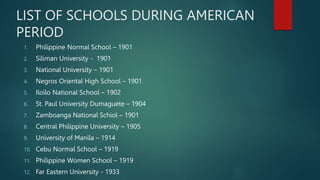
1. Philippine Normal School – 1901
2. Siliman University - 1901
3. National University – 1901
4. Negros Oriental High School – 1901
5. Iloilo National School – 1902
6. St. Paul University Dumaguete – 1904
7. Zamboanga National Schiol – 1901
8. Central Philippine University – 1905
9. University of Manila – 1914
10. Cebu Normal School – 1919
11. Philippine Women School – 1919
12. Far Eastern University - 1933
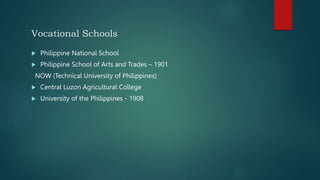
Vocational Schools
 Philippine National School
 Philippine School of Arts and Trades – 1901
NOW (Technical University of Philippines)
 Central Luzon Agricultural College
 University of the Philippines - 1908
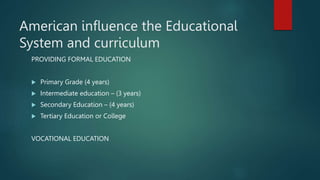
American influence the Educational
System and curriculum
PROVIDING FORMAL EDUCATION
 Primary Grade (4 years)
 Intermediate education – (3 years)
 Secondary Education – (4 years)
 Tertiary Education or College
VOCATIONAL EDUCATION
Who are qualified to be educated?
 Every child from age 7 was required to register in schools located in their
own town or province.
 To those out of school youth or elderly that wants to be educated
Vocational Education was given to them.
Aims for Education (1927)
 The Monroe Survey Commission
Purpose: To educate the entire school system that American set up.
Bases: Act no. 3162 and 3196
 Educational reforms regarding methods and techniques of teaching,
supervision, teacher training curriculum.
 Educational of teaching learning.
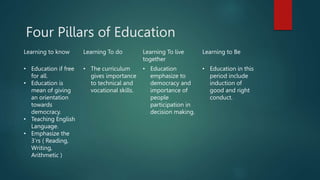
Four Pillars of Education
Learning to know Learning To do Learning To live
together
Learning to Be
• Education if free
for all.
• Education is
mean of giving
an orientation
towards
democracy.
• Teaching English
Language.
• Emphasize the
3’rs ( Reading,
Writing,
Arithmetic )
• The curriculum
gives importance
to technical and
vocational skills.
• Education
emphasize to
democracy and
importance of
people
participation in
decision making.
• Education in this
period include
induction of
good and right
conduct.
Focus of Educational System during
American Colonial Period
 Train the Filipinos in a Democratic ways of life,
citizenship, moral character and fundamental of
Vocational Education.

POWER POINT PRESENTATION - EDUC 103.pptx

  • 1.
    EDUCATIONAL SYSTEM INTHE PHILIPPINES DURING AMERICAN COLONIAL PERIOD
  • 2.
    BRIEF HISTORY  In1898-1946 the United States government was in charge of providing education in the Philippines.  In the late 19th and early 20th centuries, the Philippine Education system underwent significant changes as a result of American Colonization.  The Philippines Education Act of 1901 established a system of free and compulsory primary education.  In 1902 The Philippine assembly passed the Philippine Organic Act, which established the legal basis for Philippine Education System.  Education Act of 1953 – free and compulsory education for all children.  Education Act of 1982 – expanded access to education and introduces reforms to improve the quality of instructions.
  • 3.
    Philippine Education duringAmerican Colonial Period  1898 – American occupied Manila and reopened schools.  Act no. 74 – established the public primary school in 1901. - in 1904 they established also the intermediate school, which provides free public education.  Act no. 372 – required all provinces to maintain provincial high school.  1901 - Philippine Normal School was founded to train teachers.  1908 – University of The Philippines was established
  • 4.
    LIST OF SCHOOLSDURING AMERICAN PERIOD 1. Philippine Normal School – 1901 2. Siliman University - 1901 3. National University – 1901 4. Negros Oriental High School – 1901 5. Iloilo National School – 1902 6. St. Paul University Dumaguete – 1904 7. Zamboanga National Schiol – 1901 8. Central Philippine University – 1905 9. University of Manila – 1914 10. Cebu Normal School – 1919 11. Philippine Women School – 1919 12. Far Eastern University - 1933
  • 5.
    Vocational Schools  PhilippineNational School  Philippine School of Arts and Trades – 1901 NOW (Technical University of Philippines)  Central Luzon Agricultural College  University of the Philippines - 1908
  • 6.
    American influence theEducational System and curriculum PROVIDING FORMAL EDUCATION  Primary Grade (4 years)  Intermediate education – (3 years)  Secondary Education – (4 years)  Tertiary Education or College VOCATIONAL EDUCATION
  • 7.
    Who are qualifiedto be educated?  Every child from age 7 was required to register in schools located in their own town or province.  To those out of school youth or elderly that wants to be educated Vocational Education was given to them.
  • 8.
    Aims for Education(1927)  The Monroe Survey Commission Purpose: To educate the entire school system that American set up. Bases: Act no. 3162 and 3196  Educational reforms regarding methods and techniques of teaching, supervision, teacher training curriculum.  Educational of teaching learning.
  • 9.
    Four Pillars ofEducation Learning to know Learning To do Learning To live together Learning to Be • Education if free for all. • Education is mean of giving an orientation towards democracy. • Teaching English Language. • Emphasize the 3’rs ( Reading, Writing, Arithmetic ) • The curriculum gives importance to technical and vocational skills. • Education emphasize to democracy and importance of people participation in decision making. • Education in this period include induction of good and right conduct.
  • 10.
    Focus of EducationalSystem during American Colonial Period  Train the Filipinos in a Democratic ways of life, citizenship, moral character and fundamental of Vocational Education.